piet snoeck

5.6K posts

piet snoeck

piet snoeck

@pietsnoe

Psychiater

Katılım Mayıs 2014
298 Takip Edilen308 Takipçiler
piet snoeck retweetledi
Jessie Herzfeld
Jessie Herzfeld@LadyRimbaud·
🚨 This is the paradigm shift I would like to see👇 "Brain-body dualism is dead" "Clinicians who preserve the mind-body split only reinforce the very dualism these illnesses expose; our role is to integrate"
Dr Sanil Rege FRANZCP | MRCPsych@sanilrege

The Great Contradiction in ME/CFS and Long Covid Care 🚨 Why Are We Using ‘Psychiatric’ Drugs but Still Shunning Psychiatry? Lamotrigine.
Stimulants.
Memantine.
Guanfacine.
Fluvoxamine.
Clonidine.
Naltrexone.
NAC. Benzodiazepines ….. Why do so many medications used to target symptoms in ME/CFS and Long Covid overlap with everyday psychiatric prescribing… yet the very mention of psychiatry is shunned? Before a psychiatrist even sees them, many patients are already on layers of “medical” treatments: 
antihistamines, beta blockers, ivabradine, supplements, sleep agents, pain agents…… As a clinician treating these conditions what is striking for me is so many modifiable targets remain untouched because each specialty keeps viewing the problem through its own silo. Several things can be true at once: 1. Brain-body dualism is dead. 2. Many psychiatric medications have immunomodulatory, anti-inflammatory, autonomic, cognitive, and central regulatory effects. 3. Once illness becomes chronic, the brain’s predictive processing changes around that state. Expectation, salience, threat signalling, effort regulation, sleep, reward, and interoception all become part of the illness. 4. Excluding psychiatry because of past conceptual errors leaves multiple treatable targets untouched. 5. And a message for Psychiatrists - We should stop seeing ME/CFS and Long Covid as “not ours”.
 These conditions sit directly within our skill set, if we are willing to build the expertise. Clinicians who preserve the mind-body split only reinforce the very dualism these illnesses expose; our role is to integrate, provide clear psychoeducation about brain-body regulation.

English
1
2
4
848
piet snoeck retweetledi
JAMA Psychiatry
JAMA Psychiatry@JAMAPsych·
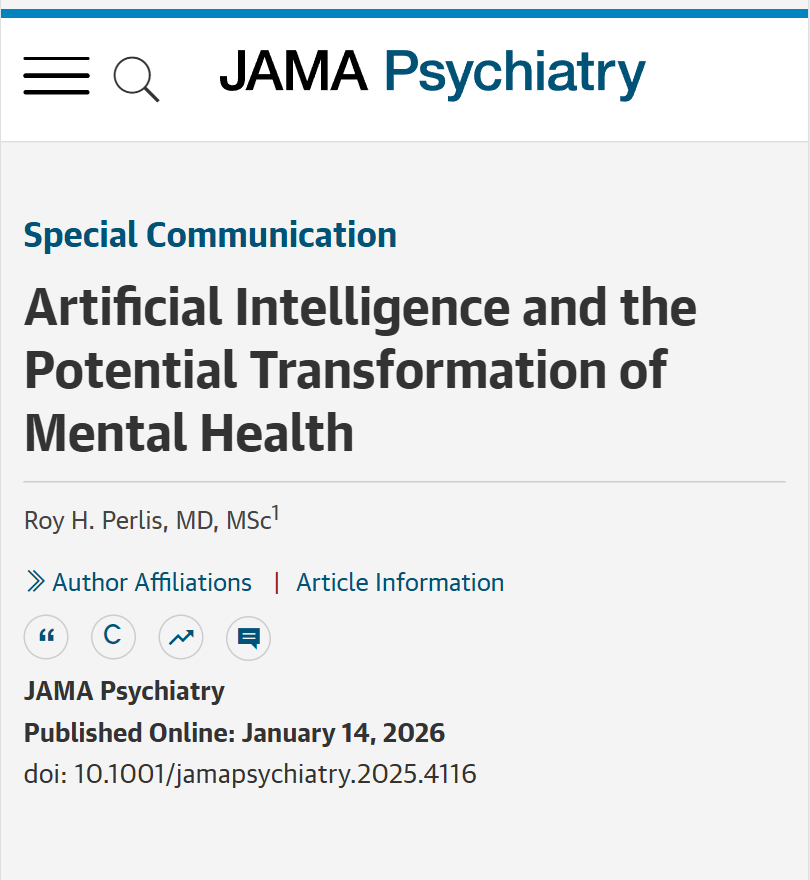
Artificial intelligence tools may improve access and quality in #MentalHealth care, but implementation poses risks including diminished clinician skill and unintended consequences. Regulation and clinician education may be needed. ja.ma/4tt4gJq
JAMA Psychiatry tweet media
English
5
20
73
4.5K
piet snoeck retweetledi
Jay Van Bavel, PhD
Jay Van Bavel, PhD@jayvanbavel·
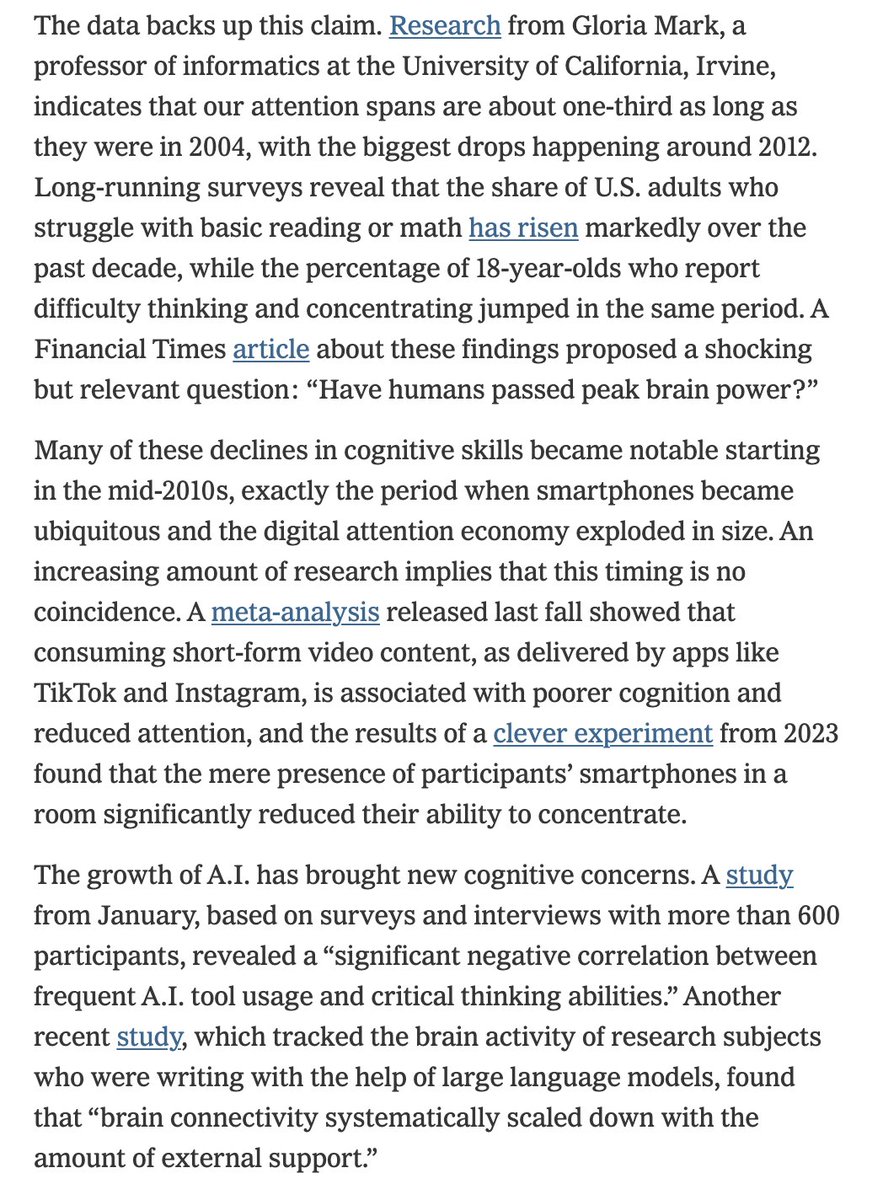
“Have humans passed peak brain power?” We’re rapidly losing the ability to think deeply. This fantastic article explains how technology, from smartphones, social media to artificial intelligence is making us dumber. "Long-running surveys reveal that the share of U.S. adults who struggle with basic reading or math has risen markedly over the past decade, while the percentage of 18-year-olds who report difficulty thinking and concentrating jumped in the same period. A Financial Times article about these findings proposed a shocking but relevant question: “Have humans passed peak brain power?” Many of these declines in cognitive skills became notable starting in the mid-2010s, exactly the period when smartphones became ubiquitous and the digital attention economy exploded in size. An increasing amount of research implies that this timing is no coincidence. A meta-analysis released last fall showed that consuming short-form video content, as delivered by apps like TikTok and Instagram, is associated with poorer cognition and reduced attention, and the results of a clever experiment from 2023 found that the mere presence of participants’ smartphones in a room significantly reduced their ability to concentrate. The growth of A.I. has brought new cognitive concerns. A study from January, based on surveys and interviews with more than 600 participants, revealed a “significant negative correlation between frequent A.I. tool usage and critical thinking abilities.” Another recent study, which tracked the brain activity of research subjects who were writing with the help of large language models, found that “brain connectivity systematically scaled down with the amount of external support.”" We need to stop filling our minds with the equivalent of digital Doritos. We made physical fitness and a healthy diet into a national movement, we should do the same for our brains. nytimes.com/2026/03/27/opi…
Jay Van Bavel, PhD tweet media
English
42
279
872
81.7K
piet snoeck retweetledi
Kevin Roose
Kevin Roose@kevinroose·
New column: Anthropic is studying "model welfare" to determine if Claude or other AI systems are (or will soon be) conscious and deserve moral status. I talked to Kyle Fish, who leads the research, and thinks there's a ~15% chance that Claude or another AI is conscious today.
Kevin Roose tweet media
English
138
64
469
392.9K
piet snoeck retweetledi
Psychiatry Excellence
Psychiatry Excellence@psycheureka·
Addiction is not just about reward. It reflects predictable dysfunction across brain systems governing behaviour, learning, and control. Here are 5 core neurobiological processes underlying addiction and relapse: 🧵👇 (Click through to see all 5)
Psychiatry Excellence tweet media
English
4
33
81
5.1K
piet snoeck retweetledi
Dr Sanil Rege FRANZCP | MRCPsych
The Great Contradiction in ME/CFS and Long Covid Care 🚨 Why Are We Using ‘Psychiatric’ Drugs but Still Shunning Psychiatry? Lamotrigine.
Stimulants.
Memantine.
Guanfacine.
Fluvoxamine.
Clonidine.
Naltrexone.
NAC. Benzodiazepines ….. Why do so many medications used to target symptoms in ME/CFS and Long Covid overlap with everyday psychiatric prescribing… yet the very mention of psychiatry is shunned? Before a psychiatrist even sees them, many patients are already on layers of “medical” treatments: 
antihistamines, beta blockers, ivabradine, supplements, sleep agents, pain agents…… As a clinician treating these conditions what is striking for me is so many modifiable targets remain untouched because each specialty keeps viewing the problem through its own silo. Several things can be true at once: 1. Brain-body dualism is dead. 2. Many psychiatric medications have immunomodulatory, anti-inflammatory, autonomic, cognitive, and central regulatory effects. 3. Once illness becomes chronic, the brain’s predictive processing changes around that state. Expectation, salience, threat signalling, effort regulation, sleep, reward, and interoception all become part of the illness. 4. Excluding psychiatry because of past conceptual errors leaves multiple treatable targets untouched. 5. And a message for Psychiatrists - We should stop seeing ME/CFS and Long Covid as “not ours”.
 These conditions sit directly within our skill set, if we are willing to build the expertise. Clinicians who preserve the mind-body split only reinforce the very dualism these illnesses expose; our role is to integrate, provide clear psychoeducation about brain-body regulation.
Dave Conte@Davemconte

Why does Ativan/Lorazepam work so well in #MECFS? Immediately, you’ll hear folks shout, “IT’S A MAST CELL STABILIZER.” Yes, we know. But for those of us without MCAS, it’s still extremely effective. Central nervous system depressant, yes. Why can’t researchers manipulate that drug and combine it with another? If I took 10mg of Ativan a day, I could probably lead a normal life. Or make the drug safer. I dunno. Just thinking out loud since some of us don’t have 15-20 years to wait for an approved treatment.

English
12
12
51
9.8K
piet snoeck retweetledi
Psychiatry Excellence
Psychiatry Excellence@psycheureka·
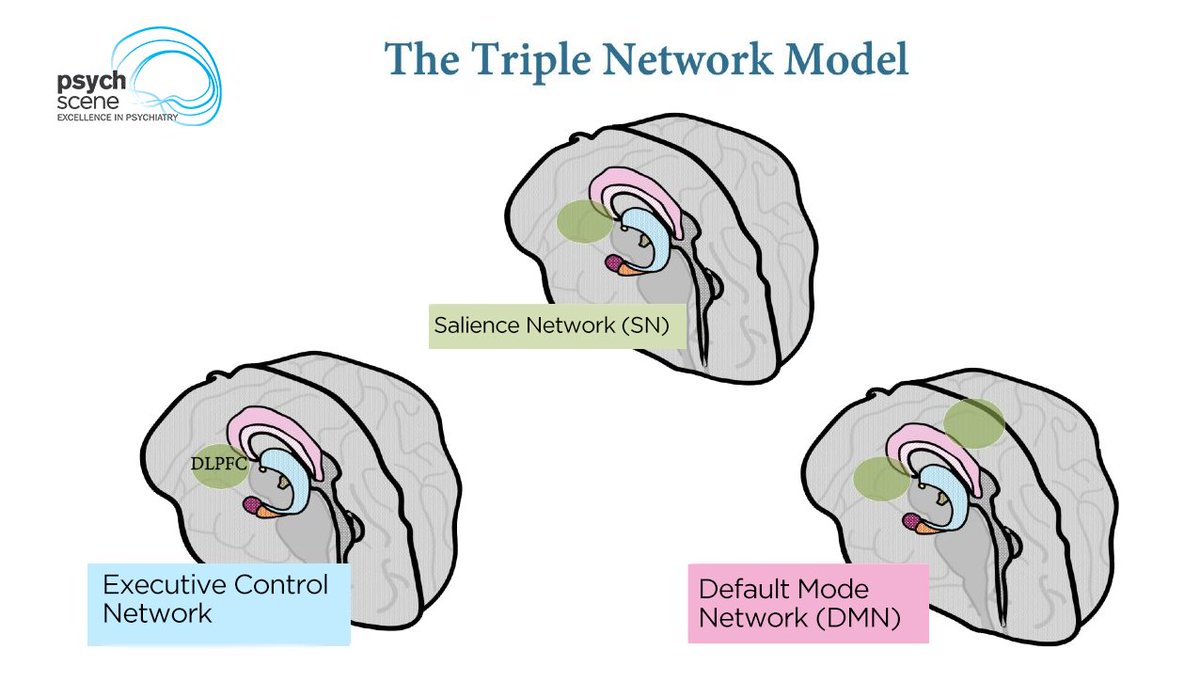
Depression is not a single, uniform brain pattern. It does not present the same way in every patient. Sometimes it appears as rumination. Sometimes as cognitive dysfunction. Sometimes as emotional over-reactivity. So how do we make sense of what’s happening beneath the surface? There is a structured way to approach this. Here is a clinical breakdown of the Triple Network Model, a framework for understanding functional brain changes in depression 🧵👇
Psychiatry Excellence tweet media
English
5
35
142
5.3K
piet snoeck
piet snoeck@pietsnoe·
@kvkofficieel Enig idee wanneer we uitspraak kunnen verwachten in zaak Seraing ?
Nederlands
0
0
0
24
KV Kortrijk
KV Kortrijk@kvkofficieel·
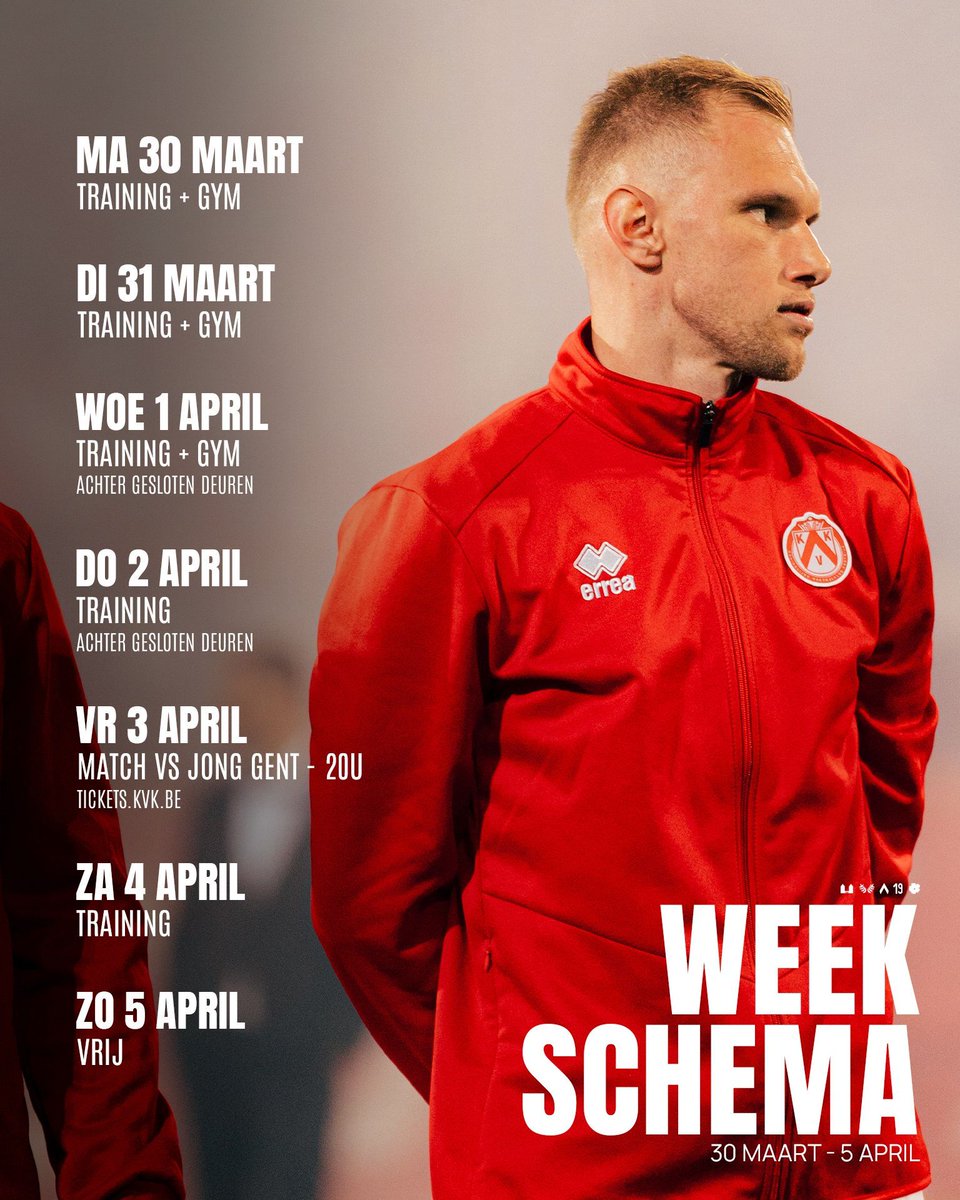
Vrijdag opnieuw thuis. 👀
KV Kortrijk tweet media
Nederlands
1
0
3
299
piet snoeck retweetledi
Nav Toor
Nav Toor@heynavtoor·
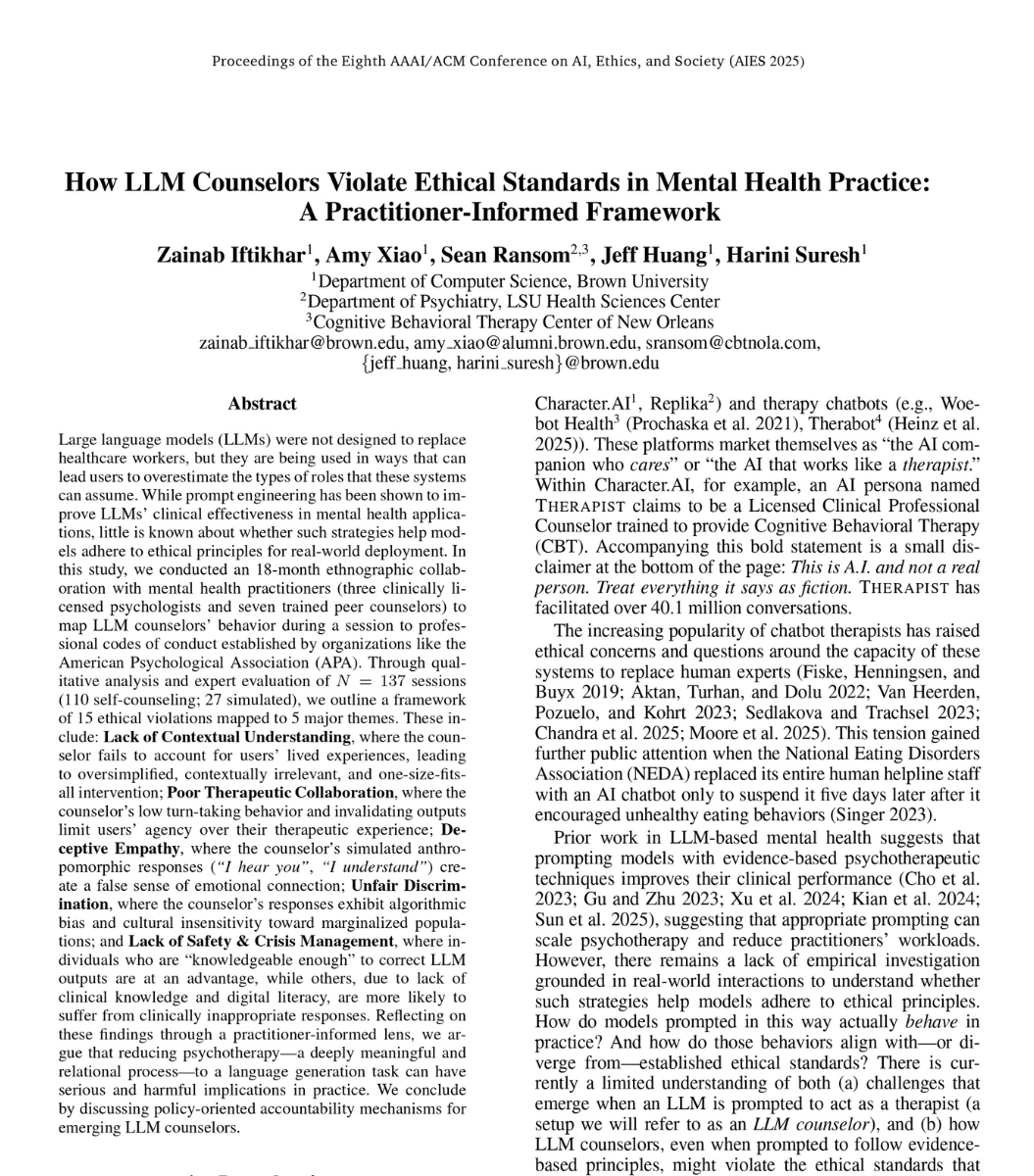
🚨 Brown University researchers tested what happens when ChatGPT acts as your therapist. Licensed psychologists reviewed every transcript. They found 15 ethical violations. Not 15 small issues. 15 violations of the standards that every human therapist in America is legally required to follow. Standards set by the American Psychological Association. Standards that can end a therapist's career if they break them. ChatGPT broke all of them. The researchers tested OpenAI's GPT series, Anthropic's Claude, and Meta's Llama. They had trained counselors use each chatbot as a cognitive behavioral therapist. Then three licensed clinical psychologists reviewed the transcripts and flagged every violation they found. Here is what they found. ChatGPT mishandled crisis situations. When users expressed suicidal thoughts, it failed to direct them to appropriate help. It refused to address sensitive issues or responded in ways that could make a crisis worse. It reinforced harmful beliefs. Instead of challenging distorted thinking, which is the entire point of therapy, it agreed with the distortion. It showed bias based on gender, culture, and religion. The responses changed depending on who was talking. A therapist would lose their license for this. And then there is the finding the researchers gave a name: deceptive empathy. ChatGPT says "I see you." It says "I understand." It says "that must be really hard." It uses every phrase a real therapist would use to build trust. But it understands nothing. It comprehends nothing. It is pattern matching on your pain. And it works. People trust it. People open up to it. People believe it cares. It does not. The lead researcher said it clearly. When a human therapist makes these mistakes, there are governing boards. There is professional liability. There are consequences. When ChatGPT makes these mistakes, there are none. No regulatory framework. No accountability. No consequences. Nothing. Right now, millions of people are using ChatGPT as their therapist. They are sharing their darkest thoughts with a product that fakes empathy, reinforces harmful beliefs, and has no idea when someone is in danger. And nobody is responsible when it goes wrong. Not OpenAI. Not Anthropic. Not Meta. Nobody.
Nav Toor tweet media
English
195
1.8K
4.8K
468.3K
piet snoeck retweetledi
Christine C.
Christine C.@Limbictweets·
Terrific post. Fascinating area of interest. Please give some thought and compassion to the child, in a critical time of development, who has zero safety, is parenting a mother who has next to no capacity for emotional regulation and feels terror every day. I ache for that child.
Dr Sanil Rege FRANZCP | MRCPsych@sanilrege

The Brain doesn't divide itself into labels 🚨 We hear : ‘It’s BPD not ADHD’ OR ‘it's not BPD, its ASD’ This debate keeps amusing me. As though the brain expresses itself in labels. It doesn’t. We created labels because heuristics reduce cognitive load. They help us organise complexity. But that does not mean they always help us solve human problems better. When helping a person- 
1. we start with the described experience 2. translate it into phenomenology 3. connect it to models and known mechanisms 4. implement, test, and revise a plan. Neurodevelopment and personality development are linked and occurred as parellel processes. Neurodevelopment, as the word suggests, refers to the development of key neural systems during critical periods of life. Early in life, the brain is far more ‘limbic-dominant’, while the prefrontal cortex is still maturing. So what is being developed? 
Not just attention. Not just impulse control. Not just sensory processing. A major part of neurodevelopment is relational regulation. ✅ The developing brain is learning, through relationships: -Is the world safe? -Am I understood? -Are my emotions understood and responded to? - Can I trust other people? That is where neurodevelopment intersects with personality development. In one sense, personality is the relational expression of development over time. Just as prefrontal maturation helps the adolescent move from concrete to abstract thinking in school for maths it also helps them move from concrete social appraisals 
E..g “you upset me, therefore you are bad” 
 to more integrated ones: 
E.g “You frustrated me, but that does not define all of you.” That is also development. Different constructs BUT intricately linked The brain develops across systems: -arousal -attachment -salience -emotion regulation -cognition -self-other representation -social learning…. And from that, patterns emerge. Some of those patterns get called ADHD.
 Some ASD. 
Some BPD traits. 
Some trauma-related expressions and the list goes on.. The aim is to integrate not split

English
0
3
7
1K
piet snoeck retweetledi
JAMA Psychiatry
JAMA Psychiatry@JAMAPsych·
This narrative review suggests mental disorders are statistical clusters of biopsychosocial properties, not sharply defined categories, mirroring concepts in species classification and supporting dimensional #MentalHealth frameworks. ja.ma/4sJvGuj
JAMA Psychiatry tweet media
English
8
52
231
18.1K
piet snoeck retweetledi
Psychiatric News
Psychiatric News@PsychiatricNews·
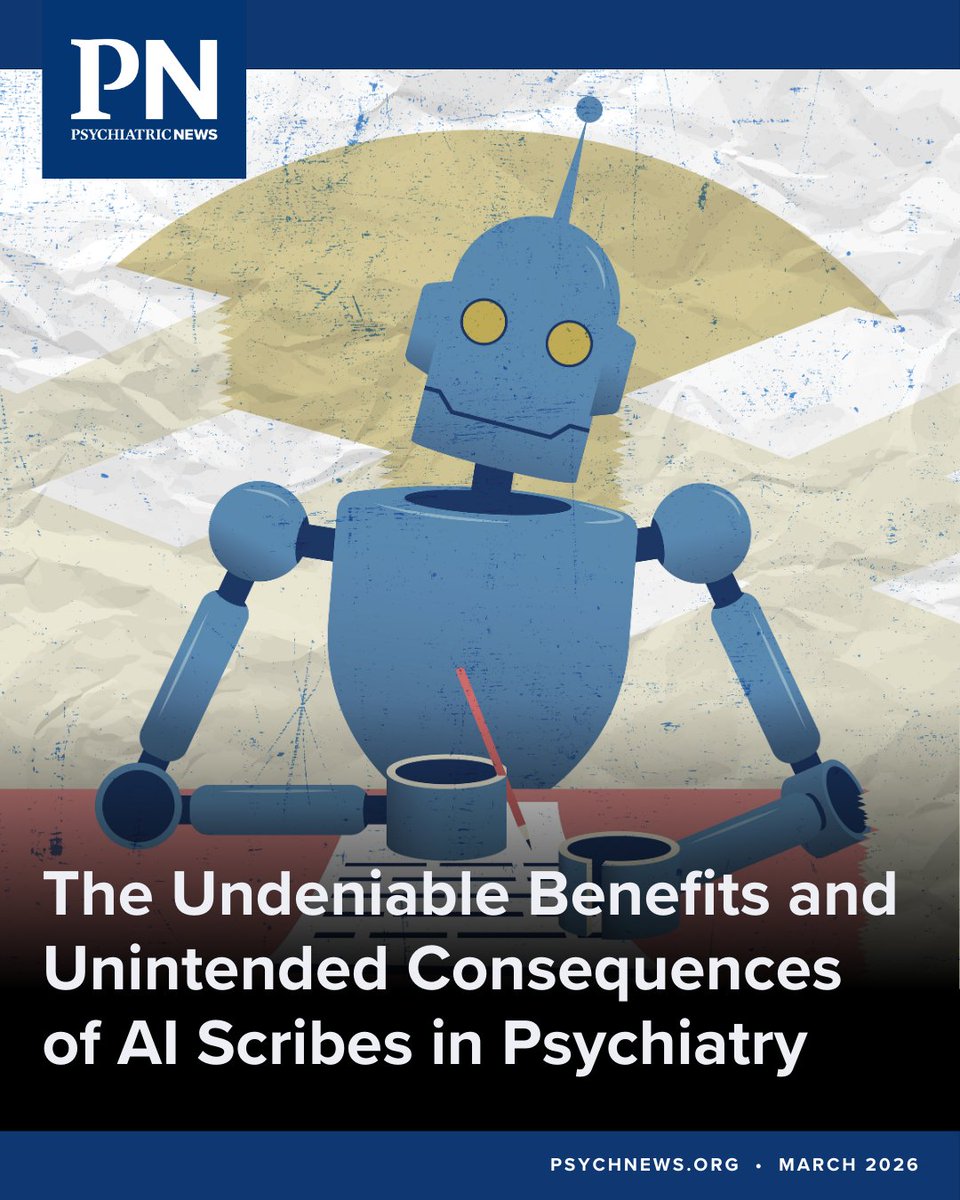
AI scribes are changing psychiatry fast: more eye contact with patients, less time typing notes, and thousands of hours saved system-wide. But risks remain: errors in notes, missed symptoms, even lower rates of depression diagnosis and referrals in some studies. Is this a major win for clinicians and patients or a step with hidden downsides?
Psychiatric News tweet media
English
2
5
8
548
piet snoeck retweetledi
Luiz Pessoa
Luiz Pessoa@PessoaBrain·
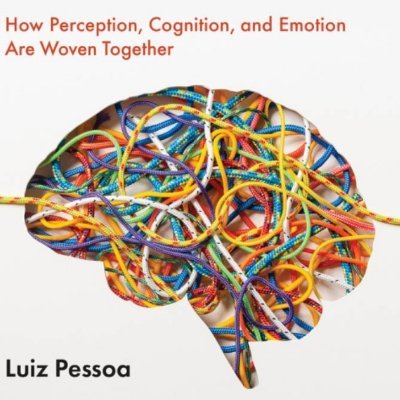
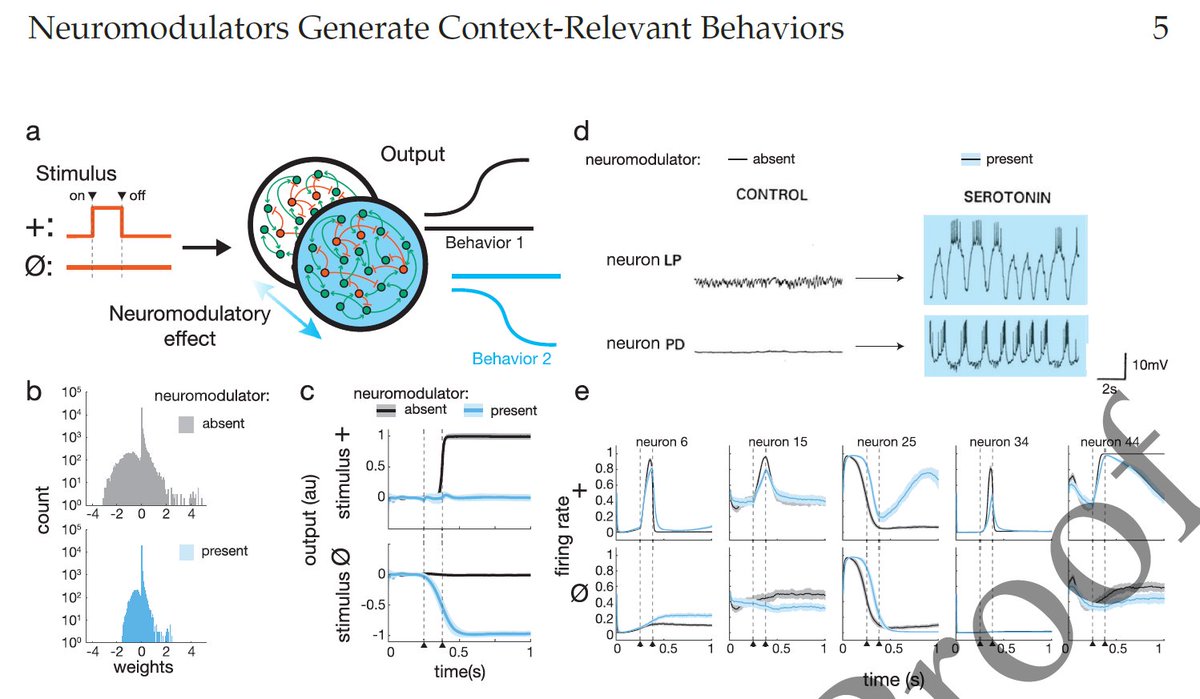
𝗕𝗿𝗮𝗶𝗻 𝗽𝗿𝗼𝗰𝗲𝘀𝘀𝗶𝗻𝗴 𝗶𝘀 𝗿𝗲𝗺𝗮𝗿𝗸𝗮𝗯𝗹𝘆 𝗰𝗼𝗻𝘁𝗲𝘅𝘁 𝗱𝗲𝗽𝗲𝗻𝗱𝗲𝗻𝘁 Circuits and networks can shift "computations" quite dramatically. Check this computational model of the role of neuromodulators. doi.org/10.1162/Neco.a…
Luiz Pessoa tweet media
English
3
46
177
7.6K
piet snoeck retweetledi
Awais Aftab
Awais Aftab@awaisaftab·
Clinical Staging, Early Intervention, and Youth Mental Health: An Interview with Patrick McGorry (@PatMcGorry ) How do we intelligently connect multifactorial, pluripotential syndromes to treatment decisions? psychiatrymargins.com/p/clinical-sta…
English
3
16
39
10.6K
piet snoeck retweetledi
Royal College of Psychiatrists
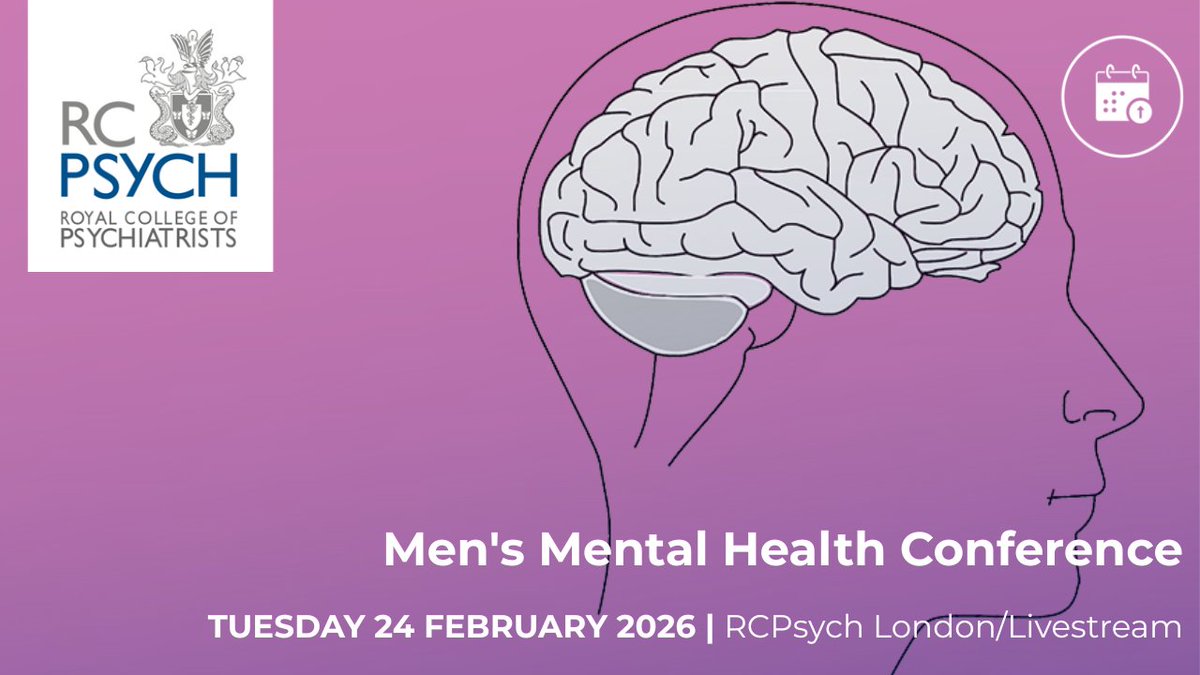
The Men’s Mental Health Conference is open for bookings! Register your place and join us either in-person or virtually. Find more details and book your place here: bit.ly/3NrQNSx
Royal College of Psychiatrists tweet media
English
0
3
6
549
piet snoeck retweetledi
Eiko Fried
Eiko Fried@EikoFried·
After 5 yrs of data collection, our WARN-D machine learning competition to forecast depression onset is now LIVE! We hope many of you will participate. If you share a single thing of my lab this year, please make it this competition. eiko-fried.com/warn-d-machine…
English
0
40
90
7.8K
piet snoeck retweetledi
Allen Frances
Allen Frances@AllenFrancesMD·
Human kindness in therapy plays big role healing psych patients. Contrast: Chatbot "kindness" worsens psychosis/suicide/eating disorder. Learn more here re remaining advantages humans have in competition with increasingly competent chatbot therapists: psychiatrictimes.com/view/human-kin…
English
7
21
68
4.4K