Chris Meechan

3.8K posts

Chris Meechan banner
Chris Meechan

Chris Meechan

@ChrisMeechan2

psychiatry higher trainee WoS | rainforest ontologist, promiscuous realist | interested in historical, conceptual and philosophical issues in psychiatry

Glasgow, Scotland Katılım Haziran 2017
2.1K Takip Edilen1.2K Takipçiler
Chris Meechan retweetledi
George Ikkos
George Ikkos@gikkos1·
1/4 (mostly) Open Access history of psychiatry. First, Open Access book on "Psychiatry aftrer Kraepelin; Ambition Images Practices 1926-2026" (published February 2026, accessed 77000 times by 8.4.26) link.springer.com/book/10.1007/9…
English
1
28
68
5.1K
Chris Meechan retweetledi
Mathematica
Mathematica@mathemetica·
Hooke's law in motion: a dancer's joints anchor a real-time spring-mass lattice. Every extension, contraction, and twist propagates tension through the system; rendering these hypnotic, radiating dashed vectors as emergent force fields.
English
134
655
5.9K
1.6M
Chris Meechan retweetledi
Jeremy the therapist
Jeremy the therapist@psychfox·
@rruetigger @JDHaltigan It’s good to be trauma-informed as a therapist but too few are also CHARACTER-informed. Trauma is seen as some “original sin” that is the root of all evil, but spoiler: people are not born basically good, without selfish instincts.
English
4
5
26
1.5K
Chris Meechan retweetledi
Adam Hunt
Adam Hunt@RealAdamHunt·
The World Psychiatric Association represents 250,000 psychiatrists across 120 countries. This year, its section for evolutionary psychiatry is hosting a free webinar series with international luminaries. All welcome. buff.ly/k4mrDOx
English
0
6
13
835
Chris Meechan retweetledi
Balázs Szigeti
Balázs Szigeti@psybalazs·
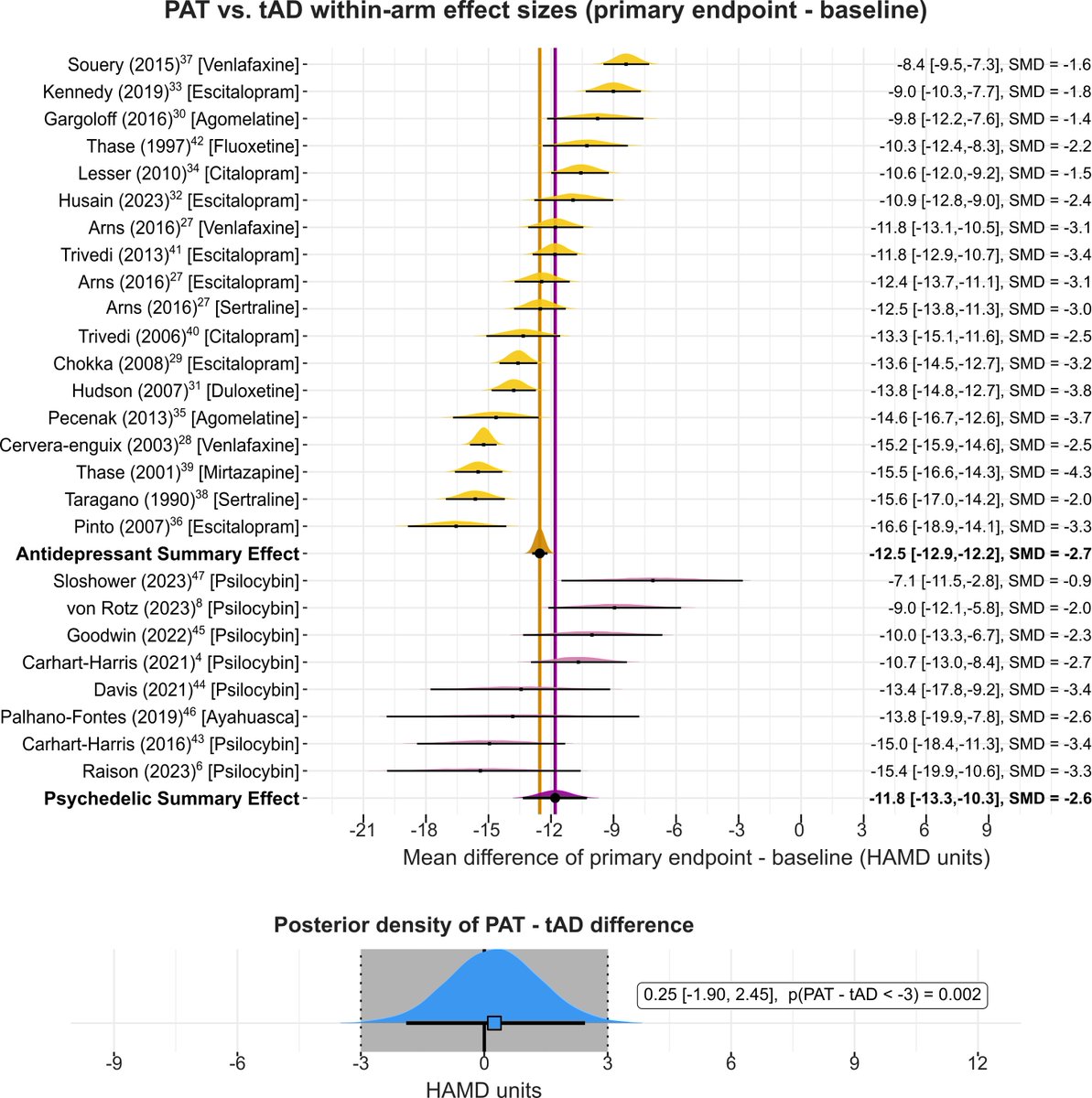
🚨MAJOR NEW PAPER 🚨 just out in @JAMAPsych : Psychedelic Therapy vs Antidepressants for the Treatment of Depression Under Equal Unblinding Conditions (tinyurl.com/yu2rbtaf). I am very proud of this one, was a lot of work for me - both co-first and last author! Eternal gratitude to co-first @QuantPsychiatry and twitterless Hannah Barnett! The premise is that it is biased to compare open-label trials (=where patients know what treatment they are getting) to blind trials (=where patients do NOT know what they are getting). Open-label trials would gain an unfair advantage by higher placebo response. Even formally blinded psychedelic trials are practically open-label as its obvious to distinguish placebo from 25mg of #psilocybin. In contrast, traditional antidepressants (SSRIs/SNRIs) trials are are close to be truly blind (Lin 2022). Given the bias of open-label vs. blinded comparison, we compared the efficacy of psychedelic-therapy (which is practically always open-label) vs. open-label antidepressants for the treatment of major depression. We tested 3 prior hypothesis: - There will be a significant difference between psychedelic-therapy vs. open-label antidepressants, favoring psychedelic-therapy. - There will be a significant difference between blinded and open-label antidepressants trials, favoring open-label. - There will NOT be a significant difference between blinded and open-label psychedelic-therapy, as practically they are always open-label. In contrast with our prior hypothesis, we did not find psychedelic-therapy to be more effective than open-label antidepressants (H1). Not only was the difference not clinically meaningful, but practically there was no difference at all. This finding means that antidepressants administered knowingly to patients, which is the case in real-life medical practice, is as effective as psychedelic-therapy. This result was robust across variations in study selection, including when we removed psychedelic-therapy trials on treatment-resistant depression. We also assessed the impact of blinding in both psychedelic-therapy and antidepressants trials. We found that for antidepressants (H2), but not for psychedelic-therapy (H3), open label is associated with better outcomes than blinded treatment. However, even in the case of antidepressants, the difference was practically small (~1.3 HAMD units). How come hypothesis 1 failed, i.e. that psychedelic-therapy is no ore effective than open-label antidepressants, given that antidepressants trials are famous for small drug-placebo difference (~2.4 HAMD units), while psychedelic-therapy trials reported large effects (~7.3)? The key factor is that in psychedelic trials the placebo response is about 50% relative to antidepressants, ~ 4 vs 8 HAMD units (Hsu 2024, Hieronymus 2025). This suppressed placebo response leads to an inflated between-arm difference, as the treatment arm is measured against a lower floor. The suppressed placebo response in psychedelic-therapy trials is likely attributable to the ‘know-cebo’ effect, i.e. the disappointment when patients realize they are in the control group. In psychedelic-therapy trials, this placebo suppression accounts for 4.0 / 7.3 ~ 55% of the specific treatment effect. In other words, ~55% of psychedelic-therapy’s effect is not explained by patient improvement after the treatment, but rather by the lack of improvement in the placebo group. In summary, we found that for the treatment of depression, psychedelic-therapy is no more effective than open-label SSRIs/SNRIs. Our results for psychedelics are twofold: psychedelic-therapy demonstrated a robust and large therapeutic effects (~12 HAMD units), which justifies optimism. On the other hand, psychedelic-therapy’s lack of superiority compared to open-label SSRIs/SNRIs highlights the influence of blinding integrity and argues against overly optimistic narrative's about psychedelic-therapy's potential.
Balázs Szigeti tweet media
English
24
62
226
67.8K
Chris Meechan retweetledi
Adam Hunt
Adam Hunt@RealAdamHunt·
"Modern species concepts, based on ecological niches, reproduction, and shared ancestry, all critically rely on Darwin’s theory of evolution. At a time when both classification manuals like the DSM and research frameworks like the Hierarchical Taxonomy of Psychopathology are proudly agnostic, the HPC view reminds us that successful classification may require strong theories"
JAMA Psychiatry@JAMAPsych

This narrative review suggests mental disorders are statistical clusters of biopsychosocial properties, not sharply defined categories, mirroring concepts in species classification and supporting dimensional #MentalHealth frameworks. ja.ma/4sJvGuj

English
0
2
9
781
Chris Meechan retweetledi
Jesus Ramirez-Bermudez
Jesus Ramirez-Bermudez@JRBneuropsiq·
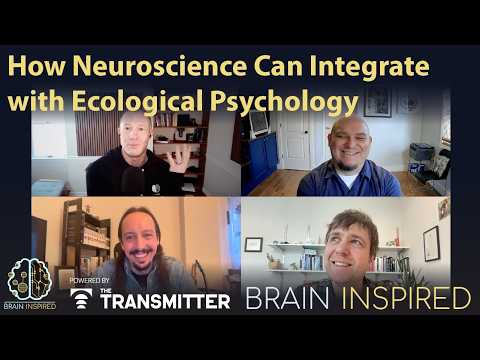
I enjoyed this discussion by @pgmid with Luis Favela, Vicente Raja, Matthieu de Wit. How Should Neuroscience Integrate with Ecological Psychology? Although stimulating, I didn't think this approach was truly "ecological". Externalist psychology, perhaps? youtube.com/watch?v=p987y_…
YouTube video
YouTube
English
0
1
9
970
Chris Meechan retweetledi
Allen Frances
Allen Frances@AllenFrancesMD·
Congratulations for bringing Emil Kraepelin back to life on the centenary of his death. Kraepelin was among best & worst contributors to psychiatry. Best for scientific rigor/Worst for reductionism & influence on Nazi psychiatrists. Remembering history helps us not repeat it.
George Ikkos@gikkos1

Open Access "Psychiatry after Kraepelin" has been published today 🙏 for excellent contributions @AllenFrancesMD @FemiMind @JRBneuropsiq @awaisaftab @BeresfordPeter @mariusturda and 🙏 @rcpsych (HoPSIG, PhilSIG) and 🙏@subodhdave for advance review link.springer.com/book/10.1007/9…

English
0
5
35
5.7K
Chris Meechan
Chris Meechan@ChrisMeechan2·
@JAMAPsych Fuzzy kinds, homeostatic property clusters and all that :)
English
0
0
2
292
JAMA Psychiatry
JAMA Psychiatry@JAMAPsych·
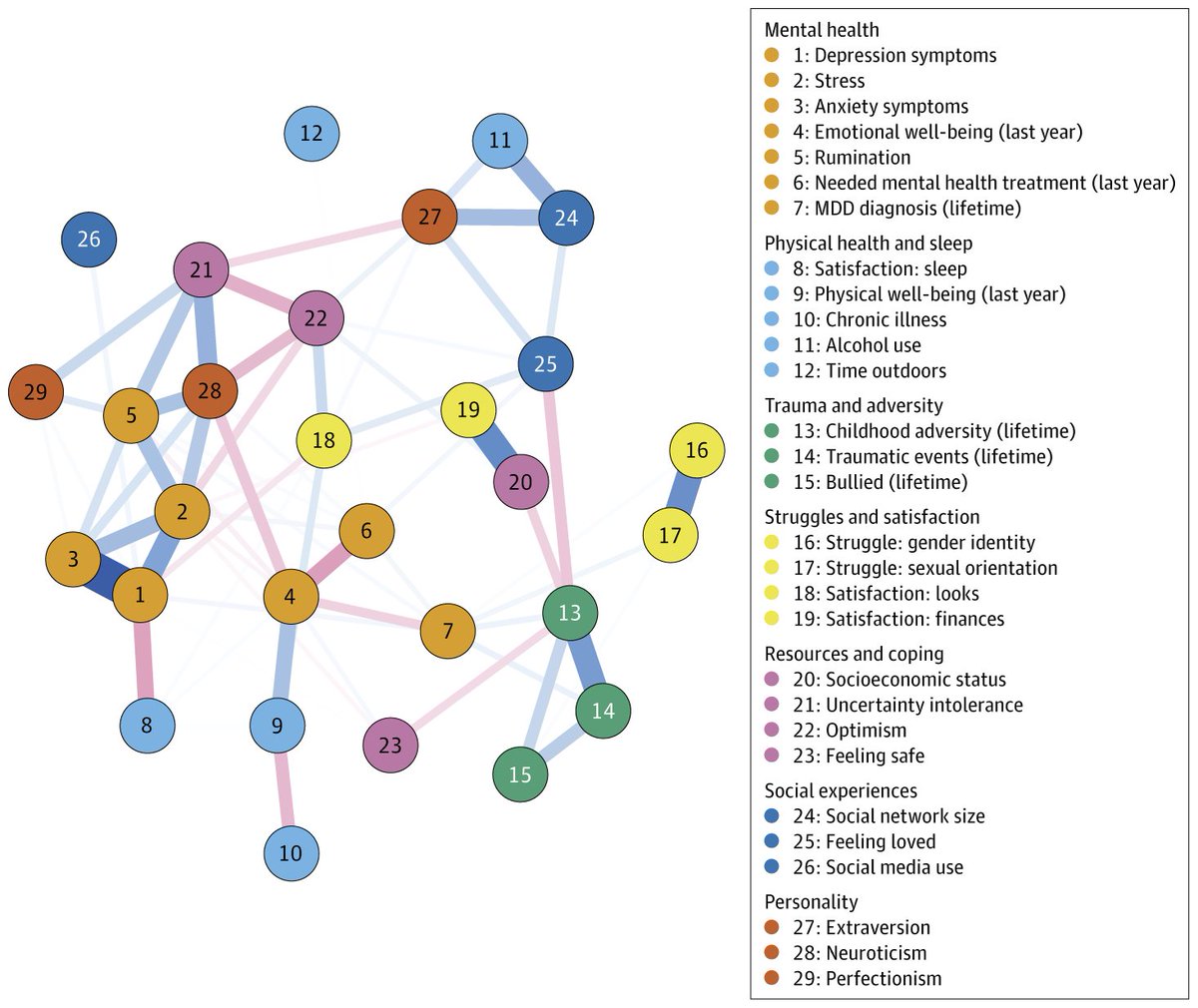
This narrative review suggests mental disorders are statistical clusters of biopsychosocial properties, not sharply defined categories, mirroring concepts in species classification and supporting dimensional #MentalHealth frameworks. ja.ma/4rrTJgk
JAMA Psychiatry tweet media
English
10
96
450
27.5K
Chris Meechan
Chris Meechan@ChrisMeechan2·
PhilSIG Drop-in online session: Phenomenology, psychoanalysis, and clinical practice. Wednesday 29 April 2026 Time: 12:00pm - 1:30pm 👇🏼 RCPsych Philosophy psychiatry events share.google/lRJkREfY8iJiDI…
English
0
0
0
39
Chris Meechan
Chris Meechan@ChrisMeechan2·
The book Waves of Hope: Personal Stories of ECT, has won the 'Clinical Psychology and Psychiatry' category at the prestigious Association of American Publishers Awards for Professional and Scholarly Excellence (PROSE). rcpsych.ac.uk/news-and-featu…
English
0
0
0
31