.@JamesLavish: When you're drowning in debt, you only have 4 doors.
Door 1: Cut spending. DOGE tried. They couldn't touch Social Security, Medicare, Medicaid, or defense. Overwhelming.
Door 2: Raise taxes. Laffer curve kills productivity. Doesn't work.
Door 3: Default. Destroys your currency. Never happening.
Door 4: Print more money. The easiest door.
... which one do you think the U.S. is going to choose?
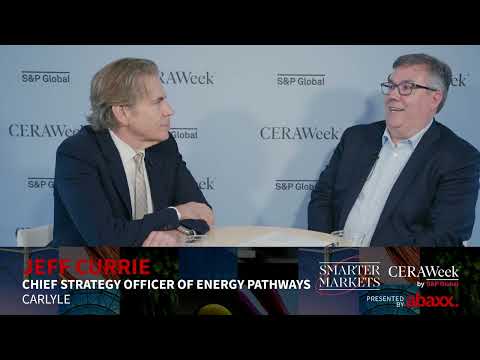
Jeff Currie: "Buy the rumour and really buy the fact now".
Fun starts mid to end April once existing inventory and SPR runs out.
youtu.be/FJ2F1HJX4-o?si…
@pkoutrom@DSBatten The US government didn’t “seize Bitcoin” the same way a bank freezes an account. They seized access to private keys (or forced custodians to hand them over).
Nonsense.
You can't mine stablecoins, so there goes all the ones related to environmental benefit. Nor are stablecoins (seizeable, freezable, censorable, middleman, centralized) a solution for the any of the human rights related usecases in the global south.
bitcoinmagazine.com/politics/bitco…
Eskom’s overbuilding of power stations in the 1970s and 1980s created an unsustainable era of cheap electricity that was followed by decades of underinvestment, ultimately resulting in South Africa’s load-shedding crisis and soaring power prices.
dailyinvestor.com/energy/126259/…
Hormuz is a weapon that can only be fired once
No one should expect a quick resolution to the current crisis, but across the next decade, even the next 3-5 years, the choke point of Hormuz will be massively substituted for
The Gulf Arab states are all very rich, with high per capita GDP - the best single measure of relative state capacity - easy access to global markets, especially financial, and have the favorable backing of the US
Everyone has known about the Hormuz vulnerability for decades. The Iranians have continually hinted around closing it, but never did. Now they have, but Hormuz is a gun that cannot be reloaded.
Deterrents work only up to the point of use. Once used, they have failed. The purpose of a deterrent is to *not* be used
Many analysts have made this basic mistake. They think that Iran is now in a position of strength, having exercised its Hormuz option. But the opposite is true. A state is weakest after it has used its deterrent. The cost of that deterrence is now priced in. The worst having been done, the targets of the deterrent are now free to make other arrangements. Before, they were reluctant to do so because of the switching costs. Now, they have no choice; they will not allow themselves to be controlled in this way again
Hormuz may never reopen. But the importance of this is a depreciating asset.
If the US is asking European and Asian allies to send their navies to the Strait of Hormuz, they should consider demanding an immediate cessation of all US tariffs on them in return. I don't think Trump would hesitate to make that demand, if the situations were reversed.
Why don’t they just tokenize the oil in the Middle East and transport it across permissionless financial rails, thereby avoiding the Strait of Hormuz altogether
Given the structure of SA’s economy, the ZAR is too strong for broad-based international competitiveness in the manufacturing sector.
Excl. precious metals, the merchandise trade balance has generally been in a deficit of about R100bn-R200bn p.a. for the last 20 years.
The peculiar tragedy of BTC is not that it failed to conquer the world, but that it abandoned the only weapon with which conquest is possible: utility. An asset that exists merely to be hoarded is not a revolution; it is a trinket. And trinkets, however feverishly admired in their season, are eventually relegated to drawers beside obsolete toys and forgotten enthusiasms.
Speculation is not a foundation. It is a mood. Moods shift. Prices flutter. Crowds chant and disperse. What remains, when the applause fades, is the question no one in the frenzy wishes to ask: what is it for?
If BTC is nothing more than an object of collective fixation—a digital heirloom to be admired and withheld—then it stands in the same category as every fashionable collectible that mistook temporary obsession for destiny. Markets can be entertained; they cannot be sustained on boredom. An instrument that does not do anything except appreciate in theory will, in practice, depreciate in interest. Human beings require purpose, not merely price.
The irony is severe. The only durable justification for BTC is use at scale—broad, relentless, transactional relevance. A system that processes commerce, settles obligations, and embeds itself into the daily mechanics of trade possesses an argument. A system that limits itself into fragility possesses only a slogan.
Narratives alone cannot compensate for contraction. One may proclaim digital gold, pristine collateral, immaculate scarcity—but scarcity without function is merely absence. To claim the future of finance, one must be capable of handling finance. To promise replacement, one must be structurally equipped for expansion. Grandeur of language cannot substitute for throughput.
The great error was to sacrifice capacity for mythology and then expect mythology to behave like infrastructure. Infrastructure demands scale. Scale demands engineering choices that privilege growth over aesthetic restraint. When scale is deliberately constrained, the claim to inevitability becomes theatre.
People do not remain enthralled by inert objects indefinitely. They require a story, yes—but a story anchored in observable power. They must see why it surpasses existing systems, how it renders them obsolete, and by what mechanism it absorbs their functions. Without that, the tale collapses into circular reasoning: it is valuable because it is valuable.
A monetary system—if one dares to use the term—must earn its permanence through relentless utility. Without transactional dominance, without practical superiority, without the capacity to carry the weight of global commerce, it is not a challenger to finance. It is a collectible with aspirations.
And collectibles, however fervently defended, eventually meet the indifference of time.