
Sreejith PP

283 posts

Sreejith PP banner
Sreejith PP

Sreejith PP

@ppsreejith_

Co-Founder & CTO https://t.co/Qfrg8WflAR (YC S24). Ex-Facebook, GoJek

San Francisco, California Katılım Nisan 2010
400 Takip Edilen498 Takipçiler
Sabitlenmiş Tweet
Sreejith PP
Sreejith PP@ppsreejith_·
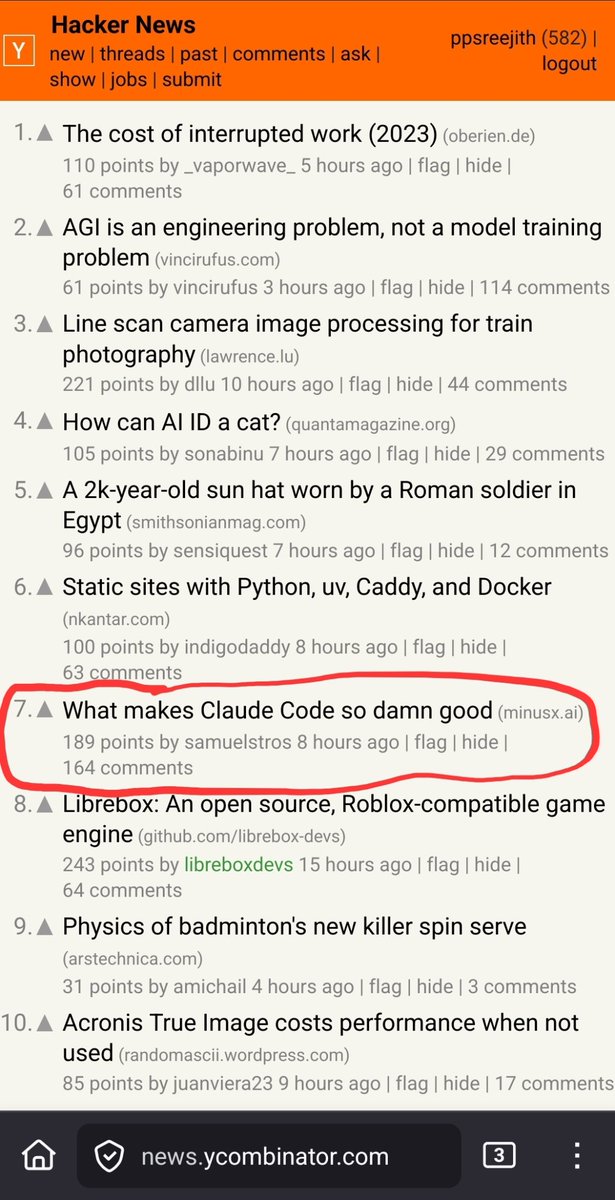
Lessons from reverse engineering Claude Code on how to recreate it's magic in other domains. Many posts on Claude Code internals aren't very actionable and often seem like AI generated data dumps. We analysed our own usage data over the last 2 months, evaluating it before incorporating it into our agent. Now @nuwandavek has distilled what's worked into some actionable heuristics that practitioners should find super useful :)
Vivek Aithal@nuwandavek

how is @claudeai's claude code so damn good and how can you recreate its magic in your own llm agent/workflow? intercepted all cc calls over the last few months and wrote up a 2k word guide on this! (all prompts, tools linked in comments) main takeaways (0/3): 0. debuggability >>> everything else. most of the magic is in designing good (low and high level) tools and prompts to let the model shine. keep it simple

English
2
1
11
2.3K
Sreejith PP
Sreejith PP@ppsreejith_·
@badlogicgames Fwiw, we've been seeing improved performance for multi-edits on files for some time now on our internal evals and switched over to it. Much faster for non co-located edits: #L329" target="_blank" rel="nofollow noopener">github.com/minusxai/minus…
English
0
0
5
83
Mario Zechner
Mario Zechner@badlogicgames·
People of pi. Do you feel experimental? Want to try a new edit tool? Stuff this into your ~/.pi/agent/extensions folder. Use it with your preferred model(s) for a while. Report back if it works. Example: GPT 5.4 prefers rewriting entire files sometimes over doing multiple small edits. This mostly solves this for me. gist.github.com/badlogic/30c35…
English
12
11
242
34.8K
Vivek Aithal
Vivek Aithal@nuwandavek·
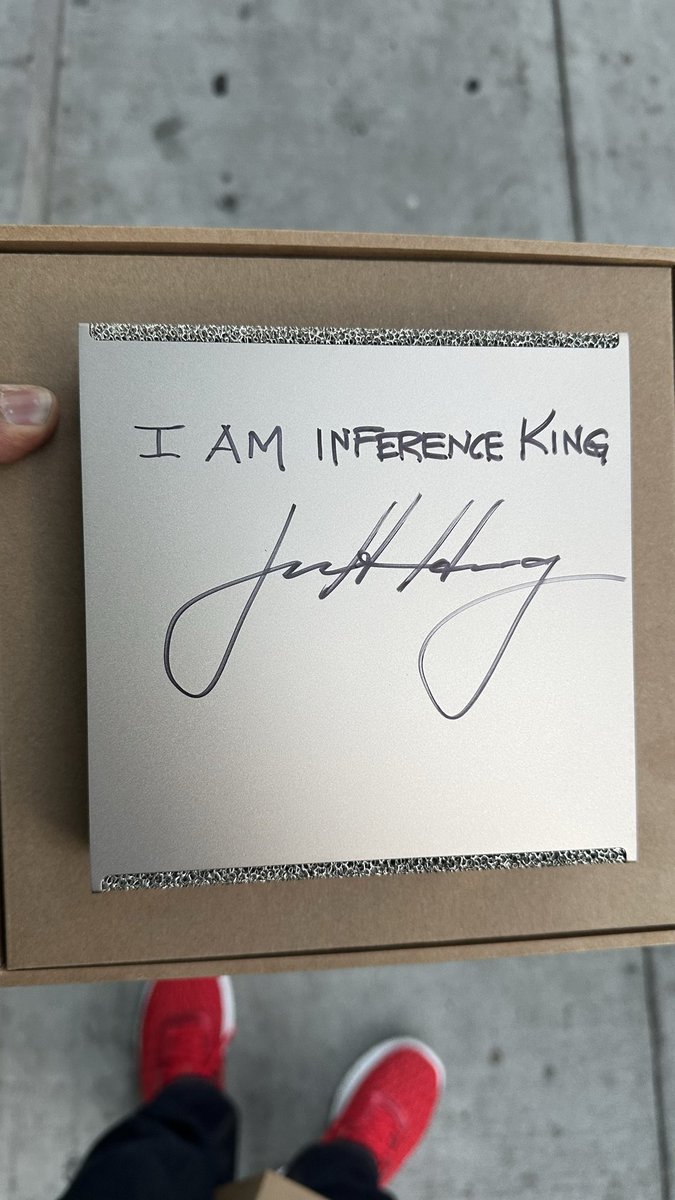
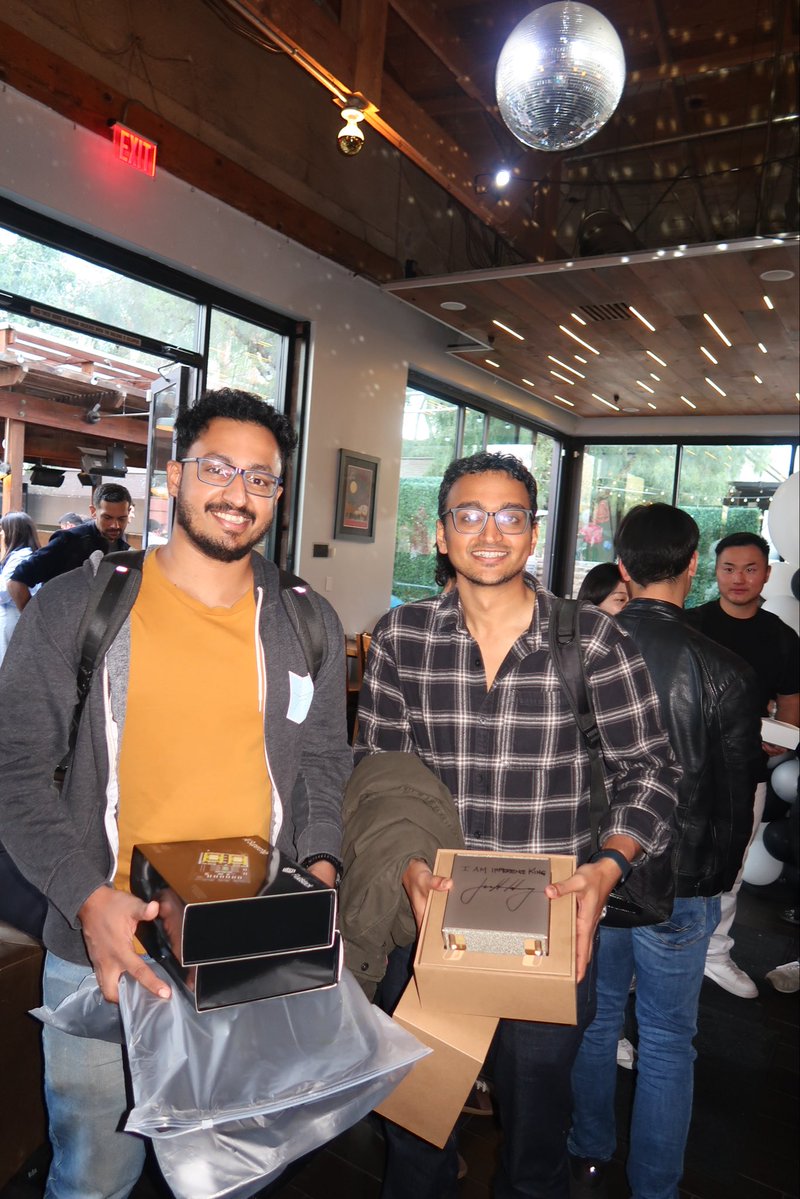
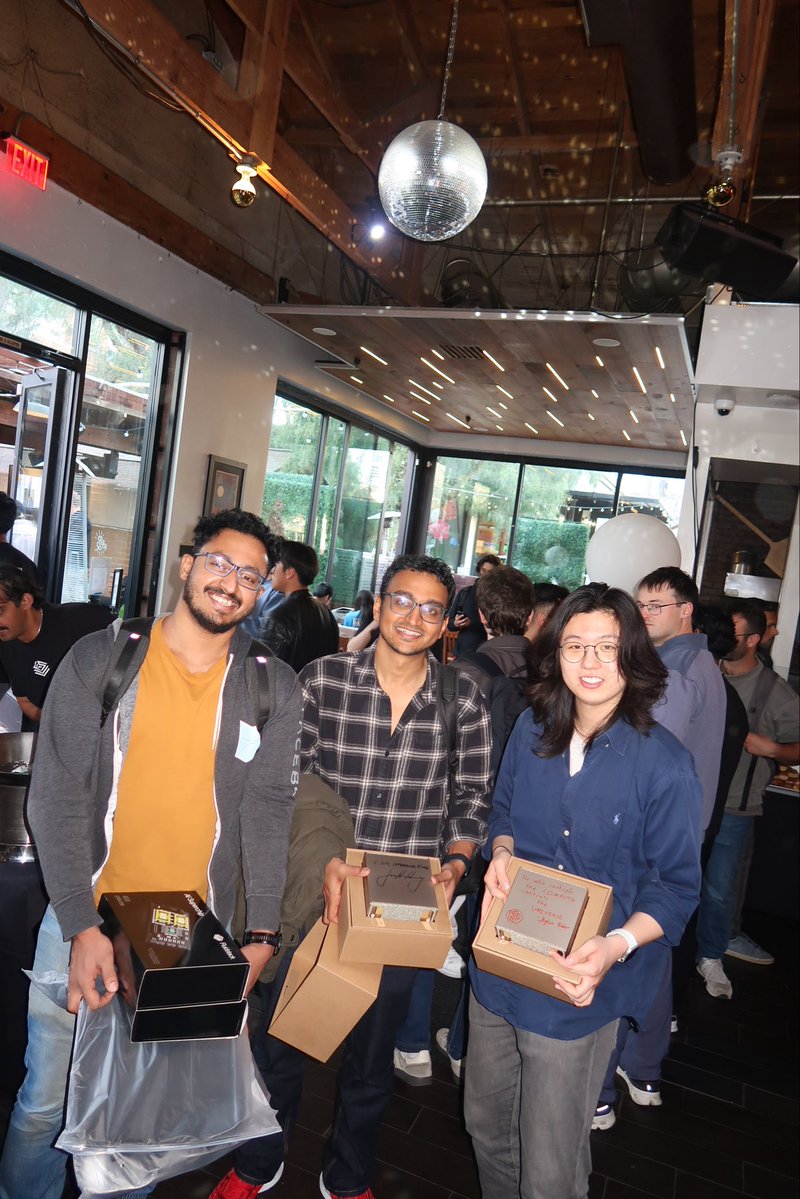
won the @SemiAnalysis_ @fluidstack hackathon and got a beautiful Jensen signed DGX spark! we built a toy distributed GPT training stack over webgpu - go to a website on your browser and contribute gradients! (blogpost coming soon) an afternoon well spent @ppsreejith_ :)
Vivek Aithal tweet media
SemiAnalysis@SemiAnalysis_

Winners have been crowned. 🏆 🥇 [1ST PLACE] 🥈 [2ND PLACE] 🥉 [3RD PLACE] Incredible builds from an incredible group. Thank you Fluidstack for making this happen at #GTC2026🔥 @dylan522p

English
10
2
46
6.6K
Sreejith PP retweetledi
Chris 🇨🇦
Chris 🇨🇦@llm_wizard·
What it’s like at GTC, just casually run into the winners of @SemiAnalysis_ hackathon with the SIGNED Spark. Vibes in the city: Hype AF
Chris 🇨🇦 tweet media
English
3
2
32
1.3K
Sreejith PP
Sreejith PP@ppsreejith_·
Day well spent indeed! Hacking together a browser based distributed GPT training stack with @nuwandavek (& Winning!) And what a pleasure it was to meet @dylan522p after listening to his podcast on the way to the hackathon! Such a fun hackathon @SemiAnalysis_ @fluidstack :)
SemiAnalysis@SemiAnalysis_

Winners have been crowned. 🏆 🥇 [1ST PLACE] 🥈 [2ND PLACE] 🥉 [3RD PLACE] Incredible builds from an incredible group. Thank you Fluidstack for making this happen at #GTC2026🔥 @dylan522p

English
1
1
9
370
Sreejith PP
Sreejith PP@ppsreejith_·
@levelsio Perhaps "The Great Firewall" deserves some credit for helping to create a thriving software industry for 1B+ people. The jobs & local clusters of core Infra & ML research that developed would definitely help startups (especially the deep tech ones).
English
0
0
0
46
@levelsio
@levelsio@levelsio·
I just realized the only 2 countries left with actual substantial startup activity now are literally only the US and China The rest of the world can't really do startups, doesn't have the funding, can't grow them and it's more like performative hobby projects for their governments Which might tell us where the future wealth will be concentrated in the world
@levelsio tweet media
English
1K
820
11.8K
1.4M
Sreejith PP
Sreejith PP@ppsreejith_·
@dwarkesh_sp Great book! An alternative explanation for the Cambrian explosion of diversity (especially hard shells) is the evolution of vision (rather than oxidation) as explained in the book "In the blink of an eye" by Andrew Parker.
English
0
0
0
158
Dwarkesh Patel
Dwarkesh Patel@dwarkesh_sp·
Notes from Chapter 1 of The Vital Question by future guest Nick Lane. In the intro he lists out the motivating questions: Why are bacteria so relatively simple despite being around for 4 billion years? Why is there so much shared structure between all eukaryotic cells despite the enormous morphological variety between animals, plants, fungi, and protists? Why did the endosymbiosis event that led to eukaryotes happen only once, and in the particular way that it did? And why is all life powered by proton gradients? Nick says all these questions are connected. Chapter 1: Lane says there’s 2 different philosophies on what bottlenecks evolutionary exploration: the niches made available by the environment, OR the internal structure necessary to exploit those niches. Textbook view is that the environment constrains exploration, whereas structure is flexible and can accommodate once the right environment is in place. Nick Lane thinks it’s the opposite. There’s been 2 big oxidation events - the first one (2.4 billion years ago) paved the way for eukaryotic cells. The second one (600 million years ago) led to the Cambrian explosion, resulting in all the variety in animals and plants and other complex life we see. So it seems the environment is central. Once you get a bunch of oxygen up in the air and into the oceans, you can start making all kinds of cool shit. But hold on. Here's what you'd expect to see if the environment was the key constraint: With this key unlock of aerobic respiration, different brands of bacteria independently evolve towards greater complexity to fill the new niches opened up (one masters osmotrophy and branches off into fungi, another photosynthesis, another phagocytosis, etc). However, you don’t see this. Instead you see that all complex life emerges from a single common eukaryotic ancestor (2.2 billion years ago). There is no independent convergent evolution towards this kind of complexity (bacteria have had 4 billion years to evolve this kind of complexity, and have stayed remarkably similar through the whole time). In fact, once you do get this key structural unlock, eukaryotic organisms proliferate widely, filling niches ranging from 100 feet long blue whales to 0.8 meter long picoplankton. What’s more: - The amount of shared structure between all eukaryotic cells is remarkable. They have almost all the same organelles and components. Nick writes: “Most of us couldn’t distinguish between a plant cell, a kidney cell and a protist from the local pond down the electron microscope.” - There’s no intermediate proto-eukaryotes, which have some, but not all, of the functionality available to eukaryotic cells. This is wild given how evolution works. We have an extensive record of the incremental upgrades between photoreceptive amoebas and mammalian eyes. Why don’t we have proto-eukaryotic cells which reproduce via meiosis but don’t have compartmentalized nucleuses, or have mitochondria but no cytoskeleton? Nick argues that the fact that no such subset of eukaryotic traits exists suggests that it is not structurally possible to survive with only some fraction of eukaryotic equipment - you need the whole package all at once. Obviously this raised the question of how the whole package was evolved at once. Which I think he will address in future chapters. Some questions for Nick: - If his view is that structure was the main bottleneck, and we’ve had eukaryotes for 2.2 billion years, then why didn't we have all these animals and shit for 2 billion years? Why did they only arise 600 million years ago (aka the Cambrian explosion)? - Nick argues that eukaryotic cells are a much more significant unlock than multi-cellularity. Multi-cellularity evolved independently dozens of times, but we only have evidence of one event like the emergence of the first eukaryotic cell. If multi-cellularity evolved independently so many times (between fungi, slime molds, algae, etc etc), do we see interesting differences based on the situations in which they evolved? Do they regulate the differentiation of cells, the organization of the body differently, and communication between tissues differently? TODO look it up later. A tangential thought. This whole debate about whether structure or environment matters more seems analogous to the discussion in ML of whether architecture or data matters more. And there it seems like data is quite crucial, but for meta-learning and generality to kick off, the architecture has to make it possible for information to flow in the right way. For example, in context learning is a kind of meta-learning that arises only once the model has the capability to attend to hundreds of previous tokens, which became tractable with transformers.
Dwarkesh Patel tweet media
Dwarkesh Patel@dwarkesh_sp

Would be fun to do a reading club for books/papers I'm going through to prep for interviews (or just interested in reading regardless). Best way to organize? Twitter Live? Discord/Slack? Or just tweet thoughts and have people discuss in comments? Something else?

English
41
70
942
200.5K
Sreejith PP
Sreejith PP@ppsreejith_·
@nuwandavek @dementorSam +1 Never have I seen someone use a carrot as a stick till I met @dementorSam. Have personally seen him lock a friend in a luxurious room in the middle of a party at his place till they emerge hours later after shipping.
English
0
0
5
196
Devanshu Tak
Devanshu Tak@devanshutak25·
My sister @charu_tak and I are working on data visualization for 3dartists.in It is still very much a work in progress but I am really liking how it's turning out. Would you like to get your hands on this?
English
2
0
12
446
Sreejith PP retweetledi
Vivek Aithal
Vivek Aithal@nuwandavek·
minusx memory: minusx md i love using claude code and one of the main reasons it is so good is the ability to just state your preferences via claude md file. but this is totally absent in analytics, where the problem is 100x worse - custom definitions, custom metrics, specific slices you want to see, etc.
Vivek Aithal tweet media
English
1
1
10
1.6K
Sreejith PP
Sreejith PP@ppsreejith_·
Between work, in rare moments of abyss-staring I think of this poem by an anonymous fan of Nick Land's "Hell Baked" and it reminds me to be grateful See endless forms most beautiful Arise from chance and constant strife. Descent with virtues mutable Gives grandeur to this view of life. Like waxing love between two lovers, All Life becomes what it discovers: The algae learn to coat the sloth As grimy soot makes dark the moth. But barren death a creature’s fortune? And where went all the slow gazelles? Behind each splendid yoke of cells, A billion years of live abortion. As sharp teeth shaped the spiral shell, All worthy things were built in Hell.
English
1
0
2
312