Anonymous 🕗

44.5K posts

Anonymous 🕗 banner
Anonymous 🕗

Anonymous 🕗

@prasunchat

Hello World. My hobbies include sitting on the couch & looking at my phone. I know everything about nothing & nothing abt everything. सभी विचार व्यक्तिगत हैं |

भदावर क्षेत्र /ଭୁବନେଶ୍ୱର Katılım Nisan 2011
1.5K Takip Edilen2K Takipçiler
Anonymous 🕗
Anonymous 🕗@prasunchat·
@VaibhavSpace @SamaHoole Sir, happy to work with you. Would it make sense if we come to you with our ppt slides before for help? I am a PhD student and make these dense seminar presentations regularly. How much time does it take per slide?
English
2
0
1
35
Sama Hoole
Sama Hoole@SamaHoole·
India ran the most important cardiovascular study of the 20th century by accident, and then immediately forgot about it. In 1967, Dr. S.L. Malhotra published a study in the British Heart Journal examining heart disease rates among 1.5 million Indian railway employees. The population was extraordinarily useful for research purposes: same employer, same healthcare access, comparable income and working conditions, spread across the entire country. The only meaningful variable was geography. Which meant diet. North Indian railway workers: Punjab, Rajasthan, UP, ate a diet built around ghee and dairy fat. They consumed up to 19 times more fat than their southern counterparts. The fat was primarily saturated: clarified butter, milk fat, the short-chain saturated fatty acids that Ancel Keys had recently been telling the Western world were arterial death. South Indian railway workers ate a diet based on rice, sambar, and seed oils: groundnut oil and sesame oil, primarily. They ate considerably less fat overall. By the standards of dietary advice being formulated in the 1960s, they should have been the healthy ones. Heart disease mortality in South India: 135 per 100,000. Heart disease mortality in North India: 20 per 100,000. Seven times higher in the population eating seed oils. Among railway sweepers specifically, the lowest-paid, most physically active workers, the gap was even wider. Heart disease was fifteen times more common in the South Indian sweeper population than in the North Indian sweeper population. Malhotra controlled for everything he could reach: smoking, where Northerners actually smoked more. Activity levels, where the relationship was inconsistent. Socioeconomic status, where executives died more often than sweepers regardless of region. He found no variable that explained the gap except the type of fat in the diet. He published the data. In a peer-reviewed journal. In 1967. The study was cited periodically, acknowledged as methodologically interesting, and then set aside. The decade in which Malhotra published was the decade in which Ancel Keys's fat hypothesis was being converted into policy. The American Heart Association was issuing guidance recommending polyunsaturated vegetable oils as replacements for saturated animal fats. The food industry was producing seed oils at industrial scale. The infrastructure of seed oil promotion was being built, expensively and with great institutional momentum. A study showing that populations eating animal fat had a fraction of the heart disease of populations eating seed oils was not, in that context, a study that anyone particularly wanted to follow up. Nobody followed up. Almost sixty years later, the finding stands unrefuted in the literature. It is not in the dietary guidelines.
Sama Hoole tweet media
English
206
2.8K
8.7K
473.2K
Sony Thăng
Sony Thăng@nxt888·
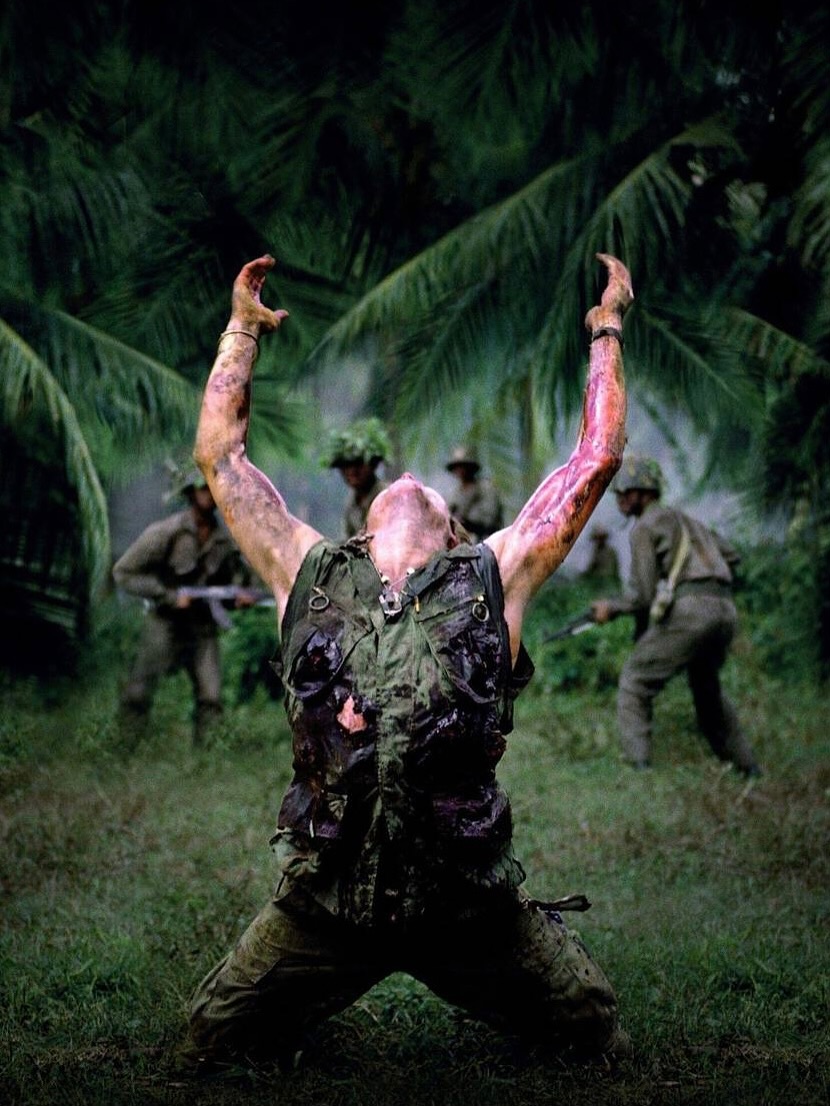
There is a mythology the U.S. built around the American War in Vietnam. It goes like this: Young idealistic soldiers were sent into an unwinnable situation by confused politicians. They came home broken and unappreciated. It was a tragedy. A mistake. A lesson learned. Notice what that story does. It centers Americans. Their trauma. Their confusion. Their homecoming. Their feelings. In this story, the Vietnamese people are a backdrop. A jungle. An obstacle. An abstraction. Three million dead Vietnamese people are the scenery for a story about American self-discovery. They made hundreds of movies about Vietnam. The Deer Hunter. Apocalypse Now. Platoon. Full Metal Jacket. Born on the Fourth of July. Hamburger Hill. Count how many of them center a Vietnamese character with a full human life, a family, a name you remember after the credits roll. They turned our genocide into their coming-of-age story. They lost the war and still managed to make themselves the main character. And then, with extraordinary arrogance, they put their soldiers' names on a wall in Washington and call it a memorial, as if the dead to be mourned were the people who flew 10,000 miles to do the killing. Where is the wall for our three million? There isn't one. Because in their telling, we were never quite real enough to mourn.
Sony Thăng tweet media
English
644
5.7K
14.9K
279.4K
Anonymous 🕗
Anonymous 🕗@prasunchat·
Only way to secure our energy security is to occupy an oil nation with low population and borders opening towards our own seas.
English
0
0
0
9
Anonymous 🕗
Anonymous 🕗@prasunchat·
References: Bhatnagar, P. (2004). Dating the era of Lord Ram. Rupa & Co. Oak, N. N. (2014). The historic Rama: Indian civilization at the end of Pleistocene. CreateSpace. Vartak, P. V. (Astronomical references in multiple scholarly analyses of Ramayana planetary positions).
English
0
0
0
17
Anonymous 🕗
Anonymous 🕗@prasunchat·
Shri Ram's birth (Chaitra Shukla Navami) via Valmiki Ramayana could be: 10 Jan 5114 BCE (Bhatnagar, 2004), 4 Dec 7323 BCE (Vartak, per analyses), OR 29 Nov 12240 BCE (Oak, 2014).
Eesti
1
0
0
24
Anonymous 🕗 retweetledi
Math Files
Math Files@Math_files·
Why did the US ban this number in 2001? It sounds insane, but 25 years ago, the Motion Picture Association of America was genuinely trying to delete this number from the internet. You see, back in 1999, a teenager in Norway named Jon Lech Johansen wrote a piece of code called DeCSS. It cracked CSS, the encryption on DVDs. Suddenly, anyone could copy a movie with the click of a button. It was a nightmare for the movie studios. They went nuclear. They sued the hacker magazine 2600: The Hacker Quarterly. They threatened Slashdot, and their lawyers fired out cease-and-desist letters to anyone hosting the code. They called it a digital burglary tool. But the internet found a loophole. A computer scientist named Phil Carmody realized that computer code is just binary ones and zeros. And you can treat that string of binary as a single number. That way, you get a really, really big integer—which is the illegal code. But Carmody knew that just finding any number wasn’t going to be enough, because the government could still ban a random number. So he needed a number that science would be forced to protect. He needed a prime number. You see, the University of Tennessee maintains a prestigious academic database called the Prime Pages. It records the 5,000 largest known prime numbers. Carmody realized that if he could turn the illegal code into a record-breaking prime number, the university would have to publish it. His first attempt was 1,401 digits long. It was prime, but too small. It didn’t crack the top 5,000 list. It wasn’t mathematically interesting enough to save. So, he hacked the math. Use this formula: K × 256^N + B Now, K is the illegal code part. 256^N is the mathematical equivalent of adding useless zeros at the end—like making a book longer by adding blank pages. It doesn’t change the actual content inside. So, he kept adding “blank pages,” shifting the number, until he hit a mathematical jackpot—a 1,959-digit monster. This wasn’t just illegal code anymore. It became the 10th largest ECP prime number ever discovered at the time. It was checkmate. The number was immediately added to the university database. For the MPAA to ban the code now, they would have to order a university to delete a scientific record. You can’t censor mathematics.
Math Files tweet media
English
95
963
8.2K
769K
Anonymous 🕗 retweetledi
Sheetal Chopra 🇮🇳
Sheetal Chopra 🇮🇳@SheetalPronamo·
Keeping the dharma Alive 🔱 This is not India This is Navratri celebration in Thailand where they celebrate the festival just like us Jayatu sanatan 💪🔥
English
67
2.5K
11.4K
75.8K
Anonymous 🕗 retweetledi
News Algebra
News Algebra@NewsAlgebraIND·
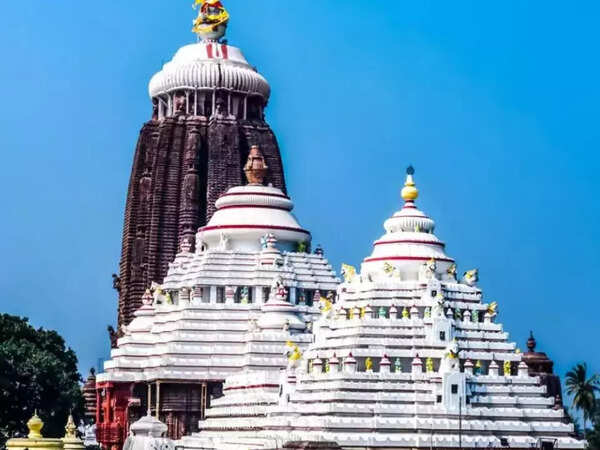
BIG NEWS 🚨 GPR survey discovers an ancient city beneath Odisha's temple town Puri 😳 Scientists have identified another structure, suspected to be a secret tunnel linking Jagannath Temple to the sea. Around 43 potential heritage sites have been identified across multiple locations 🔥 Artefacts and major structures, including a 30-foot wall and a large chamber, have been detected. Survey data also hints at a possible underground passage towards the sea 🤯
News Algebra tweet mediaNews Algebra tweet media
English
49
1K
6.7K
148.3K
Anonymous 🕗 retweetledi
LaughBreak: Dad Jokes ‘N More
A blind man accidentally walks into a ladies’ bar. He finds his way to a stool, sits down, and orders a drink. After a while, he calls out to the bartender, “Hey, you want to hear a blonde joke?” The bar goes completely silent. In a deep, husky voice, the woman next to him says, “Before you tell that joke, sir, you should know a few things…” “First, the bartender is blonde. Second, the bouncer is blonde. Third, I’m a six-foot-tall, 200-pound blonde with a black belt in karate. Fourth, the woman next to me is blonde and a professional weightlifter. And fifth, the lady to your right is blonde and a professional wrestler.” She pauses. “Now think carefully… do you still want to tell that joke?” The blind man sits quietly for a moment, then shakes his head. “Nah… not if I’m going to have to explain it five times.”
English
163
1.7K
37.4K
1.3M
Anonymous 🕗 retweetledi
.
.@LBGamestips·
Iran 🇮🇷 just released this emotional video I don’t think they are stopping until all their objectives have been met
English
2.2K
27.7K
98.3K
6.3M
Anonymous 🕗 retweetledi
GemsOfINDOLOGY
GemsOfINDOLOGY@GemsOfINDOLOGY·
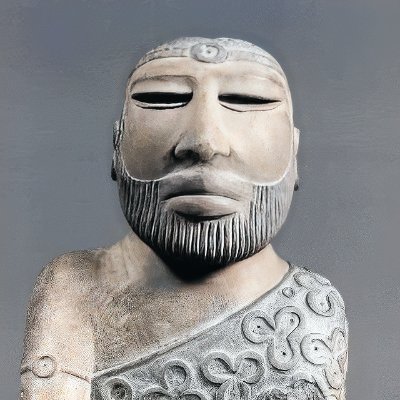
Millions died at Harappa. We found 300 bodies. That is not bad archaeology. That is deliberate erasure. At Harappa, Mohenjo-daro, Rakhigarhi: • thousands lived • only a few hundred burials found Do the math. Millions lived. Millions died. But the ground stays quiet. Archaeology calls it a problem. It isn't. It's a choice. Compare with Ancient Egypt: They preserved the body → built pyramids → anchored kings in stone. Indus did the opposite. No royal tombs. No necropolis. No "city of the dead." So where did the people go? Burned. Dispersed. Dissolved. Not lost. Removed. Fast forward. Rigveda → fire takes the body Ashoka → leaves pillars, not tombs Rajaraja Chola I → builds temples, not graves Pattern holds. Power survives. The body does not. Here's the real shift: Other civilisations → memory = corpse India → memory = system That changes everything. No bodies → no ancestral land claims No tombs → no dead kings ruling the present No accumulation → power must be renewed, not inherited This isn't absence. It's control. The Indus didn't forget its dead. It refused to keep them. And that is why the land is silent.
English
40
814
3.3K
118.5K
Anonymous 🕗 retweetledi
Savitri Mumukshu - सावित्री मुमुक्षु
And this is exactly the part we are almost never taught in our history books. This was during the time of the Gupta Empire which was a period we just casually label a “golden age,” but rarely try to study in depth. What made it golden wasn’t just their spectacular art, mathematics, or literature. It was the fact that a fully functioning administrative system existed where state, society, and dharmic values aligned to create real convenience and security for the common people when they travelled. What Faxian describes are not some isolated acts of charity - it’s about an entire system that he observed firsthand. A Hindu civilization where public welfare was not just an arbitrary afterthought for political expedience, but built into the very fabric of governance and society. What stands out here is not just the generosity, but the consistency of having rest houses spaced across highway routes, provisions ensured, and support extended even in “out-of-the-way” places. Unless the regime had administrative vision, social coordination, and a deeply internalized sense of Dharmic duty - how would this be possible? The Guptas were inspired greatly by the Mauryan empire and many of their public welfare systems were modeled on Kautilya’s Arthashastra But we are not taught even a fraction of what capable, forward-thinking administrators these rulers were or how sophisticated their systems of public welfare were. Instead we are taught nonsensical, fawning babble about Sher Shah Suri & Mughals building all our highways and introducing resthouses “Sarais”, as if Indians never had any of these before the benevolent Ghazis civilized us. The history we are taught is a joke
Savitri Mumukshu - सावित्री मुमुक्षु tweet media
John Oldman@PrasunNagar

During his travels in the early 5th century to India, Chinese pilgrim Fa-Hien mentions 'Rest-Houses' built every few kms. Hers is what he has to say: "Rooms with bed and mattresses , food and clothes are provided for resident and travelling monks without fail; and this is the same in all places." " They ( people) further seek salvation by building alongside out-of-the-way roads, Homes of Charity, where food, drinks and clothes are offered to travellers." The accommodation was free of cost, including food because these were public endowments.


English
18
512
1.2K
21.7K
GAIL (India) Limited
GAIL (India) Limited@gailindia·
Powering homes. Moving cities. In line with the latest government mandate dated March 9, 2026, GAIL is stepping up to ensure that domestic PNG and CNG users receive first-priority allocation. By prioritizing your kitchens and your vehicles, we aren't just delivering gas; we are supporting urban mobility and India’s transition to a cleaner, blue economy. Excellence in service, dependability in supply. @HardeepSPuri @TheSureshGopi @neerajmittalias @PetroleumMin
GAIL (India) Limited tweet media
English
2
1
9
490
Anonymous 🕗 retweetledi
Parimal
Parimal@Fintech03·
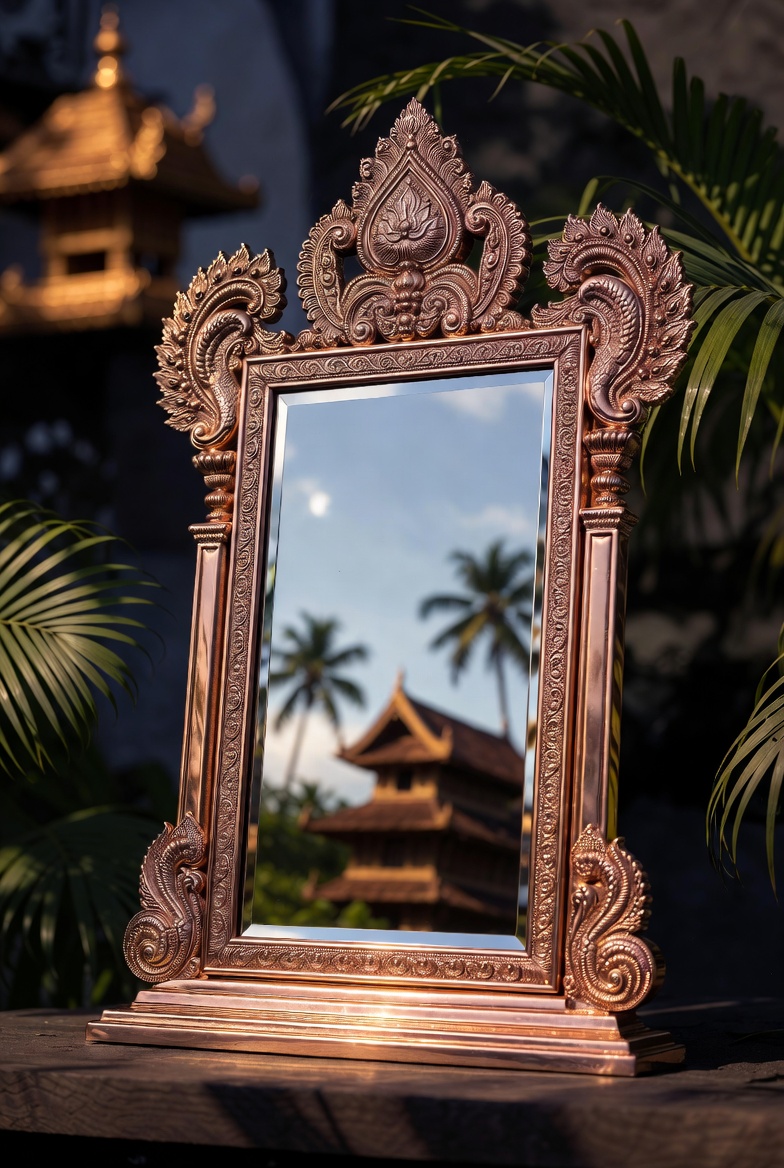
In a small village in Kerala, they make the Aranmula Kannadi: a mirror made of metal, not glass. The legend is that the King of Pandalam summoned the master bronze smiths to create a new crown for the Aranmula Parthasarathy Temple within 3 days cos the existing 1 had cracked. The smiths were struggling with the alloy's proportions until, according to lore, the head craftsman's wife had a dream. She suggested a specific, high-tin ratio. When the crown was cast, it did not just shine; it reflected like a pool of water. The artisans realized they had discovered a way to turn solid metal into a reflection. They soon transitioned from making idols to crafting the Vaal Kannadi (handheld mirror) for royalty. Unlike a glass mirror where light reflects off the back (causing ghosting), this metal mirror reflects off the Front Surface. It is a specific alloy of Copper & Tin (Speculum metal). But the secret is not the ratio (~33% Tin); it is the Cooling Rate. The alloy is cast in a way that creates a Delta-Phase Bronze crystal structure. If the cooling is off by even a few mins, the metal becomes brittle & dull. Aranmula casting produces a polycrystalline material (mixture of phases & grains), albeit with optimized texture. It is an impressive ancient feat of metallurgical control.
Parimal tweet media
English
28
459
1.9K
43.1K
Anonymous 🕗
Anonymous 🕗@prasunchat·
@Tejashyyyyy Auction is pure free-market valuation in sport. DRAMA=>Players get life-changing, transparent pay based on real DEMAND. equal purse = no auto-dynasties like NFL Draft slots rigged by bureaucrats. drama fuels global viewership, broadcaster billions → higher SALARIES!
English
0
0
0
410
Tejash
Tejash@Tejashyyyyy·
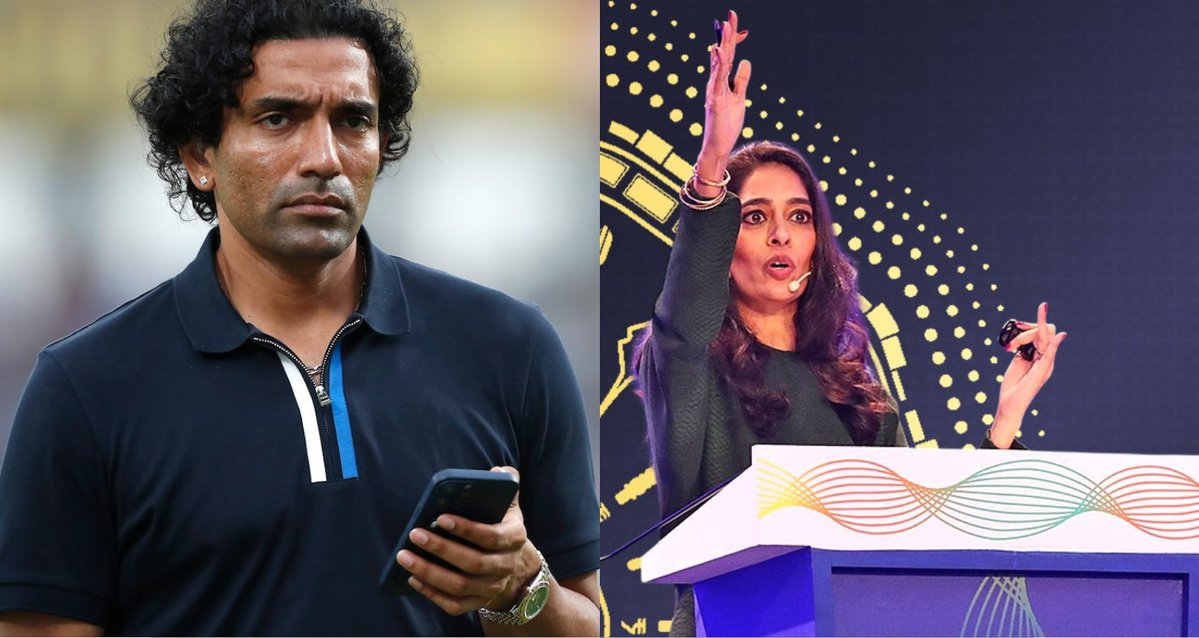
🚨 Shocking statement from Robin Uthappa about IPL auction: We should stop the auction system in cricket. I understand its importance when it first started, you wanted it to grab attention and become a big hit. But in today’s date, you don’t want to sell humans like commodities or have them go under the hammer. If you look at American sports like the NFL and NBA, they have a draft system, which makes things more interesting. Yet we are still sticking to the auction because it’s entertaining. However, there is a limit to entertainment, and it feels like we’re crossing that line. We need to bring that respect back into our society and communities. There is a semblance of respect and we don't sell them as commodities on national television.
Tejash tweet media
English
280
365
6.1K
763.9K
Anonymous 🕗 retweetledi
GemsOfINDOLOGY
GemsOfINDOLOGY@GemsOfINDOLOGY·
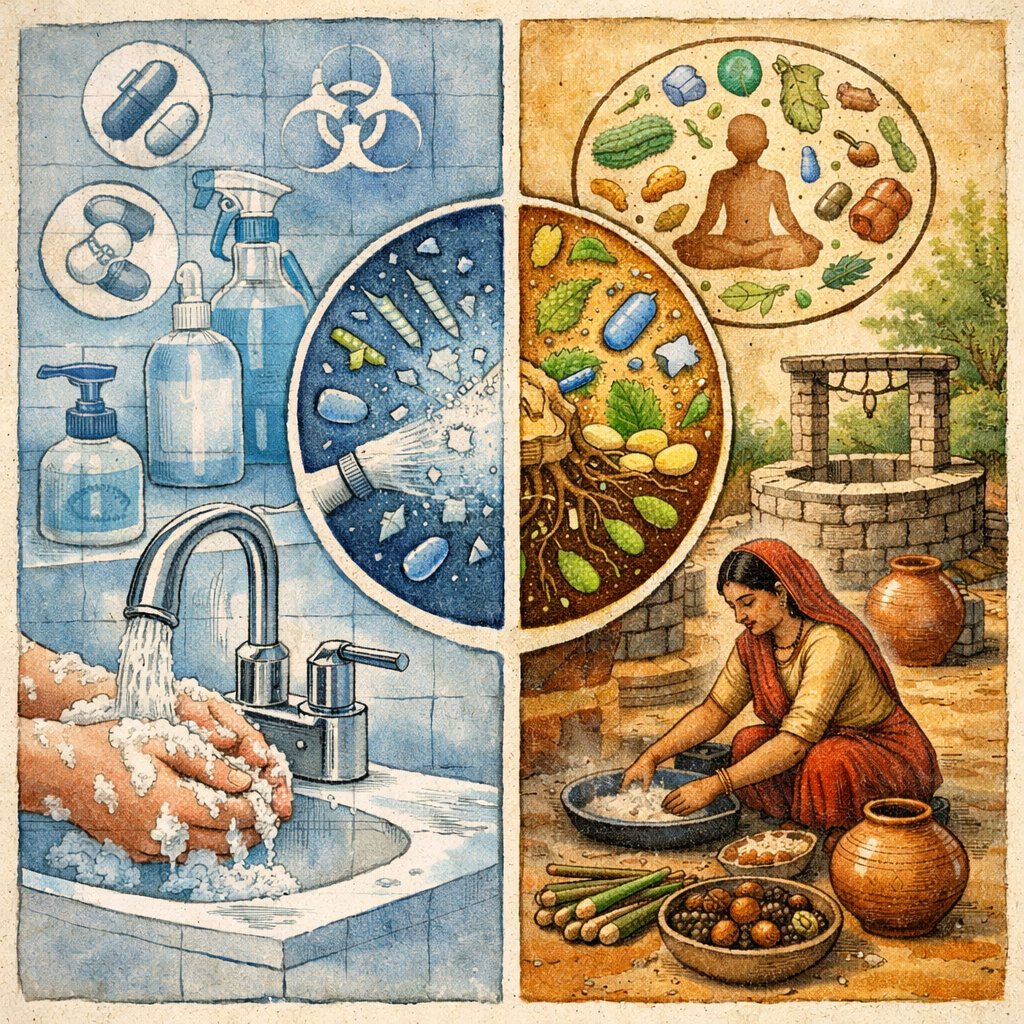
₹40,000 crore. That is roughly the size of the global probiotic market today. Pause for a moment. Modern hygiene first wipes out microbes with antibiotics, antiseptics, antibacterial soaps, sterilized surfaces, RO filtration. Then science discovers that humans cannot live without microbes. Suddenly the market is full of probiotic capsules to restore “good bacteria”. Kill them. Then sell them back. But traditional Indian life followed a very different logic. Not sterility. Balance. Consider the village house. Floors were often plastered with a thin layer of cow dung mixed with clay. To a modern eye this looks primitive. Yet dried dung contains soil bacteria such as Bacillus species that suppress harmful pathogens. The plaster also controls humidity and dust. Instead of chemical sterilization, the floor hosted a stable microbial layer. Clean. But alive. Now look at washing practices. Before commercial soaps, many households used ash to clean utensils or hands. Wood ash contains alkaline salts like potassium carbonate. When mixed with water it behaves like a mild soap, breaking down grease. It cleans. But it does not flood the surface with synthetic antimicrobial chemicals that wipe out everything. Hair care followed the same ecological logic. Reetha and shikakai were common cleansers. These plants contain natural saponins that produce foam and remove dirt, yet they are far gentler than modern sulfate shampoos. The scalp oils remain. The skin barrier survives. The microbial ecosystem stays intact. Oral hygiene was also interesting. People commonly brushed with datun sticks made from neem or babool. When chewed, the fibers fray into a natural brush. Neem carries antibacterial phytochemicals that suppress cavity-causing bacteria. But the mouth is not sterilized. The oral microbiome remains balanced. Water tells another part of the story. Drinking water came from wells, stepwells, ponds, and tanks. Groundwater naturally carries minerals like calcium and magnesium. These minerals influence gut chemistry and microbial growth. Modern RO filtration often strips them away. Water becomes chemically pure, but biologically poorer. Add one more layer. Traditional life meant constant contact with soil. Courtyards, fields, earthen floors, bare feet, clay vessels. Soil microbes interacted daily with human skin and immune systems. Today immunologists call this the “hygiene hypothesis”. When microbial exposure disappears, immune systems become confused. Allergies and autoimmune diseases rise. The pattern becomes hard to ignore. Traditional Indian hygiene did not aim for sterility. It aimed for equilibrium. Clean surfaces. Living ecosystems. Modern science is slowly rediscovering the same idea through microbiome research, fermented foods, and probiotic therapy. Which leaves an uncomfortable question. If the future of medicine is restoring microbial balance, were many traditional Indian practices quietly doing exactly that all along? 🧬
GemsOfINDOLOGY tweet media
English
44
748
1.9K
46.7K