Prayag Verma

6K posts

Prayag Verma banner
Prayag Verma

Prayag Verma

@prayagverma

I create stuff in my mind
I exist in my thoughts Katılım Eylül 2010
4K Takip Edilen1.2K Takipçiler
Sanjay Jain
Sanjay Jain@sanjayjain2012·
@andymukherjee70 You may use Market Value of Public float rather than Market cap given that promoter stake in india can unusually high. In penny stock it may be ‘genuine’ public float given a lot is held in ‘public’ but is not traded..but that’s another story!
English
2
0
1
206
Prayag Verma
Prayag Verma@prayagverma·
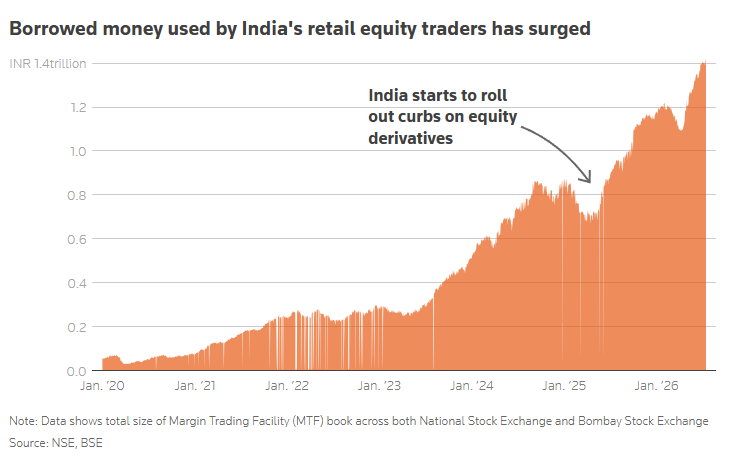
@dugalira @jaysh88 @kalrajs23 Up ~50% in the past year, and about 5× since 2021 (₹24K → ₹143K cr). Though it's still only about ~0.6% of free-float market cap. Rapid growth but off a small base🙂
Prayag Verma tweet media
English
0
0
2
21
Ira Dugal
Ira Dugal@dugalira·
An attempt to cool the options frenzy in India has pushed retail traders towards the margin trading facility -- currently growing at a rapid clip! Just a transfer of risk then? Nice story by @jaysh88 and @kalrajs23 reuters.com/world/india/in…
Ira Dugal tweet media
English
7
21
89
27.2K
Prayag Verma
Prayag Verma@prayagverma·
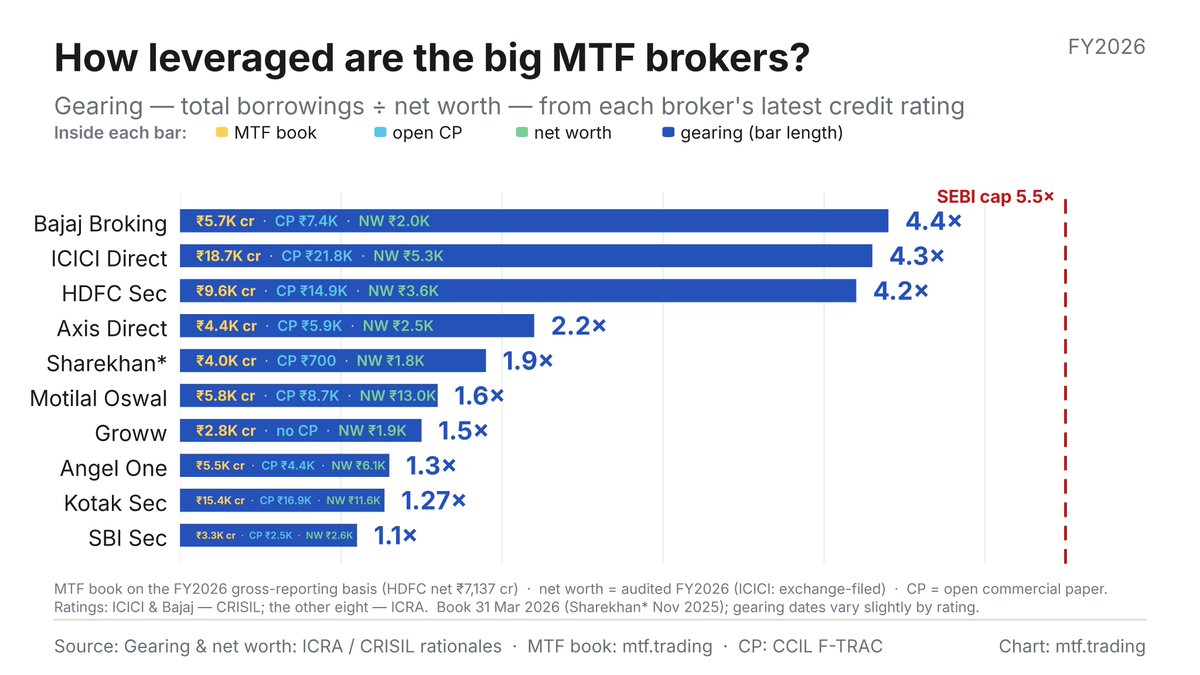
Genuinely useful thread, the leverage concern is worth taking seriously. You're right that ~51% of the book (₹73.6K cr, 1,823 stocks) is in non-F&O names. At normal traded volumes, only ~11.5% of the whole book (₹16.6K cr, 155 stocks) would take more than a week to unwind. More than two weeks: ~2.1%. Can check it here👇 mtf.trading/leveraged?clas… On the broker cap: SEBI's limit of 5.5× net worth, against 31-Mar-2026 net worth numbers (as filed with the depositories/exchanges), here's where the big MTF lenders sit -
Prayag Verma tweet media
English
0
0
2
28
Vikas Vij
Vikas Vij@TheClubJunto·
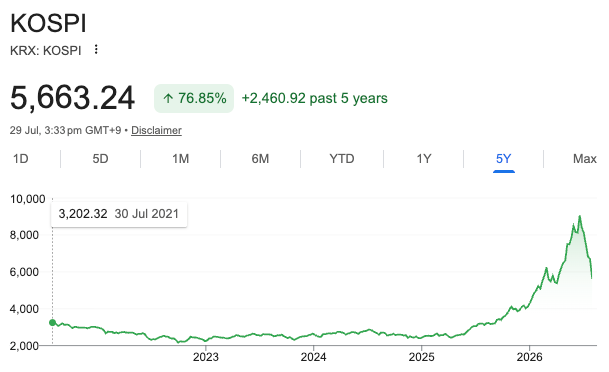
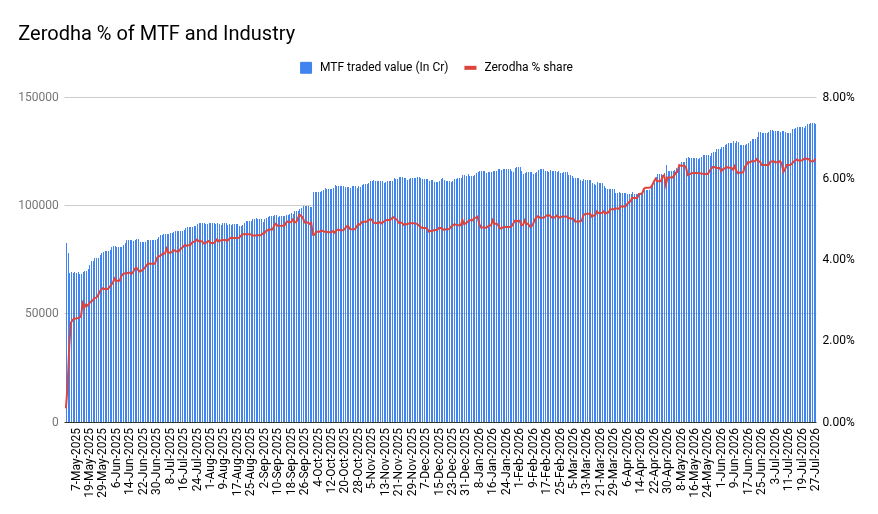
Indian Stock Market: Leverage Is the New Squid Game (a) Nithin K (Zerodha) & Andy M (Bloomberg) raise red flags (b) 2023-2026: India’s MTF Book Up 6X (c) Korea’s leverage 3X of India but in large caps; India’s 50% MTF book in Non-F&O stocks. India’s Leverage Boom a. In Korea, after forced liquidations of lakhs of retail investors (62% below 35 yrs), the government has set up suicide prevention hotlines; installed AI surveillance on bridges; established a National Suicide Response Office; and increased ICU beds for psychiatric patients in hospitals. b. Indian retail investors who wish to stay away from this scenario: Repeat after me: No leverage, no margin. Once again: No leverage, no margin. c. India’s leverage mania is growing: In March 2023, the Margin Trading Facility (MTF) Book (total volume of debt facility used) was ₹24,900 cr. In July 2026, it stands at ₹1.44 lakh cr (nearly 6X). MTF BOOK: Mar 2023 @ ₹25,000 cr Mar 2025 @ ₹68,000 cr June 2025 @ ₹85,000 cr Aug 2025 @ ₹96,000 cr Oct 2025 @ ₹1 lakh cr Dec 2025 @ ₹1.16 lakh cr Jan 2026 @ ₹1.16 lakh cr Feb 2026 @ ₹1.15 lakh cr 1st MoM decline after 1 yr Mar 2026 @ ₹1.06 lakh cr Iran War/Oil Spike/FII Exits Apr 2026 @ ₹1.16 lakh cr May 2026 @ ₹1.27 lakh cr June 2026 @ ₹1.33 lakh cr July 2026 @ ₹1.44 lakh cr Dangerous Leverage Trends a. India’s leverage boom is unstoppable since FY2023. SEBI’s own June 2026 consultation paper says MTF Book is growing 50% year-on-year. b. As of July 2026, MTF @ ₹1.44L cr is only 0.3% of total market cap. In case of Korea, it was 0.8% (nearly 3X of India). So, purely in numerical terms, India is still much safer than Korea. But in qualitative terms, India poses a complex problem. (See next point.) c. Korea’s leverage was concentrated in highly liquid large cap stocks: Samsung & SK Hynix. India’s MTF Book (July 2026) comprises 51% Non-F&O stocks. Non-F&O are small caps & mid-caps with lower liquidity. Retail investors borrowing to load up on these stocks have no idea they are playing with fire. d. While Korea’s leverage was chasing a roaring AI bull market, India’s leverage has been building in a market that has gone mostly sideways to down in the last 2 years. If India’s leverage boom continues (50% Up YoY) while total market cap remains unchanged, then India is sitting on a time bomb like Korea. Why Leverage Is Rising Why are Indian retail investors doubling down on leverage when the market itself is failing to deliver returns? a. India’s near-term inflation expectations @ 9% are exceeding FD rates @ 6%. Even long-term “buy-and-hold” in equities has gone nowhere for the last 2 years. This has created desperation among young investors to take higher risks. b. SEBI’s tightening of F&O trading rules, higher lot sizes, and increased STT has pushed active retail traders toward cash market leverage as a substitute. c. With the aggressive entry of discount apps and tech-first brokers, now even someone from a tier-3 town can use 1-click to lever up. Zerodha’s MTF market share itself has jumped from 1% to 6.5% as it could no longer sit out and resist the temptation while its competitors made profits. Risks of Non-F&O Leverage a. Zerodha’s Kamath calls non-F&O leverage as the “dangerous half” because of its poor liquidity. Here’s how it works: Market Crash → Non-F&O stock hits lower circuit → Zero buyers → Broker cannot margin sell → More lower circuits → Client equity wiped out → Bad debt lands on broker’s balance sheet → Broker himself is over-leveraged (SEBI permits leverage up to 5X of broker’s net-worth) b. PPFAS said in Feb 2026 that just a handful of large leveraged brokers control 50% of the total MTF book. This concentration risk can create a contagion effect if one of the brokers faces liquidation during a crash. Kamath himself says in his yesterday’s X post: “My biggest nightmare is the way our MTF book has been growing along with the rest of the industry.” Kamath acknowledges Zerodha’s MTF book of ₹9,000 crores is “by far the riskiest thing” the company has done in its history. c. Kamath says India’s market leverage has increased only in the last 3-4 yrs. There hasn’t been any sharp market correction in this period. Therefore, the book has not been stress-tested. Nobody, including SEBI, really knows how this will play out at scale in case of a market liquidity event. d. Andy Mukherjee says in his today’s Bloomberg article: India’s MTF exposure lies across thousands of small loans. Brokers believe a few defaults among thousands cannot hurt the balance sheet. But in reality, credit risk is never concentrated at the position level. The risk is herd behaviour at the aggregate level. If sentiment reverses, and leveraged money tries to exit together, nobody will be able to get out. Andy further warns that if rupee remains weak and inflation worsens, RBI will be forced to raise interest rates at some point. If that happens, the 9-18% interest burden on MTF positions rises further, while market goes down (and the underlying MTF stock collateral values go down.) ENDQUOTE “My gut says a lot of what the brokers are earning today as interest income, will be all given back when the market reversal happens.” “Someone asked me what the risk model is in this situation. I said: “Pray that stocks don’t fall,” if that counts as a risk model.” – Nithin Kamath, Zerodha Founder & CEO, Substack, Jan 21, 2026 @arabicatrader
English
10
14
66
13.8K
Nooresh Merani
Nooresh Merani@nooreshtech·
Some stock specific do have 10-15% of float in mtf. But nothing overall as per data. Mtf.trading and many other websites have good data or just need to pull excel from nse.
English
1
1
7
2.5K
Nooresh Merani
Nooresh Merani@nooreshtech·
US the calculated margin funding is 1.5 trillion dollars and 2% of Market cap. In India - 1.5 lakh cr mtf , 5 lakh cr futures. Its too small and should only grow. 450-500 lakh cr mkt cap of india. Even futures in 1% of mkt cap ( we have stockwise, brokerwise limit)
Ravi Dharamshi@ravidharamshi77

@nikhilkamathcio is warning about MTF and leverage. @andymukherjee70 has picked up on that and is claiming AI does not have monopoly on exuberance Indian small and midcaps are also euphoric. Can someone do simple analysis and say what is leverage as compared to history (say last 30 years or compare it to the previous peaks of 2001, 2008). Also what has it been as a % of mcap? Also how the regulations are as compared to the past. Comparing only with liquidity in stocks or past 2 years is a very myopic view of things. @NChanduka please do some dispassionate data analysis.

English
3
3
32
20.5K
Deepak Shenoy
Deepak Shenoy@deepakshenoy·
@chiragkb5 Sounds silly because we can't protect ourselves from Pakistani hackers? Plus they can vpn in from anywhere anyhow
English
1
0
2
582
Deepak Shenoy
Deepak Shenoy@deepakshenoy·
I didn't know this - but ccilindia is not accessible outside India. Neither is nsdl's FPI site. Neither is data.rbi.org.in Why are we blocking the outside world from our data?
English
37
7
123
25.7K
Prayag Verma retweetledi
Nithin Kamath
Nithin Kamath@Nithin0dha·
My biggest nightmare as a broker is what’s happening in the Korean markets right now. The source of my nightmare is the way our MTF book has been growing along with the industry as a whole. In terms of pure risk, MTF is by far the biggest risk we have taken since we started in 2010. More specifically, the risk lies in our ₹9,000-crore book: at least half of it is in non-F&O stocks, which can hit lower circuits every day without offering an exit. The problem with Korea is the one-way rally. When markets go up so sharply, leverage builds up because collateral values increase, leading to more borrowing and so on. The second layer of risk comes from the derivatives complex and leveraged ETFs, which further exacerbate moves on both the upside and downside. When the markets fall, things get really ugly. The first leg of selling tends to be small, but as collateral and margin values drop, margin calls increase, leading to forced selling. Forced unwinding from leveraged ETFs makes this worse, and this downside move becomes a self-reinforcing loop until things stabilize. Btw, MTF became popular only in the last 3–4 years, and we really haven’t seen a sharp market crash similar to the KOSPI since COVID. Even though MTF as a percentage of market cap is small, if the Indian markets were to fall sharply, it would cause severe sell-offs across many small- and mid-cap stocks. Brokers today typically provide MTF on ~1,500 stocks. 😬 Luckily, thanks to SEBI, we've avoided the worst excesses that typically arise from unchecked leverage. Btw, my colleague @prayagverma maintains a site with really good market stats, including MTF, here: mtf.trading
Nithin Kamath tweet mediaNithin Kamath tweet mediaNithin Kamath tweet media
English
155
308
2.7K
461.8K
Babu Mani
Babu Mani@ChartWizMani·
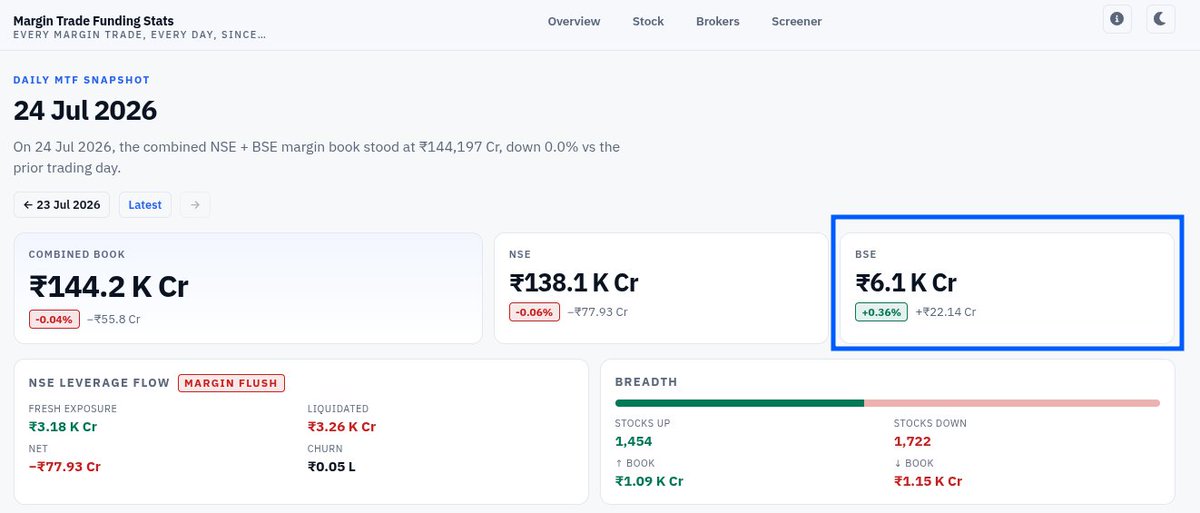
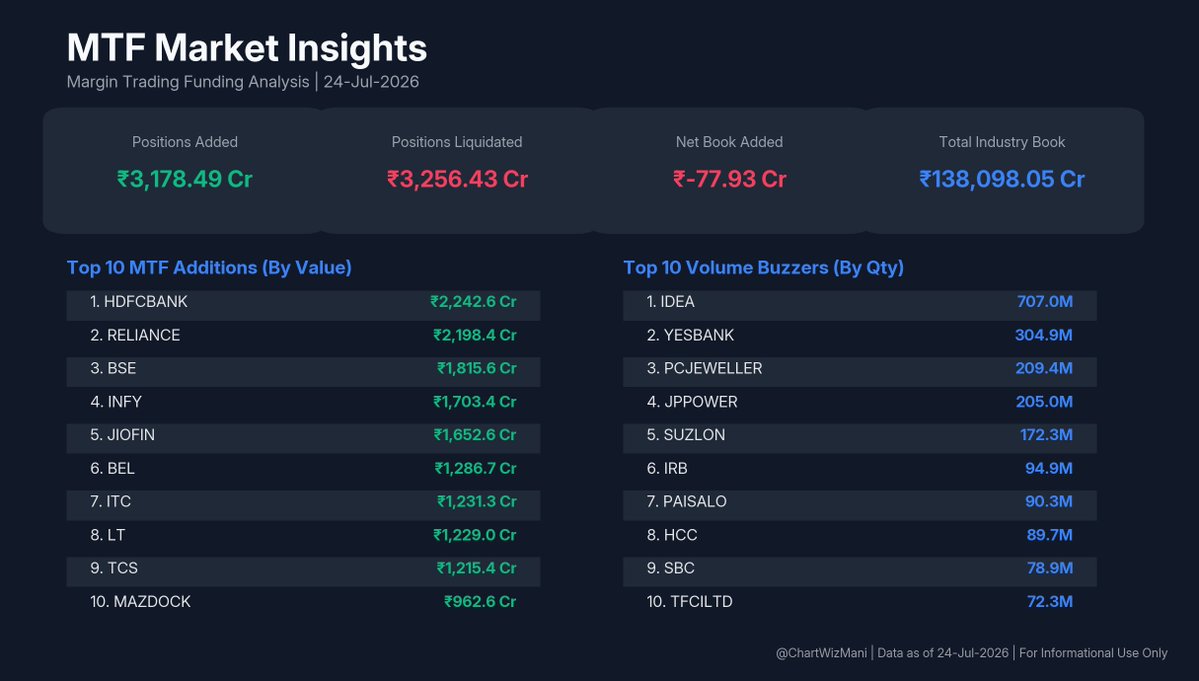
MTF (Margin Trading) Insights | 24-Jul-2026 Net Margin Book Added: ₹-77.93 Cr Margin Positions Added: ₹3,178.49 Cr Margin Positions Liquidated: ₹3,256.43 Cr Industry Margin (MTF) Book: ₹138,098.05 Cr #MTF #MarginTrading #Nifty #BankNifty #StockMarket
Babu Mani tweet media
English
1
0
2
325
Prayag Verma retweetledi
Mohit Mehra
Mohit Mehra@mohitmehra·
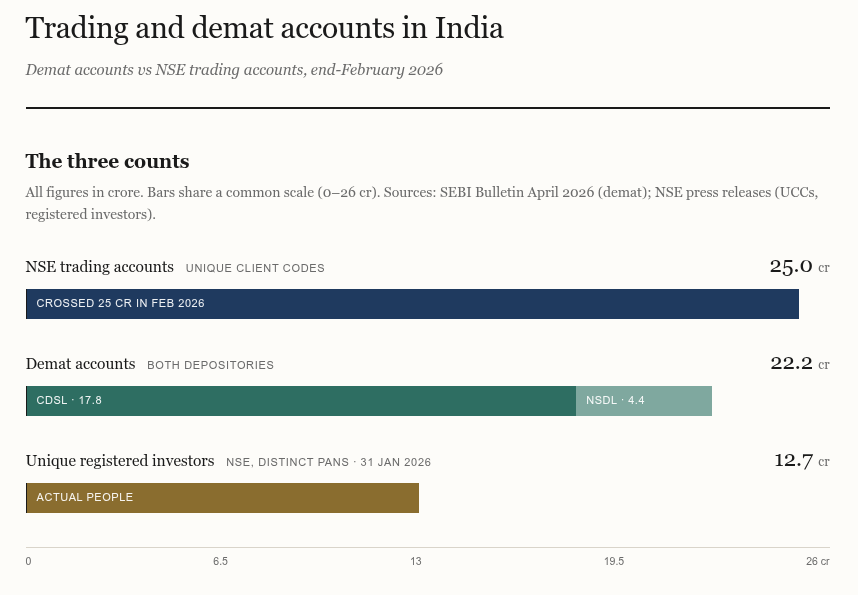
I often find capital market startups get confused with the TAM. And to be fair the numbers are a little difficult to follow. India has nearly 3 crore more trading accounts than demat accounts. In Feb 2026, the trading accounts registered on the NSE crossed 25 crore, while demat accounts across CDSL and NSDL stood at 22.2 crore. The gap is not a data error though. One usually opens a trading and demat account together, but technically one demat can be linked to multiple trading accounts and vice-versa. And then if you remove all duplication, the actual count of unique investors is 12.7 crores, or roughly 2 trading accounts and 1.7 demat accounts per actual person.
Mohit Mehra tweet media
English
0
1
6
715
Prayag Verma
Prayag Verma@prayagverma·
@makemytrip @makemytripcare Hi team, needed help with a refund request. Had dropped an email to triphelp@makemytrip.com, grievanceofficer@makemytrip.com & amazontravelsupport@makemytrip.com, but haven't received any response to it for around 10 days. Could you guide with the steps that need to be taken to resolve this
English
3
0
1
2.7K
Prayag Verma retweetledi
Mohit Mehra
Mohit Mehra@mohitmehra·
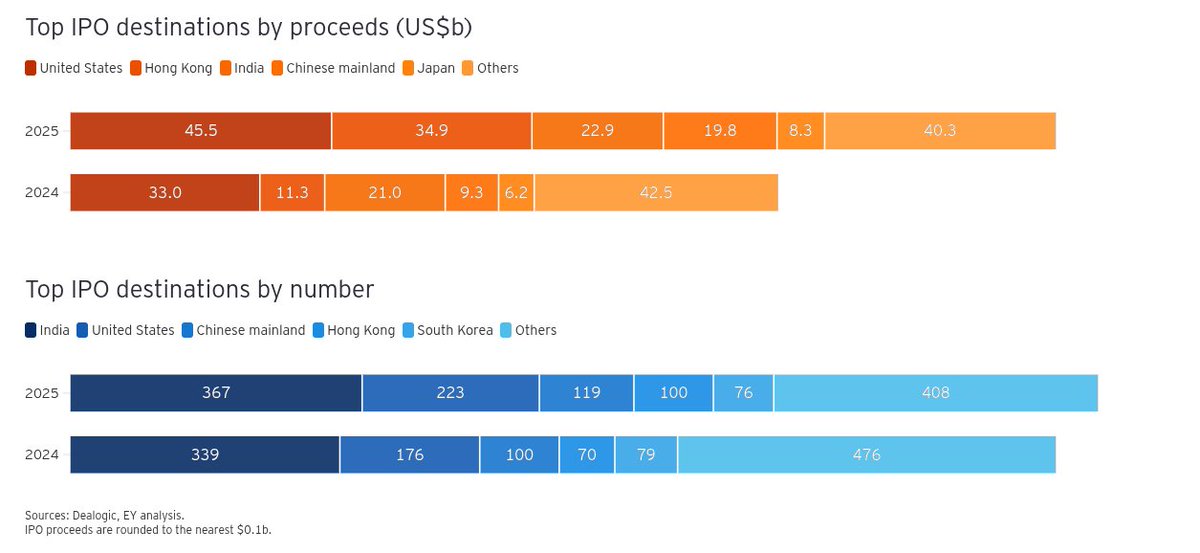
India had the highest number of IPOs in the world in 2025, with 367 listings, more than the US and mainland China combined. In terms of funds raised, it was 3rd largest. This surge in listings is also why SEBI tightened the eligibility norms for merchant bankers this year. The net worth requirement for Category-I merchant bankers was raised 10x, from ₹5 crore to ₹50 crore. Merchant bankers handling SME IPOs now need a networth of ₹10 crore, along with a separate liquid net worth requirement in cash and government securities, not capital tied up in group entities or illiquid assets. This is the first change to the networth requirement since 1995. Given that this might reduce competition for merchant banks in India, it will be interesting to see whether this increases the fees the large merchant This is the first revision to merchant banker net worth requirements since 1995. Given that a higher threshold could reduce competition in the industry, it will be interesting to see whether larger merchant banks start charging even higher fees once the IPO cycle picks up again🙃
Mohit Mehra tweet media
English
0
2
5
599
Prayag Verma
Prayag Verma@prayagverma·
The MTF book size (BSE and NSE) is from the EOD reports from exchanges. These reports have a per-security breakdown available in them. The way to flag whether a security is an ETF or FnO/non-FnO stock is via a mix of ISIN level targeting (INF as the first 3 characters for ETFs) and by using the FnO Bhavcopy to get underlying stocks (each day) and then marking the remaining ones as non-FnO stocks. Currently updating it daily on mtf.trading . Building this with the help of AI and slowly improving as things mature
English
0
0
0
63
Shrikant Soni
Shrikant Soni@sss26888·
@prayagverma This is Interesting. May I know what is the official data source used for this
English
1
0
1
128
Prayag Verma
Prayag Verma@prayagverma·
The split between FnO vs non-FnO stocks as the MTF book has grown over the years -
Prayag Verma tweet media
Nithin Kamath@Nithin0dha

MTF books are growing across brokers despite the broader markets going nowhere. This isn't like the Korean markets, for example, where the markets are up 150% in the last year alone, and people are borrowing to ride that rally. Our situation is different. The big risk with MTF is the risk of the stock becoming illiquid in case there's a sharp market fall. If a stock moves more than the margin provided (say 20%), the bad debit is on the broker. The odds of recovering a loss from a customer aren't that great. The risk shoots up when the collateral is stocks. A customer pledges Stock A, gets 80% margin on it, and uses that to take further positions worth 400% in the same stock. If that stock is a mid or small-cap stock, circuits kick in, and there's simply no exit if markets turn around. Nearly 50% of the entire industry MTF book is non-F&O stocks. While we still don’t allow collateral margin for buying MTF, competitive pressure would mean we will have to. There's significant risk on the customer, but also on the broker. While our MTF book has grown meaningfully over the last 16 months, it's still only about 25% of our networth. For some brokers, this number could be closer to 500% which is the maximum regulator allows. If markets crash, brokers could end up holding losses from MTF positions they can't exit and that puts the entire ecosystem at risk. MTF seems like easy money for the brokers. But the Risk Management team at brokers has to make sure that on one bad day, you don't give it all back. 😬

English
1
0
10
6.8K
Saikiran Pulavarthi
Saikiran Pulavarthi@P_Sai_Kiran·
For years, India’s problem was “Indians don’t invest in fin assets.” Now a new question emerges: “What happens when massive dom savings endlessly recycle into equities?” Jefferies report sparked this debate. Maybe SIPs r not just mkt story anymore & they r becoming macro story
English
2
3
70
20.9K
Prayag Verma retweetledi
Mohit Mehra
Mohit Mehra@mohitmehra·
NCDEX is launching weather derivatives for Mumbai rains. Isn't this gambling? Is this a slippery slope? What gets traded next if even rainfall does? It's a fair instinct, but the contract isn't arbitrary. Weather has been informally hedged in India for years, but this version draws its validity from the Securities Contracts (Regulation) Act, 1956. Commodity derivatives used to sit under the Forward Contracts (Regulation) Act. In 2015, FCRA was repealed, and commodity derivatives were merged into SCRA under SEBI. The definition of what can be traded is a finite list, with two buckets: (1) goods, and (2) activities, services, rights, interests and events. Under (2), there are only two notified items today: weather and freight. So no, this isn't a slippery slope. Whether it should have been opened at all is a separate question.
Mohit Mehra tweet media
English
0
3
14
4.7K
Prayag Verma
Prayag Verma@prayagverma·
Nithin Kamath@Nithin0dha

Rainmatter started in 2016, with a few of us doubling up on our day jobs and trying to help startups that were trying to expand India’s capital markets ecosystem. Nine years later, it has grown into something far bigger than we ever imagined. So far, we’ve invested over ₹1,500 crore across 160+ startups spanning fintech, climate, health, media, and deep tech. We’ve also earmarked 10% of everything Zerodha earns to invest in startups, and another 10% for the social sector through the @RainmatterOrg. The thesis has evolved from just expanding the capital markets, but the thread running through it is simple. As a country, we need to own more of what we consume. Sovereignty, in the truest sense. We’re not a typical VC. We don’t take board seats, and we’re not in this for quick exits. We’re not interested in forcing founders into short-term decisions just so we can make money in five or six years. The simple reality is that building a good business is hard. Building one that is genuinely useful, scalable, and profitable is even harder when investors are pushing you to speedrun success and sustainability. That kind of pressure usually leads to shortcuts. And shortcuts, more often than not, come at the consumer’s expense. So our approach has been simple: be patient, back founders for the long term, and help them build the business the right way. That, more than anything else, is the heart of @Rainmatterin.

0
0
1
26
Prayag Verma
Prayag Verma@prayagverma·
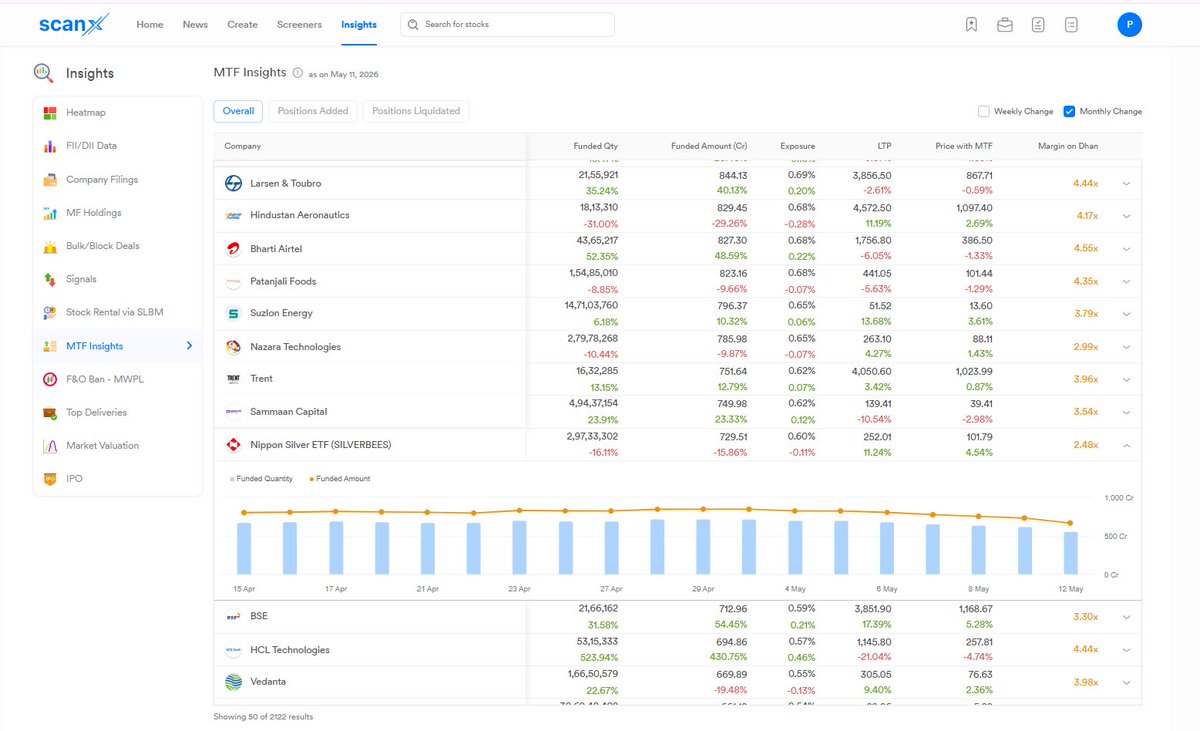
@piyushchaudhry Peak touched ~1800 cr at one point around the end of Jan 2026 time period
Prayag Verma tweet media
English
1
0
3
183
Piyush Chaudhry
Piyush Chaudhry@piyushchaudhry·
After Silver crashed from 420k to around 200k, all the stories of supply deficits, solar panels, EV's and kaju katli left the chat. With price coming back to 300k, Silver ETF's exposure through MTF is down to 730 Cr vs peak of the rally exposure 1300 Cr.
Piyush Chaudhry tweet media
Piyush Chaudhry@piyushchaudhry

SILVER ETF has climbed to the Top 3 in MTF. There are now 6 stocks with over 1% of the total book exposure, up from 4 a Month ago. Book size has grown as well.

English
10
6
81
11.3K
Prayag Verma retweetledi
Nithin Kamath
Nithin Kamath@Nithin0dha·
This is how we want our customers to feel — like they're "in good hands". From this essay by @kepano.
Nithin Kamath tweet media
English
26
40
570
59.7K
Prayag Verma retweetledi
Mohit Mehra
Mohit Mehra@mohitmehra·
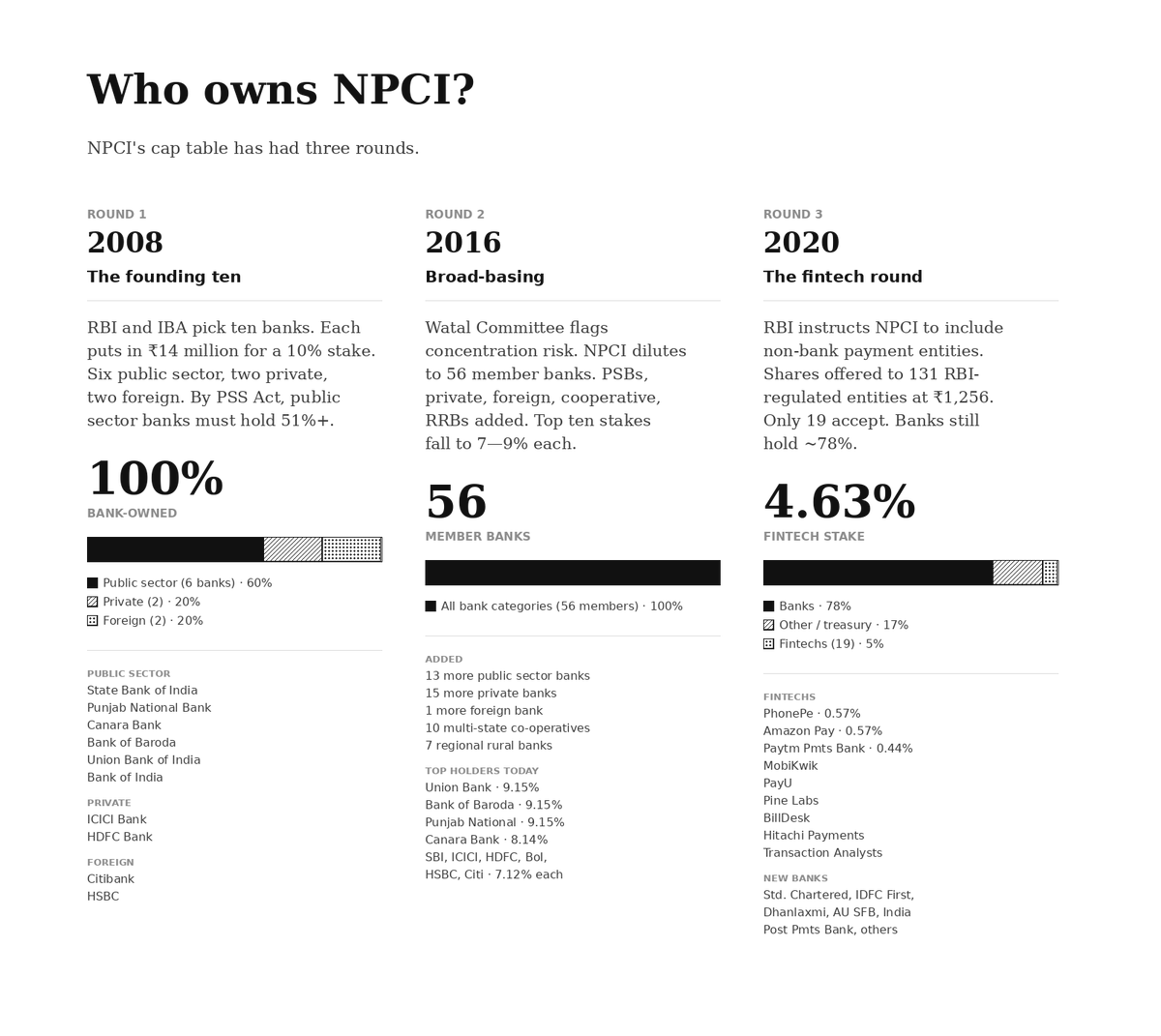
For the last couple of years I've been confused about NPCI's not-for-profit status. Yesterday, I was reading about how it came to be the way it is, and it's an interesting story. In 2004, an RBI team flew to Sweden to study BGC, a bank-owned non-profit running Swedish payment rails since 1959. A.P. Hota was on that trip. By 2008, he was NPCI's founding MD, and built it on the BGC template. Section 8 non-profit, owned by banks, payments as a public good. In 2020, two things happened. BGC, the original, was absorbed into a for-profit. RBI's New Umbrella Entity (NUE) framework opened the door for NPCI to do the same. Then-RBI Governor Shaktikanta Das said NPCI "will be given the option" to convert. That same November, NPCI capped third-party UPI apps at 30%. In December, PhonePe, Paytm Payments Bank, and Amazon Pay became NPCI shareholders. PhonePe is one of the two apps most affected by the cap. It is also a part-owner of the entity that set it. The conversion never took place. NPCI stayed a Section 8 non-profit, which means the money it makes is called surplus, not profit. Which probably also means less shareholder pressure to chase profits. NPCI's FY25 surplus was ₹1,552 crore. But NPCI runs UPI, RuPay, IMPS, NACH, AePS and BBPS. It is, effectively, India's payments monopoly. If it ever did follow BGC and convert, the current surplus is the wrong number to look at. With even a small MDR on UPI volumes, profits could easily be 10x. NPCI would be worth closer to ₹5 lakh crore as a for-profit. At that valuation, the NPCI stake some PSU banks hold would be worth a meaningful chunk of their own market cap.
Mohit Mehra tweet media
English
3
10
48
6.2K
RedboxGlobal India
RedboxGlobal India@REDBOXINDIA·
INDIAN GOVERNMENT TEST ALERT SENT TO ALL MOBILE PHONES LOUD ALARM WITH VOICE MESSAGE CAUSED MOMENTARY PANIC AMONG USERS
English
142
189
3.1K
393.9K