Carly Martinetti

4K posts

Carly Martinetti banner
Carly Martinetti

Carly Martinetti

@PRcarly

Co-founder at Notably • PR & Comms Strategy • Chat w/ me if you want press that drives business results: https://t.co/FGjh8Ju12A 👋

Boston, MA Katılım Mayıs 2014
1.4K Takip Edilen5.9K Takipçiler
Sabitlenmiş Tweet
Carly Martinetti
Carly Martinetti@PRcarly·
I run a PR agency that lands our clients in TechCrunch, CNBC, & other world class publications on a consistent basis. My superpower? I can make anything sound newsworthy to the journalist I'm pitching. These are the 2 golden rules I follow that 10x my placement rate: 👇 1/8 🧵
English
22
33
417
91.1K
Carly Martinetti
Carly Martinetti@PRcarly·
SQUARE THIS CIRCLE: Per @Qwoted, AI tools have driven a 200% increase in pitch volume. Meanwhile, newsrooms have shrunk ~20% since the pandemic. THE SUPPLY SIDE: For every 10 pitches a journalist receives, only 1-3 are relevant to their work (per Qwoted). @MuckRack's brand new State of Journalism 2026 report puts a finer point on it: nearly half of journalists say they seldom receive pitches that match their coverage. THE DEMAND SIDE: The reporters still standing are covering more beats with less support. 88% disregard anything that misses their beat. They don't have the bandwidth to sort through the noise. THE AI-ON-AI TWIST: Qwoted now runs AI detection on every incoming pitch via their Pangram partnership, flagging how much was likely machine-generated. So we've arrived at the logical endpoint: AI writing the pitches on one side, AI flagging them on the other. And in the middle, a journalist with less time than ever deciding what's worth opening. BUT IT CUTS BOTH WAYS: At @NotablyPR, we're still landing clients in The New York Times, The Wall Street Journal, Forbes, WIRED, TechCrunch, and on the front page of CNN. We use AI for research and feedback on pitches, but they’re still hand-crafted the old fashioned way… with tons of elbow grease. What's new is what happens after. For one client, 38% of their inbound leads now come from ChatGPT, citing the same earned coverage we placed. That channel didn't exist two years ago. SO YES, THE MATH IS HARDER: 86% of journalists say pitches still inspire at least some of their stories. The funnel is tighter, noise is louder, but earned media that actually lands now compounds in ways it never did before… through the same AI systems that are making everything else harder. CONCLUSION: The circle won’t square for everyone. If you’re relying on AI to write MORE pitches, you’re shooting yourself in the foot. But if you’re EARNING media the old-fashioned way, you’re both cutting through all the noise AND getting cited by the same AI that's drowning everyone else out.
English
1
0
6
348
Carly Martinetti
Carly Martinetti@PRcarly·
Three months ago, I posted a pitch-filtering AI prompt that an editor at a legit publication shared with me. It garnered dozens and dozens of comments and some intense debates which… makes total sense. What the filter screens for: - Relevance (table stakes; if you're off-topic, you're out) - Substance over hype (real event or... just “adjectives”) - Traffic alignment (scored against what drives readers to the publication) What gets penalized: - Language like "game-changing" and "world's first" - Spray-and-pray pitches not written for this specific publication - Promo fluff without concrete news Here's the thing: none of this is new. Journalists/editors have always had their own criteria for filtering out pitches. They’ve just never delegated that to AI. Since I shared the prompt, the soup has… thickened. @MuckRack's 2026 State of Journalism report says 82% of journalists now use AI tools. Pitch volume is up 200% (per Qwoted). Newsrooms are down 20%. When pitch volume triples and newsrooms shrink by a fifth, the below filter starts to look increasingly like the only reasonable “fight fire with fire” response, which I’m concerned about. Specifically, what are the downstream implications of a filter encoding not just the journalist's biases, but also those of whatever AI model is used under the hood? If it’s deprioritizing certain categories or filtering below a funding threshold, it might miss the next breakout story. A pitch with clumsy language but a genuinely great angle could get dinged. Will something idiosyncratic that a human might say “OMG this is actually VERY interesting” be flagged as “doesn’t match pattern; reject” by an AI? Either way, the bar keeps getting higher: fewer journalists, fewer publications, higher interest thresholds, and now… AI deciding what a human even sees. Ouch.
Carly Martinetti tweet media
English
0
1
5
534
Carly Martinetti
Carly Martinetti@PRcarly·
BREAKING: @MuckRack just dropped their 2026 State of Journalism report, surveying over 1,000 journalists. And buried in the data is a warning the PR industry needs to hear right now. One journalist's message to PR pros, in their own words: "I can tell if you use AI." THE CONTEXT: Concern about unchecked AI use among journalists jumped from 18% to 26% in a single year, the biggest shift in the entire threat landscape. It now ties "public trust in journalism" as a top-three concern. Meanwhile, 82% of journalists are using AI tools themselves. They know exactly what AI-generated copy looks like because they're working with these tools every single day. They can smell it in a pitch. THE DATA: PR pitches were already in trouble before AI entered the chat: - 47% of journalists say they seldom or never receive pitches relevant to what they cover - 88% immediately delete pitches that don't match their beat - 54% seldom or never even respond to pitches at all And yet journalists still need PR: - 86% say at least some of their published stories started with a pitch - 70% want clear relevance to their beat - 58% want access to sources for interviews In other words: journalists value PR when it's done well. The problem is that almost nobody is doing it well. WHAT THIS MEANS: An editor recently sent me the prompt he uses to filter incoming pitches. AI fighting AI. That's where we are. The PR industry is responding to a relevance crisis by automating the irrelevance. More volume, less personalization, zero relationship. The exact opposite of what journalists are asking for. AI should be freeing PR pros to do more research into what a journalist actually covers (that’s our MO at @NotablyPR), more relationship building, more targeted and thoughtful outreach. Instead, too many teams are using it to blast more pitches at more people with less thought than ever. Journalists are telling us exactly what they need. Loudly, repeatedly, now backed with abundant data. The question is whether the industry has any interest in listening.
Carly Martinetti tweet media
English
1
2
18
1.4K
Carly Martinetti
Carly Martinetti@PRcarly·
If your new PR agency just told you they’d like to “start with the trades before mainstream” and you nodded approvingly, congratulations. That places you in a small [and cultured] minority that understands where decision-makers lurk. The kinds of publications/substacks/podcasts you may have not heard about, but that engage the time and attention of real decision-makers. Folks who read Federal News Network, listen to the Biotech Startups podcast, or peruse the Biometric Update newsletter (earned media wins for our clients). But, because the only way they got so high in their companies is by voraciously educating and upskilling themselves in their industry. And, it’s also a source they trust for deciding how to spend their budgets. What software solution to add to their tech stack. Which vendor has the technical expertise to meet their highly specific use case. What firm or consultancy to engage in a years-long transformational project. Turns out AI is reading the trades too. Per @GrowandConvert's December 2025 study, 86% of the sources LLMs cite for industry questions come from industry-specific sites, not the big general publications. Now, this post is not meant to take a dig at mainstream coverage. Having “Fast Company” on your landing page can project the kind of 3rd-party approval that customers and investors consider when making decisions. But if anything, trade publications make it *easier* to land mainstream coverage. You’re basically saying, “I’ve got a good story here, and it’s already been vetted with trades coverage.” Which would probably be met with a mental “OK, I’ll give it a once over, but this better be good…” So not a guarantee for mainstream coverage (hint: there are NO guarantees in earned media), but another wedge. So if your PR agency is pointing its compass to the trades—even if you haven’t heard of the specific publications—you may just be on to something.
English
1
1
10
793
Carly Martinetti
Carly Martinetti@PRcarly·
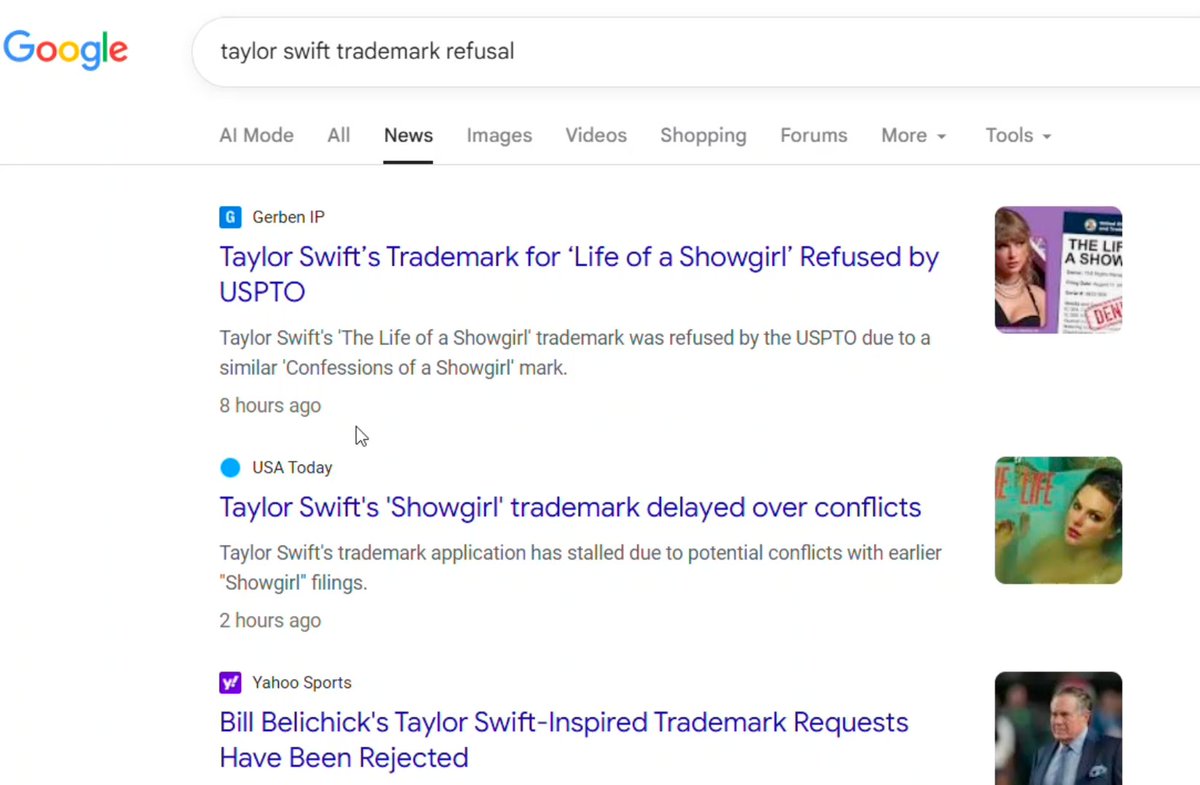
A client's blog post just appeared on Google News, above USA Today. And it's the very first time in my 15 years of doing PR I've seen anything like it. The backstory: @JoshGerben is a trademark attorney. We started working together in October 2024 with a specific strategy: he spots trademark filings early, we pitch media on his expert commentary before anyone else is talking about it. In 18 months, that strategy generated 311 earned media placements (Reuters, Bloomberg, CNN, you name it), all linking back to his site. Google's algorithm looks for expertise, authority, and trustworthiness, not to mention a consistent history of original, timely content. That, and who’s linking to you. When 311 articles from major news outlets are all pointing back to the same domain, that's an overwhelming authority signal. Google's systems recognized his blog as a credible news source because at that point… it functionally was one. And now Google treats his website as a legit source of news in its entirety. I asked a GEO/SEO expert I know about this. His response: it's very hard to do, and it's definitely due to the PR strategy. Josh has since stopped doing SEO entirely. PR is his only marketing channel now. People see his blog posts appear in organic search, and reach out to do business with him. I want to be clear: this isn't a playbook I can guarantee for every client. Josh has a unique advantage in being able to spot filings first, and the volume of newsworthy moments in trademark law is unusual. But when earned media is consistent enough, for long enough, in credible enough outlets, it compounds in ways you didn't plan for and couldn't have predicted. That's the part I think most companies still underestimate.
Carly Martinetti tweet media
English
2
0
18
1.5K
Carly Martinetti
Carly Martinetti@PRcarly·
If you’re worried about AI coming for PR jobs, read on. A team from Princeton, Georgia Tech, and the Allen Institute for AI tested what makes content more likely to be cited by generative search engines. They ran 10,000 queries and measured nine different optimization methods. The three that worked best: - Verifiable statistics (37-40% visibility boost) - Expert quotations (~30%) - Credible third-party citations (30-40%). Read that list again if you're in PR, because that's what a good earned media placement produces. And @MuckRack's analysis of over a million AI-cited links backs this up from the other direction: 95% of AI citations come from non-paid sources. 89% from earned media specifically. So every time you place a client in a credible publication with real data and expert perspective, you’re also building the citation layer that AI pulls from when a buyer asks ChatGPT "who are the best companies in X space?" And that citation layer has a strong recency bias. For time-sensitive queries, journalistic sources account for 49% of all AI citations. Which strengthens PR’s long-standing argument for… a long-standing (sorry, couldn’t help myself), sustained and ongoing earned media strategy. PR pros have spent entire careers mastering what these systems now reward. The difference is that credibility compounds in a way it never did before.
English
6
2
36
4.3K
Carly Martinetti
Carly Martinetti@PRcarly·
@carlfranzen Interesting take, Carl! Do you think journalist's will no longer be judged then on the quality of their reporting but by the quality of their prompting, in a sense? Just curious how you think things like the George Polk awards will be determined in the future.
English
0
0
0
28
Chris Lesinski
Chris Lesinski@lesinski·
@PRcarly I don't want to name names but sites that regurgitate press releases
English
2
0
0
32
Carly Martinetti
Carly Martinetti@PRcarly·
PREDICTION: Gartner says that PR and earned media budgets will DOUBLE by 2027... and the reason why should matter to every marketer still pouring money into paid channels. Their latest report lays it out: mass adoption of AI as a replacement for traditional search is going to force a fundamental reallocation of marketing spend away from paid, toward earned. THE EVIDENCE: Between the first half of 2024 and first half of 2025, ChatGPT traffic grew 608%, while Google and Bing both declined. Muck Rack's research shows that more than 95% of links cited in AI-generated answers come from non-paid sources, with half of all AI citations coming from content published in the last 11 months. And per Semrush, AI search visitors convert at 4.4x the rate of traditional organic search. We've been watching this play out with our own clients... one saw 38% of their leads this year come directly from earned media surfacing in ChatGPT queries (we got them in the NYT, WSJ, Wired, Forbes, TechCrunch, and others). WHAT THIS MEANS: Gartner is essentially telling CMOs: the channel your customers use to find you is changing to AI; and earned media is what AI trusts. Brands still treating PR as a "nice to have" line item below paid media and SEO are in store for an awakening (I was going to say “rude awakening” but that would be… rude). For PR teams already doing the work, every placement you secure isn't just building credibility with human readers anymore; it’s informing the AI systems that are increasingly deciding which brands get recommended and which ones don't exist. And for marketers who spent the last decade buying their way into "earned-looking" content... native ads, sponsored posts, advertorials pretending to be editorial... AI is seeing right through it. THE NEW REALITY: We're watching a once-in-a-generation shift in how people discover brands. The companies investing in real earned media (that is, true third-party validation) are the ones building a moat. Every month without it? Good luck catching up.
English
30
51
389
111.5K
Carly Martinetti
Carly Martinetti@PRcarly·
@lesinski Curious what sites you’re referring to as “bunk PR sites?” You mean like owned publications from brands masquerading as independent pubs?
English
1
0
0
151
Chris Lesinski
Chris Lesinski@lesinski·
@PRcarly You are right about this. But long term, there is no way that AI scrapers continue to cite bunk PR sites; this is game is already on their radar.
English
1
0
0
172
Carly Martinetti
Carly Martinetti@PRcarly·
@FrederickMelo I think there will be more sponsored content for certain types of stories. Continued fractioning of media away from mainstream into other forms/outlets (substacks, more niche pubs).
English
1
0
1
165
Carly Martinetti
Carly Martinetti@PRcarly·
@rodwrites @PRSuperstarUK Yes, 100%, especially because I think true profile pieces and the like will be harder to come by for companies. Those might end up trending more towards paid whereas true earned skews (even more) towards true news.
English
0
0
1
103
Rodney J. Moore
Rodney J. Moore@rodwrites·
@PRcarly @PRSuperstarUK I think sponsored content will still have a place, but not on an island (or moat). This seems particularly true for B2B. Thoughts?
English
1
0
0
124
Kimeko M.
Kimeko M.@KimekoM·
i've already taken this to the group chat, so bringing it here too. pr and earned media budgets rise as brands chase visibility in ai search. ai prioritizes earned media and publisher content while hammering publisher traffic. more reliance on journalism, but less revenue 🤔
Carly Martinetti@PRcarly

PREDICTION: Gartner says that PR and earned media budgets will DOUBLE by 2027... and the reason why should matter to every marketer still pouring money into paid channels. Their latest report lays it out: mass adoption of AI as a replacement for traditional search is going to force a fundamental reallocation of marketing spend away from paid, toward earned. THE EVIDENCE: Between the first half of 2024 and first half of 2025, ChatGPT traffic grew 608%, while Google and Bing both declined. Muck Rack's research shows that more than 95% of links cited in AI-generated answers come from non-paid sources, with half of all AI citations coming from content published in the last 11 months. And per Semrush, AI search visitors convert at 4.4x the rate of traditional organic search. We've been watching this play out with our own clients... one saw 38% of their leads this year come directly from earned media surfacing in ChatGPT queries (we got them in the NYT, WSJ, Wired, Forbes, TechCrunch, and others). WHAT THIS MEANS: Gartner is essentially telling CMOs: the channel your customers use to find you is changing to AI; and earned media is what AI trusts. Brands still treating PR as a "nice to have" line item below paid media and SEO are in store for an awakening (I was going to say “rude awakening” but that would be… rude). For PR teams already doing the work, every placement you secure isn't just building credibility with human readers anymore; it’s informing the AI systems that are increasingly deciding which brands get recommended and which ones don't exist. And for marketers who spent the last decade buying their way into "earned-looking" content... native ads, sponsored posts, advertorials pretending to be editorial... AI is seeing right through it. THE NEW REALITY: We're watching a once-in-a-generation shift in how people discover brands. The companies investing in real earned media (that is, true third-party validation) are the ones building a moat. Every month without it? Good luck catching up.

English
2
0
17
1.8K
Carly Martinetti
Carly Martinetti@PRcarly·
Enjoyed reading this? Follow @PRcarly for more PR insights, rants, and advice.
English
1
0
5
1.2K
Gregory Kennedy
Gregory Kennedy@gregorykennedy·
@PRcarly I find this hard to believe with mass media’s reach in terminal decline. Viewership of most major pubs is a fraction of what it was a few years ago. How are they defining PR?
English
1
0
2
787
Michael Draznin
Michael Draznin@mdraznin·
@PRcarly Real request: I might have missed it but do you have a link for Gartner’s latest report you reference at the top? (not trying to be a pita - I genuinely need this)
English
1
0
0
432
Nick Schenck
Nick Schenck@SchenckNick·
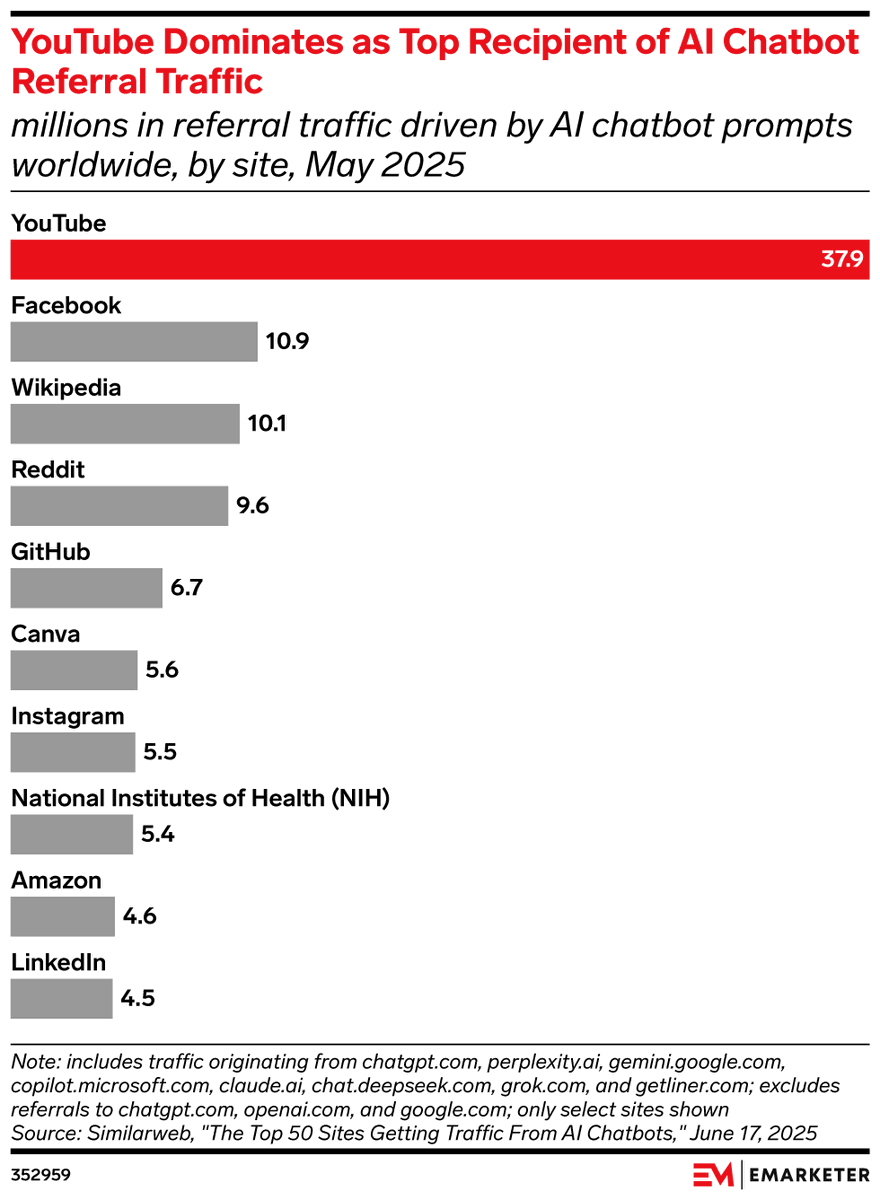
@PRcarly Earned media + YouTube is the winning combo IMO
Nick Schenck tweet media
English
1
0
5
672