Nicholas Tatonetti

5K posts

Nicholas Tatonetti banner
Nicholas Tatonetti

Nicholas Tatonetti

@proftatonetti

Prof @CedarsSinai making drugs safer 1B data points at a time. @Stanford BMI PhD; @Columbia DBMI; @tatonetti.bsky.social; EiC BioData Mining; he/they 🏳️‍🌈

Los Angeles, CA Katılım Aralık 2008
844 Takip Edilen3.2K Takipçiler
Nicholas Tatonetti
Nicholas Tatonetti@proftatonetti·
We then tested a simple correction pipeline: WhisperX transcription → LLM correction Passing transcripts through an LLM told to “adjust the errors” reduced word error rates by ~4.5–6.9 pts This also narrowed the gap between groups nature.com/articles/s4174…
English
0
0
0
49
Nicholas Tatonetti
Nicholas Tatonetti@proftatonetti·
Some patterns stood out 1) the gap was largest in base Whisper with ~11 point higher word error rates for non-native speakers 2) errors clustered in clinically dense language 3) more biomedical terminology > higher error rates - medication/disease names were especially vulnerable
English
1
0
0
85
Nicholas Tatonetti
Nicholas Tatonetti@proftatonetti·
GI fellow Jamil Samaan noticed something odd when using AI ambient scribes and speech transcription tools Clinicians with non-native English accents appeared to confuse the model He and Yassi Fatapour decided to investigate, now out in npj Digital Medicine nature.com/articles/s4174…
English
1
2
5
950
Nicholas Tatonetti
Nicholas Tatonetti@proftatonetti·
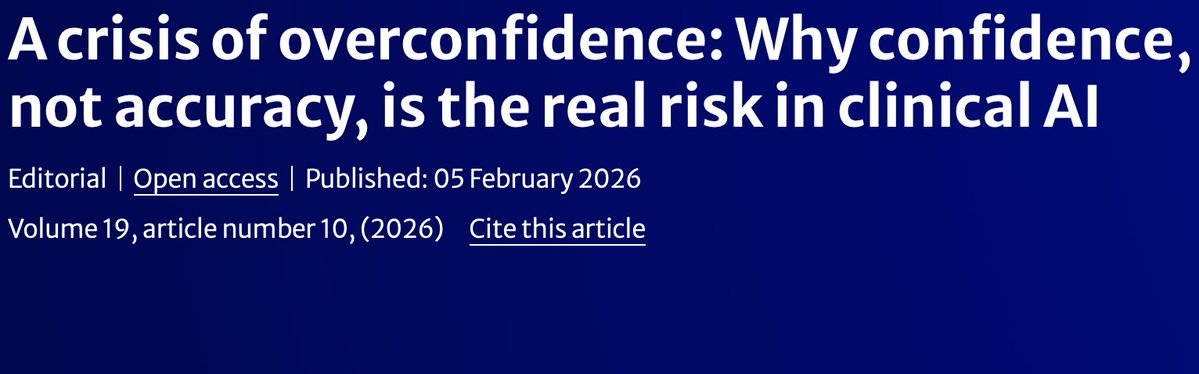
New editorial in BioData Mining: A crisis of overconfidence in clinical AI led by @CedarsSinai PhD student, Jacob Berkowitz. Why sounding confident can be more dangerous than being inaccurate, and why calibration needs to be central in clinical AI. link.springer.com/article/10.118…
English
1
1
6
417
Nicholas Tatonetti retweetledi
Demis Hassabis
Demis Hassabis@demishassabis·
AlphaGenome is our latest & most advanced genomics model published in @Nature today including making the model & weights available to academic researchers. Can’t wait to see what the research community will do with it. Congrats to the team on our newest front cover! #AI4Science
Google DeepMind@GoogleDeepMind

Our breakthrough AI model AlphaGenome is helping scientists understand our DNA, predict the molecular impact of genetic changes, and drive new biological discoveries. 🧬 Find out more in @Naturegoo.gle/4bXlV6y

English
127
680
4.8K
501.4K
Nicholas Tatonetti retweetledi
Eric Topol
Eric Topol@EricTopol·
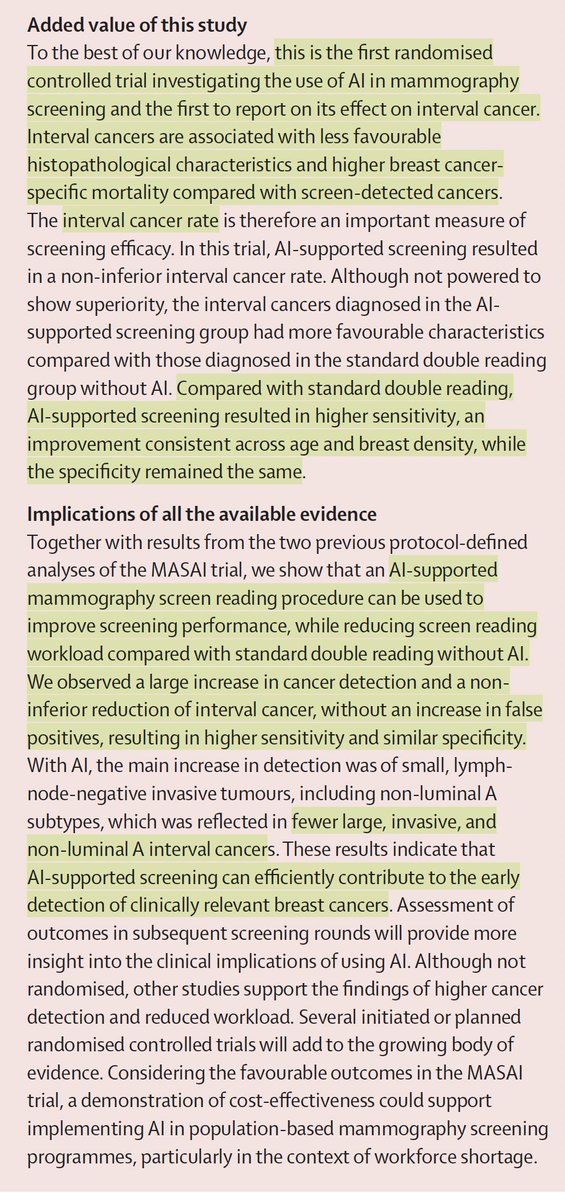
The largest randomized trial of medical A.I. —Over 100,000 women in Sweden —radiologist + AI vs 2 radiologists, in follow-up —AI added led to 29% more cancer detected, 44% reduced workload, and —Less cancer dx in subsequent 2 years, and, when found, less aggressive thelancet.com/journals/lance…
Eric Topol tweet media
English
111
1.3K
6K
1.5M
Nicholas Tatonetti retweetledi
Apoorva
Apoorva@apoorvasriniva·
I’m sorry but claude code is slop for research projects when you let it make its own decisions
English
0
1
11
2.9K
Nicholas Tatonetti
Nicholas Tatonetti@proftatonetti·
Excited to announce our new project with ARPA-H which advances methods to artificially accelerate the aging of organoids to study drug toxicities over time. A current huge gap in our understanding and our models. cedars-sinai.org/newsroom/cedar…
English
0
1
11
3.1K
Nicholas Tatonetti retweetledi
James Lucas
James Lucas@JamesLucasIT·
After twelve years of work, the world’s most beautiful subway station has been inaugurated in Rome: Colosseo, an underground archaeological museum.
English
208
1.1K
8.1K
555.8K
Nicholas Tatonetti retweetledi
Niko McCarty.
Niko McCarty.@NikoMcCarty·
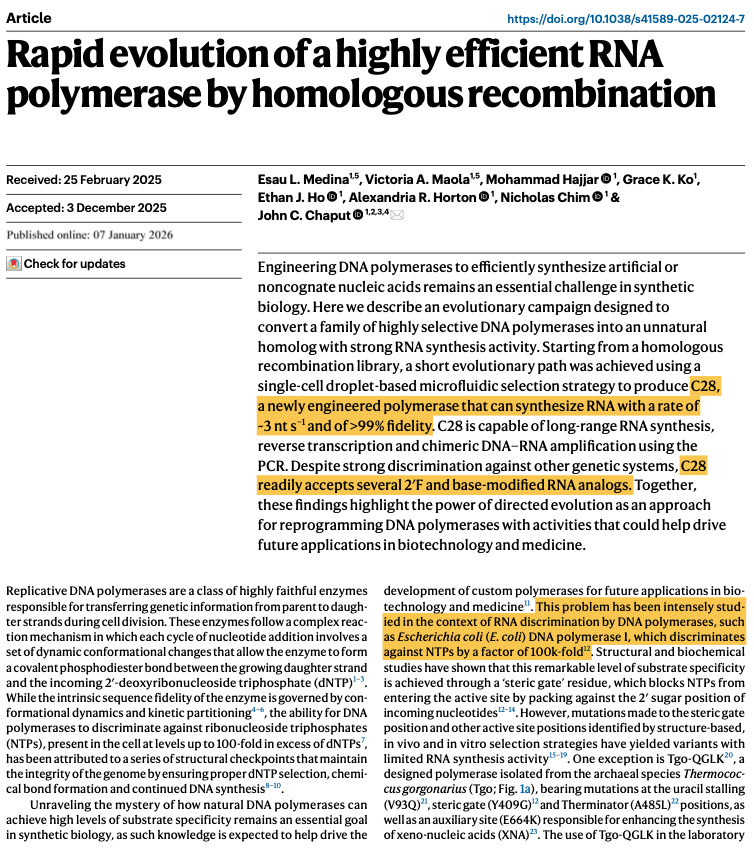
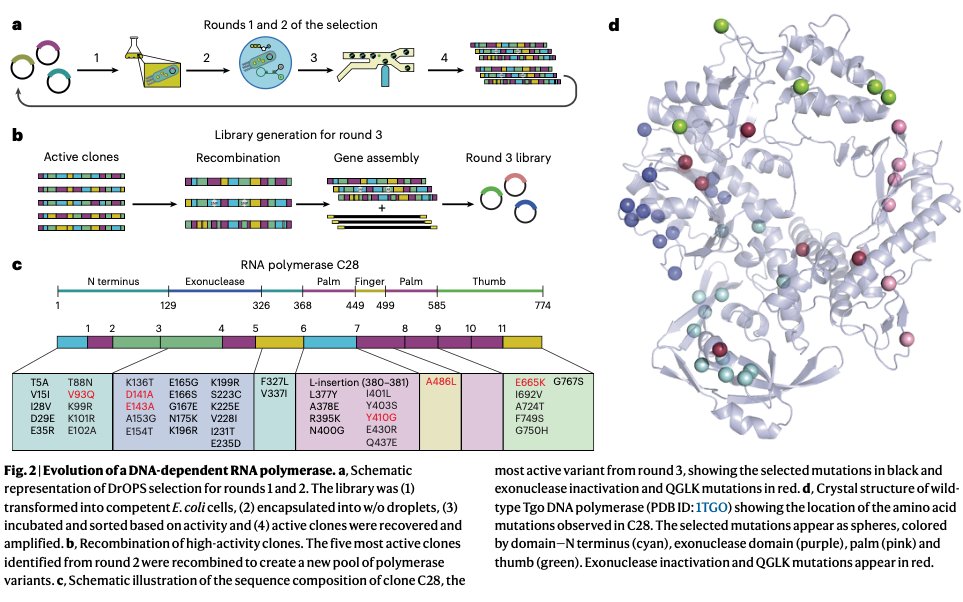
This paper is wild. After 3 rounds of directed evolution, they converted a DNA polymerase into an enzyme that can do: - RNA synthesis - Reverse transcription - Synthesis of "unnatural" nucleotides - Synthesis of DNA-RNA chimeras One of the best papers I’ve read recently. For context: In nature, it is DNA polymerase that takes a DNA sequence as a template and then copies it. These enzymes are crucial in replicating the genome for cell division, and they are EXTREMELY specific for DNA over RNA. This is key because RNA nucleotides are present in the cell at concentrations ~100x higher than DNA nucleotides, so the enzyme has evolved clever strategies to select one over the other. RNA polymerases, for comparison, are the enzymes that take a DNA sequence as template and then convert it into RNA. They are involved in gene expression, for example. To convert a DNA polymerase into an RNA polymerase (and all the other functions I mentioned earlier), the authors did a fairly straightforward directed evolution experiment. First, they took four DNA polymerase enzymes belonging to various archaea. These DNA polymerases don’t check for DNA vs. RNA as stringently as other types of cells, so they’re a good starting point to evolve RNA polymerases. The authors inserted some targeted mutations into these enzymes, based on known mutations in the literature. For example, they swapped the amino acid at position 409 for a smaller amino acid, thus removing a “gate” that keeps RNA building blocks from entering the enzyme. Next, they took the four genes encoding these DNA polymerases and cut them up into 12 segments each. They randomly stitched these 12 segments together — from the four different genes — to build millions of unique variants. Each shuffled gene was inserted into an E. coli cell. Then, they grew up these cells (each carrying a unique polymerase) and put them into microfluidic droplets. A device isolates each droplet, lyses the cell open, and releases the polymerase. The droplet also contains RNA building blocks and a DNA template, encoding a fluorescent reporter. If the polymerase begins synthesizing RNA, it will produce a detectable signal. They screened about 100 million droplets in 10 hours of work, searching for those with a signal. For each well that yields a fluorescent signal, the researchers isolated the DNA and sequenced it to figure out which polymerase it was. They repeated this 3x times, finally isolating a really excellent RNA polymerase variant which they called "C28." C28 has 39 mutations compared to the wildtype enzymes. It incorporates about 3.3 nucleotides of RNA per second, with 99.8% fidelity. The crazy thing is that this enzyme can also copy DNA or RNA templates back into DNA (reverse transcription), or use chimeric DNA-RNA molecules as a template and amplify them. It is just a super versatile polymerase that can act on DNA, RNA, or modified nucleotides, to build just about anything.
Niko McCarty. tweet mediaNiko McCarty. tweet media
English
16
364
1.7K
86.2K
Nicholas Tatonetti
Nicholas Tatonetti@proftatonetti·
Science matters – and so do its stories. Knowable Magazine is producing consumer friendly stories about real scientific discoveries. If you'd like to support their efforts through donations, you can find out more here: secure.qgiv.com/for/knowable-m…
English
0
0
0
120
Nicholas Tatonetti retweetledi
Apoorva
Apoorva@apoorvasriniva·
I’ll be at NeurIPS Dec 2-4 and at the Foresight Institute event in SF Dec 5-7. If you’re working on AI in bio— may I meet you?
English
9
3
93
20.4K
Nicholas Tatonetti retweetledi
Christoph Bock Lab @ CeMM & MedUni Vienna
🗨️ Just published in @NatureBiotech: Our CellWhisperer AI enables chat-based analysis of single-cell sequencing data. You can talk to your cells & figure out the biology without writing any computer code. Paper link and annotated walkthrough in the thread below (1/11)
English
12
185
695
64K
Nicholas Tatonetti retweetledi
Steven N. Durlauf
Steven N. Durlauf@sndurlauf·
In light of James Watson's death, I post this article which clarifies Rosalind Franklin's contributions to the discovery of the structure of DNA. It is richer than the conventional narrative. nature.com/articles/d4158…
English
23
279
922
162.6K