chana/חנה🎗️🇮🇱🪬✡️🏳️‍🌈

6.7K posts

chana/חנה🎗️🇮🇱🪬✡️🏳️‍🌈

chana/חנה🎗️🇮🇱🪬✡️🏳️‍🌈

@psych_yo_mind

Proud Black Israeli 🇮🇱Jew 100% for peace between people, nations, & inner peace. Lover of life-always sarcastic. Still waiting for my Jewish space laser⚡️🇫🇷

paradise Katılım Haziran 2011
593 Takip Edilen667 Takipçiler
chana/חנה🎗️🇮🇱🪬✡️🏳️‍🌈 retweetledi
Rachel Gur
Rachel Gur@RachelGur·
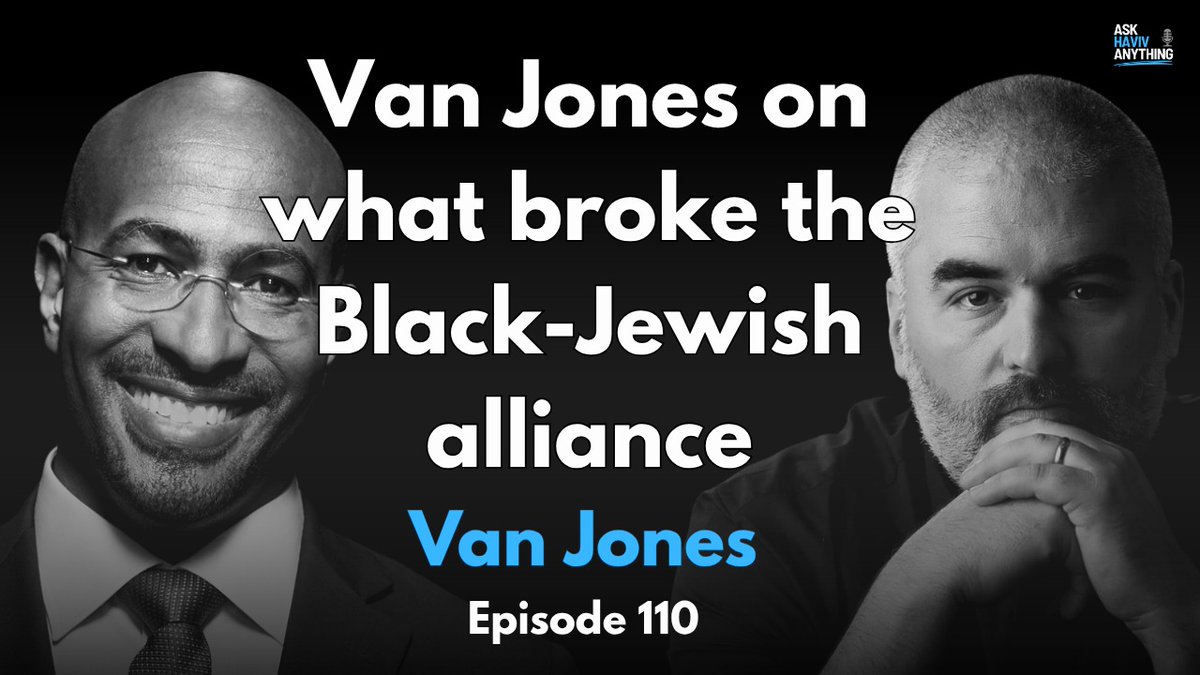
In this unflinching conversation we delver into the mistrust and unraveling between America's Black and Jewish communities that once changed history together. From civil rights to October 7, DEI to Gaza, we ask what happened, and whether that venerable alliance can be rebuilt.>
Rachel Gur tweet media
English
16
27
170
19.3K
chana/חנה🎗️🇮🇱🪬✡️🏳️‍🌈
@Howard_Lovy I remember been there with the dems but October 7th opened my eyes. Was a Democrat since I could first vote a couple decades ago. It’s crazy how much my views haven’t changed but the party has gone down hill fast.
English
0
0
7
177
chana/חנה🎗️🇮🇱🪬✡️🏳️‍🌈 retweetledi
Haviv Rettig Gur
Haviv Rettig Gur@havivrettiggur·
We were never America's charity case. America gave Israel aid because it was in America's interest to do so. It was buying tech no one else would or could make until Israel proved it was possible, like Iron Dome. It was also a massive federal grants program to certain Congressional districts, because among its many conditions, nearly all of it had to be spent in America. There's a famous story told by older Israelis about how the aid crashed the textile industry in Israel's south, a major employer in that working-class region, because the IDF started to buy uniforms from American manufacturers. And over the years, a great many of us have chafed at the loss of independence this aid represented -- including over the past three years, again and again. @EinatWilf made this point: "I’m soooo on board for that! Does this mean that we will finally be allowed to: 1) buy what we want, and from whomever we want and most important, develop and produce what we want even if it competes with American products? 2) win our wars rather than be constantly subjected to arrested development ceasefires?" And everybody in Washington knows all this. Netanyahu himself once talked this way, back in the late 90s, until the beneficiaries (on both sides) told him to shut up. This aid was seen in Washington as leverage over the Israelis -- and America has always sought leverage, from the Kennedy-initiated Cold War "bear hug" to keep Israel from going nuclear to Biden's slow-walking of shipments. There are significant knock-on benefits to Israel if the aid goes away. Here's a big one: A US-induced budget crunch might force Netanyahu to finally cut some of the vast, unique Haredi welfare payouts that keeps half of Haredi men out of the job market. And in military terms, independence is even more critical. For example, we all need to be building at least ten times as many drones, missiles and missile-defense interceptors going forward. Or maybe 50 times. Israel has to get serious about massively upping indigenous production and getting away from reliance on any foreign power, even an ally as powerful as America. Financial aid that forces Israel to buy American interceptors delays that critical shift. (America should also be massively upping production and stockpiling, by the way; these technologies are the future of war, and not even America's production capacity reflects that fact.) Long story short, my "camp" in Israeli thinking -- call us the "fiscal responsibility because we're adults" camp that once, in his better days, included Netanyahu -- has always believed and publicly argued that when the aid ends, it'll be a net benefit for Israel. And one final comment: If the aid really does dry up, this will be celebrated as a win by our enemies, by those who yearn to see Israel fall. Good. In fact, this outcome may be the strongest argument for doing it. The movement to destroy us, especially among Arab and Muslim ideologues, has spent literally generations explaining that we only win wars or thrive economically because we have the backing of America. (And before America it was the French, and before the French the Soviets, and before the Soviets the British, and before the British the Russians...you get the idea. For a century and a half, our enemies told this same story to avoid the possibility that our own strength and competence are the reasons we survive and win.) So when we continue to win in a future shorn of American aid, our enemies will learn something valuable about us, something that might make some of them rethink the strategy of sacrificing new generations of Arab or Persian treasure, honor and blood on the altar of our destruction. So let them celebrate. It's really important that they go through the whole psychological arc. The greater the triumphant expectation, the more powerful and educational will be the ultimate failure.
RedWave Press@RedWavePress

Rahm Emanuel: “No more U.S. military aid—financial assistance from the taxpayers for Israel. You’re a country like all other allies of ours, Japan, South Korea, the Brits, the Germans. You’re going to pay full price; you can buy what you want, but you have to abide by the laws that should be it.” “No more U.S. taxpayer support... I was in the room when President Obama’s largest assistance was under President Obama. We did the funding for the Iron Dome. But here, the days of taxpayer subsidizing Israel are over.” “No more financial aid.”

English
412
638
2.9K
387.6K
chana/חנה🎗️🇮🇱🪬✡️🏳️‍🌈 retweetledi
David Bernstein
David Bernstein@ProfDBernstein·
How do people with a straight face say that Israel get "military aid" but South Korea doesn't, simply bc one is officially in the foreign aid budget, and one is buried in the military budget. The US has over 20K soldiers stationed in South Korea, there as a tripwire in case the North attacks. This costs *FAR* more than military aid to Israel, and also puts thousands of American soldiers directly in harm's way.
RedWave Press@RedWavePress

Rahm Emanuel: “No more U.S. military aid—financial assistance from the taxpayers for Israel. You’re a country like all other allies of ours, Japan, South Korea, the Brits, the Germans. You’re going to pay full price; you can buy what you want, but you have to abide by the laws that should be it.” “No more U.S. taxpayer support... I was in the room when President Obama’s largest assistance was under President Obama. We did the funding for the Iron Dome. But here, the days of taxpayer subsidizing Israel are over.” “No more financial aid.”
English
247
496
2.6K
417.4K
chana/חנה🎗️🇮🇱🪬✡️🏳️‍🌈 retweetledi
Ahmed Fouad Alkhatib
Ahmed Fouad Alkhatib@afalkhatib·
A ceasefire that freezes the conflicts in Lebanon and Iran, just as it did in the Gaza Strip, without addressing the perpetual and catastrophic risk that Hezbollah, the Iranian regime, and Hamas pose to their people, neighbors, and the entire world, is a tried-and-tested formula for more war, future destruction, and stagnation in the Middle East. Kicking the can down the road and failing to turn ceasefires into new and transformative beginnings cast serious doubt on claims of total victory or grand proclamations of success and achievement. Most are interested in sparing lives and preventing further uncalculated escalations that can destroy the global economy and cause serious harm to US interests and those of its allies. However, those who scream for ceasefires are the first to move on once conflicts are no longer in headlines or impacting them personally, allowing for conflicts to be frozen, transitions to be paralyzed, and for terror agents of chaos to continue posing a threat and preparing for the next round of fighting. Caring about Lebanese, Iranian, and Gazans means being concerned with Hezbollah, the regime, and Hamas, and how these three have caused unimaginable levels of harm and devastation to their populations and nations.
English
19
173
601
23.7K
chana/חנה🎗️🇮🇱🪬✡️🏳️‍🌈 retweetledi
Rachel Gur
Rachel Gur@RachelGur·
Ezra Klein’s recent video about the “one-state reality” of Israelis and Palestinians caused a stir. It’s what a foreigner might think who isn’t curious about what Israelis and Palestinians think is happening to them. Here is @havivrettiggur response:
English
149
457
2.4K
229K
chana/חנה🎗️🇮🇱🪬✡️🏳️‍🌈 retweetledi
John Spencer
John Spencer@SpencerGuard·
For those that do not know, the members of the Senate that attempted to block bulldozer sales to Israel were trying to prevent them from receiving (delivery of bulldozers they purchased) the primary device/vehicle (D9 bulldozer) the IDF uses to protect soldiers when entering Hamas/Hezbollah terrain filled with IEDs and ambushes. IMO.
Amit Segal@AmitSegal

Last night, the U.S. Senate voted on a pair of resolutions aimed at blocking arms and bulldozer sales to Israel. Israel and the U.S. did not lose the war to Iran, but Israel is rapidly losing the battle for public opinion. Also, the shekel hits a 30-year high, and Bibi calls the Lebanese president. All in today’s edition of It’s Noon in Israel. open.substack.com/pub/amitsegal/…
English
103
344
1.2K
73K
chana/חנה🎗️🇮🇱🪬✡️🏳️‍🌈 retweetledi
Congressman Randy Fine
Congressman Randy Fine@RepFine·
I was born in the United States. My parents were born in the United States. Two of my grandparents were born in the United States more than 100 years ago. Neither of the other two were born in Israel. I never even visited Israel until I was in my 30s. Hasan Piker is the child of two Turkish Muslims who engaged in birth tourism so he could become “American,” after which he was immediately taken to Turkey and spent his entire childhood. Piker said “America deserved 9/11.” “KiII the motherf*ckers. Let the streets soak in their red, capitalist bIood!" “If you cared about Medicare fraud, you would kill @SenRickScott” He has campaigned alongside Representatives @RepSummerLee @RoKhanna @IlhanMN @RashidaTlaib @ZohranKMamdani @AOC and @BernieSanders This is the Democrat Party today. @DanaBashCNN @jaketapper
hasanabi@hasanthehun

buddy youre getting deported to israel

English
4.5K
4.8K
31.1K
3.8M
chana/חנה🎗️🇮🇱🪬✡️🏳️‍🌈 retweetledi
Brianna Wu
Brianna Wu@BriannaWu·
I’m so glad I actually went to Israel. Because when you go there, you can see how every part of these leftist talking points are wrong. First, Israel does not want to “expand its borders.” There’s barely anything in northern Israel, and the IDF doesn’t need more territory to control. What they do want is to disrupt line of sight. It’s remarkable to stand on a mountain ridge and see Jordan, Gush Etzion and Tel Aviv with your naked eye. Imagine what someone could do with a rocket or sniper rifle standing on the mountain ridges of Syria. Secondly, Israel did not want to “destroy Gaza.” They did need to disrupt the tunnel system (paid for with US aid money) that Hamas had designed to hide in. The reason for this is Hamas told the world repeatedly they’d repeat October 7th. Thirdly, the thing Israelis want more than anything is to be left alone. It’s underappreciated here in America, but Israelis are tired of running to bomb shelters in the middle of the night. I had a conversation with a friend whose father lives in northern Israel last week. They decided as a family it was safer for him to stay in bed and risk being killed by a rocket than continue going down the stairs in the risk he could break his hip. Can you imagine having that conversation with your father? There is such a profound lack of understanding of the Israeli perspective in Democratic circles. Part of it is the fact that Israel is remarkably bad at putting out their point of view to the public, but the larger reality is the left inclined to believe the worst of Jews for some reason.
Lu Korte@homewithlu

@BriannaWu That ratio is BS. Is everyone supposed to die so Israel can expand its borders? Not much left in Gaza to destroy, might as well start on Lebanon. Israel Foreign Ministry has no credibility, they simply support war crimes.

English
321
215
1.6K
253.5K
chana/חנה🎗️🇮🇱🪬✡️🏳️‍🌈 retweetledi
Melissa Chen
Melissa Chen@MsMelChen·
May I offer a different perspective on the whole transatlantic family feud brewing over NATO. Europeans are furious at what they call American unilateralism and "wars of choice," while Americans are done subsidizing allies who won't lift a finger when Washington actually needs them. Given all the sentimentality and historical baggage, there’s been a lot of bad blood and high grade insults thrown both ways. A lot of pride here is at stake. But given that I am not American or European, what I can provide is an Asian perspective. The whole thing looks very different as there are no blood ties or cultural nostalgia to pull me either way. Because of distance, the default Asian lens on America has always been colder, clearer, and far more pragmatic than the European one. Asians have never lived under the illusion that their relationship to the US is one based on shared values. If they ever did, the illusion was shattered during the Cold War. Instead, Asian nations saw the relationship to America as a cold, interest-driven bargain in a dangerous neighborhood full of communists, insurgents, and bigger powers. Fast forward to today, and this lesson still holds. Japan, South Korea, the Philippines, Vietnam, Singapore and Indonesia all partner with America because their interests (not values) align - especially when it comes to countering China. These nations have reasons to be alarmed about Beijing's ambitions in the South China Sea, around Taiwan, and across the Indo-Pacific. They don't need lectures about democracy or liberal international order to see the value in US forward presence, intelligence sharing, tech transfers, and security guarantees. It's a straight-up transactional deal: the US keeps the sea lanes open and the PLA at bay. Meanwhile, Asian nations host your bases, buy your weapons, and join your alliances (Quad, AUKUS, etc.). When interests diverge, they adjust pragmatically, without the drama and meltdown. Probably not many in the West know this, but one of the forces that shaped this attitude was the US pullout of Vietnam and the rest of America’s Cold War shenanigans. Lee Kuan Yew was one of America’s loudest cheerleaders in Southeast Asia. In 1967 he flew to Washington, testified to Congress, and begged Lyndon Johnson (and later Nixon) not to cut and run in Vietnam. He warned that a hasty US exit would trigger the dominoes - Vietnam, Cambodia, Laos, and then pressure on the rest of Southeast Asia. Singapore became a logistical hub, providing a haven for US troops on R&R, oil refineries supplying the American war machine, and Lockheed servicing aircraft. At one point, US military-related spending made up 15% of Singapore’s entire GDP. Singapore didn’t support the war because it loved American democracy but because it kept the communists tied up and bought Southeast Asia time to build up its own economy and military. Then came the pullout - the Paris Accords in 1973 and then Saigon falls in 1975. Despite all the lobbying, despite the blood and resources America had spent, domestic politics in the US (the anti-war movement, Congress, Vietnam syndrome etc.) ended it. LKY watched in disbelief as the superpower that had promised to hold the line simply walked away. The lesson was that American commitments are real only as long as they serve American interests and American voters don’t get tired. It’s a brutal one to internalize. LKY was disappointed and noted American “unreliability” but Singapore didn’t collapse into panic or anti-Americanism. They just recalibrated and kept pursuing pragmatism by building its own deterrent, diversifying partners, and later offered the US naval logistics access (Sembawang port) when the Philippines kicked them out of Subic Bay in the early 1990s. Malaysia drew the same conclusion. The Tunku was pro-Western and anti-communist early on, but Malaysia never joined SEATO and pushed ZOPFAN (Zone of Peace, Freedom and Neutrality) instead. When the British announced their East-of-Suez withdrawal in 1968 and Nixon’s Doctrine (1969) told Asians “you defend yourselves first, we’ll just help,” Kuala Lumpur accelerated its neutralist tilt. The message was clear - don’t count on Washington to bleed indefinitely for distant allies. South Korea is similarly pragmatic but it operates under far higher stakes due to baggage from the Korean War and the ongoing North Korean threat. American intervention literally saved the South from conquest, resulting in a bond that is forged in blood. While South Korea had to learn the same lessons - that the American umbrella isn’t permanent, sharing a border with a nuclear-armed adversary forces tighter coupling with Washington. The reverberations of Nixon’s 1973 opening to Beijing cannot be understated. It shocked the entire region that America, the great anti-communist crusader, suddenly would cozy up to Mao to counter the Soviets. If Washington could flip on core principles when interests demanded it, why should smaller states pretend the relationship was about anything deeper? The core Asian critique of the European approach to dealing with America is that it is entirely bound up in moral values and civilizational kinship. This means that every disagreement feels like a betrayal and breeds resentment on both sides. Because Europe is so hyped up on abstract values, it makes NATO feel like a sacred club that America is disrespecting. Asia's interest-based lens sees alliances as tools - useful until they're not. Maybe Europe thinks the Asian approach is cynical but the irony is that this is actually what keeps Indo-Pacific partners far more reliable counterweights to China than many NATO members ever were against Russia.
Marc Thiessen 🇺🇸❤️🇺🇦🇹🇼🇮🇱@marcthiessen

So many longtime NATO supporters saying the same thing right now. I helped bring Poland, Hungary and Czech Republic into NATO. But denying us basing and overflight is inexcusable, as is their failure to help with Strait of Hormuz. No one asking them to bomb Iran, just let us use our bases and help escort ships. If they can’t do that, NATO has no purpose.

English
394
830
4.4K
665.7K
chana/חנה🎗️🇮🇱🪬✡️🏳️‍🌈 retweetledi
Izabella Tabarovsky
Izabella Tabarovsky@IzaTabaro·
I’m asked this a lot in my lectures: Why did the Soviets invest so many resources in propagating antizionism globally? Did they really hate Jews that much? The answer is that they invested in antizionism because it worked for them, both geopolitically and domestically. To be sure, there were many individuals in the Soviet antizionist apparatus who were driven by personal antisemitism. The Zionologists — individuals tasked with formulating the key tenets of the ideology — are the prime example. But at the state level, the demonization of Israel served much bigger, strategic purposes. It strengthened the Soviet-Arab alliance. It helped mobilize groups and states around the world against the US and the West, pulling them into the Soviet anti-Western orbit, including at the UN. At home, it functioned as a warning to other minorities: don’t organize around your own national interests, and definitely forget about any emigration demands. For the Soviets, antizionism was a tool — and a highly effective one at that. That’s why they kept using it, even when internal discussions acknowledged that their antizionist language was echoing the Protocols and Nazi propaganda. This is useful to understand because antizionism is still a political tool today. We talk a lot about antizionist hate, and there is no question that much of it is driven by that. But there are also political entrepreneurs who use antizionism to get ahead: to gain social media followers, raise money, advance socially and professionally, or pursue political goals. States do the same: witness South Africa filing its case against Israel at the ICJ or China deploying antizionist propaganda online. When incentives align, antizionism gets used. And right now, antizionism is rewarded. It’s a crucial aspect of its growing popularity, and it’s really important that we understand it as we develop strategies to combat it.
Judea Pearl@yudapearl

@LekhtNaya @gabedrawsX What still remains unexplained is why the Soviet spent so much energy in this propaganda? Why were Jews such a threat to them? Who were they really targeting? @LekhtNaya

English
76
806
2.4K
186.4K
chana/חנה🎗️🇮🇱🪬✡️🏳️‍🌈 retweetledi
Vivid.🇮🇱
Vivid.🇮🇱@VividProwess·
Douglas Murray: "Imagine what kind of a psychopath you have to be to gang rape a girl and then shoot her in the head. Most won't be proud of that, but Hamas is." The vast majority of Gazans celebrated this.
English
419
6.6K
27.3K
238.5K
chana/חנה🎗️🇮🇱🪬✡️🏳️‍🌈 retweetledi
Howard Lovy
Howard Lovy@Howard_Lovy·
My friend @LoganLevkoff lost her job because she is an outspoken Zionist. This is an absolute outrage. Her story needs to be amplified, and her former employers held accountable. thefp.com/p/i-was-fired-…
English
2
66
323
12.5K
chana/חנה🎗️🇮🇱🪬✡️🏳️‍🌈 retweetledi
Eyal Yakoby
Eyal Yakoby@EYakoby·
BREAKING: President Trump confirms that 45,000 Iranians were slaughtered by the Iranian regime in January.
English
2K
2.1K
9.9K
495.9K