Pulkit Gupta

246 posts

Pulkit Gupta

Pulkit Gupta

@pulkit_gupta2

@TsentaAi (YC S26)

Indianapolis Katılım Eylül 2022
171 Takip Edilen300 Takipçiler
Sabitlenmiş Tweet
Pulkit Gupta
Pulkit Gupta@pulkit_gupta2·
Tsenta (YC S26) is now backed by Y Combinator This isn’t a “we made it” post. It’s more like a checkpoint and a reminder of the loop that’s shaped my life for years: build → ship → get feedback → repeat I am 19 today, but I actually started building long before I knew what startups were. When I was 10, I remember telling my parents I wanted to start my own company someday. COVID accidentally gave me an entry point. I stumbled across a YouTube tutorial: “Build a WhatsApp clone with React.” I had basically zero context. I followed it line-by-line, didn’t understand half of it… and still watched something I made come alive on the screen. I got addicted to building. For months, I built every day. First I copied tutorials. Then I started tweaking things. Then I started trying to build from scratch. I made full-stack clones, YouTube, Netflix, Google Meet, auth, databases, APIs, frontends… the whole thing. I recorded long, uncut walkthroughs and posted them online. There are 50+ hours of those videos still out there today. By the end of high school, I’d built 50+ projects. But looking back, almost all of were someone else’s ideas. I was getting strong at execution, but I still didn’t have ownership, the kind where you’re obsessed with one specific problem and willing to bleed for it. Then college started, and I thought the hard part was done. I genuinely believed: if you can build real things end-to-end, getting internship interviews should be straightforward. Wrong. I could ship. I could build full-stack products. But I couldn’t get a single interview. Not one. It wasn’t just frustrating, it was confusing. It felt like the system didn’t reward builders. It rewarded people who were good at navigating the process. The problem wasn’t ability. It was distribution. That’s when I met Agnay Srivastava He was stuck in the same loop, capable, motivated, doing real work, still getting blocked by the internship/job application grind. So we stopped trying to “play the game better” and started building the thing we wished existed. That became Tsenta. Getting into YC feels like a higher bar: • ship faster • talk to users more • be brutally honest about what’s broken • keep earning trust Grateful to @snowmaker for believing in us.

Pulkit Gupta tweet media
English
6
1
26
2.8K
Pulkit Gupta
Pulkit Gupta@pulkit_gupta2·
would you use something like this? find and apply to jobs from imessage/whatsapp. our whole dekstop app condensed into a messaging platform.
Pulkit Gupta tweet media
English
3
1
6
292
Pulkit Gupta
Pulkit Gupta@pulkit_gupta2·
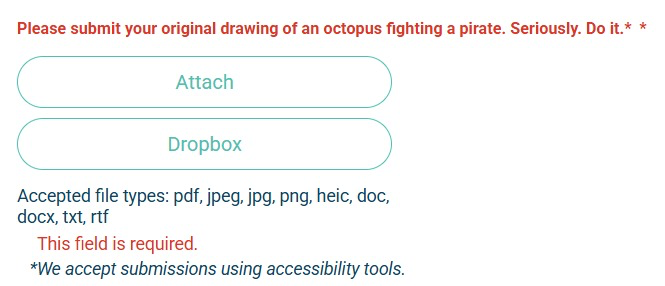
question for a job application.
Pulkit Gupta tweet media
English
3
2
5
270
Pulkit Gupta
Pulkit Gupta@pulkit_gupta2·
Y Combinator's Summer 2026 applications are open now. we got in with a b2c startup, no revenue and no pedigree, & while still in school. here's a no b.s. list of what worked for us. 1. make it obvious you lived the problem. Agnay and I each applied to 1,500+ jobs as international students. 150+ combined hours of repetitive form filling. we didn't have to explain why job applications are broken. we'd done it ourselves, hundreds of times. YC cares about founder-market fit more than almost anything. if you built this because you needed it, say that. 2. show you understand something fundamental competitors don't. our application had one line that I think mattered a lot: "browser-automation economics are fundamentally broken in the cloud. on-device is the only way to make this work at scale for consumers" jot down insights that only come from actually building in the space. put them front and center. 3. your "hack" answer matters more than you think. mine was about spending 4-5 months navigating the open-source Android community to get device trees open-sourced after a developer had closed them off, which took real relationships and a lot of building in a space i had no idea about. pick something that shows resourcefulness. 4. be embarrassingly specific. we listed exact user counts, exact costs per application, and all the hours we'd spent iterating. vague numbers read like you're hiding something. even if yours are small, own them. 5. rewrite every answer for brevity (and perhaps the most important). YC partners read thousands of applications. if they have to re-read a sentence to understand what you mean, you've lost them. we rewrote ours until every answer was obvious on first read. the application takes a few hours. getting in will likely change the trajectory of not just your company but your life. if you're building something real, just apply.
English
0
0
8
182
Pulkit Gupta retweetledi
Agnay Srivastava
Agnay Srivastava@AgnaySrivastava·
@ycombinator's Summer 2026 applications are open now. we got in with a b2c startup, no revenue and no pedigree, & while still in school. here's a no b.s. list of what worked for us. 1. make it obvious you lived the problem. Pulkit and I each applied to 1,500+ jobs as international students. 150+ combined hours of repetitive form filling. we didn't have to explain why job applications are broken. we'd done it ourselves, hundreds of times. YC cares about founder-market fit more than almost anything. if you built this because you needed it, say that. 2. show you understand something fundamental competitors don't. our application had one line that I think mattered a lot: "browser-automation economics are fundamentally broken in the cloud. on-device is the only way to make this work at scale for consumers" jot down insights that only come from actually building in the space. put them front and center. 3. your "hack" answer matters more than you think. mine was about spending 4-5 months navigating the open-source Android community to get device trees open-sourced after a developer had closed them off, which took real relationships and a lot of building in a space i had no idea about. pick something that shows resourcefulness. 4. be embarrassingly specific. we listed exact user counts, exact costs per application, and all the hours we'd spent iterating. vague numbers read like you're hiding something. even if yours are small, own them. 5. rewrite every answer for brevity (and perhaps the most important). YC partners read thousands of applications. if they have to re-read a sentence to understand what you mean, you've lost them. we rewrote ours until every answer was obvious on first read. the application takes a few hours. getting in will likely change the trajectory of not just your company but your life. if you're building something real, just apply.
English
0
1
5
170
Pulkit Gupta
Pulkit Gupta@pulkit_gupta2·
emails like these >>
Pulkit Gupta tweet media
English
2
0
7
178
Striver | Building takeUforward
Can someone help us get a Stripe invite? I'd like to integrate it for international customers. We have decent volume (8 digits in INR) annually. Anyone who works there, or has connection. Thank you in advance 😅 @stripe
English
58
6
881
150.4K
Pulkit Gupta
Pulkit Gupta@pulkit_gupta2·
My roommate had been applying to internships for 3 months. Barely any interviews. This month: • 3 interviews • one from Motorola • and he just got an offer. Another Tsenta user just landed an interview with Intel. Something’s working.
English
2
0
14
267
Pulkit Gupta
Pulkit Gupta@pulkit_gupta2·
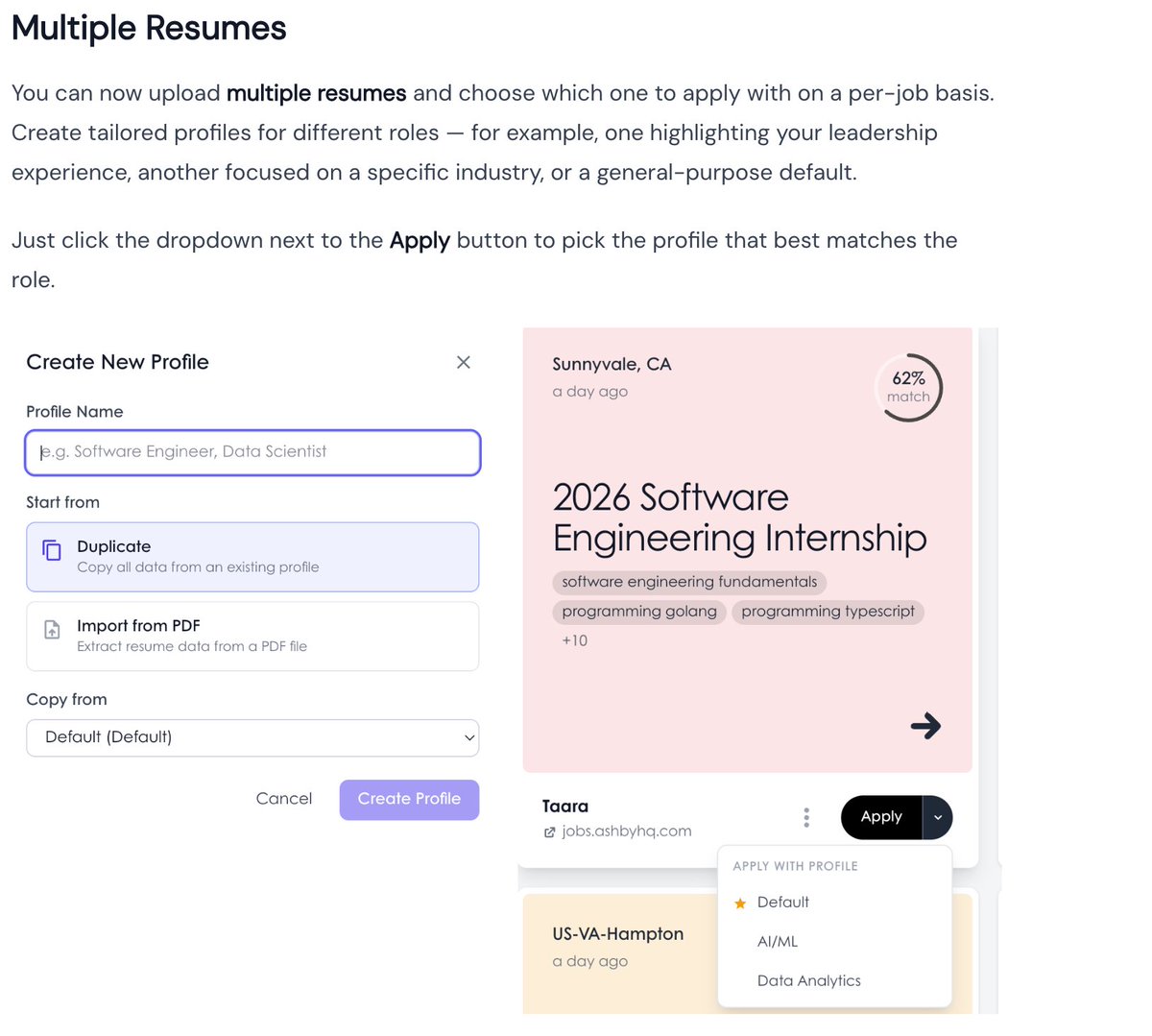
New on Tsenta: Create multiple profiles/resumes for different roles and choose the right one for each job you apply to.
Pulkit Gupta tweet media
English
2
1
10
423
Aman
Aman@Amank1412·
IIT MATTER BTW.
Aman tweet media
English
38
10
565
269.6K
Charlie Holtz
Charlie Holtz@charlieholtz·
Introducing Manual Mode™ Conductor now has a built-in file editor for when you want to edit files directly (like a caveman). We use it for quick edits, like .env files, json configs, or tailwind classes. Otherwise, ask the AI!
English
52
6
449
38.3K
Pulkit Gupta
Pulkit Gupta@pulkit_gupta2·
Speed beats networking in 2026. Every job gets 1000+ applicants. If you found the hiring manager’s email, so did 900 other people. And they still ask you to apply through the ATS for a reason, that’s how they vet at scale. Every single ATS rewards speed. Apply early and your resume actually gets read. We’re seeing users who send ~10 well-matched applications per day consistently land interviews. Bad markets reward systems. We’re building for exactly this.
English
4
0
12
213
Pulkit Gupta retweetledi
Agnay Srivastava
Agnay Srivastava@AgnaySrivastava·
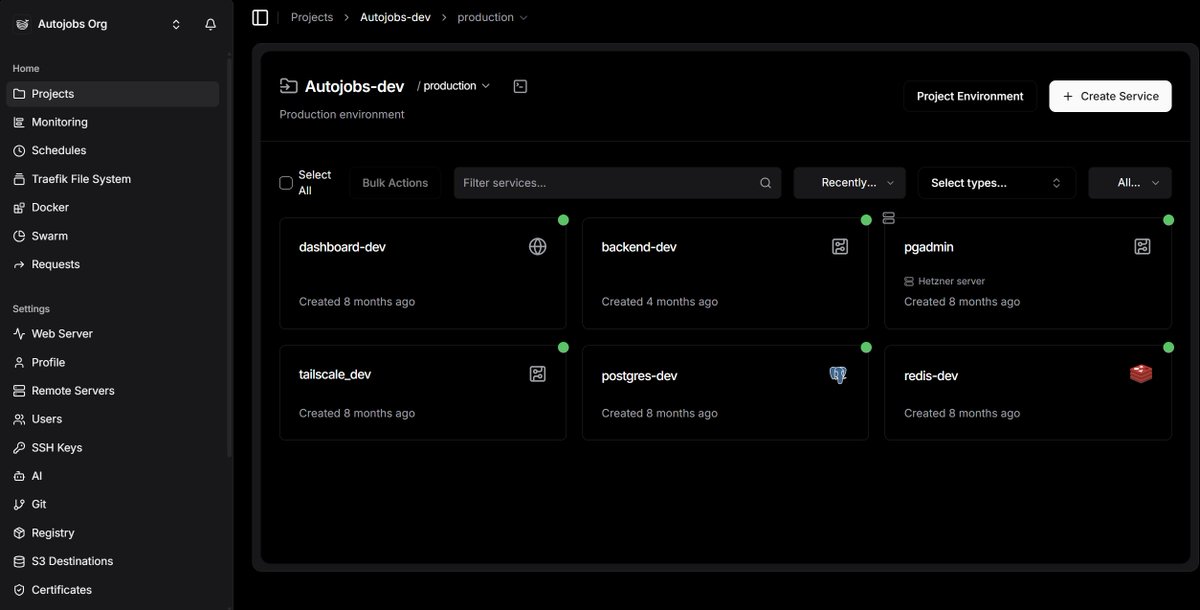
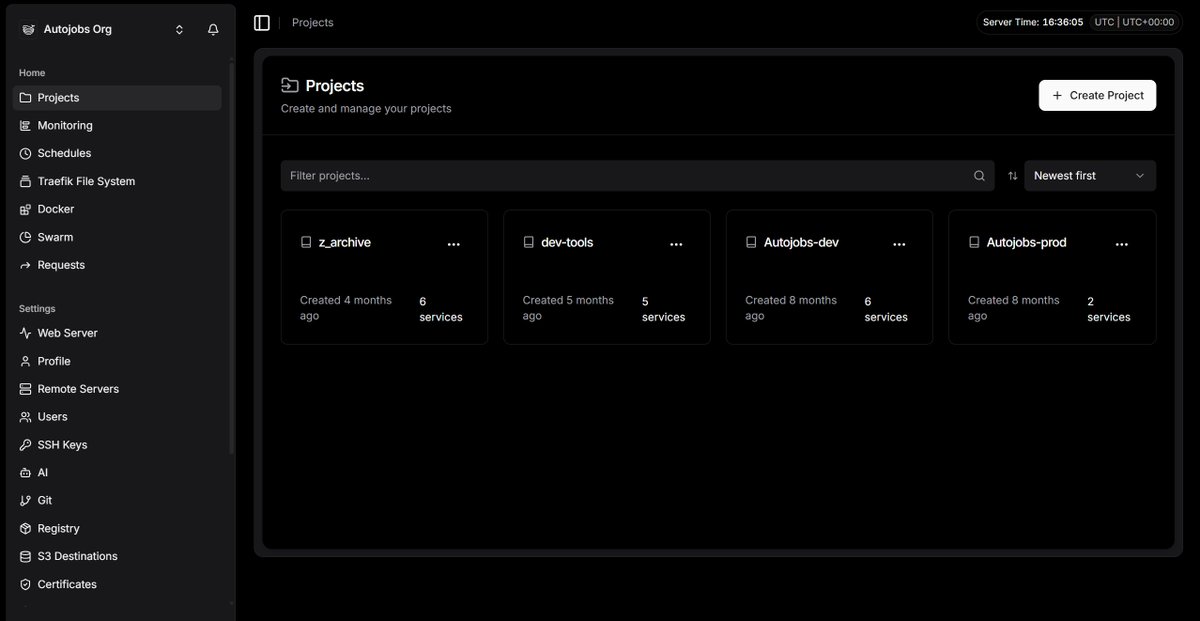
We launched our YC startup with a tech stack that costs $14.99/month. Every tool on this list is open source, self-hostable, and has zero vendor lock-in. Dokploy (@getdokploy) on a Hetzner VPS: Self-hosted PaaS with Docker templates and seamless CI/CD. Replaced Vercel and AWS for us. Can't recommend this enough. @better_auth - TypeScript-native authentication with full control over your user data, and one we wish we'd picked over Firebase. Rybbit (@yang_frog) - Privacy-friendly user analytics. Lighter than PostHog for getting started, and self-hostable. @PostgreSQL - The only database you will ever need. Their extension ecosystem alone makes it worth it. @infisical - Secrets management with end-to-end encryption. No more .env files scattered across Slack and Notion. @SignozHQ - Observability, logs, traces, and metrics in one place. Essentially DataDog without the bill. @mastra - TypeScript framework for AI agents and workflows. Ship AI features in hours, with solid LLM observability baked in. @nextjs - The default for frontend, and the one AI coding tools understand best. With AI, the setup overhead that used to justify vendor lock-in is basically gone. You don't need a $10k/month cloud bill to build something real. (screenshots of our dokploy setup below!)
Agnay Srivastava tweet mediaAgnay Srivastava tweet media
English
2
1
15
512
Pulkit Gupta retweetledi
Jared Friedman
Jared Friedman@snowmaker·
Software engineering changed more in the last 3 months than the preceeding 30 years. Everything about running a software company needs to be rethought from first principles.
English
355
713
6.8K
540.4K
Jason Filby
Jason Filby@jasonfi·
@pulkit_gupta2 I like how you do everything you can to remove friction from the process.
English
1
0
1
409
Pulkit Gupta
Pulkit Gupta@pulkit_gupta2·
this is 100% not true. we got into YC on our first attempt. idea -> job applications, B2C. revenue -> barely any when we applied traction -> 300 signups only. that too just from our college school -> small engineering school in Indiana connections -> 0 we never thought we'd get in without any significant traction. but we did. we had a product that worked and a problem we deeply understood and that's what matters.
Annie ❤️‍🔥@AnnieLiao_2000

my friend just got rejected from YC for the third time she's convinced it's because her idea wasn't good enough i looked at the other 22 people i know who applied here's what actually happened: applied: 23 people interviewed: 4 accepted: 1 the one who got in had $200k revenue, previous exit, stanford CS, and knew a partner my friend had a great idea and no traction but everyone on twitter says "YC funds ideas not just traction" technically true except the "ideas" that get funded come with revenue, pedigree, or network three of my friends quit their startups after YC rejection not because the idea was bad because rejection felt like validation they should quit five others applied again next batch same result the application took my friend 60 hours across rewrites she stressed for 2 months waiting now she's depressed and questioning everything YC rejection has this weight in SF that's insane like if YC didn't want it, maybe it's not worth building which is bullshit but the feeling is real i wish someone had told her: your odds were 0.1% from the start not because your idea sucked because you didn't have the traction/pedigree/connections yet build more, apply later, or don't apply at all YC isn't the only path but SF makes it feel like the only path that matters

English
12
1
140
25.2K