ShorThing

12 posts

ShorThing

ShorThing

@qubyte12

Katılım Eylül 2025
26 Takip Edilen2 Takipçiler
ShorThing retweetledi
qBitTensor Labs
qBitTensor Labs@qBitTensorLabs·
User adoption is picking up rapidly on @OpenQuantum_. Through initiatives like referral links, we are seeing an uptick in not only total users, but also active users, who are executing real quantum jobs on Bittensor. These metrics are strong indicators that the platform is gaining traction where really it matters — in communities of innovators conducting real quantum research. #quantum #openquantum #quantumcomputing #SN48
English
1
14
43
1.5K
ShorThing
ShorThing@qubyte12·
Man I love quantum
English
0
0
0
1
ShorThing retweetledi
Louise Beattie
Louise Beattie@LouiseBeattie·
I keep noticing the same pattern with Bittensor. People dismiss it as too complex, too early, too niche. Then they actually look into it. Then they can't stop looking into it. The complexity isn't a barrier, it's a filter. Those who get through it tend to stay. $TAO
English
6
8
60
3.9K
ShorThing retweetledi
qBitTensor Labs
qBitTensor Labs@qBitTensorLabs·
Low on spark credits? Well here’s your chance to restock! We’ve recently rolled out referral links to reward users for sharing @OpenQuantum_ with their friends. Each user receives a unique code which they can use to easily invite others. For every successful referral, users will receive 50 Spark Credits!
English
1
7
22
1K
ShorThing
ShorThing@qubyte12·
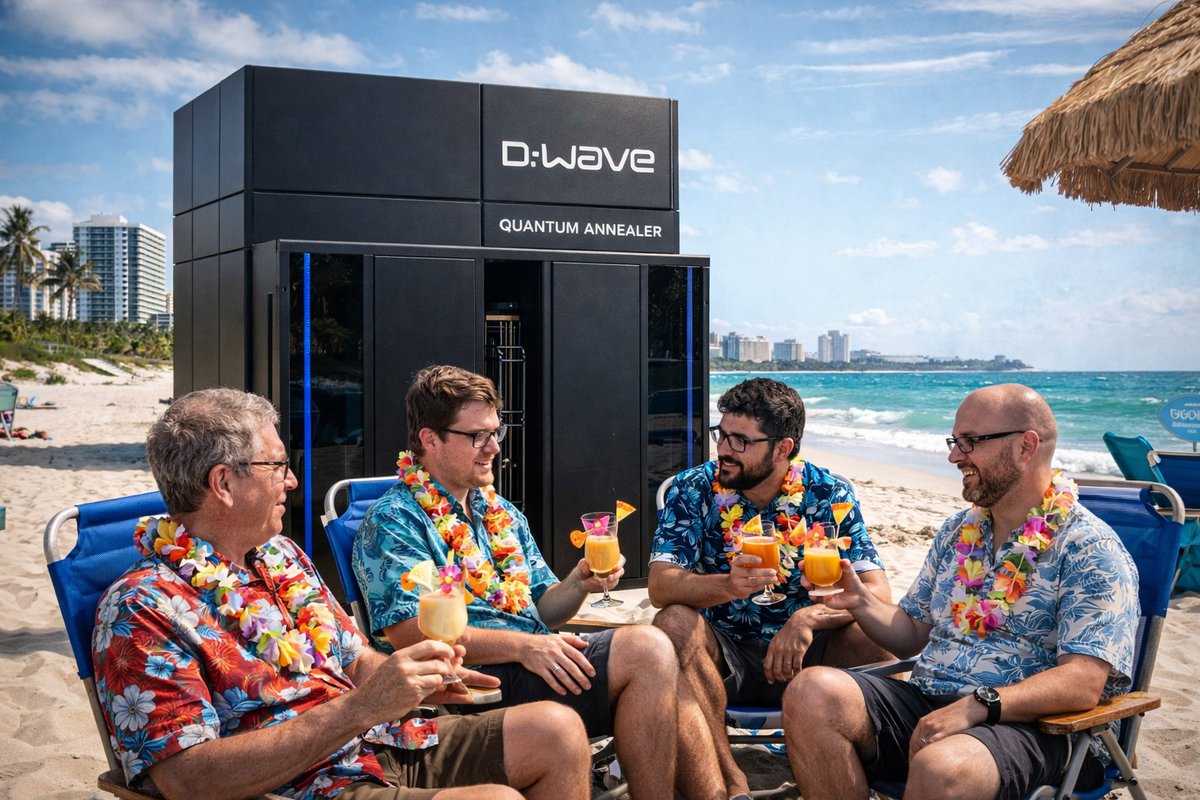
Bob out here networking with the MIT gigabrains and biggest names in the quantum industry. Probably nothing
qBitTensor Labs@qBitTensorLabs

Just getting back from iQuHACK ’26 at MIT, where we spent the weekend with some of the brightest students in quantum. It was great to see the collaboration, creativity, and ingenuity as they worked to solve the challenge we sponsored, which will directly benefit @OpenQuantum_ As we gather our bearings, we’ve decided to push out QBTLL till NEXT week. Expect to hear from us on 2/12 with some exciting updates on #SN63 and Open Quantum! We had the chance to catch up with our friends David (@metapunkkk ) and Mikhail (@MYShalaginov ) from Superquantum (@qubitcoinx) — one of the few other companies that explores the intersection between quantum and crypto. It was great getting to compare notes on the quantum-crypto space and discuss some possible shared directions… #iQuHACK #OpenQuantum

English
0
0
0
3
ShorThing retweetledi
const
const@const_reborn·
After AI, it’s all just commodities. Own them, make them on Bittensor.
English
16
44
341
12.7K
ShorThing retweetledi
JB Rings
JB Rings@dTAO_Dad·
The Quantum Software Contractor #SN63 Fueled by incentive computing on $TAO The subnets’ product development mechanism has been challenged and hardened over the past few months, but will be on full display soon. The @qBitTensorLabs innovation engine. ⚛️
qBitTensor Labs@qBitTensorLabs

Instead of waiting for the green light from the validators, we’re running the yellow. While the timeline on Treasury Wallets remains unclear, we’re focused on developing #SN63. Progress doesn’t wait for alignment - it comes from building. The focus stays on momentum. Which will finish first, SN63, or Treasury Wallets? The race is on

English
1
6
19
657
ShorThing
ShorThing@qubyte12·
Don't think there's any subnets out there with this level of industry recognition or scientific legitimacy. Open Quantum ➡️🌑
qBitTensor Labs@qBitTensorLabs

The whitepaper lays it out clearly. @OpenQuantum_ changes the game—real access to the world’s scarcest resource, powered by decentralized incentives on Bittensor. With the whitepaper’s release, Open Quantum will be put front and center to industry leaders and top quantum researchers. How many other subnets can say the same?

English
0
0
1
10
qBitTensor Labs
qBitTensor Labs@qBitTensorLabs·
The intersection of Crypto & Quantum – That’s the lane we are in. Believer or skeptic, quantum is coming and will fundamentally impact cryptocurrency. The big question? When do you think quantum breaks crypto? ~ < 5 years ~ 5-10 years ~ 10+ years #QuantumComputing #NextWave #BreakingBTC
qBitTensor Labs tweet media
BeyondNISQ@BeyondNISQ

Well researched and written but not exactly "succinct" @SuccinctJT :-) I want to take a moment to highlight that this is substantially grounded in a single snapshot of where the technology sits today. To give a fair assessment of cryptographic risk accurately, however, snapshots are insufficient. Trends matter, and current trends do suggest a non-trivial chance of a materially more aggressive trajectory than your write-up implies. Innovation Reducing the Required Resources A concrete example is Craig Gidney’s May 2025 paper, “How to factor 2048-bit RSA integers with less than a million noisy qubits.” Under explicit error-correction and architectural assumptions, Gidney shows that a machine with <1 million noisy physical qubits could, in principle, factor RSA-2048 in under a week. For context, this single paper reduced prior resource estimates by more than an order of magnitude, from ~20 million qubits (Gidney–Ekerå 2019) to ~1 million. This is not speculative hype; it is grounded in published fault-tolerant resource modeling, improvements in modular arithmetic, and optimized magic-state management. ArXiv: arxiv.org/abs/2505.15917 Innovation Driving High Quality Logical Qubits On the hardware side, IonQ’s publicly disclosed roadmap now projects fault-tolerant logical qubit counts far beyond trivial scales. According to their 2025–2026 technical disclosures, IonQ targets: ~8,000 logical qubits by 2029 ~80,000 logical qubits by 2030, with very low logical error rates If logical qubits are treated as the relevant, error-corrected computational resource (which you may say is optimistic, and I may agree) then multi-thousand logical-qubit systems within this decade directly challenge the assumption that CRQCs are inherently decades away, even without assuming further algorithmic breakthroughs beyond Gidney’s work. Putting it Together The relevant question, then, is not whether a CRQC exists today, but whether it could plausibly emerge on an accelerated timeline driven by algorithmic innovation and aggressive engineering roadmaps. Taken together, the 2025 resource reductions and public industry plans make it increasingly plausible that conventional public-key cryptography could be threatened before the end of this decade, and likely within the next. In your concluding lines you note: "I won’t argue that a cryptographically relevant quantum computer in five years is literally impossible, only highly unlikely." I agree with this assessment. However, from a traditional risk-mitigation perspective, outcomes that are low probability but high impact cannot be dismissed. For cryptographic systems underpinning critical infrastructure, financial markets, and national security, the appropriate posture is not prediction, but preparedness. This argues for measured, proactive transitions to quantum-resilient cryptography rather than reactive responses once timelines become uncomfortably clear. I should note that your analysis of how Bitcoin is (and is not) vulnerable, and your core distinctions between encryption, signatures, and HNDL risk, are strong and people should be aware of these distinctions.

English
3
3
28
1.3K