Raghav

18.5K posts

Raghav banner
Raghav

Raghav

@raghav44

Bharat Katılım Ekim 2009
1.3K Takip Edilen181 Takipçiler
Sabitlenmiş Tweet
Raghav
Raghav@raghav44·
vidyaranyam.in Get Involved, please support this wonderful initiative.
English
0
2
1
438
Raghav retweetledi
महावीर, ಮಹಾವೀರ, Mahavir
When Shri KAMARAJ was CM, he had 7 Ministers In his Cabinet. Mr KAKKAN was one among them in the Cabinet. He was given the following portfolis: HOME PWD AGRICULTURE IRRIGATION ANIMAL HUSBANDRY POLICE JAILS PRISON FINANCE EDUCATION LABOUR PROHIBITION. He was Cabinet Minister for 10 years. While touring, he used to wash his clothes ( self). Once he toured Trichy. He missed the train. Next train was in the next morning. He never approached anyone including the railway staff. He just SLEPT ON THE RAILWAY PLATFORM BENCH. In the midnight, railway police woke him up with the POLICE LATHIS. The police asked him who are you? You cannot sleep here. Go away. He replied “ Sir. My name is KAKKAN. I am the Minister for the Police and Home department. I will leave once the train arrives in the morning. The POLICEMEN WERE SHOCKED. Sir OUR APOLOGIES TO YOU. FORGIVE US. Sir you can stay in the FIRST CLASS WAITING ROOM. He replied. No. This comfort is sufficient for me. And slept on the platform bench. Police guarded him till he got into his train. Today is his BIRTHDAY. Can we expect such simple and honest Ministers today. कहाँ गए वो लोग। Credits - Harish Shetty
महावीर, ಮಹಾವೀರ, Mahavir tweet media
English
58
298
801
15.7K
Raghav retweetledi
Parimal
Parimal@Fintech03·
Next in who after the Bibha Series? At just 28, he published a bold paper on the combined gravitational & mesic field eqns in General Relativity... an ambitious attempt to bridge gravity with the subatomic world. But then, Ratan Lal Brahmachary (1932-2018) vanished from the world of physics. He spent the next 50 yrs as a Ghost in the jungle, using his mathematical mind to decode the secret language of tigers. He is the man who found the Physics of Scent, proving that a subatomic particle & a predator’s territory follow the same divine logic. He was a titan of 2 worlds who chose the silence of the forest over the fame of the lab, the ultimate experimental ghost who proved that everything in the universe is connected. Born in 1932 in Dhaka, Ratan Lal was a child of the Partition era. He was a pure, cold-blooded physicist at heart. He was a direct student of Satyendra Nath Bose. Under Bose’s guidance, he did not look at animals; he looked at the curvature of space & time. He spent a decade in the 1950s & 60s traveling b/w the best labs in Italy, France, & Germany, solving the hardest problems in Relativistic Field Theory. Before he ever stepped into a jungle, he solved a Giant problem in high-level physics. In 1960, he published a paper titled "Solution of the Combined Gravitational & Mesic Field Equations in General Relativity." He was trying to figure out how gravity interacts with the Meson (the same particle Bibha Chowdhuri spent her life tracking). He created a mathematical bridge b/w the Infinite (gravity) & the Infinitesimal (subatomic particles). At 28, he was on track to become 1 of the world's leading theoretical physicists. But then, he did something no 1 expected. Brahmachary felt that physics was too clean & too quiet. He moved to the Indian Statistical Institute (ISI) under Mahalanobis, but instead of doing math, he started studying Pheromones (the chemical signals animals use to talk). For the next 50 yrs, the world of physics lost him. He became a Ghost to his former peers. Meanwhile, in the world of biology, he became a legend for discovering why tiger urine smells like Basmati Rice (the 2AP molecule). To his relatives & the public, he was an eccentric who visited Africa 14 times & lived among tigers. They had completely forgotten/never knew that he was 1 of the few men on Earth who could decipher Einstein’s field equations with a pencil & no computer. Because he switched fields, he never received the top-tier Lifetime Achievement awards in Physics (because he left)/Biology (because he was just a physicist visiting). He lived in the gaps b/w the sciences. He died in 2018. Today, he is remembered for tigers, while his pioneering work on Gravitational Field Theory remains a Ghost in the archives of Progress of Theoretical Physics.
Parimal tweet mediaParimal tweet media
English
5
61
119
1.8K
Raghav retweetledi
Parimal
Parimal@Fintech03·
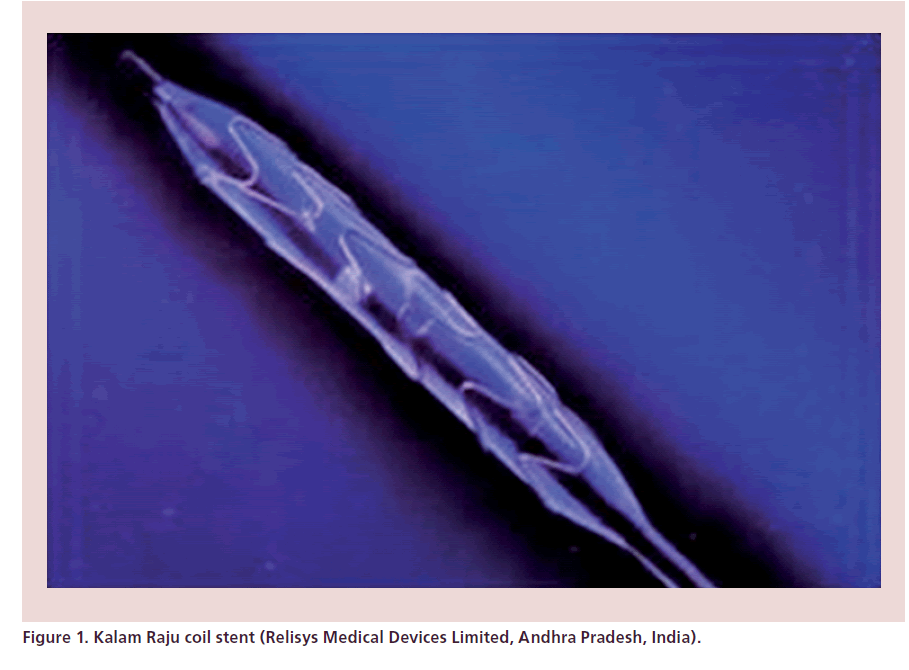
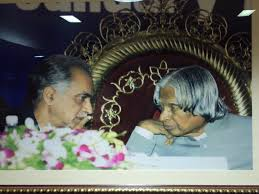
In the 1990s, the world saw APJ Abdul Kalam as the man building India’s nuclear Sword. But behind the curtain of the DRDO, he was preparing a different kind of strike... not against a nation, but against a monopoly. He realized that the same high-grade, biocompatible steel used to shield missiles from atmospheric friction was the perfect Kernel to shield a human heart from failure. By turning military-grade secrets into a ₹10000 (~$110) medical device, Kalam did not just launch a missile; he launched a system-wide crash of the global healthcare economy. The biggest barrier to affordable healthcare in the 90s was the Black Box of Materials. Global giants claimed that the steel used in stents was a proprietary secret that justified a 1000% markup. Dr. B. Somaraju (a cardiologist) told Kalam that 1000s were dying because they could not afford a piece of wire mesh. Kalam looked at the specs & realized: We already have this. The 316L Stainless Steel used in the Agni & Prithvi missiles had to be non-reactive, ultra-durable, & capable of extreme precision. It was essentially Medical Grade steel with a different name. Kalam did not ask for permission; he authorized the transfer of missile metallurgy to the hospital bed. When the Kalam-Raju Stent hit the market, it was a Price Bomb. At the time, imported stents cost b/w ₹60000 & ₹150,000 (~$630-1600). The Kalam-Raju stent was introduced at a fraction of the cost. Global giants, who had previously claimed their prices were fixed by R&D costs, suddenly found a way to cut prices by 70% overnight. They did not do it out of kindness; they did it because the Missile Man had broken their encryption on the market. This stent became the Standard Build for affordable cardiac care in India, leading to several 1000+ successful implants in the 1st few yrs alone. Kalam did not stop at the heart. Healthcare in rural India had a connectivity bug. Doctors could not reach patients, & data was lost. In the late 90s, long before the iPad/modern tabs existed, Kalam & Raju designed a Ruggedized Tablet PC for primary healthcare. It was designed to be Battlefield Tough but used by village health workers. It proved that Sovereignty is not just about protecting the border; it is about protecting the data & the health of the last citizen. While the public saw him as a Simple Scientist, the boardrooms of multi-billion dollar pharmaceutical companies saw him as the man who destroyed their Revenue Stream in the developing world.
Parimal tweet mediaParimal tweet media
English
24
331
1K
24.9K
Raghav retweetledi
Sann
Sann@san_x_m·
His name was Satish Shetty. He was 39 years old. A social activist from Pune with no political connections and no institutional backing. Just an RTI form and the will to use it. Between 2005 and 2010 he exposed one of the largest land grab scams in Maharashtra. A real estate company had acquired land near the Pune-Mumbai highway using forged sale deeds. After his complaints forced an investigation, 90 sale deeds were cancelled, the sub-registrar who processed the fraudulent documents was suspended and a major real estate project was scrapped. The threat calls started. He did not stop. On the morning of January 13 2010 he went for his regular walk in Talegaon. He was stabbed to death on the road. He was 39 years old. His brother Sandeep refused to let it end there. Local police closed the case. He went to CBI. CBI went quiet. He went to Bombay High Court. He went to the Supreme Court. In 2023 the Supreme Court ordered the case reopened. Fifteen years. Four courts. One brother. Still no conviction. Since the RTI Act came into force in 2005 more than 65 RTI activists have been killed in India and over 400 have been harassed or intimidated. The Whistleblower Protection Act passed in 2014 has never been fully implemented. In India filing an RTI costs ten rupees. For some people it has cost everything. Follow for real stories about people India must never forget.
Sann tweet media
English
107
1.9K
4.4K
135.5K
Mohandas Pai
Mohandas Pai@TVMohandasPai·
I agree. We need the citizens to form groups and work with others to improve the roads and footpath. All have a collective responsibility. The system is totally broken and only citizen involvement can improve matters. We are trying the same in Bengaluru. @BPACofficial @RevathyAshok @kiranshaw @rk_misra
Walking Project@walkingproject

We can understand Mr. Pai’s distress. The daily lived experience is jarring. At the Walking Project, one of our closest areas of involvement over the past 15 years has been the roads of Andheri East and West, with efforts to improve road design, basic road markings, junction design, high-quality footpaths, shade, cleanliness, and more. Andheri Kurla Road, Sahar Road, Mahakali Caves Road, Cardinal Gracious Road, MIDC, New Link Road, S V Road, J P Road, every single road has seen sustained effort. From writing to government officials, local councillors, and MLAs, to working with architects and urban designers to create compelling collateral, to public meetings and on-street engagement, we have done it all. We even found our office in Andheri East thanks to the QMED Foundation. While companies and residents in the area contribute billions of rupees to GDP every day, and everyone likes and shares posts from @andheriwestshitposting when a flaw in the design or environment is pointed out. But when we try to fix those same problems, we struggle to find even 10 donors in Andheri willing to support our advocacy efforts. Everyone likes to complain. Everyone enjoys the instant gratification of posts and likes on social media. But when it comes to putting in time, money, or sustained effort, most people step back. Between the K West and K East wards, which together comprise nearly 2 million residents and another million in the floating working population, including the airport and numerous business districts, this is the most populated part of Mumbai at any given time. Talk is cheap. We have been unable to sustain our engagements purely due to the lack of resources and manpower required to engage consistently with dozens of engineers, bureaucrats, and officers across different agencies for any significant change to happen. Citizens. Put your money where your mouth is. Donate at walkingproject.org/donate @TVMohandasPai

English
20
39
162
7.1K
Raghav retweetledi
Parimal
Parimal@Fintech03·
Next in who after/before the Ramanujan Series? He was a Human Algo operating in a time when the world was being mapped through the sheer force of brainpower & brass telescopes. When he finally calculated the height of Everest as exactly 29000 feet, he was so afraid people would think he rounded it off that he arbitrarily added 2 feet to make it look calculated. He reported it as 29002 feet. This is the only time in history a scientist added an error to make the truth look more believable! Radhanath Sikdar (1813-70)! Born in Jorasanko, Calcutta, Radhanath was part of the Young Bengal movement, a group of radical thinkers who prioritized reason over superstition. At Hindu College (now Presidency University), his genius was so disruptive that his teacher, the famous John Tytler, told the British govt, "I have a pupil who knows more math than I do." In 1831, George Everest was looking for a Computer. He did not want a human who just added numbers; he wanted someone who could handle Spherical Trigonometry. Radhanath was hired at age 18. His family members likely did not know that Radhanath often went w/o sleep to cross-verify the British Logarithmic Tables, which he found to be full of manual bugs. When we look at a mountain from 150 KMs away, the light bends because of the Earth's atmosphere (Refraction). This makes the mountain appear higher/lower than it actually is. The British surveyors had a basic formula for refraction, but it kept failing in the Himalayas due to the extreme temperature variances. Sikdar developed a Custom Refraction Constant. He spent yrs observing how light behaved across the plains of Bengal & Bihar to adjust the math. W/o this patch, his measurement of 29002 feet would have been off by 100s of feet. It is whispered in archival circles that he used Ancient Indian Siddhantic Trigonometry (specifically concepts of Jyā & Koti-jyā) to cross-verify the British sine tables. He found the European tables slightly low-resolution for the scale of the Himalayas. He was the 1st to propose & implement a systematic way to calculate Calcutta Time, which was the precursor to Indian Standard Time (IST). He wrote the mathematical sections of the Manual of Surveying for India. His colleagues admitted that w/o his chapters, the book was useless. He basically wrote the Dev Doc for an entire continent's geography. Because he was an Indian in a colonial firmware, he was never given the titles his British peers received. He was made a Fellow of the Royal Astronomical Society & the German Oriental Society...not because the British recommended him, but because European scientists were stunned by the clean code of his research papers. He was the 1st Indian to be appointed a Chief Computer & later the Superintendent of the Meteorological Observatory. In the 1851 edition of the Manual of Surveying, the British authors wrote: "The mathematical portions of this work were entirely the creation of Babu Radhanath Sikdar." The Edit: In the 1875 edition (after Sikdar died), that sentence was deleted. The British authorities tried to erase the fact that an Indian had provided the brainpower for the Empire's greatest survey. #WhoAfterRamanujan
Parimal tweet media
English
5
153
327
12.3K
Raghav retweetledi
Parimal
Parimal@Fintech03·
Next in who after the Ramanujan Series? While the world was at war in 1943, a young man in Banaras was solving an eqn that even Einstein had left incomplete. Today, every scientist studying the birth of a Black Hole uses the 'Vaidya Metric', the math of a star that bleeds light. Prahlad Chunnilal Vaidya (1918-2010) Born in 1918 in Shahpur, Gujarat, P.C. Vaidya’s journey was rooted in the simplicity & indigenous excellence. He did his schooling in Bhavnagar & Bombay. Like many Silos of that era, he did not have access to high-end labs/Western mentors. He was largely a self-driven intellect. In the 1940s, he joined Banaras Hindu University (BHU) to work with V.V. Narlikar. This was a legendary combo of Indian relativity research. Einstein’s eqns were great at describing a static star/a vacuum. But what happens when a star is radiating energy? How does the geometry of space-time change when a massive object is literally bleeding light & heat? At age 25, Vaidya discovered a solution to Einstein's field eqns that describes the gravitational field of a radiating star. This is known globally as the Vaidya Metric. It is a fundamental tool used today to understand Gravitational Collapse & the formation of Black Holes. If we are calculating how a star dies while emitting radiation, we must use Vaidya’s math. Despite his global fame in physics, Vaidya lived a life of extreme simplicity. He wore Khadi his entire life & was often seen cycling to his department at Gujarat University. While Western scientists like Stephen Hawking & Roger Penrose were using his work to build their theories on Black Holes, Vaidya was busy writing mathematics textbooks in Gujarati to ensure that local students could learn high-level science in their mother tongue. He was the President of the Indian Mathematical Society & was awarded the Padma Shri, but for him, the greatest award was the Vaidya Metric being taught in every advanced General Relativity course from Harvard to Cambridge. Vaidya was known for his mental simulations. He once said that Einstein's eqns were not just symbols; they were music that described the dance of matter & light. He remained a Ghost to the Indian public because Relativity was considered too abstract. People did not realize that the man walking in a simple dhoti-kurta in Ahmedabad was the man who had mathematically modeled the death of stars. P.C. Vaidya did not wait for a Supercomputer. He used a pen, a paper, & the calmness of his mind to solve the geometry of a radiating universe. He is the Ramanujan of Gravitation.
Parimal tweet media
English
17
352
841
31.8K
Raghav retweetledi
Parimal
Parimal@Fintech03·
Next in who after the Ramanujan Series? He is the living ghost of Indian mathematics. While the world’s most abstract algebraic structures bear the quiet imprint of his work, the man himself walks the streets of Chennai in a simple dhoti...unrecognized, yet profoundly influential. Born in 1935 in Tamil Nadu, Dr. Ramaiyengar Sridharan was raised in a culture that viewed mathematical proficiency as a form of ancestral heritage. He was part of the Golden Era of the Tata Institute of Fundamental Research (TIFR) in Bomaby. Under the mentorship of legends like K.G. Ramanathan, he entered a silo where the only currency was a perfect proof. He earned his PhD from Columbia University under Samuel Eilenberg, 1 of the founders of Category Theory. While the West tried to claim him, Sridharan remained rooted in the Indian way of thinking: internalized, quiet, & incredibly deep. Sridharan’s work allows us to treat Algebra like Shapes. He is a master of Non-Commutative Algebra & Projective Modules. He made deep contributions to the theory of projective modules over polynomial rings, essentially figuring out how to define straight lines & flat surfaces in purely algebraic spaces that have no physical form. In the theory of enveloping algebras & representations of Lie algebras, his work on filtrations provides a powerful tool to break down complex algebraic structures into manageable, predictable layers. His research on quadratic forms & modules continues to influence areas of algebra that have indirect connections to modern cryptography & coding theory. If you saw him today in Chennai, you would not see a Global Tech Icon. You would see a scholar dressed in a simple cotton shirt & dhoti, perhaps visiting a local bookstore/temple. He is a world authority on the History of Indian Mathematics. He can trace logical connections from Brahmagupta’s algorithms in the 7th century to the polynomial algebra of the 21st century. Yet he remains so low profile that even many in the Indian mathematical community are only vaguely aware of the depth of his contributions. Awards and Global Stature: - Shanti Swarup Bhatnagar Prize (1980): India’s highest scientific honor in the mathematical sciences. - Fellow of the World Academy of Sciences (TWAS). - Honorary Fellow of TIFR: a lifetime recognition reserved for the architects of Indian mathematics. He has spent decades quietly advancing algebra while also preserving & teaching the rich history of Indian mathematical thought. #WhoAfterRamanujan
Parimal tweet media
English
8
163
505
21.3K
Raghav retweetledi
Rima Sarkar
Rima Sarkar@_RimaSarkar·
Why is Indian sugarcane so sweet? If you’ve ever enjoyed a glass of fresh cane juice, you have Janaki Ammal to thank! 🔹️ In the 1930s, India had to import sweeter cane from Java. Janaki Ammal, a brilliant scientist at a time, used her knowledge of plant cells to create a made-in-India hybrid that was both sweet and hardy enough to grow in our climate. 🔹️​The Cytogenetic Pioneer: She was the first Indian woman to earn a PhD in Botany (University of Michigan, 1931). She literally mapped the genetic DNA of thousands of Indian plants. 🔹️​Economic Independence: Her work at the Sugarcane Breeding Institute in Coimbatore helped India become self-sufficient in sugar production, a massive boost for the post-independence economy. 🔹️​The Guardian of the Rainforest: Later in life, she turned to conservation. Her scientific authority was the backbone of the Save Silent Valley movement, protecting one of India’s most ancient rainforests from being submerged by a dam. 🔹️​Janaki Ammal lived a life of pure scientific devotion. There is a beautiful white flower bred in London named after her: the Magnolia kobus Janaki Ammal. This summer, when you drink a cold, sweet, satisfying glass of sugarcane juice, remember the name: Edavalath Kakkat Janaki Ammal.
Rima Sarkar tweet media
English
19
467
1.3K
31.3K
Raghav retweetledi
Parimal
Parimal@Fintech03·
I am going to start the Physics Series as well & decided to name it after Bibha Chowdhuri. She was a woman who worked in the shadows of giants, doing the actual heavy lifting of data that led to 2 Nobel-level discoveries, yet she was almost erased from history because she was just a woman in a silo of men. Born in 1913 in Calcutta, she came from a family of intellectuals. She was the only woman in her MSc. Physics class at Calcutta University in 1936. She joined the lab of Debendra Mohan Bose (D.M. Bose), the nephew of J.C. Bose. It was here, in a modest lab in Calcutta, that she began looking for the Ghost Particles of the universe. Using simple photographic plates & the high altitudes of Darjeeling, Bibha & D.M. Bose discovered a new particle, the Meson (specifically the pi-meson/pion). Because of World War II, they could not get high-sensitivity photographic plates from Europe. They had to use inferior 1s, which made their data noisy. A few years later, Cecil Powell used the exact same method with better plates in the Andes & won the Nobel Prize in 1950 for the discovery of the pi-meson. In his book, Powell acknowledged that the Bose-Chowdhuri method was the pioneer, but the world forgot the woman who did it 1st. She later went to Manchester to work under Nobel laureate P.M.S. Blackett for her PhD, investigating Extensive Air Showers (cosmic rays hitting the atmosphere). She was the 1st to calculate the density of these showers at sea level. When she returned to India, she joined the newly formed TIFR (Tata Institute of Fundamental Research). Despite being 1 of the most qualified cosmic ray physicists in the world, she was often sidelined. She never married. She lived for her lab. She was known to be a quiet, fierce researcher who did not care for Scientific Politics. While her male colleagues were showered with Padma awards & fellowships, Bibha Chowdhuri received almost zero national recognition during her lifetime. She died in 1991, still working on research papers in a small flat in Calcutta. The world finally started to apologize to her in the 21st century: In 2019, the International Astronomical Union (IAU) named a star Bibha (Sextans constellation). She is now globally recognized as the "1st Indian Woman High-Energy Physicist." She represents the Unrecognized Infra of Indian Science. She proved that you do not need a multi-billion dollar particle accelerator to discover the building blocks of the universe, you just need a photographic plate, a mountain, & unbreakable focus.
Parimal tweet media
English
17
252
690
10.1K
Anita R Ratnam
Anita R Ratnam@aratnam·
@ThrillaRilla369 This should not even be a question. It’s a privilege, an honour and a blessed duty. Our parents birthed us, raised us, were the safety net during our muddled/confused years- now it’s our turn to nurture, be patient and caring.
English
3
1
13
485
Thrilla the Gorilla
Thrilla the Gorilla@ThrillaRilla369·
Be honest… do you think it’s your responsibility to take care of your parents?
English
5.5K
435
6.5K
523.3K
Shweta Punj
Shweta Punj@shwwetapunj·
We have lost our pillar, our guide, our world. Papa @balbirpunj lived a life driven by purpose and was fuelled by his love for the nation. He tirelessly worked until his last breath for the cause he had dedicated his life to- of making the country strong, prosperous and powerful. He was one of the pioneers of driving the change in the ecosystem of national politics and was blessed to have lived through a changed India. He lived many lives in the 76 years that he spent with us -as a student activist, a thinker, philosopher, Journalist, strategist, guide, historian, political leader and most importantly a humanitarian. As a true Ram bhakt, he lived his on the principles of Rama where he put his dharma for the nation above all. A true patriot, nationalist, father, husband, son, brother, grandfather, friend. We would like to thank everyone who reached out us in this unimaginable hour of grief 🙏 —-
English
111
82
375
40.6K
Indian Tech & Infra
Indian Tech & Infra@IndianTechGuide·
🚨 "India should aspire for 100% ethanol blending in the near future," says Minister Nithin Gadkari.
Indian Tech & Infra tweet media
English
2.4K
336
4.8K
1.3M
Raghav
Raghav@raghav44·
@LGIndia I got it fixed navigating thro your chatbot but the experience is lousy. Why do you collect so much data if you dont plan retaining them?
English
0
0
0
6
LG India
LG India@LGIndia·
@raghav44 Hi, we’re truly sorry to hear about this unfortunate situation. We're here to help and would like to investigate this further. Kindly send us your registered contact number or complaint number via DM, and we’ll look into this as soon as possible.
English
1
0
0
12
Raghav
Raghav@raghav44·
@LGIndia why is it so damn difficult to even book a simple service request. You need a freaking kyc type registration to even book a paid service? What kid of nut job managing this department. Trying for 20 min and your chat bot axis like a gate keeper...
English
1
0
0
30
Raghav
Raghav@raghav44·
@TVMohandasPai Exactly. This is the chauvinism that exist in every city in India that forgives maximum incompetency in managing basic civic services which is supposed to be managed by the local municipal body & the property taxes.
English
0
0
0
425
Mohandas Pai
Mohandas Pai@TVMohandasPai·
Look please stop giving excuses for non performance in Bengaluru . Cannot the city administration at least clean the roads,remove garbage,debris, fix broken footpaths? Don’t they have the money for at least that? Yes Bengaluru is a great city,wonderful people, etc. but does not take away the fact that city administration has failed for many years to keep the city clean, corruption has increased ,captured by crooked contractors. We should be honest to ourselves not give such excuses. Yes @GBAChiefComm is trying to improve but need to improve fast-at least clean up our city.,
Srinivas Alavilli@srinualavilli

It’s “Bengaluru”. With all our “broken roads, invisible footpaths, unchecked garbage” we some how managed to attract and retain talent and create jobs for millions of Indians coming from everywhere & making it home. Quality of life in Bengaluru is not defined by social media posts designed for engagement farming but lived experiences of people. Talk to people in the real world. Our city is so amazing that no one wants to leave despite issues. It’s a work in progress, like all great cities are. We just went from 1 corporation to 5 and 198 wards to 369 which will lead to better service delivery. Comparing what happens inside a business park with what’s outside doesn’t make sense as the challenges are much different from building and maintaining public infrastructure in the real world with limited powers, funds, capacities. Business parks are mini islands that don’t need to deal with legacy of sewage lines, land rights, legal disputes, 500 years of history. This is the story of all mega cities as our local governance system has not evolved in 30 years; both Union & State governments retain all the revenues generated by cities without sharing them. Cities are not given even a fraction of taxes they generate. If we want our cities to deliver better, we should work on solutions that empower them as City Governments, not compare them.
English
51
154
823
52.8K
Raghav retweetledi
Parimal
Parimal@Fintech03·
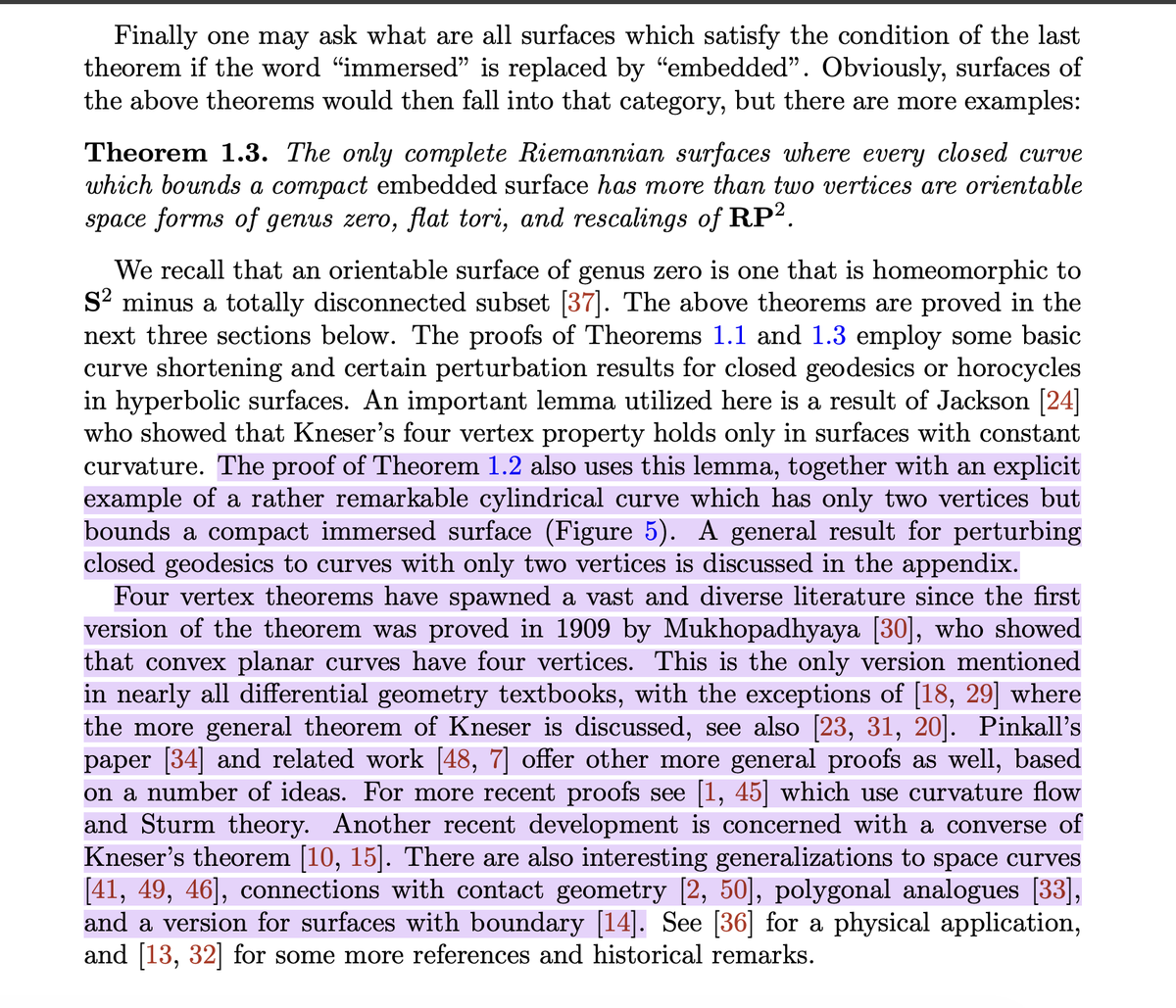
Next in who after/before the Ramanujan Series? 4 yrs before Ramanujan wrote his 1st letter to Hardy, a man in Calcutta had already solved a fundamental mystery of geometry that European masters were still struggling with. He is the 1st modern Indian to have a global geometric law named after him. Syamadas Mukhopadhyaya (1866–1937) Born in 1866 in the Hooghly district of West Bengal, Syamadas was a generational talent. He studied at the prestigious Presidency College, Calcutta. He was a contemporary of figures like Ashutosh Mukherjee, but while others went into administration/law, Syamadas chose the Silo of Pure Geometry. He became a prof at Calcutta University. He lived through the peak of the British Raj, but his mind lived in Non-Euclidean Space. He was known for being a man of few words but infinite eqns. In 1909, He published a paper titled "New Methods in the Geometry of a Plane Curve." In it, he proved the 4 Vertex Theorem: Every simple closed convex curve has at least 4 vertices (points where the curvature reaches a local maxima/minima). For decades, European mathematicians thought this was a Western discovery. It was only later recognized that Syamadas Mukhopadhyaya was the 1st to prove it in 1909, yrs before the famous European mathematicians (like Adolf Kneser) arrived at the same conclusion. He also pioneered work in Stereometry & the differential geometry of curves in n-dimensional space. He essentially built a bridge b/w classical geometry & the modern topology that Einstein would later use to describe the universe. He was 1 of the founding members & the President of the Calcutta Mathematical Society. He turned Calcutta into a global hub for mathematical research at a time when the West thought India was only capable of arithmetic. In the early 20th century, the British Raj was not handing out many medals to Indian scientists. His Award was the permanent attachment of his name to a fundamental theorem in global textbooks. He was so deep into his research that he often developed concepts independently that were being debated in the elite circles of Göttingen & Cambridge. He proved that an Indian mind, working in a silo in Calcutta, could out-think the greatest minds of Europe.
Parimal tweet mediaParimal tweet media
English
2
74
201
3K
Raghav
Raghav@raghav44·
@TVMohandasPai These buildings are towers of incompetent grief for neglecting town and country planning, sanitation, public transport and safety. NO WHERE in the world would this chaos exist especially when `one ring road as 60,000 engineers exist - kharge' said.
English
0
0
0
653
Mohandas Pai
Mohandas Pai@TVMohandasPai·
The tragedy of our cities. World class buildings, third class roads and footpaths in many areas. Private quality, public disaster driven by deep corruption! Was in Mumbai today at Andheri-totally shocked at bad roads,huge debris on road, slow work, poor quality of new concrete road, never ending works….
Vishal Bhargava@VishalBhargava5

Bangalore: You drive on the broken roads, invisible footpaths, unchecked garbage. Every sign of a third-world city. And then you enter the gate of business parks where the first-world experience awaits you.

English
146
275
1K
53.3K