
Raman Dutt

1.9K posts

Raman Dutt banner
Raman Dutt

Raman Dutt

@RamanDutt4

Generative AI research @turinginst @EdinburghUni | PhD @BioMedAI_CDT | Prev @HuaweiUK @hiti_lab, @ShivNadarUniv

Global Maxima Katılım Nisan 2019
1.3K Takip Edilen1.3K Takipçiler
Sabitlenmiş Tweet
Raman Dutt
Raman Dutt@RamanDutt4·
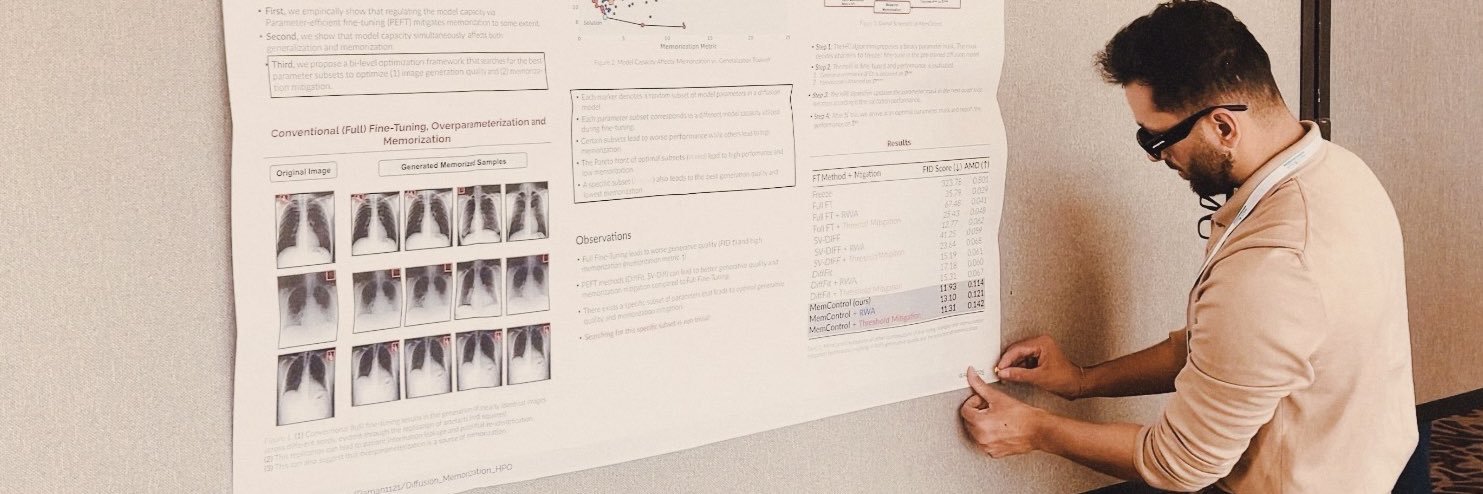
Looking to reduce memorization WHILE improving image quality in diffusion models? Delighted to share our work "𝐌𝐞𝐦𝐂𝐨𝐧𝐭𝐫𝐨𝐥" now accepted at WACV '25 (@wacv_official). We show strong results for medical image generation and also establish an initial benchmark! More 👇
English

2
12
25
5.2K
Ayan Das
Ayan Das@dasayan05·
Today was my last day at @Huawei R&D UK. Had an amazing 1 year. A whole new beginning awaits. Stay tuned.
GIF
English
1
0
9
619
Raman Dutt
Raman Dutt@RamanDutt4·
@quxiaoyin Saw similar patterns post PhD. Very few PhD entry-level jobs
English
0
0
0
17
Xiaoyin Qu
Xiaoyin Qu@quxiaoyin·
Stanford CS grads can’t find jobs right now. A few years ago, that would’ve sounded absurd. Today, friends are texting me asking if I know anyone hiring interns. The resumes? Stanford. MIT. Top-tier CS. All struggling. When I was in school, companies competed for CS majors. Signing bonuses. Exploding offers. Recruiters chasing students. That world is gone. Big tech isn’t hiring junior talent the way it used to. Meta cut back on interns and entry-level engineers. OpenAI largely hires senior+ talent. The hiring bar shifted up. At the same time, most companies aren’t adding headcount — they’re trying to extract more productivity from existing teams. But here’s what’s interesting: some 19–22 year olds are still getting hired — and getting paid more than engineers with years of experience. What separates them? They prove they’re exceptional early. They publish research. They ship real products, not just coursework. Some skip the traditional path entirely and go straight to OpenAI or Google. The credential filter is weakening. Proof of execution is replacing pedigree. They dominate hackathons. A 19-year-old won xAI’s hackathon and Elon hired him on the spot. AI companies are looking for people who explore, build, and execute fast. Hackathons are becoming live auditions. And many of them build in public. They create content, explain AI tools, grow audiences. Marketing and DevRel teams notice. If you can use AI well and communicate clearly, you’re suddenly more valuable than someone with a decade of silent experience. The gap between “can’t find a job” and “multiple premium offers” has never been wider. The old playbook was: get the degree and wait to be picked. The new playbook is: build, ship, compete, publish. AI didn’t just change the tools. It changed how talent gets discovered. #TechCareers #AI #fyp #SiliconValley #FutureOfWork
English
137
246
1.7K
310.6K
Raman Dutt
Raman Dutt@RamanDutt4·
Billionaires are beefing over who went to the island, Anthropic is trolling OpenAI, the stock market is crashing, the job market is trash, and my PhD thesis is still incomplete. #2026
English
1
0
3
235
Raman Dutt retweetledi
Yuki
Yuki@y_m_asano·
So You Think your @iclr_conf rejection was surprising? We nearly fell out of our chairs when our 7.25 avg rating (10,8,6,5 -- i.e. top 4%) Bitune paper got rejected 😅. It's not like new points or problems surfaced... Just ¯\_(ツ)_/¯ I guess? Sharing this so that especially younger researchers also see that the review process is somewhat random and can be _very_ frustrating - for all of us :). Oh well! Onwards!
Yuki tweet media
English
11
26
363
63.3K
Mariya I. Vasileva
Mariya I. Vasileva@mariyaivasileva·
Most conferences discourage or straight up disallow (eg CVPR) heavy additions of new experimentation because it alters the original positioning or claims, in certain cases. I can see how despite the effort and favourable conclusions from those experiments, the meta-reviewer may still decide it’s best resubmitted as a new paper at the next venue. I know it doesn’t help, but if you believe in your research, incorporated suggested experiments, and got positive feedback from reviewers *twice* — it will be accepted next time!
English
2
0
8
606
Raman Dutt
Raman Dutt@RamanDutt4·
@mariyaivasileva That’s a very interesting point! I would agree I didn’t make any major changes between Neurips and ICLR, but added a ton of new experiments during the ICLR rebuttal.
English
1
0
4
1.8K
Mariya I. Vasileva
Mariya I. Vasileva@mariyaivasileva·
Sorry to hear about your (understandable) frustrations with the peer review process. A couple of thoughts that might be worth considering: was there concrete, actionable feedback provided from the previous review cycle on how to strengthen the paper? Often times, meta-reviewers repeat across venues, and — at least in my day — if a paper was resubmitted without substantial additions to the gap areas the reviews identified the first time, it may just be rejected right away.
English
2
0
7
2.7K
Sudharshan Balaji
Sudharshan Balaji@bsudharshan2001·
@RamanDutt4 Same here buddy. Had solid scores across 3 straight ACL cycles, still got vetoed by the meta reviewer. Nothing to do but chin up and submit again 🐧 Be the penguin
English
1
0
2
1.2K
Prakhar Kaushik
Prakhar Kaushik@toshi2k2·
@RamanDutt4 Unfortunately, personal biases of ACs pop in here often, and @iclr_conf PCs cannot be bothered enough to check on that. My meta review essentially reads - I don't like the figure design, and I don't wanna read, but everything's cool, so reject.
English
1
0
13
2.2K
Raman Dutt
Raman Dutt@RamanDutt4·
@hxiao In our case, we have no back and forth with the reviewers due to the OpenReview incident. All we could do was submit a rebuttal and hope for the best.
English
0
0
0
1.1K
Han Xiao
Han Xiao@hxiao·
Same in another conf: solid reviews, leaning accept, then the meta-reviewer just killed it. Since the reviews were good, we didn't go hard in the rebuttal. But then meta-reviewer stepped in with a completely different take, we had no chance to push back. The system basically punishes you for having good initial reviews.
English
1
0
3
2.5K
Mukul Ranjan
Mukul Ranjan@mukul_ranjan_·
@RamanDutt4 My friend showed this to me saying, I found someone in the same boat as you. 🫂🫂
English
1
0
3
2K
Harshit Budhraja
Harshit Budhraja@harshitbudhraja·
Had a near-death experience this morning. @Uber driver to BLR Airport dozed off, grazed the divider. I had to grab the steering wheel from the backseat to avoid an accident. Made him switch seats and drove the rest myself. Thank god I was awake.
English
6
3
17
1.8K
Yuhao Dong
Yuhao Dong@dyhTHU·
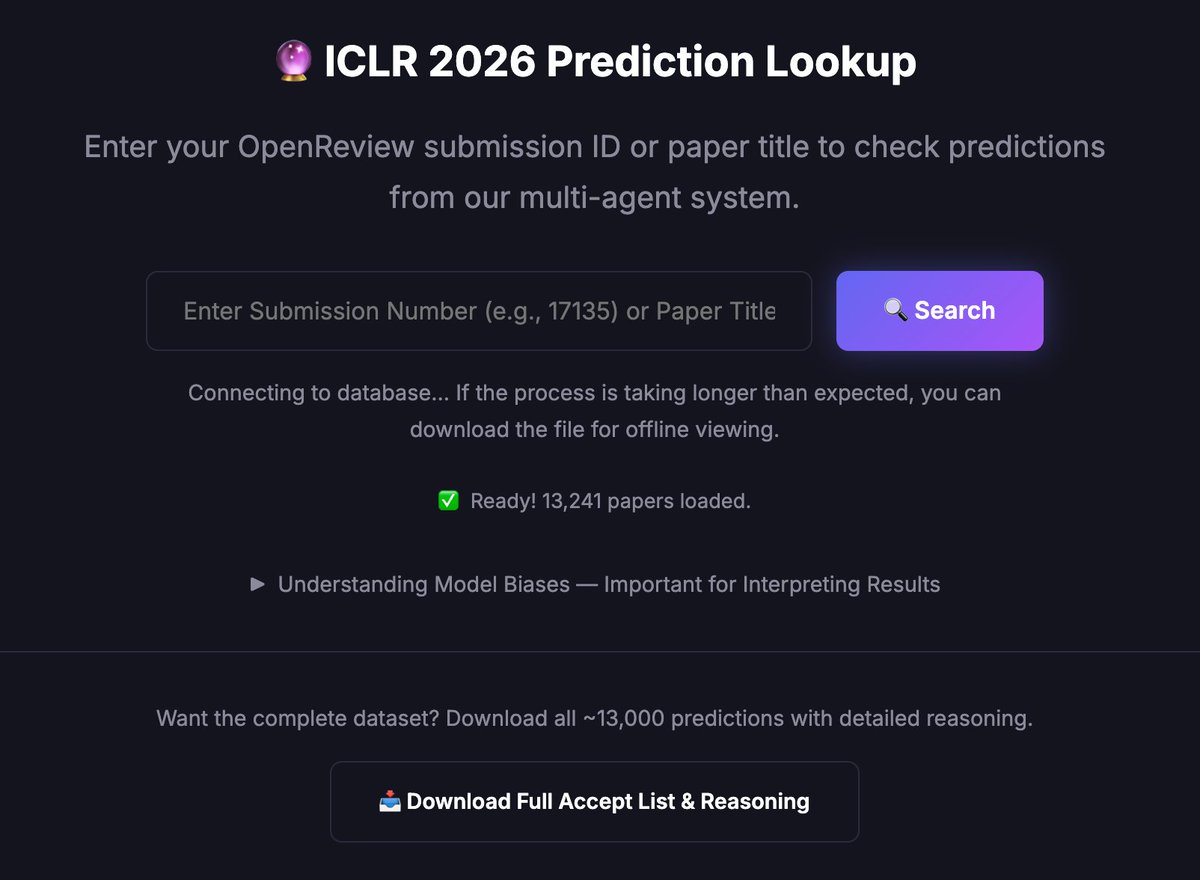
📢ICLR2026 Acceptance Prediction is out! 🚀Find the acceptance of your paper in advance (predicted): paperdecision.netlify.app 🛠️Code of Multi-Agent Framework and Benchmark is available: github.com/PaperDecision/… 🎯Our goal is to understand the how and why behind paper decisions.
Yuhao Dong tweet media
English
12
15
154
31.6K
Tech with Mak
Tech with Mak@techNmak·
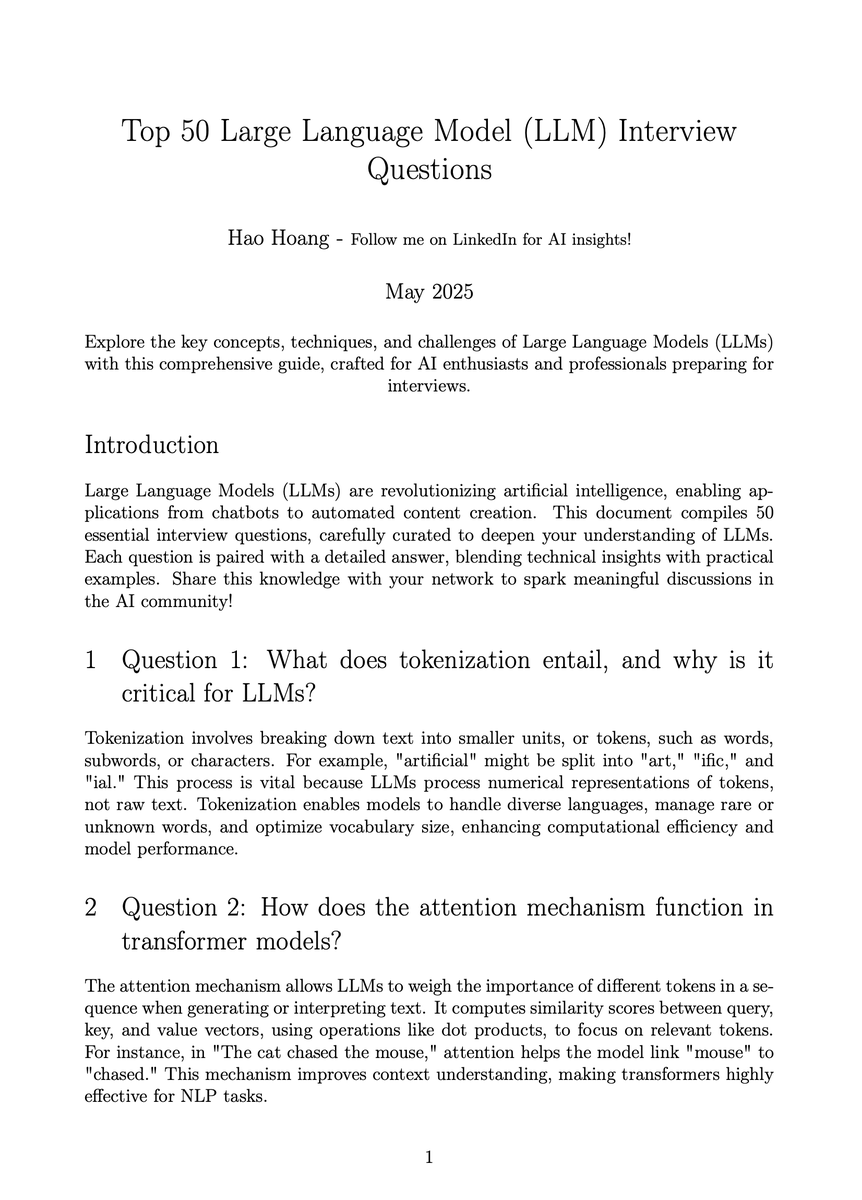
These are literally the kind of LLM interview questions most candidates wish they had seen earlier. A curated list of LLM interview questions - shared by Hao Hoang Want this doc? Follow @techNmak and comment “LLM” - I’ll send it over.
Tech with Mak tweet media
English
1.4K
496
4.2K
409.8K
Raman Dutt
Raman Dutt@RamanDutt4·
I am using LLMs to learn about LLMs. What a time to be alive
English
0
0
1
409
Raman Dutt retweetledi
Mehar Bhatia
Mehar Bhatia@bhatia_mehar·
🚨How do LLMs acquire human values?🤔 We often point to preference optimization. However, in our new work, we trace how and when model values shift during post-training and uncover surprising dynamics. We ask: How do data, algorithms, and their interaction shape model values?🧵
English
2
49
129
39.9K
Raman Dutt
Raman Dutt@RamanDutt4·
Paper just got rejected from NeurIPS after 3/4 reviewers recommended an accept. The reviewer who rejected never bothered to look or respond to our rebuttal after raising nonsense points. Is this what we are working for? THIS is the premier conference in AI?! @NeurIPSConf
English
0
0
5
680
Raman Dutt retweetledi
Osman Batur İnce
Osman Batur İnce@ospanbatyr·
Multimodal models typically need millions of examples from each modality paired with text for training. With SEMI 🌓, we integrate new low-resource modalities into LLMs with as few as 32 samples — including satellite images, galaxies, sensors, and molecules. (1/6)
GIF
English
3
38
210
21.7K