Ramy Sedhom, MD, FASCO

5.3K posts

Ramy Sedhom, MD, FASCO

Ramy Sedhom, MD, FASCO

@ramsedhom

Director, Program in Geriatric Onc & Supportive Care Innovation @PC3Innovation, Assistant Professor at Penn Medicine, Oncology Section Chief at Penn Princeton

Princeton, NJ Katılım Kasım 2013
634 Takip Edilen2.3K Takipçiler
Sabitlenmiş Tweet
Ramy Sedhom, MD, FASCO
Ramy Sedhom, MD, FASCO@ramsedhom·
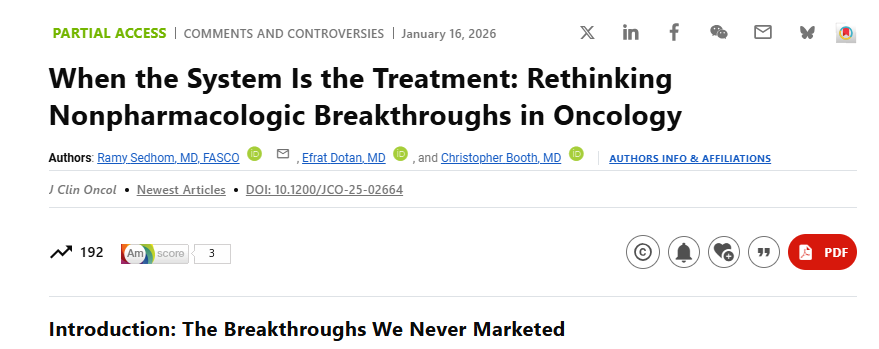
Imagine 4 new anticancer drugs Pallituzumab, Geriatriximab, Symptomab, & Exercizumab hit the market. They should dominate the plenary sessions at ASCO & command billion-dollar revenue. But they don't because they're nonpharmacologic & shame on us. Read our opinion piece in @JCO_ASCO ascopubs.org/doi/full/10.12…
Ramy Sedhom, MD, FASCO tweet media
English
6
36
105
23.2K
Ramy Sedhom, MD, FASCO retweetledi
Liverpool News
Liverpool News@LFCVine·
Mo Salah dancing on the streets of Vancouver with fans, after he scores to help Egypt win their first ever World Cup game.🇪🇬🕺🏻
English
12
98
1.3K
81.4K
Ramy Sedhom, MD, FASCO
Ramy Sedhom, MD, FASCO@ramsedhom·
We are optimizing treatment for young onset CRC but 41% are walking in emotionally distressed & only 27% get the support they need. The tumor is not the only target. Nice report on how dedicated navigation services improve supportive care access ascopubs.org/doi/abs/10.120…
English
1
2
5
482
Ramy Sedhom, MD, FASCO retweetledi
FanDuel
FanDuel@FanDuel·
A 20-point deficit means NOTHING to the Knicks 😤
FanDuel tweet media
English
15
299
2.4K
70.6K
Ramy Sedhom, MD, FASCO retweetledi
ArtButMakeItSports
ArtButMakeItSports@ArtButSports·
Cast of Laocoön and his Sons (Roman version of a lost Greek original), 100BC-50AD
ArtButMakeItSports tweet media
English
162
9.8K
66.7K
1.6M
Ramy Sedhom, MD, FASCO retweetledi
Isabel ALAK
Isabel ALAK@ALACIsabel·
@Dr_RShatsky @BianchiniGP There have been other study in the past in bone mets with different tumors. Same results. We use 3m periodicity since a long time.
English
1
1
2
293
Ramy Sedhom, MD, FASCO retweetledi
Jacob Plieth
Jacob Plieth@JacobPlieth·
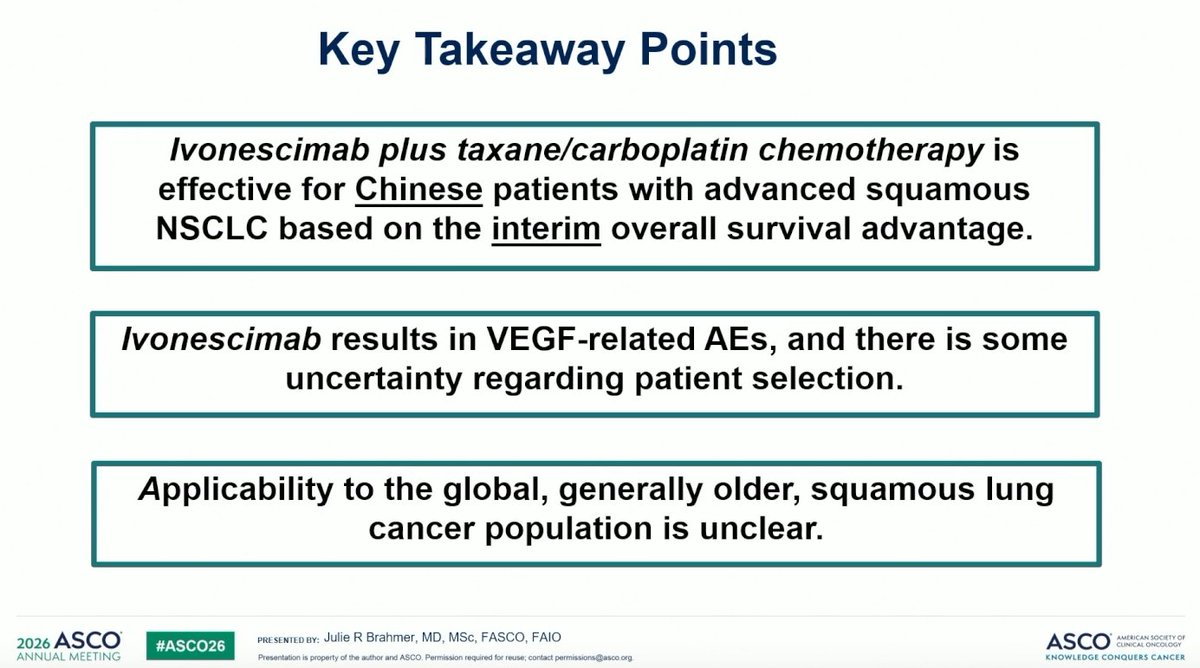
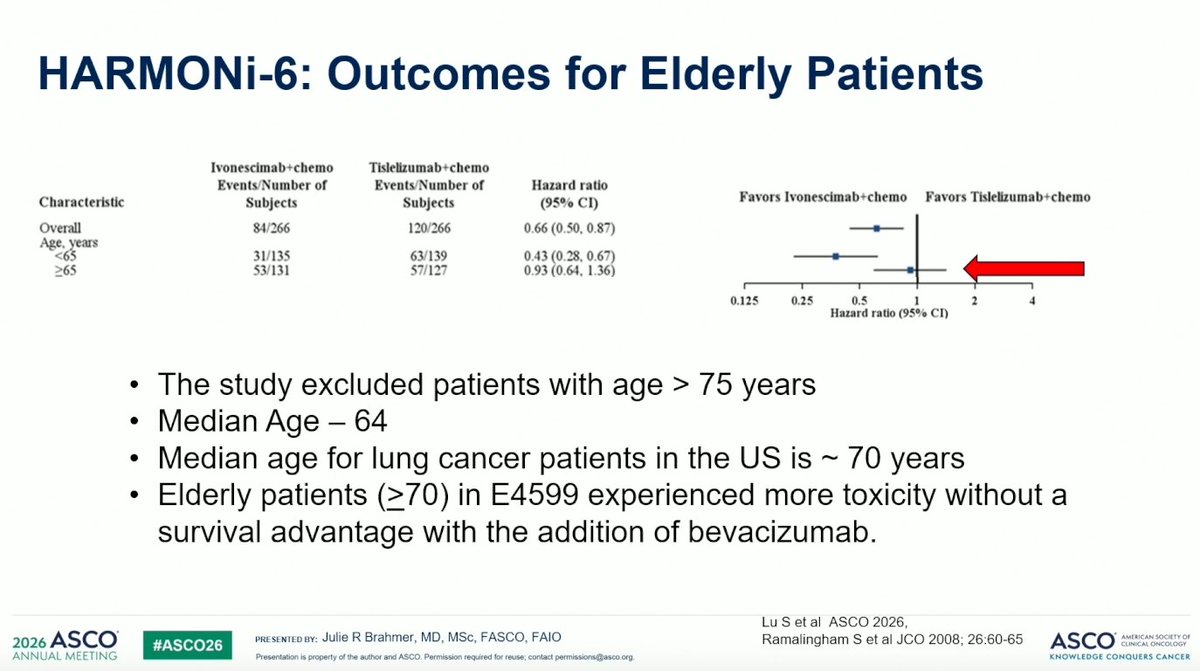
Wow, #Asco26 discussant Julie Brahmer is distinctly restrained (OK, scathing!) in her enthusiasm for Harmoni-6 $SMMT
Jacob Plieth tweet mediaJacob Plieth tweet mediaJacob Plieth tweet mediaJacob Plieth tweet media
English
7
11
61
35.6K
Ramy Sedhom, MD, FASCO
Ramy Sedhom, MD, FASCO@ramsedhom·
@PTarantinoMD @ASCO It’s based off learning theory & we even see in journalism (“don’t bury the lead”) Ultimately helps with cognitive bandwidth and helps with framing while listening
English
0
1
3
239
Paolo Tarantino
Paolo Tarantino@PTarantinoMD·
@ASCO please Let’s go back to including the trial conclusions only at the END of the presentations!
English
4
2
44
3.3K
Ramy Sedhom, MD, FASCO retweetledi
Pope Leo XIV
Pope Leo XIV@Pontifex·
Deep inner suffering inevitably arises when the human person is reduced to performance, consumption, or a statistical datum. Many young people today live under the yoke of expectations to perform, immersed in an exasperated competitiveness that generates anxiety, fear of not measuring up, and disorientation.
English
958
13.2K
77.8K
2.8M
Ramy Sedhom, MD, FASCO retweetledi
Daniel V. Araujo
Daniel V. Araujo@DVAraujoMD·
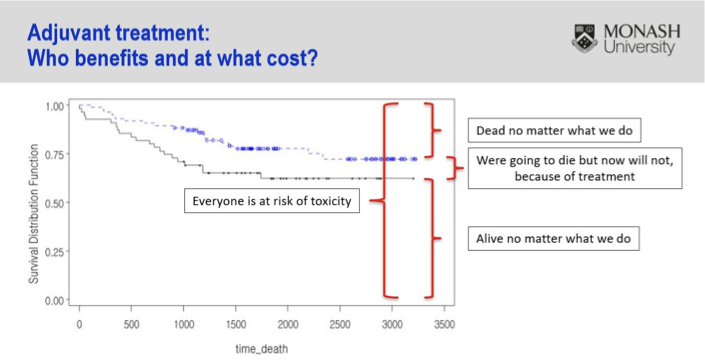
A really thought-provoking study at #ASCO26 (Abstr 4512, Clinical Science Symposium): decision regret after adjuvant pembrolizumab in RCC. 🔹 The question Do patients regret receiving adjuvant pembro — and if so, is it driven by long-term toxicity that CTCAE grading doesn't adequately reflect? They built a patient co-designed tool focused on long-term toxicity. 🔹 The study 104 RCC pts post-adjuvant pembro across 3 London centres, median f/u 30 mo. Pts completed the Ottawa Decision Regret Scale alongside their own rating of irAEs as life-changing, significant, or non-significant. 🔹 What they found 28% rated their toxicity as significant and 11% as life-changing — but these ratings did NOT correlate with CTCAE grade (a third of G1–2 events were rated significant), and regret was identical for G1–2 vs G3–4 irAEs. Regret was driven by patient-perceived long-term toxicity, especially permanent endocrine and MSK irAEs — and not by disease recurrence (only 1/14 who relapsed expressed regret). Lower baseline expectations of toxicity → more regret. 🔹 My take Striking that >1 in 4 reported significant and >1 in 10 life-changing toxicity. What concerns me most isn't that CTCAE missed these events — it's that the grade didn't correlate with how significant patients found them, nor with regret at all. That deviates from the very purpose of grading. The hard part: a regret analysis is tough to contextualize when the alternative, no treatment, risks recurrence — arguably worse than a long-term toxicity. Adjuvant therapy is challenging by nature: most patients are either cured already or destined to recur regardless — we expose everyone to toxicity to benefit a minority. We urgently need biomarkers to find the few who truly benefit. This slide from @Prof_IanD says it all 👇 Looking forward to seeing the presentation! 🔗 asco.org/abstracts-pres… #kcsm #ASCO26 @BethN01 @tompowles1
Daniel V. Araujo tweet media
English
5
32
95
22.5K