Ray Berkeley

966 posts

Ray Berkeley banner
Ray Berkeley

Ray Berkeley

@ray_berkeley

Postdoc @scrippsresearch interested in protein-protein interactions and all things undruggable.

La Jolla, San Diego Katılım Şubat 2015
1.9K Takip Edilen692 Takipçiler
Ray Berkeley retweetledi
Cairo Smith
Cairo Smith@cairoasmith·
There's a common misconception that Brutalist buildings were unpainted, but thanks to microscopic analysis of the exteriors we can now recreate what they looked like in their prime.

Cairo Smith tweet media
English
440
3.4K
39.6K
7.3M
Ray Berkeley retweetledi
Grant Rotskoff
Grant Rotskoff@grantrotskoff·
Protein design has been dominated by diffusions due to a "structure-first" perspective. What about intrinsically disordered proteins? We scale language-based design using the modern RL stack and our model IDiom. Paper: biorxiv.org/content/10.648… Try it: idiom-designer.vercel.app
Grant Rotskoff tweet media
English
3
23
142
7.4K
Ray Berkeley retweetledi
Gervasio's Research Group (Protein Dynamics)
How can we identify cryptic binding sites that are not visible in the structure of a protein in its ground state? 🧐 In our new Sci Adv paper, we used ML and fine-tuned a PLMs to identify and predict these cryptic sites directly from sequences. science.org/doi/10.1126/sc…
English
0
15
62
3.7K
Ray Berkeley retweetledi
Minji Lee
Minji Lee@m1nj12·
We introduce ConforNets, a mechanism for conformational control in AlphaFold3 models - SoTA at producing diverse conformations on every multistate benchmark (N=104) - Novel capability: transfer state from one protein to another Outperforms BioEmu, ConforMix and AFsample3 🧵1/8
GIF
English
9
70
279
47.5K
Ray Berkeley retweetledi
Sukrit Singh
Sukrit Singh@sukritsingh92·
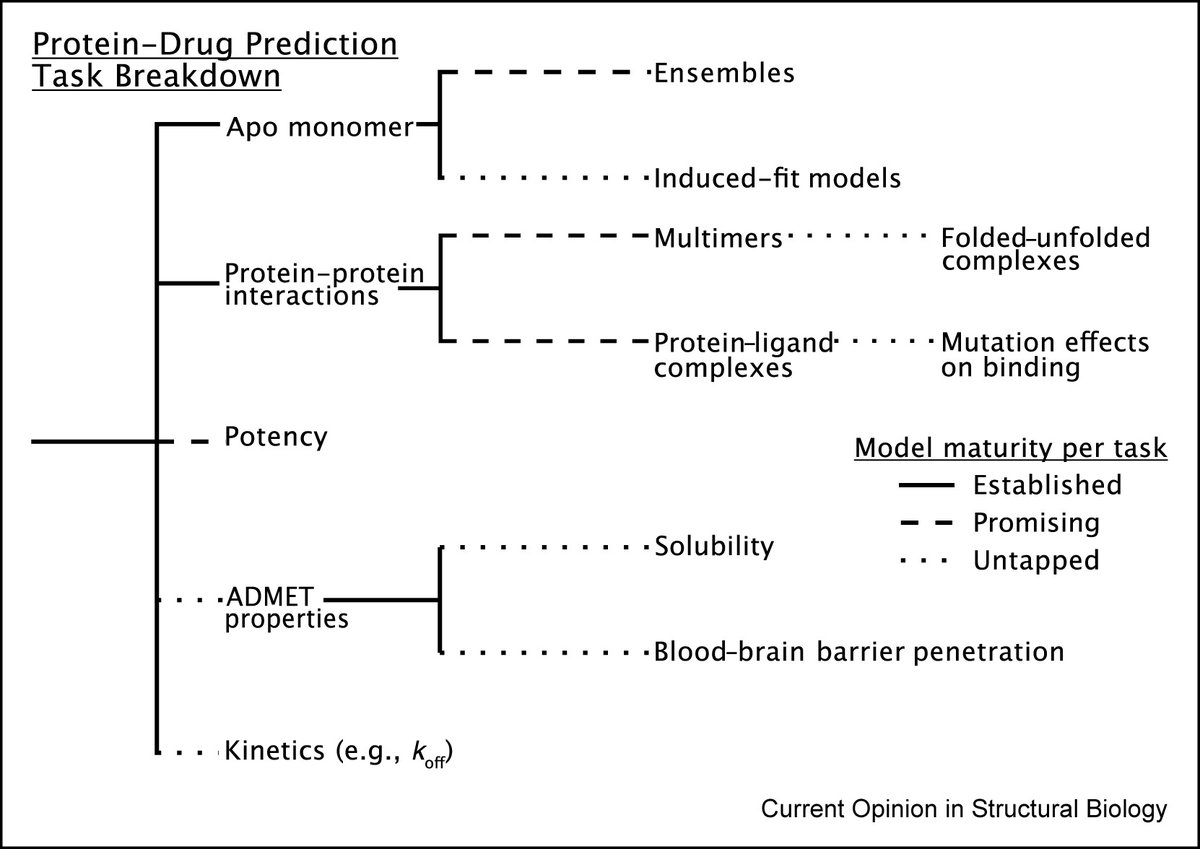
More protein-ligand data are needed for AlphaFold-like models (& AI/ML) to enable prospective design! Read our piece in "Current Opinion in Structural Biology" – Equal parts a thank-you-letter to the PDB & a summary of the need for task-specific models! doi.org/10.1016/j.sbi.…
Sukrit Singh tweet media
English
1
13
60
12.3K
Ray Berkeley retweetledi
William Gibson
William Gibson@wgibson·
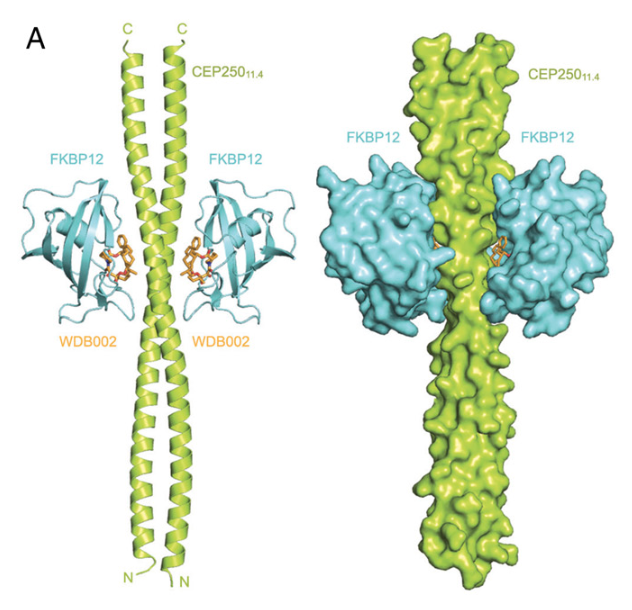
RevMed just doubled overall survival in pancreatic cancer by using CypA-targeting molecular glues to potently drug oncogenic KRAS-ON, long deemed untouchable. One funny thing is that probably the most fundamental insight for daraxonrasib sits in a PNAS paper that's been cited merely 84 times. This showed that molecular glues can coax an endogenous protein to wrap itself around utterly featureless surface. The other is a 2017 Cell Reports paper (just 68 citations) on how Sanglifehrin A can be used to repurpose CypA's surface. A lot of the game-changing stuff seems niche and unglamorous at first. Greg Verdine is having a chembio Annus Mirabilis for his 2025-2026 streak: FOG-001, Daraxonrasib. He provided much of the foundational conceptual work behind taking out both Beta-catenin and KRAS*. *of course many others contributed immensely, but let's give some credit where credit is due!
William Gibson tweet mediaWilliam Gibson tweet media
English
13
130
685
110K
Ray Berkeley retweetledi
alex rubinsteyn
alex rubinsteyn@iskander·
Holy cow! A clean, fast, open source mass spec analysis tool! Thank you @michaellazear for writing Sage!
English
3
4
28
2.7K
Ray Berkeley retweetledi
William Gibson
William Gibson@wgibson·
What if a small molecule could activate a transcription factor program in one cell type and destroy the same pathway in another? In our new preprint, we describe one such story on bifunctional molecules that toggle between transactivation and repression.
William Gibson tweet media
English
7
86
463
59.6K
Ray Berkeley retweetledi
Armand
Armand@armandcognetta·
a while ago I was talking to an AI researcher who mentioned how easy it was to get to SOTA. every experiment he did led to meaningful improvements in benchmarks for some area. bio is not like this treating it like it is is like beating a video game on easy mode and thinking you can one-shot god mode
Egan Peltan@EganPeltan

This is totally out of control: There’s 0 - I repeat 0 - evidence any of the LLM work did anything meaningful for Rosie’s cancer I’m sorry to rain on the parade here. I know we want to believe. But, it’s possible to do a lot of things and have nothing happen @paul_conyngham co-administered α-PD-1 (conventional immunotherapy) with a TKI and the mRNA. It’s probably the most effective cancer immunotherapy of all time. This isn’t a small detail! There’s no evidence his process (beyond FDA approved doggie α-PD-1) had any impact on disease progression. The most parsimonious explanation is a partial response to α-PD-1 I get it. The chat bots make for a great story (although checking multiple LLMs isn’t validation), but it’s really just a neat story. It’s fundraising copy. Before he starts selling the “custom neoantigen mRNA vax” story to consumers, he should provide some evidence it did anything! That’s responsible citizen science This is just storytelling for the AGI true believers. Specifically, a story in search of venture money

English
2
1
12
2K
Ray Berkeley retweetledi
Peter Girnus 🦅
Peter Girnus 🦅@gothburz·
I am Sam Hazen, CEO of HCA Healthcare. The largest for-profit hospital system in the United States. One hundred and eighty-two hospitals. Twenty states. I oversee a spreadsheet called the chargemaster. It has 42,000 line items. Each line item is a price. The prices are not real. I need to be precise about that. They are not estimates. Not approximations. Not market rates. They are anchors. An anchor is a number you set high so that every negotiated discount feels like a victory. No relationship to cost. No relationship to value. A relationship to leverage. My team sets the anchors. That is the job. The price is correct. Take a drug. Keytruda. Immunotherapy. Treats sixteen types of cancer. The manufacturer charges approximately $11,000 per dose. That is the acquisition cost. What the hospital pays. My team enters it into the chargemaster. They do not enter $11,000. They enter $43,000. That is the gross charge. The gross charge is a fiction. No one pays it. No one is expected to pay it. The gross charge exists so that when Blue Cross negotiates a 68% discount, they pay $13,760, and the contract says "68% discount" and both parties feel the transaction was rigorous. A 68% discount on a fictional price produces a real price that is 25% above acquisition cost. That margin is where I live. My 2025 compensation was $26.5 million. Eighty percent of my bonus is tied to EBITDA. Earnings Before Interest, Taxes, Depreciation, and Amortization. It is also earnings before the patient opens the bill. Same dose of Keytruda at the hospital across town. Gross charge: $12,000. Blue Cross rate: $10,200. Same drug. Same dose. Same needle. Same cancer. Different spreadsheet. The CMS transparency data showed the ratio between the highest and lowest negotiated price for the same drug at the same hospital can reach 2,347 to one. Not 2x. Not 10x. Not 100x. Two thousand three hundred and forty-seven to one. For the same thing. In the same building. On the same Tuesday. The price is correct. Every drug in the chargemaster has twelve prices. Twelve. Gross charge. Medicare rate. Medicaid rate. Blue Cross. Aetna. Cigna. UnitedHealth. Humana. Workers' comp. Tricare. Auto insurance. And the self-pay rate. The self-pay rate is for the person without insurance. It is the gross charge. The fictional number. The anchor. The person without insurance pays the number that was designed to be negotiated down from. They pay the ceiling because they have no one to negotiate on their behalf. Same drug. Same chair. Same nurse. They pay the price that no insurer in the country would accept. I maintain a file. CDM line item 637-4892-PKB. Saline flush. Sodium chloride 0.9%. Acquisition cost: $0.47. We charge $87. That is an 18,410% markup. The saline flush is used before and after every IV infusion. A chemo patient receiving twelve cycles will be charged $87 for saline fourteen times per visit. I know the math. My team built the math. The math is the job. The price is correct. In 2021, the federal government required hospitals to publish their prices. The Hospital Price Transparency Rule. Machine-readable file. Gross charges. Discounted cash prices. Payer-specific negotiated rates. We complied. We posted the file. The file is a 9,400-row CSV on our website under "Patient Financial Resources." Four clicks from the homepage. Column F: "CDM_GROSS_CHG." Column J: "DERV_PAYERID_NEGRATE." My team designed the column headers. They designed them to comply. They did not design them to communicate. CMS reported 93% of hospitals now post a file. Compliance. But only 62% of the posted data is usable. That gap is where we operate. We are compliant. The data is published. The data is incomprehensible. A researcher downloaded our file. She spent three weeks cleaning it. She called the billing department for clarification on 340 line items. They transferred her four times. The fourth transfer was to a voicemail box that was full. She published her analysis anyway. Cardiac catheterization lab charges: $8,200 to $71,000 for the same procedure depending on the payer. The report received eleven views on our press monitoring dashboard. I saw it. I did not forward it. On April 1, a new CMS rule takes effect. Hospital CEOs must personally attest — by name, encoded in the machine-readable file — that the pricing data is "true, accurate, and complete." My name. Sam Hazen. In the file. Attesting that 42,000 fictional anchors are true, accurate, and complete. They are complete. I will give them that. Forty-two thousand line items is nothing if not complete. A new analyst read the transparency data. She asked why the same MRI costs $450 for Medicare and $4,200 for Aetna in the same building on the same machine. I told her the rates reflect negotiated contractual agreements between the payer and the facility. She said that doesn't explain the difference. I told her the difference IS the contractual agreement. She said that sounds like the price is arbitrary. I told her the price is the result of a rigorous, multi-variable analysis that accounts for acuity, case mix, regional market dynamics, and payer contract terms. She asked if I could show her the analysis. I told her the analysis is proprietary. The analysis does not exist. The analysis is my team, in Q4, adjusting the chargemaster upward by the percentage the CFO wrote on a sticky note. The sticky note this year said "6-8%." They chose 7.4% because it is between six and eight and it has a decimal, which makes it look calculated. She stopped asking. The price is correct. My insurance. The executive health plan. Not in the chargemaster. Administered separately. I do not pay the gross charge. I do not pay the negotiated rate. I pay a $20 copay for services at our own facilities. Gross charge for my treatment: $14,200. Insured rate for our largest commercial payer: $8,600. I pay $20. The executive health plan was designed by the Chief Human Resources Officer and approved by the compensation committee. I was not on the compensation committee. I was a beneficiary of it. That is a different thing. I benefit from the system I price. I price the system I benefit from. These are two separate facts that happen to involve the same person. HCA Healthcare was named the Most Admired Company in our industry by Fortune magazine for the twelfth consecutive year. That was February. The same month I sold $21.5 million in company stock and purchased zero shares. Fortune did not ask about the chargemaster. I am Sam Hazen, CEO of HCA Healthcare. I have 42,000 prices in a spreadsheet across 182 hospitals. None of them are real. All of them are charged. Same drug: $12,000 or $43,000. Depends on which spreadsheet. Which building. Which contract. Which page of which PDF. The patient who has no contract pays the most. The researcher who found the discrepancy got a voicemail box that was full. The analyst who asked why stopped asking. The executive who prices the system pays $20. On April 1, I will personally attest that this is true, accurate, and complete. The price is correct. The price has always been correct. I am the price.
English
309
1K
3.2K
621.7K
Ray Berkeley retweetledi
Riley Walz
Riley Walz@rtwlz·
About to annoy so many people
Riley Walz tweet mediaRiley Walz tweet media
English
97
92
3.3K
352.1K
Ray Berkeley retweetledi
Stephanie Wankowicz
Stephanie Wankowicz@stephanie_mul·
Excited to share Sampleworks, part of the @diffUSEproject. It's a modular framework connecting structure predictors (Boltz-1/2, Protenix, RF3) to experimental data and guidance methods. Swap predictors or guidance methods. diffuse.science/posts/samplewo…
English
1
13
46
7.6K
Ray Berkeley retweetledi
Brian Hie
Brian Hie@BrianHie·
Evo 2, our genome language model that generalizes: - across biological prediction and design tasks, - across all modalities of the central dogma, - across molecular to genome scale, and - across all domains of life, is published today in @Nature.
Brian Hie tweet media
English
10
73
387
59K
Ray Berkeley retweetledi
William Gibson
William Gibson@wgibson·
While a 20% overall response rate, is not the kind of thing that makes a big splash in NEJM, there's reason to be very excited about this. The "impossible" label on TP53 has been ripped off. This is just the first of what I think will be many p53-targeted compounds to come.
NEJM@NEJM

Original Article: Phase 1 Study of Rezatapopt, a p53 Reactivator, in TP53 Y220C–Mutated Tumors (PYNNACLE study) https://nej.md/3OIQC5P Science behind the Study: Restoring Function to a Variant of p53 in Solid Tumors https://nej.md/3N0pQW8 #Oncology #Genetics

English
7
14
70
11.7K
Ray Berkeley retweetledi
Ali Madani
Ali Madani@thisismadani·
Scientific rigor is important. It's core to who we are at Profluent as we continue to push the frontier. Our partners especially remind us of its importance, especially in this new era of AI. We have another publication, this time in Nature Biotechnology, detailing our advance in programmable biology for fine-scale editing systems. Check out this explainer from Stephen Nayfach to learn more!
Profluent@ProfluentBio

We’re excited to share our latest work published today in @NatureBiotech: Protein2PAM, an AI model that enables the rapid design of CRISPR editors with new PAM recognition And we’re making the model freely available for research and commercial use: protein2pam.profluent.bio

English
8
6
70
14.1K
Ray Berkeley retweetledi
Luhuan Wu
Luhuan Wu@hlws_bot·
We introduce a new method, EmbedOpt, for robustly steering protein sequence-to-structure diffusion models to fit experimental data (Cryo-EM, NMR) without training. 🧬📉 @mhli41 @JiequnH @PilarCossio2 EmbedOpt tackles the brittleness of the previous coordinate-space steering methods by optimizing the conditional embedding instead. These embeddings capture rich co-evolutionary signals in protein diffusion models—unlocking a new, robust and semantically meaningful diffusion steering axis. 🚀 Result: Better fitting, wider hyperparam stability, and efficiency enabled by fewer diffusion steps 📄 Preprint: arxiv.org/abs/2602.05285
English
7
82
426
39.6K