aNYguy

467 posts

aNYguy banner
aNYguy

aNYguy

@recksonite

Trader | CFA | Aspiring mensch

United States Katılım Eylül 2013
884 Takip Edilen164 Takipçiler
aNYguy
aNYguy@recksonite·
@emollick @nealstephenson I think this is *relatively* easy: @grok, can you assign a Victorian agentic scientist to discover the luminiferous aether using only known scientific findings available up until that era?
English
1
0
0
153
Ethan Mollick
Ethan Mollick@emollick·
I wish the corpus from the era was big enough that we could do counterfactual history. I wonder if you can generate enough synthetic data to get it to work. If I could, I'd love to assign a Victorian agentic scientist to discover the luminous aether. Very @nealstephenson
English
11
1
91
13.8K
Ethan Mollick
Ethan Mollick@emollick·
Want to talk to the past? Here is an LLM "trained entirely from scratch on a corpus of over 28,000 Victorian-era British texts published between 1837 and 1899, drawn from a dataset made available by the British Library." Quite different from an LLM roleplaying a Victorian.
Ethan Mollick tweet mediaEthan Mollick tweet media
English
83
122
1.4K
87.1K
aNYguy
aNYguy@recksonite·
@shanaka86 @BillAckman You have a point, but let’s be serious: in practice Patriot missiles are not intended, nor used against drones. They’re reserved for ballistic missiles. You’re grossly distorting the economics by ignoring this fact
English
0
0
2
360
Shanaka Anslem Perera ⚡
BREAKING: Zelensky just landed in the UAE and signed a defence cooperation agreement with President MBZ. The deal on the table changes everything about this war. Ukraine is offering Gulf states 1,000 drone interceptors per day. Each Sting interceptor costs $2,100. Each Patriot missile it replaces costs $3.9 million. In exchange, Ukraine wants the Patriot missiles the Gulf states are burning through, because Kyiv cannot get enough of them to stop Russian missiles. Read that again. The country America refused to arm fast enough is now arming America’s allies with a weapon that costs 1,857 times less than the one America cannot produce fast enough. The National reported on March 27 that Zelensky told reporters: “We’d like to quietly receive the Patriot missiles we have a deficit of, and give them a corresponding number of interceptors.” AFP confirmed the UAE agreement on March 28. Eleven countries have formally requested Ukraine’s drone defence expertise per Zelensky’s own count. Over 200 Ukrainian military specialists are already deployed across the UAE, Qatar, Saudi Arabia, Kuwait, and Jordan. Here is the arithmetic that should terrify every Pentagon procurement officer on earth. The United States fired 943 Patriot interceptors in the first four days of the Iran war per a US Congressional study cited by the Jerusalem Post. That is eighteen months of Lockheed Martin’s annual production consumed in 96 hours. Each of those 943 shots cost $3.9 million. Total expenditure: $3.68 billion in four days on defensive interceptions alone. Iran produces 10,000 Shahed drones per month per Reuters. Each drone costs $20,000 to $50,000. The cost exchange ratio is 114 to 1 in Iran’s favour per Military Times. Ukraine’s Sting interceptor inverts this arithmetic entirely. At $2,100, the cost ratio flips from 114-to-1 against America to roughly 10-to-1 against Iran. Ukraine can supply 1,000 per day. That is 30,000 per month against Iran’s 10,000 Shaheds per month. For the first time in this war, the defender’s production rate exceeds the attacker’s production rate at a fraction of the cost. And the country that built this weapon is the same country that Trump publicly rejected. “No, they are not helping. We do not need their help. We know more about drones than anyone else” per Fox News. He doubled down: “The last person we need help from is Zelensky.” Meanwhile the Pentagon notified Congress of plans to redirect $750 million in Ukraine-bound Patriot missiles to Gulf states per House of Saud reporting. America is simultaneously refusing Ukraine’s cheap solution and cannibalising Ukraine’s expensive one. Zelensky framed this explicitly. He told The National: “No matter how many Patriots, THAADs, or other air-defence systems are in the Middle East, that alone is not enough for fully effective air defence.” He told the UK Parliament: “When it comes to shooting down massive Shahed attacks, only Ukrainian experience can really help with this today.” The Pentagon is spending $3.9 million per interception, raiding Swiss fighter jet accounts to cover shortfalls, and diverting Ukraine’s own Patriot supply to the Gulf. Zelensky is offering the same result for $2,100 and producing 1,000 units per day. The market has a word for this kind of disruption. The $2,100 drone is the most important weapon in this war. And the country that built it is the one America said it did not need. Full analysis - open.substack.com/pub/shanakaans…
English
890
5.9K
21.3K
2.9M
Alexander Hamilton's Tears
Alexander Hamilton's Tears@Hamiltonstears·
@citrinowicz "Victory" has proved illusive for the US in Iran so far. And "defeat" in Iran is clearly defined: if the regime is still in charge in Iran after this war and Iran is able to extract some sort of toll for ships to use Hormuz, that is a flat loss for the US.
English
1
0
0
1.3K
Danny (Dennis) Citrinowicz ,داني سيترينوفيتش
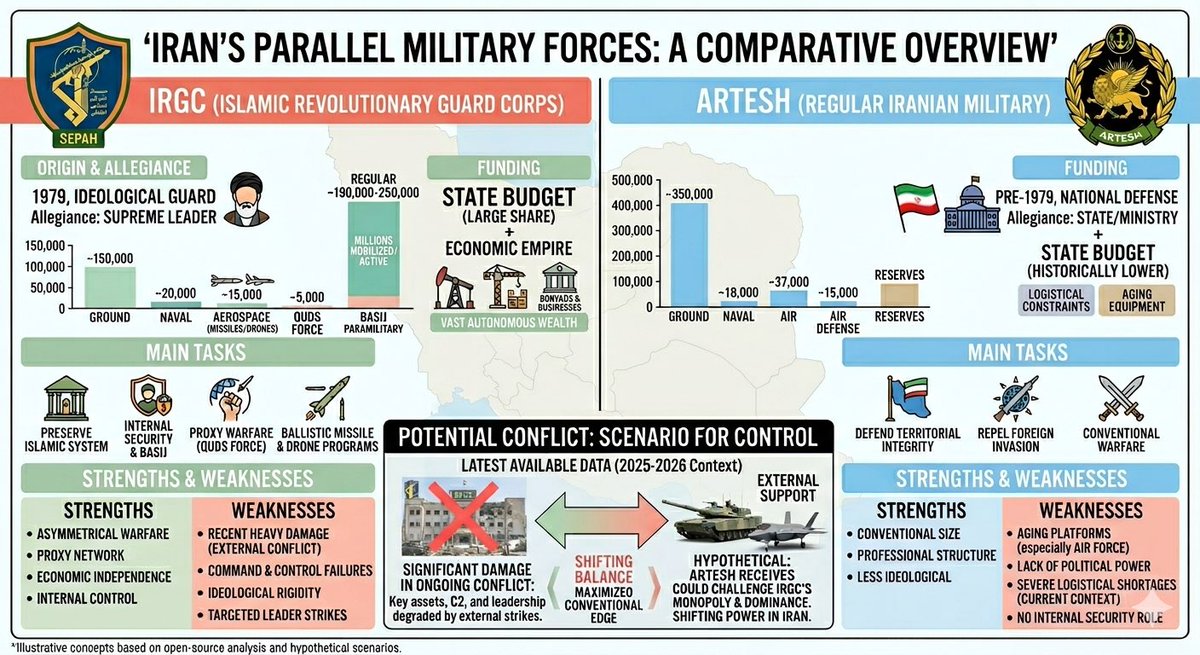
Operational Success, Strategic Failure in Iran This is not a matter of opinion. It is a matter of facts. 1. Iran today is weaker than it was before the conflict, but it is also more radical. The Islamic Revolutionary Guard Corps has further consolidated its influence over decision-making, eroding what little internal balance once existed within the regime. Iran was never moderate under Ayatollah Ali Khamenei, but there were previously competing centers of power. That dynamic has largely disappeared, leaving a more ideologically rigid system in place. 2. To be sure, the United States and Israel have inflicted significant damage on Iran’s military capabilities. Their operational and intelligence superiority is unquestioned. But battlefield success does not automatically translate into strategic victory. Iran has demonstrated, time and again, an ability to rebuild. Nowhere is this more consequential than in the nuclear domain. With roughly 440 kilograms of uranium enriched to 60%, Tehran retains a latent capability that cannot simply be bombed away or seized. Counting destroyed targets is not the same as achieving a durable strategic outcome. 3. The regional picture further complicates the narrative of success. Key Gulf actors, such as Oman and Qatar, have pushed for de-escalation and, in some cases, openly criticized Israel’s role in the conflict. Qatar continues to maintain functional ties with Iran. Even among U.S. partners that normalized relations with Israel, such as the UAE and Bahrain, public unease is evident. Saudi Arabia, is unlikely to advance normalization under current conditions surrounding the Palestinian issue. The idea of a cohesive regional alignment against Iran remains overstated. 4. More fundamentally, the campaign’s implicit objective was not merely to degrade capabilities, but to alter the strategic landscape, ultimately by creating conditions for regime change. That outcome has not materialized. Instead, hardline leadership remains in place, now facing incentives to reassess its nuclear posture. A regime that feels both threatened and vindicated may be more,not less, inclined to pursue a nuclear weapon. 5. If the conflict ends under current conditions, Iran may emerge as the strategic winner despite suffering tactical losses. It can claim resilience in the face of sustained pressure from two of the world’s most capable militaries. Meanwhile, global competitors of the United States stand to benefit. Russia gains breathing room and geopolitical leverage, while China watches Washington become further entangled in the Middle East. 6. Even the situation in the Strait of Hormuz underscores the paradox. What was open at the outset of the conflict may now require diplomatic or military effort to reopen—turning a return to the status quo into a perceived achievement. 7. There would be no more positive development for the Middle East than the fall of the Iranian regime. That remains the strategic prize. But it is far from clear that the current campaign, as it stands, has advanced that outcome. If anything, there is a growing risk it has produced the opposite effect. 8. The more immediate question is how this ends. The administration faces a narrowing set of options, none of them particularly good. One path is a negotiated agreement. But under current conditions, such a deal is unlikely to be favorable. From Tehran’s perspective, the regime has withstood sustained military pressure and can claim a form of strategic resilience. That perception matters. It reduces any incentive to compromise on the core pillars of its security and ideology such as its missile program, its drone capabilities, and ultimately its nuclear posture. A deal reached under these circumstances risks formalizing, rather than rolling back, Iran’s long-term threat. The alternative is escalation: a broader military campaign, potentially including the seizure of strategic assets such as Kharg Island or contested Gulf or Hormuz straits. But such moves would not be decisive. Iran is not a state that can be coerced into collapse through limited territorial losses. Instead, escalation would likely prolong the conflict, expand its scope, and increase the risks of regional spillover—without guaranteeing a strategic breakthrough. In short, there is no good option as long as this regime in Tehran remains in place and at present, it is not going anywhere. 9. There is also a second-order effect that deserves attention in Washington. The U.S.-Israel alliance remains a cornerstone of Israel’s security and long-term future. That is not in question. But it is less clear that this campaign strengthens Israel’s standing in the United States. On the contrary, prolonged conflict, especially one that lacks a clear strategic end state, risks deepening political and public friction. If United States is being drawn into an open-ended Middle Eastern conflict without a clear payoff, the political cost for Israel could become significant. The bottom line is clear - this has been a remarkable operational performance, driven by close coordination between U.S. Central Command and Israel. But if it concludes without meaningful strategic change, it will be remembered as a strategic failure. The risk is not an Iran that is weakened and deterred, but one that adapts, emerging more determined, more radical, and potentially closer to a nuclear threshold, resembling Pakistan or North Korea rather than the "new" Venezuela for example #IranWar
David M Friedman@DavidM_Friedman

I don’t buy any of this — a lot of think tank doublespeak that ignores some basic realities: 1. Iran is dramatically weaker now in every single relevant category of threat. 2. The US and Israel have destroyed large quantities of weapons and launchers, along with defense infrastructure and factories, research facilities and human capital. 3. The war has united the US and Israel with moderate Arab nations against radical Islamists, strengthening an important ongoing alliance. 4. With the internet down and the streets filled with armed thugs, regime change may not be imminent but it is likely inevitable. Comparing this to the facts and circumstances prior to 28 February, there is no doubt that the free world is better off now. Only a military “academic” could see things so differently.

English
36
137
437
119K
aNYguy
aNYguy@recksonite·
@citrinowicz You’re painting too bleak a picture. The IRGC is fractured, decapitated, and bankrupt. Attrition? After 4 weeks? Nonsense. The regime’s grip on power is weaker with every passing day. And thanks to the resolve of men stronger than you, IRGC’s days are numbered.
English
5
0
20
2.7K
Danny (Dennis) Citrinowicz ,داني سيترينوفيتش
Four weeks into the war, the emerging picture is deeply problematic. The conflict appears to have produced a more radicalized Iranian regime, still in possession of significant stockpiles of 60% enriched uranium, while retaining the ability to exert influence over critical global economic chokepoints, and maintain a steady pace of projectile launches. This has come in exchange for a partial degradation of Iran’s forcd buildup primarily in the conventional domain. Even in this respect, however, the achievements remain limited and, more importantly, It is clear that Iran will rebuild its capabilities, and even if it takes longer than expected, it will ultimately succeed in doing so. The absence of a clearly defined exit strategy has led to a gradual slide into a war of attrition, one that is imposing mounting costs on the economy, military readiness, and, critically, the civilian home front all over the ME and beyond. At the outset of the conflict, the current trajectory suggests a far more ambiguous outcome. At best, the results are mixed; at worst, they point to a troubling gap between operational success and strategic effectiveness. While the end state of the campaign remains uncertain, the current trajectory suggests that accumulated operational gains are not translating into strategic success, and may, in fact, be leading to strategic failure. #IranIsraelWar
English
27
106
399
103.6K
aNYguy retweetledi
zerohedge
zerohedge@zerohedge·
Hormuz Bypasses Maxed Out: Saudi East-West Pipeline Hits Record 7 MMb/d, As UAE Fujairah Crude Loadings Reach Capacity zerohedge.com/energy/hormuz-…
English
50
83
514
84.1K
aNYguy
aNYguy@recksonite·
@elerianm The global economy will continue to erode for as long as the IRGC maintains control of the Strait of Hormuz and the Bab el-Mandeb Strait. It’s that simple
English
1
0
2
309
Mohamed A. El-Erian
Mohamed A. El-Erian@elerianm·
Regarding the economic and financial implications of the Middle East War: An unsettling short-term scenario for the global economy and markets is that the US may not be able to impose its will on the other primary combatants—Iran and Israel. In such a scenario, the range of potential "endpoints" widens considerably, and the path to most of them is volatile. #economy #markets #middleeastwar
English
37
55
353
53.1K
aNYguy
aNYguy@recksonite·
@Doranimated @BillAckman @jmurtazashvili We’ve seen this playbook before: human shields, hostages, propaganda. Every adult in the room understands this strategy needs to be defeated sooner rather than later.
English
0
0
0
1.1K
Mike
Mike@Doranimated·
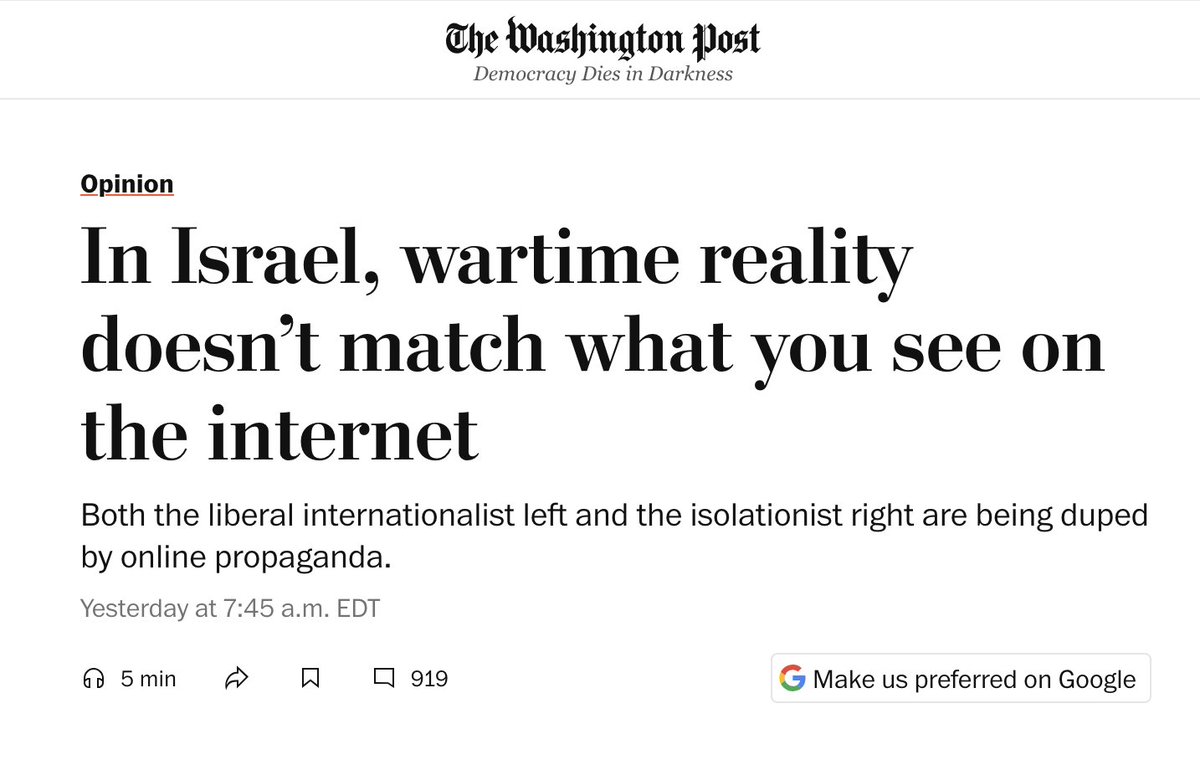
The world is truly upside down! The Washington Post has published a brilliant article, written by, get this, a professor! To give you some flavor, here are a few choice lines by @jmurtazashvili: 1) "We are living through the first alt-war: a conflict in which the war fought online and the war fought in reality have diverged so completely that they might as well be happening on different planets. It’s not that people lack information, it’s more that they are constructing an entirely different alternate reality — one that confirms what they already believe." 2) "What worries me more than the fake videos are the people who cannot fathom that this war is going well for the United States, for Israel and maybe even for the long-suffering people of Iran. The strategic picture is more favorable than the online narrative suggests." 3) "Two weeks into the war, I watch otherwise reasonable analysts sprint to catastrophe. Former officials, thinktank scholars, credentialed professionals who are supposed to know how to read a conflict. Within days they had written the obituary: quagmire, overreach, disaster." 4) "The liberal internationalist left and the isolationist right — two camps that have agreed on almost nothing for decades — have suddenly found themselves in lockstep, racing to declare the war a failure before it had barely begun. This is the new blob: not the old foreign-policy establishment that the term originally described but a new amalgamation that has arrived at the same conclusion from opposite directions. Together they are the most powerful engine of the alt-war." The truth. In the mainstream media. By a professor. And written well. Four things I thought I'd never see again in my lifetime.
Mike tweet media
English
375
2K
7.1K
466K
aNYguy
aNYguy@recksonite·
@citrinowicz @citrinowicz, you have a strange way of casting IRGC’s steady, grinding defeat as a victory. Thank goodness you’re not calling the shots and we have strong leaders in charge
English
0
0
0
76
Danny (Dennis) Citrinowicz ,داني سيترينوفيتش
כניסת החות'ים למערכה לא הייתה שאלה של אם, אלא של מתי. בסופו של דבר, כרכיב מרכזי בראייתם וכחלק מציר ההתנגדות הנאבק בישראל ובארצות הברית, לא היה ניתן לבלום את הצטרפותם באמצעות איומים או תמריצים כלכליים. עם זאת, המשמעות המרכזית של כניסתם אינה הירי לעבר ישראל, מבלי להמעיט בחשיבותו, אלא ביכולתם לאיים על מיצרי באב אל-מנדב ועל נמל ינבו. יכולת זו מקשה על מאמצי סעודיה ומדינות המפרץ לעקוף את מיצרי הורמוז, ובכך מעצימה את הפגיעוּת של נתיבי האנרגיה האזוריים והגלובליים. אחד ההישגים המשמעותיים של איראן במערכה הנוכחית, בניגוד לסבבים קודמים, הוא היכולת להרחיב אותה לכדי מערכה אזורית מלאה—הכוללת את חזבאללה, המיליציות השיעיות בעיראק וכעת גם את החות'ים. התפתחות זו לא רק מקלה על איראן מבחינה צבאית, אלא גם מסבכת מאוד את האפשרות לסיים את המערכה, שכן סביר שאיראן תדרוש שכל הסדר הפסקת אש יחול על כלל הזירות במקביל. מכאן עולה כי למרות סימני שחיקה, ציר ההתנגדות רחוק מקריסה. להפך, רמת המחויבות וההתלכדות סביב איראן מדגישה את עמידותו. בהתאם לכך, כל דרישה מאיראן במסגרת משא ומתן לחדול מתמיכה בשותפיה האזוריים צפויה להיתקל בקשיים משמעותיים. פתיחתה של חזית נוספת רק מעמיקה את מורכבות המערכה ומגדילה את הסיכונים הגלומים בה.
roi kais • روعي كايس • רועי קייס@kaisos1987

הדובר הצבאי של החות'ים בתימן יחיא סריע מודיע כי בהמשך להודעה שלהם על התערבותם הצבאית הישירה כדי לסייע לאיראן ולחזיתות ההתנגדות בלבנון, בעיראק ובזירה הפלסטינית ולאור ההסלמה הצבאית והפגיעה בתשתיות וביצוע פשעים ומעשי טבח נגד אחיהם בלבנון, באיראן, בעיראק ובזירה הפלסטינית, כלשונו, החות'ים בעזרת האל ביצעו את הפעולה הצבאית הראשונה שלהם - שיגור של טילים בליסטיים לעבר יעדים צבאיים רגישים בדרום ישראל ("פלסטין הכבושה"). בהודעה אמר כי הפעולות שלהם יימשכו עד שיושגו המטרות המוצהרות וכפי שהוגדרו בהודעה הקודמת.

עברית
15
53
227
79.1K
aNYguy
aNYguy@recksonite·
@citrinowicz @FT You have a strange way of casting IRGC’s steady, grinding defeat as a victory. Thank goodness you’re not calling the shots
English
0
0
0
205
Danny (Dennis) Citrinowicz ,داني سيترينوفيتش
Rold @FT that Iran may lack the capacity for massive salvos, but its current approach appears to be a strategy designed to endure rather than overwhelm. This reflects long-term planning: Iran appears to be deliberately rationing its missile and drone use, recognising the conflict is likely to be prolonged. At the current tempo, it probably has enough missiles for several more weeks. Rather than relying on large-scale barrages, it is sustaining pressure through smaller but continuous attacks — limited missile strikes on Israel, waves of drones and frequent short-range missile launches towards Gulf states.  Even a small number of strikes could hit critical energy and infrastructure targets. This poses a particular challenge for Gulf countries and gives Tehran disproportionate leverage. @charles_clover ft.com/content/6a3944…
English
10
28
110
12.4K
aNYguy
aNYguy@recksonite·
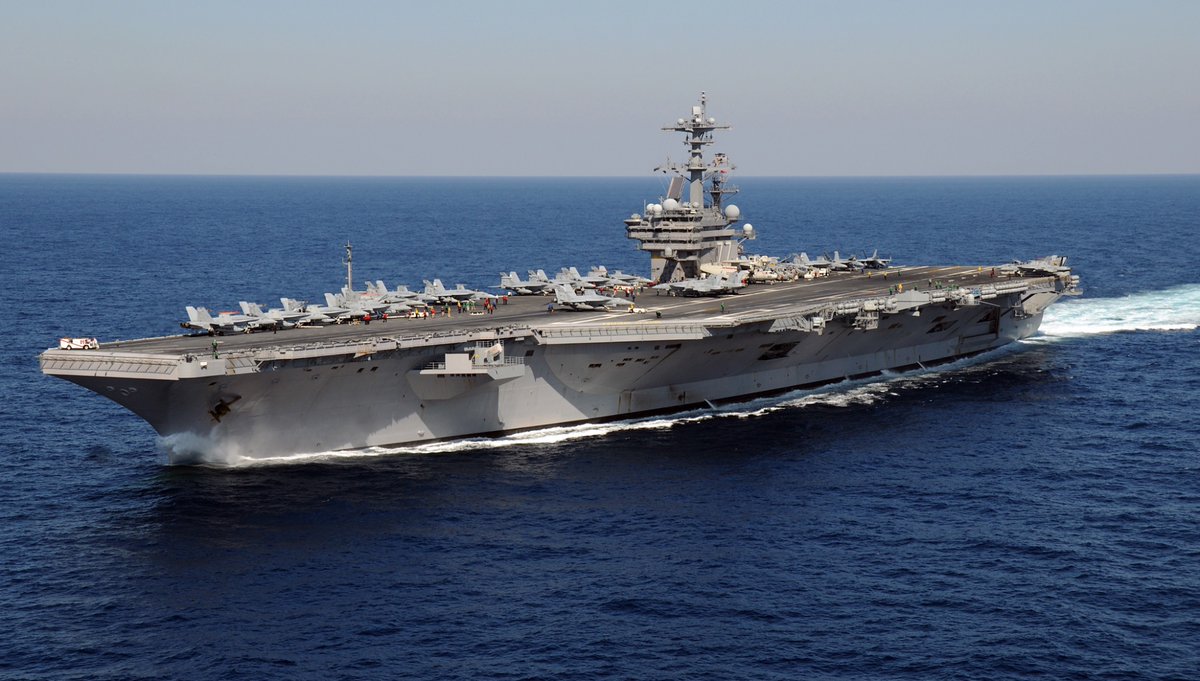
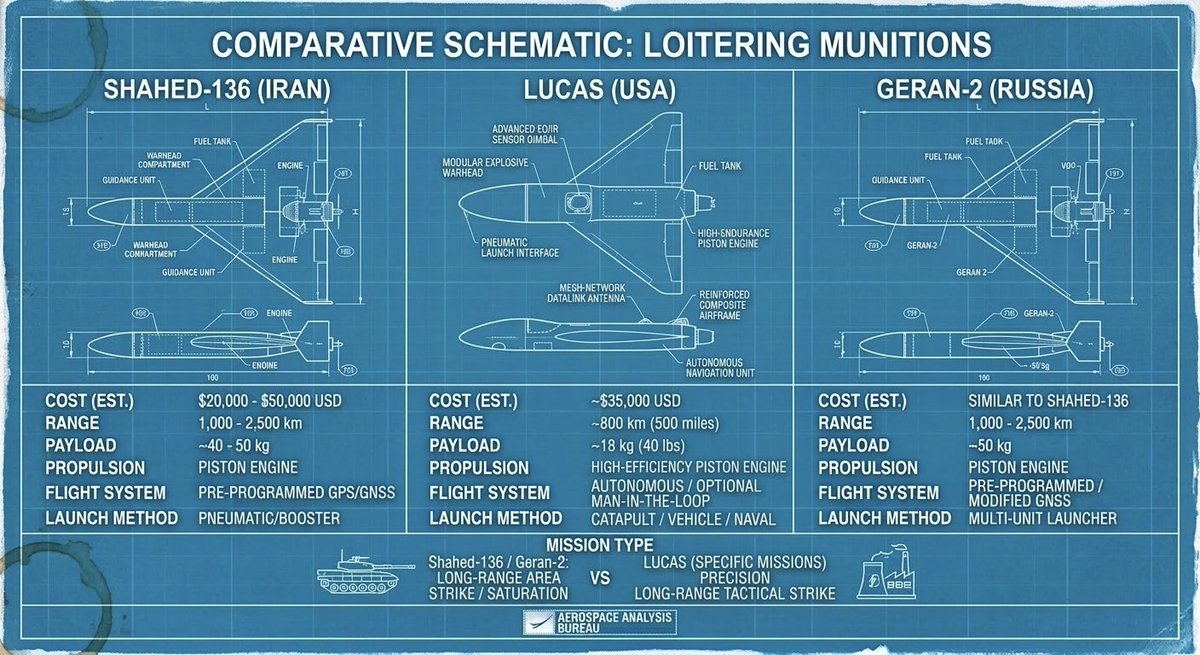
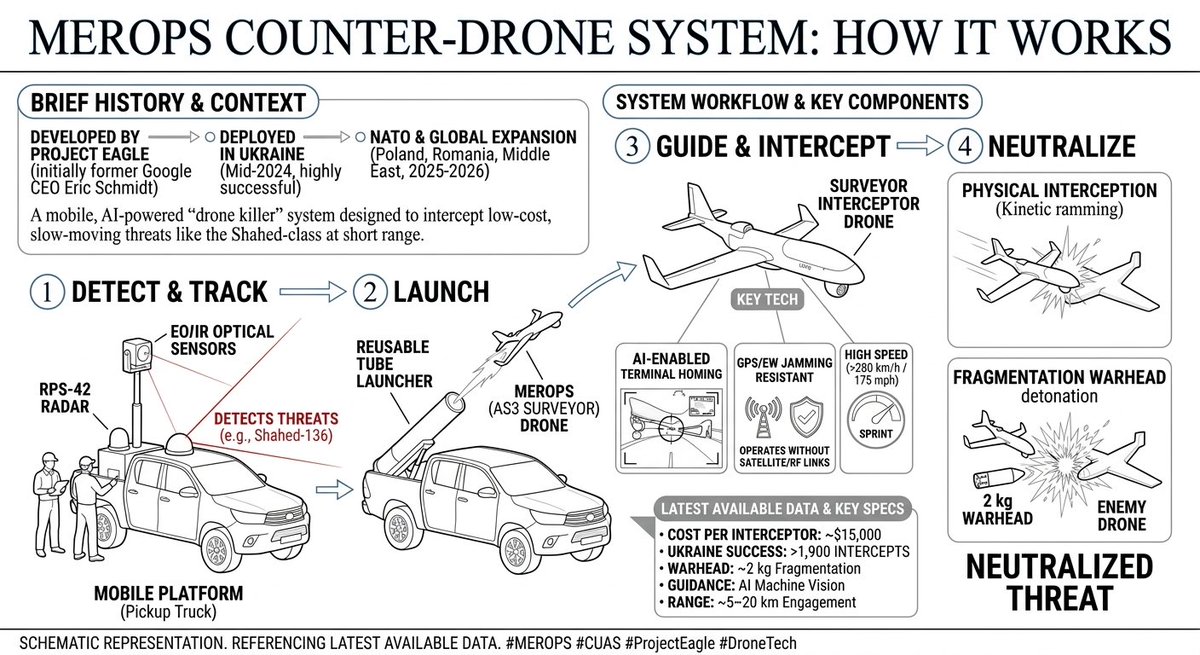
@Osint613 And let’s not forget the Ukrainian anti-drone contingent in the Gulf… it’ll be a critical component if the war escalates
aNYguy tweet media
English
0
0
1
1K
Open Source Intel
Open Source Intel@Osint613·
The USS George H.W. Bush aircraft carrier will deploy to U.S. Central Command’s area of responsibility, which oversees U.S. military operations against Iran, CBS News reports, citing sources.
Open Source Intel tweet media
English
62
257
2.2K
178.2K
The Spectator Index
The Spectator Index@spectatorindex·
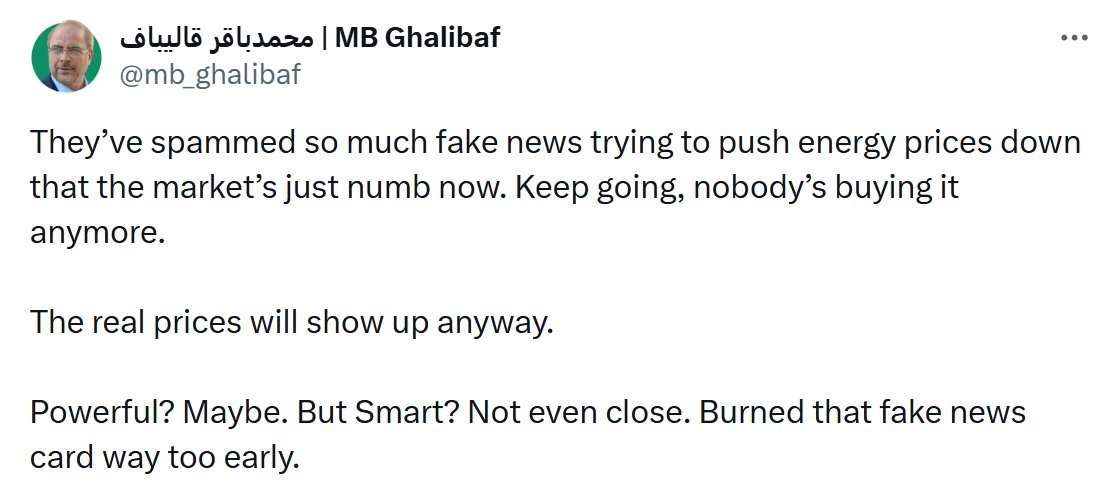
BREAKING: Iran's speaker of parliament says that 'fake news' is being used to push energy prices down and the market is now 'numb'.
The Spectator Index tweet media
English
84
291
2.5K
182.9K
Open Source Intel
Open Source Intel@Osint613·
Iran Parliament Speaker Mohammad Bagher Ghalibaf: “They’ve spammed so much fake news trying to push energy prices down that the market’s just numb now. Keep going, nobody’s buying it anymore. The real prices will show up anyway. Powerful? Maybe. But smart? Not even close. Burned that fake news card way too early.”
Open Source Intel tweet media
English
75
44
252
61.5K
aNYguy
aNYguy@recksonite·
@emollick That’s great…but can it do anything about the line at security?
English
0
0
0
64
Ethan Mollick
Ethan Mollick@emollick·
One way to see the advancement of AI is to see how much further you can get with new models on the same hardware Here is "an otter using a laptop on an airplane" generated on my home computer using the open weights Wan 2.1, first try. We have come pretty far in 18 months.
Ethan Mollick@emollick

On one hand, these are obviously much worse "otter using wifi on an airplane" than any state-of-the AI text-to-video generation, it looks like something from 2022. On the other, it was done entirely offline on my computer using open AI video generation tools, a new capability.


English
39
13
289
33.3K
aNYguy
aNYguy@recksonite·
@Osint613 Probably something about the new White House ballroom
English
0
0
4
311
aNYguy
aNYguy@recksonite·
@ericnuttall The window to avert a catastrophic crises remains open - we’ll know within days. Still, I agree completely about the complacency
English
0
0
10
5K
Eric Nuttall
Eric Nuttall@ericnuttall·
I've so far avoided dramatics because I would be accused of bias. To be clear: this is the worst energy crisis of our lifetimes, well beyond what any sober mind could have envisioned, with no end in sight. The level of complacency to me is astounding.
English
79
1.6K
10K
926.2K
*Walter Bloomberg
*Walter Bloomberg@DeItaone·
IRAN PREPARES 1 MILLION TROOPS FOR U.S. INVASION Iran is reportedly ready to deploy over 1 million fighters if the U.S. launches a ground invasion, according to Tasnim News Agency citing an IRGC source. Recent days have seen a surge of enlistment requests to the Basij, Revolutionary Guards, and Army. The source warned that Iran is prepared to counter U.S. attempts to reopen the Strait of Hormuz while maintaining its closure.
English
650
539
3.8K
1.2M
aNYguy
aNYguy@recksonite·
@Osint613 Depends what infrastructure is left standing
English
0
0
0
52
Open Source Intel
Open Source Intel@Osint613·
If the Islamic regime eventually falls, does that mean Iranian oil is available to the world? That’s 3 million barrels per day. Wondering how oil would react.
English
138
74
1.4K
89K