Brittany Renae retweetledi
The same people explaining what a Sovereign Wealth Fund is today were explaining that Carney wasn't an owner of Brookfield yesterday.
English
Brittany Renae
9.9K posts


BREAKING!!! The Liberals just moved to SHUT DOWN debate on their committee takeover motion. The very first thing the new Liberal MPs will do is to vote in favour of killing debate. Mark Carney proves every day that he is just another Liberal.


To my X followers, I’ve worked with the media for nearly 25 years. For most of that time, the relationship was professional and balanced. But in recent years, something has shifted. I am increasingly concerned about the state of our democracy — particularly how media, in general, are informing Canadians about food policy, food inflation, and economic policy. I now find myself learning more about Canada’s economy and policy changes from American outlets than from Canadian ones. Much of our national coverage feels reactive, shallow, or overly fixated on partisan narratives rather than substantive policy analysis. What troubles me most is the lack of scrutiny applied evenly across governments and institutions. For example, when the Bank of Canada suggested that Ottawa’s counter-tariffs contributed to food inflation, only one major outlet — Bloomberg — gave it meaningful coverage. The grocery benefit program received very little examination regarding how it would be financed. It took days before anyone pressed for clarity. During the latest spike in food inflation, several outlets turned to the same small circle of commentators who dismissed any potential role of federal policy — carbon pricing, GST holidays, counter-tariffs — despite mounting evidence that policy decisions can and do affect food prices. Instead of investigating structural drivers of inflation, much of the coverage focuses on fact-checking opposition rhetoric, even though the opposition has not governed since 2015. Scrutiny should be applied equally — not selectively. Quebec media, while imperfect, appear to have maintained a broader range of debate. In much of the rest of Canada, I see increasing concentration of voices — often from the same region, Ontario, often reflecting similar policy perspectives — and less diversity of thought grounded in empirical research. This isn’t about partisan politics. It’s about accountability, transparency, and healthy democratic discourse. Media are under financial pressure — that’s real. But public trust depends on independence and depth. Subsidy structures, incentives, and newsroom economics all matter. Canada deserves stronger policy journalism — especially on food affordability, supply chains, and economic resilience. We need more data-driven analysis, more intellectual diversity, and more courage to ask uncomfortable questions — regardless of which party is in power. Until that happens, Canadians would be wise to diversify their news sources and think critically about what they’re being told — and what they’re not.











@rupasubramanya @Lagarde @MarkJCarney 🤣🤣. TIME listed Justin Trudeau as one of the world’s most influential people in 2016 and 2018. We all know how that’s turned out!


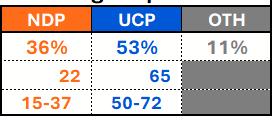
(Models Available To Subscribers) Alberta Provincial Polling: UCP: 53% (-) NDP: 36% (-8) Others: 11% Leger / April 6, 2026 / n=858 / Online (% Change With 2023 Election) Check out AB model details from @338Canada here: 338canada.com/alberta


NDP MP Leah Gazan condemns Budget 2026 for cutting $7B from Indigenous Services Canada and Crown Indigenous relations. "They provided $0 to deal with the ongoing genocide of MMIWG2SLGBTQQIA+," she said. "Rates of violence are increasing, and the PM is turning a blind eye."

Support for Alberta separatism at a 5-year high: poll nationalpost.com/news/canada/su…