

Rob Weber
7.8K posts

Rob Weber
@robertjweber
Founder Backing Founders @GreatNorthVC, Husband, Father, Twin @mnvikingsfan
Minneapolis, Minnesota Katılım Şubat 2009
2K Takip Edilen5.2K Takipçiler

For companies operating around the world, hiring vendors for one-off purchases in other countries can be a complicated process, eating up time and resources.
Onboarding new vendors often requires tax forms, compliance checks and obtaining bank information. For smaller, one-off tasks - say, ordering flowers for a one-time corporate event - all that overhead can prove more trouble than it’s worth.
Enter Candex. The New York-based startup aims to help large companies pay small, one-time, or irregular vendors without the administrative headache or risk of onboarding them.
Candex essentially acts as a tech-based master vendor. A large company sets Candex up in its system once, and when it wants to make a purchase from a small supplier, it pays Candex, which then handles the compliance, tax, and payment delivery to the actual supplier.
This week, the company shared exclusively with @crunchbasenews that it has raised funding from longtime customer London-based bank HSBC to extend last July’s 9Yards Capital-led $33M Series C to $40M. The company says the financing brings its total funding to over $120 million since its 2011 inception.
Article link in comments

English
@APompliano @mlinford_ Great to hear the consumer economy seems to be holding up strong.
BNPL is becoming financial infrastructure:
greatnorthventures.com/toward-bnpl-3-…
English

I sat down with Affirm COO @mlinford_ to understand the strength of the US consumer, along with details about $AFRM and how they see their future potential.
English
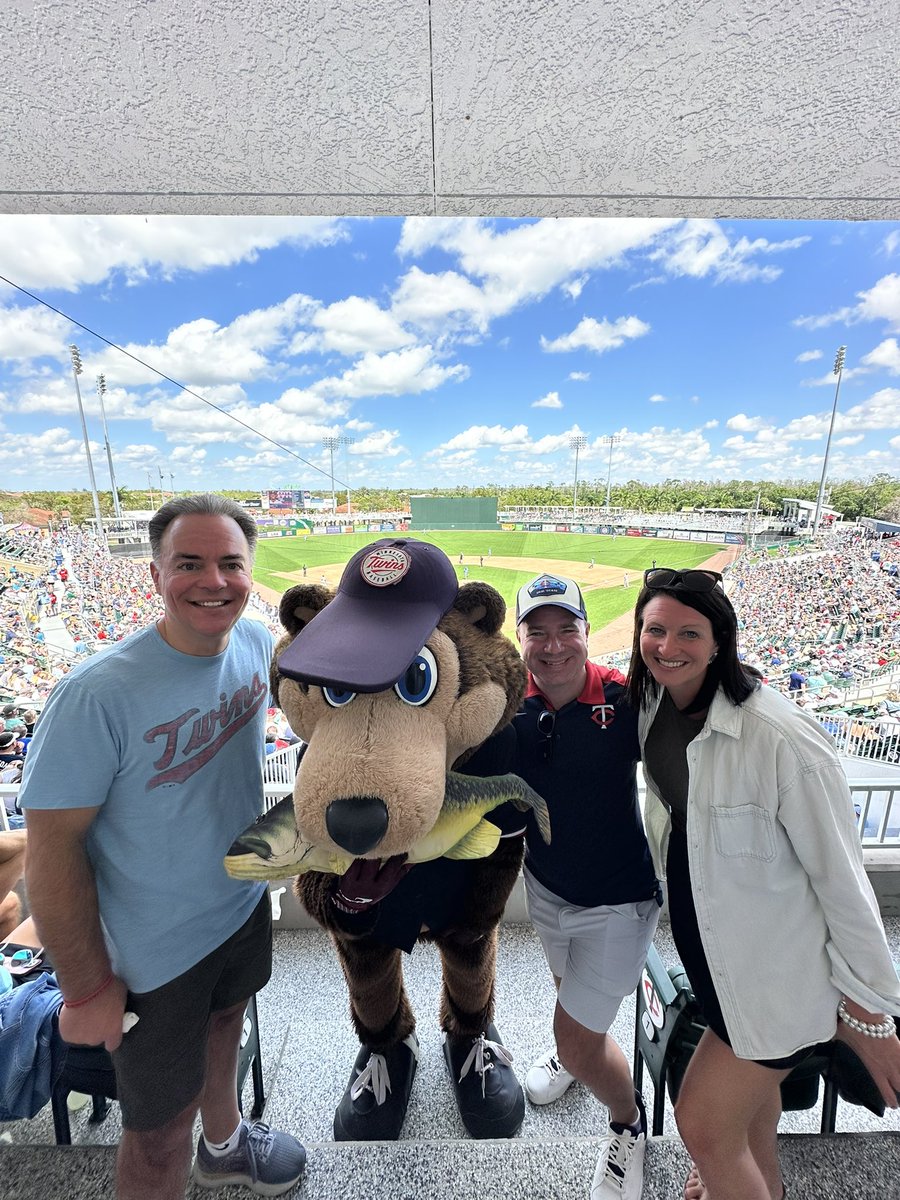
Nothing beats the energy of a ballpark, especially with the founders and partners who make the journey worth it. ⚾️
Great catching up with the @TeamGenius_App team & @BrianSchoenborn at the Twins game. Seeing this crew together is exactly what @greatnorthvc is all about! 🚀


English

I agree. Especially in the age of remote work. Remote work is the accelerant. The gasoline on the fire.
At Sezzle multiple team members left Minneapolis for other locations across the USA for a variety of reasons during and after COVID, when we were forced to adopt remote work. (we never looked back btw)
States that are adopting tactics to attract talent are winning right now.
John Arnold@johnarnold
There is a group of states actively competing to attract businesses and high earners, and another group adopting policies that drive them away. I don't see how this doesn't end up as a disaster in the long-term for the latter.
English

If MN wants to attract/retain entrepreneurs who will drive the state’s future economy, they should pay close attention to comments like this.
Charlie Youakim@CharlieYouakim
I agree. Especially in the age of remote work. Remote work is the accelerant. The gasoline on the fire. At Sezzle multiple team members left Minneapolis for other locations across the USA for a variety of reasons during and after COVID, when we were forced to adopt remote work. (we never looked back btw) States that are adopting tactics to attract talent are winning right now.
English
English

@robertjweber @Affirm @PayPal Hi Rob! Great post. Im curious do you invest in fintech solutions built on blockchain and agentic finance? Would love to connect and learn more about your interests.
English
Why are @Affirm & @PayPal chasing bank charters? 🏦
It’s not about becoming traditional banks—it’s about control & escaping regulatory fragmentation.
BNPL is aging out of the hype phase & into the "infrastructure" phase 👇
greatnorthventures.com/toward-bnpl-3-…
English



Chicago's fintech sector keeps building... @aeropay's HQ expansion is one more signal that our city is a serious hub for payments infrastructure! bit.ly/3MkW7qA @ChicagoVentures
English
Rob Weber retweetledi

KLAR is down 70% in 5 months. 📉
The "smooth" BNPL dream is a subprime nightmare. Stuck between merchant volume and spiraling credit losses, Klarna has no move left.
AI can’t fix bad debt.
Full breakdown: @thebittersea/why-klarna-nyse-klar-down-70-in-5-months-4bb55caa9319" target="_blank" rel="nofollow noopener">medium.com/@thebittersea/… #Klarna #Stocks
English

Nobody told me that half of PE/VC is just relationship management. Should’ve taken more improv classes
English

Remember meta-search engines that combined results from multiple pre-Google search engines?
I'm reminded of those when I get different (and inaccurate) results from 3 different LLMs. Seems like something that might not last?
English



Why wait 6 months to go digital when you can do it in 48 hours?
@Quickllyit is transforming the $100B+ ethnic grocery market, capturing 10% of all South Asian stores in North America while maintaining a 99% retention rate.
Check out my latest post- greatnorthventures.com/firing-on-all-…
English

There’s something equally important to attorney-client privilege and that is confidentiality in general.
How many white collar workers are currently feverishly uploading decks, models, PDFs and otherwise confidential work product into public LLMs trying to do their job better or otherwise get an edge right now?
Non-zero.
How will this work, then, when a company claims copyright or confidentiality violations because it turns out an employee broke their employee agreement when using one of these tools.
But, then what? Do the tools purge that information? Can you undo any prompt/response meta data? Agent traces?
Of course not.
When technology innovations meet established regulations, regulations usually win.
Corporations will need to adapt to the ruling below and extend its implications beyond A/C Priv to everyday work.
Moish Peltz@mpeltz
Your AI conversations aren't privileged. Yesterday, Judge Jed Rakoff ruled that 31 documents a defendant generated using an AI tool and later shared with his defense attorneys are not protected by attorney-client privilege or work product doctrine. The logic is simple: an AI tool is not an attorney. It has no law license, owes no duty of loyalty, and its terms of service explicitly disclaim any attorney-client relationship. Sharing case details with an AI platform is legally no different from talking through your legal situation with a friend (which is not privileged). You can't fix it after the fact, either. Sending unprivileged documents to your lawyer doesn't retroactively make them privileged. That's been settled law for years. It just hadn't been tested with AI until now. And here's what really hurt the defendant: the AI provider's privacy policy (Claude), in effect when he used the tool, expressly permits disclosure of user prompts and outputs to governmental authorities. There was no reasonable expectation of confidentiality. The core problem is the gap between how people experience AI and what's actually happening. The conversational interface feels private. It feels like talking to an advisor. But unless you negotiate for an enterprise agreement that says otherwise, you're inputting information into a third-party commercial platform that retains your data and reserves broad rights to disclose it. Judge Rakoff also flagged an interesting wrinkle: the defendant reportedly fed information from his attorneys into the AI tool. If prosecutors try to use these documents at trial, defense counsel could become a fact witness, potentially forcing a mistrial. Winning on privilege doesn't make the evidentiary picture simple. For anyone advising clients or managing legal risk, this is a wake-up call. AI tools are not a safe space for clients to process their counsel's advice and to regurgitate their legal strategy. Every prompt is a potential disclosure. Every output is a potentially discoverable document. So what do we do about it? First, attorneys need to be proactive. Advise clients explicitly that anything they put into an AI tool may be discoverable and is almost certainly not privileged. Put it in your engagement letters. Make it part of onboarding. Don't assume clients understand this, because most don't. Second, if clients want to use AI to help process legal issues (and they clearly will, increasingly), then let's give them a way to do it inside the privilege. Collaborative AI workspaces shared between attorney and client, where the AI interaction happens under counsel's direction and within the attorney-client relationship, can change the analysis entirely. I'm excited to be planning this kind of approach, and I think it's where the industry needs to head. storage.courtlistener.com/recap/gov.usco…
English

Can we all agree on this regardless of party?
Any/all fraudulent use of taxpayer funds and any effort to use government power to enrich a politician or his or her family should lead to massive jail time.
People who let it happen carelessly should leave government positions.
English

@robertjweber Love these. But they definitely lean more PLG than enterprise.
English
Great advice for up and coming SaaS founders👇
Adam Fard@AdamFard_
Here are 11 tips on how to build a better SaaS business in 2026 (This is something I learned by making mistakes first) 👇 1. Charge from day one (freemium is important, but PAID brings in customers) 2. MVP should only include the essentials, the rest is pure EGO 3. Price by VALUE, not by competition 4. Understand that 10% churn = lose almost 50% of revenue in 6 months (70% of revenue comes from those who are already inside) 5. Having a good product that no one knows about is like having nothing. Value your marketing. 6. On your landing page, the first 3 sec are the most important. The user must understand what you do. 7. Login with Google is mandatory 8. Value and prioritize good UX (use @uxpilotai to get everything you need) 9. In your onboarding process, remove any barriers until the A-HA moment 10. Use your product/SaaS EVERY DAY 11. Often, talking to users is more important than writing more lines of code It is worth mentioning that this is my experience, and it may undergo some changes depending on your stage and investment profile. This is what worked for me and helped me take my SaaS to $5M ARR. You can do it.
English