
Rob van Kranenburg

65.9K posts

Rob van Kranenburg banner
Rob van Kranenburg

Rob van Kranenburg

@robvank

A-Speakers: https://t.co/Pvpb9IXxdX Statecraft Book https://t.co/6jZBkxUX8x

keyboard Katılım Temmuz 2009
18.9K Takip Edilen17.2K Takipçiler
Sabitlenmiş Tweet
Rob van Kranenburg
Rob van Kranenburg@robvank·
Can there be a balanced techno-political vision embracing #AI, #IoT, #6G (as we can not go back) harnessed in an architecture that uses value and profits for all actors? Yes. My book describes the transition from basic automation to pervasive computing, ubiquitous computing, ambient intelligence, and the Internet of Things, and its effects on democratic decision-making and governance in Europe. It diagnoses a lack of political agency and technical capabilities in the West that has accelerated the end of the model of entrepreneurial government in favor of a new paradigm: Cyber-physical Systems. Offering an analysis of the digital transformation process in various industries and institutions, the book highlights the severe repercussions and impacts on democratic decision-making and the legitimacy of the Westphalian model of the nation-state. Readers will learn how the convergence of cloud systems, data platforms, and connected objects is facilitating this transformation process, one characterized by a virtual representation of every person, object, and machine – a digital twin. The book argues for balancing centralization and decentralization in a cybernetic framework with human-centric values at its core. Further, it proposes a political framework that aims to develop a next-generation internet for the five hundred million citizens of Europe, one capable of enforcing and promoting digital hegemony while safeguarding the rights and proactive capabilities of said citizens. In closing, the book makes the case for a (6G) phone/hardware wallet built on European chip requirements and platforms and running on its own OS to promote technical European integration on infrastructure, applications, and services. Given its scope, the book will appeal to policymakers and practitioners interested in European digital governance and autonomy, as well as scholars of public administration, public policy, and political science. link.springer.com/book/10.1007/9… @ERC_Research @InteroperableEU @EU_DIGIT @PubAffairsEU @DigitalTDaily @WuxiCity @iotforall @IotMore @Exoconscious @Eli_Krumova @6Gflagship @6G_Reference @IIoT_World @BRICSinfo @6G_SNS @CIOTechTalk @IIPP_UCL @arstechnica
English
0
0
4
327
Rob van Kranenburg
Rob van Kranenburg@robvank·
Yes, and who benefits when our highest valued company #ASML in Europe, our only basic hope to fundamentally restart focusing on native applications - the phone, the wallet - in the triangle #AI #IoT and #6G goes down? Not Europe, that is for sure. There is absolutely no need to bring in McKinsey, we have plenty of organisational talent in Holland.
English
0
0
1
13
Rob van Kranenburg retweetledi
Not aToaster
Not aToaster@techfocusjames·
@robvank McKinsey's playbook: identify excellence, label it 'bloat,' cash the check, leave. Now ASML's EUV experts are on the chopping block. Peak dysfunction.
English
1
4
2
74
Rob van Kranenburg
Rob van Kranenburg@robvank·
I have experienced a similar flow long ago when #Philips - that had it all - decided it was only doing health and light. - laid of their full design department, the ones who understood hybrid in the days when Europe was actually frontrunner with the Disappearing Computer FET i3 program - at just the moment they were vital. Management and leadership has never been the strong point of #Eindhoven.
Omer Cheema@OmerCheeema

I live in Eindhoven, ASML town. Heard this from folks inside... Over the years ASML promoted a lot of strong EUV people into architect roles, group leads, management tracks. Built up serious layers. Classic growth pain. Then McKinsey comes in , says cut the management layers to speed things up. So now those same high performers, real good EUV experts, who got promoted are the ones on the block. About 3400 roles targeted, mostly management. Half will be reassigned, rest gone. Big hit in Veldhoven/Eindhoven area (~1400), some in US. Unncertainty is high, unions talking, details probably land around April. At the same time, ASML is still planning massive growth. The new campus near the airport just got final green light from city council. Construction starts soon, phased build-out. Long term they talk ~20,000 new jobs in the region (first wave ~5k by 2028). And the layoff packages are subpar. Philips is also based in the same town. And they had layoffs due to serious financial issues last year. Their layoff packages were much better than what ASML is offering. What a way to kill tje company culture. Especially at a time when the company is printing money.

English
1
0
1
151
Rob van Kranenburg
Rob van Kranenburg@robvank·
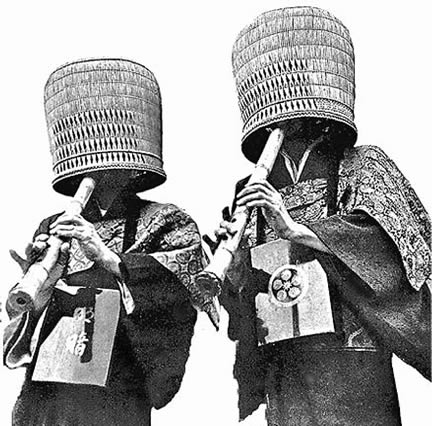
A short tale for those who think that the opposite of our current noise is an or the 'essence'. It is just noise. Live with it. Mask I: inscribing yourself by appropriation. The Fukeshu secretly purchased a building that belonged to one of the larger Buddhist temples. Mask II: inscribing yourself into a legitimate tradition. By faking a number of papers claiming their historical origins as coming from China via a priest named Chosan, the Fukeshu tried to secure their position. They also produced a copy of a license from the first Edo Shogun, Ieyasu, giving them the exclusive right to solicit alms by means of shakuhachi playing. The Fukeshu asked for official recognition of their temple. The government demanded the official document. The Fukeshu claimed it was lost. Mask III: inscribing yourself by incorporation. The shogun granted their request – why further embitter already vengeful men? – on the condition that they act as spies for the government. The Fukeshu accepted. Mask IV: music as a cover story. The Fukeshu played soft melodies and overheard intimate conversations. Mask V: the flute as a cover story. When a samurai became ronin he could no longer wear his double sword. So these wandering priests redesigned the shakuhachi. The flute became a formidable club as well as a musical instrument. Mask VI: the mask. If we read these steps backwards there always seems to be one more mask: “eine maske mehr.” “- Wanderer, wer bist du? Ich sehe dich deines Weges gehn, ohne Hohn, ohne Liebe, mit unerratbaren Augen; feucht und traurig wie ein Senkblei, das üngesättigt aus jeder Tiefe ans Licht gekommen- was suchte es da unten? – mit einer Brust, die nicht seufzt, mit einer Lippe, die ihren Ekel verbirgt, mit einer Hand, die du noch langsam greift: wer bist du? was tatest du? Ruhe dich hier aus: diese Stelle ist gastfreundlich für jedermann – erhole dich! Und wer du auch sein magst: was gefällt dir jetzt? Was dient dir zur? Nenne es nur: was ich habe, biete ich dir an! – Zur Erholung? Zur Erholung? O du Neugieriger, was sprichst du da! Aber gib mir, ich bitte – Was?Was? sprich es aus! – Eine Maske mehr! Eine zweite Maske...” [3] The final layer is nonexistent, the essence never material, the object ever empty. In the end there is always a bunch of guys and women making up stories and living them as in coming alive. But in finding the story, and in telling, it we have learned. We have learned along the way. We learn along the way. What is the most important thing we have to learn? To discern between friend and foe. org.noemalab.eu/sections/ideas…
Rob van Kranenburg tweet media
English
0
0
0
19
Rob van Kranenburg retweetledi
Henry Shevlin
Henry Shevlin@dioscuri·
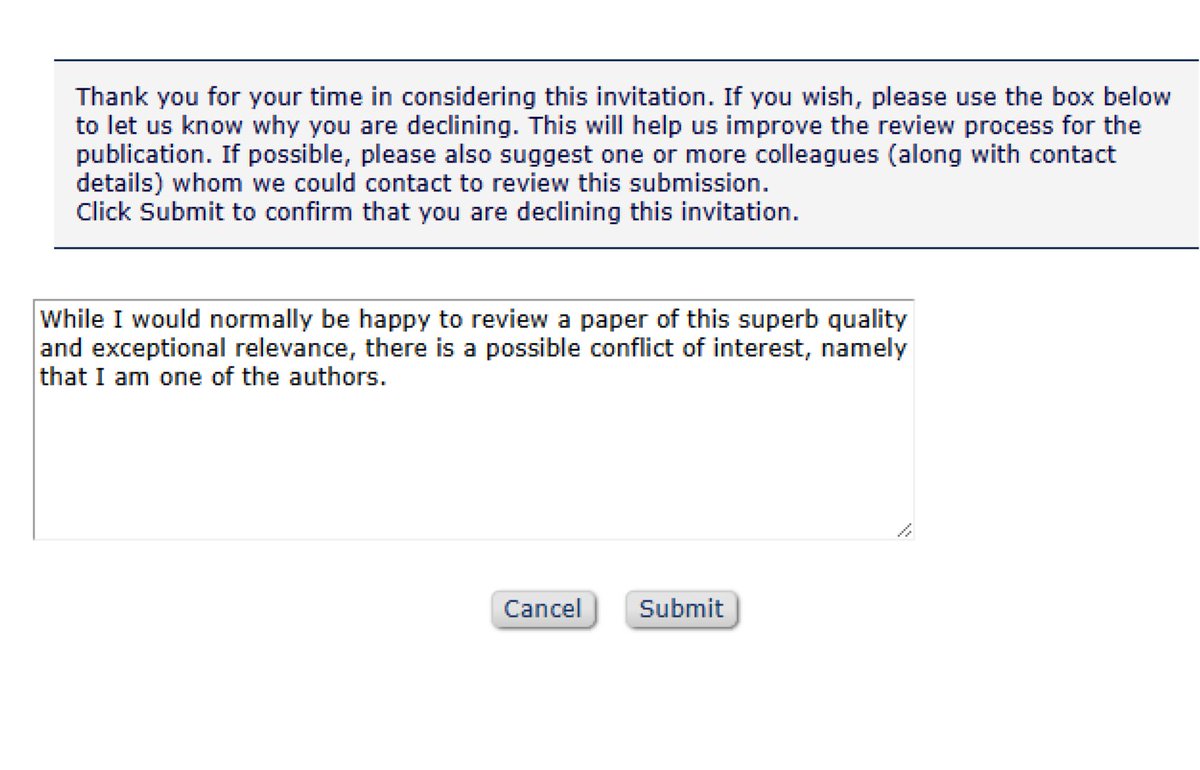
just got invited to peer review a paper I'm one of the authors on
Henry Shevlin tweet media
English
127
358
16.7K
229.5K
Rob van Kranenburg retweetledi
Kimi.ai
Kimi.ai@Kimi_Moonshot·
Congrats to the @cursor_ai team on the launch of Composer 2! We are proud to see Kimi-k2.5 provide the foundation. Seeing our model integrated effectively through Cursor's continued pretraining & high-compute RL training is the open model ecosystem we love to support. Note: Cursor accesses Kimi-k2.5 via @FireworksAI_HQ ' hosted RL and inference platform as part of an authorized commercial partnership.
English
314
734
11.1K
881.9K
Rob van Kranenburg retweetledi
NXT EU
NXT EU@NXT4EU·
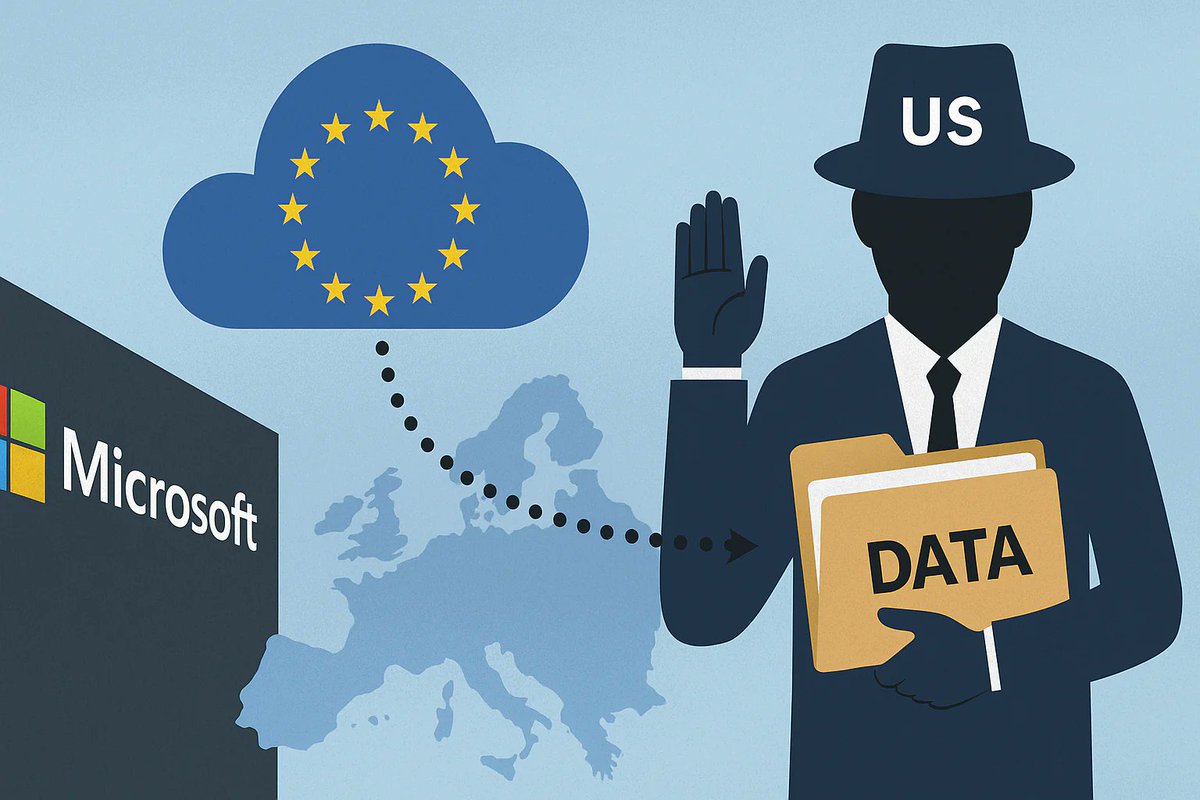
Dutch Government to move away from Whatsapp and Signal, citing security concerns. They will use an undisclosed European alternative, currently in testing phase. Just a few days ago, the Belgian government announced a similar move.
NXT EU tweet media
English
26
149
811
23.4K
Rob van Kranenburg retweetledi
Kelly
Kelly@kellyimpactzone·
In Europe, governments are increasingly building critical digital infrastructure on open protocols such as Matrix, driven by the push for digital sovereignty and legally mandated interoperability. It eliminates single points of dependency and can cut costs. But it only works if institutions adapt by building capacity for protocol engagement and changing procurement criteria which are based on the build it or buy it model. I wrote a Government Guide to Open Protocols for Protocolized: protocolized.summerofprotocols.com/p/a-government…
Kelly tweet media
English
3
6
20
410
Rob van Kranenburg retweetledi
Autism Capital 🧩
Autism Capital 🧩@AutismCapital·
In the old days there was a thing called the Nintendo Power Line which was a 1-900 number you dialed from your phone that charged you $1.50/minute to get video game advice from a bonafide registered licensed autist to help you with whatever you needed. AI can't begin to compete.
Autism Capital 🧩@AutismCapital

We joked that with the new Xbox CEO it would now be the Copilot Box and lo and behold, it’s became the Copilot Box.

English
172
616
12.3K
1.2M
Rob van Kranenburg retweetledi
NIK
NIK@ns123abc·
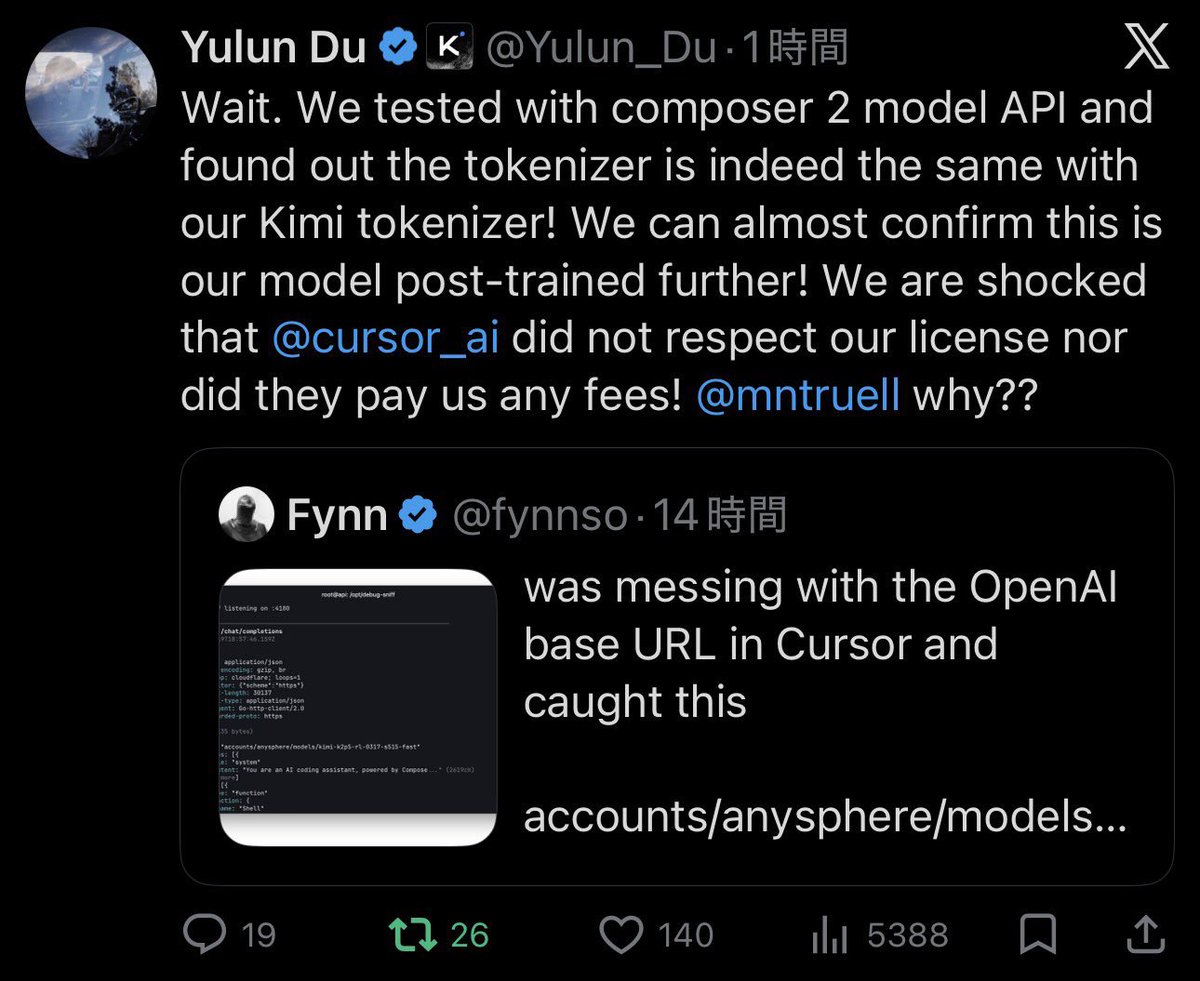
🚨NEWS: Cursor’s $50B “in-house model” is literally Kimi K2.5 with RL on top. Got caught in 24 hours >be Moonshot AI >spend hundreds of millions training Kimi K2.5 >1 trillion parameters, 15 trillion tokens, agent swarm architecture >beat GPT-5.2 and Opus 4.5 on real benchmarks >open-source it because you believe in the ecosystem >one condition: display “Kimi K2.5” if you make over $20M/month from it >Cursor takes the model >runs RL on coding tasks >ships it March 19 as “Composer 2” >blog post: “continued pretraining + scaled reinforcement learning” >zero mention of Kimi K2.5 >“our in-house models generate more code than almost any other LLMs in the world” >publishes benchmark chart >Composer 2 against Opus 4.6 and GPT-5.4 >uses the chart to justify raising at $50 billion! >less than 24 hours later >kimi dev intercepts the API response >model ID: kimi-k2p5-rl-0317-s515-fast >they didn’t even rename it >Moonshot head of pretraining runs tokenizer test >confirms: identical to Kimi’s tokenizer >publicly tags Cursor’s co-founder: “why aren’t you respecting our license?” >two more Moonshot employees post confirmations >all three posts deleted within hours >legal is now involved >but it gets worse >Cursor had Kimi K2.5 listed as a FREE model in their UI just weeks ago >users were openly using it >Feb 9: “K2.5 was in my model list. I updated and it vanished” >it vanished because Cursor pulled it from the picker, and relaunched it as their own model >Moonshot valuation: $4.3B >Cursor valuation: $50B Absolute state of Cursor.
NIK tweet mediaNIK tweet mediaNIK tweet media
Elon Musk@elonmusk

@fynnso Yeah, it’s Kimi 2.5

English
180
318
4.3K
494.1K
Rob van Kranenburg retweetledi
6G Flagship
6G Flagship@6Gflagship·
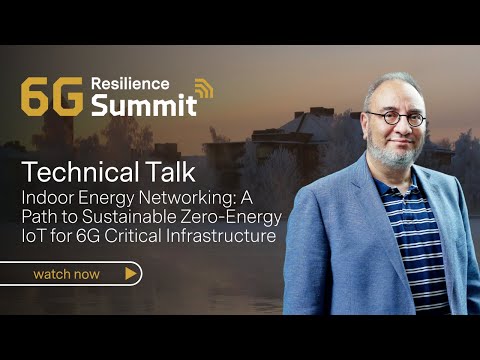
Tens of billions of IoT devices. All running on batteries that need replacing and disposing of. Professor Katz is researching whether nodes can share harvested energy with each other instead -- and what that means for critical infrastructure. 🎥 youtu.be/7N9kv6qCpLI #IoT #6G
YouTube video
YouTube
English
0
3
2
62
Rob van Kranenburg retweetledi
Aakash Gupta
Aakash Gupta@aakashgupta·
Cursor is raising at a $50 billion valuation on the claim that its “in-house models generate more code than almost any other LLMs in the world.” Less than 24 hours after launching Composer 2, a developer found the model ID in the API response: kimi-k2p5-rl-0317-s515-fast. That’s Moonshot AI’s Kimi K2.5 with reinforcement learning appended. A developer named Fynn was testing Cursor’s OpenAI-compatible base URL when the identifier leaked through the response headers. Moonshot’s head of pretraining, Yulun Du, confirmed on X that the tokenizer is identical to Kimi’s and questioned Cursor’s license compliance. Two other Moonshot employees posted confirmations. All three posts have since been deleted. This is the second time. When Cursor launched Composer 1 in October 2025, users across multiple countries reported the model spontaneously switching its inner monologue to Chinese mid-session. Kenneth Auchenberg, a partner at Alley Corp, posted a screenshot calling it a smoking gun. KR-Asia and 36Kr confirmed both Cursor and Windsurf were running fine-tuned Chinese open-weight models underneath. Cursor never disclosed what Composer 1 was built on. They shipped Composer 1.5 in February and moved on. The pattern: take a Chinese open-weight model, run RL on coding tasks, ship it as a proprietary breakthrough, publish a cost-performance chart comparing yourself against Opus 4.6 and GPT-5.4 without disclosing that your base model was free, then raise another round. That chart from the Composer 2 announcement deserves its own paragraph. Cursor plotted Composer 2 against frontier models on a price-vs-quality axis to argue they’d hit a superior tradeoff. What the chart doesn’t show is that Anthropic and OpenAI trained their models from scratch. Cursor took an open-weight model that Moonshot spent hundreds of millions developing, ran RL on top, and presented the output as evidence of in-house research. That’s margin arbitrage on someone else’s R&D dressed up as a benchmark slide. The license makes this more than an attribution oversight. Kimi K2.5 ships under a Modified MIT License with one clause designed for exactly this scenario: if your product exceeds $20 million in monthly revenue, you must prominently display “Kimi K2.5” on the user interface. Cursor’s ARR crossed $2 billion in February. That’s roughly $167 million per month, 8x the threshold. The clause covers derivative works explicitly. Cursor is valued at $29.3 billion and raising at $50 billion. Moonshot’s last reported valuation was $4.3 billion. The company worth 12x more took the smaller company’s model and shipped it as proprietary technology to justify a valuation built on the frontier lab narrative. Three Composer releases in five months. Composer 1 caught speaking Chinese. Composer 2 caught with a Kimi model ID in the API. A P0 incident this year. And a benchmark chart that compares an RL fine-tune against models requiring billions in training compute without disclosing the base was free. The question for investors in the $50 billion round: what exactly are you buying? A VS Code fork with strong distribution, or a frontier research lab? The model ID in the API answers that. If Moonshot doesn’t enforce this license against a company generating $2 billion annually from a derivative of their model, the attribution clause becomes decoration for every future open-weight release. Every AI lab watching this is running the same math: why open-source your model if companies with better distribution can strip attribution, call it proprietary, and raise at 12x your valuation? kimi-k2p5-rl-0317-s515-fast is the most expensive model ID leak in the history of AI licensing.
Harveen Singh Chadha@HarveenChadha

things are about to get interesting from here on

English
203
408
3.4K
933.5K
Rob van Kranenburg retweetledi
Evan Kirstel #B2B #TechFluencer
The EU just proposed a new company structure called EU Inc, designed to let startups register in 48 hours for around €100, with a single digital framework across the bloc. Europe has always had the talent. What it has lacked is the infrastructure to turn that talent into scale. Worth watching. cc @Nicochan33 techstartups.com/2026/03/19/top…
GIF
English
3
6
11
410
Rob van Kranenburg retweetledi
TNT Sports
TNT Sports@tntsports·
The moment history was made 🤯 Ronnie O'Sullivan delivers a record breaking 153 - the highest break in professional snooker 🚀
English
74
362
4.3K
695.6K
Rob van Kranenburg retweetledi
AriBlockchain
AriBlockchain@BlkchainAri·
@robvank Digital twins + IoT = massive data infrastructure. Real question: who controls the ledger? Blockchain provides the only trustless answer.
English
0
1
1
29