ry

520 posts

ry banner
ry

ry

@ryancruzb

my brain works in mysterious ways CEO https://t.co/zonM4UWVuf @hackzero_ai

multiverse timeline Katılım Ağustos 2022
935 Takip Edilen221 Takipçiler
ry retweetledi
Elon Musk
Elon Musk@elonmusk·
@ThomasAlxDmy You don’t seem to understand that SpaceX will be worth more than the rest of Earth if we accomplish our goals
English
3K
2.5K
34.6K
3.5M
ry retweetledi
Elon Musk
Elon Musk@elonmusk·
@chamath AI+Robots will be able to do everything, resulting in universal high income. Work will be optional.
English
5.3K
2K
17.3K
2.4M
ry retweetledi
David
David@DavidSHolz·
i wish i could do more - i wish i had a thousand hands and a thousand eyes and a thousand years and army of angels and a thousand stars that lit the sky so bright that the night would never come and that our sleepless dreams would fill this world
English
215
453
4.8K
567.9K
ry retweetledi
the tiny corp
the tiny corp@__tinygrad__·
Our first assembly backend, DEV=CPU:X86 is merged! Instruction selection + register allocation added, and it's all visible with VIZ=1. This is the path to kernels that outperform everyone playing at the LLVM/PTX layer.
the tiny corp tweet media
English
9
18
374
21.5K
ry retweetledi
kache
kache@yacineMTB·
you can outsource your thinking but you cannot outsource your understanding
English
288
4.2K
18.6K
3M
ry retweetledi
roon
roon@tszzl·
not enough people are emotionally prepared for if it’s not a bubble
English
492
814
11.9K
2.2M
ry retweetledi
Paul Graham
Paul Graham@paulg·
If you really want to hold yourself to a high standard, graph the growth rate of the number you care about instead of the number itself. Then you're winning if you can even keep it flat.
English
126
188
3.3K
172.1K
ry retweetledi
Zhikai Zhang
Zhikai Zhang@Zhikai273·
🎾Introducing LATENT: Learning Athletic Humanoid Tennis Skills from Imperfect Human Motion Data Dynamic movements, agile whole-body coordination, and rapid reactions. A step toward athletic humanoid sports skills. Project: zzk273.github.io/LATENT/ Code: github.com/GalaxyGeneralR…
English
158
627
4K
1.4M
ry
ry@ryancruzb·
@Princessazumi29 Hi, are you the owner of hackthis (dot) com? if so , could you please dm? I've an offer : )
English
0
0
0
22
ry retweetledi
Chester
Chester@chesterzelaya·
good engineering is indistinguishable from magic and all i want to be is a fucking wizard
English
16
21
224
7.7K
ry retweetledi
vixhaℓ
vixhaℓ@TheVixhal·
The gap between “relax” and “work harder on bigger things” will be the largest voluntary psychological and existential divergence in our species’ history. One group will be chilling in customized paradise while the other group is essentially becoming post-human demigods trying to steer the future of the light cone.
Garry Tan@garrytan

AGI fully realized will actually give people a choice: relax or work harder on bigger more ambitious things than you ever thought possible

English
55
61
1.2K
238.2K
Chester
Chester@chesterzelaya·
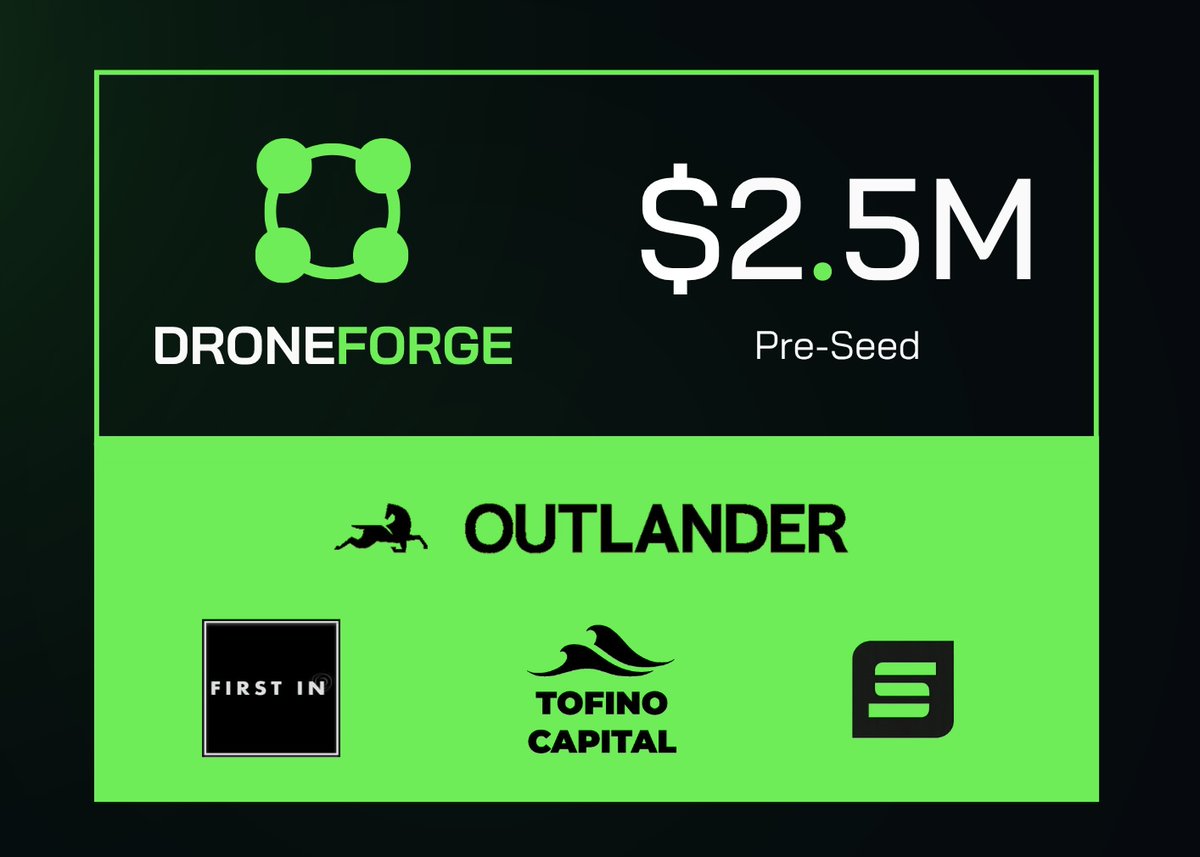
Announcing Droneforge's $2.5M Pre-Seed led by Outlander, with participation from First In Capital, Tofino Capital, and Shor Capital. Alongside a group of amazing early angels. At @droneforge , we have only two missions... 🧵 1/4
Chester tweet media
Elon Musk@elonmusk

@chesterzelaya AI drones

English
86
36
642
260.9K
ry retweetledi
Josef Chen
Josef Chen@josefchen·
We’ve achieved AGI: Artificial Gastro Intelligence. Today we’re publicly launching Epicure, the world’s most advanced culinary AI, powered by actual science of how food ingredients are paired. Our PhD @jaklerad has refined the dataset and created a 300-dimensional, best-performing food pairing model to date, spanning >1000 food ingredients. To prove that, we've made our research publicly accessible through a simple recipe generator. No paywall, no sign-ups.
City of London, London 🇬🇧 English
118
195
1.4K
195.6K
ry retweetledi
David Kirtley
David Kirtley@Dkirtley·
We’re not here to copy the universe ☀️ We’re here to out-engineer it 🦾
English
5
7
51
1.9K
ry
ry@ryancruzb·
locked in doing sim2real with the boys
English
0
1
14
367
ry
ry@ryancruzb·
@runpod WHATT!!! Just tried it with 10 TRILLION params and it trained in 13.42s on a single 3090!!
ry tweet media
English
1
0
4
154
Runpod
Runpod@runpod·
We've shipped Quantum Compression! Train models up to 700B+ in under 60 seconds on one 3090 with our proprietary compression technology. What happens if it doesn't finish in 60 seconds? We turn the pod off and let you try again. No more long nights checking your training runs. No more tmux.
Runpod tweet media
English
2
5
22
1.2K
limina
limina@liminalsunset_·
So when it comes to the hidden EE stacks powering cars, industrial, consumer, really, there's a few, and who "owns" "electricity" right now is like 50-50 but leaning towards China: 1) 0-50V Power Electronics This area is probably where China has the greatest lead right now. If you look at PCs, Servers, etc, power management is dominated by companies like MPS, AOSemi etc. This is like your 12V to 1.2V VRM, delivering 100s of Amps for GPU CPU etc. On the consumer side, for phone chargers, power banks, speakers etc you're seeing a lot of Southchip, Injoinic etc. It is easily possible to build a fully Chinese very high performance <60V class ESCs (motor control, for drones, robots, etc) and power stages with fast switching and low R_DS (on) MOSFETs (CR Micro has some good ones in JLC library). Most consumer-side electronics now choose entirely Chinese parts and reference designs for this type of application. Pre-Bambu, all 3D printers were on the Allegro/TI stack, then Trinamic (now ADI) stack, but Bambu is using a motion control MCU that appears to have been bought out from Fairchild, Spintrol, + some no-name domestic H bridge ICs. The alternative stack in Automotive is dominated by TI (less), (US), ST (French), Infineon (German), for 12V electronics. Likely, this is due to a better understanding of the safety and reliability characteristics of these devices + manufacturer support, plus most automotive stuff comes from Bosch these days, and being in Germany helps with the choice. 2) <600V Power Electronics This would be things like switching power supplies, like an ATX, your phone charger, etc, as well as motors for home appliance applications. The stove would be under here. This market is primarily using ST/ONsemi/Infineon/International Rectifier (now Infineon) and Rohm, but some designs are starting to use some Chinese domestic semiconductors. Often what happens is they substitute their diodes but use a brand name switching element. The smaller chargers or lower name PSUs are more likely to have a Chinese chip in them, especially for control, but GaN chargers are more likely to have Navitas (US), Power Integrations (US), or InnoScience (China). The entire circuit development of these power supplies is almost entirely centralized on Taiwan and China right now. On the PC side you're likely to see Delta Electronics, Lite-On, Chicony, etc., along with the usual ATX OEMs like CWT, GW, Super Flower, FSP. They make everything from Apple's PSU to Xiaomi's. Of course there are plenty of tiny manufacturers, but it is difficult to name a common American manufacturer of finished power supplies. Even Apple does not design the PSU; when you look at different vendors' versions of their PSU there are sometimes differences (though I suppose they participate). The supply chain for PSUs is very complex, integrating the manufacture of transformers, inductors, PCB, design, semiconductor, certification, and even fans. The quality of the switching element is critical for reliable operation of modern appliances, as a failure will usually take out the board, the breaker, and the motor phase/load. It's exposed to the grid fluctuations and anecdotally the power grid quality in the US is fairly low, leading to widespread failures of surge protective parts leading to power electronics burnout. Most American market appliances have finally moved to an inverter- based model. A washing machine will typically have a ~1/2HP 3-phase high speed AC belt drive (top loaders; Maytag Whirlpool etc. ) or a direct drive (Samsung LG etc) motor. At least for some of the more American OEMs, the motor is being sourced as a part from an European Tier1. Haier (GE) and Midea, both Chinese companies, are making inroads into the market and they build their own motors, Midea owns Welling motors. Korean companies will likely have built their own inverter (but use Euro/American/JP power electronics). In air conditioning, all of the American brands are now maintaining 2-3 product lines, 1) fully non digital, 2) inverter, self-developed (of these, it seems like Trane/Ingersoll-Rand is the only one that has their own motor controls or maybe one or two Carrier products) 3) rebranded China (Trane-Gree, Carrier-Midea, Bosch-Midea. For electronics-integrated motors: Smaller 310V class "resin pack fan motors" are split between Nidec, Panasonic, and Welling/Wolong/etc, which China making up more and more of the market. For air handlers/furnaces, it's either Genteq (Pioneered ECM), Nidec JP (US Motors got bought), ebmpapst (combustion motors in Euro boilers), Shinano (CN/JP) (Korean boilers), "broad ocean motor" (CN, furnace motors, as replacement for Genteq to save cost), and at some point Panasonic. 3) <1500V Power Electronics Seems to be ST and Infineon dominated here. Lower volumes, EV ramp up, etc. Some other players i.e. Danfoss-Semikron doing high performance packaging of bare die IGBTs into EV power modules, etc. Tesla does their own packaging of ST SiC FETs. Almost all of industrial is still on IGBTs and limited to 8kHz switching on motor drives. VW uses a larger rotor on latest drive unit so they can stick with IGBTs. Less information floating around publicly for these applications since the EV market is almost exclusively customized products. EV chargers are basically all Chinese outside of Tesla now. North American companies buy the power modules and build a box around them (to fulfil all of the archaic NEC and UL reqs, half of the space is power modules half is wasted). I believe ChargePoint does some custom chargers and at one point integrated all the power electronics into the charging post (same size as V4 SuC, ~40kW?). Phoenix Contact has essentially a monopoly on the charging handles and cables. The electronics and ISO 15118 (CCS) protocol stack outside of large companies is dominated by the large automotive OEM companies, but China have their own. China did a state grid sponsored EV charger buildout a while ago and that spun up tons of companies making half-rack 2U "power modules" that take in 480V 3Ph AC and spit out 150-900V for EV charging. Huge parallellable isolated CC-CV power modules really. Likely all Euro/American power semiconductors, a TI C2000 doing control etc. 4) MCU (Microcontroller) stack Split between Chinese, US, Euro. Before the pandemic, everything ran on either PIC (Microchip, US) or STM32 (ST Microelectronics, France). After the chip shortage, every STM32 application became a GD32 application (GigaDevice, China), or AT32 (ArteryTek, China) or otherwise. China has a really robust capacity for non-leading edge (>22nm) chips, and MCUs are usually built on 65/90nm mature nodes to save cost. Bambu is on Spintrol (China). Essentially, the STM32 product structure (ARM cortex + peripherals) was very quickly copied and adapted (and no, the silicon is not the same, they reimplemented it clean room based on the STM32 datasheets and many of the clones are code and pin compatible!). The average chips in China have a microcontroller like this, or some variation of a Cortex M0. USB PD controllers accelerated this, as you cannot cost effectively build a USB PD accessory with discrete TI and ST silicon (Injoinic, Chipsea etc integrate the whole stack into single chip, from power switch to CPU to PHY) Infineon and ST microcontrollers in automotive and safety applications have been relatively unaffected. Anything that needs certification is expensive to change like that, so they're not going to make that change on a dime. Unsure about Chinese EVs, haven't disassembled before, but likely a much higher share of domestic semiconductors. All the major semi manufacturers have a major China presence (to the point where TI datasheets for anything power related are written in Chinglish), so I assume this makes it easier for them to crosspollinate compliance stuff to the local manufacturers. TI's C2000 microcontroller series (TMS320 DSP) has been extremely robust for many applications around electrical power conversion. I would expect that one is present in the Impulse product. Inverters, chargers, motor drives etc. Many of these are mixed-signal parts, integrating op-amps and comparators, which simplify use for applications requiring control loops. In high power applications, the added cost of the MCU is not significant enough to change it. 5) MPU (MicroProcessor) stack Less of a "Owning Electricity" topic, but for modern cars etc UI and interface is super important. On the Western side, most industrial-consumer-automotive products will be using either NXP iMX, an Intel/AMD SoC, or a Qualcomm/Broadcom one (and increasingly for AI and Robotics, a Nvidia one). On the Eastern side, Espressif ESP32 (really more of a MCU), Rockchip (RK3588 - Unitree Go2 G1; RK3399 - TV boxes, Rigol oscilloscopes), Amlogic (technically american but feels spiritually asian) (S905 - TV boxes, Google Nest), Allwinner, MediaTek, Samsung Exynos, RISC-V chips like the C906/whatever's in the Lichee Pi, HiSilicon (Huawei), etc. For Chinese companies, ability to work with the silicon vendor more closely is a huge boost. More and more companies, especially in automotive, are looking into becoming fabless semi companies to support new applications like self driving. Even Midea does their own IoT chips. Of course, this will also enable them to reduce costs by rolling multiple functions into one (e.g. Infotainment, ADAS). There has been a huge boom in Chinese fabless companies, for example Sophgo (Bitmain) who started out doing mining ASICs with world's first 7nm TSMC mining ASIC, then pivoted to AIoT chips and then got entangled in Huawei and got sanctioned. This, along with all of the IoT chip startups (Beken, WCH, etc) that license an ARM and increasingly RISC-V core and a bunch of wireless IP and churn out Bluetooth/WiFi/ZigBee SoCs that you'd never imagine existing in the west (where due to high cost of RF certs, the RF module is often never integrated into the system as a MCU or AP). The flip side of this is that the software support is usually even worse than the Western chipmakers, primarily because software support longevity isn't as valued, nobody cares about security updates, and polish is not as demanded. They are certainly in the move fast stages. Of course, arguably, for a small company, ALL of their developer SDKs always leak out, unlike the Western ones, so the "support" is better than being ignored by Western companies burdened by IP saber rattling and US export control fears. Of course Western manufacturers get no pass here; Qualcomm is still playing MBA games with Comma (even though the potential here is astronomical), and Western chip companies seem really unexcited about "new" application areas and are unwilling to take the risk on them (IoT, the Linux Hacker space, etc) 6) New Energy Sources Long story short (post is way too long already): CATL (China) is dominant in batteries. Pretty much every modern phone, laptop, car is using their cells. Large ecosystem of pack makers in China using their cells - Simplo, Getac, etc are some of the larger ones. They compete with Samsung and LG but at least for smaller packs it's almost always CATL. BYD is dominant in LFP (LiFePO4) batteries, and China is the primary source of LFP batteries. They use the "blade" concept, with physically large prismatic cells. They ship tons and tons of large packs to the city bus market around the world. The primary benefit of LFP is safety ("Flammable" vs "Explosive"), and long (>2000) cycle life. The challenges with energy density are surmountable, but they're more temperature sensitive and require new supply chain to adapt to 3.2V (vs 3.85V) nominal voltage. BMS solutions are almost always TI. Smaller batteries you can just assume are using TI's bq chips. Nobody uses anything else. Larger BMSes are probably doing something with MCUs and whatnot. Cell protection and monitoring is STARTING to get displaced by Chinese semi companies, but really only for at least scooter/ebike sized packs. PV is well documented to have come down in cost significantly over the years, greatly improving its usefulness, but tariffs. PV inverter/microinverter market is China dominated (Deye, Hoymiles etc). Likely lots of global semi content there. Completeness and accuracy not guaranteed or implied. Not gpt, not deep researched. For fun only.
English
3
2
26
1.9K
Sam D'Amico
Sam D'Amico@sdamico·
This is not well understood, but extremely important. The world is electrifying and even legacy electrical stuff is being redefined with the tech stack of EVs and consumer electronics.
Ashlee Vance@ashleevance

@mrbilliam @sdamico Owning electricity
English
10
26
316
62.8K
ry
ry@ryancruzb·
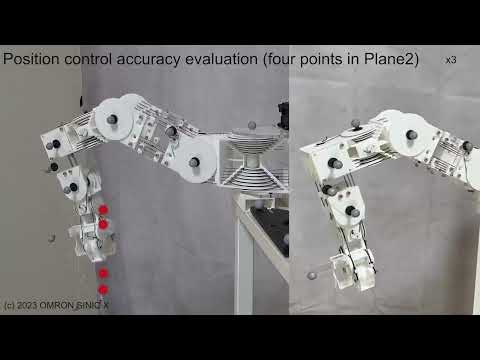
@zobotics It’s really a shame capstan drives aren’t used more often! They are so cool !!! I’m sooo obsessed with anything cable related, check this out: youtu.be/sjfoP8uSgYY?si…
YouTube video
YouTube
English
1
0
8
10.7K
ry retweetledi
vittorio
vittorio@IterIntellectus·
the mandate of heaven is taken, not given
English
13
8
130
7.7K