Sabitlenmiş Tweet
Ryan Koonce
707 posts

Ryan Koonce
@ryankoonce
CEO @AttributionApp. Your CAC is wrong and I can prove it. Building the multi-touch attribution platform for SaaS, ecommerce & enterprise. Built @MammothGrowth.
San Francisco Katılım Nisan 2009
367 Takip Edilen389 Takipçiler

@BryanECano Eh kinda, seems like triple whale is a couple of integrations away between meta, shopify and anthropic from being obsoleted
Totally different story if they didn't cost like $3,000/mo for a $10M business haha
English

@dan__rosenthal Don’t forget attributionapp.com to measure everything!
English

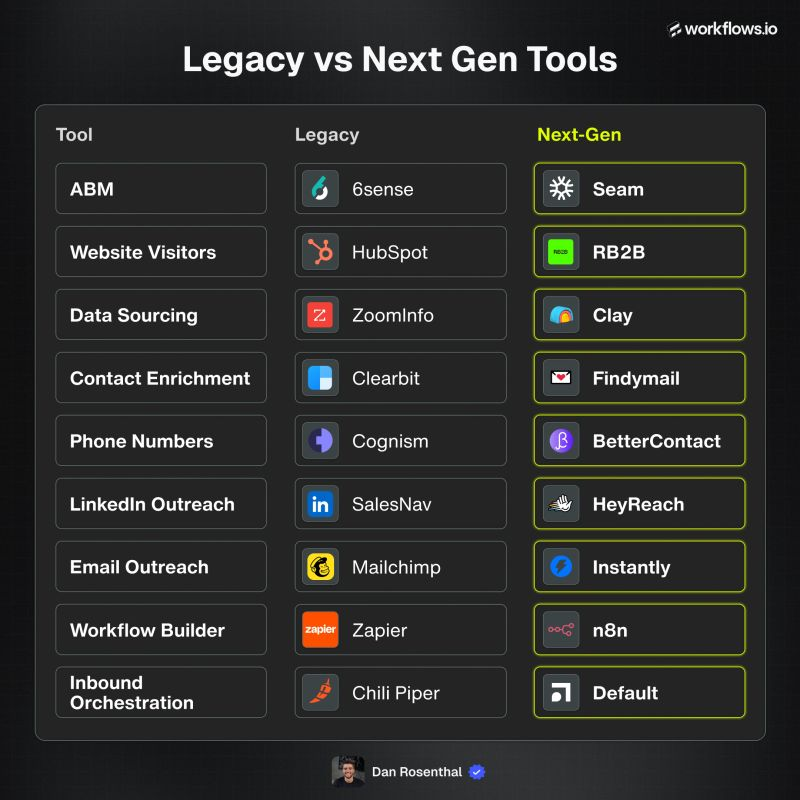
There are 2 types of GTM stacks in 2026:
The legacy stack:
→ ZoomInfo for contacts, paying $40K+ for stale data
→ Salesforce for everything, paying consultants to maintain it
→ Mailchimp for outreach, not built for sequences in the slightest
→ 6sense for ABM, paying enterprise prices for a dashboard
The challenger stack:
→ Clay for enrichment + orchestration
→ Findymail for verified contacts
→ Instantly.ai for email sequences
→ HeyReach for LinkedIn outreach
→ n8n for workflow automation
→ Seam AI for ABM
The challenger stack costs a fraction, ships features faster, and integrates natively with the AI layer.
Every category has a new winner.
And most of them didn't exist 3 years ago.

English

This. But incrementality testing won't fix the fundamental problem - you still don't have cost at the user level. Without that, you can't audit which touchpoint actually drove the ROAS. The 23% waste comes from platforms taking credit for everything. Need user-level cost aligned to proportional conversion credit to see the real story. Then layer in incrementality.
English

A Marketing Science Institute study found brands without incrementality testing waste ~23% of marketing spend on non-incremental activity.
Your retention team blasts a win-back email.
Paid team retargets the same user on Meta.
They buy.
Both teams claim the win.
Reality? It was probably organic all along. No holdout test = no truth.
2/7
English

Conversion tracking fixes the pixels but not attribution. You still don't have cost at the user level - so that 4x ROAS is still aggregate data you can't audit back to actual customers. The real problem: Google shows sessions, not journeys. Without identity resolution, you're still scaling blind. LMK if you want the data.
English

this is one of our most requested asks:
how to fix your Google Ads tracking.
most brands are scaling blind with broken tracking
they think they’re getting 4x ROAS
but half the conversions are fake or misattributed
i packaged up our internal conversion tracking SOP + checklist into a guide
inside:
- 4 common tracking issues to watch for
- 5-step process to audit your setup
- our testing & troubleshooting protocol
- how to set up multiple tracking sources
- our monthly audit checklist to keep everything accurate
this is the same process we’ve used to manage $50M+ in spend this year
like + reply “tracking” and I’ll send it over
(must be following)
English

When every lost pixel costs revenue, you need more than better tools - you need cost at the user level. Most agencies are optimizing spreadsheets built on session data they can't audit back to actual customers. The real operating system: user-level attribution that traces every dollar to real conversions. You need that data. Only one place to get it.
English

@jasonlk SFMC is the counter argument. No one should have bought that for at least 5 years and yet it does more revenue than all the other martech companies combined…. Inertia is in their favor.
English

To be blunt: Old SaaS is dying. Dying. No one wants to buy this stuff anymore. No one. Not unless they have to.
Customers want AI / AI Agents that do all the work for them. And more and more often, that's entirely possible.
Build that, and folks will line-up down the block to buy from you.
But new SaaS is better than ever. Replit, Lovable, Harvey, Legora, Sierra, Decagon, etc. are all New SaaS. And Databricks, OpenRouter, Supabase, Vercal, Elevenlabs, etc. in many ways are all products enabling and for B2B / SaaS.
They really are. And they are all growing at rates like we've never seen before.
You can do it, too. If you have the team, and the will.
But the window is closing.
English

Last click is prehistoric. But most multi-touch attribution still can't give you cost at the user level. You're seeing influence but can't audit the ROAS back to actual customers. The question isn't just 'what touched the buyer' — it's 'can you trace every dollar of ad spend to real conversions?'
English

Last click gets the credit.
But did it really do all the work?
Multi-touch attribution shows what actually moves buyers forward.
Stop guessing. Start measuring influence.
bit.ly/4uec9E3
#Attribution #MarketingAnalytics #DigitalMarketing
English

@thedennis Tools don't make you better. Systems do. But Triple Whale isn't truth - it's session data you can't audit back to actual customers. Truth is cost at the user level that you can trace to real conversions. Creative decisions need data you can actually defend.
English

Creative strategist toolkit in 2026:
- Atria → ad research
- Claude → brief writing
- CapCut → rough cuts
- Frame.io → feedback loops
- Notion → creative wiki
- Slack → kill slow emails
- Triple Whale → truth
Tools don't make you better. Systems do.
English

Custom dashboards are great but you still don't have cost at the user level. Triple Whale gives you session data you can't audit. Your client can edit the dashboard with prompts but still can't trace ROAS to actual customers. The real disruption: user-level cost data that actually maps to business logic. Hit me up and I'll give you early access to the MCP.
English

@NBA__Courtside Why not just add more players to the roster? You end up with less minutes per player but you could spread it out. Have to spread the money out more then too. So would a star take a few mill less to play 15% less games? Not sure.
English

Draymond Green on Steve Kerr comments about the NBA should do a 72 game schedule:
“There is a lot of games and things are different, I know everybody look at like, oh man they used to play 82 games all those years ago. Like, they used to walk the ball up the floor, the pace difference the game is played at now and the pace played in the 90’s is like drastically different. The fastest pace team in the 90’s would probably be the slowest pace team today. Like it’s drastically different. So, the game has changed and I think the amount of games. Like, you’re putting all these things to protect the amount of games played by stars, 65 game rule all these things. And the reality is, it’s just too many games.”
(Via @DraymondShow)
English

San Francisco is the next Detroit.
Joshua Rauh@joshrauh
Let this sink in. California wealth tax architect Saez admits it here: he would let 80% of billionaires leave CA, liquidating Silicon Valley and its jobs, for an extra $2 billion per year in revenues. This is in a state that spends $325 billion per year, up by 68% since 2019.
English

@glarrisharris This. Multi-touch attribution dashboards show correlation, not causation. Most can't put cost at the user level or audit which creative sequence actually drove conversion. "Omnichannel" becomes meaningless when you can't trace spend to actual customers across the full journey.
English

Most marketers have dashboards. Most run multi-touch attribution. Many claim omnichannel, but running display, CTV, and social in parallel isn’t orchestration. Sequencing creative, aligning KPIs, and connecting first-party data across channels is harder. demandgenreport.com/industry-news/…
English

This. You have all the infrastructure but phone calls break your attribution model because you can't put cost on the user who called. Most MTA models treat phone conversions as direct/organic. Without user-level cost data that includes phone attribution, your highest-value channel stays invisible.
English

You built the CDP. The Snowflake warehouse. The multi-touch attribution model. And you're still flying blind on your highest-converting channel. Phone calls are first-party data. Act like it. #MarketingOps
factua.com/blog/the-attri…
English

@walls_jason1 @mcuban Congrats! You were always a tech founder. You just don’t know it. Now you just have the right tools. Don’t discount what you’ve done. Many will still try and fail. And many more won’t even try.
English

Yesterday Mark Cuban reposted my work, DM'd me, and told me to keep telling my story.
So here it is.
I'm a Master Electrician. IBEW Local 369. 15 years pulling wire in Kentucky. Zero coding background. I didn't go to Stanford. I went to trade school.
Every week I'd show up to a home where someone just bought a Tesla or a Rivian. And every time, someone had already told them they needed a $3,000-$5,000 panel upgrade to install a charger.
70% of the time? They didn't need it.
The math is in the NEC — Section 220.82. Load calculations. But nobody was doing them for homeowners. Electricians upsell. Dealers don't know. And the homeowner just pays.
I got angry enough to build something about it.
I found @claudeai. No coding experience. I just started talking to it like I'd explain a job to an apprentice. "Here's how load calcs work. Here's the NEC code. Now help me build a tool that does this."
6 months later — @ChargeRight is live. Real software. Stripe payments. PDF reports. NEC 220.82 calculations automated. $12.99 instead of a $500 truck roll.
I'm still pulling wire. I still take service calls. I wake up at 5:05 AM for work.
But something shifted.
Yesterday @vivilinsv published my story as Claude Builder Spotlight #1. Mark Cuban saw it. The Claude community showed up. And for the first time, I felt like this thing I built in my kitchen might actually matter.
I'm not a tech founder. I'm a dad who wants to coach little league and be home for dinner. I just happened to build something that helps people.
If you're in the trades and thinking about using AI — do it. The barrier isn't technical skill. It's believing you're allowed to try.
EVchargeright.com
English

@codyschneiderxx Try getting that through a SOC2 audit…. Would be awesome though.
English

I believe this more than anything right now
the most effective startup employees will have custom agents and personal software they bring to their jobs
and these people will become 100x employees
how I see this working:
personally, the way I operate now is simple
basically whatever I’m working on, I’m trying to automate parts of it in the background while I work on it
I’m either building agents that can take over the task as it comes up
or building software that eliminates it entirely
and this stack of software slowly becomes an extension of m
every week it gets a extended, refined, and more capable of doing the things I don’t want to do or the things I shouldn’t be wasting time on
over time, it stops feeling like “tools” and starts feeling like infrastructure
a personal backend
a private ops team
a swarm of specialized agents that quietly remove friction from everything I touch
and once you start working like this, it’s impossible to go back
you start seeing every repetitive action, every manual process, every annoying workflow as a bug
not in the company’s system but in your system
if you fix 3–5 of these bugs every week, you wake up a few months later with:
- your own automations
- your own research agents
- your own monitoring systems
- your own custom interfaces
- your own intelligence layer sitting on top of your job
it’s compounding leverage
and I think that’s where the 100x employee comes from
not from raw talent
not from hustle
but from the quiet accumulation of self-augmenting tools that raise your ceiling until you’re operating on an entirely different curve
most people will still be “doing work.”
a few will be architecting systems that do their work for them
those people win
those people become irreplaceable
those people become their own force multipliers
companies that recognize this and empower it will end up hiring individuals who effectively show up with their own internal R&D department in their github repo
we’re entering the era of the 1000x startup employee
and it’s going to change everything
English