Ryan Lucas

633 posts

Ryan Lucas banner
Ryan Lucas

Ryan Lucas

@ryanlucas

I like to build products that people use. Currently VP of Design @rippling.

San Francisco, CA Katılım Temmuz 2013
209 Takip Edilen1.4K Takipçiler
Ehsan Nour
Ehsan Nour@thisisehsan·
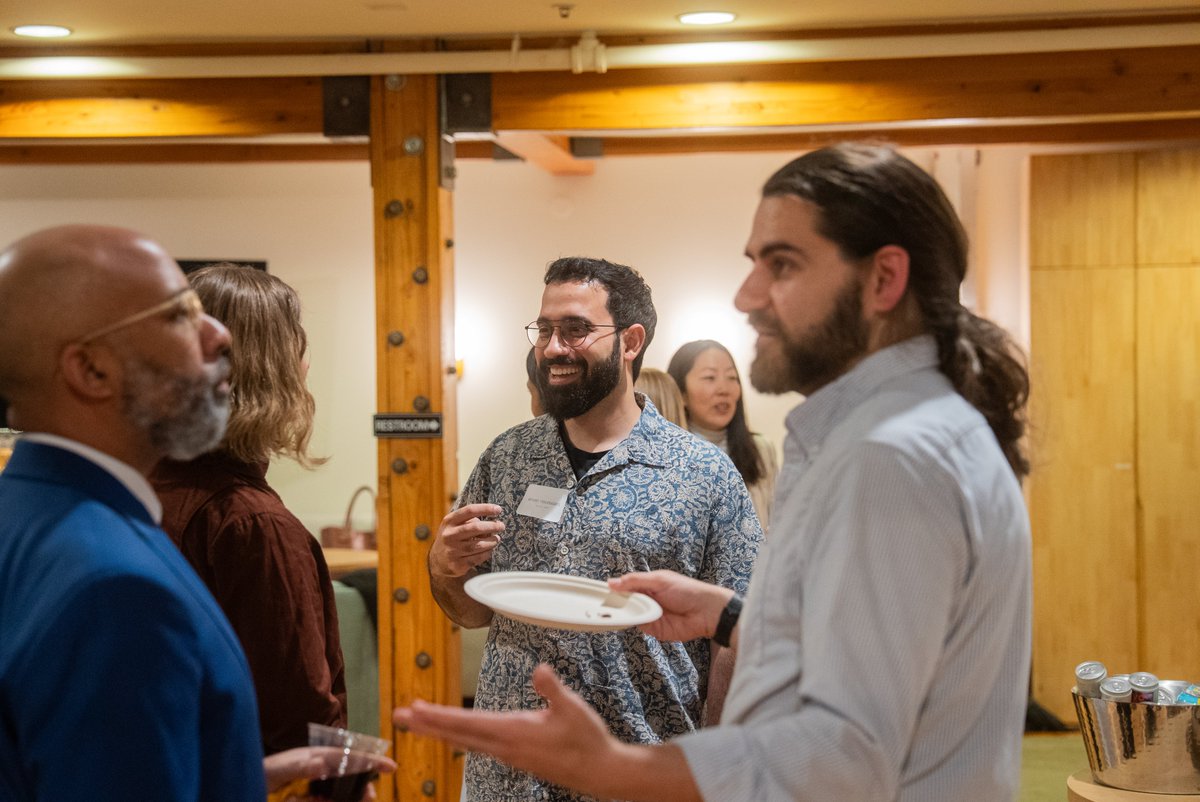
Had the honor to host a group of 30 design leaders, founders, and product folks at @imbue_ai this week and one thing is clear: I enjoyed myself a lot! Ping me if you want to join the next one
Ehsan Nour tweet mediaEhsan Nour tweet mediaEhsan Nour tweet mediaEhsan Nour tweet media
English
2
2
12
673
Ryan Lucas
Ryan Lucas@ryanlucas·
Fun chat with @BrettBerson from @firstround on Executive Function. We got concrete on what “quality” actually means, scaling design in hypergrowth, and why the best teams blur the lines between design/product/engineering. (Plus I got to slip in a Henry Dreyfuss mention!)
Brett Berson@brettberson

This is Episode 2 of Executive Function with Ryan Lucas, VP of Design at Rippling and former Head of Design at Retool. For Ryan, everything begins with being very clear about what the job of design and a design function really is. In his words, “Useful, usable and desirable are the three things we need to deliver. And I think people often forget about the last bit, but it’s incredibly important to the practice of professional design, whether it’s physical products or software products. Henry Dreyfuss said the designer’s job is not done if the product doesn’t sell, and I’ve always believed that.” We go on to discuss: - Design leaders who "shield" their teams from organizational chaos are doing them a disservice, not a favor. - To truly scale quality, you probably need a benevolent dictator, one opinionated person who sets the bar. - Parker Conrad goes directly to the individual designer when he sees a problem, skipping Ryan entirely, and Ryan thinks that's great. - At Rippling, individual designers sometimes own a Series C company's worth of product by themselves. - Great creative work cannot come from fear because fight-or-flight shuts down the prefrontal cortex, which is where all creative thinking lives. - In the absence of a date, there is no commitment, and that rigor around commitments is what makes Rippling's speed possible. - One-on-ones should be jam sessions on hard problems, not status updates or career development chats. - He'd rather a young designer have opinions he completely disagrees with than no opinions at all. - The hardest skill in the job is knowing which balls are rubber and which are glass, and you only learn by letting some drop. - The most successful use of a design crit is when designers tell you upfront what feedback they actually need, otherwise everyone wastes time on things that have already been decided. - The perfectionism that makes someone a great designer is the same trait that will prevent them from becoming a great design leader. - The best designers steer the business, they see a problem, come out of their lane, and move the tiller without being asked. Timestamps: 03:29 The Useful, usable, desirable — and used — design framework 04:49 How design relates to engineering, product, and marketing 08:15 Measuring success as a design leader 12:40 The gap between director and VP-level design leadership 14:23 Why great design leaders jump up and down in altitude 19:26 The four pillars every design manager must master 21:34 Over-indexing on quality and the perfectionist trap 27:53 How to build judgment through pattern matching 34:31 Why Figma is not the source of truth 38:39 The "Do/Try/Consider" framework 44:05 Should one-on-ones exist? 46:45 How to scale judgment 50:49 What to look for when hiring your first design leader 54:54 Advice for young designers who want to lead 58:24 Demanding yet supportive: A balanced management style 01:02:43 What Rippling's operating system teaches about execution

English
1
1
10
787
Steve Ruiz
Steve Ruiz@steveruizok·
Dense. Give me the information. Dial down your whitespace. Dial up your contrast. Allow text to span more than 56 characters, allow spacing below 1.7, allow black borders between columns, scroll bars, tables with alternating background tints. Fast. Local-first or optimistic writes on the client. Few if any animations. Smart use of fonts, images, and assets to prioritize quick loads and transitions. Present. Do not navigate me if I don’t need to be navigated, but orient your design from the start for multiple views. Allow multiple panes. Look at high-pressure applications (trading, IDEs, medical, emergency, military) and take inspiration. Don’t take me away from my task. File over app. Open file format that many apps can view. Skip the spec until things harden, but keep it open anyway. Let my bots read it. Moldable. Decompose your app into lower primitives that can be loosely recomposed by the user to form many types of documents, dashboards, reports, etc. Start me at a good set of constructions. I’ll make the software into what I need it to be whether you like it or not, so make it easy for me and my bots. BYOAI. Let me bring my own services and information, either because the application is open enough for the bots to interact with directly (see File over app) or via an exposed host / tunnel or some other dangerous route. Above all remember that making software is getting easier so businesses will be making software on top of your software. Design for this!
English
7
16
262
19.8K
Ryan Lucas
Ryan Lucas@ryanlucas·
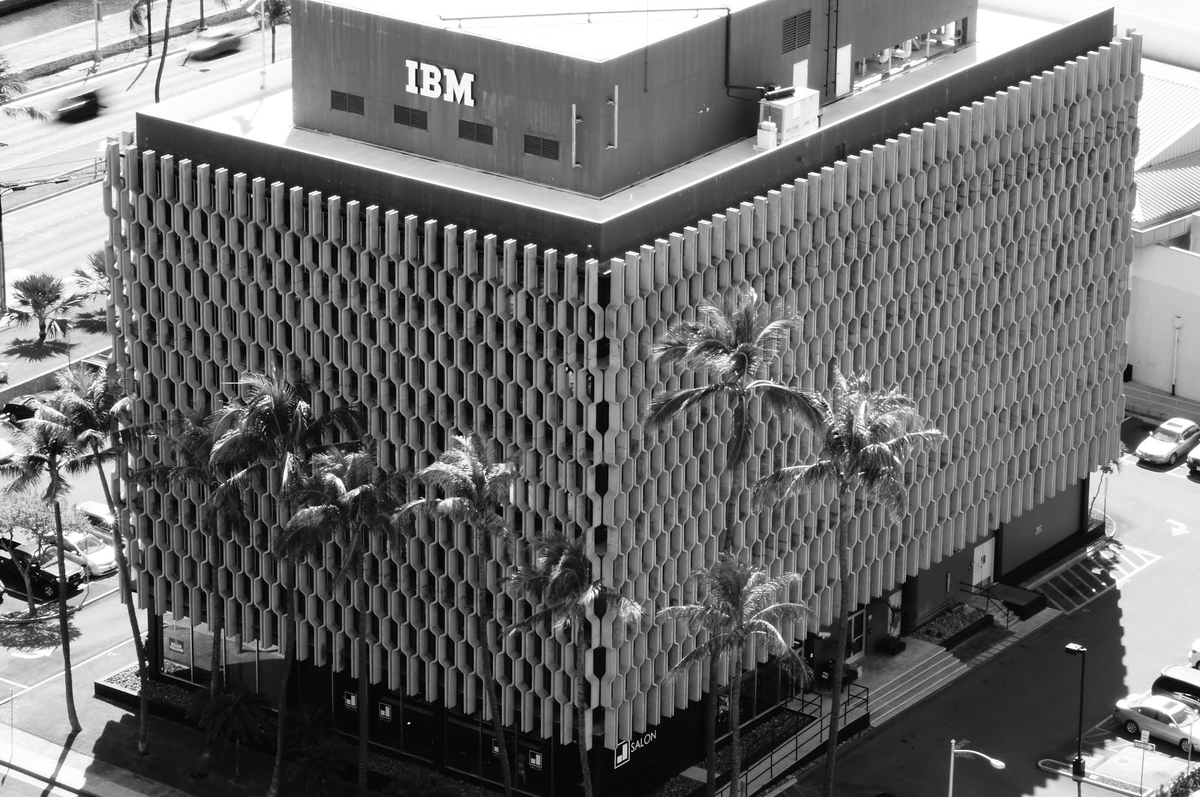
@usgraphics Wait until you get to Breuer’s IBM campus in Boca Raton, or Victor Lundy’s IBM building in Cranford, NJ.
Ryan Lucas tweet media
English
0
0
7
313
U.S. Graphics Company
U.S. Graphics Company@usgraphics·
The IBM Building, Hawaii Circa 1960's Vladimir Ossipoff
U.S. Graphics Company tweet media
English
12
19
322
16.5K
Cory Wilkerson
Cory Wilkerson@corywilkerson·
Oh no. The product marketing team has shown up in the claude code cli. Coal in my stocking.
Cory Wilkerson tweet media
English
2
0
8
4.2K
Ryan Lucas
Ryan Lucas@ryanlucas·
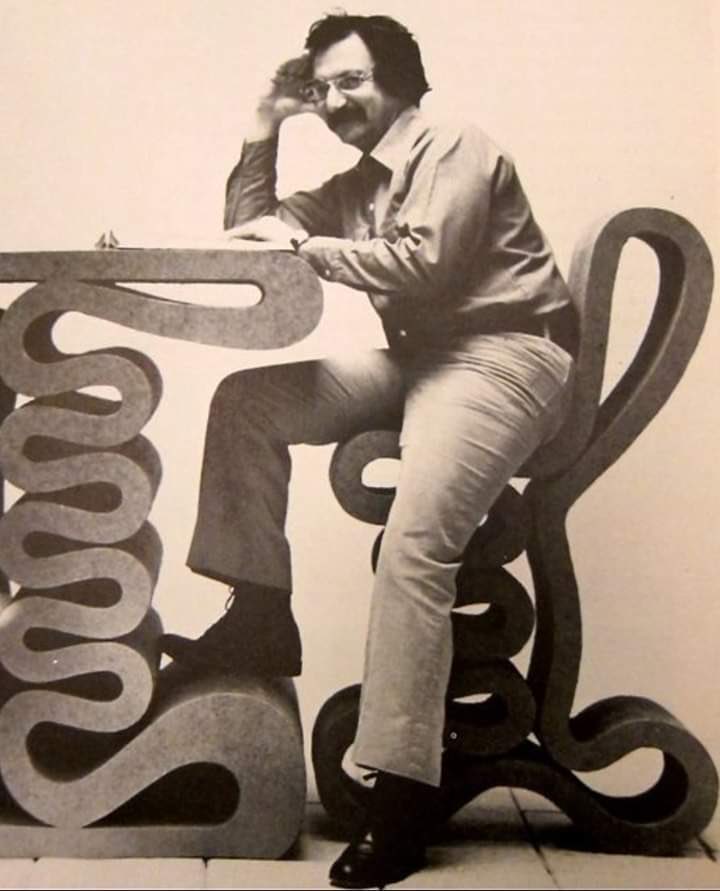
“98% of everything that is built and designed today is pure shit. There's no sense of design, no respect for humanity or for anything else. They are damn buildings and that's it. Once in a while, there's a small group of people who do something special. Very few.”
Ryan Lucas tweet media
English
0
0
2
186
Ryan Lucas retweetledi
Felix Lee
Felix Lee@felixleezd·
Industrial designers make brilliant software designers. They are wired to put in way more care and intent into what they ship. This is still very underrated.
English
9
3
45
4K
Ryo Lu
Ryo Lu@ryolu_·
on simplicity: simplicity isn’t about stripping everything down to the bare minimum. it’s about finding the simplest system that can do the most things and serve the most people. removing features just to remove them isn’t simple – it’s disruptive. real simplicity comes from unification: building systems that allow for variation and customization to fit different needs and contexts. simplicity is subjective. a pilot wouldn’t be happy if you removed their HUD displays and cockpit controls. but a beginner stepping into that same cockpit for the first time would be overwhelmed, not knowing where to start. the beautiful thing about software is that it’s conceptual and malleable. unlike physical objects, it can adapt and transform for its user. true simplicity in software means: • simplicity at the system level – unified concepts that compose elegantly • transparency – making the system understandable and explorable • progressive disclosure – revealing complexity gradually as people grow • safety – letting people learn without fear of breaking things this is a simple (but hard) way to create systems that feel simple to beginners while staying powerful for experts. not by removing, but by layering thoughtfully. the end is not minimalism. it’s maximum capability with minimum friction.
English
46
83
879
69.3K
Ryan Lucas
Ryan Lucas@ryanlucas·
@thenanyu Henry Royce said it simply: “Take the best that exists and make it better; when it does not exist, design it.” But the “faster horse” idea was never about innovation or novelty, it’s about understanding the difference between stated preference and revealed preference.
English
0
0
0
125
Nan Yu
Nan Yu@thenanyu·
Do people understand that 90% of the time a faster horse is the right answer?
English
22
10
179
15.2K
U.S. Graphics Company
U.S. Graphics Company@usgraphics·
90's design was peak bouba. Absolute blubber, blimp and bulbous maxxing of the 90's is behind us. Bilabial aesthetic has been neutralized but not entirely, its resurgence is of great civilizational concern.
U.S. Graphics Company tweet media
English
35
25
562
47.5K
Alex Tapper
Alex Tapper@ABTapper·
@ryanlucas What if the complex business processes you’re helping enterprises optimize with agentic AI are ultimately just designed to sell more sugar water?
English
1
0
1
203
Ryan Lucas
Ryan Lucas@ryanlucas·
“Do you want to sell sugar water for the rest of your life, or do you want to come with me and help enterprises adopt agentic AI to streamline their complex business processes at scale?”
English
2
2
12
1.3K
Ryan Lucas
Ryan Lucas@ryanlucas·
@davepl1968 @usgraphics See your Range Rover and raise you a 5th Gen 4Runner. Fewer, bigger knobs and buttons. Manual lever for shifting the transfer case.
Ryan Lucas tweet media
English
0
1
7
659
Dave W Plummer
Dave W Plummer@davepl1968·
This was peak user interface for vehicles. Everything had a hard button, perfectly logical layout, and could be operated with gloves. 2010 Range Rover Autobiography Supercharged.
Dave W Plummer tweet media
English
98
51
1.3K
54.2K
Tara Seshan
Tara Seshan@tarstarr·
When I’m a billionaire I’m going to drop a children’s album with the Wu Tang Clan.
English
1
0
9
805
Ryan Lucas
Ryan Lucas@ryanlucas·
@collision A lot of pro tooling always used dark/inverted UIs. Blender circa 1994. The Microsoft Expression suite in 2006. Adobe introduced dark themes in CS6 in 2012, I believe. I’m sure there are earlier examples, but call it ~30 years of prior art.
English
1
0
4
223
John Collison
John Collison@collision·
Where did the current Dark Mode fashion come from in UI design? Presumably there was one designer who was patient zero for this contagion.
English
137
16
620
164.3K