

Sat Ramphal
2.2K posts

Sat Ramphal
@sat_ramphal
CEO at Maya Ai 🌴 4X founder, Human & innovator | Ai and Deep tech | 🇹🇹🇬🇾
Tampa, FL Katılım Mart 2017
2.7K Takip Edilen546 Takipçiler

@sat_ramphal @sat_ramphal Hi Sat, I have amazing React Native developer that has 9 years experience. Happy to discuss further via DM. Thank you.
English
Hi everyone,
I am hiring two engineers. If anyone knows anyone looking for a job please let me know.
Full stack - python
Front end - react native
🌴
English
@naazweb Yes open to it, depending on the situation it can work.
English

@JKsagacity initially it would be on our RPA platform, with a transitioned to a combine load of AI related tasks.
English

@sat_ramphal What's the main responsibilities of the Python position? AI related? or something else?
English
@_aatikakhan_ We would like some one that is more mid level that has some years of exp in Python.
English


🌟 Big News, Mayans! Maya AI is heading to the Entrepreneurship World Cup Finals in Riyadh! 🎉 Huge thanks to GENGLOBAL & all our supporters. 🙌 Excited for this journey!
🔗 Learn more: zurl.co/oiSJ
#MayaAI #EWC2024 #StartupSuccess #GlobalFinals

English
We are humbled to win and be heading to Saudi Arabia 🇸🇦
Maya AI@mayaaiknows
🌟 Big News, Mayans! Maya AI is heading to the Entrepreneurship World Cup Finals in Riyadh! 🎉 Huge thanks to GENGLOBAL & all our supporters. 🙌 Excited for this journey! 🔗 Learn more: zurl.co/oiSJ #MayaAI #EWC2024 #StartupSuccess #GlobalFinals
English
Sat Ramphal retweetledi

CHARGE 5-25X MORE FOR YOUR CONSUMER SUBSCRIPTION PRODUCT
Consumer CEOs: Charging $20 monthly / $200 annually for your product means that you need 1M subscribers to get to $200M ARR. Given the high churn with consumer SaaS products (4% per month not uncommon) you will need to constantly keep filling the top of funnel just to tread water.
Yes, ChatGPT and Claude have built large businesses with this low priced model, but they are the exception, not the rule. They've also each raised $5b+.
Consider instead, a plan where you charge ~$1000 per year, or even ~$5000 per year. Raising your prices by 5-25x does two things. First it, dramatically lowers the number of subscribers you need to get to real scale ($X00M ARR). As a side benefit, each subscriber is much more valuable, so you can invest in customer succes and retention. Second, it massively raises the bar on the value your product need to deliver.
Let's talk about the second thing. How do you raise the bar on value? You do it in four ways: (i) REFRAMING the role that your product plays in your customer's life (and finding a niche customer segment that cares about this) (ii) DELIVERING said value to this niche customer base, and (iii) COMPARING it to an amount the customer already pays for a comparable service.
Let's take an example. Calendaring systems like Calendly are either free for users or charge $10-15 per seat per month. However, what if such a system could reframe their product as an AI executive assistant, and subsequently build out this functionality? They can then compare the new price of $250 per month to the cheapest outsourced EA service (Eg: Athena) which charges $3000 per month. Obviously, the product needs to deliver value equivalent to an EA, but with AI, this is much more viable today than it was a few years ago.
One may argue that only a small % of people will pay $250 per month for an EA. But that's OK. Due to our higher per-customer revenue, our new system can afford to spend a much higher CAC to target and find 100,000 people (solopreneurs, SMB owners, coaches, etc) who will pay $3000 per year for this service. And also invest in a team to keep them happy and satisfied and not churn. 100,000 * $3000 = $300M per year! The economics become similar to a SMB-style business vs a consumer business.
So, to summarize:
1. Reframe the role of your service in your customer's life, ideally comparing it to an existing in-real-life service
2. Articulate a niche customer segment who cares deeply about this IRL service
3. Build this new, more expansive product that delivers this service
4. Price it much higher than earlier, comparing the value to what your target customer would pay for this service in an alternative world
5. Profit
Building a profit pool from a higher priced product will earn you the right to then build a new lower-priced product and go broader. This is the playbook that Tesla followed.
tldr with rare exceptions, I think most consumer products should start with a high priced version, dominate a niche customer base, and then over time, go broader with lower priced version. Most of them are doing the opposite, making survival hard.
English
Sat Ramphal retweetledi
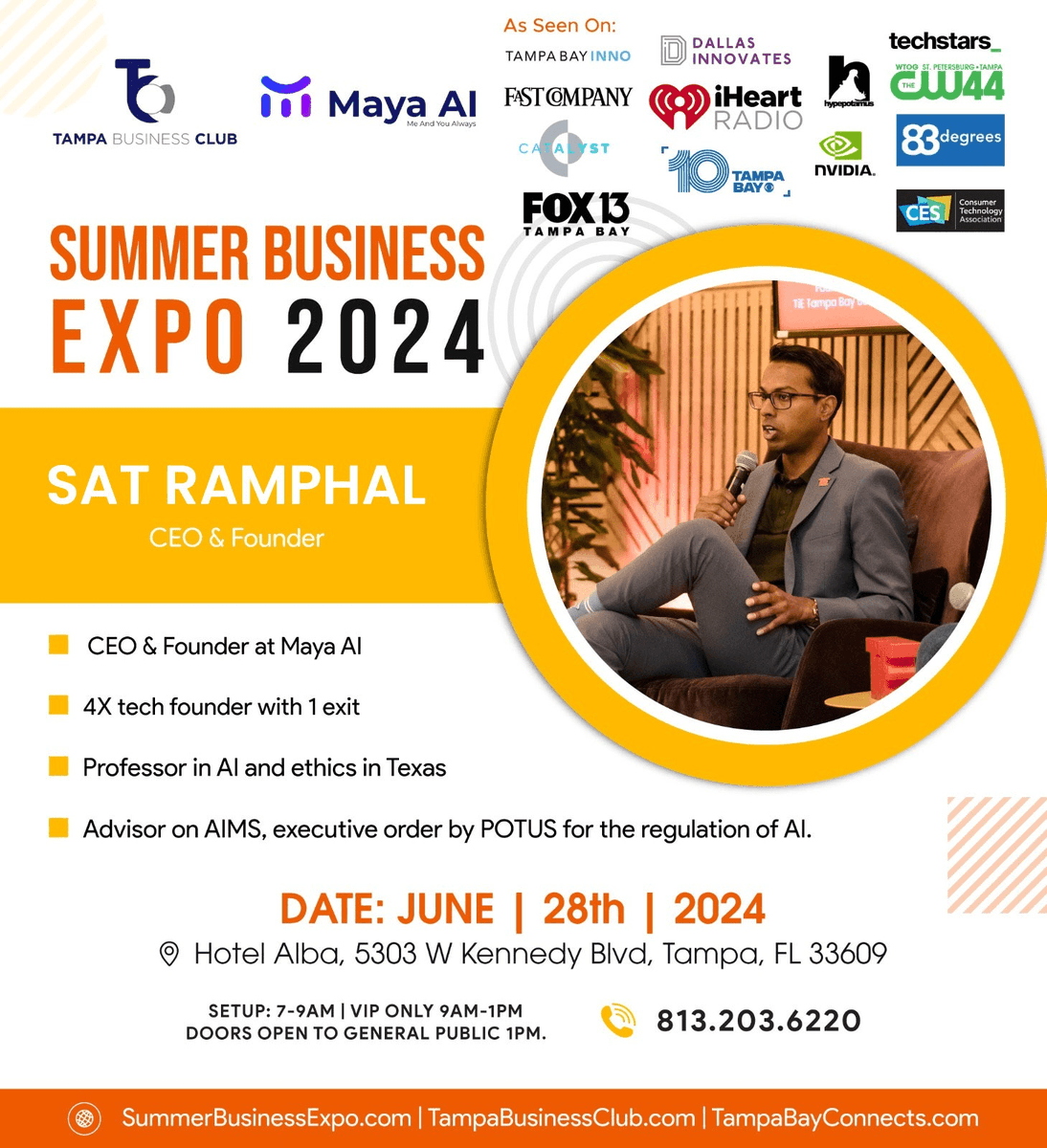
AI is making waves! 🌊 Join us as our CEO, Sat, takes the stage at the Summer Business Expo! Learn about the future of AI, automation, and industry transformations. Don't miss it!
More info: zurl.co/XreM
#technology #innovation #MayaAI #AI #business #event
English
Sat Ramphal retweetledi
AI SOFTWARE PRICING: PRICE BASED ON METRICS IN YOUR CONTROL
AI-Native Software Founders: I'm sure by now, you've all read the posts around how you should price your products based on end-customer outcomes (vs seats or other old-school methods).
While this is all good, I have a caveat for you. Be careful that you only price based on metrics that you have control over. For example, if you're building an AI SDR agent that's used by other companies as a replacement for human SDRs, the temptation might be to price based on appointments scheduled by the AI agent. The challenge with this is that you don't have control over the product quality / differentiation, the competitive dynamics, or even the customer mindset when they get a message from you. For all these reasons, the right metric to price on is an intermediate metric under your control, such as "activities" (where an activity might be generating a lead list, composing a personalized email to a prospect, etc). One can estimate how many activities a SDR completes per month, and the AI SDR agent should be able to tirelessly accomplish multiples of this number at a fraction of the price. And so hopefully, the cost per appointment should be lower than with a human SDR. But it's a folly to price on this.
A good analogy is search advertising. Google could have priced search ads as cost per conversion instead of cost per click, since Google has tremendous amounts of conversion data (from Google Analytics, Chrome, etc). However, ultimately the conversion rate on the website is impacted by many factors not under Google's control (product, offer, marketing message, website design, etc), and it doesn't make sense to price on conversions.
tl;dr Figure out a leading indicator that's fully under your control, and price based on this intermediate metric, vs on the eventual outcome.
English
Sat Ramphal retweetledi

I have a few startup investments doing $3-$5M ARR growing 100-400%+ YoY that can’t raise a Series A right now.
I remember 5-10yrs ago if you had $1M ARR a Series A term sheet was 100% guaranteed.
Yes lots of factors, nuance etc but it’s weird and tough out there.
English
Sat Ramphal retweetledi
Q: Define conviction.
A: When every LP rejects you and new hires defect, double down and launch a fund with 100% your own capital.

English
Sat Ramphal retweetledi

My inbox:
AI agents
AI agents
AI agents
AI agents
AI agents
AI agents
AI agents
Français
Sat Ramphal retweetledi


@emirates would really like someone to contact me. As no one should go through what I went through.
While it was my first time in Dubai, it was sad to say I was scammed with your partner @bookingcom through the Emirates app.
I was charged and given a fake number.
English
English

Congratulations to @meetmayaai, a member company of Embarc Collective, for being selected for the @TechstarsFWTX program! This opportunity will help Maya AI further its mission of revolutionizing healthcare through artificial intelligence and innovation.🩺🏥
English
Making Headlines in Tampa!
Maya AI@mayaaiknows
🌟Exciting News Alert! We are delighted to share that we've been recognized at the 2023 Tampa Bay Inno Awards 🏆Honored by @TampaBayInno, a big thanks for the recognition; we are grateful to our awesome team and supporters, too many to list Check it out: zurl.co/LwbN
English
Sat Ramphal retweetledi
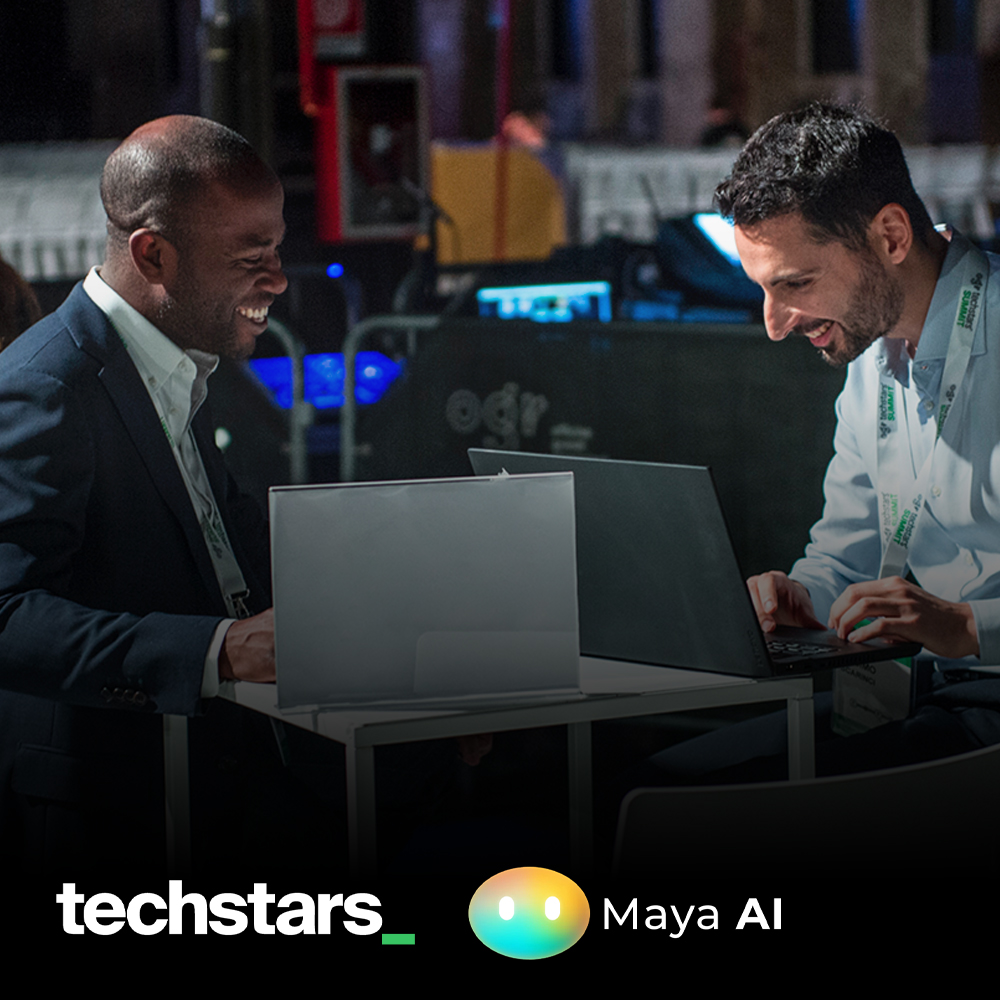
Exciting News! Maya AI joins @TechstarsFWTX Accelerator! 🌟
We're thrilled to be part of this incredible opportunity, advancing AI in healthcare. Thanks to the @Techstars team and our supporters! Stay tuned for updates. 🙌
Check it out: lnkd.in/em7kkCEh
English
English

.@BryanDChambers ... remember introducing me to this guy years ago (the one and only @treybowles). Just spent the day @TechstarsFWTX

English