Roger

1.3K posts

Roger

Roger

@selsrog

Dad, entrepreneur, padel player, music lover and technology geek.

Belgium Katılım Kasım 2009
112 Takip Edilen241 Takipçiler
Roger
Roger@selsrog·
Hi @herbertong and Team, I am confused. You and your peers keep telling that Tesla Robotaxi’s are twice as safe as humans, but Grok seems to disagree. Any idea where the differences are? grok.com/share/bGVnYWN5…
English
8
0
10
8.8K
Roger
Roger@selsrog·
@premierpadel got a question on Premier Predict, the in-app prediction game. Does it run per season, or endlessly? As we are at the start of the 2026 season, and the previous result still stand. And, what are the prizes to be won, and when?
English
1
0
0
28
Bob Loukas 🗽
Bob Loukas 🗽@BobLoukas·
Every cycle feels different, but it never is. You make real money on paper and think it’s permanent. Then you round-trip it and swear you’re done forever. You then miss the early part of the next cycle because of PTSD. You buy back some only after it doubles “just to be safe.” You get fully loaded by the mid-cycle, the tingly feeling is back. You promise yourself this time you’ve learned a thing or two and will be smart and reasonable this time. Then the gains start and you take the bait, you get emotional, fall in love, and go searching for narratives to latch too. The hucksters are back too in full force selling you a dream, you ignore their last cycle grift, and fall for their new shiny paper. A faster path to your dream. You start regurgitating all their talking points, welcome to the club. You start adding leverage, this is easy, you’re going to be super-yacht rich. You buy garbage tokens and projects, telling yourself they figured out some money glitch. It’s a whole new paradigm. You start to project where you’re going to be just one year out at this rate and say that’s too long, let’s go harder. And then the rugs begin to get pulled. You’re quickly down 50% on a leveraged/speculative pile of poop, that you fear selling at such a “discount”. What about the dream. Paralysis becomes so great you can’t even action an exit over your better thoughts. And not before long, you’re back to the beginning. ----------------------------- I know this is only a subset of people entirely, more so in crypto, but I think we all to some level or extent, fall for the above. I do too! So not intended to throw shade on people (except the hucksters), but a reminder that a balance between risk and preservation is paramount, but more importantly when to be balanced between the two at various stages of the cycle. Knowing where we are in the cycle requires being as unemotional and agnostic to your positions as possible. Once money becomes so personal, rational judgement is lost. As for where we are now. Stocks haven’t broken down broadly, although the cracks are forming. We’re in a bull trend still, but also in that “be mindful” stage, and dips are probably not opportunities anymore. For crypto, the carnage is huge, but can get so much worse. We’re way past the get out stage, but that doesn’t mean you can’t get out to live another day. If you’re sitting on stuff with paralysis, free yourself of this burden and dump it. A worthless token isn’t cheap because it's down 60%. This does not apply to spot bitcoin, you’re not selling that 44% off highs, even expecting much deeper levels to come in 2026.
English
148
185
2K
143.8K
Greg Brockman
Greg Brockman@gdb·
Software development is undergoing a renaissance in front of our eyes. If you haven't used the tools recently, you likely are underestimating what you're missing. Since December, there's been a step function improvement in what tools like Codex can do. Some great engineers at OpenAI yesterday told me that their job has fundamentally changed since December. Prior to then, they could use Codex for unit tests; now it writes essentially all the code and does a great deal of their operations and debugging. Not everyone has yet made that leap, but it's usually because of factors besides the capability of the model. Every company faces the same opportunity now, and navigating it well — just like with cloud computing or the Internet — requires careful thought. This post shares how OpenAI is currently approaching retooling our teams towards agentic software development. We're still learning and iterating, but here's how we're thinking about it right now: As a first step, by March 31st, we're aiming that: (1) For any technical task, the tool of first resort for humans is interacting with an agent rather than using an editor or terminal. (2) The default way humans utilize agents is explicitly evaluated as safe, but also productive enough that most workflows do not need additional permissions. In order to get there, here's what we recommended to the team a few weeks ago: 1. Take the time to try out the tools. The tools do sell themselves — many people have had amazing experiences with 5.2 in Codex, after having churned from codex web a few months ago. But many people are also so busy they haven't had a chance to try Codex yet or got stuck thinking "is there any way it could do X" rather than just trying. - Designate an "agents captain" for your team — the primary person responsible for thinking about how agents can be brought into the teams' workflow. - Share experiences or questions in a few designated internal channels - Take a day for a company-wide Codex hackathon 2. Create skills and AGENTS[.md]. - Create and maintain an AGENTS[.md] for any project you work on; update the AGENTS[.md] whenever the agent does something wrong or struggles with a task. - Write skills for anything that you get Codex to do, and commit it to the skills directory in a shared repository 3. Inventory and make accessible any internal tools. - Maintain a list of tools that your team relies on, and make sure someone takes point on making it agent-accessible (such as via a CLI or MCP server). 4. Structure codebases to be agent-first. With the models changing so fast, this is still somewhat untrodden ground, and will require some exploration. - Write tests which are quick to run, and create high-quality interfaces between components. 5. Say no to slop. Managing AI generated code at scale is an emerging problem, and will require new processes and conventions to keep code quality high - Ensure that some human is accountable for any code that gets merged. As a code reviewer, maintain at least the same bar as you would for human-written code, and make sure the author understands what they're submitting. 6. Work on basic infra. There's a lot of room for everyone to build basic infrastructure, which can be guided by internal user feedback. The core tools are getting a lot better and more usable, but there's a lot of infrastructure that currently go around the tools, such as observability, tracking not just the committed code but the agent trajectories that led to them, and central management of the tools that agents are able to use. Overall, adopting tools like Codex is not just a technical but also a deep cultural change, with a lot of downstream implications to figure out. We encourage every manager to drive this with their team, and to think through other action items — for example, per item 5 above, what else can prevent a lot of "functionally-correct but poorly-maintainable code" from creeping into codebases.
English
414
1.6K
12.2K
2.1M
Roger
Roger@selsrog·
@NicoQuarles as much as I like your (padel) commenting a lot, please don’t forget it is television, and not radio!
English
0
0
0
10
Roger
Roger@selsrog·
@premierpadel An update would be nice, you know. give “this crowd” you like so much a bit of “love” in return… To much to ask?
English
0
0
21
1.4K
Roger
Roger@selsrog·
@X When will it be available outside of the US, more specifically in Belgium?
English
0
0
0
18
Roger retweetledi
Herbert Ong
Herbert Ong@herbertong·
Exclusive $TSLA Interview! Keith Fitz-Gerald has a track record like no other predicting the dot com bubble, the global financial crisis, and calling the rise of Palantir. @fitz_keith Last July, he was on national TV saying Tesla was set to double or triple. Today, he's back with another bold prediction - $TSLA hitting a 20 TRILLION DOLLAR valuation! Keith is Principal at the Fitz-Gerald Group and has had over 3,000 prime time TV appearances. Don't miss this! Keith is very well spoken with some great points about Tesla
English
91
266
1.7K
237.5K
Martin Varsavsky
Martin Varsavsky@martinvars·
This is the article in English that Elon submitted that was translated and published in German. Only the AfD Can Save Germany Germany stands at a critical juncture, its future teetering on the edge of economic and cultural collapse. As someone who has invested significantly in Germany's industrial and technological landscape, I believe I have earned the right to speak candidly about its political direction. The Alternative for Germany (AfD) represents the last vestige of hope for this nation. Here's why: Economic Revival: Germany's economy, once the powerhouse of Europe, is now mired in bureaucracy and stifling regulations. The AfD understands that economic freedom is not just desirable but necessary. Their approach to reducing government overreach, cutting taxes, and deregulating the market echoes the principles that have made Tesla and SpaceX successful. If Germany is to reclaim its industrial might, it needs a party that will not just talk about growth but enact policies to foster an environment where businesses can thrive without the heavy hand of government. Immigration and National Identity: Germany has opened its borders to mass migration, which, while humanitarian in intent, has led to significant cultural and social tensions. The AfD advocates for a controlled immigration policy that prioritizes integration and the preservation of German culture and security. This is not about xenophobia but about ensuring that Germany does not lose its identity in the quest for globalism. A nation must maintain its core values and cultural heritage to remain strong and united. Energy and Independence: The energy policies pushed by current coalitions are not only economically costly but also geopolitically naive. Germany's decision to phase out nuclear power and rely heavily on coal and imported gas, plus highly variable wind and solar without the necessary grid-scale batteries to provide stability, has left it vulnerable, especially in light of energy supply disruptions. The AfD's stance on energy is pragmatic, advocating for a balanced approach. I hope they consider doubling down on safe nuclear power, together with battery energy storage to buffer large swings in electricity usage, as that is the obvious solution. Political Realism: The traditional parties have failed Germany. Their policies have led to economic stagnation, social unrest, and a dilution of national identity. The AfD, despite being labeled far-right, offers a political realism that resonates with many Germans who feel their concerns are ignored by the establishment. They address the issues at hand without the political correctness that often masks the truth. The description of AfD as far-right is made obviously false simply by noting that Alice Weidel, the party leader has a same-sex partner from Sri Lanka! Does that sound like Hitler to you? Please. Innovation and the Future: I've built companies on the principle that innovation requires freedom from unnecessary constraints. The AfD's vision aligns with this ethos. They push for educational reforms that encourage critical thinking over indoctrination and support tech industries which are the future of global economic leadership. To those who decry the AfD as extremist, I say, look beyond the labels. Look at the policies, the economic plans, and the cultural preservation efforts. Germany needs a party that isn't afraid to challenge the status quo, that isn't bogged down by the politics of the past. The AfD can save Germany from becoming a shadow of its former self. It can steer the country towards a future where economic prosperity, cultural integrity, and technological innovation are not just aspirations but realities. Germany has been too comfortable with mediocrity; it's time for bold changes, and the AfD is the only party offering that path. Elon Musk
English
607
2.4K
12K
12.9M
Martin Varsavsky
Martin Varsavsky@martinvars·
Elon Musk’s opinion article in Die Welt explaining his support for the AfD has sparked widespread debate. I see a lot of speculation on how this piece came about so let me explain. As a friend of Elon and a Supervisory Board Member of Axel Springer, I saw his public support for the AfD on X as an opportunity for him to elaborate on his views in a more thoughtful and detailed way. I reached out to Jennifer Wilton, the editor-in-chief of Die Welt, to gauge her interest in an editorial from Elon on the subject. After careful consideration, she agreed that such a piece would be of significant news value and worthy of publication. I then approached Elon, explaining the potential impact of this opportunity to clarify his position. He liked the idea, wrote the article, and Die Welt published it.
English
408
961
7.9K
13.3M
Roger
Roger@selsrog·
@vladquant @gruber Been a while since I listened to John, and he confirms again: half an hour in the “interview” and he talked more then his guest.
English
0
0
0
29
Vlad
Vlad@vladquant·
Joining @gruber on The Talk Show was insanely great. He gets what matters. We discuss why user-centric web search matters, will LLMs get us to "Knowledge Navigator", reasons why Kagi is building Orion browser and more. daringfireball.net/thetalkshow/20…
English
3
4
33
11.8K
Oscar Hoole
Oscar Hoole@theoscarhoole·
In 2015, Apple tried to CRUSH Spotify. • Threatened to remove them from App Store • Demanded 30% of all revenue • Blocked their app updates But Spotify's response was genius. Here's how a Swedish startup outsmarted the world's biggest company 🧵
Oscar Hoole tweet media
English
1.8K
12K
165.9K
48.7M
Sawyer Merritt
Sawyer Merritt@SawyerMerritt·
Tesla will release its Q4 delivery report one week from today before market open. The company needs to deliver 514,925 vehicles to equal its total deliveries for 2023. Anyone want to take a guess at what the number will be?
Sawyer Merritt tweet media
English
698
243
4K
473.9K
Roger
Roger@selsrog·
@theDCApod either you teach Marty some manners, or I stop listening.
English
0
0
0
5
Sawyer Merritt
Sawyer Merritt@SawyerMerritt·
This worked well for you all last time, so let's do it again! If you'd like someone to use your Tesla referral code, comment below on this post with your link. If you're planning to buy a new Tesla, consider using a referral link from a smaller creator. Let's sell some Teslas!
Sawyer Merritt tweet media
English
5.3K
306
3.3K
804.4K
Roger retweetledi
Kagi
Kagi@KagiHQ·
Never get lost in translation again. Today, we launch Kagi Translate, offering superior translations across 244 languages! Higher quality translations than Google Translate and DeepL, zero tracking, and free ✨ More info: blog.kagi.com/kagi-translate Try it: translate.kagi.com
English
10
36
115
17.1K
Roger
Roger@selsrog·
@CernBasher Accidentally (?) this is also the answer to the “ultimate question of life” in the Hitchhikers guide to the Galaxy… Btw, one of Elon’s favourite books of all time…
English
0
0
1
70
Cern Basher
Cern Basher@CernBasher·
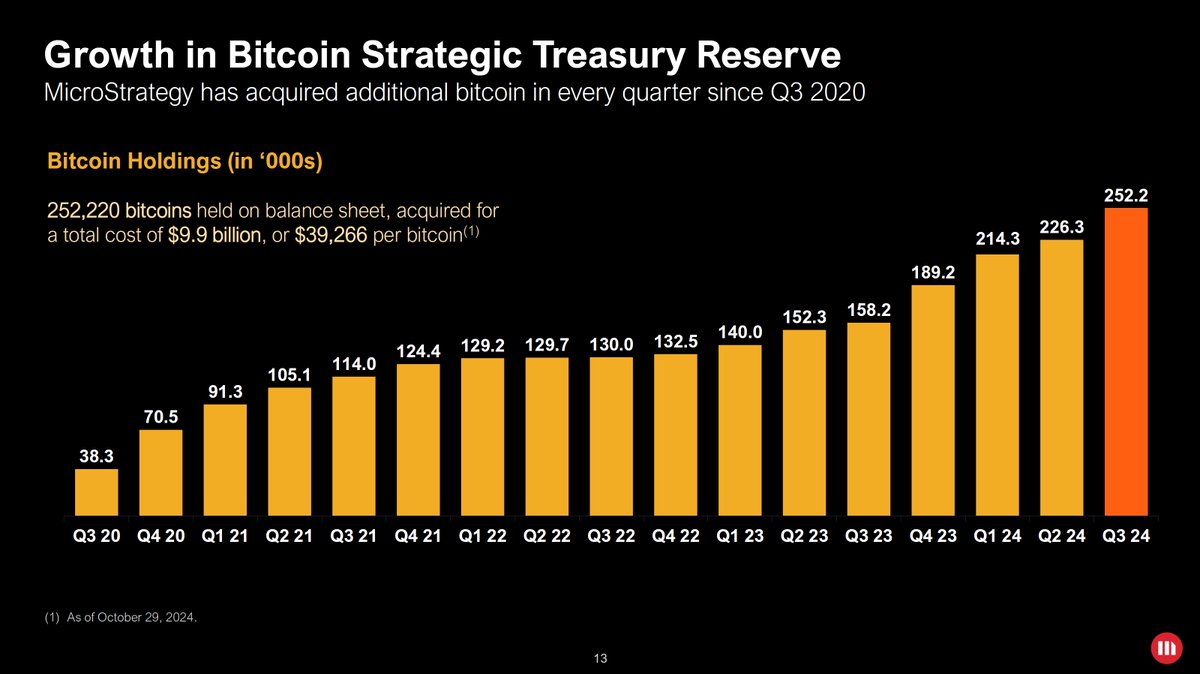
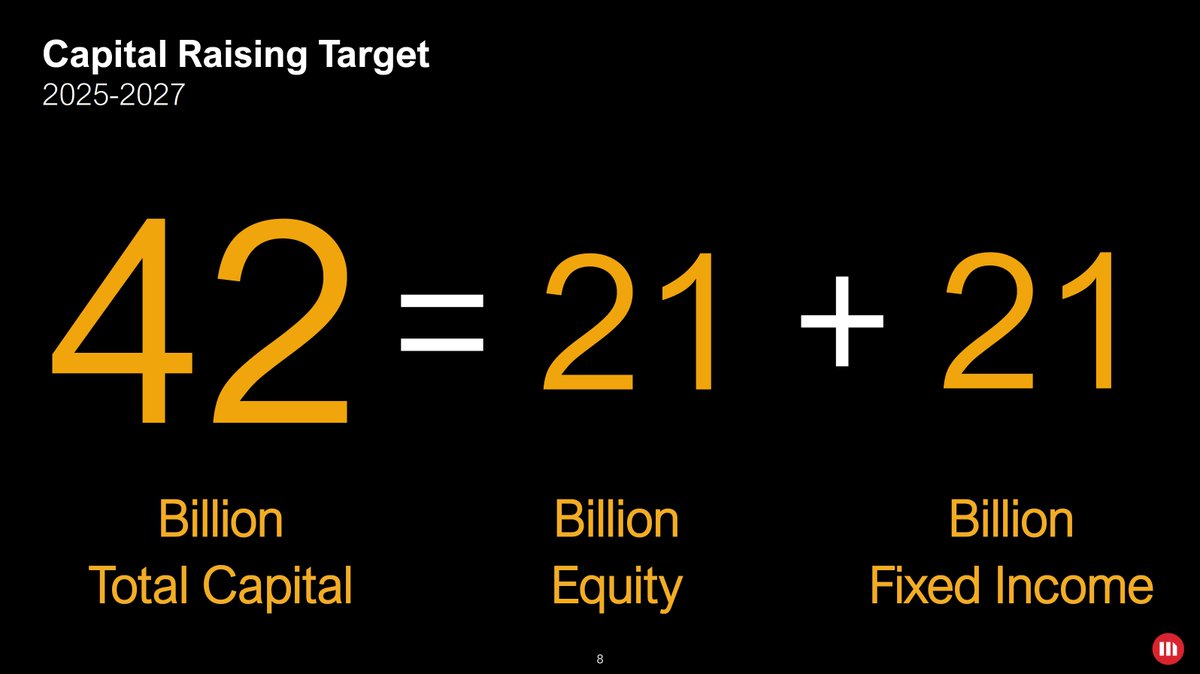
If you think that most people don't understand Tesla, even more don't understand what Microstrategy is doing What if the answer to everything is 42? Microstrategy seems to think so... "Today, we are announcing a strategic goal of raising $42 billion of capital over the next 3 years, comprised of $21 billion of equity and $21 billion of fixed income securities, which we refer to as our “21/21 Plan.” As a Bitcoin Treasury Company, we plan to use the additional capital to buy more bitcoin as a treasury reserve asset in a manner that will allow us to achieve higher BTC Yield,” said Phong Le, President and Chief Executive Officer, MicroStrategy. What are they doing? They are borrowing melting ice cubes (dollars) and investing in a scarce digital asset/security technology (bitcoin). This could be one of the smartest arbitrage strategies in history. Today Microstrategy holds about $18 billion worth of bitcoin.
Cern Basher tweet mediaCern Basher tweet mediaCern Basher tweet mediaCern Basher tweet media
Cern Basher@CernBasher

The World is the Biggest Computer Chip What is a Microchip? So, let's imagine a city, but a very, very, very tiny city that you can't even see without a super powerful microscope. This city is what we call a "microchip". Just like in a regular city, there are many different parts that help the city work properly. You've got roads, buildings, traffic lights, cars, and more. In the microchip, there are these tiny paths, like roads, that electricity can travel down. Along these paths, there are many different parts, like buildings, which we call "transistors". Transistors are essentially tiny electric switches that can be turned on or off. When these switches are "on," they allow electricity to flow through. When they're "off," they stop the electricity. By manipulating these on and off states, microchips can perform calculations, store data, and control other parts of a device. They're incredibly small, often no bigger than a fingernail, but a microchip has millions, and in some cases billions, of transistors. In the real world, we don’t have any cities with billions of buildings! Microchips are fundamental to the operation of a wide range of electronic devices, including computers, smartphones, cars, and household appliances. They revolutionized the technology landscape, enabling devices to become smaller, faster, and more affordable. To appreciate the significance of microchips, let's imagine traveling back in time to the 1940s. During that era, computers were enormous machines that occupied entire rooms, and instead of microchips, they relied on vacuum tubes for their calculations. These vacuum tubes were bulky, consumed a substantial amount of energy, and overheated quickly. Similar to light bulbs, they frequently burned out and needed replacement, making the maintenance of those early computers a considerable challenge. The breakthrough occurred in the 1950s with the invention of the "transistor." Transistors were significantly smaller than vacuum tubes, generated less heat, and exhibited higher reliability. This marked a significant advancement. However, at the time, transistors were still manufactured and installed individually, which involved extensive labor. The true revolution unfolded in the 1950s and 1960s when inventors discovered a method to integrate numerous transistors onto a single piece of silicon. This groundbreaking innovation gave birth to the microchip, also known as the integrated circuit. Microchips drastically reduced the size, increased the speed, and lowered the cost of computers. Since then, we have witnessed ongoing advancements in microchip technology. It's as if we have been able to pack more and more cities inside our microchips over time. In the 1970s, a chip could accommodate a few thousand transistors. By the 1980s, that number grew to several hundred thousand. In the 1990s, microchips could house a few million transistors. Today, we can fit billions of transistors on a single chip. This continuous progress explains why our computers, smartphones, and game consoles have become significantly more powerful over the years. Recall that a microchip is simply electricity running through its circuits. Then what happens when power grids – also just electricity running through circuits – are connected globally? Would we have created a global earth computer? We might even call it a “Macrochip.” While the benefits of smaller, faster, and energy-efficient microchips are evident, it raises the question of whether the opposite - larger, slower, and highly energy-intensive macrochips - would hold any value. Larger: A global computer, by its very nature, would transcend the control of any single nation. It would be accessible to all nations, resulting in the equitable distribution of computational resources. Slower: A big slow computer might at first seem like a terrible idea, but it has its advantages when it comes to security – more on this in a minute. Energy Intensive: Once again, an energy-intensive computer might appear disadvantageous. However, it may also possess significant advantages. Now, let's delve into the topic of security… How do we protect things we value? Let’s imagine that we have something of value – say, trillions of dollars of gold – what is the best way to protect it? In this case, simply storing the gold in a big warehouse might not suffice. Instead, a more secure approach would involve storing the gold in a high-security vault designed to be exceptionally difficult to breach. The vault would ideally be situated in a remote location, fortified with robust perimeter defenses, advanced surveillance systems, sophisticated access controls, and well-trained security personnel under your control and trust. Essentially, it would necessitate the establishment of a private army! Additionally, it might not be wise not to keep all the gold in one place, despite the increased complexity in managing and securing multiple storage sites. When the value of the gold reaches trillions, considerations for security must extend beyond individual locations. Safeguarding the gold would require contemplating the security of the entire country in which you reside. Without such precautions, an adversary could seize control of your nation and claim all the gold within its borders as their own. Hence, comprehensive protection would necessitate not only an army but also a navy to safeguard the seas and an air force to defend against aerial attacks. This is going to get quite expensive! On a related note, the substantial military expenditure of the United States is partly due to the need to protect valuable and productive assets worldwide, beyond just gold. Inadequate military resources would create a strong incentive for another nation to forcibly acquire what they desire. Of course, valid questions may arise regarding the appropriateness of the military spending, ensuring it is not wasteful, and whether the allocation is appropriately focused. The core problem is that securing digital assets lacks a direct way to impose a physical cost on those who seek to compromise them. Unlike physical assets that can be defended with physical power, such as an army or navy, the digital realm lacks a tangible means to exact a real-world consequence on adversaries. However, let's explore an intriguing possibility: what if there was a way to extract a physical cost from anyone engaging in malicious activities, such as sending unwanted spam, launching cyberattacks, or stealing information and money? What if there was a digital counterpart to an army, navy, or air force? Enter a technology called Bitcoin Most people think of Bitcoin as some form of speculative digital money, albeit one that explodes upwards and crashes down with reckless abandon. Bitcoin is often disparaged for its high energy consumption and slow processing speed (it can only process a limited number of transactions per second). And Bitcoin is often derided because it operates independently of any nation state, making it more susceptible to market manipulation and fraud compared to regulated financial systems. On top of all that, Bitcoin has no cash flows – therefore, some respected investors like Warren Buffett have argued it has no intrinsic value. Yet, Bitcoin's market value today is about $1.3 trillion. If after 15 years Bitcoin is so useless and if it’s a speculative asset, why has it appreciated so much? What’s going on here? Bitcoin as a digital security system Well, it turns out that most people are thinking of Bitcoin in the wrong terms. Rather than viewing Bitcoin as money or some kind of digital gold, it turns out the Bitcoin is really just a technology that offers a type of digital security that we’ve never seen before. And while the criticisms have some truth, Bitcoin was actually intentionally designed to use a lot of energy and to be slow. These are the features that could make it incredibly useful as a form of digital security. To comprehend how Bitcoin works, let's use an analogy. Imagine you're playing a massive game of hide and seek with your friends, where the goal is to find a tiny valuable rock hidden somewhere within a countryside of rolling hills. In this game, you can't just go around and look for the rock, but you have to guess where it could be. You keep making guesses, and each time you guess, you dig in that spot to see if the special rock is there. Given the vast search area and the small size of the rock, finding it becomes challenging. This game is similar to Bitcoin mining. The special rock is like a "block" of Bitcoin transactions, and your guesses are the calculations your computer makes to try and find the block. Special computers called a miners have a singular purpose of guessing “where” the bitcoin are. In the actual Bitcoin game, when a computer finds the special block (approximately every ten minutes), it shows it to all the other computers playing the game. They all check to make sure it's the right block. If it is, then everyone agrees that the computer who found it gets some new bitcoins as a prize. Only 21 million Bitcoin will ever be mined, but they can be subdivided into smaller units if necessary. The game then resets, and a new round begins with a new special block to find. This ongoing process ensures the continuous creation of new bitcoins while also enabling the addition of transactions to the Bitcoin blockchain. By finding more bitcoins, you gain temporary administrator rights for a specific transaction, allowing you to post it on the blockchain. This decentralized nature of Bitcoin, without a central authority controlling the network, exemplifies one of its unique values. There is no CEO or President of Bitcoin. Once something is added to the blockchain it can’t be erased. Importantly, the Bitcoin game is designed to maintain a level of difficulty, making it harder to find the special block even as computers improve at guessing. Consequently, mining Bitcoin requires numerous calculations and substantial electricity consumption. However, it is worth noting that Bitcoin mining currently utilizes less than 0.25% of the world's energy production. When compared to other uses Bitcoin uses about 60% of the energy as mining for gold and just a bit more than computer games or holiday lights. Yet, no one is seeking to ban computer games or holiday lights (yet)! Over the past eight years, Bitcoin mining has become almost 60 times more efficient, and this trend is expected to continue as computing technology advances. Bitcoin miners have strong incentives to minimize their mining costs, leading to two primary strategies: 1) employing more powerful and energy-efficient mining computers, and 2) seeking the cheapest sources of electricity available. Because Bitcoin miners are highly incentivized to drive down their power costs, they have become big users of sustainable sources of electricity – now at about 60% sustainable globally and leading many other industries. Interestingly, utility and electric grid operators often welcome Bitcoin miners as they can voluntarily reduce their electricity usage when grids become overloaded. This enables utilities to avoid excessive spending on short-term power generation, and Bitcoin miners effectively contribute to stabilizing grids rather than disrupting them. Bitcoin’s hashrate – the network’s computing power – is massive The growth in computing power within the Bitcoin network, facilitated by more powerful computers and affordable sustainable electricity, has led to remarkable increases in the hashrate. To understand the concept of hashrate, let's revisit the game of hide and seek analogy. Imagine you can make a guess and dig a spot in the playground every two seconds - quite fast. Now, envision possessing a superpower that allows you to make hundreds, thousands, or even millions of guesses in just one second. This superpower aligns with a computer's mining capability for Bitcoin, known as its "hashrate." A higher hashrate implies that the computer can make more guesses per second, increasing its chances of finding the special block (or 'rock') before anyone else in the game. Presently, Bitcoin's network is operating at a hashrate of more than 500 exahashes per second (500 Ehash/s). An exahash is equivalent to one quintillion (or a billion billion) hashes. Hence, the Bitcoin network is capable of making a staggering 500 quintillion guesses every second. To put this into perspective, it is a number as vast as 500,000,000,000,000,000,000 (500 followed by 18 zeros). This extraordinary computing power is essential for locating those small but significant blocks within the Bitcoin network. This immense hashrate is what contributes to the security of the Bitcoin network. It requires an incredible amount of computing power, surpassing the capabilities of any single country, to successfully post the next transaction on the Bitcoin ledger. Consequently, Bitcoin mining resembles a massive global army safeguarding the ledger against unauthorized access, with no single entity possessing exclusive control. It can stand as a protective force over digital assets, preventing alteration or theft. Any attempt to breach the Bitcoin network's security would incur exorbitant costs and could potentially become a "battlefield" for nation-states. However, each attack only serves to strengthen the network as the overall hashrate grows. My Takeaway: We have all witnessed the remarkable progression of microchips, as they continue to shrink in size, increase in speed, and become more energy-efficient. The advantages of such technological advancements are clear. However, a new concept is now emerging: the macrochip. The Bitcoin network serves as an example of an earth-sized computer that operates at a slower pace and requires substantial energy resources. While the immediate benefits of such a colossal computer may not be readily apparent, it has the potential to address a critical issue that has persisted since the advent of the internet - the lack of physical protection for data and digital assets. In the real world, the ability to impose a cost on potential attackers is essential. Anything of value must be safeguarded, or it risks being taken away by someone else. Just envision what would happen if you were to leave $1 million in cash lying unguarded on the sidewalk! The same principle applies to the digital realm. Increasingly, the things we value are digital in nature (including, but not limited to, money). However, until the advent of Bitcoin, there was no effective way to impose a tangible cost on would-be cyber attackers. Bitcoin, often mistaken for a just digital currency due to its name containing the word "coin," could perhaps be better described as "Bitpower." It operates by converting real-world electricity into bits or data, without the need for any central authority's control. This data can then represent valuable information, property, money, or any other form of value, which can be shielded behind a clever “game.” In conclusion, the progression from microchips to the emerging concept of macrochips, as exemplified by the Bitcoin network, introduces intriguing possibilities for providing physical protection to digital assets. By leveraging the power of energy and encryption, this technology holds the potential to safeguard valuable information and assets in a manner previously unattainable in the digital world. Such a security system could be quite valuable and time will tell whether Bitcoin can truly fulfill this role effectively. For a deeper dive on these ideas watch:“Softwar: Bitcoin as Non-Lethal Warfare” with Jason Lowery - youtu.be/PInd7uRiGjs

English
18
13
142
32.8K