hsh

616 posts

hsh

hsh

@SeonghunHong

Katılım Ağustos 2021
932 Takip Edilen58 Takipçiler
hsh retweetledi
Gab
Gab@GabGrowth·
Recently listened to @daniel_koss and @itsalasdairmann 's interview of $DLO CEO Pedro Arnt. 10 key takeaways for me: 1. $DLO does not have a technological moat. Its moat is in the messy back-end where it has spent nearly a decade building relationships, acquiring local knowledge and fine-tuning operational execution. 2. Stripe and Adyen are extremely strong in a world where payments are card-based and organised (Global North). $DLO is stronger where the world is fragmented and operationally messy. 3. Many have framed volatility as a bear thesis for many EM businesses. For $DLO, volatility and complexity is the very reason it exists. If EM payments were simple, $DLO wouldn't be needed. 4. On take rates, $DLO is intentionally prioritising TPV growth and merchant relationships, even if that means offering volume discounts or more aggressive pricing today. The logic is to win more merchants, help them grow in EMs, build trust and scale and then add monetisation levers later. Pedro mentions that he believes payments is NOT a "race to zero" because he expects several levers to support take rates over time: FinTech consolidation/less irrational pricing from smaller competitors/more scale advantage/more fragmentation from AI, blockchain, local wallets, additional products like credit, KYC and physical-world payment products. 5. $DLO is exiting an investment cycle, so TPV, revenue and GP growth should grow faster than OPEX. TPV grows fastest -> GP grows slower because of take-rate compression -> NP grows faster than GP because of operating leverage. Pedro emphasised that the model is cash-generative and does not have heavy working-capital needs, which is why the business is comfortable doing share buybacks and dividends while keeping liquidity buffers. 6. $DLO's biggest long-term thesis is that EM consumers are becoming richer, more digital and less cash-dependent. His view is that most investors understand this trend, but many are too short-term to underwrite it properly. 7. Stablecoins are a major improvement for consumers and SMBs but for large enterprises, the pain point is less obvious today. Large global merchants already get relatively fast fiat settlement and wholesale FX pricing through companies like $DLO. So stablecoins are not yet dramatically cheaper or better for them. The near-term opportunity he believes is in fiat-to-stablecoin ramps. For instance, a customer in Indonesia wants to buy USDC. They start with rupiah, a local bank account, wallet or payment method. The stablecoin company needs someone to collect that fiat locally, handle local payment methods, compliance, FX, conversion, settlement and reconciliation. That is the role $DLO can play. 8. Agentic payments are likely positive for $DLO. Pedro believes AI agents will replace many tasks, but he does not think they remove the need for payment infrastructure. His argument is that agents may actually increase payment fragmentation. A human might just use a credit card out of habit, but an agent will optimise across payment cost, loyalty points, local payment methods, crypto etc. This fragmentation is opportunity for $DLO. 9. However, there is one scenario where middlemen like dLocal could become less relevant. That is if consumers instruct agents to always pay with crypto, and merchants simply accept blockchain transfers directly. But he says we are nowhere near that world because non-blockchain payment methods still offer a lot of value, including credit, protections, insurance, loyalty, familiarity and local relevance. 10. AI-native companies are the biggest threat. Pedro's concern is not necessarily direct competitors today, but the fact that new companies can be built from scratch around AI, while existing companies have to go through difficult change management. $DLO can become AI-first, but it cannot truly become AI-native because it already has legacy processes, people and organisational structure. The most striking example he gives is seeing payments companies with very few employees producing extremely high TPV or gross profit per employee. Conclusion: Overall, I thought it was a great interview. The over-arching theme of the interview was Pedro explaining why $DLO is not just a payments processor, but an infrastructure layer for EM payments. I think the most important point he made was that dLocal’s moat is not purely software. Stripe and Adyen can win in developed markets by owning more of the stack and building better APIs. But in emerging markets, dLocal cannot own every wallet, local acquirer, banking rail or payment method. So the moat is operational: local relationships, incident management, redundancy, conversion optimisation, regulatory understanding and people on the ground. This answers the largest bear thesis: "Is dLocal just a commoditised payments processor with declining take rates?" His answer is basically no. The market is seeing take-rate compression and assuming commoditisation. He mentions dLocal is intentionally trading some near-term take rate for volume, merchant trust and long-term platform control. TPV growth alone is not enough. If TPV keeps growing fast but gross profit growth decelerates too much, the market will keep viewing the business as lower-quality. But if gross profit continues to compound and EBITDA margins expand, then the stock can rerate because the take-rate bear thesis becomes less relevant. The ultra bull case of course, would be if take-rates can bottom and tick up. In such a scenario, I think $DLO would get a massive re-rating.
English
5
9
116
14K
hsh retweetledi
Oliver | MMMT Wealth (CPA)
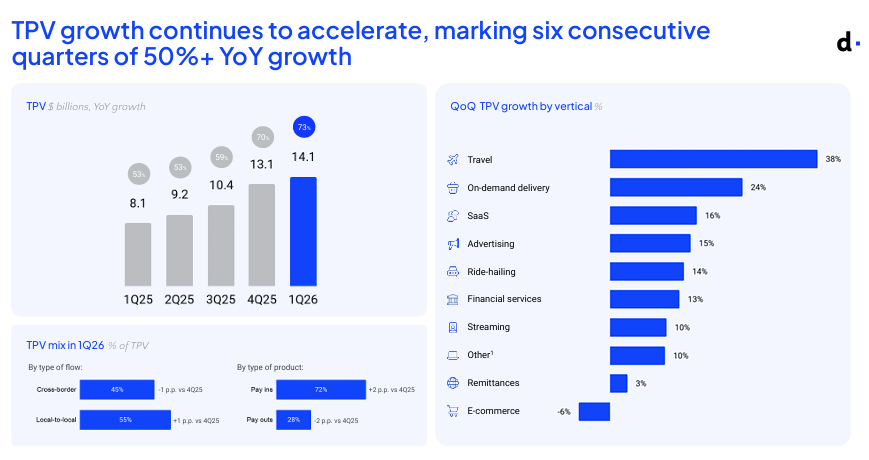
I was drafting my $DLO thoughts and then I saw @realroseceline post below. Most of it I couldn't say better myself so I'm quoting it here. Big picture it's really as simple as this: The margins were ugly yes in this quarter yes (mostly temporary). But you've got a $3.2 billion dollar company going after a HUGE TAM. It has TPV growing 73% YoY (that itself is super rare). I don't know about you but with the greenspace ahead, as an investor I'd be frustrated if management weren't investing heavily into growth at this stage? This is a company with huge potential across many avenues. Management are going for it. If that means a short-term struggle on margins then fine by me. Long $DLO
Oliver | MMMT Wealth (CPA) tweet media
Rose Celine Investments 🌹@realroseceline

Thoughts on $DLO Investing is not always predictable, sometimes you get a perfect quarter and the stock goes up. Other times the numbers look messy underneath the surface even while the actual business keeps getting stronger. That is kind of how I look at this quarter from $DLO. They processed over $14b in TPV, up 73%. Crazy growth at this scale, the network is still expanding rapidly, merchants are integrating deeper, and $DLO is becoming more important inside the global commerce ecosystem. I think one of the biggest mistakes investors make with $DLO is analyzing it like a simple payment processor when the business is increasingly becoming financial infrastructure for emerging markets. That is a very different thing because processing payments alone eventually becomes commoditized. But building the rails that help global merchants move money, settle funds, handle payouts, FX, integrate local wallets, and operate across 60+ fragmented markets is much harder to replicate. Most investors see emerging markets and immediately think about risk and instability. But for a company like $DLO, the complexity is exactly what creates the opportunity. Every country has different banking systems, regulations, tax structures, FX controls, local payment methods, fraud patterns, and settlement. Global merchants do not want to rebuild all of that country by country themselves, which is why once they integrate deeply into $DLO. You can already see this happening with merchants like $UBER expanding with them across dozens of countries. Once a merchant operationally builds around your infrastructure across multiple regions, leaving is not nearly as simple as someone else offering a slightly cheaper payment rate somewhere else. The operational complexity becomes a massive moat. Margins moved from 40% down to 35%, but management has been saying this would happen as they onboard large enterprise merchants offer the, volume discounts. The tradeoff is lower margins upfront in exchange for much larger and stickier relationships over time. And the payment itself is really just the starting point because they cross sell treasury, payouts, FX, financing, wallets, and settlement. To me, if a company is processing over $14b a quarter growing 73%, maybe the more important question is not whether margins were 35% or 39%. Maybe the more important question is whether the company is becoming embedded into the movement of global commerce across emerging markets. The market seems nervous because the quarter looked messy underneath the surface. There was a one time tax issue for $10m, operating expenses were elevated, and free cash flow looked weaker because of working capital timing. But honestly this looks much more like an investment cycle and timing than a broken business model. One thing I also think investors are underappreciating is the balance sheet. The company still has a pristine financial position with hundreds of millions in cash and a very asset light model with strong underlying economics. They have flexibility, liquidity to invest aggressively while also returning capital to shareholders. I also like that management authorized a buyback representing roughly 10% of the company. Honestly I was a little disappointed they did not repurchase more stock last quarter, especially with the stock trading at attractive levels. Hopefully they become more aggressive here. That is another thing I think people miss with businesses like this. If the underlying engine keeps compounding and the company simultaneously reduces share count over time, the long term math can become very powerful for patient shareholders. At the end of the day, investors need to decide what matters more. One noisy quarter, or the fact that $DLO processed roughly $47b in payment volume over the last twelve months and still appears to be expanding rapidly across emerging markets while maintaining what I still think is a great economic model. 🌹

English
10
7
130
34.4K
hsh retweetledi
BookNote
BookNote@BookNoteApp·
9 books that will teach you more than 3 years of university: 1) Skin in the Game by Nassim Taleb
BookNote tweet media
English
15
401
2.7K
397.3K
hsh retweetledi
Exencial Research Partners
Exencial Research Partners@exencial_RP·
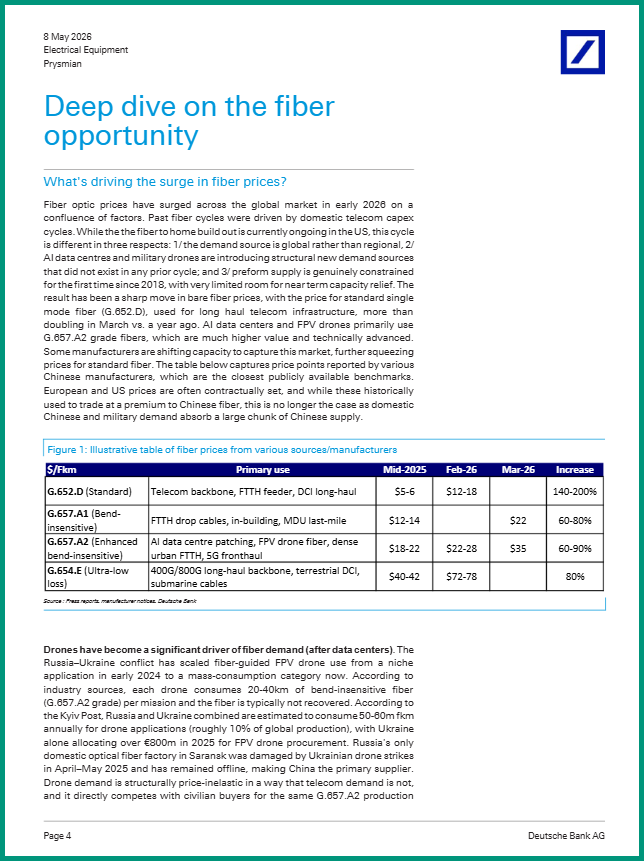
Deep dive on the fiber opportunity Global fiber production is around 570 million fiber-kilometres annually, with APAC dominating output, but US hyperscalers increasingly require domestically produced fiber due to CHIPS Act incentives, geopolitical risks, and supply chain audits. Projects like Meta’s Hyperion data center in Louisiana require 12.9 million fkm of fiber, highlighting the scale of demand, with estimates suggesting half of US fiber capacity may be needed for AI infrastructure by 2027.
Exencial Research Partners tweet mediaExencial Research Partners tweet mediaExencial Research Partners tweet media
English
2
16
117
9K
hsh retweetledi
AilaunchX
AilaunchX@Ai_Tech_tool·
Instead of watching an hour of Netflix, watch this 2 hour hour Stanford lecture will teach you more about how LLMs like ChatGPT and Claude are built than most people working at top AI companies learn in their entire careers.
English
31
941
4.8K
615.4K
hsh retweetledi
Zach Rynes | CLG
Zach Rynes | CLG@ChainLinkGod·
The Depository Trust and Clearing Corporation (@The_DTCC) is the most important company in the world that you have never heard of They settle $4.7 quadrillion in securities transactions per year, making it by far the highest financial value processor in the world They are the world’s largest securities depository and the primary infrastructure in the United States for clearing, settlement, and asset servicing DTCC’s infrastructure covers equities, bonds, ETFs, treasuries, mutual funds, money market instruments, mortgage backed securities, and OTC derivatives Their scale is incomparable: ✅ $114 trillion in assets under custody ✅ Serving issuers from 150+ countries ✅ 100+ million transactions processed every day ✅ Designated a Systemically Important Financial Market Utility (SIFMU) by the U.S. government Practically speaking, the DTCC is the plumbing that underpins the U.S. financial system (and by extension, the global financial system) And today, the DTCC announced they are integrating @chainlink to advance 24/7 collateral mobility on the DTCC Collateral AppChain
Zach Rynes | CLG tweet media
DTCC@The_DTCC

Today we announced progress toward our goal of advancing 24/7 collateral mobility. DTCC’s Collateral AppChain, a shared infrastructure platform for collateral, will leverage the Chainlink Runtime Environment (CRE) and @chainlink data standard to enable near real-time collateral management across financial markets and blockchains. The integration will enable the seamless pairing of asset prices, valuations, and movement, with the aim of overhauling how market risk is managed globally and unlock greater capital efficiency. This milestone reflects our broader vision to enable 24/7, near real-time collateral management across the global financial system. Read the full announcement: dtcc.com/news/2026/may/…

English
39
132
803
36.4K
hsh retweetledi
Sukh Sroay
Sukh Sroay@sukh_saroy·
Anthropic showed a 24-minute workshop on how to actually prompt Claude. Taught by the people who built it. Free. No signup. No paywall. I've watched $300 courses that don't cover what they teach in the first 8 minutes.
English
42
454
3.3K
602.7K
hsh retweetledi
고딩경제맨
고딩경제맨@winneravgwin·
Anthropic이 조용하고 음흉하게 Claude 공식 무료 코스를 풀었다. 근데 이상할 정도로 한국커뮤니티에서 잘 안 말함. 유튜브 짜깁기 강의 아님.누가 만든 제3자 강의 아님. Claude를 만든 팀이 직접 제공하는 공식 학습 자료임. 무료, 오피셜, 여러분들이 좋아하는 수료증 있음. 그리고 Claude를 제대로 쓰고 싶은 사람에게 꽤 미친 입문 루트다. “AI 잘 쓰고 싶다”면서 유료 강의부터 결제하기 전에, 일단 이거부터 찍먹하는게 맞다. 여기서 시작 01. Claude 101 — 일상 업무를 위한 Claude 입문 anthropic.skilljar.com/claude-101 02. AI Fluency: Frameworks and Foundations anthropic.skilljar.com/ai-fluency-fra… 03. Introduction to Agent Skills anthropic.skilljar.com/introduction-t… 개발자라면 여기부터 진짜다 04. Building with the Claude API anthropic.skilljar.com/claude-with-th… 05. Claude Code in Action anthropic.skilljar.com/claude-code-in… 06. Introduction to Model Context Protocol anthropic.skilljar.com/introduction-t… 07. MCP Advanced Topics anthropic.skilljar.com/model-context-… 교육자·학생·비영리 단체용 08. AI Fluency for Students anthropic.skilljar.com/ai-fluency-for… 09. AI Fluency for Educators anthropic.skilljar.com/ai-fluency-for… 10. Teaching AI Fluency anthropic.skilljar.com/teaching-ai-fl… 11. AI Fluency for Nonprofits anthropic.skilljar.com/ai-fluency-for… 엔터프라이즈·클라우드 연동 12. Claude with Amazon Bedrock anthropic.skilljar.com/claude-in-amaz… 13. Claude with Google Cloud Vertex AI anthropic.skilljar.com/claude-with-go… Claude를 잘 쓰는 능력은 이제 단순한 “프롬프트 잘 쓰기”가 아니다. 업무 맥락을 구조화하고, Claude Code로 개발 흐름을 만들고, API로 제품에 붙이고, MCP로 외부 도구와 연결하고, Agent Skills로 반복 작업을 자동화하는 능력이다. 이게 앞으로의 개발자에게는 거의 기본 장비가 될 가능성이 높다. 프로 팁은 간단함. 첫 입문이면 Claude 101부터 시작. 개발자라면 그다음 바로 Claude Code in Action으로 넘어가면 된다. Claude를 그냥 챗봇으로 쓰는 사람과 작업 시스템으로 굴리는 사람의 격차는 여기서 벌어진다. 다른 AI 강의 결제하기 전에 이건 북마크해두자! 소년 소녀들이여, 원피스는 존재한다. 🥷 고딩경제맨 @winneravgwin 팔로우하면 이런 AI 공식 리소스 풀리는 순간 바로 스킬트리 강화 가능ㅎㅇ
고딩경제맨 tweet media
한국어
21
987
2.6K
142.4K
hsh retweetledi
bodila
bodila@51bodila·
Citadel CEO shares a secret with Stanford - how his fund uses AI to control $69B in capital 42-min AI masterclass from the founder of one of the world’s top investment funds Bookmark & watch it - it’s the best interview on the use of AI in finance. Then listen how Ken Griffin borrowed $265k and turned it into $90B
bodila@51bodila

Citadel CEO started trading with $265K borrowed from his grandmother in a Harvard dorm room → now he has $90B in fund profits 35-minutes of the complete story behind the most profitable fund in the world Bookmark & watch - this is the best masterclass on how to build a Tier-1 fund

English
13
152
995
291.1K
hsh retweetledi
Jaynit
Jaynit@jaynitx·
Bill Ackman literally gave a 44-minute masterclass that explains money better than any business school:
English
30
679
4.1K
557.3K
hsh retweetledi
Dwarkesh Patel
Dwarkesh Patel@dwarkesh_sp·
Did a very different format with @reinerpope – a blackboard lecture where he walks through how frontier LLMs are trained and served. It's shocking how much you can deduce about what the labs are doing from a handful of equations, public API prices, and some chalk. It’s a bit technical, but I encourage you to hang in there - it’s really worth it. There are less than a handful of people who understand the full stack of AI, from chip design to model architecture, as well as Reiner. It was a real delight to learn from him. Recommend watching this one on YouTube so you can see the chalkboard. 0:00:00 – How batch size affects token cost and speed 0:31:59 – How MoE models are laid out across GPU racks 0:47:02 – How pipeline parallelism spreads model layers across racks 1:03:27 – Why Ilya said, “As we now know, pipelining is not wise.” 1:18:49 – Because of RL, models may be 100x over-trained beyond Chinchilla-optimal 1:32:52 – Deducing long context memory costs from API pricing 2:03:52 – Convergent evolution between neural nets and cryptography
English
152
600
6.6K
1.3M
hsh retweetledi
Boring_Business
Boring_Business@BoringBiz_·
This is one of the best primers that exist on the data center and AI industry right now If you want to better understand the unit economics of each layer in the AI stack, I highly recommend you give this a listen Chase Lochmiller, CEO and Co Founder of Crusoe, breaks down the inputs and outputs of data centers at a granular level Shoutout to @apoorv03 for hosting yet another fantastic class
English
21
190
1.9K
154.8K
hsh retweetledi
DBK‏
DBK‏@DBKventures·
그래서 크립토는 끝났나? 크립토는 끝나지 않았지만, 우리가 믿고 싶었던 크립토는 끝났다 1. 크립토가 새로운 인터넷이 되고, Web3가 Web2를, 프로토콜 경제가 주주 자본주의를 대체하고, 모든 앱과 커뮤니티와 금융과 게임과 문화가 토큰 기반 네트워크로 재편될 것이라는 거대한 믿음. 2. 비트코인이 fiat를 무너뜨리고, 모든 가치의 기준 단위가 되고, 국가화폐 시스템을 대체할 것이라는 종교적 확신. 이런 류의 문명 교체론은 이제 무너졌음. 3. 크립토가, 블록체인이 사기였다는 뜻도 아님. 비트코인이 실패한 자산이라는 뜻도 아님. 다만, 크립토가 꽤나 쓸모 있는 기술이라는 것이 곧, 인류 사회 전체를 재구성할 게임체인저라는 의미도 아님. 우리는 이 둘을 너무 오랫동안 섞어서 믿어왔음 4. 지난 10년간 업계는 스스로를 너무 크게 해석했음. 비트코인은 디지털 금을 넘어 세계화폐가, 이더리움은 월드컴퓨터가, Web3는 소유의 인터넷이, NFT는 문화와 IP의 기본 단위가, DAO는 회사를 대체할 것이라 했고, 토큰은 모든 네트워크의 기본 경제 단위가 될 것이라 했음. 5. 하지만 현실은 훨씬 냉정했음. 사람들은 자기 데이터를 직접 소유하고 싶어 하지 않았고, 탈중앙화된 SNS보다 편하고 빠른 SNS를 원했고, NFT로 문화적 소유권을 증명하기보다 그냥 좋은 콘텐츠를 소비했고, DAO 거버넌스보다 책임지는 운영 주체를 원했고, 셀프커스터디보다 비밀번호를 잃어버려도 복구되는 서비스를 원했음. 6. 비트맥시들이 외쳤던 비트코인 본위제, fiat의 몰락 같은 주장도 같은 맥락임. 비트코인은 분명 강력한 자산임. 고정 공급, 검열저항성, 글로벌 유동성, 비국가성, 자기보관 가능성은 의미가 있음. 하지만 좋은 비국가적 희소자산과 전 세계 화폐 시스템의 대체 사이에는 엄청난 괴리가 존재함. 7. 크립토의 상당 부분은 사실상 종교적 믿음에 가까웠고 또 종교적으로 동작했음. 막연한 희망회로와 에코챔버, 자기확신의 강화... 크립토 리서처, VC, 거래소, 재단, KOL, 마켓메이커, 미디어는 대부분 같은 밸류체인 안에 있음. 이들은 산업이 계속 커져야 돈을 벌고, 산업이 계속 중요해야만 함. 그러니 자연스럽게 낙관 편향이 생김. 8. 크립토가 진짜 잘하는 것은 생각보다 좁을 지도 모름. 일반 앱 백엔드로도, SNS를 대체하기에도, 게임의 핵심 재미를 만들기에도, 콘텐츠 플랫폼을 운영하기에도, 대중 소비자 UX를 만들기에도 별로임. 블록체인은 느리고, 비싸고, 복잡하고, 실수 복구가 어렵고, 고객센터가 없고, 사용자에게 책임을 과도하게 전가함 9. 물론, 크립토의 영역은 있음. 국경 없는 가치 이전. 비국가적 희소자산. 글로벌 달러 유통. 24시간 자산 거래. 프로그램 가능한 담보. 비허가형 금융 실험. 온체인 정산. 토큰 기반 유동성 형성. 검열저항적 자산 보관... 크립토는 새로운 금융 레일임. 10. 문제는 크립토는 스스로가 너무 거창해졌다는 것임. 크립토가 실제로 바꿀 수 있는 것은 인류 문명이 아닌 금융의 일부임. 비트코인은 금의 일부 기능을 디지털화함. 스테이블코인은 달러의 유통 방식을 바꿈. DeFi는 거래소, 대출, 파생상품, 담보 관리의 온체인화함. RWA는 기존 금융상품의 발행·유통·담보 활용 방식을 바꾸려 함. 토큰은 초기 유동성 형성과 커뮤니티 금융화 방식을 바꿈. 11. 이건 작지 않음. 하지만 모든 것을 송두리째 바꾸는 것은 아님. 크립토는 금융 안에서는 꽤 큰 기술임. 하지만 인터넷 전체, 사회 전체, 국가 전체, 인류 전체의 운영체제와 근간을 바꾸는 기술은 아닐 수 있음. 이걸 인정하는 순간, 많은 맥시들의 자아와 목적성은 크게 훼손됨. 크립토를 기술 그 이상의 시대정신으로 믿었기 때문임. 12. AI의 등장은 이 현재의 상황을 더 선명하게 만듦. AI는 크립토의 실존적 불안을 증폭시켰음. AI는 일반 사용자가 바로 효용을 느낌. 글을 쓰고, 코드를 짜고, 이미지를 만들고, 검색을 대체하고, 업무 생산성을 바꾸고, 기업 비용 구조를 바꿈. 13. 반면 크립토는 여전히 설명이 필요함. 왜 지갑을 만들어야 하는지, 왜 가스비를 내야 하는지, 왜 브릿지를 해야 하는지, 왜 셀프커스터디를 해야 하는지, 왜 이 토큰이 필요한지 설명해야 함. 프론티어 기술의 체감 효용 경쟁에서 밀려버린 것임. 그래서 업계 내부에서 "우리가 믿었던 이 기술이 정말 그렇게 중요한가?"라는 의문이 더 강해진 것임. 14. 냉정하게 말하면, 최고 인재와 자본이 향하는 프론티어의 자리는 AI가 가져갔음. 크립토는 더 이상 시대적 기술이 아님. 하지만 이것이 죽음을 의미하진 않음. AI가 더 크다는 것과 크립토가 무의미하다는 것은 다른 말임. AI는 생산성의 기술이고, 크립토는 소유권·정산·자산 유통의 기술임. 둘은 다른 문제를 품고 있음.
DBK‏ tweet media
한국어
22
34
159
11.1K
hsh retweetledi
Matt Allen
Matt Allen@investmattallen·
A Stanford lecture just exposed where the ~$650B AI data center spend is actually going and who is quietly capturing the upside They explain why the entire bottleneck has shifted from GPUs to power and what comes next This is a MUST watch for investors:
English
13
103
619
113.5K
hsh retweetledi
Rene Sellmann
Rene Sellmann@ReneSellmann·
A moat is only valuable if it lasts! Michael Mauboussin’s latest work on competitive advantages is the definitive guide to corporate longevity (and why most growth stories eventually hit a wall). 7 charts you can't afford to ignore 👇🏻🧵
Rene Sellmann tweet media
English
4
29
184
18K