Shiv Shrivastava

472 posts

Shiv Shrivastava banner
Shiv Shrivastava

Shiv Shrivastava

@shivnull

@offsetrl (acq @rogoai) prev @moonpay @palladium

New York City Katılım Mart 2011
489 Takip Edilen2.1K Takipçiler
Ale
Ale@0xdanzu·
Brahma has been acquired by @Polymarket. We started @BrahmaFi in late 2021 with a simple bet: crypto infrastructure was too complex for the people who stood to benefit from it most. Over four years we built vaults, smart accounts, automated execution, and a full payment settlement stack connecting crypto to credit cards. All trying to close the gap between what DeFi could do and what users could actually use. It wasn't always smooth, but we shipped through every cycle and came out the other side with something we're proud of. It started with a late night ping from @allquantor: "get on the phone, Shayne wants to talk to you guys." One call turned into many. Polymarket is scaling fast and building products that need the exact kind of infrastructure thinking we'd spent four years developing at Brahma. That overlap was obvious from day one. Prediction markets are the clearest example of a crypto-native product going mainstream, and the ambition is to take that much further. New market categories, new product surfaces, mainstream audiences. That's exactly the kind of problem my co-founders @kakujain, @BapireddyK and I want to focus on next. Our product and engineering team is joining to help make it happen. To everyone who built with us, used what we made, or backed us when it was just an idea - thank you. We're here to build. fortune.com/2026/03/18/exc…
English
72
15
370
38.4K
Shiv Shrivastava
Shiv Shrivastava@shivnull·
@Houseofyogi I love this city so much but the management of taxpayer dollars is egregious and unfortunately the socialists will only make it worse
English
2
1
31
3K
Yogi
Yogi@Houseofyogi·
NYC taxes explained for people who don't pay attention: Property tax. Income tax. Sales tax. Unincorporated business tax. Commercial rent tax. Hotel tax. Mortgage recording tax. Mansion tax. Utility tax. Congestion pricing. Twenty-plus taxes. And the mayor wants more. Let me show you what that actually feels like. You're 26. First real job. $85,000. You feel rich. Then you see your paycheck. Federal takes a cut. Fine. Then New York State takes 6%. Then New York City takes another 3.5%. Then there's a "metropolitan commuter mobility tax" you've never heard of. Your $85K is now $54K before rent. You grab coffee. 8.875% sales tax. You take an Uber to the airport. Congestion pricing just added $9. Your landlord raised rent, he's passing along a property tax increase you'll never see on a bill but you're paying every month. You're not rich. You're not even comfortable. You're just surviving. But fine. It's New York. You chose this. Now here's the part nobody talks about. In 2000, NYC's budget was $40 billion for 8 million people. That's about $5,000 per person. Today it's $121 billion for 8.5 million people. $14,244 per person. Population grew 6%. Inflation was 82%. Spending per person nearly tripled. So things must be three times better, right? In 2017, 51% of New Yorkers rated quality of life as good. Today it's 34%. Only 12% think the city spends money wisely. Only 22% feel safe on the subway at night. Felony assaults hit a 24-year high. They spend $31,000 per student on education. Less than half kids can read at grade level. They tripled the spending. Everything got worse. Where'd the money go? Pensions up 115%. Outsourced contracts up $7 billion. A brand new $5 billion asylum seeker expense that didn't exist three years ago. Social services doubled. 302,000 city employees. Debt ballooning. And the new mayor doesn't look at this and say "we need to spend better." He says "we need to tax more." A 2% income tax hike that would push the combined state and city rate to 16.8% -> the highest in the entire country. Tax increases that impact everyone. His supporters chant "tax the rich" at rallies. The top 1% already pay 40% of the city's income tax. And they're leaving anyway. NYC's share of the nation's millionaires dropped from 7% to 4%. They have accountants. They have Florida. You know who can't leave? Your uncle with the restaurant. Your parents in that house. You, watching your paycheck disappear into twenty taxes before you can save a dollar. You need to make $312,000 in New York to live the same lifestyle as someone making $125,000 in Houston. Houston spends $2,850 per person. No state income tax. No city income tax. Population growing. NYC spends five times more. Worse results. NYC is a Netflix subscription that keeps raising the price while the product gets worse. And you can't cancel. $40 billion wasn't enough. $60 billion wasn't enough. $80 billion. $100 billion. Now $121 billion. It will never be enough. Because the problem was never revenue. There is enough money. There has always been enough money. They don't need more of yours. They need to do better with what they already take. I hope you understand what's at stake.
Yogi tweet media
English
536
2.8K
10.2K
621.4K
Shiv Shrivastava
Shiv Shrivastava@shivnull·
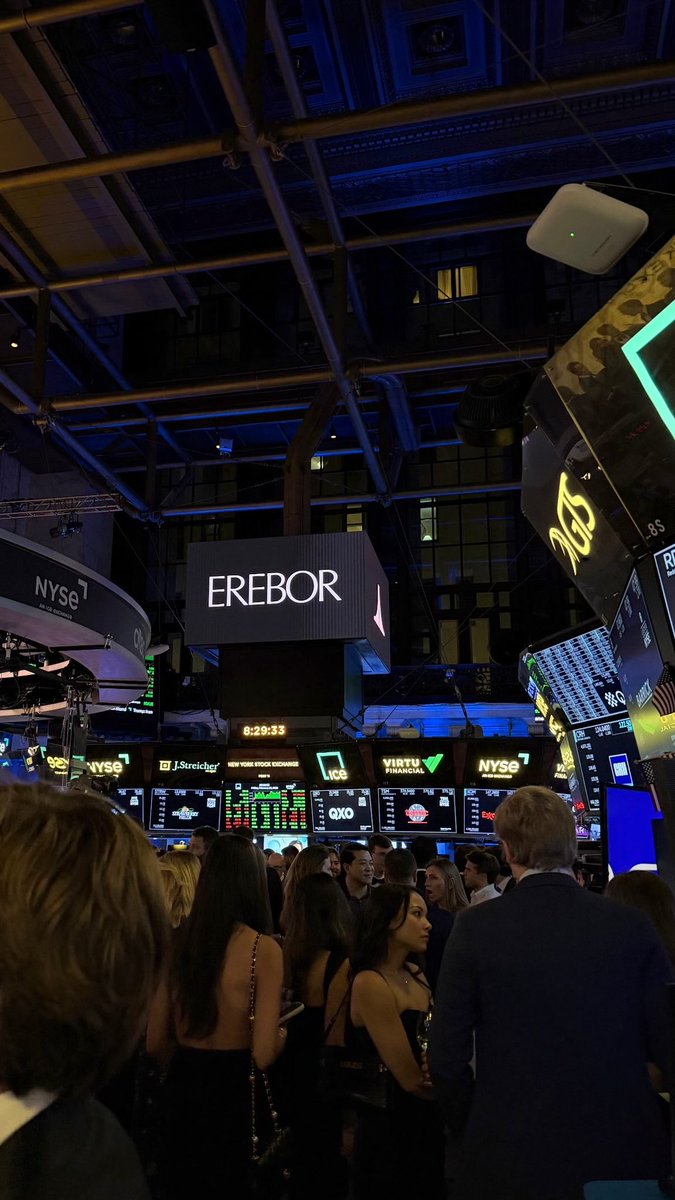
Just set up my @ereborbank acc. By far the most frictionless onboarding I’ve experienced in fintech Proud of these guys and proud to see stables sitting next to my cash Also, love this FDIC easter egg haha 🦅🇺🇸
Shiv Shrivastava tweet media
Palmer Luckey@PalmerLuckey

The real bank for real Americans doing real things! The cutting-edge business model is based on next-gen concepts like "don't let your client's money disappear", "care at all about national security", and most importantly, "the market sometimes goes down".

English
1
1
12
1.5K
Shiv Shrivastava retweetledi
Tushar Jain
Tushar Jain@tushar_jain·
6/ Our core investment themes for the coming years are: 1) Fintech 4.0 2) DeFi Mullet 3) Financial Globalization 4) More Efficient Borrow/Lend 5) Entertainment Finance 6) Programmable Ownership 7) Credibly-Neutral Blockchains 8) New Cryptographic Primitives
English
20
7
144
45.9K
TBPN
TBPN@tbpn·
BREAKING: @ereborbank secures final OCC approval, becoming a U.S. national bank
TBPN tweet media
English
61
102
2.1K
602.9K
David Marcus
David Marcus@davidmarcus·
A few thoughts about PayPal, nearly 12 years after I left. I woke up this morning to dozens of messages from former PayPal colleagues. It pushed me to finally speak up. I never spoke publicly about the company after I left. Part of that was loyalty to John Donahoe, who gave me an unlikely opportunity, handing the reins of PayPal to a startup guy who, on paper, had no business running a then 15,000-person organization. But part of it was something else: I had left. I chose not to stay and fight for the changes I believed in. Speaking from the sidelines felt like armchair commentary. Easy opinions without the burden of execution. So I stayed quiet. But twelve years of silence is long enough. And today's news makes it clear the pattern I've watched unfold isn't self-correcting. I left PayPal in 2014 because I was deeply frustrated. We had executed a silent turnaround of a company that had lost its soul. We brought back engineering talent, shipped good products quickly, and acquired Braintree and Venmo. The company was on a tear. So much so that Carl Icahn felt compelled to accumulate a position in eBay and push for a PayPal spinoff. At the time, eBay decided to fight Icahn. It was a difficult period for me, caught between what I felt was right for PayPal and my loyalty to the eBay team. This is when Mark Zuckerberg approached me to join Facebook. The combination of his conviction that messaging would become foundational, the appeal of going back to building products at scale, and my growing exhaustion with the internal politics at PayPal and eBay eventually convinced me to leave and join one of the best teams in the world, one I had admired for a long time. In the summer of 2014, I met John in a café in Portola Valley and told him I had decided to leave. During that conversation, he told me that Icahn had effectively won the fight, that PayPal was going to become an independent company, and he tried to convince me to stay on as CEO, but I had already said yes to Mark, and my word is my bond. There was no turning back. After my departure, the board scrambled to find a replacement, and it took a few months for them to land on Dan Schulman. The leadership style shifted from product-led to financially-led. Over time, product conviction gave way to financial optimization. Much of the momentum we had created still persisted and carried the company forward, mainly driven by Bill Ready, who came over in the Braintree acquisition and rose to COO. Under his leadership, Venmo grew exponentially, and total payment volume (TPV) accelerated quickly. But the shift under Schulman became more pronounced after Bill's departure at the end of 2019. With him went the product conviction that had defined the post-spinoff momentum. Then, for a period, COVID-fueled online shopping hid a lot of the company's new weaknesses. During that period, the company made a fundamental miscalculation: it optimized for payment volume instead of margin and differentiation. It leaned into unbranded checkout, where PayPal had the least leverage, instead of branded checkout, where the margin, data, and customer relationship actually lived. Visa masterfully structured a deal that effectively ended PayPal's ability to steer customers toward bank-funded transactions, which had been a core driver of PayPal's economics. Not long after, PayPal lost a significant portion of eBay's volume. Over time, it saw its share of checkout among its most profitable customers steadily erode as Apple Pay and others continued to execute well. The same pattern repeated itself across lending, buy-now-pay-later (BNPL), and new rails. On lending, PayPal missed the opportunity to turn it into a platform weapon. Products like Working Capital were conservative, short-duration, and optimized for loss minimization. Lending never became programmable, never became identity-driven, and never became a reason for merchants or consumers to choose PayPal over something else. The missed opportunity in BNPL was even more striking. Klarna, Affirm, and Afterpay didn't just offer installment payments, they built consumer finance brands, persistent credit identities, and new shopping behaviors. PayPal saw the BNPL turn, entered the market, and had every advantage: distribution, trust, and merchant relationships. But BNPL was treated as a defensive checkout feature rather than an offensive category. There was no attempt to turn it into a core consumer relationship, no super-app behavior, and no meaningful differentiation for merchants. Others built platforms, PayPal added a feature. The failure to lean into building and owning new rails followed the same logic. After the spinoff, PayPal had a once-in-a-generation opportunity to build a global, at scale payment network. Instead, the company focused on building on top of existing networks and third-party rails. More recently, that mindset carried over to PYUSD. Technically, the product was sound. Strategically, it launched without a compelling transactional reason to exist. PYUSD had distribution, but no organic demand. It was not embedded deeply enough into flows to become a true settlement layer, a cross-border merchant rail, or a programmable money primitive. It sat adjacent to the product instead of inside the core of it. Acquisitions during this period followed a similar pattern. Honey was not a strategic acquisition for PayPal. It added activity, but not leverage. It lived outside the transaction, monetized affiliate economics rather than payment economics, and never meaningfully strengthened PayPal's control of the customer or the checkout moment. Xoom solved a real problem in remittances, but it never compounded PayPal's advantage. It scaled volume without changing the underlying rails, identity graph, or settlement model, and as importantly, it didn’t cater to a high-value, high-margin customer archetype. None of these were bad companies. They were just a wrong fit for PayPal and became unnecessary distractions. The board eventually recognized the problem. In 2023, they brought in Alex Chriss, an Intuit veteran with a strong product background, explicitly to restore product conviction. It was the right instinct. But Alex came from software, not payments. He understood SMB product development. He didn't have the muscle memory for transaction economics, network effects, or settlement infrastructure. In hindsight, he also made an error: clearing out much of the leadership team that understood payments deeply. Executives with years of institutional knowledge departed within his first year. This morning, Alex was removed as CEO. Branded checkout grew 1% last quarter. The board tapped another operator, Enrique Lores, the former HP CEO who's been on the PayPal board for five years. I don’t know Enrique. And he might be a great leader, but on paper at least, he’s a hardware executive. For a payments company. The common thread through all of this is incentive design. Once PayPal became independent, short/medium-term predictability beat long-term vision and ambition. Stock performance mattered more than platform risk and network opportunity. Financial optimization replaced product conviction. I'm not claiming I would have made every call differently. Running a public company at scale involves tradeoffs I didn't have to make after I left. But the pattern, choosing predictability over platform risk, again and again, was a choice, not an inevitability. Over time, the company that had every advantage and could’ve become the most consequential and relevant payments company of our time, lost its mojo, its product edge, and its ability to compete in a market that’s being rewired and reinvented in front of our eyes. That's the part that's hardest to watch for a company I care so deeply about.
English
622
948
8.9K
2.4M
Shiv Shrivastava retweetledi
Carlos E. Perez
Carlos E. Perez@IntuitMachine·
Robots don't have to be human-sized to be useful.
English
2
7
39
6K
Julian Rachman
Julian Rachman@julrach·
Yield vaults take way too many contract calls just to deposit and withdraw assets. So I built Money In Transit 🚇 money-in-transit.vercel.app It lets you deposit and withdraw from yield vaults with a single transfer, powered by @otimlabs.
English
5
3
14
855
Rogo
Rogo@RogoAI·
We’re excited to announce our $75 million Series C led by @sequoia, with participation from @jpmorgan, @WellsFargo, @ThriveCapital, @khoslaventures,@BoxGroup, Mantis VC, Positive Sum, Stonecroft Management & @_altcapital to build AI that makes the best financial professionals smarter, faster, and more ambitious. There’s a long road ahead and we’re grateful to our clients, team, and investors for their partnership as we set out to transform finance. rogo.ai/series-c
Rogo tweet media
English
14
23
199
177K
Oliur
Oliur@UltraLinx·
Can you read 900 words per minute? Try it.
English
4.9K
29.6K
212.2K
31.5M
Rune
Rune@RuneCrypto_·
Eric Adams, former NYC major, has just removed liquidity of his new memecoin, $NYC, scamming investors for over $2,536,301 He launched a $NYC memecoin just 30 minutes ago, and has removed its liquidity after promoting it on his personal social media, claiming to be the NYC token
Rune tweet media
Eric Adams@ericadamsfornyc

We’re about to change the game.

English
714
1.9K
11.9K
4.8M
Roshun Patel
Roshun Patel@roshunpatel·
my suggested readings for developing a theory of everything: I. The Static Multiverse: - The Fabric of Reality by David Deutsch (1997) - The End of Time: The Next Revolution in Physics by Julian Barbour (1999) II. The Mechanism: Retrocausality & The Participatory Universe - A Delayed Choice Quantum Eraser by Kim, Yu, Kulik, Shih, and Scully (Physical Review Letters, 2000) - Information, Physics, Quantum: The Search for Links by John Archibald Wheeler (1990) III. The Driver: Consciousness & Probability Bias - Margins of Reality: The Role of Consciousness in the Physical World by Robert G. Jahn and Brenda J. Dunne (1987) - Real Magic: Ancient Wisdom, Modern Science, and a Guide to the Secret Power of the Universe by Dean Radin (2018) IV. The Hardware: The Biological Interface - Shadows of the Mind: A Search for the Missing Science of Consciousness by Roger Penrose (1994) V. The Protocol: The User Manual - Analysis and Assessment of Gateway Process by Wayne M. McDonnell (CIA / US Army Intelligence, 1983) - Penetration by Ingo Swann (1998) by the end of this, promise you'll have a newfound understanding of reality
English
10
1
26
2.1K
Chubby♨️
Chubby♨️@kimmonismus·
Leak / update on OpenAI's device: no joke its a pen OpenAI’s rumored new device is a pen-shaped, ultra-portable “third core device” meant to sit alongside your phone and laptop. Leaks describe it as screenless, iPod Shuffle–sized, and wearable (e.g., on a neck strap), using a microphone + camera to understand what’s happening around you and offer context-aware help. it could turn handwritten notes into text and sync them straight into ChatGPT. Reporting also suggests OpenAI is upgrading its audio models to support a more natural, fast, voice-first experience for the device.
Jukan@jukan05

Additional details about OpenAI’s AI device: It is a pen-shaped device that integrates AI, aiming to become a “third core device” following the iPhone and MacBook. It’s lightweight and highly portable—about the size of an iPod Shuffle—and can be carried in a pocket or worn around the neck. It will feature a microphone and a camera to perceive and understand the user’s surrounding environment. Interestingly, it will be able to convert handwritten notes directly into text and instantly upload them to ChatGPT.

English
109
38
716
234.9K
KYLE
KYLE@kvle_hl·
@shivnull Happy New Year Shiv! 🥂
English
1
0
1
94
Shiv Shrivastava
Shiv Shrivastava@shivnull·
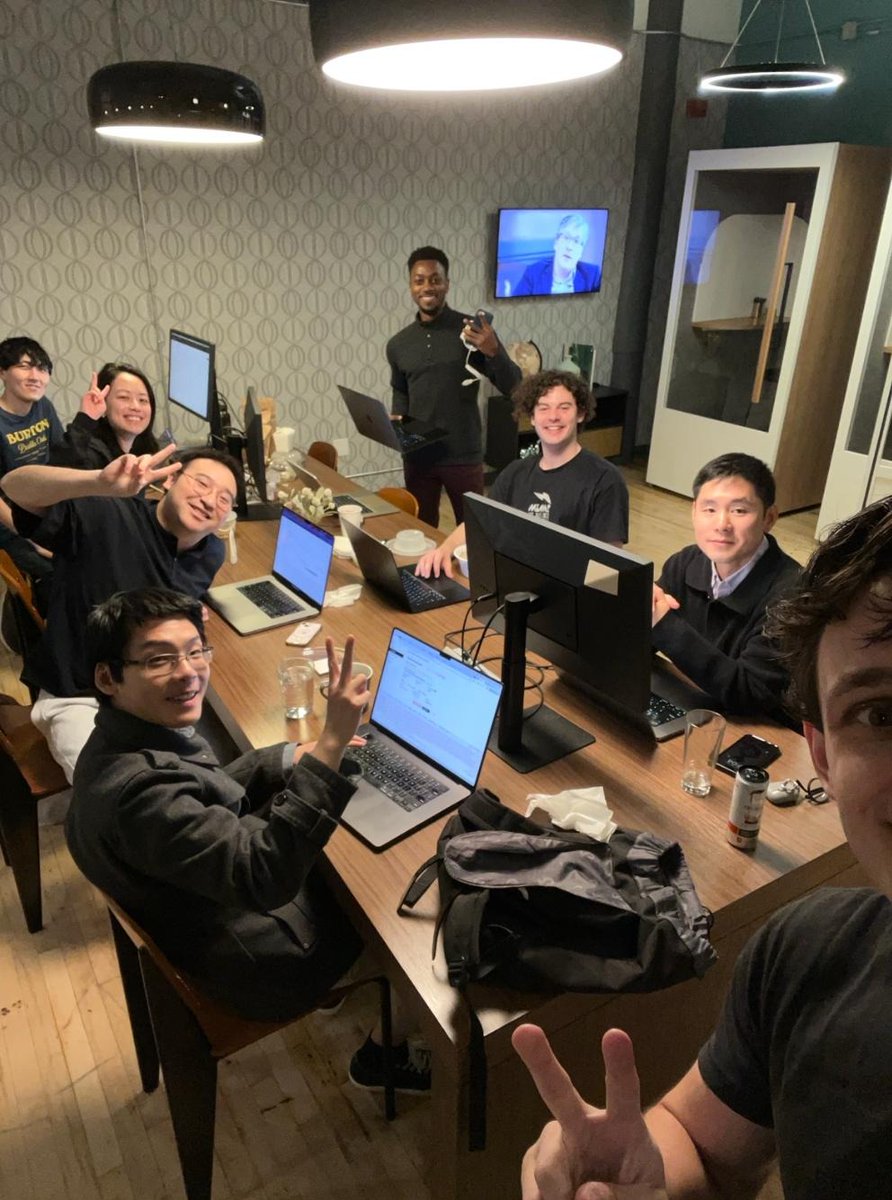
The last day of 2025 was beautiful I am grateful Happy New Year
Shiv Shrivastava tweet mediaShiv Shrivastava tweet mediaShiv Shrivastava tweet mediaShiv Shrivastava tweet media
English
3
0
13
1.1K