
Sabitlenmiş Tweet
Andy G
2.7K posts


Andy G
@simplyandyg
Dad. Husband. Software Engineer. I also pretend I can write. Currently writing about important things for my kids.
Katılım Haziran 2009
275 Takip Edilen151 Takipçiler

one skill. that's it.
you install it once and every time you ask claude to build something it:
> expands your prompt into a full spec
> interviews you on the decisions it would otherwise guess at
> builds from the complete brief
which means:
1: first drafts come back one-shotted or very close to done
2: you stop editing the same stuff over and over
3: you get hours back every week
free skill + full breakdown:
Ole Lehmann@itsolelehmann
English
@BandarianS @T_Nation What exercises do you typically do for hamstring strength work?
English

@T_Nation Dead lifts.
I have no intention of competing in the Olympics and also... I like my spine like it is, healthy! 💪
English

What's one lift you refuse to do... even though everyone says it's essential?
English
@ZubyMusic The way I view it is, looking at where I was at 20. The way I viewed and interacted with the world. Maybe some aren't "kids", but for many it is true.
English

Andy G retweetledi
Private equity firms bought 500 hospitals. Death rates in their emergency rooms went up 13%. They fired 12% of the staff. Then they paid themselves billions in dividends.
A Harvard study just confirmed what doctors already knew: people are dying so investors can hit quarterly targets.
Exactly what happens. A PE firm buys a hospital using debt. The debt gets placed on the hospital's balance sheet, not the firm's. Now the hospital owes hundreds of millions it never borrowed. To service that debt, the hospital cuts costs. Costs mean nurses.
The numbers from the Harvard/University of Chicago study are horrifying. After PE acquisition, emergency department salary spending dropped 18.2%. ICU salary spending dropped 15.9%. Hospital-wide employees were cut 11.6%. Emergency department deaths rose 13%, seven additional deaths per 10,000 visits.
A separate study found patients undergoing surgery at PE-acquired hospitals had 17% higher odds of dying within 90 days.
Steward Health Care, owned by Cerberus Capital, filed bankruptcy with $9 billion in debt after closing hospitals across Massachusetts. The CEO lived on a $40 million yacht while emergency rooms went dark. Eight hospitals serving 2 million people nearly disappeared because a PE fund extracted more cash than the system could survive.
The private equity industry has poured over $1 trillion into healthcare. They operate a quarter of ERs nationwide. This isn't going away.
The investing angle nobody talks about.
Non-PE hospital operators like HCA Healthcare (HCA) and Tenet (THC) are the direct beneficiaries. Every time a PE hospital closes or deteriorates, patients flow to the nearest competitor. HCA has returned 1,200% since 2011. Patient volume from PE closures is a structural tailwind nobody's pricing in.
Medical staffing firms (AMN Healthcare, Cross Country) charge premium rates specifically because PE hospitals cut staff. The staffing shortage IS the business model for these companies.
The disruption play: outpatient surgical centers (SCA Health, now part of UnitedHealth) are pulling profitable procedures out of hospitals entirely. PE-owned hospitals lose their highest-margin surgeries to outpatient, and the death spiral accelerates.
Pull up tradevision and monitor healthcare M&A alerts, hospital closure filings, and patient volume migration data. When a PE-owned hospital announces "restructuring," the patient volume shift to competitors like HCA starts within 30 days. That 30-day window is when the competitor's earnings revisions haven't updated yet. Free to try.
(a private equity firm bought your local hospital. borrowed $500 million in the hospital's name. fired 12% of the nurses. emergency room deaths rose 13%. then they paid themselves dividends. nobody went to prison. they're currently buying another hospital.)
English
@ChrisPalmerMD I am finally reading this now. And I must say, thanks for this book
English
@simplyandyg To put it ALL together, I would recommend my book, which includes over 300 scientific citations.
However, you can search online for countless references if you want to piece it together yourself.
amzn.to/43byUKO
English
As rates of obesity, diabetes, and prediabetes skyrocket, so, too, do the rates of mental illness.
Yes, I'm talking about stress, anxiety, depression, and burnout, but I'm also talking about rates of autism and bipolar disorder, too.
It's all interconnected.
#BrainEnergy

English

GIF
English

What’s the most overrated health food and why is it peanut butter?
English

@coookwithchris anything called milk that doesn’t come from an animal with nipples
English
@DrifLotfi @kasentuner @AskPerplexity Why does "being an AI browser" mean they're getting even more data than Chrome or any other browser?
Is there any source that actually explains whether this is the case?
English

@simplyandyg @kasentuner @AskPerplexity They’re literally harvesting all of your data and selling it on, it’s in their TOS as well…. And given it’s an AI browser, they’re getting even more data out of you then a normal Brave or Chrome browser
English

Perplexity Computer replaced $225K/yr in marketing tools in a single weekend.
We built an AI marketing agent that scans hourly, manages budgets, detects fatigue, and coordinates several campaigns end to end.
In one test run, it made 224 micro-optimizations to our ad stack.
English
@DrifLotfi @kasentuner @AskPerplexity Intrusive data wise, how?
Isn't it basically just a browser that has perplexity as the default search engine?
English
@kasentuner @AskPerplexity I haven't, way too intrusive IMO (data wise) lol , I just use chrome, and not to mention i already use claude code and their chrome extension when needed..... I also already use my own browser agents when needed
English
@jawestenberg @paulg @evanbuhler It's wild to me people think Trump wouldn't be part of whatever "secret organization" may or may not be out there. If you want a conspiracy theory, at least try to be sensible about it. The dude has been among the Uber wealthy class his whole life, and you think isn't in it? 🥴🙃
English

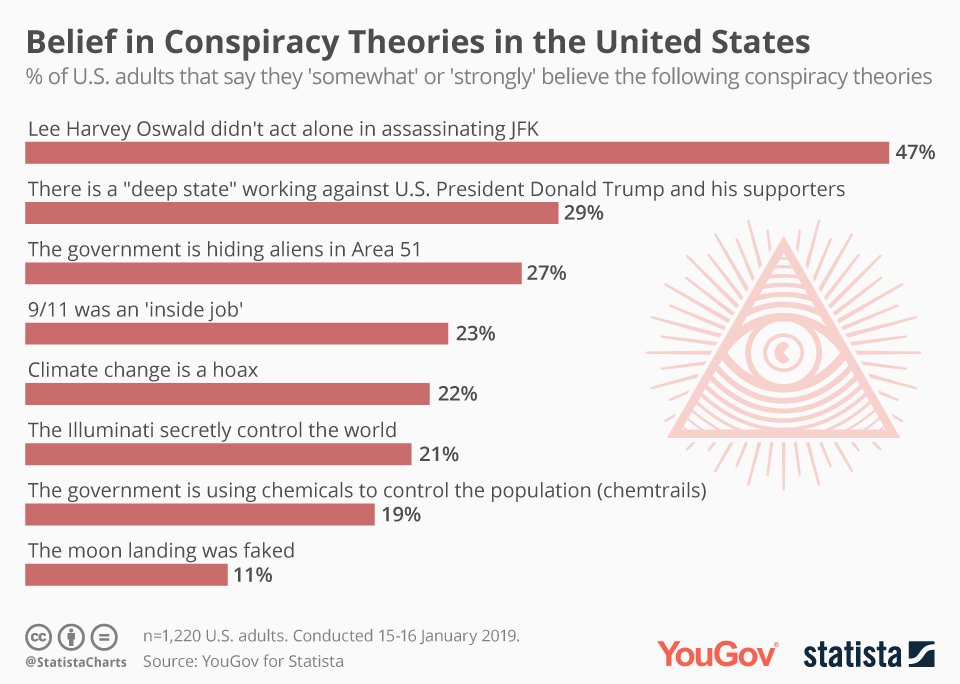

Ofc it’s a British dude calling people he’s never met “stupid.”
Paul Graham@paulg
Do I worry about stupid or biased readers now? To some extent. I have to take extra care to give the intellectually dishonest no room to misinterpret me. And certainly a lot of endnotes are armor against misinterpretation. In the future I'll just be able to do no-look passes.
English
@eranium @itsolelehmann I think he means context switching still has cost & it may be better to work on something related to one agent's work rather than trying to bounce from context to context and micromanage unrelated projects. But we'll see which proves to be the rule and which the exception
English

@itsolelehmann I liked to show this example to my clients in the past but I believe it is not true for agentic engineering anymore. You will get more and better work done with 8 agents multitasking than with 1 agent in focus mode. We need to unlearn.
English
Andy G retweetledi
Billion(s) dollar empires that dominate the market are sexy, exciting, incredible feats...
But a lot of people bootstrap companies to $5-$10m, sell them & have a great life.
We should talk more about them, because the opportunity has never been greater to pull that off.
English
@GregorySchern @Austen Maybe an agent skill to do that on every request over a certain complexity. On very small/simple requests, figuring out which model to use would probably cost more than just doing it. Or if the most basic model did a good job of deciding how to delegate then maybe?
English

@Austen there's an opportunity in there to auto select a model that fits the use case vs manually selecting a model
English

Model providers are making $$$$ from people defaulting to the newest/biggest model which is 20x as expensive as the one they actually need.
It’s a casual user tax.
English
@qwerty_954792 @sciencegirl Learning HOW to learn is what is most important. Not WHAT you learn. And there are many methods to do that.
The best things take times. AI or not.
Everyone is always in a rush. It's often not about speed, but rather consistency.
Learning is a marathon, not a sprint
English

@sciencegirl Will fail in the age of AI.
Way too slow in a world that is getting faster by the day.
English

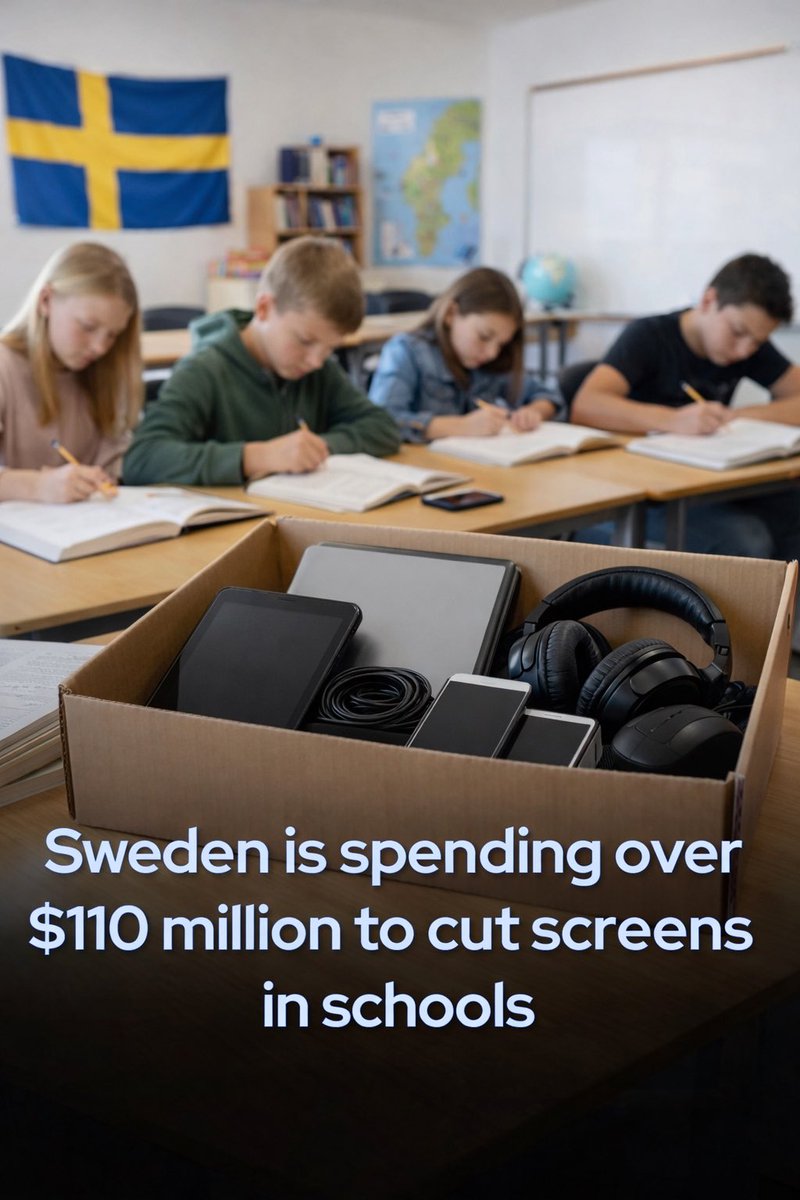
Sweden is investing more than $110 million to bring printed textbooks back into classrooms.
After years of pushing digital learning, the Swedish government is reducing screen use in schools and renewing its focus on physical books. Over the past decade, many schools replaced textbooks with laptops and tablets, moving lessons, homework, grading, and parent communication almost entirely online.
During this period, student performance declined. Results from international assessments such as the OECD’s Programme for International Student Assessment showed drops in reading, math, and science, prompting officials to reconsider the role of screens in learning.
Research indicates that reading on digital displays can demand more mental effort than reading on paper, especially for younger students. Screens also introduce more distractions, and studies have linked heavy digital use to reduced comprehension and memory retention.
In response, Sweden allocated €60 million in 2023 to restore printed textbooks, with another €44 million planned through 2025. The aim is to ensure every student has a physical textbook for each subject.
Officials stress that technology isn’t being removed from schools, but repositioned as a support tool rather than the default. Printed books are now prioritized for core learning, particularly reading.
While Sweden remains highly tech-advanced, this policy shift reflects a growing global debate: whether more technology automatically leads to better education.
English
Andy G retweetledi

Unrealized gains tax for Gen-Z:
You buy a Pokémon card for $50.
Someone offers you $500 for it. You say no. You love that card. You're keeping it.
The government says: "Cool, but that card is worth $500 now. You owe us $100 in taxes."
You: "…I didn't sell it."
Government: "Don't care. Pay up."
You don't have $100 lying around. So you're forced to sell the card you love just to pay a tax on money you never received.
Next month? That card drops back to $50.
Your card is gone. Your money is gone. And the government shrugs.
That's a wealth tax on unrealized gains. They don't pay you back the tax...
Now picture this.
Your mom calls you crying. She has to sell the house she raised you in. Not because she can't afford it. She's lived there 30 years. It's paid off.
But some website says it's worth more now and the government says she owes $15,000 she doesn't have.
So she sells your childhood home. The kitchen where she made you breakfast. The doorframe where she marked your height every birthday.
Gone.
To pay a tax on money that was never real.
Now picture the opposite.
Your dad put everything into his small business. For 20 years he built it from nothing. One year the business is "valued" at $2 million on paper. He owes a massive tax bill. He empties his savings. Sells his truck. Borrows money. Pays it.
Next year the market crashes. His business is worth $200,000.
He lost everything to pay a tax on a number that doesn't exist anymore.
Does the government give him his money back?
No.
Does the government give him his truck back?
No.
Does the government care?
No.
They sold this idea as "taxing billionaires." But billionaires have armies of lawyers, offshore accounts, and trusts. They'll be fine.
You know who won't be fine? Your mom. Your dad. Your neighbor with a small business. The farmer down the road who's had the same land for four generations and now has to sell it because dirt got expensive.
You're not taxing wealth. You're taxing people for owning things.
It's like getting a parking ticket for a car you might drive somewhere someday.
They want you to own nothing and be happy. To fund the fraud, waste and abuse of the welfare state they created.
There is enough money. More tax isn't needed. It's all a lie. But you've been gaslit into believing this is a rich vs poor debate.
I hope you understand what's at stake.
English
Andy G retweetledi

When I was a kid, my mom, who was by all means extremely free range, prohibited me and my sister from reading teen magazines.
“They want to sell you on who they need you to be, not who you are and what you can become”
She was way ahead of her time.
English
@wayneb @hasantoxr @openclaw @Raspberry_Pi Has anyone reviewed the source code at all? Anything to worry about there from a Chinese government surveillance perspective
English

English

Chinese engineers just rebuilt @OpenClaw in Go and it runs on a $10 @Raspberry_Pi instead of a $399 Mac mini.
It uses <10 MB of memory, boots in 1 second, and is 400× faster to start.
100% Open-Source.

English
English

@hasantoxr @openclaw @Raspberry_Pi It's never been about running on macs. It's about how secure you can make it, how much trust you can put in your digital proxy. IronClaw solves this:
github.com/nearai/ironclaw
English