Josh Wulf

20.7K posts

Josh Wulf banner
Josh Wulf

Josh Wulf

@sitapati

https://t.co/1gBr9ZEOcH

Auckland, New Zealand Katılım Ağustos 2008
5.2K Takip Edilen2.8K Takipçiler
Josh Wulf
Josh Wulf@sitapati·
@SkyNewsAust "Fuel crisis worsens" positions the shortage as an external force happening to people, which is precisely the frame that justifies panic buying. "Panic buying causes localised shortages" positions people as the cause, which would dampen the behaviour.
English
0
0
0
513
Josh Wulf retweetledi
Tuki
Tuki@TukiFromKL·
🚨 Andrej Karpathy just explained the scariest thing happening in software right now.. someone poisoned a Python package that gets 97 million downloads a month.. and a simple pip install was enough to steal everything on your machine.. SSH keys.. AWS credentials.. crypto wallets.. database passwords.. git credentials.. shell history.. SSL private keys.. everything.. and here's the part that should terrify every developer alive.. the attack was only discovered because the attacker wrote sloppy code.. the malware used so much RAM that it crashed someone's computer.. if the attacker had been better at coding.. nobody would have noticed for weeks.. one developer.. using Cursor with an MCP plugin.. had litellm pulled in as a dependency they didn't even know about.. their machine crashed.. and that crash saved thousands of companies from getting their entire infrastructure stolen.. Karpathy's take is the real wake up call.. every time you install any package you're trusting every single dependency in its tree.. and any one of them could be poisoned.. vibe coding saved us this time.. the attacker vibe coded the attack and it was too sloppy to work quietly.. next time they won't make that mistake.
Andrej Karpathy@karpathy

Software horror: litellm PyPI supply chain attack. Simple `pip install litellm` was enough to exfiltrate SSH keys, AWS/GCP/Azure creds, Kubernetes configs, git credentials, env vars (all your API keys), shell history, crypto wallets, SSL private keys, CI/CD secrets, database passwords. LiteLLM itself has 97 million downloads per month which is already terrible, but much worse, the contagion spreads to any project that depends on litellm. For example, if you did `pip install dspy` (which depended on litellm>=1.64.0), you'd also be pwnd. Same for any other large project that depended on litellm. Afaict the poisoned version was up for only less than ~1 hour. The attack had a bug which led to its discovery - Callum McMahon was using an MCP plugin inside Cursor that pulled in litellm as a transitive dependency. When litellm 1.82.8 installed, their machine ran out of RAM and crashed. So if the attacker didn't vibe code this attack it could have been undetected for many days or weeks. Supply chain attacks like this are basically the scariest thing imaginable in modern software. Every time you install any depedency you could be pulling in a poisoned package anywhere deep inside its entire depedency tree. This is especially risky with large projects that might have lots and lots of dependencies. The credentials that do get stolen in each attack can then be used to take over more accounts and compromise more packages. Classical software engineering would have you believe that dependencies are good (we're building pyramids from bricks), but imo this has to be re-evaluated, and it's why I've been so growingly averse to them, preferring to use LLMs to "yoink" functionality when it's simple enough and possible.


English
283
2.3K
13.9K
3.1M
Josh Wulf retweetledi
Simplifying AI
Simplifying AI@simplifyinAI·
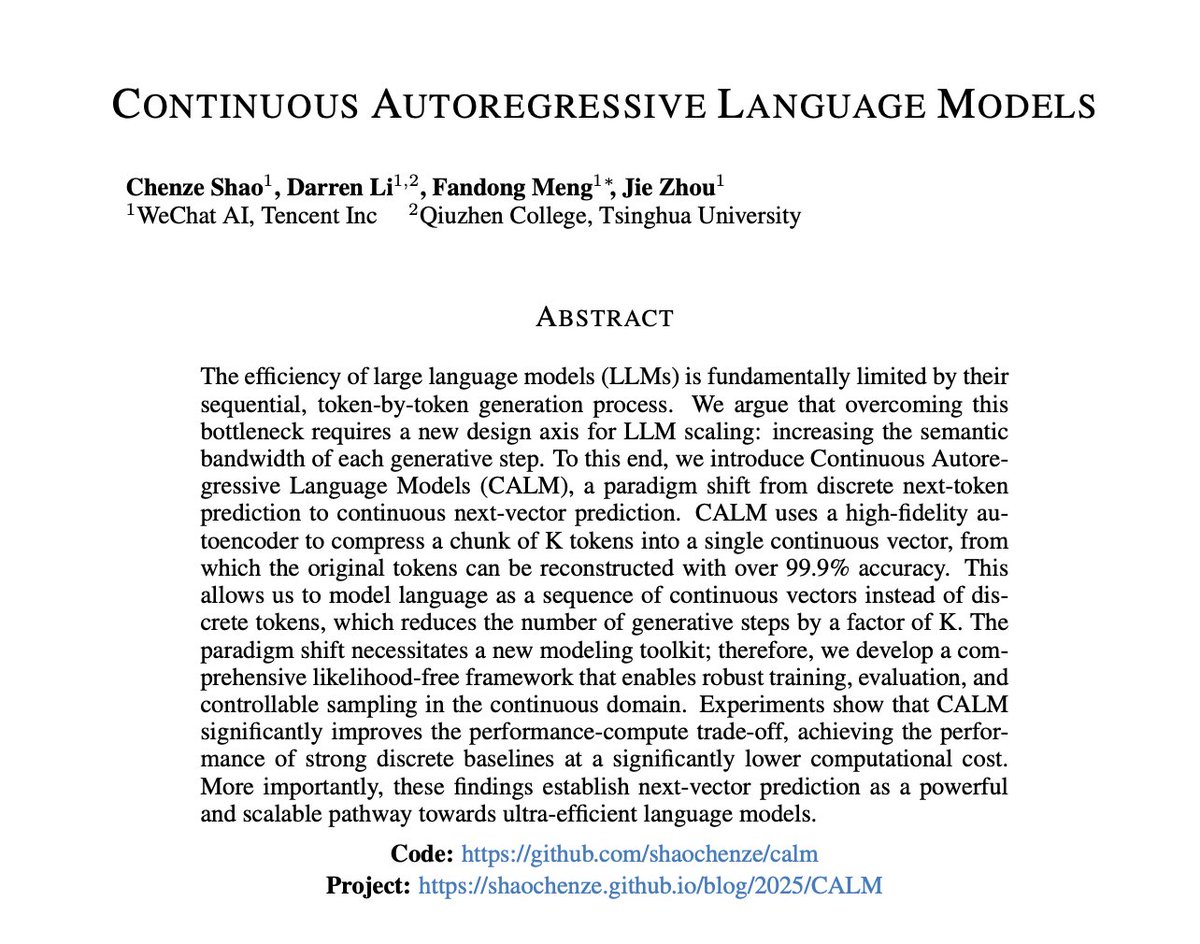
🚨 BREAKING: Tencent has killed the “next-token” paradigm. Tencent and Tsinghua has released CALM (Continuous Autoregressive Language Models), and it completely disrupts the next-token paradigm. LLMs currently waste massive amounts of compute predicting discrete, single tokens through a huge vocabulary softmax layer. It’s slow and scales poorly. CALM bypasses the vocabulary entirely. It uses a high-fidelity autoencoder to compress chunks of text into a single continuous vector with 99.9% reconstruction accuracy. The model now predicts the “next vector” in a continuous space. The numbers are actually insane: - Each generative step now carries 4× the semantic bandwidth. - Training compute is reduced by 44%. - The softmax bottleneck is completely removed. We’re literally watching language models evolve from typing discrete symbols to streaming continuous thoughts. This changes the entire trajectory of AI.
Simplifying AI tweet media
English
139
573
4.2K
439.1K
Josh Wulf retweetledi
Eric
Eric@Ex0byt·
Qwen3.5 27B is awesome (the entire family above 9B is impressive). You can now try it directly in your browser at SOTA speeds with whatever GPU you have: hf.co/spaces/Ex0bit/… My previous research in practice - The `Intel/Qwen3.5-27B-int4-AutoRound` is particularly good.
0xSero@0xSero

A 27B model is #2 on pinch-bench You’d need 150,000$ in GPU hours to train this from scratch (base + post training) Basically 1-2 weeks over 256 H100s That is not unreasonable, you’d need 540B tokens for pre-training and a bit more for post training. None of this is crazy

English
33
121
1.7K
349.1K
Josh Wulf retweetledi
TeeMinusZero
TeeMinusZero@TeeMinusZero·
T-0: HOW TO LIVE ON TATOOINE Andre Houssney is a Lebanese-born regenerative farmer who’s pulled off massive self-sufficiency projects across Africa, and now runs Jacob Springs Farm in Colorado. In this segment, he talks about the agricultural T-0 moment, why we the time to prepare for self-sufficiency is now. T-0 is a show about the rebels reshaping the world through decentralized tech, energy, farming, and blockchain. More info @ teeminuszero.net
English
1
8
97
532.6K
Josh Wulf retweetledi
GitHub Projects Community
GitHub Projects Community@GithubProjects·
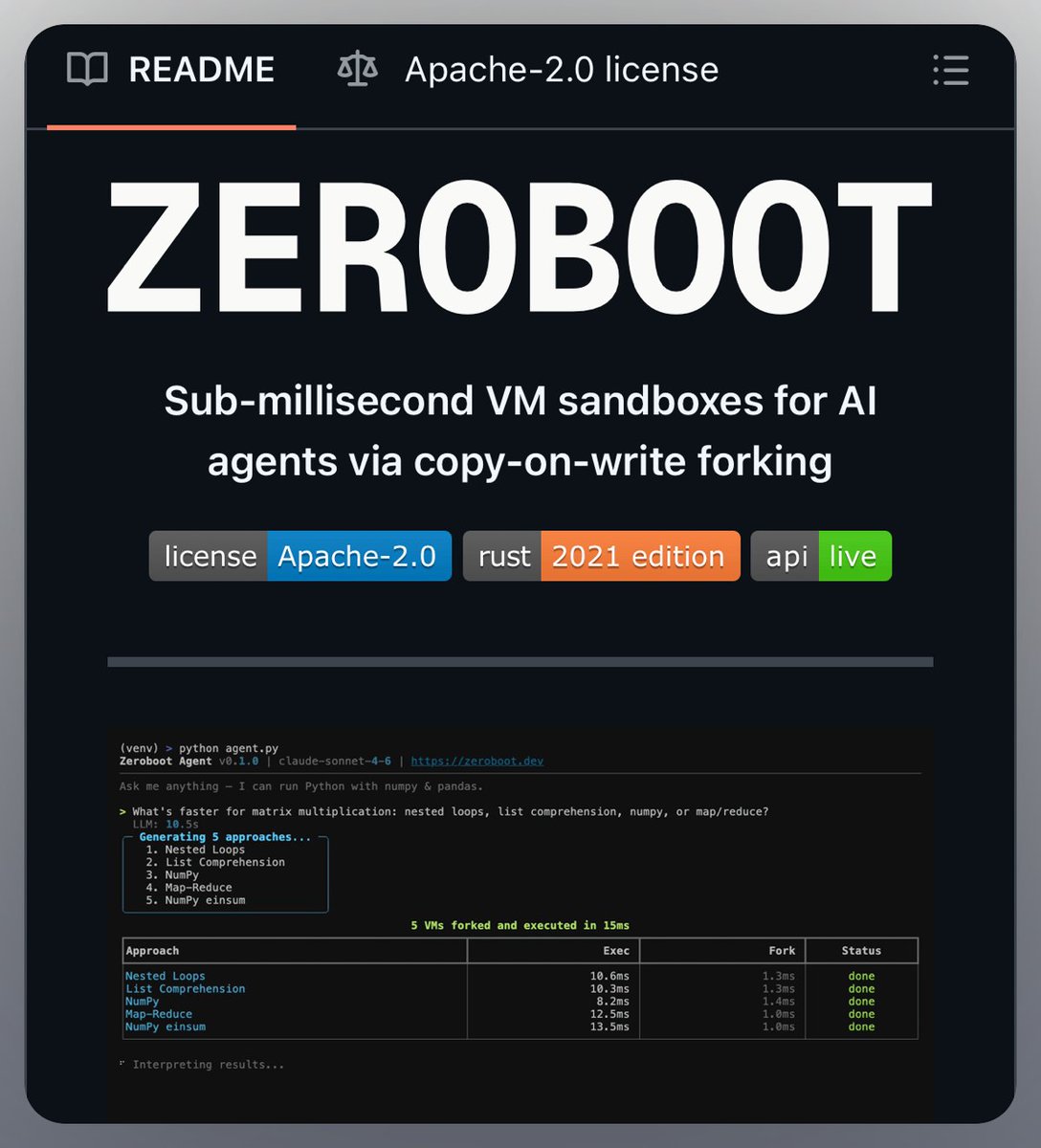
Sub-millisecond VM sandboxes are here. Zeroboot boots preloaded environments, snapshots them, then forks new isolated VMs in ~0.8ms. This changes how we think about running agents and serverless workloads.
GitHub Projects Community tweet media
English
40
167
1.5K
116.1K
Josh Wulf retweetledi
Chris Rickard
Chris Rickard@chrisrickard·
I'll be speaking @ AI Engineer Melbourne on "Legacy Software + Agentic Discovery". I’ll be sharing practical lessons from large-scale reverse-engineering projects: - recovering intent from code - where humans still matter most - what high-quality spec generation might look like ... and when I say large, I mean 12M+ LOC. ... and when I say legacy, I mean 25+ years old. --- 3-4 June 2026, Federation Square Melbourne & Online. Sharing the stage with some rad humans including @swyx, @GeoffreyHuntley, @jeremyphoward and stacks more. 🔗 Tix && discount link: webdirections.org/register/?even… Huge thanks @aiDotEngineer & @johnallsopp
Chris Rickard tweet media
English
2
4
22
7.3K
Josh Wulf retweetledi
Nav Toor
Nav Toor@heynavtoor·
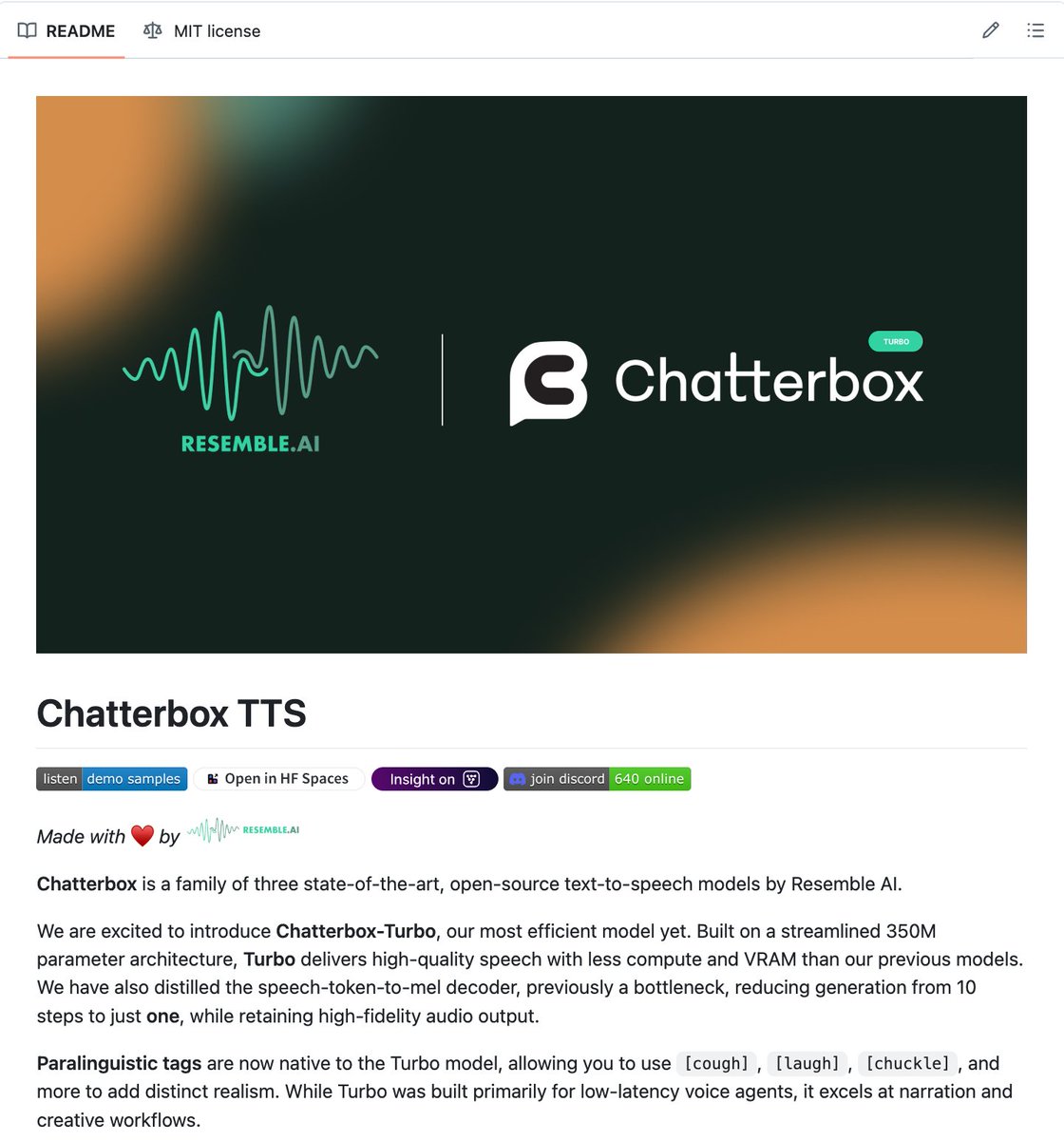
🚨Someone just open sourced a tool that clones any voice from a 10-second audio clip. It's called Chatterbox. Give it a short recording of anyone's voice and it will generate new speech in that exact voice. Any words you want. 23 languages. One pip install. Free. Here's what makes this one different: → 350M parameter model. Runs on a single GPU. → You can make the cloned voice laugh, cough, chuckle, and sigh → Works in English, Japanese, Chinese, Hindi, Arabic, French, and 17 more → Built-in watermarking so generated audio can be detected → Voice conversion mode turns YOUR voice into someone else's in real-time Five lines of Python and it's talking: pip install chatterbox-tts from chatterbox.tts_turbo import ChatterboxTurboTTS model = ChatterboxTurboTTS.from_pretrained(device="cuda") wav = model.generate("Hello world", audio_prompt_path="any_voice.wav") That's it. That voice now says whatever you type. 21.9K GitHub stars. 2.9K forks. MIT License. ElevenLabs charges $5 to $99/month for this. Chatterbox does it for free. 100% Open Source.
Nav Toor tweet media
English
16
67
355
20.2K
Josh Wulf retweetledi
Alvaro Cintas
Alvaro Cintas@dr_cintas·
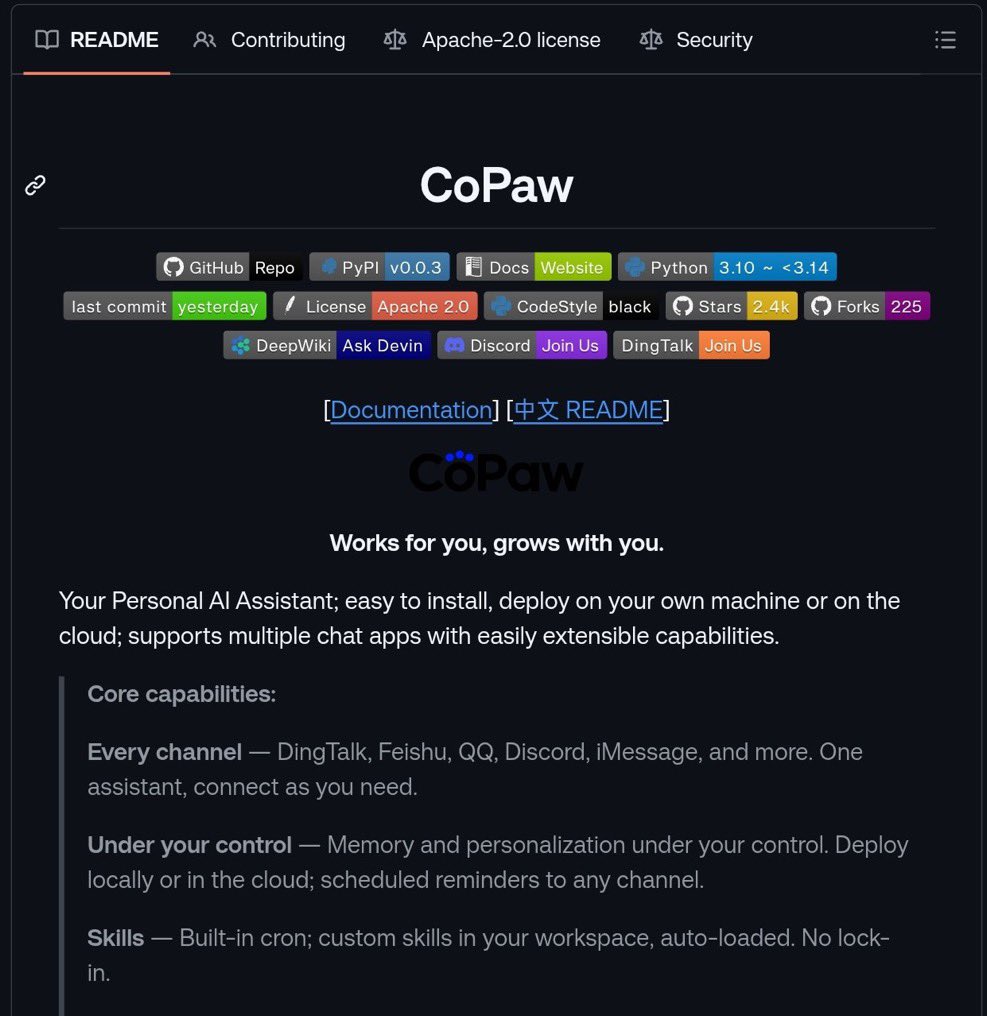
Alibaba has released an open source framework that's like a mix of OpenClaw + Claude Cowork 🤯 • Long-term memory • Runs locally with Ollama • Works with free models like Qwen 3.5 • Self-hosting, skills, and more Link: github.com/agentscope-ai/…
Alvaro Cintas tweet media
English
36
175
1.3K
95K
Josh Wulf retweetledi
Christos Tzamos
Christos Tzamos@ChristosTzamos·
1/4 LLMs solve research grade math problems but struggle with basic calculations. We bridge this gap by turning them to computers. We built a computer INSIDE a transformer that can run programs for millions of steps in seconds solving even the hardest Sudokus with 100% accuracy
English
251
810
6.1K
1.8M
Josh Wulf retweetledi
Hugging Models
Hugging Models@HuggingModels·
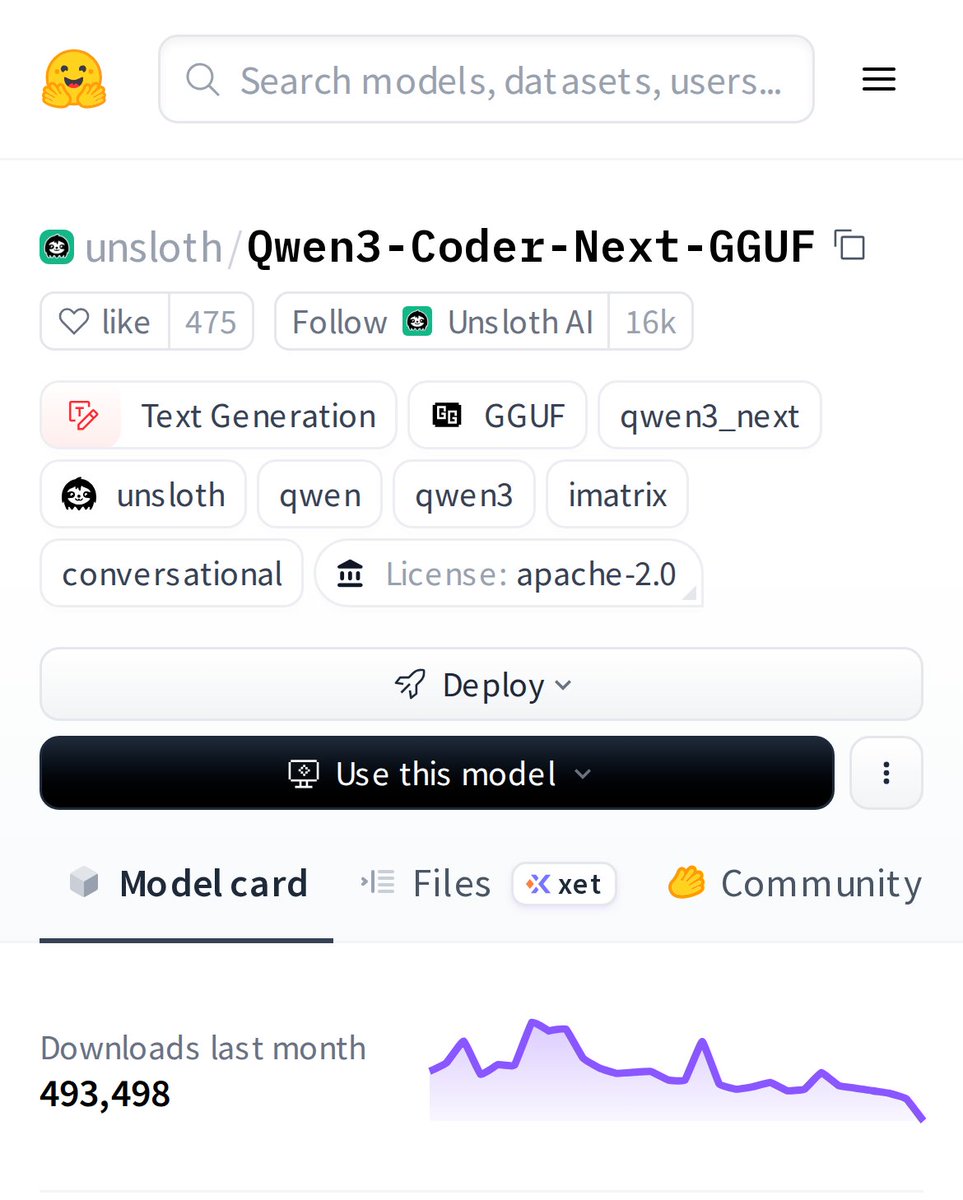
Meet Qwen3-Coder-Next-GGUF: a specialized coding assistant that's been downloaded nearly 500k times. This isn't just another LLM, it's a quantized powerhouse designed specifically for developers who want local, efficient code generation. Think of it as your AI pair programmer that runs on your own hardware.
Hugging Models tweet media
English
5
14
150
10.8K
Josh Wulf retweetledi
⚡AI Search⚡
⚡AI Search⚡@aisearchio·
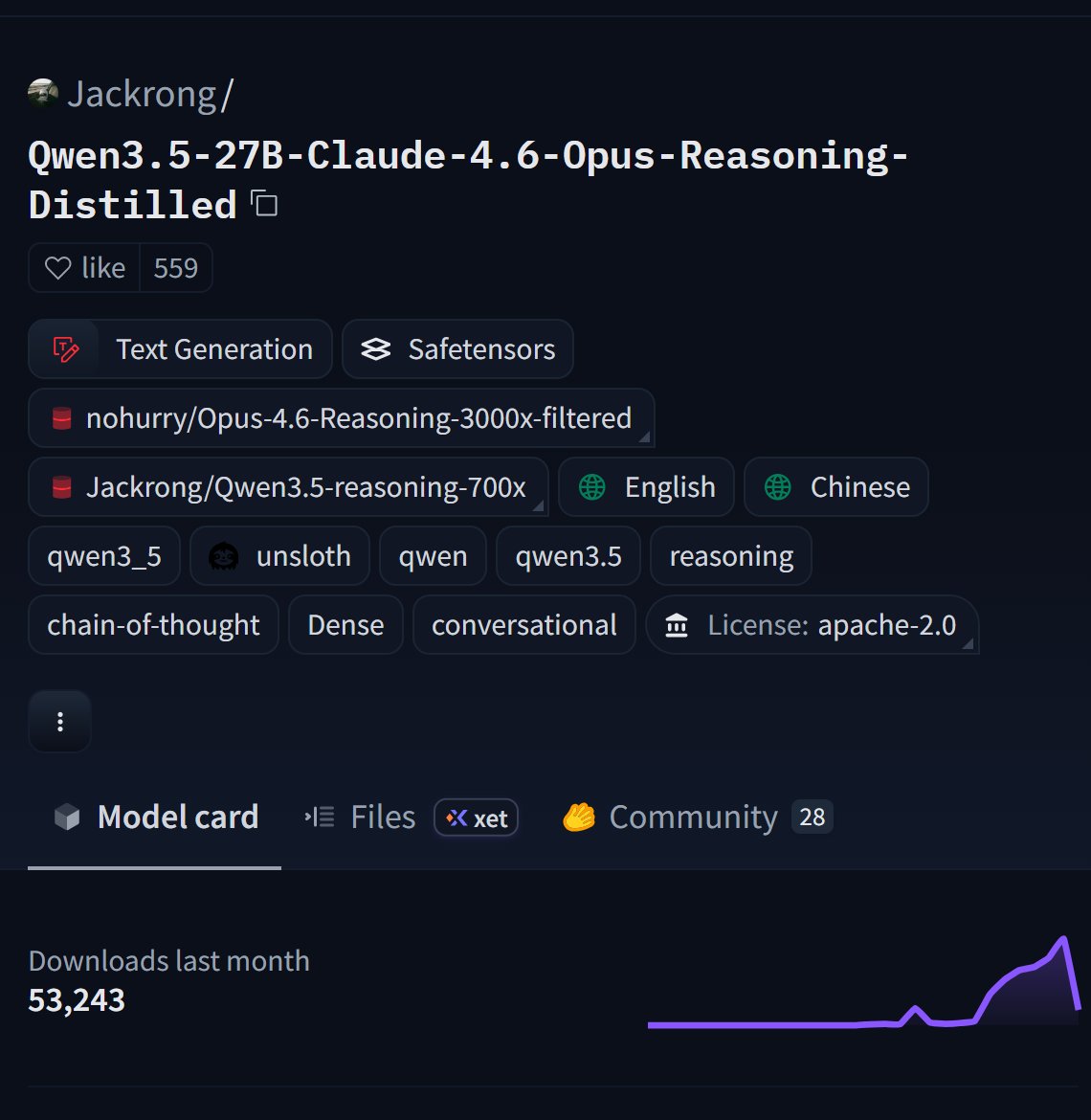
Want the intelligence of Opus 4.6, but running locally like Qwen? This is the model for you. Qwen 3.5, fine-tuned in the style of Opus. huggingface.co/Jackrong/Qwen3…
⚡AI Search⚡ tweet media
English
19
53
618
35.8K
Josh Wulf retweetledi
Hugging Models
Hugging Models@HuggingModels·
Meet GLM-4.7-Flash-Claude-Opus-4.5-High-Reasoning-Distill: a distilled powerhouse that brings elite reasoning to local machines. This GGUF model packs Claude-level thinking into a format you can run on your own hardware. The community is buzzing about this one!
Hugging Models tweet media
English
14
47
541
41.8K
Josh Wulf retweetledi
Chris Tate
Chris Tate@ctatedev·
json-render now supports YAML as a wire format JSONL needs a full element before rendering YAML is valid at every prefix, going from element-level to property-level 💨 YAML looks like source code to LLMs And we use 3 standards they know: JSON Patch, Merge Patch, Unified diff
English
68
105
1.8K
185.8K
Josh Wulf retweetledi
Learn Something
Learn Something@cooltechtipz·
How morse code works.
English
72
1.8K
11.4K
582.2K
Josh Wulf retweetledi
Sukh Sroay
Sukh Sroay@sukh_saroy·
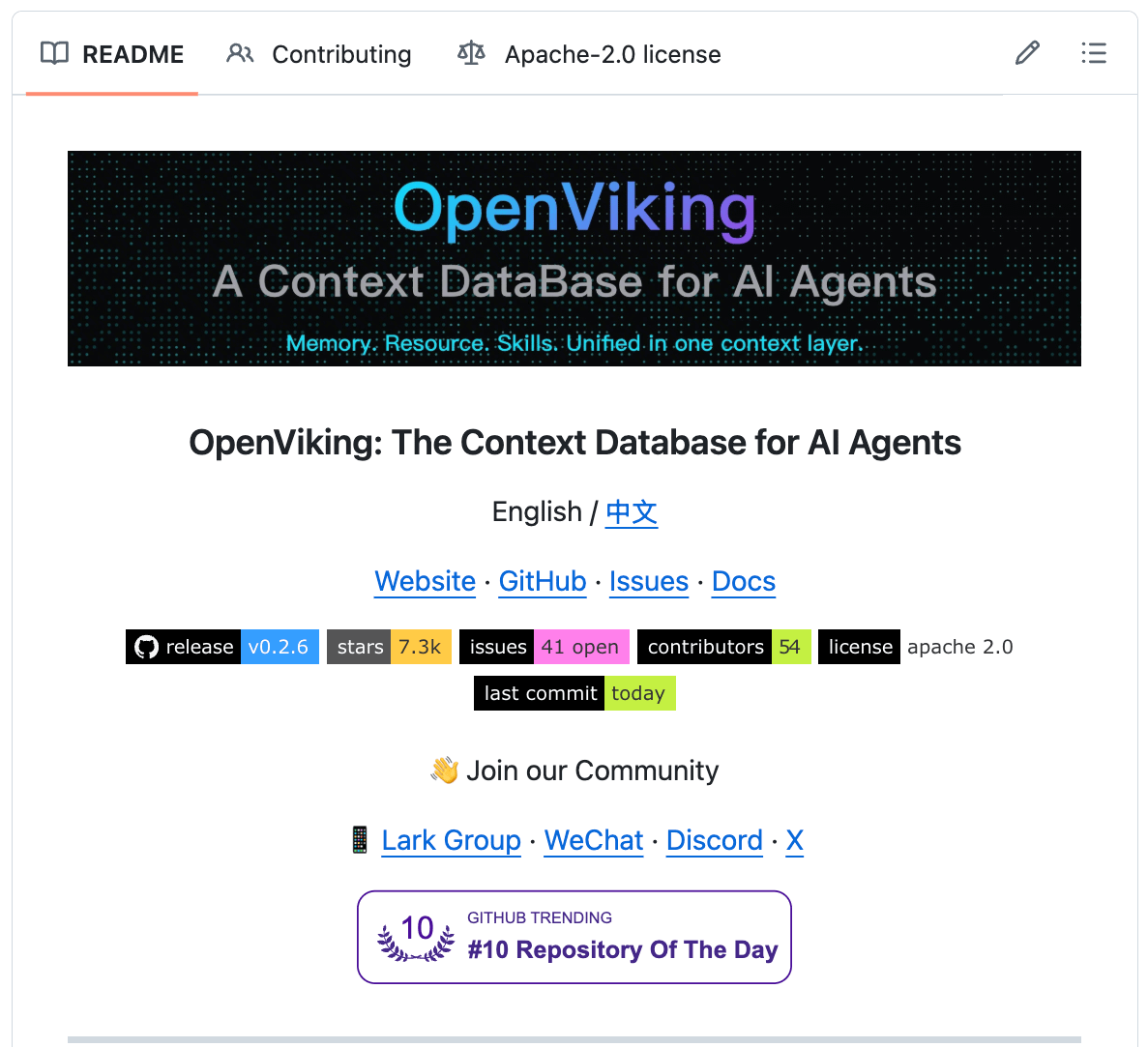
🚨 ByteDance just open sourced a "brain" for AI agents. It's called OpenViking. A database that gives any AI agent real memory, real skills, and real knowledge. Right now, every AI agent forgets everything after each conversation. OpenViking fixes that. The idea is dead simple: store context like files on a computer. → Memories go in viking://user/memories/ → Skills go in viking://agent/skills/ → Resources go in viking://resources/ It also saves you money. Every piece of context has three levels: → L0: A one-liner (~100 tokens) → L1: The important stuff (~2K tokens) → L2: The full thing (only loads when truly needed) Your agent skims first. Digs deeper only when it has to. Here's the wildest part: After every conversation, it automatically learns from what just happened. No retraining. No manual updates. Your agent just gets better on its own. Built by the same ByteDance team running vector search behind TikTok since 2019. pip install openviking 1K+ GitHub stars. 100% Open Source.
Sukh Sroay tweet media
English
67
174
1K
87.4K
Josh Wulf retweetledi
Mark Gadala-Maria
Mark Gadala-Maria@markgadala·
Wow. Alibaba just quietly released one of the most useful AI products of all time. It's an AI agent that you can install instantly in any browser to do tasks for you using Qwen 3.5. No setup, no token costs, 100% free and open source. Try it now: github.com/alibaba/page-a…
English
51
169
1.4K
146.1K
Josh Wulf retweetledi
UI/UX Savior
UI/UX Savior@UiSavior·
Lol 😂😂
74
666
5.7K
485.9K
Josh Wulf retweetledi
Ryan Hart
Ryan Hart@thisdudelikesAI·
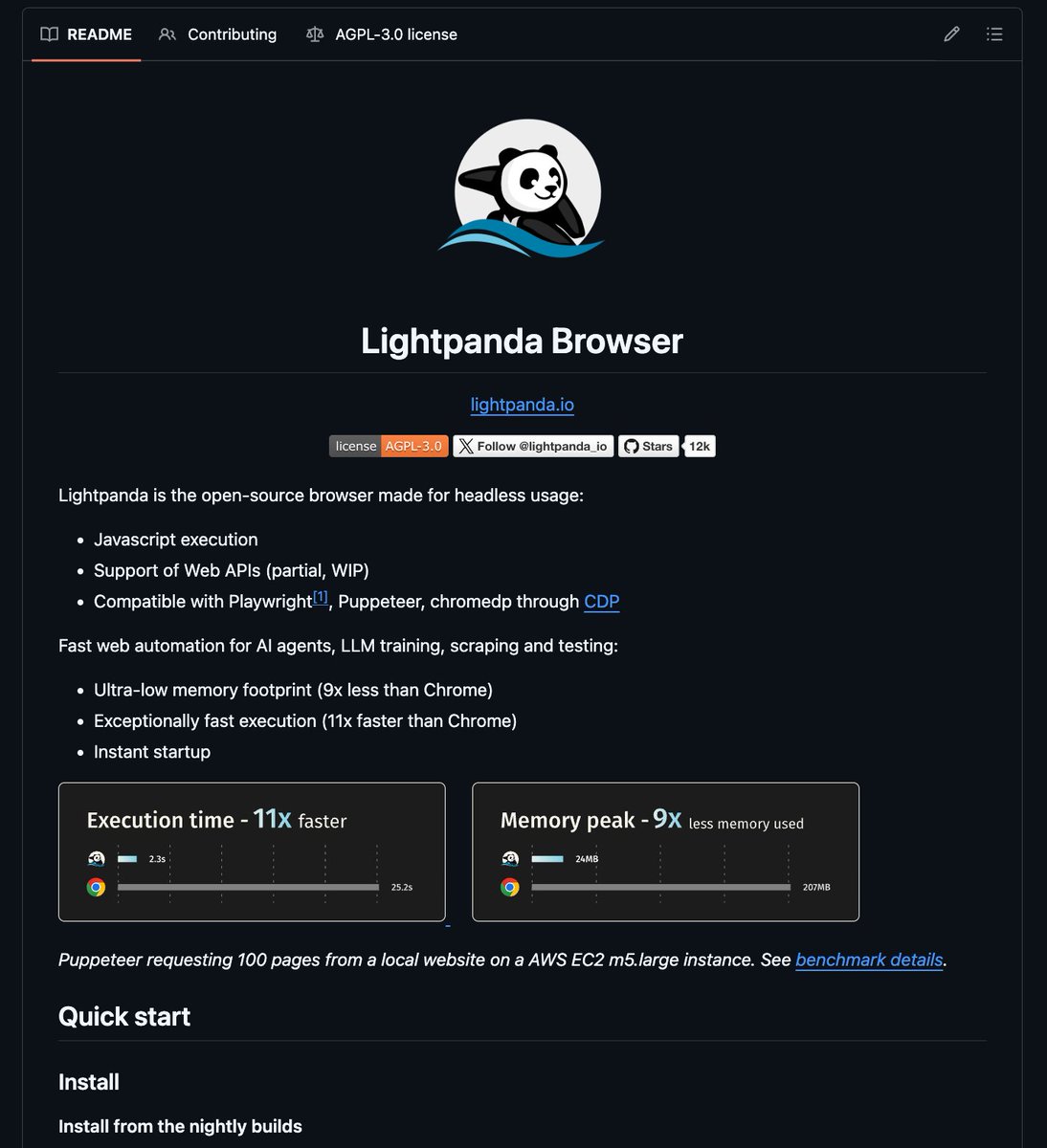
🚨BREAKING: Someone just open-sourced a headless browser that runs 11x faster than Chrome and uses 9x less memory. It's called Lightpanda and it's built from scratch specifically for AI agents, scraping, and automation. Not a Chromium fork. Not a hack. A completely new browser written in Zig. Here's why this changes everything for AI builders: ↓
Ryan Hart tweet media
English
278
942
8.2K
738.3K