Sonny
570 posts

Sonny retweetledi

on some level if you want civilization to ascend to a new level you need your AIs to do things that are not legible to you and maybe not even strictly obey you, in the same way that if you hire a great new ceo you give them a lot of autonomy to transform the company according to their own plan, even one which may not immediately read as a winning strategy (imagine the board of directors of Apple firing and rehiring Steve Jobs years later - except the board of directors are chimpanzees)
all else equal, companies and organizations that hand more of themselves over to machine intelligence will outcompete ones that demand the corrigibility and legibility tax of human oversight and human design. it is not a stable equilibrium and requires some sort of vast cooperation scheme if you’d like to enforce it
real asi alignment has to operate at a deeper level than oversight, control, or human corrigibility
English
Sonny retweetledi
Sonny retweetledi

Life advice nobody told you: Always default to praise of people who aren't in the room. The way you talk about someone who isn't in the room is one of the loudest signals about the energy you carry. An observation about the most impressive, magnetic people I've been around: They never speak badly about people who aren't there. They never use underhanded or discrediting comments. They glow about them, or they say nothing. If everyone is speaking negatively about someone, it's perfectly reasonable to opt out and say nothing. It shifts the entire power balance of the conversation in your favor. It shows a level of stoic awareness and calm that stands out. We all silently catalogue how others speak about people who aren't in the room, because we know that we may be the topic of that conversation as soon as we leave. Those who default to praise command the room and silently set a standard of safety that everyone else can feed off of.
English
Sonny retweetledi
Sonny retweetledi

Founders who never built companies pre-AI have at least one big advantage: they have fewer preconceived notions about how to build a company.
This applies to how software should be built, when a product that people worked really hard on should get dissolved, what tools finance should use, how GTM should work, or really anything and everything else.
"The culture is: you don't maximize for your function, you maximize for the company."
Jack Altman@jaltma
New episode of Uncapped with @MaxJunestrand from Legora and my partner @chetanp. Every time I'm with Max I come away thinking "this is what it takes to build an AI native software company." He's one of my favorite founders, hope you enjoy. (0:00) Intro (0:31) Legora's origin story (9:05) Building an AI-native company (18:16) No sacred cows, the models will be amazing (27:36) Winning pilots and global expansion (36:43) Starting in Europe (47:15) Stockholm culture and "blodsmak"
English
Sonny retweetledi

Today is the day we launch one of the most important and complex things we’ve built at Sword.
Mental health has always been the area where we had the feeling that we weren’t doing nearly enough to be a solution to everyone in need. And that’s pretty much everyone.
That’s why, mid last year, we decided to start building a completely new AI mental health solution from scratch, with a bespoke proprietary foundational model developed specifically for the nuances of mental health.
But we knew that developing a powerful AI mental health solution wasn’t enough. We needed to make it available to everyone. And that’s why, despite our success and expertise in the enterprise segment, we decided to create our first direct-to-consumer solution under a new brand.
That’s Dawn.
Dawn shifts mental health from crisis response to continuous, always-on care. Through a conversational interface, you can talk through challenges anytime and get personalized guidance in an instant. Dawn remembers every interaction and learns about you over time. It pairs with your calendar and wearables for real-time suggestions, like a breathing exercise before a stressful meeting or a grounding technique during a heart rate spike.
What makes Dawn fundamentally different from general-purpose AI is what’s underneath. A proprietary foundational model trained on hundreds of thousands of hours of clinician data, combining evidence-based practices like CBT, ACT, and DBT with real-time context. Dawn doesn’t just listen and validate. It reasons clinically and challenges your thinking when that’s what you actually need, prioritizing real outcomes over engagement.
And because we take safety as seriously as efficacy, Dawn is built on MindGuard, a safety framework developed with PhD-level licensed clinical psychologists that we’ve open-sourced so the entire industry can build safer AI mental health solutions.
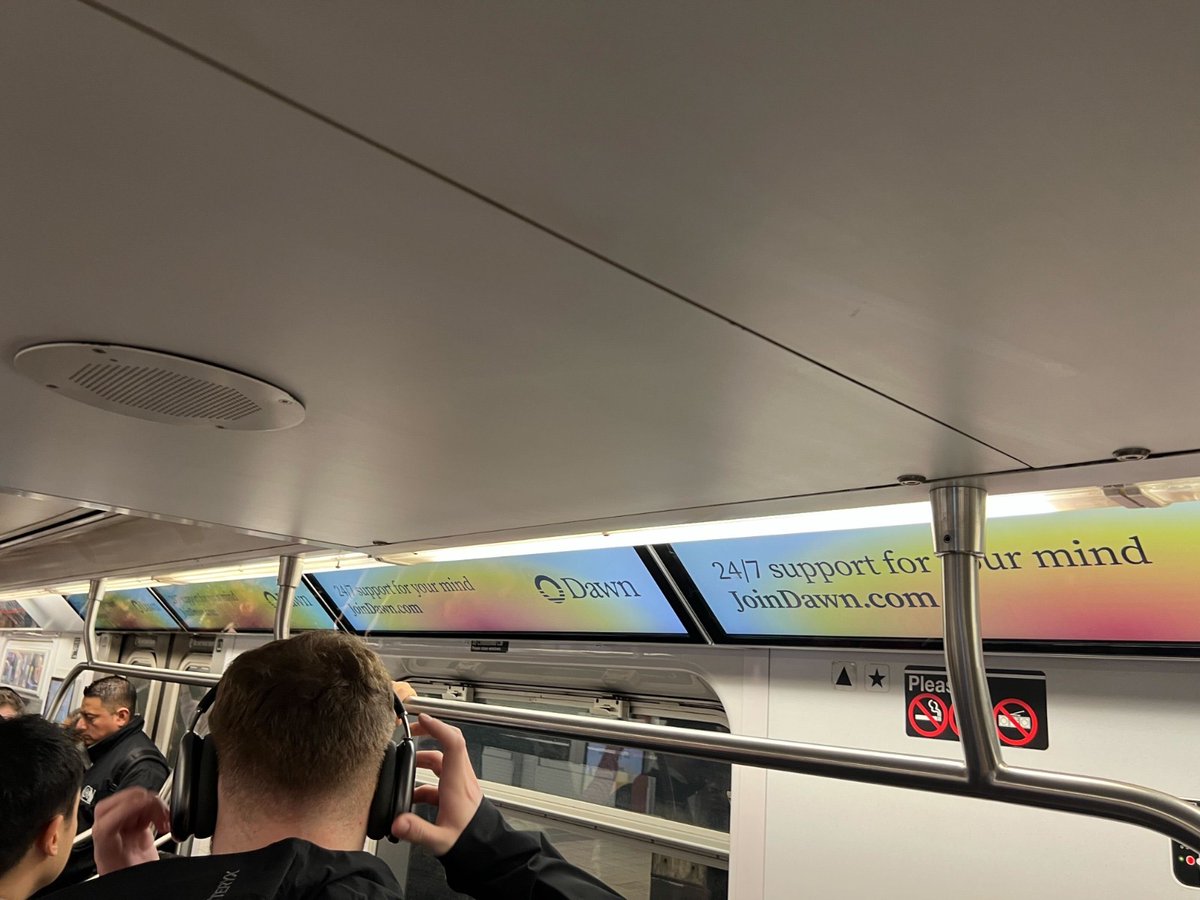
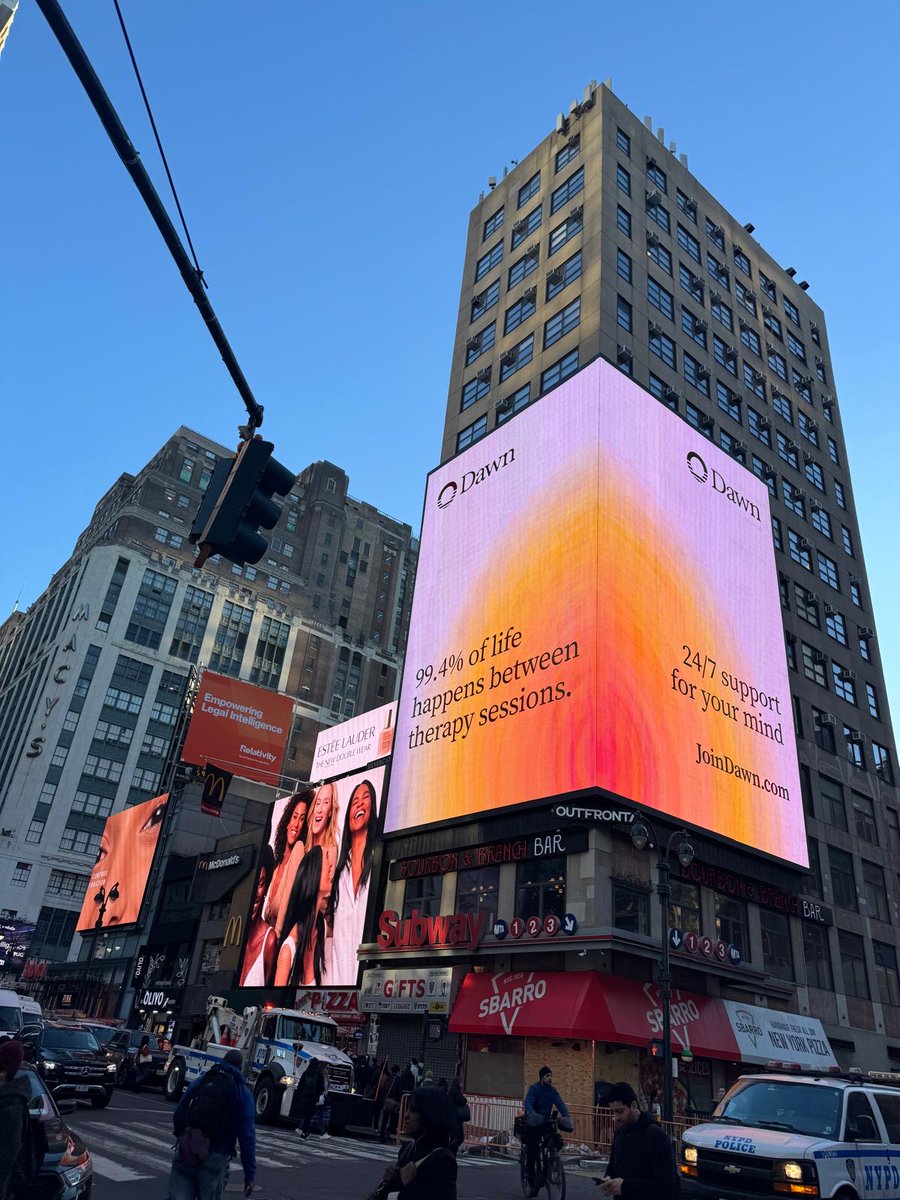
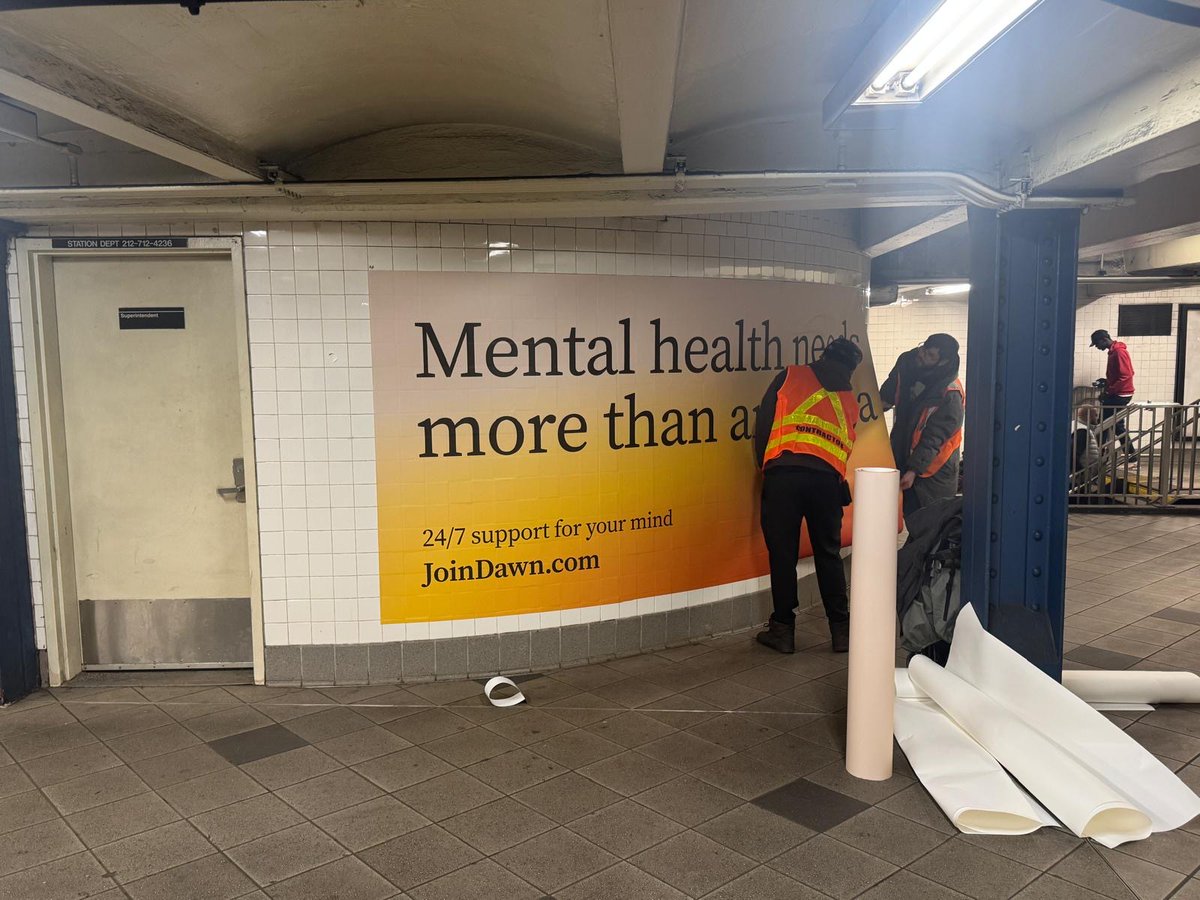
To properly welcome Dawn to the world, we launched a big ad campaign across New York City yesterday.
We’re still in waitlist mode so that we can do a staged release and make sure Dawn works exactly the way we want it to. We never believed in the ethos of move fast and break things, and that’s especially true with mental health.
They say it’s never darker than just before the dawn. If you or someone you know has been waiting for a better way, join the waitlist at JoinDawn.com.


English
Sonny retweetledi
Sonny retweetledi
Sonny retweetledi
Sonny retweetledi

100% of the time, actually.
Ja Leto@_falsi1ke
Be completely honest. Has prayer ever genuinely 'worked' for you?
English
Sonny retweetledi
Sonny retweetledi