
Space Frontier

4.8K posts

Space Frontier banner
Space Frontier

Space Frontier

@SpaceFrontier

Founded in 1988, dedicated to opening the #space frontier to sustainable human settlement through the power of free enterprise | @NewSpaceCon @NewSpaceEurope

Alexandria, VA Katılım Mart 2008
7.1K Takip Edilen35.9K Takipçiler
Space Frontier retweetledi
NASA Administrator Jared Isaacman
No commercial alternative just yet, but the day will surely come, and that is when infrequent crewed missions to the Moon become routine. And just because the agency tolerated externally imposed and self-inflicted inefficiencies in the past does not mean we are willing to tolerate them going forward. The President’s Executive Order made that clear. At NASA, we are on mission, and the clock is running.
English
53
96
2.4K
50K
Space Frontier retweetledi
Steve Yates (葉望輝)
To win Space Race 2.0, end block-buys. They reward late delivery and budget maxing. Block-buys only help Beijing.
English
14
58
366
1.5M
Space Frontier retweetledi
NYSE 🏛
NYSE 🏛@NYSE·
NASA takes center stage. Honoring the mission, the crew, and the thousands of people who made history happen. Featuring • Michael Altenhofen, Senior Advisor • John Blevins, SLS Chief Engineer • Judd Frieling, Artemis II Flight Director • Sarah Gillis, Senior Advisor • Dr. Lori Glaze, Head of Artemis • Jared Isaacman, Administrator • Amit Kshatriya, Associate Administrator • Tyler Nester, Artemis II Chief Engineer • Luis Saucedo, Orion Program • Liliana Villarreal, Artemis II Landing Recovery Director • Dr. Kelsey Young, Artemis II Science Lead • Charlie Blackwell-Thompson, Artemis Launch Director • Branelle Rodriguez, Artemis Orion Vehicle Manager @NASA | @NASAAdmin | @NASAArtemis
NYSE 🏛 tweet media
English
20
86
572
378.9K
Space Frontier
Space Frontier@SpaceFrontier·
💥NEW: Is NASA’s SLS helping us reach the Moon before China or holding us back? The opportunity costs are massive. Must Read: Economic Analysis by former U.S. Treasury Deputy Secretary Michael Faulkender —> spacefrontier.substack.com/p/the-economic…
Space Frontier tweet media
English
12
21
141
554.9K
Space Frontier retweetledi
Breaking911
Breaking911@Breaking911·
BREAKING: NASA Administrator Jared Isaacman is converting a select number of outsourced contractor roles into civil servant positions, ending an arrangement that cost U.S. taxpayers over $1 billion a year in unnecessary fees to staffing agencies.
English
53
530
3.8K
427.9K
Space Frontier
Space Frontier@SpaceFrontier·
We’re proud to partner with the @USEnergyAssoc for the upcoming webinar “Energy Without Limits: Harnessing the Sun from Space.” This conversation will explore how space-based solar power can move from concept to critical infrastructure—delivering reliable, dispatchable energy anywhere it’s needed. If you’re thinking about grid resilience, energy security, or the future of infrastructure—this is a conversation worth being part of. 👉events.usea.org/events/1087 #SpaceSolarPower #SpaceEnergy #CleanEnergy #EnergyFromSpace #NewSpace #Sustainability #RenewableEnergy #Innovation
Space Frontier tweet media
English
0
0
1
139
Space Frontier retweetledi
Eric Daugherty
Eric Daugherty@EricLDaugh·
🚨 GREAT NEWS: Trump NASA chief Jared Isaacman just CONFIRMED his goal is to CLOBBER China in the space race “We want to be ON the moon — not above the moon looking down on the Chinese!" 🔥 Isaacman is moving to ensure a MOON BASE is waiting for our astronauts in 2028 "When you have competition, you do NOT wanna lose." "We face a Chinese rival...we want infrastructure on the surface. We want AMERICAN STANDARDS on the Moon." "For power, for communication, mobility, logistics, rovers...surface improvements, and habitation." The man is committed, I like it! BEAT CHINA TO MOON DOMINANCE! 🇺🇸 @NASAAdmin
English
124
704
4.9K
271.8K
Space Frontier
Space Frontier@SpaceFrontier·
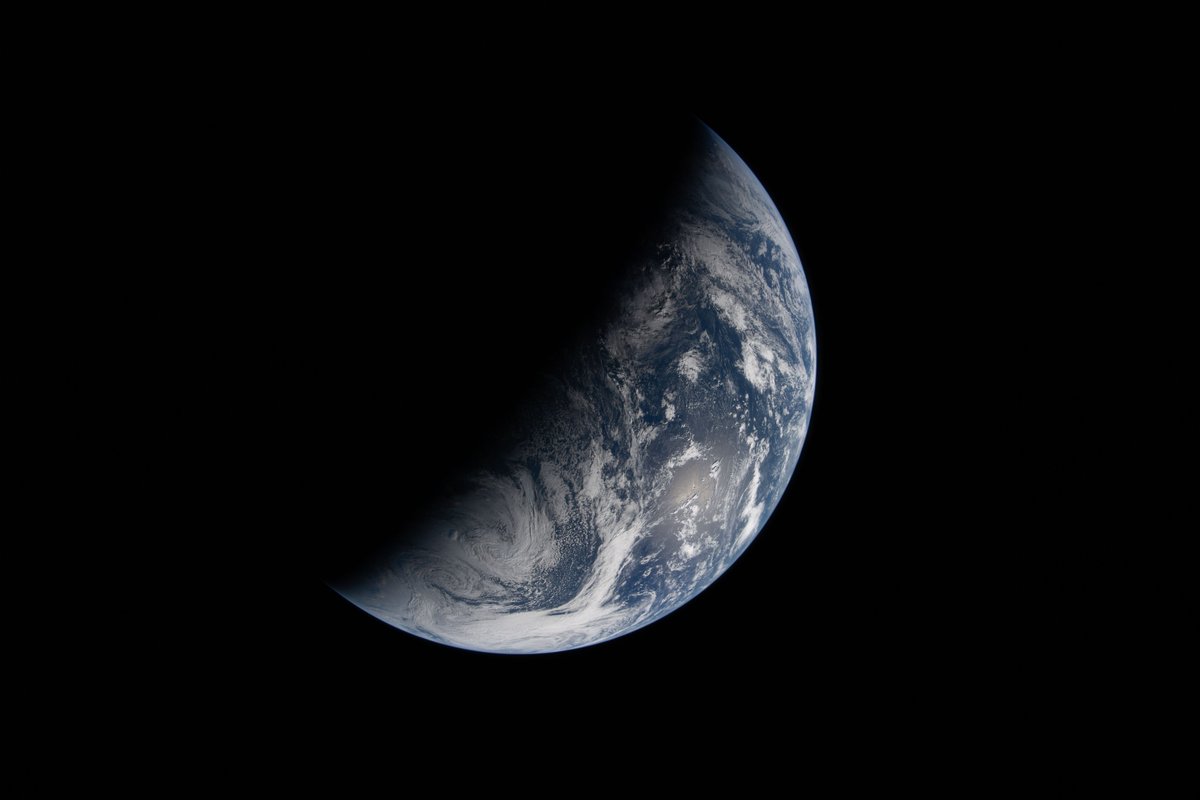
Happy Earth Day Spaceship: Earth! See our planet the way the Artemis II astronauts saw it…distant, fragile, and worth everything. 🌏 We’ve spent decades reaching for the Moon… and what we keep rediscovering is Earth. Protecting this planet isn’t separate from exploring space. It’s the reason we do it. 📷 New photos from #ArtemisII credit: NASA #earthday
Space Frontier tweet mediaSpace Frontier tweet media
English
0
0
2
299
Space Frontier retweetledi
Jeff Foust
Jeff Foust@jeff_foust·
Isaacman uses his opening statement to criticize a long record of cost overruns on NASA programs (Dragonfly, X-59, SLS Block 1B); programs too big to fail but too costly to succeed.
English
1
10
142
16.1K
Space Frontier
Space Frontier@SpaceFrontier·
🚨Our Yuri's Night celebration has a new date! 🚨 Come and play among the stars and celebrate humanity's farthest journey from Earth a little bit closer to home! ✨ Music + Space! 🎉 Drinks, food, DRAG, trivia, & more! 🎟️ givebutter.com/yuris-night-26 All donations will go directly to supporting the SFF's mission to make space more sustainable & attainable for all of humanity.
Space Frontier tweet media
English
0
0
2
196
Space Frontier retweetledi
Ryan Kriser
Ryan Kriser@RyanKriser·
Worth pausing on what’s different here. For decades, NASA Administrators spoke in careful institutional cadence — managing stakeholders, protecting programs, avoiding candor that could rattle contractors or Congress. Jared is doing the opposite: naming what’s broken, sunsetting what doesn’t work, and pointing the agency at a lunar and cislunar future measured in months, not decades. That’s not a style change. It’s a structural one — and the space economy will be shaped by it.
Jared Isaacman@rookisaacman

I understand some in the community have an affinity for specific hardware, but the focus should be on outcomes. With respect to SLS, the desired outcome is launching crewed Orion spacecraft at a reasonable cadence, rebuilding muscle memory, and buying down risk so we can land astronauts on the Moon. This is until such time as there are multiple crewed pathways that allow us to undertake lunar missions with even greater frequency and at lower cost, so that Artemis can live on for decades into the future. The idea that Artemis II was only held up by the heat shield is not correct. Administrator Bill Nelson stated in December 2024, two years after Artemis I flew, that we would refly the same heat shield design on Artemis II, yet the mission did not fly until April 2026. On a side note, if leadership knew at the time that Artemis II would not launch until April 2026, it probably would have made sense to replace the heat shield altogether. Even with as clean of a mission as Artemis II, it is hard to imagine waiting until 2028 to fly again and jump right to a lunar landing. SLS and Orion must launch with a reasonable cadence, and we need every opportunity to learn. That is why we added Artemis III, an easy trade against funding programs overbudget and behind schedule, in advance of a landing on Artemis IV. You cannot point to the ML-2 structure and a single EUS tank and say it was “pretty much done" and you certainly have no specifics as to the suitability of stage adapter. The Government Accountability Office has been clear on the timing and remaining costs for both ML-2 and EUS, based on a history of OIG oversight reports. Simply put, we would be committing billions more to troubled programs when we can work cooperatively with the OEM and its joint venture to leverage an in-production upper stage with decades of flight heritage and get very good at turning ML-1. Of course, we retain the option of working with industry on ML-2, converting it to the SLS standard, or harvesting parts. I am not here to favor companies or perpetuate underperforming programs. I do not want to throw away billions of taxpayer dollars, and time we do not have, on a flavor of a rocket that is not necessary to return astronauts to the moon. Those billions could go toward more Artemis missions or more science and discovery. Our focus must be on the immensely hard task of sending astronauts to the Moon with frequency and safely so we can land and stay. Above all else, I care about outcomes, and so does the hardworking team at NASA, focused on delivering for the American people and everyone around the world who eagerly await the headlines we all experienced this past weekend.

English
15
27
409
41K
Space Frontier retweetledi
Rand Simberg
Rand Simberg@Simberg_Space·
Whoa. Bluntness that we've needed, but never really gotten from a NASA administrator, maybe never until now.
Jared Isaacman@rookisaacman

I understand some in the community have an affinity for specific hardware, but the focus should be on outcomes. With respect to SLS, the desired outcome is launching crewed Orion spacecraft at a reasonable cadence, rebuilding muscle memory, and buying down risk so we can land astronauts on the Moon. This is until such time as there are multiple crewed pathways that allow us to undertake lunar missions with even greater frequency and at lower cost, so that Artemis can live on for decades into the future. The idea that Artemis II was only held up by the heat shield is not correct. Administrator Bill Nelson stated in December 2024, two years after Artemis I flew, that we would refly the same heat shield design on Artemis II, yet the mission did not fly until April 2026. On a side note, if leadership knew at the time that Artemis II would not launch until April 2026, it probably would have made sense to replace the heat shield altogether. Even with as clean of a mission as Artemis II, it is hard to imagine waiting until 2028 to fly again and jump right to a lunar landing. SLS and Orion must launch with a reasonable cadence, and we need every opportunity to learn. That is why we added Artemis III, an easy trade against funding programs overbudget and behind schedule, in advance of a landing on Artemis IV. You cannot point to the ML-2 structure and a single EUS tank and say it was “pretty much done" and you certainly have no specifics as to the suitability of stage adapter. The Government Accountability Office has been clear on the timing and remaining costs for both ML-2 and EUS, based on a history of OIG oversight reports. Simply put, we would be committing billions more to troubled programs when we can work cooperatively with the OEM and its joint venture to leverage an in-production upper stage with decades of flight heritage and get very good at turning ML-1. Of course, we retain the option of working with industry on ML-2, converting it to the SLS standard, or harvesting parts. I am not here to favor companies or perpetuate underperforming programs. I do not want to throw away billions of taxpayer dollars, and time we do not have, on a flavor of a rocket that is not necessary to return astronauts to the moon. Those billions could go toward more Artemis missions or more science and discovery. Our focus must be on the immensely hard task of sending astronauts to the Moon with frequency and safely so we can land and stay. Above all else, I care about outcomes, and so does the hardworking team at NASA, focused on delivering for the American people and everyone around the world who eagerly await the headlines we all experienced this past weekend.

English
1
5
56
1.4K
Space Frontier retweetledi
Lori Garver
Lori Garver@Lori_Garver·
Whether you agree with him 100% of the time or not, you gotta respect a NASA Administrator willingly to share his views publicly in a direct response on meaningful current issues. Refreshing to say the least!
Jared Isaacman@rookisaacman

I understand some in the community have an affinity for specific hardware, but the focus should be on outcomes. With respect to SLS, the desired outcome is launching crewed Orion spacecraft at a reasonable cadence, rebuilding muscle memory, and buying down risk so we can land astronauts on the Moon. This is until such time as there are multiple crewed pathways that allow us to undertake lunar missions with even greater frequency and at lower cost, so that Artemis can live on for decades into the future. The idea that Artemis II was only held up by the heat shield is not correct. Administrator Bill Nelson stated in December 2024, two years after Artemis I flew, that we would refly the same heat shield design on Artemis II, yet the mission did not fly until April 2026. On a side note, if leadership knew at the time that Artemis II would not launch until April 2026, it probably would have made sense to replace the heat shield altogether. Even with as clean of a mission as Artemis II, it is hard to imagine waiting until 2028 to fly again and jump right to a lunar landing. SLS and Orion must launch with a reasonable cadence, and we need every opportunity to learn. That is why we added Artemis III, an easy trade against funding programs overbudget and behind schedule, in advance of a landing on Artemis IV. You cannot point to the ML-2 structure and a single EUS tank and say it was “pretty much done" and you certainly have no specifics as to the suitability of stage adapter. The Government Accountability Office has been clear on the timing and remaining costs for both ML-2 and EUS, based on a history of OIG oversight reports. Simply put, we would be committing billions more to troubled programs when we can work cooperatively with the OEM and its joint venture to leverage an in-production upper stage with decades of flight heritage and get very good at turning ML-1. Of course, we retain the option of working with industry on ML-2, converting it to the SLS standard, or harvesting parts. I am not here to favor companies or perpetuate underperforming programs. I do not want to throw away billions of taxpayer dollars, and time we do not have, on a flavor of a rocket that is not necessary to return astronauts to the moon. Those billions could go toward more Artemis missions or more science and discovery. Our focus must be on the immensely hard task of sending astronauts to the Moon with frequency and safely so we can land and stay. Above all else, I care about outcomes, and so does the hardworking team at NASA, focused on delivering for the American people and everyone around the world who eagerly await the headlines we all experienced this past weekend.

English
13
27
730
23.7K
Space Frontier retweetledi
Jared Isaacman
Jared Isaacman@rookisaacman·
I understand some in the community have an affinity for specific hardware, but the focus should be on outcomes. With respect to SLS, the desired outcome is launching crewed Orion spacecraft at a reasonable cadence, rebuilding muscle memory, and buying down risk so we can land astronauts on the Moon. This is until such time as there are multiple crewed pathways that allow us to undertake lunar missions with even greater frequency and at lower cost, so that Artemis can live on for decades into the future. The idea that Artemis II was only held up by the heat shield is not correct. Administrator Bill Nelson stated in December 2024, two years after Artemis I flew, that we would refly the same heat shield design on Artemis II, yet the mission did not fly until April 2026. On a side note, if leadership knew at the time that Artemis II would not launch until April 2026, it probably would have made sense to replace the heat shield altogether. Even with as clean of a mission as Artemis II, it is hard to imagine waiting until 2028 to fly again and jump right to a lunar landing. SLS and Orion must launch with a reasonable cadence, and we need every opportunity to learn. That is why we added Artemis III, an easy trade against funding programs overbudget and behind schedule, in advance of a landing on Artemis IV. You cannot point to the ML-2 structure and a single EUS tank and say it was “pretty much done" and you certainly have no specifics as to the suitability of stage adapter. The Government Accountability Office has been clear on the timing and remaining costs for both ML-2 and EUS, based on a history of OIG oversight reports. Simply put, we would be committing billions more to troubled programs when we can work cooperatively with the OEM and its joint venture to leverage an in-production upper stage with decades of flight heritage and get very good at turning ML-1. Of course, we retain the option of working with industry on ML-2, converting it to the SLS standard, or harvesting parts. I am not here to favor companies or perpetuate underperforming programs. I do not want to throw away billions of taxpayer dollars, and time we do not have, on a flavor of a rocket that is not necessary to return astronauts to the moon. Those billions could go toward more Artemis missions or more science and discovery. Our focus must be on the immensely hard task of sending astronauts to the Moon with frequency and safely so we can land and stay. Above all else, I care about outcomes, and so does the hardworking team at NASA, focused on delivering for the American people and everyone around the world who eagerly await the headlines we all experienced this past weekend.
English
100
361
5.1K
548.4K
Space Frontier retweetledi
NASA
NASA@NASA·
LIVE: They are coming home. Watch as the Artemis II crew returns to Earth, splashing down at around 8:07pm ET (0007 UTC April 11). twitter.com/i/broadcasts/1…
English
4.7K
34.4K
139.4K
9.4M