AnalogDelete

14.3K posts

AnalogDelete banner
AnalogDelete

AnalogDelete

@spec01010

https://t.co/wTEWbgn37S 👀

United States Katılım Mart 2016
251 Takip Edilen338 Takipçiler
Sabitlenmiş Tweet
AnalogDelete
AnalogDelete@spec01010·
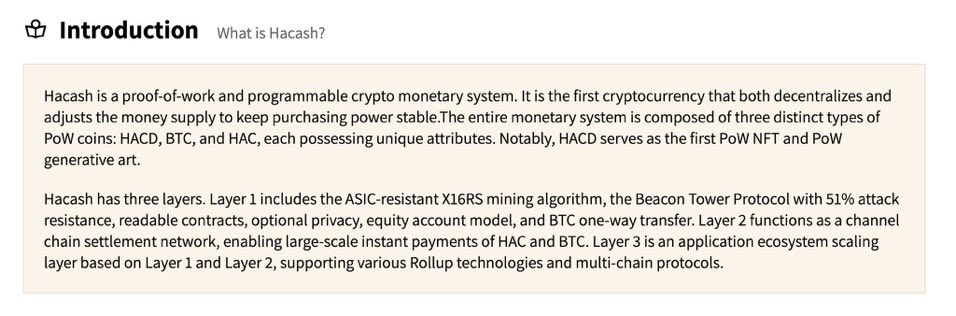
“We should have a gentleman’s agreement to postpone the GPU arms race as long as we can for the good of the network.”— Satoshi Nakamoto, BitcoinTalk, Dec. 12, 2009 #SatoshiNakamoto once stated on the forum ‘BitcoinTalk’ that specialized hardware would eventually emerge and threaten the fair competition of #mining. He was correct. His goal was to build a stable, fair, and decentralized network system. Over the past decades, #Bitcoin (#BTC) and its signature Proof-of-Work (PoW) algorithm has laid the foundation for #blockchain’s impact, but the significant issue has been exposed — ‘unfair mining competition.’ Many PoW blockchains have tried to address this issue, but often in ways that deviate from Satoshi’s original intent. @hacashorg emerged in this context. #Hacash’s vision and prospective mechanism design not only address this core problem of Bitcoin but aim to build a global financial system that prioritizes #decentralization and fairness. At the heart of this effort is the unique Hacash mining mechanism, which combines the technical Hacash X16RS algorithm with a special reward distribution mechanism. It provides a solid foundation for mining $HAC (Hacash coins) and $HACD 💎 (Hacash diamonds), ensuring the fair, #decentralized, and long-term distribution of these digital assets, thereby fulfilling Satoshi Nakamoto’s vision. Next, we will provide a detailed explanation of the Hacash mining mechanism. Understanding this mechanism will highlight why the Hacash community has huge potential and is the future of PoW blockchains... medium.com/hacash-com/hac… #hacash #bitcoin #hacashDiamond #blockDiamond #PoW #SoundMoney @hacashorg @HacashCom @Bitcoin @coinbase @VitalikButerin @ethereumJoseph @binance @cz_binance @krakenfx @tyler @cameron @kucoincom @SatoshiLite @crypt0snews @AltcoinDaily @cryptocom @crypto @discovercrypto @RCEugene @BITCryptoXchg @NFTsGallerry @Ashcryptoreal @blockchainchick @nyblockchainco @maxkeiser @Brad_Laurie @ethereum
English
2
11
25
2.7K
CryptoGrodd
CryptoGrodd@groddofcrypto·
I’m quietly buying as much $KAS at .03+ as I can afford. Call it a hunch.
English
13
16
196
4.3K
Exy
Exy@eth_exy·
Low market cap Massive potential What's the ticker?
English
149
101
199
24.8K
Fox Crypto
Fox Crypto@itsFoxCrypto·
NEXT BIG #CRYPTO PROJECT IS ___________?? 👀🚀
English
107
6
64
4.4K
Crypto Fergani
Crypto Fergani@cryptofergani·
ETH is dead BTC is too slow SOL is filled with scammers XRP is for old people What’s the solution?
English
724
78
469
101.4K
AnalogDelete retweetledi
CyberArchive
CyberArchive@Cyberarchive·
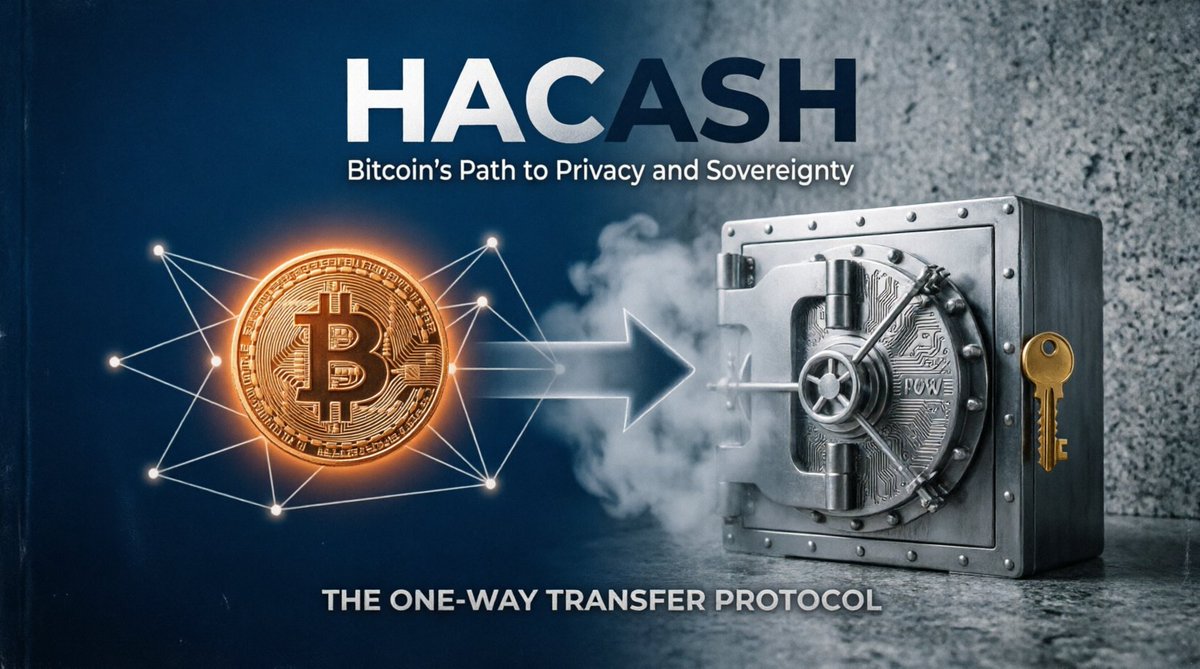
Let me explain the $BTC one-way transfer to #Hacash in the simplest way possible. Imagine you have Bitcoin. You love Bitcoin. But you also wish Bitcoin could do more like send instantly, or use in apps, without waiting ten minutes per transaction or paying high fees. #Hacash offers a way to do that. But it works differently than anything you've seen before. Here's how it works, step by step. You take your Bitcoin and send it to a special address on the Bitcoin network. This address isn't controlled by any person, company, or group. It's generated by math. No one knows the private key. Not even the Hacash team. Once Bitcoin goes there, it cannot be moved again. That's why we call it a black hole address. When Hacash sees that your Bitcoin has arrived and been confirmed on the Bitcoin network, it does something simple. It creates the same amount of BTC on the Hacash network. And it gives control of that BTC to you. Not a wrapped version. Not an IOU. Protocol-native BTC, secured by Hacash's consensus. The most important part: you use the exact same private key you used on Bitcoin. If you control your Bitcoin with a certain seed phrase or wallet, that same key controls your BTC on Hacash. You don't need to learn a new system. You don't need to trust a new custodian. Your keys, your coins. Always. And here's something else that matters: it becomes private. On Bitcoin, every transaction is visible to everyone. Forever. Your balance, your sends, your receives all public. That's great for verification, but not always great for privacy. Hacash is different. Transactions are pseudonymous by default. Your activity isn't broadcast to the world unless you choose to share it. You can verify your own transactions without exposing them to surveillance. You can prove what you need to prove, to who you need to prove it to, without revealing everything to everyone. This isn't about hiding. It's about choice. Privacy by default. Transparency by choice. Why does this matter? Because now your Bitcoin can do things Bitcoin wasn't designed to do. It can move in less than a second. It can be used in applications without risking smart contract exploits. It can participate in DeFi without approving infinite spending or signing blind transactions. And it can do all of this without forcing your financial life into the public eye. And none of this requires you to trust a bridge operator, a multisig wallet, a federated validator set, or an oracle. There is no middleman. There is no upgradeable contract that can be paused or drained. There is only code that runs exactly as written. This is not a bridge in the traditional sense. Bridges usually work both ways. They let you deposit BTC and get wrapped BTC, then later redeem it. That back-and-forth requires trust. It requires validators. It creates attack surfaces. We've seen what happens when those bridges fail. Millions lost. Users left with nothing. Hacash removes that risk by removing the return path. Yes, it's one-way. Once your BTC is on Hacash, it stays on Hacash. That's not a bug. That's the design. By eliminating the ability to pull BTC back through a smart contract, Hacash eliminates the ability for attackers to exploit that path. Think of it like moving your gold from a public vault to a private, fortified vault. You can't easily move it back, but while it's there, it's safer, more usable, more private, and still entirely yours. hacash.org/BTC #Bitcoin #Hacash $BTC $HACD @Bitcoin @BitcoinMagazine @Davincij15
CyberArchive tweet media
English
0
6
14
244
AnalogDelete retweetledi
CyberArchive
CyberArchive@Cyberarchive·
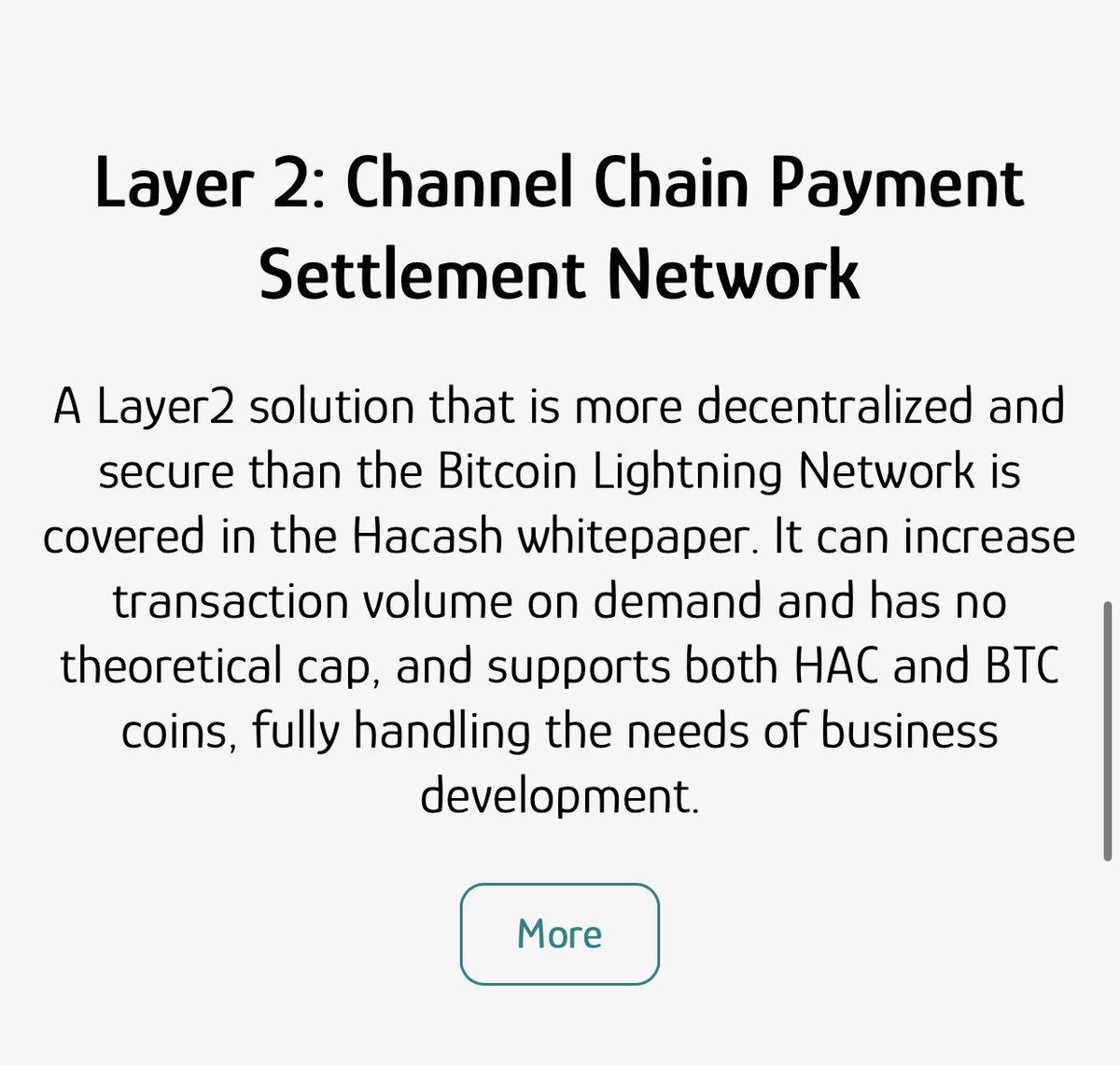
"The Hook" Bitcoin as Instant Payment Primitive 1. Thesis: Calling Hacash "the hook" extends beyond rescue. It is functional enablement: catching Bitcoin and pulling it into an architecture where instant, low-cost payments become possible without compromising the monetary properties that make Bitcoin valuable. 2. Definition: Instant BTC on Hacash = migrated BTC (via one-way transfer) + L2 payment channels + protocol-native settlement + PoW finality. No wrapped tokens. No federated validators. No trusted relayers. Just layered cryptography and consensus-enforced rules. 3. The Bitcoin Constraint: Bitcoin's base layer prioritizes settlement finality over throughput: ~10-minute block times Limited transactions per second Fee market volatility during congestion These are features for sound money but frictions for daily payments. 4. The Hook's Solution: Once BTC is migrated to Hacash: It inherits L2 instant payment channels (sub-second confirmation) Settles atomically on L1-2 (no contract risk) Pays fees in HAC (action-sized, predictable) Retains key continuity (same private key, no new trust) The Hook doesn't change Bitcoin. It extends Bitcoin's utility into a payment-optimized layer without altering Bitcoin's consensus. 5. Security Model: ✅ Instant payments are cryptographically secured, not centrally operated ✅ Finality flows upward: L2 channels settle to L1-2 PoW ✅ No bridge operators, no multisig, no upgradeable contracts ✅ Compromise requires attacking Hacash consensus not a single payment hub 6. Research Question: Can an asymmetric scaling model where Bitcoin migrates unidirectionally into a layered, PoW-backed payment environment preserve monetary soundness while enabling practical utility? The Hook tests whether sovereignty and usability can coexist without centralized intermediaries. $BTC $HACD $HAC #Hacash #Bitcoin
English
0
6
10
146
AnalogDelete
AnalogDelete@spec01010·
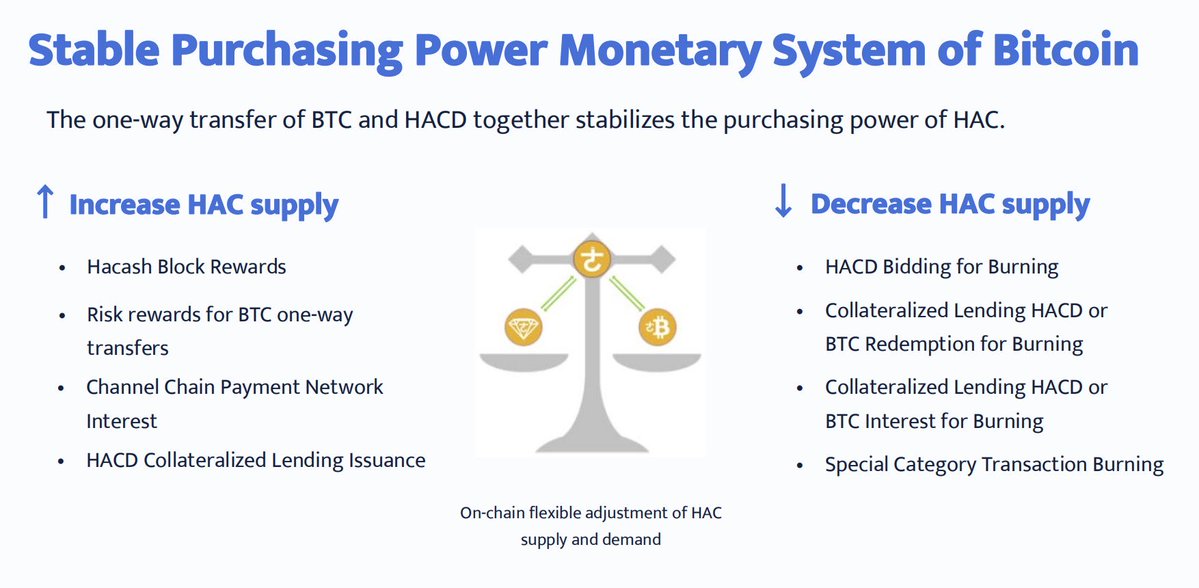
@Kas_Currency_Fr The revolution is in innovative/sustainable monetary policy with the fairest issuance. Not another fixed supply/halving model, and especially not one where 90% of coins have been mined before 99% of the world knows about it. #hacash is the revolution Explorer.hacash.org
AnalogDelete tweet mediaAnalogDelete tweet mediaAnalogDelete tweet mediaAnalogDelete tweet media
English
0
0
1
12
𐤊 Kaspa Currency France 𐤊
Parfois, la vraie révolution n’est pas dans le bruit. Elle est dans cette sensation étrange : vous envoyez 500 $KAS à un ami, vous payez un café, ou vous bougez un petit actif… et ça passe. Instantanément. Sans friction. Sans que vous ayez eu à penser à la blockchain. C’est exactement là que Kaspa gagne silencieusement : elle disparaît pour laisser place à l’usage. L’infrastructure invisible qui rend enfin le reste fluide. Et on n’est qu’au début. ✨ #Kaspa #UX
𐤊 Kaspa Currency France 𐤊 tweet media
Français
2
5
84
985
Lenn Treve ▽
Lenn Treve ▽@SirBoughtALot·
Bitcoin: 7 TPS. Visa: 24,000 TPS. Nexa’s: 100,000+ TPS. Built by the OG engineers behind Bitcoin Cash. No VC money. No pre-mine. First halving: 16 days ago. Only a few are talking about this. 🧵
Lenn Treve ▽ tweet media
English
6
17
47
575
AnalogDelete retweetledi
CyberArchive
CyberArchive@Cyberarchive·
A system that demands exposure to prove fairness has already failed. True justice stretches time to equalize opportunity, guards privacy as the default, and offers transparency only by choice. Sound money doesn’t announce itself it endures quietly, leaving room for every generation to arrive on time. #hacash $HACD $HAC
English
0
6
9
108
AnalogDelete retweetledi
CyberArchive
CyberArchive@Cyberarchive·
HAC as Settlement Primitive 1. Thesis: $HAC is not a utility token. It is a protocol-native settlement asset the energy layer of Hacash, designed to power explicit transactions, secure consensus, and enable sovereignty without delegated trust. 2. Definition: HAC = PoW-issued coin + first-class action type in TEX/AST + protocol-level account abstraction + storage rent denominator. No ERC-20 wrapper. No smart contract dependency. No admin mint. 3. Issuance: Mined via X16RS (SHA3-chain with random algorithm selection). Dynamic difficulty adjustment. No pre-mine, no team allocation, no venture reserve. Supply emerges from verifiable work not promises. 4. Function: - Pays for transaction execution (gas by action size) - Settles L1-2 atomic transfers (no contract risk) - Fuels on-chain HACD auctions (90% of bids burned) - Denominates storage rent (state sustainability mechanism) 5. Sovereignty Properties: ✅ No approve/transferFrom attack surface ✅ No upgradeable proxy traps ✅ No delegated authorization ✅ Intent declared in transaction structure, not opaque contract logic 6. Economic Design: - HAC flows: energy for execution - HACD stacks: value for persistence - Burning mechanisms: deflationary pressure via auctions, rent, execution - No hidden inflation: issuance rules are consensus-enforced, not governance-adjusted Hacash.org #pow #Hacash #cryptocurrency $HAC $HACD
English
0
4
10
196
AnalogDelete retweetledi
CyberArchive
CyberArchive@Cyberarchive·
Why Hacash is "The Hook" The Architecture of Sovereign Money. Read this to understand 100%. 1. The Thesis Crypto is a slaughterhouse of rugs, blind signing, and contract risk. Hacash is not "DeFi 2.0." It is a sovereignty engine. We call it The Hook: A mechanism designed to catch Bitcoin as it drifts toward exploit-prone environments, and pull it into an architecture where value is secured by math, not promises. 2. The Problem Hacash Solves Bitcoin is sound money but slow/rigid. Ethereum is programmable but fragile (admin keys, proxies, infinite approvals). Bridges are traps (multisig compromises, oracle failures). Hacash offers a third path: Protocol-Native Programmability.Assets live in the consensus layer, not in upgradeable contracts. 3. The Core Primitive: Explicit SemanticsIn Ethereum, you sign a function call and hope the contract doesn't drain you (Blind Signing). In Hacash, the transaction structure explicitly declares intent (TEX/AST). Before execution, you see exactly what moves, where it goes, and the state change. Intent is machine-verifiable. The hook catches deception. 4. The Asset Triad Hacash is built on three pillars, all protocol-native (no ERC-20 wrappers): $HAC (Energy): PoW coin. Pays for gas & storage rent. The flow of the system. $HACD (Value): Hybrid Stack Token. 2²⁴ supply. PoW-mined, on-chain auctioned, stackable. The anchor. $BTC (Migrated): Bitcoin caught by the hook. Instant payment capabilities. 5. The "Hook" Mechanism (BTC One-Way Transfer)How do you move BTC safely? You don't bridge it; you migrate it. User sends BTC to a deterministic "black hole" address. Hacash consensus observes the burn and mints protocol-native BTC on Hacash. Key Continuity: The same private key controls the funds. Irreversible: No rollback, no multisig, no validator set to compromise. You sacrifice bidirectional flexibility for maximum security. 6. Instant Payments via The Hook Bitcoin is slow. Hacash is fast. Once BTC is hooked, it inherits Hacash's L2 instant payment channels and L1-2 atomic settlement. Sub-second transfers. Zero contract risk. Bitcoin remains sound money on its chain; it becomes spendable cash on Hacash. 7. The Tech Stack: Layered Programmability Hacash separates safety from complexity. L1-2 (Atomic): Simple transfers, swaps, conditionals. No VM risk. Deterministic. L3-6 (VM/DeFi): Complex logic (like Uniswap) exists here. Isolation: If a L6 contract gets hacked, L1-2 assets remain safe. The blast radius is contained. 8. $HACD: The Hybrid Stack Token More than an NFT. It is a programmable store of value. Mining: PoW-issued via SHA3-based algorithm. Scarcity: 16,777,216 max. Hard cap. Stacking: You can issue tokens (FT/NFT) on top of a HACD. Gene: 10-byte visual algorithm renders unique art client-side. Efficiency + Aesthetics. 9. Economic Security: Storage Rent Unlimited state bloat kills chains. Hacash uses Storage Rent. If you want to keep data on-chain, you pay rent. If you stop, the state is recycled. This forces protocols to be efficient and economically sustainable. No "ghost contracts" eating bandwidth forever. 10. The Reality Check (Honest Tradeoffs)Hacash is not magic. It is engineering. ⚠️ Complexity: TEX/AST requires learning a new mental model. ️One-Way Bridge: BTC cannot naturally flow back to Bitcoin mainnet (by design). ⚠️ Adoption: It is early. Tooling is maturing. ️PoW: ASICs are a long-term threat to decentralization (though X16RS resists for now). 11. Why "The Hook" Matters In a world of "Trust Us" and "Audit Pending," Hacash offers Trustless Verification. No Admin Keys. No Upgrade Backdoors. No Blind Signing. No Centralized Oracles. The Hook holds what matters: Your keys, your intent, your sovereignty. 12. Hacash is a wager on a future where code is law, and law is verifiable. It is not a get-rich-quick scheme. It is infrastructure for the post-trust era. If you believe sovereignty is the only metric that matters, The Hook is where you belong. Verify the code. Run the node. Understand the risk. Hacash. The Reckoning is Mined. Someday, they will understand. hacash.org hacash.com hacd.it github.com/hacash/doc #Hacash #TheHook #Bitcoin #Sovereignty #PoW #CryptoArchitecture $HACD $HAC $BTC
CyberArchive tweet media
English
1
5
10
217
AnalogDelete retweetledi
Hachiko on HACD
Hachiko on HACD@HachikoHACD·
7 years of $HACD. No premine. No allocation. PoW from day one. $HACHI is built on this foundation. Loyalty needs time. Formation needs structure. Not just a meme. A meme formed through HACD.
HACD Labs | PoW Coin Launch@hacdlabs

Seven years ago today, the first HACD was mined. NHMYYM #1 May 16, 2019 10:42 UTC No premine. No allocation. No contract deployment. Just PoW. A named asset unit was born. Seven years later, HACD is evolving from a scarce PoW collectible into a container for structured asset formation. Happy 7th birthday, HACD.

English
0
5
17
227
AnalogDelete retweetledi
HACD Labs | PoW Coin Launch
Seven years ago today, the first HACD was mined. NHMYYM #1 May 16, 2019 10:42 UTC No premine. No allocation. No contract deployment. Just PoW. A named asset unit was born. Seven years later, HACD is evolving from a scarce PoW collectible into a container for structured asset formation. Happy 7th birthday, HACD.
HACD Labs | PoW Coin Launch tweet media
English
0
7
19
1.8K
AnalogDelete retweetledi
HACD Labs | PoW Coin Launch
We used ChatGPT Images 2.0 to visualize what @hacdlabs is building. $HACD as a PoW-backed asset container. Powered by: PoW Cost Hybrid Stack Protocol Stack Assets Incubator Launchpad HVM Sidechains A product stack for PoW-native asset formation, launch, trading, and execution.
HACD Labs | PoW Coin Launch tweet media
English
0
9
16
403
AnalogDelete retweetledi
HACD Labs | PoW Coin Launch
Limited $HACD with unlimited programmability.
Whale №588 ㄜ 🇺🇦@whalenumber588

How hacdchess.online position generarion works? lets use MNYESN as example visual gene: 0a9f2adf6d4ed7f02fa0 first 17 units are defining the position 0a9f2adf6d4ed7f02fa Firstly are going pawns every symbol defines where it will be located 1,2,3,4,5,6,7 - 2nd row 8,9,0,a,b,c - 3rd d,e,f - 4th row it goes from a to h. In my example the first digit is 0 which sets pawn on A3 (3rd row). then a = B3, 9 = C3, f = D4, 2 = E2, a = F3, d = G4, f = H4. 0a9f2adf - sets pawns. You can see that setting a pawn on 4th is 19%, on 3rd 37.5% and 43.5% on 2nd making the position opened, normal for game, but still very depending from the luck. You can have any position, even the starting one. To protect the king from a check, if its on A1 or H1, then pawn always will be on B2, G2! Next goes the king it spawns only on 1st row: to allow castling, and balance security. Digits are setting the vertical: 1 - A; 2,3 - B; 4,5 - C; 6,7,e - D; 8,9,d - E, 0,a - F, b,c - G, f - H as you can see, the highest chance is closer to a center and the lowest in the corner. Center (E,D) - 37.5%, corner (A,H) - 12.5%, other - 50%. In our example 9th digit is 6 = king D1. Then rooks to allow the castling if king is not in the corner, I use the next algorytm to define rooks: rooks has to be from the both side of the king. So if in 8 squares your king is on 5th, there are 3 possibile squares from the one side and 4 from another. The digits from 1 to 16 defining count of steps the rook will do searching for its place. OUR example: 10th digit is d which equals 14. And the king is on D1. Means only A1, B1, C1 is available. I place the rook at C1 and do 14 steps to the side and back including the start: C1 - B1 - A1 - B1 - C1 - B1 - A1 - B1 - C1 - B1 - A1 - B1 - C1 - B1 - rook from this side is located at B1. If the digit would be 0 - it would be on C1. Second rook the same. Available squares: E1, F1, G1, H1 11th digit: 4 equals 5 steps E1 - F1 - G1 - H1 - G1 second rook is on G1 Queen Queen and other pieces can be spawned on 1-2 first rows. It looks for all avaible squares and shares the same logic to rooks. For our example: From 1-2 raws are taken: B1 abd G1 by rooks, D1 by a king, E2 by the pawn Available are: A1, A2, B2, C1, C2, D2, E1, F1, F2, G2, H1, H2. Pieces are going in snake shape (A1-A2-B1-B2...) and the corner is H2 12th digit is e, equals 15 steps: A1 - A2 - B2 - C1 - C2 - D2 - E1 - F1 - F2 - G2 - H1 - H2 (CORNER) - H1 - G2 - F2 The Queen is on F2 Bishops First is black square bishop. 13th digit is: d The same logic of the route as for a Queen. But this bishop can have only diagonals, the route is: A1, B2, C1, D2, E1, F2, G1, H2 In our example F2, G1 are taken digit d equals 14 steps: A1 - B2 - C1 - D2 - E1 - H2 - E1 - D2 - C1 - B2 - A1 - B2 - C1 - D2 Bishop - D2 Next bishops route goes the same but from 8 to 1. H1, G2, F1, E2, D1, C2, B1, A2 B1, D1, E2 are taken Next digit is 7, equals 8 steps. H1 - G2 - F1 - C2 - A2 - C2 - F1 - G2 Bishop - G2 Knights are 100% similar to a Queen, starting at A1, endning at H2. 16th digit is f equals 16 A1 - A2 - B2 - C1 - C2 - E1 - F1 - H1 - H2 - F1 - E1 - C1 - C2 - B2 - A2 - A1 knight A1 And 17th symbol is 0 equals 1 step. Knight A2 For black color position is revesed A = H, 1 = 8 Thanks for attention!

English
0
5
14
556
AnalogDelete retweetledi
Ken You ㄜ
Ken You ㄜ@YouKenTrust·
Bitcoin hard cap is great, but fixed supply does not automatically equal stable purchasing power. In the real economy, monetary demand changes, productivity changes, population changes, and credit structures change. Traditional fiat money responds to change through central-bank discretion, but the problem is excessive power. Then is it possible to use a more transparent, more rule-based, more market-oriented method to explore purchasing-power stability? One theoretical meaning of Hacash type designs is that they reopen this question: Can cryptocurrency explore a monetary system closer to purchasing-power adaptability without returning to arbitrary central-bank discretion?
Ken You ㄜ@YouKenTrust

Bitcoin answered one core question: How can we create non-sovereign, digital, credibly scarce base money? But it did not answer all questions. For example: -Is fixed supply necessarily the final answer for all monetary scenarios? -How should the problem of monetary purchasing-power stability be solved? -Can PoW be used not only to maintain ledger security, but also to enter the asset-formation process? -Will the boundary between money and assets be reconstructed? -How will monetary competition happen? Bitcoin is the starting point, not the end of all questions.

English
0
6
14
428
AnalogDelete retweetledi
CyberArchive
CyberArchive@Cyberarchive·
Why @hacdlabs matters (read this carefully): Most crypto projects launch the same way: 1. VCs provide capital 2. Team gets tokens 3. "Community" buys at higher price 4. VCs and team exit 5. Community holds bags This isn't innovation. It's extraction with better marketing. HACD Labs does something different: Instead of venture capital, projects plug into proof-of-work. Here's what that means: The Foundation: HACD is a PoW-mined asset (like Bitcoin). No pre-mine. No team allocation. Scarcity created by energy, not promises. The Stack: Projects issue tokens on top of HACD. These "Stack Tokens" inherit HACD's security: no admin keys, no upgrade traps, no rug pulls. The value flows back to the base layer. The Alignment: No advisory fees. No equity grabs. Support comes in HACD/HAC/stablecoins. Success means the whole stack appreciates not just insider wallets. Why this is significant: For the first time, we're testing whether innovation can be bootstrapped by energy instead of capital. Not "trust our roadmap." Not "believe in our vision." But "verify the work." hacd.it/incubator Hacd.it #hacash #pow $HACD $HAC $BTC #CryptoMarket
CyberArchive tweet media
English
0
4
9
148
AnalogDelete retweetledi
Ken You ㄜ
Ken You ㄜ@YouKenTrust·
The new digital gold is forming. HACD makes plug PoW and play PoW possible for everyone. Happy 7th birthday, HACD!
HACD Labs | PoW Coin Launch@hacdlabs

Seven years ago today, the first HACD was mined. NHMYYM #1 May 16, 2019 10:42 UTC No premine. No allocation. No contract deployment. Just PoW. A named asset unit was born. Seven years later, HACD is evolving from a scarce PoW collectible into a container for structured asset formation. Happy 7th birthday, HACD.

English
0
7
20
446