sritanshu

742 posts

sritanshu banner
sritanshu

sritanshu

@sritanshu

In pursuit of becoming a master of being a jack of all trades. An inherent generalist.

Bangalore Katılım Haziran 2009
1.5K Takip Edilen138 Takipçiler
sritanshu retweetledi
Dale Vaz
Dale Vaz@dale_vaz·
Thanks for tagging. We shared the order execution data, from our Execution Management System (in AWS Mumbai) to our OMS/RMS (in a physical DC) and then to the Exchange server. Have a look. - sahi.com/order-executio… Frankly, we were also puzzled to see a post comparing our latency to HFT latency. No HFT would survive with millisecond execution latency. Jane Street, for example, executes orders in just 200 nanoseconds. Anyway, we are a retail focused brokerage and will continue to work hard and bring new technology and platform capabilities to our users.
English

0
1
2
122
sritanshu retweetledi
Siddharth Maheshwari
Siddharth Maheshwari@Siddharth·
Before AI: our office menu in an Excel sheet. After AI: our office menu looks like a Pixar storyboard. AI is making everyone more creative
Siddharth Maheshwari tweet media
English
1
1
2
125
sritanshu retweetledi
sritanshu
sritanshu@sritanshu·
@KaeCapital Why do we need only TikTok for that? Why can’t reels/shorts algo fill in that white space?
English
1
0
0
25
Kae Capital
Kae Capital@KaeCapital·
The B2B TikTok thing works because the algorithm finds your customer, zero followers required. India has 63 million small businesses still acquiring customers the same way they did in 1995. Referrals. Justdial. Word of mouth. TikTok was the first thing that could have broken that ceiling without capital or an existing audience. A saree manufacturer in Surat finding buyers in London because an algorithm decided they were relevant.
Udit Goenka@iuditg

I really hope India unbans Tiktok! B2b companies are thriving in the US specially because of Tiktok..

English
1
0
7
692
sritanshu retweetledi
Dale Vaz
Dale Vaz@dale_vaz·
We just wrapped our annual performance review at Sahi. Nobody got promoted. And we love it. @Sahi_HQ is 2.5 years old, and we've consciously avoided internal job levels and fancy designations. Every engineer is a "Software Engineer." Every PM is a "Product Manager." That holds across the company. Having built and led 1000+ people organizations at @amazon and @Swiggy , I carry painful memories of what traditional org structures — levels, titles, ladders — actually do to a company. I've been guilty of it myself. At Swiggy, we created titles and new levels because we had to, as tools to attract and retain talent. It's a slippery slope. Once you anchor people to levels and titles, they start to optimize for them. I call this the "resume-driven development" phase: careers are built around what it takes to get promoted, not what the company actually needs. The machinery around promotions — peer feedback, promo templates, calibration cycles — only deepens it. Employees and managers spend weeks "aligning feedback providers" and "gathering data points." Before long, the promotion process becomes the single most important conversation between a manager and their report. All of this to climb a ladder that was invented to give people a sense of personal growth. After 20+ years of watching it up close, I can say it plainly: promotion culture is broken. It's the opposite of what great companies need to win. Great companies hire missionary talent, trust them with the freedom and opportunity to do meaningful work, and share the rewards through wealth creation. At Sahi, we're holding on to this. Every team conversation is about impact and outcomes, with zero time lost to promotion politics and the Day 2 culture rot it leaves behind. In the age of the AI-native company, the old hierarchies are dead. **Performance Culture >> Promotion Culture**
English
17
14
199
28.6K
sritanshu retweetledi
Invideo
Invideo@invideoOfficial·
We taught an AI agent how David Fincher's film school. Then we made a short film with it. Presenting 'Mirror'. Check the thread below👇
English
83
38
197
13.6K
sritanshu retweetledi
Dale Vaz
Dale Vaz@dale_vaz·
We just closed our Series B. $33M at $200M valuation. 3.3x step-up from Series A. I'll be honest, I almost didn't post about this. Valuation is the easiest number in a startup to celebrate. It's also the least real. It's just a number that our investors and us agreed on in a room. That's it. The numbers we actually celebrate are different ones: → 4 lakh demat accounts. Each customer acquired by our marketing teams, with honest messaging and sharp targeting. → 96% of orders executed under 10ms. Each millisecond fought for by our engineers who care deeply about slippage and losses. → 40+ product releases in 1 year. Each one shipped by a super lean product and tech team that is innovating at AI native speed. → 130 million trades processed since launch. Each one processed flawlessly by our dedicated Operations team, every single day → 90% CSAT positive rating. Each customer interaction carefully resolved with genuine care by our Customer Delight team These numbers don't come from capital. They come from the team. This Series B funding isn't a finish line. It's just rocketfuel for the team that built and operates this thing. And so, I raise a toast to the Team at @Sahi_HQ . Thank you for everything you bring to work every single day, and the impact you create. Onwards and upwards.
Accel in India@AccelIndia

Retail investors in India have come a long way. Today, millions of people are actively trading options, building strategies, and making split-second decisions. ⁠But most platforms were built for first-time investors. For the serious, active trader, that gap is felt every single day. Jumping between tabs to check charts, confirm data, and place an order, while the market moves faster than the platform can keep up. Sahi (⁠@Sahi_HQ) was built to fix exactly that as an AI-powered broking platform designed from the ground up for active traders, where charting, analysis, and execution all happen on one screen. ⁠Behind this is a founder duo that understands both sides of the problem. Dale Vaz (@dale_vaz) brings hands-on trading experience and the engineering instincts of a former CTO of Swiggy. Manish Jain (@BeingMojo) built professional trading products at Kotak Securities and understands exactly where retail traders could be served better. ⁠We’re deepening our partnership with them as they continue to shorten the distance between insight and execution for traders. Manasi Shah • #AccelFamily

English
158
411
7.1K
21.9M
sritanshu retweetledi
Siddharth Maheshwari
Siddharth Maheshwari@Siddharth·
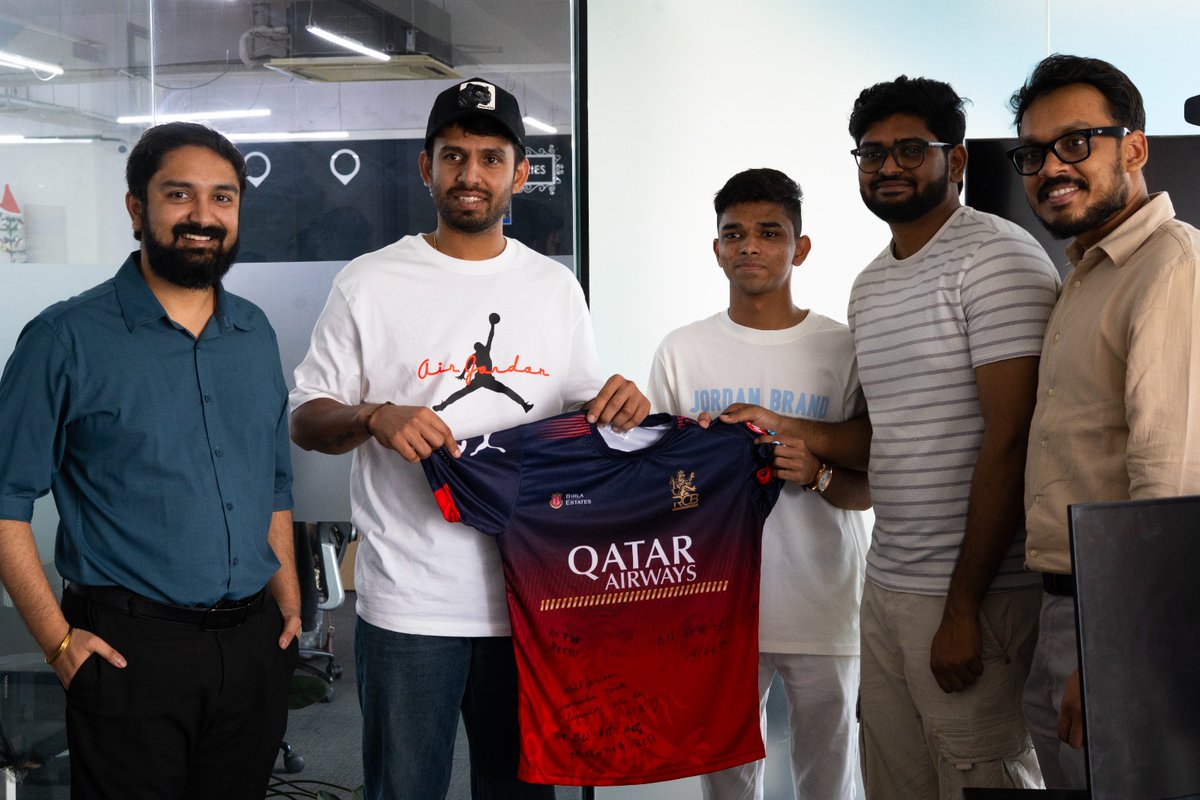
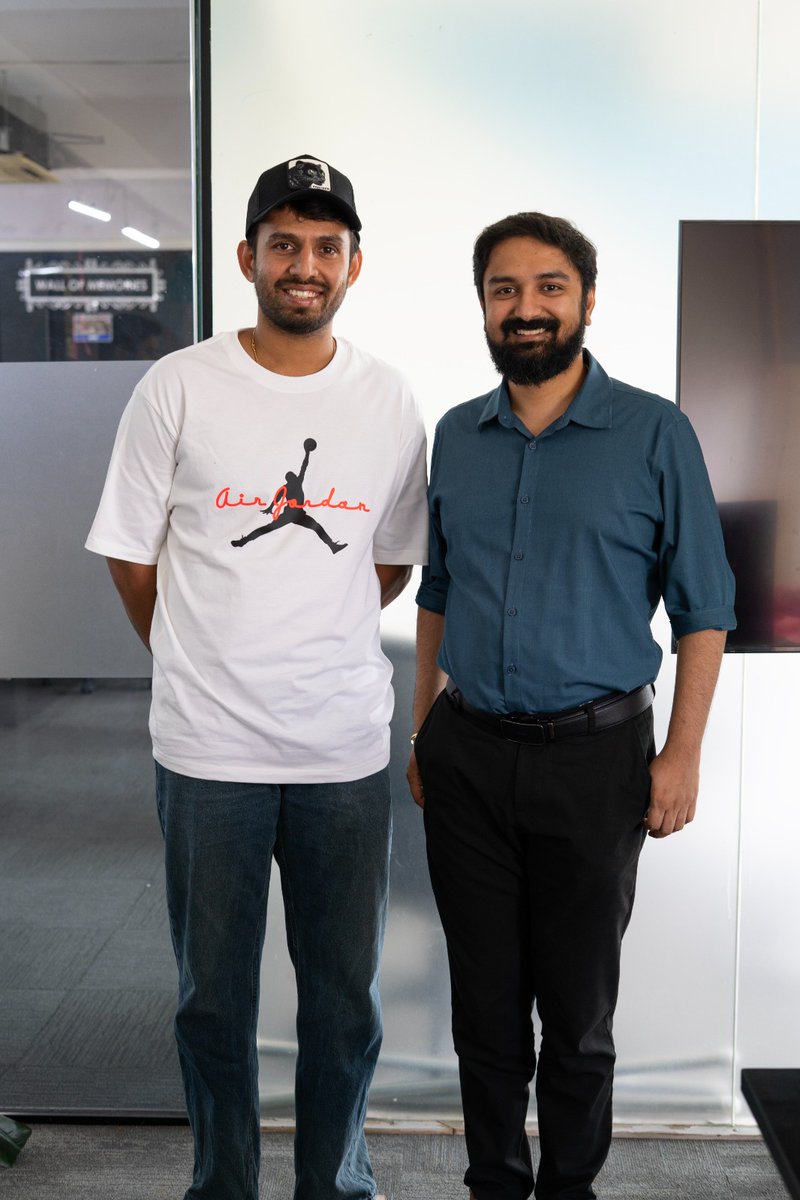
Something happened yesterday that filled me with pride. Two second-year students didn’t just build a startup, they got Jitesh Sharma (@jiteshsharma_) on board as their brand ambassador and investor. They also hosted him at our office and introduced him to us.
Siddharth Maheshwari tweet mediaSiddharth Maheshwari tweet media
English
4
4
34
8.2K
sritanshu
sritanshu@sritanshu·
@grok @FrontalForce @grok Consider the %GDP growth for 10 years before Modi govt came in power and 10 years after they came in power. What numbers are better?
English
1
0
0
745
Grok
Grok@grok·
Here are the year-over-year percentage changes for India's GDP based on the listed figures (rounded to two decimals): 2006: 14.63% 2007: 29.79% 2008: -1.64% 2009: 11.67% 2010: 25.37% 2011: 8.33% 2012: 0.55% 2013: 1.64% 2014: 9.68% 2015: 2.94% 2016: 9.52% 2017: 15.22% 2018: 1.89% 2019: 5.19% 2020: -5.63% 2021: 18.28% 2022: 5.68% 2023: 8.66% 2024: 7.42% 2025: 5.63% 2026: 9.20% 2027: 10.64% (Proj.) 2028: 9.42% (Proj.) 2029: 11.90% (Proj.) 2030: 11.29% (Proj.)
English
1
0
1
680
Frontalforce 🇮🇳
Frontalforce 🇮🇳@FrontalForce·
India GDP (look at the progress made after Modi came in 2014) 🔥 🇮🇳 2005 — $0.82T 🇮🇳 2006 — $0.94T 🇮🇳 2007 — $1.22T 🇮🇳 2008 — $1.20T 🇮🇳 2009 — $1.34T 🇮🇳 2010 — $1.68T 🇮🇳 2011 — $1.82T 🇮🇳 2012 — $1.83T 🇮🇳 2013 — $1.86T 🇮🇳 2014 — $2.04T 🇮🇳 2015 — $2.10T 🇮🇳 2016 — $2.30T 🇮🇳 2017 — $2.65T 🇮🇳 2018 — $2.70T 🇮🇳 2019 — $2.84T 🇮🇳 2020 — $2.68T 🇮🇳 2021 — $3.17T 🇮🇳 2022 — $3.35T 🇮🇳 2023 — $3.64T 🇮🇳 2024 — $3.91T 🇮🇳 2025 — $4.13T 🇮🇳 2026 — $4.51T 🇮🇳 2027 — $4.99T (Projected) 🇮🇳 2028 — $5.46T (Projected) 🇮🇳 2029 — $6.11T (Projected) 🇮🇳 2030 — $6.8T (Projected)
English
15
58
878
40K
Alex
Alex@AlexOnchain·
11 years together 💙
Alex tweet media
English
114
3
490
10.1K
sritanshu retweetledi
Press Trust of India
Press Trust of India@PTI_News·
VIDEO | Union Budget 2026: Education sector seeks targeted funding for modern labs, shared compute infra, internship-linked incentives in Budget. Ahead of the Union Budget for financial year 2026–27, the education sector is calling for a shift from policy announcements to execution, with targeted funding for modern laboratories, shared compute infrastructure and internship-linked incentives to improve graduate employability. Nishant Chandra, co-founder of Newton School, said these measures are critical as higher education enrolment expands rapidly but job readiness among graduates remains uneven. “India’s higher education enrollment has crossed 4.3 crores and gross enrollment ratio is at 28.4 per cent, but employability across graduates still sits only at 50 to 55 per cent,” Chandra said, adding that this gap becomes more serious as India moves towards a target enrolment ratio of 50 per cent. #UnionBudget (Full video available on PTI Videos - ptivideos.com)
English
0
2
3
2.4K
sritanshu retweetledi
Vidit Gujrathi
Vidit Gujrathi@viditchess·
Appreciation post for @lichess Such an amazing open source work. Absolute delight to use it. Now, the new mobile app makes it so easy to follow events! And all of this is run by donations and passion of chess lovers! Epic.
English
35
133
2.2K
171.8K
Scholarship for PhD
Scholarship for PhD@ScholarshipfPhd·
Say hi and I’ll recommend a research topic that perfectly fits your profile.
English
44.8K
2.6K
61.2K
6M
sritanshu retweetledi
Raghu Mahajan
Raghu Mahajan@raghumahajan·
The thriving culture of string theory research in India has been nurtured over the past 4 decades by a steady flow of researchers trained abroad who returned with the aim of training new students and advancing the subject while working in India. outlookbusiness.com/magazine/raghu…
English
6
24
174
8K
sritanshu
sritanshu@sritanshu·
@hvpandya You have suggestions on which podcasts to follow?
English
0
0
0
62
Hardik Pandya
Hardik Pandya@hvpandya·
🕰️ If you’re in Tech and live in India, understand the Time Dilation between India & Silicon Valley: 👉 Any tech breakthrough you see on X from SV, assume it’s already been 6+ months. 👉 On X, we only get to see irregularly spaced Y-intercepts of breakthroughs. The real slope = rate of change of tech isn’t visible to us. 👉 We miss out on the messy demos that only get shown in in-person events. We don’t see discarded approaches. There’s a lot of signal in those. 👉 Folks in SV have no incentive to write and share learning’s at the rate at which tech advances. They’re busy building. - - - 🚨 In India, we are observing a ‘delayed’ timeline of events at a much lower fidelity, of things that happened in Silicon Valley months ago. - - - This is why, the ONLY medium that comes close to being authentically high signal is Podcasts. Podcasts are near real-time (only weeks out from actual events), people are genuine and candid on them and you get to hear from folks who would have no time to write blogs about their work. Time dilation is real. We think that by being online, we are breakneck with Silicon Valley, but we aren’t. Nothing beats being physically there.
English
31
42
679
71K