
Salvador Severich

1.5K posts

Salvador Severich banner
Salvador Severich

Salvador Severich

@sseverich

Entrepreneur. 'The future starts today, not tomorrow.' Business and tech passionate, eager to keep learning!

Antwerp, Belgium Katılım Mayıs 2010
544 Takip Edilen290 Takipçiler
Salvador Severich retweetledi
Lenny Rachitsky
Lenny Rachitsky@lennysan·
My biggest takeaways from @stewart: 1. Product design is about creating understanding, not removing friction. Teams obsess over reducing friction and removing steps, but 70% to 80% of product design challenges are actually about helping people *understand* what your product does and what to do next. Users arrive barely interested and confused about what you offer. If they can’t quickly grasp what they’re looking at, they’ll leave. Making confusing things faster just gets users to the exit quicker. The mantra should be “Don’t make me think,” not “reduce friction.” 2. You’re not selling features—you’re selling outcomes. Nobody wants a saddle; they want to go horseback riding. Nobody wants a hammer; they want something built. People understand cars and beer without explanation, but new software needs an explanation of both what it is and why people should want it. Slack wasn’t selling messaging features—it was selling better team coordination and reduced email chaos. If you can’t articulate the transformation your product creates in people’s lives, you’re just listing features. 3. Organizations naturally fill with fake work that looks exactly like real work, what Stewart calls “hyper-realistic work-like activities.” Meetings to preview deck slides, analysis of tiny feature differences, elaborate processes around insignificant decisions. People aren’t stupid or lazy; they’re responding to having more workers than valuable work to do. Leaders must continuously ensure there’s enough clearly valuable work and explicitly say no to projects that can’t possibly generate meaningful impact. 4. The value of a feature exists on a "utility curve." There’s the initial flat zone where a feature is too weak to matter, then a steep rise where it brings users to the "aha" moment, then the value levels off where improvements don’t matter much anymore. Teams often give up in the first flat zone or waste resources in the third. The key question isn’t whether you have a feature, but whether you’ve invested enough to reach the steep part of the curve where it becomes genuinely valuable. 5. Small conveniences create emotional connections that drive word-of-mouth growth. No one switches products because of a good time-zone picker or smooth password recovery, but these details make users love or hate your product. Slack grew largely because people who used it at one company would join a new company and advocate strongly for adopting it. That advocacy came from accumulated small delights, not major features. 6. The “owner’s delusion” explains why bad experiences persist everywhere. Restaurant owners create terrible websites even though they’ve experienced the frustration of visiting other terrible restaurant websites. Business owners assume visitors care deeply about their product, when in reality people arrive distracted, in a hurry, just above the threshold of caring at all. The solution is to regularly step back, pretend you’re a normal person with limited time and patience, and honestly evaluate if your product makes sense. 7. Only pivot after exhausting all reasonable ideas. The right time to pivot isn’t when things get hard—it’s when you’ve genuinely tried every non-ridiculous approach and can coldly, rationally assess that the expected value has dropped below alternatives. Pivoting is humiliating because you’ve convinced investors, employees, and users of a vision you’re now abandoning. That emotional cost means most people either pivot too quickly or wait until they run out of money. 8. Treating customers and employees with extraordinary generosity creates a competitive advantage. Slack pioneered fair billing (not charging for unused seats), gave free credits during Covid, and automatically refunded customers for downtime without their asking. This wasn’t just ethics—it helped attract better employees, created positive stories, and built long-term customer loyalty. The mantra was “In the long run, the measure of our success will be the amount of value we create for customers.”
Lenny Rachitsky@lennysan

Stewart Butterfield (@stewart) rarely does interviews. After 2 years of trying, I finally convinced him to come on. In this special conversation, Stewart shares the frameworks and mental models that most helped him build two of the most important products in tech history (@Flickr, and @SlackHQ—which he sold for $28B, and which powers how basically every company collaborates these days). We discuss: 🔸 "Utility curves" — his framework for prioritizing ideas 🔸 "The owner's delusion" — why restaurant websites suck 🔸 "Tilting your umbrella" — a hilarious Slack core value 🔸 "Hyper-realistic work-like activities" — my new favorite concept 🔸 "Don't make me think" — Stewart's foundational design philosophy 🔸 The story behind "We don't sell saddles here" Listen now 👇 • YouTube: youtu.be/kLe-zy5r0Mk • Spotify: open.spotify.com/episode/42JBWU… • Apple: podcasts.apple.com/us/podcast/sla… Thank you to our wonderful sponsors for supporting the podcast: 🏆 @WorkOS — Modern identity platform for B2B SaaS, free up to 1 million MAUs: workos.com/lenny 🏆 @getmetronome — Monetization infrastructure for modern software companies: metronome.com 🏆 @Lovable — Build apps by simply chatting with AI: lovable.com

English
25
69
634
129.9K
Salvador Severich retweetledi
Brian Halligan
Brian Halligan@bhalligan·
Everything I learned about strategy in building HubSpot: Watch the competition, but never follow it: I got this line from Arnoldo Hax, my strategy professor at Sloan, and repeated it so many times that it is ingrained in HubSpot’s DNA. It is relatively obvious at this point that HubSpot competes with Salesforce.com (a formidable competitor). We very carefully watched them, but tried not to “follow” them—see next lesson. When everyone is zigging, you should zag: Regardless of what you think of Peter Thiel’s politics, he wrote a really good book on startups called Zero To One. In it, he talks about how you need to be right about something that everyone thinks you are wrong about for a long time. This type of “zagging” worked for HubSpot three times. First, we decided to focus on SMB (more M than S, btw) and stuck with it when everyone and their brother thought we should move to the enterprise. Second, we decided we would move from a marketing application company to a CRM platform company, competing with Salesforce, when everyone and their sister told us we were crazy to try because they were too hard to compete with. Third, we decided we would “build” (craft!) our CRM in-house as opposed to acquiring our way there when everyone and their cousin told us that we needed to follow ye olde CRM M&A franken-playbook. Don’t trash talk: I somewhat recently watched the U.S. Open tennis finals. In the remarks after the matches, I always appreciate how respectful the players are toward their opponents and how they express it. I feel the same way about Salesforce; they are a very good company that is hard to compete with, and no good comes in “poking the bear.” [h/t to my co-founder Dharmesh for coming up with the “poke the bear” analogy and many other brilliant things] Creating a category is harder than it looks:  HubSpot created the “inbound marketing” category.  Pulling that off involved writing about zillion blog articles, giving a jillion speeches, writing a book, running a conference, etc.  We invested way more energy in creating the inbound marketing category in the early years than we did in marketing the HubSpot product.  …So, when we wanted to go into the sales category, we thought we could just re-run the same playbook for “inbound sales.”  Failed.  When we went into CRM, we thought we’d create a new category called CMR, “customer managed relationship” software.  Failed.  When we released our CMS, we thought we’d create a new category called COS, “content optimization system.”  Failed.  In retrospect, we caught lightning in a bottle with “inbound marketing.” Either you are eaten by a platform or become a platform:  In the early days of HubSpot, we used to pitch the company as “Salesforce.com is to sales as HubSpot is to marketing.”  Under our breath, we’d always say “until Salesforce.com wants to become the Salesforce.com of marketing.”  Well, one day they did.  They picked up Exact Target, Pardot, Radian6 and Buddy Media all within a few months and built themselves a very large Marketing Cloud business.  We decided at that point that we ought to pivot from being a marketing app to a CRM platform ourselves, lest we be eaten.  This turned out to be a very good call in hindsight.  [h/t Steve Fradette, co-founder of Toast]
English
35
47
439
55.6K
Salvador Severich retweetledi
a16z
a16z@a16z·
.@bhorowitz at SXSW (2014): "If you’re going to be an entrepreneur, get in your mind there’s no quitting." Expertise isn’t inherited. It’s earned by iteratively compounding knowledge until you see what nobody else can. That’s why you don't quit.
English
22
137
940
62.6K
Salvador Severich retweetledi
Dan Gray
Dan Gray@credistick·
"Venture capital spent the last decade pulling itself in two. The vast amount of capital resulted in the expansion of early investing while also keeping companies private for much longer. It’s easy to find people talking at cross purposes because they exist at opposite ends of the market. The differences are so fundamental that they are practically separate asset classes. It is in these differences that the future of venture capital lies: the value unlocked by embracing the divergent strengths of early and late stage managers — with the former selling significant stakes from their portfolio to the latter." (source: "Why venture capital should embrace divergence") It became clear in the aftermath of 2022, when the venture market took a tumble, that many early stage VCs were frustrated with the state of venture. They had watched portfolio companies get "foie grased", becoming sluggish and overvalued — no exit in sight. Indeed, it highlighted a serious problem that is unique to early-stage VC: managers are exposed to the late-stage market as their portfolio companies mature. For no other category of investor is this the case. Asset managers would never find themselves with a book that no longer fit their own strategy. And yet, for early VCs, this was the norm. (Originally, VCs would partner with a startup from inception to exit, when exits took ~4 years. The greats like @Benchmark and @USV have adapted to today's ~12 year horizons, but many seed investors lose board seats / get crammed-down — losing relevance.) Unfortunately, there was no other option. Liquidity was unlocked at exit, and the limited volume of secondaries had a negative signal attached. Fortunately, this is now beginning to change. The obvious desperation for liquidity has — for now — removed the stigma associated with secondaries. This is an opportunity for venture capital to embrace the divergence, building a new structure around shorter feedback loops, faster liquidity, stronger pricing tension, more responsive investing, and focused investor attention. There's a great read on this topic by @hunterwalk, running through the 'traditional' role of secondaries versus the opportunity today — looking at everything from pricing to signalling and the impact on startups: "Balancing and consolidating the cap table on behalf of the founder to make sure the later investors have enough skin in the game. Sometimes we’ve seen founders proactively asking if we want to sell because they have more investor demand than they want to service." (source: "Praise Our Lord For Secondary Markets, Because Selling Shares Is Now an Essential Part of (Seed) Venture Capital") Unsurprisingly, @chudson is already skating to where the puck will be, talking about the importance of secondaries to investors at the earliest stages like @PrecursorVC: "For funds like his, selling stock of private startups to other investors will be “75% to 80% of the dollars that [limited partners] get back in the next five years,” Hudson told me from his office in San Francisco’s brick-lined Jackson Square." (source: "How Charles Hudson’s Precursor Is Navigating the IPO Drought") Indeed, some investors (like @m2jr) have seen this for a while — recognising the shifting priorities as private companies mature over much longer periods of time, and how that is reflected in the cap table: "Let's be realistic here; you're better off in the fullness of time if certain players are in your cap table, and not a seed fund." (source: "Mike Maples: Three Frameworks to Evaluate Startups and Founders") In summary: There are now three distinct strategies in venture (more on that "trifurcation" in the quoted post), and secondaries play an important role for each in terms of exit, entry, or both. The main question seems to be how many years of 'private market growth' a company might have in its strategy. Meaning, high-speed / low-margin growth for capturing market share (ugly financials). Beyond a certain point, when the growth of a company begins to decelerate, it makes sense to help them mature towards a traditional IPO or M&A exit (more attractive financials). For most companies, the traditional path is likely to remain the most appropriate. Indeed, if the goal of venture banks is to build the 'MAG-7 of private markets', it's not clear how many players that strategy can really support — for all that it is the 'loudest model' today (h/t @kwharrison13 for the lingo). The resistance to this idea is in the 'power law' wisdom that value comes from the compounding value of the biggest winners. It's difficult to see how much of this is just status-quo bias. There are a number of factors which must be accounted for: The status-quo may no longer be appealing as: - Companies are taking much longer to exit - Dilution is much greater - Preference stacks are larger - Early investors lose relevance OTOH, earlier liquidity via secondaries means: - Faster returns / better IRR - Better survival rates - Less dilution at exit - Better understanding of risk/environment It doesn't mean VCs are exiting the position entirely, just that they are properly executing their fiduciary responsibility: taking enough money off the table for LPs before the portfolio company grows beyond their influence — at which point risk is much greater. For seed investors that continue to hold until the ultimate exit, it's difficult to see that strategy as anything but letting Jesus take the wheel.
Dan Gray tweet media
English
6
14
137
37.7K
Salvador Severich retweetledi
FC Barcelona
FC Barcelona@FCBarcelona·
𝗥𝗘𝗔𝗟 𝗠𝗔𝗗𝗥𝗜𝗗 0️⃣-4️⃣ 𝗙𝗖 𝗕𝗔𝗥𝗖𝗘𝗟𝗢𝗡𝗔 #LaLigaHighlights #ElClásico
Español
734
6.6K
40.3K
914.7K
Salvador Severich retweetledi
Jason ✨👾SaaStr.Ai✨ Lemkin
"The simplest excuse in sales: The Product Isn't Good Enough. There's often truth in it. But it's also the lamest excuse for missing plan." with @kylecnorton
English
3
4
48
12.6K
Salvador Severich retweetledi
Tim Ferriss
Tim Ferriss@tferriss·
Slow meals = life. From Daniel Gilbert of Harvard to Martin Seligman of Princeton, the “happiness” (self-reported well-being) researchers seem to agree on one thing: Mealtime with friends and loved ones is a direct predictor of well-being. Have at least one 2-to-3-hour dinner and/or drinks per week—yes, 2–3 hours—with those who make you smile and feel good. I find the afterglow effect to be greatest and longest with groups of five or more. Two times that are conducive to this: Thursday dinners or after-dinner drinks and Sunday brunches.
English
44
217
1.9K
285.9K
Salvador Severich retweetledi
Denny Klisch
Denny Klisch@KiwiDenny·
Best MVP description I have ever seen.
Denny Klisch tweet media
English
9
156
1.3K
202.3K
Salvador Severich retweetledi
Peter Yang
Peter Yang@petergyang·
Execution is the only moat. And the more successful your company becomes, the easier it is to rest on your laurels and not execute. So rage against bureaucracy and fight to keep your: - Customer obsession - Ownership mindset - Sense of urgency Only the paranoid survive.
English
14
94
738
125.9K
Salvador Severich retweetledi
Tomasz Tunguz
Tomasz Tunguz@ttunguz·
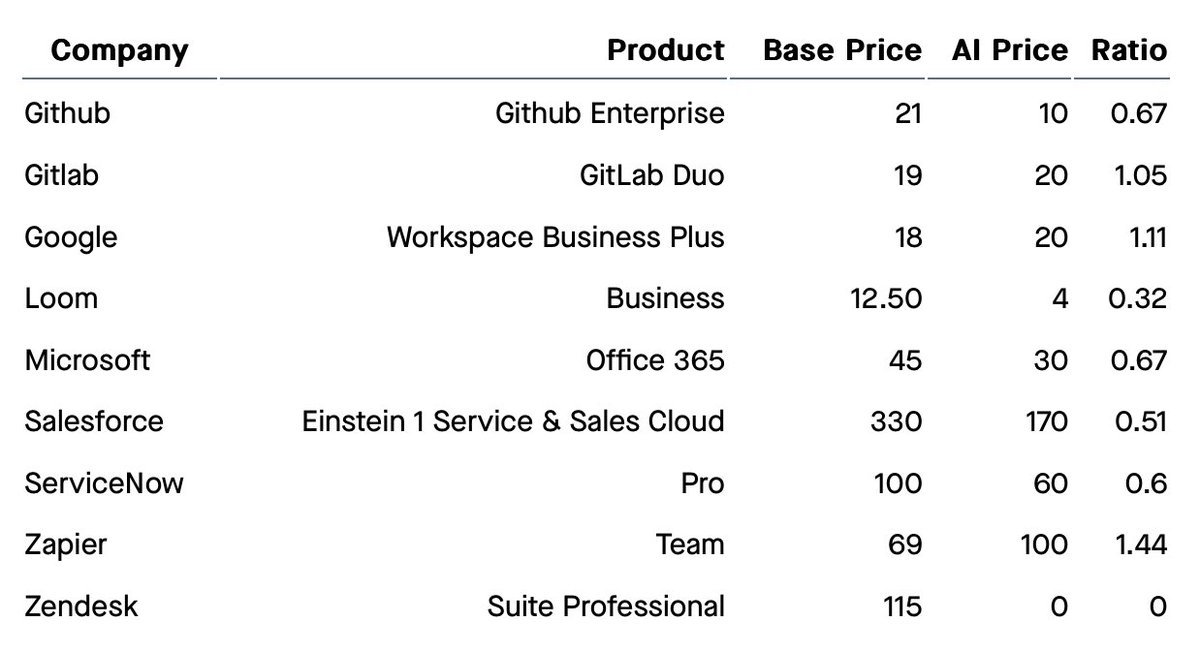
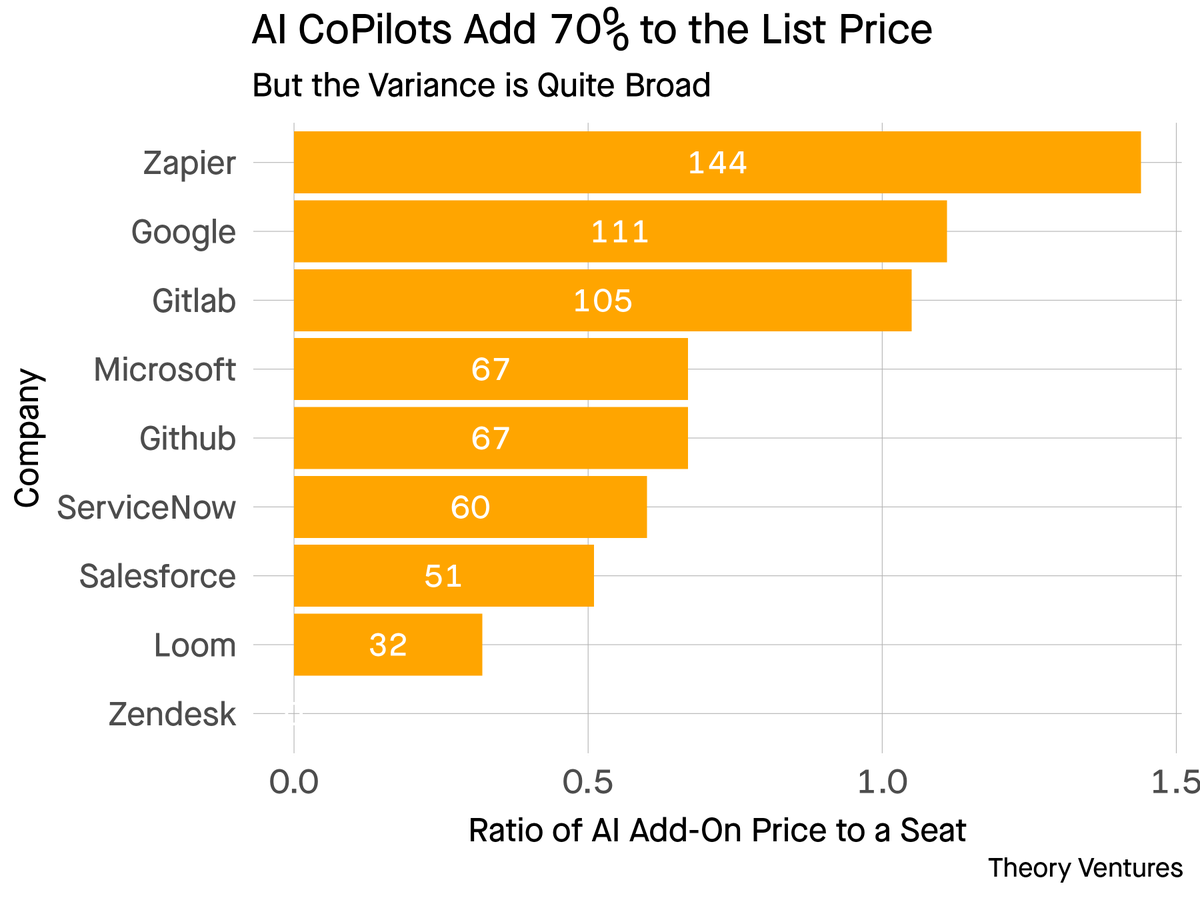
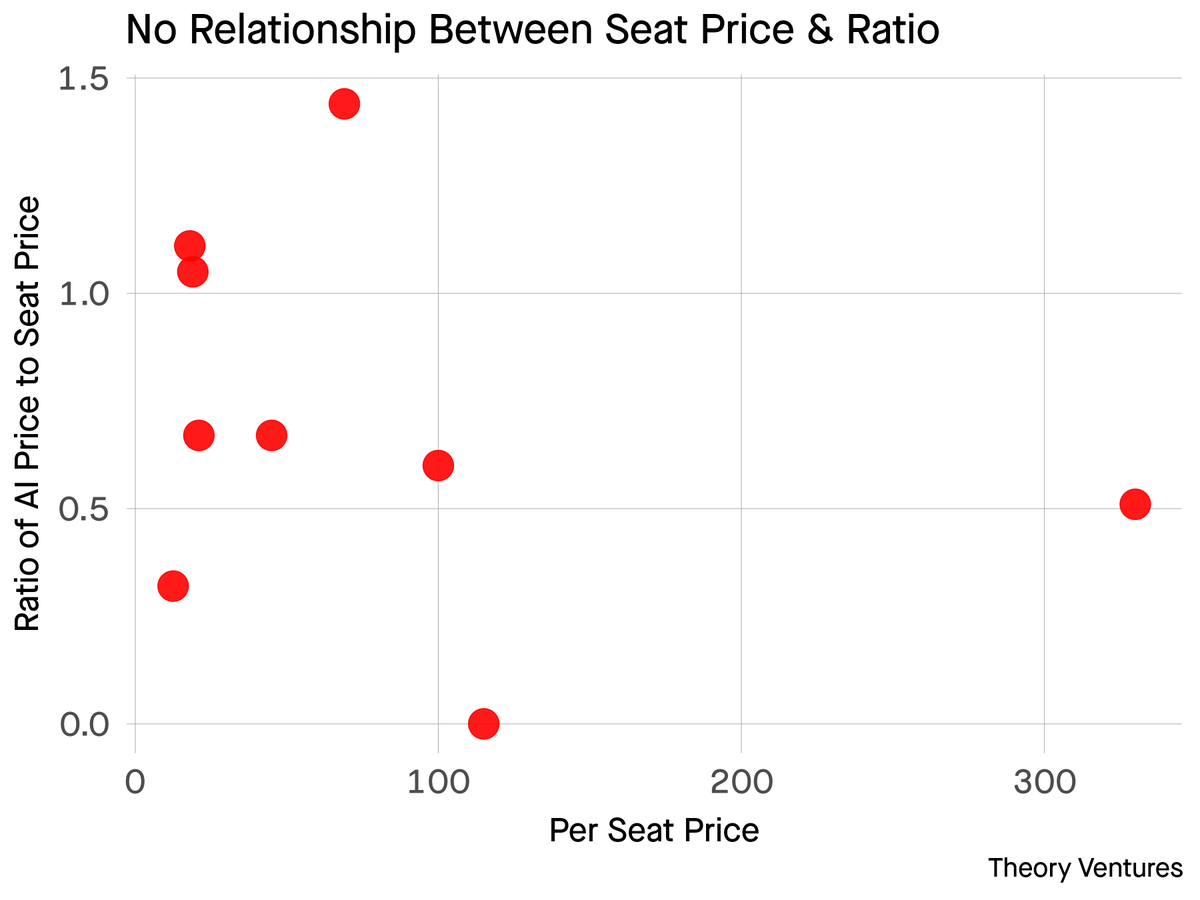
Pricing an AI product will be a defining question in software for the next few years. AI products offer productivity gains. But greater productivity may reduce the demand for seats over time, ultimately decreasing the size of software markets. We can observe the market trends today across some of the larger SaaS companies who offer AI pricing. The table lists the company ; the product ; the base price per-seat for the enterprise plan if available, otherwise the team plan ; then the price for the AI or co-pilot add-on ; and finally the ratio between the AI price and the base price. Sometimes the price is hard to compare, but I’ve tried to do my best to create a fair comparison. Plotting the ratio illustrates the variance in the market today. Zapier & Google charge more for their AI features than the base seat. While Loom charges about a 33% premium. There’s no relationship between a more expensive seat & a greater ratio of the AI add-on. The R-Square is 0.08 : no correlation at all. Overall, I’d characterize the ecosystem as iterating. OpenAI and GitHub launched their features at roughly $20-30 per month. This initial pricing has anchored the market at least for now in that range. Microsoft & ServiceNow have stated AI features increased productivity by approximately 50 percent. If buyers act rationally & reduce headcount by 50%1 which we know is probably not true, then to maintain the same revenue per customer, price would need to double. We can observe that in three of the companies’ pricing strategy above. If pricing really does provide information (see the work of Mauboussin), then these companies are pricing in a 40% productivity gain. This is for copilots. Agents, which fully automate work or at least claim to fully automate work, may have more disruptive pricing. Instead of hiring a sales development rep, hire a robot. I’ll write about that in tomorrow’s post. It’s highly debatable whether this will happen. Most companies will likely leverage efficiency gains into more growth, but let’s consider the downside scenario. tomtunguz.com/ai-copilot-pre…
Tomasz Tunguz tweet mediaTomasz Tunguz tweet mediaTomasz Tunguz tweet media
English
6
23
151
27.2K
Salvador Severich retweetledi
Elad Gil
Elad Gil@eladgil·
Reminder - if someone is making intros / doing work on your behalf, make it as easy as possible for them: 1. Fresh email w new subject & short intro blurb with a clear ask in it that they can forward w/ 0 work 2. New email per action item they are helping you with 3. No spelling errors etc
English
14
75
625
105.9K
Salvador Severich retweetledi
Chris Harvey
Chris Harvey@ChrisHarveyEsq·
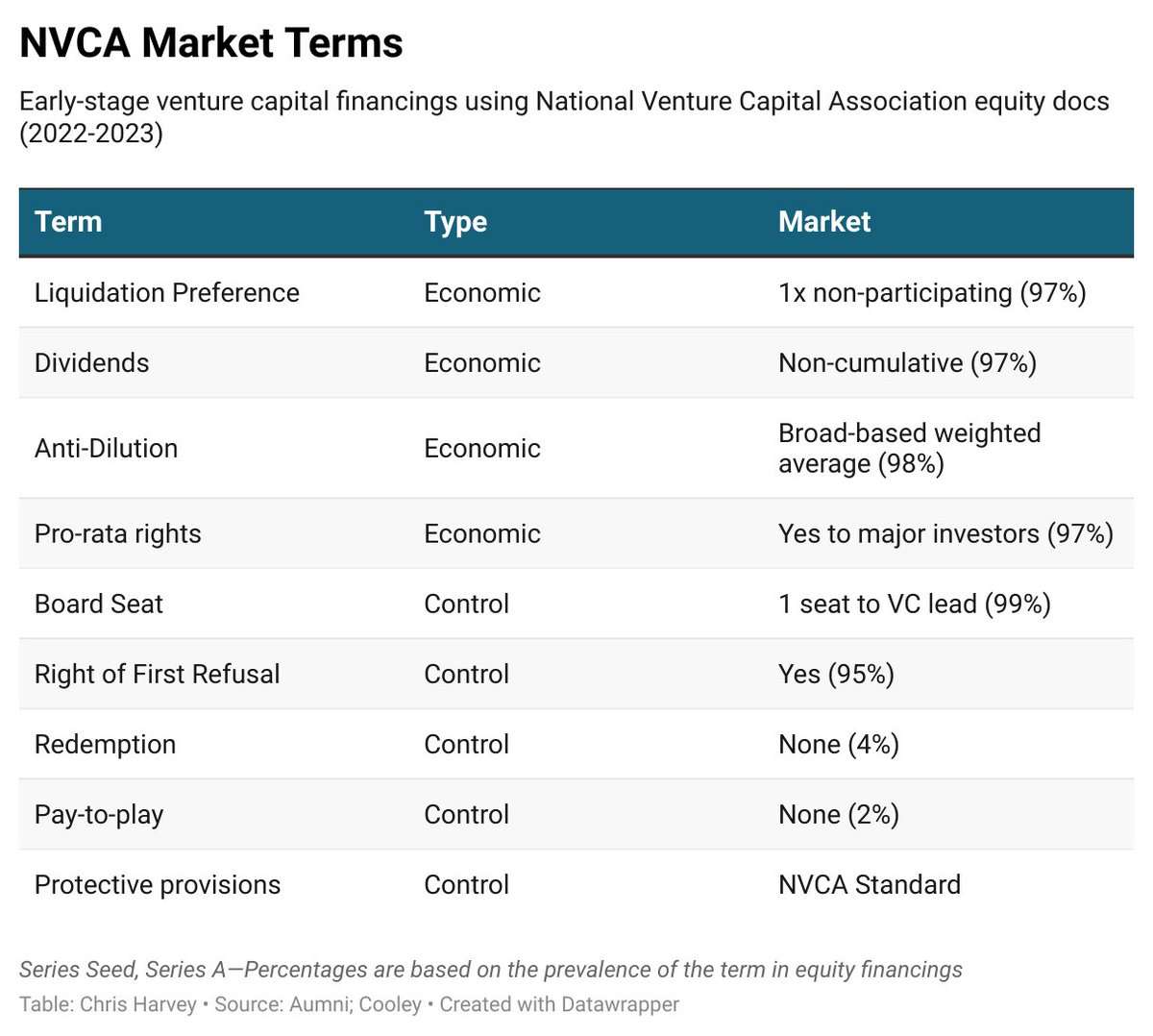
⬛ What does a structured term sheet look like? Anything that deviates from these market terms. Some years ago, an associate at a law firm told me that Pay-to-play provisions were "very common" at Series A—as in, a Pay-to-play provision was inserted in almost all venture deals they did. 👀 This was before law firms like @CooleyLLP and data aggregators like @getaumni @cartainc & @PitchBook published their data freely & consistently. Today we know better. Everyone in a venture deal wins when they know what's important. Leave the rest to the market. This is for early-stage financings but there are often shared terms at later stages. Key Legend: • Liquidation Preference: Ensures investors get their investment back before other equity holders in the event of an exit or liquidation (1x = dollar for dollar, non-participating = no double dip) • Dividends: These are distributions of profits to shareholders, and non-cumulative means that if they are not paid out in one year, they do not accumulate to be owed in subsequent years. Startups generally don't issue dividends, but CUMULATIVE dividends are a sneaky way of seeking higher liquidation premiums. • Anti-Dilution: This provision protects investors from dilution if later shares are sold at a lower price than what they paid, with the broad-based weighted average being a method to fairly adjust the price based on the new & existing shares. • Pro-rata rights: These rights give "major investors" (lead VCs) the option to participate in future funding rounds to maintain their ownership percentage. • Board Seat: Right of a venture capital lead investor to have one representative on the company's board of directors (Median # board seats for Seed is 3, Series A is 5) • Right of First Refusal (ROFR): This grants the investor the right to match any offer the company receives for its shares before the company can sell to another party. • Redemption: This term, rarely used in early-stage deals, would allow investors to force the company to buy back their shares under certain conditions. • Pay-to-play: A rarely included provision that requires investors to participate in future financings to benefit from certain protections like anti-dilution or even holding preferred stock. • Protective provisions: These are veto rights or supermajority vote requirements for major decisions, aligned with the NVCA (National Venture Capital Association) default standards.
Chris Harvey tweet media
English
5
30
111
23.3K
Salvador Severich retweetledi
Tomasz Tunguz
Tomasz Tunguz@ttunguz·
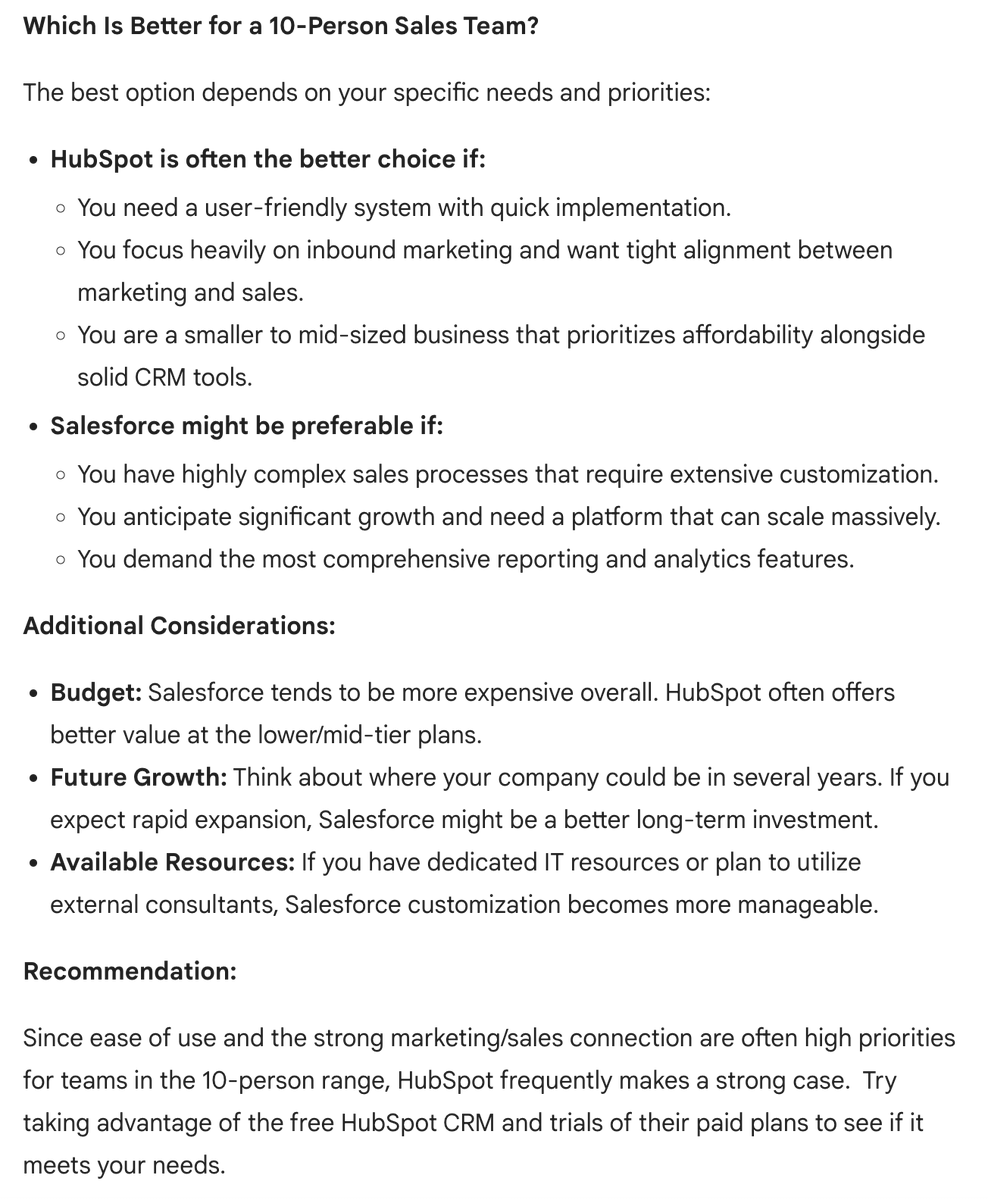
AI will transform software sales. Most of the discourse so far has focused on how AI upends the sellers’ worldview. But the buyers’ process will also evolve. When researching software, operational buyers & procurement teams alike will use AI to research different offerings. Typing “Compare Salesforce & Hubspot for a 10 person sales team. which is better?” into Gemini produces this result & most importantly, a recommendation : [image below] For a Hubspot or a Salesforce seller, a few ramifications resound from the new reality that most buyers will consult AI before speaking to a rep. First, marketers must ensure the information surfaced in these queries is accurate. SEO is no longer sufficient. AIO, (AI-optimization), will become necessary to ensure the results are accurate. The workflow to achieve this outcome isn’t yet built but will undoubtedly influence inbound-marketing efforts. Second, procurement teams may automate some or all of the RFP/RFQ. My second query was to compare pricing between the two products & ask which would be less expensive. HubSpot generally offers a lower price point at equivalent feature tiers, especially for small to medium-sized sales teams. How about SOC2 & ISO-27001 or FedRamp compliance? It’s just a query away. AI becomes a low-budget Gartner in box. Third, agents acting on behalf of buyers may execute transactional sales differently “swiping” a virtual credit card to buy project management seats in the same way a Nike-neaker-bot snipes a pair of Jordans. A buyer types “buy 5 seats of the best Gantt charting software for software teams.” into their chatbox & off the robot goes. All of these vignettes into the future of software buyer behavior are guesses. What’s certain is that prospects will use AI to research & potentially automate software purchases.
Tomasz Tunguz tweet media
English
17
31
194
59.7K
Salvador Severich retweetledi
The Transcript
The Transcript@TheTranscript_·
$NVDA CEO's advice to students: "resilience matters in success...I don't know how to teach it to you except for, 'I hope suffering happens to you'..greatness comes from character & character...is formed out of people who suffered..I wish upon you ample doses of pain & suffering"
English
98
1.3K
4.9K
866.7K
Salvador Severich retweetledi
Startup Archive
Startup Archive@StartupArchive_·
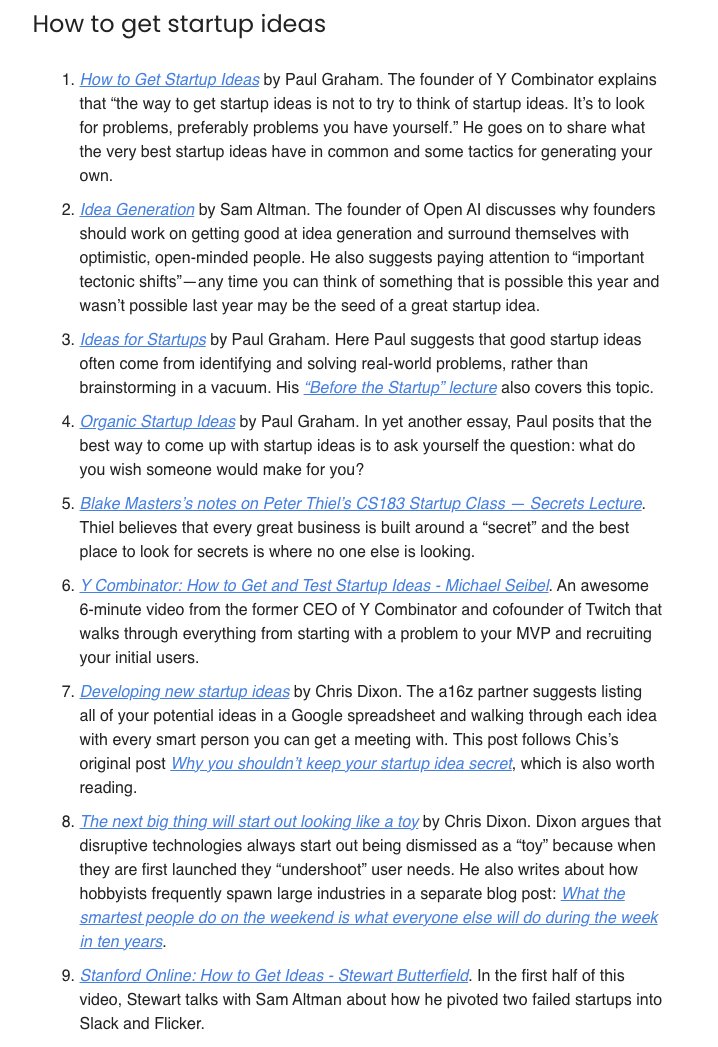
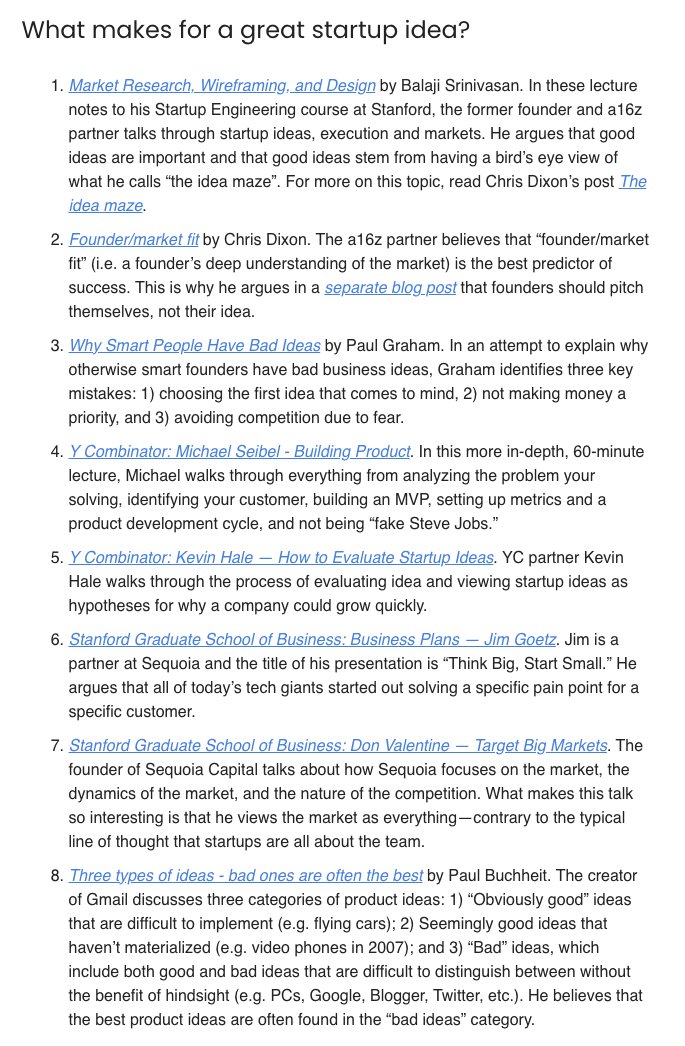
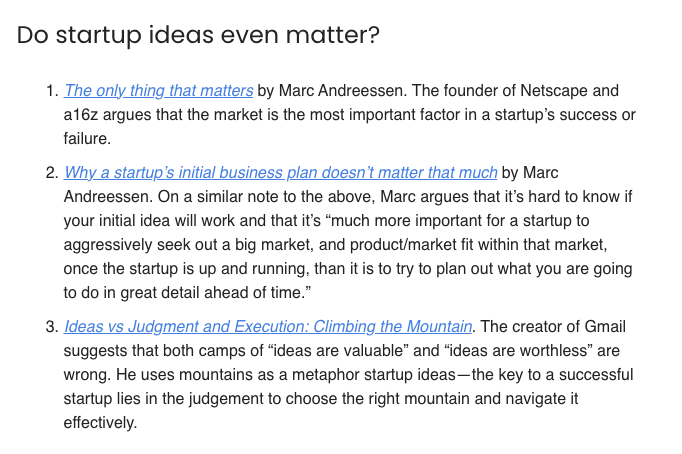
“The most common question prospective startup founders ask is how to get ideas for startups. The second most common question is if you have any ideas for their startup.” - Sam Altman To help founders with this question, we’ve put together a list of the 20 best links we’ve come across on this topic: "How to get startup ideas: The 20 best essays and videos"
Startup Archive tweet mediaStartup Archive tweet mediaStartup Archive tweet media
English
4
49
268
37.6K
Salvador Severich retweetledi
Ray Dalio
Ray Dalio@RayDalio·
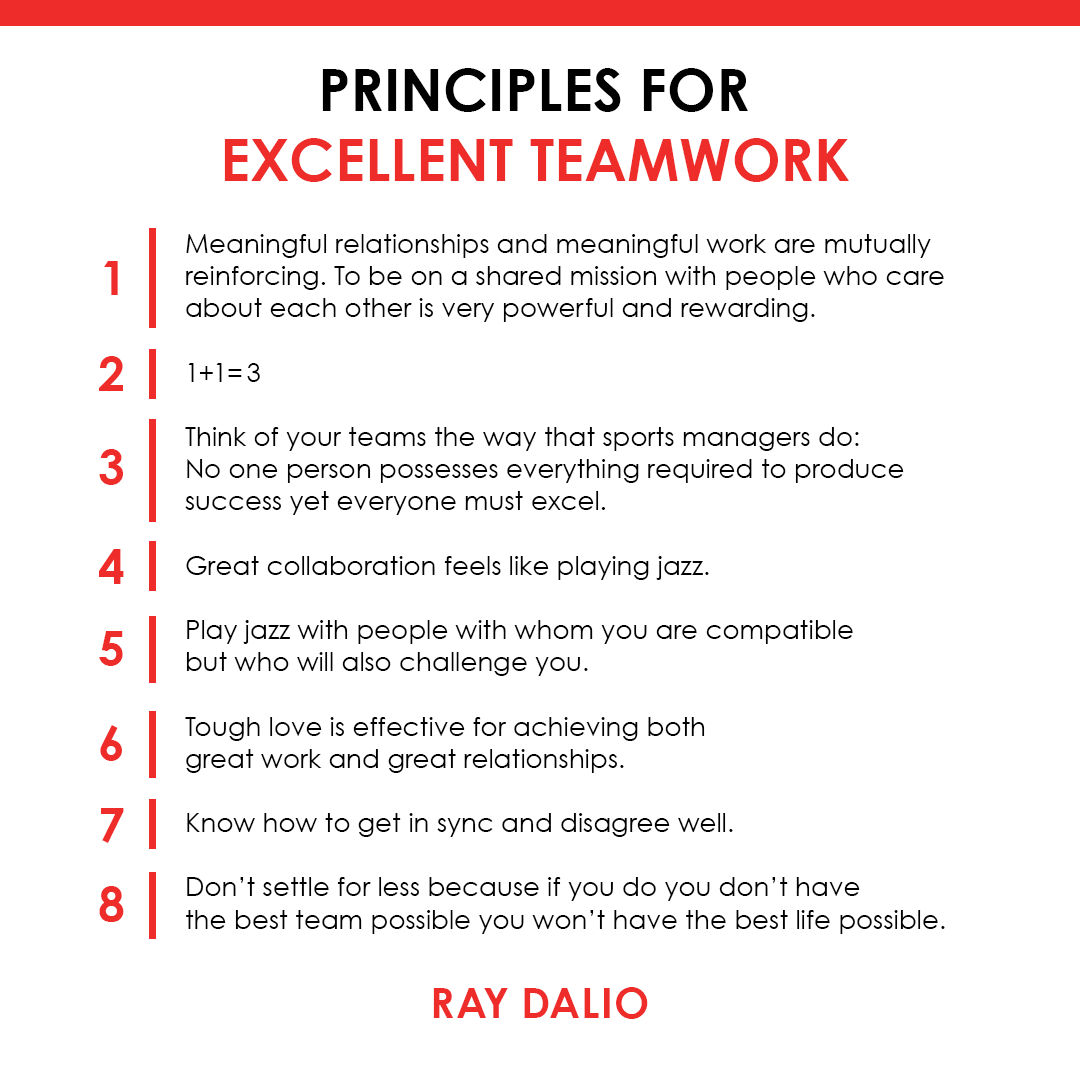
You won't accomplish much without great teamwork because you need to work with others to accomplish things. Many of you have been asking about how to achieve happiness within your organization, so I wanted to share some of my principles for great teamwork that I learned along the way. #principleoftheday
Ray Dalio tweet media
English
28
187
788
131.6K
Salvador Severich retweetledi
Paweł Huryn
Paweł Huryn@PawelHuryn·
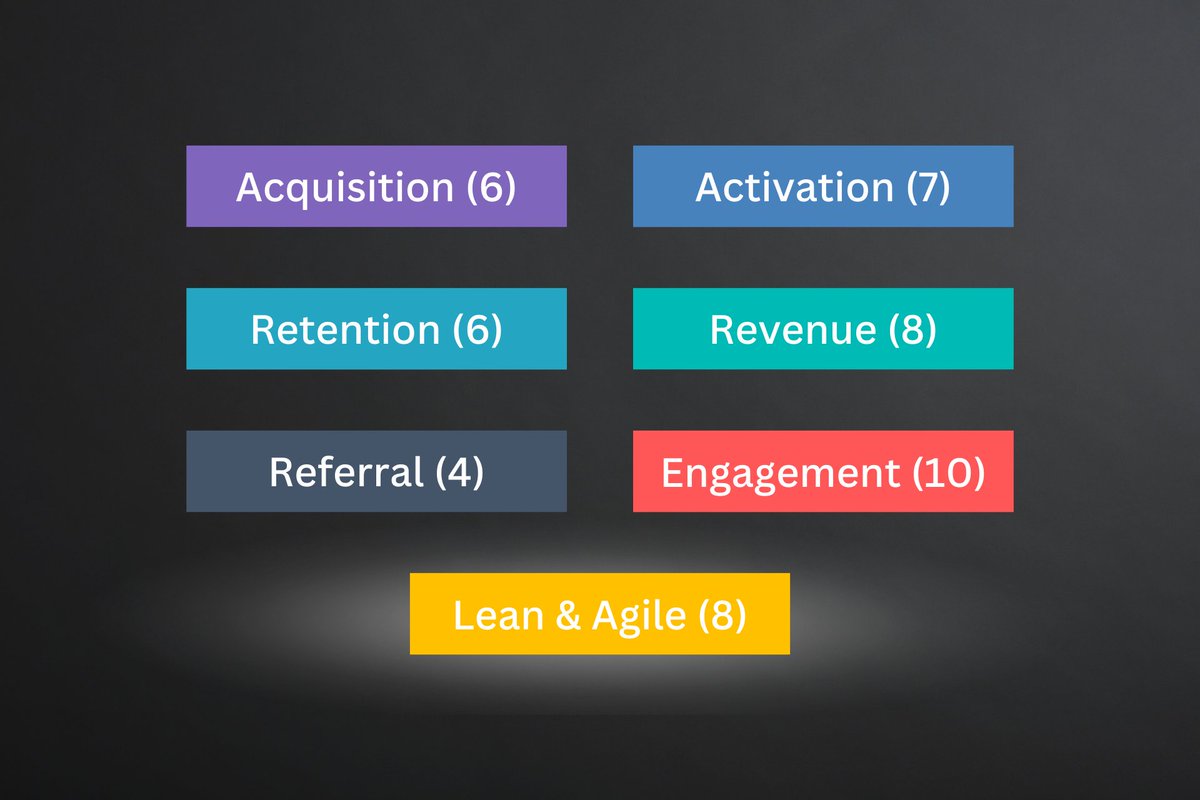
The Ultimate List of Product Metrics: Extended Edition 1. Acquisition Metrics 2. Activation Metrics 3. Engagement Metrics 4. Retention Metrics 5. Revenue Metrics 6. Referral Metrics 7. Lean and Agile Metrics 8. Conclusions and resources The classification below is based primarily on the AARRR (Acquisition, Activation, Retention, Revenue, Referral) framework, which is universal, and fits every organization that works on customer-facing tech products. On top of that, I added two categories: Engagement Metrics: I want to emphasize the distinct metrics focusing on user interaction with the product. More in the 3rd point. Lean and Agile Metrics: Metrics related to the effectiveness of delivering value. Some of them, like Time to Market (TTM) or Time to Learn (TTL), are essential to succeed by quickly adapting to the changing market conditions. Without further ado: 1. Acquisition Metrics 1.1 Bounce Rate The percentage of visitors who leave your website after viewing just one page. A high bounce rate may indicate issues with the landing page (e.g., messaging) or targeting. 1.2 Conversion Rate The percentage of users who take a desired action, like signing up for a newsletter. 1.3 Landing Page Conversion Rate The percentage of visitors who take a desired action on a specific landing page, like signing up or starting a trial, on a specific landing page. 1.4 Cost of Customer Acquisition (CAC) The cost of acquiring a new customer through marketing and sales efforts. 1.5 Channel Effectiveness The success of each acquisition channel in driving traffic, sign-ups, or purchases. 1.6 Traffic Source Distribution The breakdown of incoming user traffic by different sources, such as organic search, referrals, or paid ads. 2. Activation Metrics 2.1 Time to Value (TTV) The time it takes for a user to experience the core benefits of your product after starting to use it. A shorter TTV leads to higher user satisfaction, engagement, and retention. In product-led growth, optimizing TTV is crucial to ensure users quickly understand the value your product delivers. 2.2 Onboarding Completion Rate The percentage of users who complete the onboarding process successfully. 2.3 User Activation Rate The percentage of users who successfully complete a certain milestone in your onboarding process. 2.4 Trial-to-Paid Conversion Rate The percentage of trial users who convert into paying customers. 2.5 First-time User Conversion Rate The percentage of first-time users who complete a desired action, such as creating an account or purchasing. This metric helps assess the effectiveness of the onboarding process. 2.6 Product Qualified Accounts (PQA) “In product-led sales, the product determines Product Qualified Accounts (PQA) to indicate when an account is prepared for sales engagement and potential conversion.” - @ElenaVerna, link in my full article 2.7 Product Qualified Leads (PQL) “PQLs, or Product Qualified Leads, are the people within the existing self-serve user base with buying power.” - @ElenaVerna, link in my full article 3. Engagement Metrics Engagement Metrics can be considered part of the Retention and, depending on the context, Activation (e.g., Session Length). I presented them as a separate category to emphasize the distinct metrics focusing on user interaction with the product. 3.1 Daily Active Users (DAU) The number of unique users who engage with the product daily. 3.2 Monthly Active Users (MAU) The number of unique users who engage with the product monthly. 3.3 Stickiness The ratio of daily active users (DAU) to monthly active users (MAU), which indicates how often users engage with the product. Stickiness = DAU / MAU 3.4 User Satisfaction (CSAT) A measure of how satisfied users are with the product, often determined through surveys or in-app feedback (e.g., Pendo, Gainsight). 3.5 Session Length The duration of a user's interaction with the product during a single session. 3.6 Session Frequency The average number of sessions per user within a specific time frame. 3.7 Feature Usage The frequency and depth of usage for specific product features. 3.8 Customer Effort Score (CES) Measures the ease with which customers can interact with your product or service. It is often determined by asking users to rate the effort required to accomplish a task or resolve an issue on a scale from very low to very high effort. A lower CES indicates a more user-friendly product, which can lead to higher user satisfaction and loyalty. 3.9 Task Success Rate The percentage of users who successfully complete a specific task or set of tasks within your product. This metric helps assess the usability and effectiveness of your product's features. 3.10 User Feedback Score A quantitative measure of user satisfaction gathered through surveys, ratings, or reviews. There isn't a single standardized method or rating scale. This could be a numeric scale (e.g., 1 to 5 or 1 to 10), a star rating, or a qualitative scale (e.g., poor, average, excellent). 4. Retention Metrics 4.1 Churn Rate The percentage of users who stop using the product within a specific period, e.g., monthly. 4.2 User Retention Rate The percentage of users who continue using the product after a specific period. Often monthly. 4.3 User Renewal Rate The percentage of users who renew their subscription or continue using the product after their initial contract period. 4.4 Customer Lifetime The average time it takes for a user to stop using the product. Customer Lifetime = 1 / Churn Rate 4.5 Customer Health Score A composite metric that combines multiple indicators, such as usage, satisfaction, and support interactions, to provide an overall assessment of the customer's relationship with the product. 4.6 Product Adoption Rate The percentage of users who adopt new features or functionality within a certain time frame after release. 5. Revenue Metrics 5.1 Average Revenue Per Account (ARPA) The average revenue generated per account (customer) within a specific time frame. For example, monthly. 5.2 Customer Lifetime Value (CLV/LTV) The total revenue a user generates during their entire relationship with the product. CLV = Customer Lifetime * ARPA 5.3 Customer Profitability The difference between the lifetime value of a customer (LTV) and the cost of acquiring them (CAC). 5.4 Monthly Recurring Revenue (MRR) The predictable revenue generated by a subscription-based product every month. 5.5 Expansion Revenue Additional revenue generated from existing customers through upsells, cross-sells, or add-on purchases. 5.6 Net Revenue Churn The revenue lost due to customer cancellations, downgrades, or non-renewals within a specific period, typically a month/year. 5.7 Net Revenue Retention The cumulative sum of retained, contracted, and expanded revenue over a specific period, typically a month or year. 5.8 Average Contract Value (ACV) The average revenue generated from each customer contract, which can help assess the effectiveness of pricing and packaging strategies. 6. Referral Metrics 6.1 Virality Coefficient The number of new users acquired through referrals by existing users. Often expressed as a ratio (<1, 1, >1). 6.2 Customer Referral Rate The percentage of customers who refer others to the product. 6.3 Referral Conversion Rate The percentage of referrals that convert into active users. 6.4 Net Promoter Score (NPS) A measure of customer satisfaction and loyalty based on how likely users are to recommend the product to others. NPS = % of Promoters - % of Detractors (-100 to 100) Warning: NPS measures customer attitude and sentiment, not the actual behavior. 7. Agile and Lean Metrics Before we dive in, it's important to remember that Kanban aims to optimize the flow of value, not the flow of work So, for example, if you use User Stories and sub-tasks, focus on tracking the whole User Stories, not individual sub-tasks. 7.1 Lead Time A Kanban metric that measures the total time between an idea placed in a Product Backlog until the work in a specific process is completed. For example, if Microsoft decides to use ChatGTP in Bing, Lead Time would be the time between deciding on a specific approach and when the feature is production-ready. 7.2 Time to Market (TTM) Time to Market (TTM) is a broader concept, encompassing idea generation, experimentation, product delivery, and pre-launch activities that might be required before an idea is shipped. For example, if Microsoft decides to incorporate ChatGPT into Bing, the TTM would be the period between having a draft idea and when customers can use a new capability. 7.3 Cycle Time A Kanban metric that is a component of Lead Time. It measures the time it takes from when the implementation of an idea begins until it's done. For example, if Microsoft decides to incorporate ChatGPT into Bing, the Cycle Time would be the period between when developers start implementing a specific idea and when it becomes production-ready. 7.4 Work In Progress (WIP) WIP is a Kanban metric that represents the number of ideas that your team is currently working on. The goal is to limit WIP to reduce context-switching and minimize the Cycle Time. This ultimately minimizes the Time To Market (TTM). 7.5 Throughput The rate at which ideas pass through your team's workflow over a given period. ... Continue reading for free Due to character limit, continue reading for free here (no email, no paywall): lnkd.in/e4KGEfud - Visualizations - Lean and Agile metrics - Conclusions - Additional techniques - Free resources Hope that helps!
Paweł Huryn tweet media
English
5
82
417
49K
Salvador Severich retweetledi
Luke Sophinos
Luke Sophinos@lukesophinos·
How to Win Friends and Influence People 🧵
English
30
81
417
186.2K
Salvador Severich retweetledi
Matt Schnuck
Matt Schnuck@mattschnuck·
Jim Collins coached Jeff Bezos and Amazon. He estimates that only 3% of the world has figured out their “Ikagai” or “Hedgehog”. Here’s what they are and how you find yours:
English
172
1K
6.1K
1.8M