Shourya S Roy Burman

46 posts

Shourya S Roy Burman

Shourya S Roy Burman

@ssroyburman

Designing biological sequences | ex-@DanaFarber @harvardmed @JohnsHopkins @IITKanpur

SF Bay Area Katılım Ekim 2015
211 Takip Edilen156 Takipçiler
Sabitlenmiş Tweet
Shourya S Roy Burman
Shourya S Roy Burman@ssroyburman·
We expand the range of zinc finger transcription factors that can be targeted by degraders via CRBN. Once thought undruggable, our work shows how functional genomics uncovers new targets missed by proteomics and reveals rules for the structure–activity relationship of compounds.
Mikołaj Słabicki@biomiko

We mapped the zinc‑finger (ZF) “degrome.” High‑throughput ZF reporters + glutarimide analogs → new CRBN‑recruited degrons and design rules for degraders.

English

0
1
8
651
Shourya S Roy Burman retweetledi
Katherine A Donovan
Katherine A Donovan@kdonovan1008·
🧩 New paper out in Nature Communications! "Unveiling the hidden interactome of CRBN molecular glues" Huge thanks to our incredible team and collaborators who made this possible! 📖 Read the full open-access article here: nature.com/articles/s4146…
English
1
13
70
7.8K
Shourya S Roy Burman retweetledi
Zuzanna Kozicka
Zuzanna Kozicka@zkozicka·
Very excited for our next seminar this Thursday (March 20th): Martin Schwalm (@thesgconline, form. Knapp lab) will discuss UPS inhibitors and @DeanClift1 (@TRIMTECHtx) will share insights on hijacking TRIM21! 👉Join us at 12 PM EST/ 5 pm CET (‼️US/EU daylight saving mismatch‼️)
Zuzanna Kozicka tweet media
English
0
3
9
582
Shourya S Roy Burman retweetledi
Hojong Yoon
Hojong Yoon@hojong_yoon·
Very excited for our next seminar next week! Yuh Min Chook(@yuhminchook) at UTSW will share an intriguing allosteric mechanism of drug-induced XPO1 degradation, mediated by the CRL5-ASB8 E3 ligase complex. Join us at 12 pm EST (Feb 20th). Preprint - biorxiv.org/content/10.110…
Hojong Yoon tweet media
English
0
3
12
1.4K
Shourya S Roy Burman retweetledi
Hojong Yoon
Hojong Yoon@hojong_yoon·
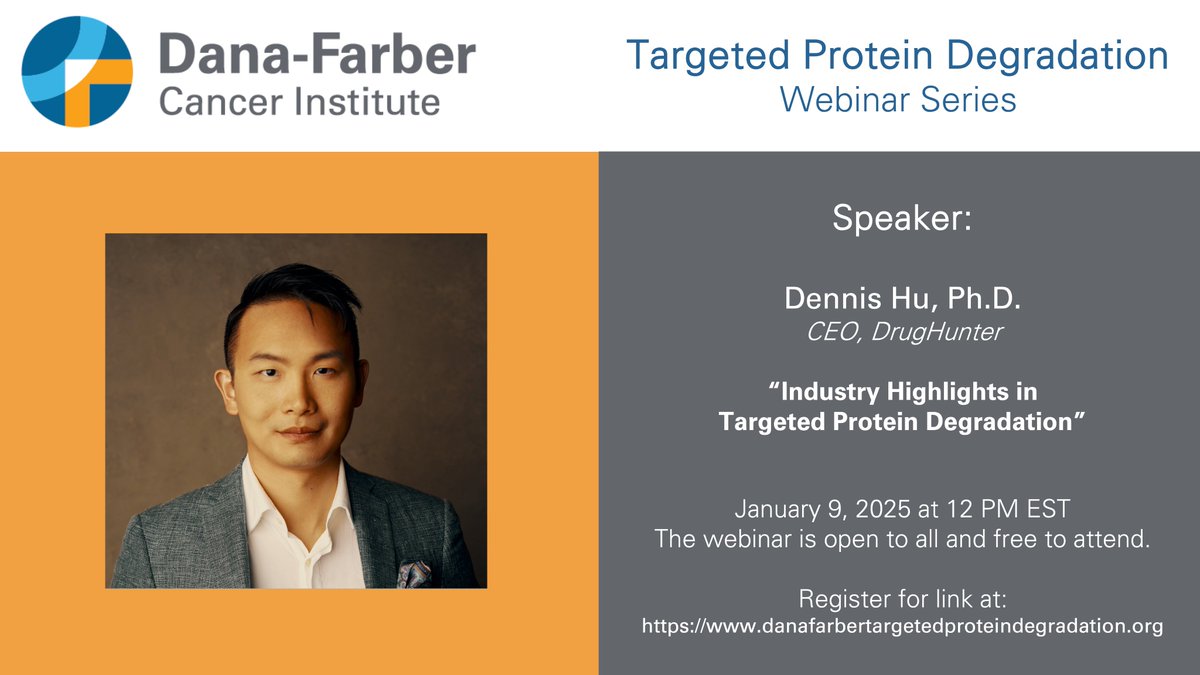
Join us for the final TPD webinar of 2024 on 12/19. @FleurMFerguson & @eswang01 - "ZBTB11 Degraders Target Metabolic Vulnerabilities in K-Ras Inhibitor Resistant PDAC" Slava Ziegler - "Targeting IDO1 by monovalent degraders exploiting the native IDO1 degradation mechanism"
Hojong Yoon tweet media
English
0
6
28
2.5K
Shourya S Roy Burman retweetledi
Zuzanna Kozicka
Zuzanna Kozicka@zkozicka·
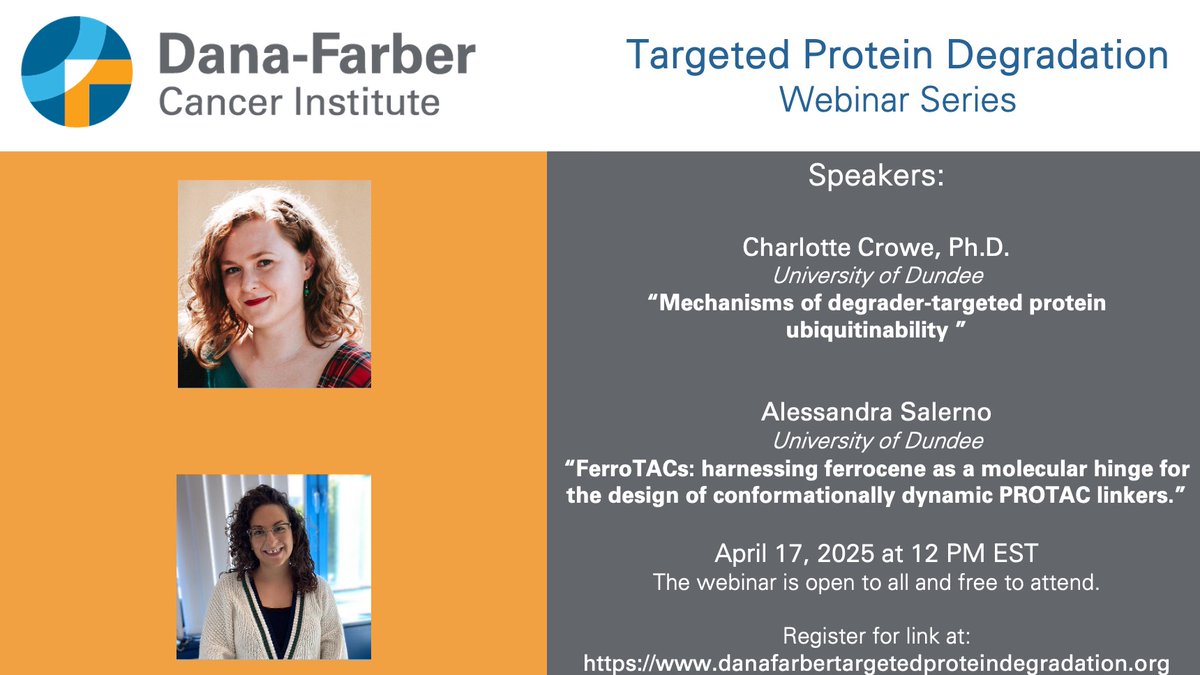
We are thrilled to have @georg_e_winter @CeMM_News return to the DFCI TPD webinar this Thursday! Georg will talk about how inhibitors can supercharge endogenous degradation mechanisms. Very much looking forward! 👉Join us at 12 PM EST/ 6 pm CET (hybrid format)
Zuzanna Kozicka tweet media
English
0
7
40
7K
Shourya S Roy Burman retweetledi
Zuzanna Kozicka
Zuzanna Kozicka@zkozicka·
Very excited for our next seminar this Thursday: Derek Bartlett (formerly @pfizer, now @UNC) will share insights on PK-PD modelling for TPD and Kyle Mangano (@Amgen) will present how VIPER-TACs co-opt viral E3s. 👉Join us at 12 PM EST/ 6 pm CET (back to original schedule)!
Zuzanna Kozicka tweet media
English
0
4
24
1.8K
Shourya S Roy Burman retweetledi
Katherine A Donovan
Katherine A Donovan@kdonovan1008·
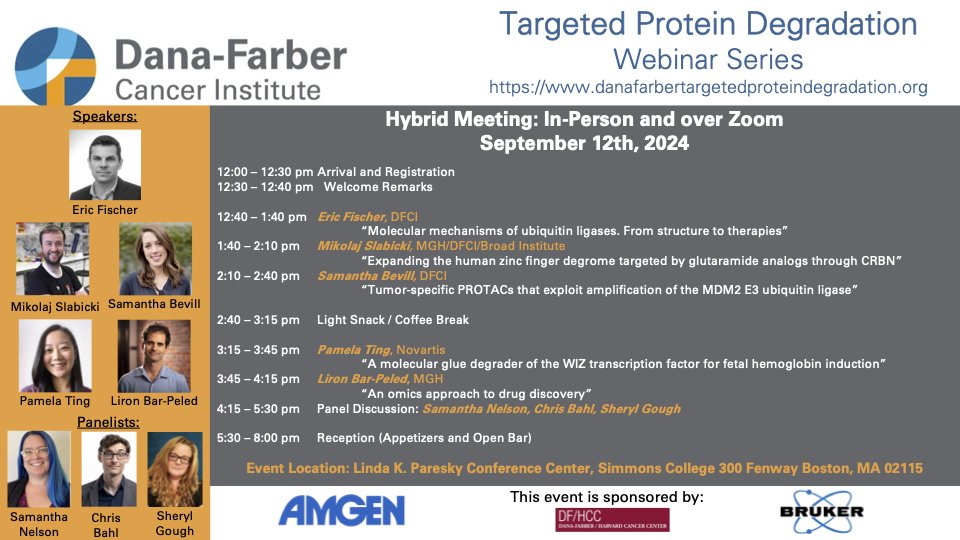
Extremely excited about our next in-person TPD event. If you are in Boston on September 12th - sign up and join us for a half day of science and networking! Registration link: forms.gle/a8p2ALX9n2YDWt…
Katherine A Donovan tweet media
English
1
12
50
6.5K
Franziska Wachter
Franziska Wachter@FranziskaWacht1·
Grateful for the tremendous support for my research which focuses on the development of novel treatments for hard-to-treat pediatric leukemia. Thank you all! Together, we're making the difference! @DFBC_PedCare @BostonChildrens @DFCI_ChemBio @DFCI_CCBM @fischerlab1
Dana-Farber Cancer Biology Department@DFCI_CancerBio

Nice DFCI Insight blog post about Sidney Farber Fellow @FranziskaWacht1 who will be conducting her research in @fischerlab1 blog.dana-farber.org/insight/2024/0…

English
5
2
35
3.3K
Shourya S Roy Burman retweetledi
Katherine A Donovan
Katherine A Donovan@kdonovan1008·
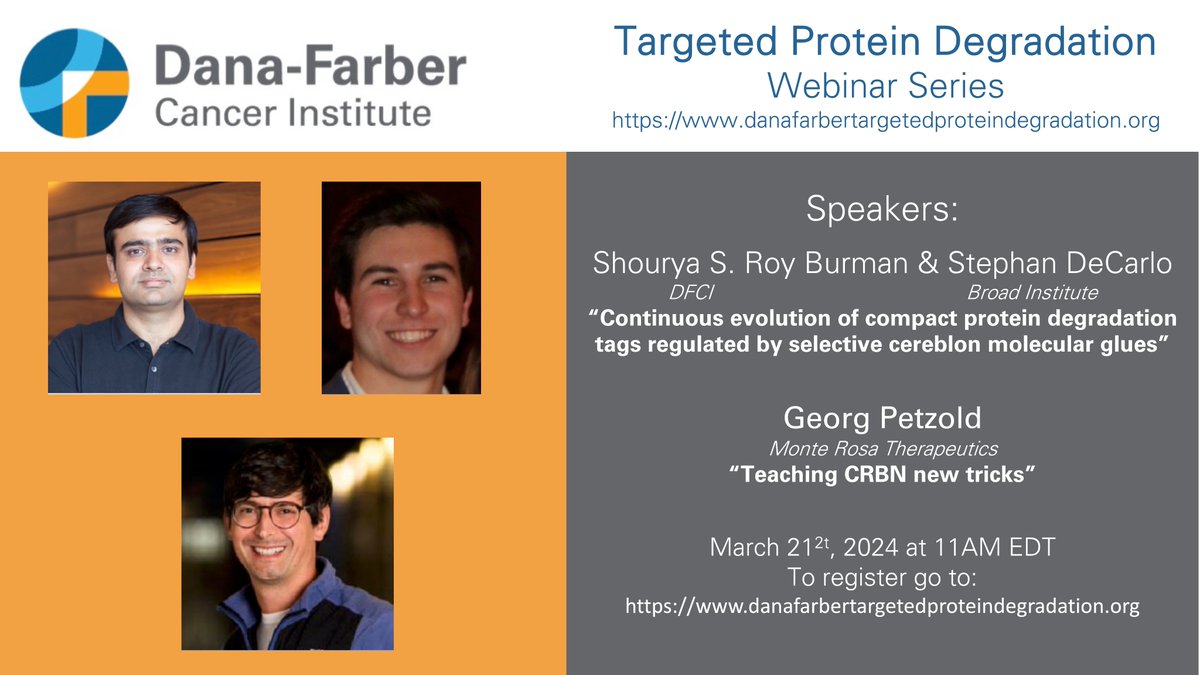
Reminder about the seminar tomorrow - 11AM eastern time!!
Katherine A Donovan tweet media
English
0
2
11
853
Shourya S Roy Burman
Shourya S Roy Burman@ssroyburman·
@moritzhunkeler Yeah, several months spent purifying different constructs in different expression systems to isolate the ZnF. Turns out the first bacterial tagged construct we had was good enough. Funny how these things work out.
English
1
0
1
152
Moritz Hunkeler
Moritz Hunkeler@moritzhunkeler·
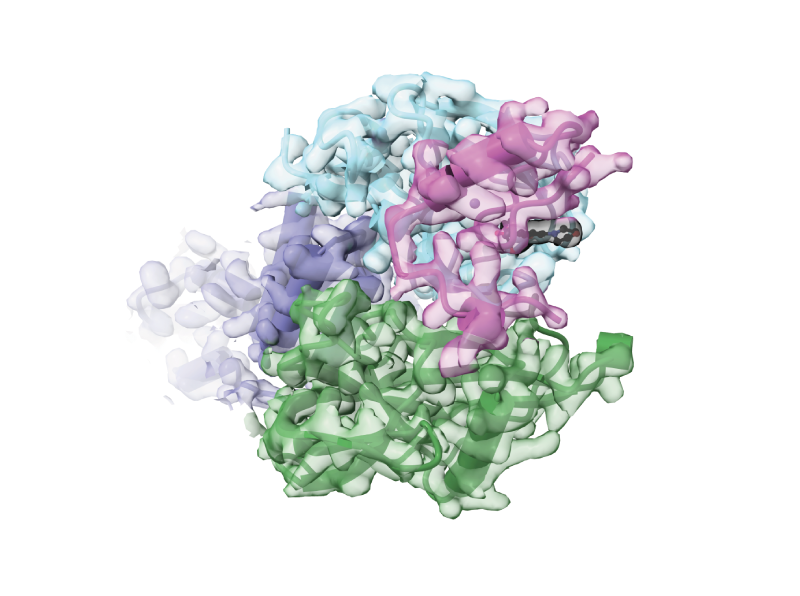
When Shourya told me he couldn't cut the MBP off his ZnF, I thought oh boy that could be a problem (because of added flexibility/heterogeneity). Turns out: no problem at all --> ZnF structure without MBP, and 4 Å MBP structure from the same data set :D science.org/doi/10.1126/sc…
English
2
2
21
2.7K
Shourya S Roy Burman retweetledi
David R. Liu
David R. Liu@davidrliu·
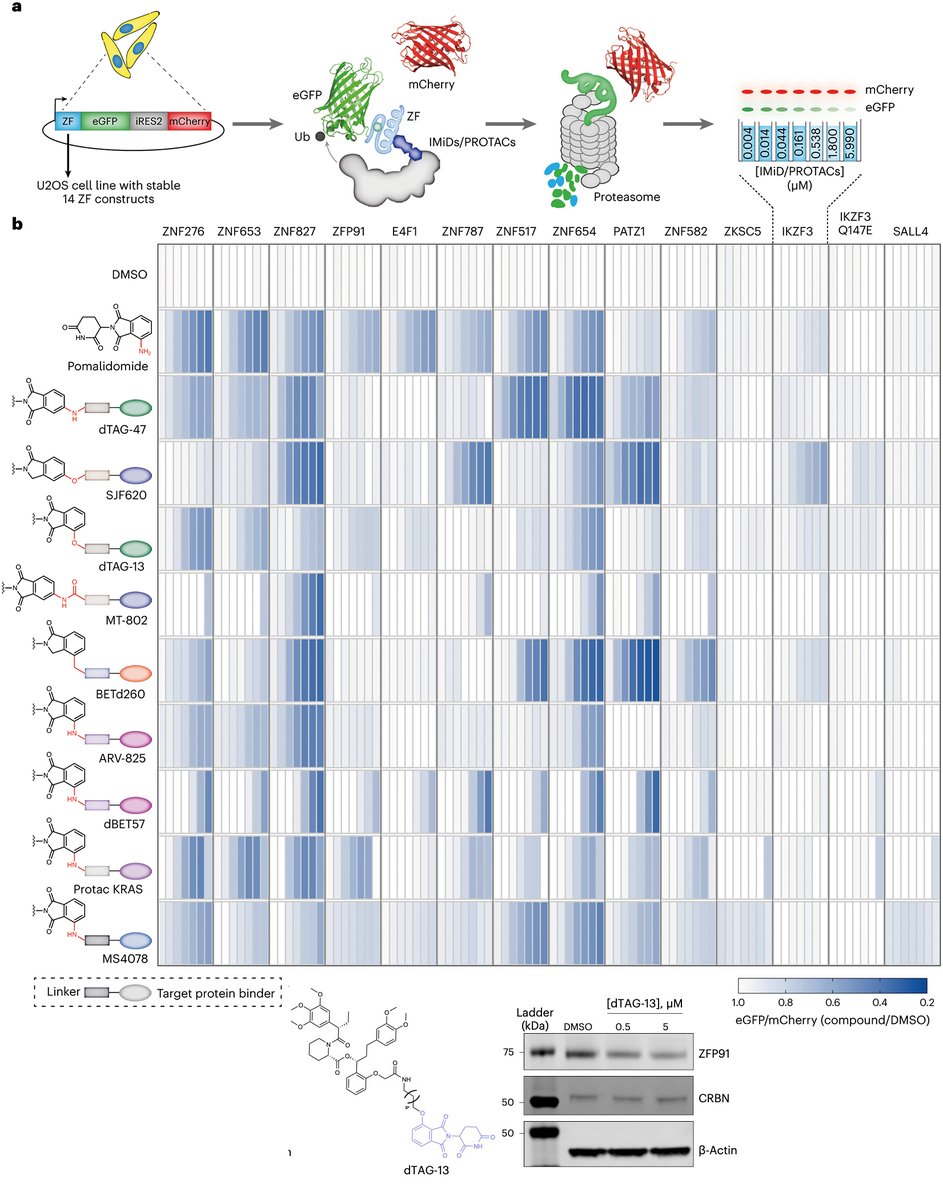
Thanks for your comments, Jay. To answer your question: 1) dTag uses FKBP12-F36V, which is 108 amino acids (324 bp). Unfortunately this size is too large to be directly and scarlessly installed using prime editing; we tried as part of our TwinPE studies (pubmed.ncbi.nlm.nih.gov/34887556/) but could only precisely install ~1/3 of the FKBP12 gene efficiently. 2) dTag small molecules degrade off-target ZF proteins, as shown in the attached figure from ncbi.nlm.nih.gov/pmc/articles/P… 3) The dTag system requires heterobifunctional molecules consisting of AP1867—linker—IMiD, and thus are subject to hook effects as you showed in your beautiful NCB paper. I appreciate that #2 and #3 might be addressed with dose-finding though it would be preferable to avoid the issues all together. You could install dTag or other larger degron tags with HDR though generally with lower efficiency, higher byproducts, and the consequences of making chromosomal breaks.
David R. Liu tweet media
English
0
6
62
8.1K
Shourya S Roy Burman retweetledi
Broad Institute
Broad Institute@broadinstitute·
A new PACE-based system generates protein degradation tags that interact with an otherwise-inert small molecule to trigger the rapid breakdown of a cell’s native proteins, with molecular glue systems that can become useful new research tools. broad.io/Pace-News-0314…
Broad Institute tweet media
English
0
21
78
14.4K
Shourya S Roy Burman
Shourya S Roy Burman@ssroyburman·
And to @CancerResearch for funding this moonshot project of making potent degrons that can act as post-infusion switches in the next generation of engineered cell therapies. 6/6
English
0
1
2
572
Shourya S Roy Burman
Shourya S Roy Burman@ssroyburman·
We engineered a new tool to interrogate biological pathways and validate cancer dependencies! This new degron can be fused to your protein of interest at its genomic locus to degrade it within an hour using a clean compound. science.org/doi/10.1126/sc… 1/6
David R. Liu@davidrliu

Today in @Science_Magazine we report the laboratory evolution of compact degrons that enable targeted protein degradation triggered by an otherwise-inert small molecule, a multidisciplinary study that integrates organic chemistry, molecular glues, protein evolution, genome editing, and structural biology. PDF: drive.google.com/file/d/18hu15h… 1/13

English
1
8
44
8K