
Sabitlenmiş Tweet

ft.com/content/86836a… Repeat after me: building any new homes reduces housing costs for all
English
Stuart Gibson
587 posts
@stuart_gibson
The first trillion is the hardest.

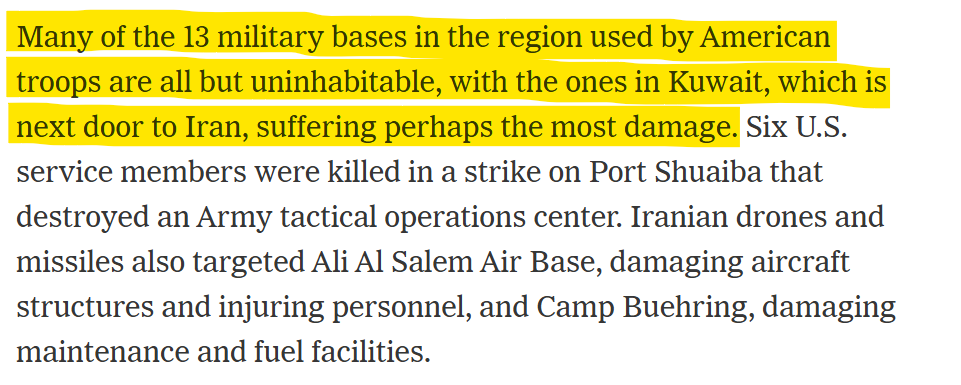
I don't think people realize just how extraordinary what we're witnessing with Iran is. I was arguing with a dear journalist friend of mine yesterday who was telling me that Iran was winning, yes, but only on the strategic level, not tactically. The type of thing a skinny kid getting stuffed in lockers in highschool tells himself to make himself feel better: "These people will BEG to work for me in ten years. Everyone knows jocks peak in highschool. They'll literally beg." 😏 I think that's precisely wrong, and that's what makes the Iran war different. As of now, Iran is in fact holding its own tactically too. Think about other U.S. wars of aggression these past few decades. Take Vietnam, Afghanistan, Libya, Iraq, Serbia, etc. (the list is unfortunately very long). The pattern was roughly always the same with an immense power differential between aggressor and victim. These wars were, by and large, imperial: the empire attempting to crush a much weaker people whose only realistic recourse was guerrilla resistance. And that is when they actually had the will to resist: some - like Libya - barely even bothered, just resigning themselves to their fate (despite being, at the time, the richest country in Africa). As spectators of these wars, if you had any moral sense, the dominant emotion was a kind of helpless disgust: you were watching a giant stomp through someone else's house. Sure, the U.S. actually lost many - if not most - of these wars, famously replacing the Taliban with the Taliban or being expelled with their tail between their legs from Vietnam, but the power differential was no less real for it. It's just that power doesn't always guarantee victory: sometimes the giant can't kill everyone, and eventually tires of trying. But the “victories” won this way were always pyrrhic at best: the people endured, yes, but what they were left with was a country in ashes that takes decades to rebuild. Meanwhile, in the grand scheme of things, the giant walked away with little more than a bruised ego. Iran is - remarkably - proving to be an entirely different beast: when others were merely surviving a giant, Iran appears to be able to compete with one. What just happened over the past 48 hours is the best illustration of this. You had the President of the United States issue a formal ultimatum: reopen the Strait of Hormuz within 48 hours or we "obliterate" your power grid. Iran's response was essentially: we dare you, if you do this we'll make all your Gulf allies uninhabitable within a week. And, as we saw, Trump backed down: pretexting non-existent "VERY GOOD AND PRODUCTIVE CONVERSATIONS" with Iran, he said his ultimatum no-longer applied (or, rather, became 5 days). Adding he now envisaged the Strait of Hormuz being “jointly controlled by me and the Ayatollah.” To the amusement of Iran’s diplomacy (x.com/IraninSA/statu…). That, folks, is a textbook tactical victory. It is, remarkably, Iran demonstrating in this instance that it had escalation dominance over the United States of America. That is, the ability to credibly threaten consequences so severe that the US - for perhaps the first time since the Cold War - found it preferable to stand down. That's no skinny kid being locked in a locker dreaming of revenge fantasies. That's the kid grabbing the bully's wrist mid-shove and watching his face change. And it's not the only tactical victory in this war so far. Take the episode over the Israeli attack on Iran's South Pars gas facility. Iran had warned that if that happened U.S. allies in the region - including Israel - would face a symmetrical response. And they delivered: famously devastating Qatar's Ras Laffan facility - which produced roughly 20% of global LNG supply - and leading, according to Qatar themselves, to a $20 billion loss of annual revenue for the next 5 years (oilprice.com/Latest-Energy-…). Not only that but they also managed to hit Israel's Haifa refinery (aljazeera.com/news/2026/3/19…), one of the country's most strategic and protected sites. The result was Trump distancing himself from the South Pars attack, saying that Israel had "violently lashed out" unilaterally and that "NO MORE ATTACKS WILL BE MADE BY ISRAEL pertaining to this extremely important and valuable South Pars Field." Israel then said it wouldn't strike Iran energy sites anymore (bloomberg.com/news/articles/…). From where I stand, that's another tactical victory. It is, at least, Iran demonstrating that is can fight back **symmetrically** against the U.S. and its allies. Not through asymmetric resistance with IEDs hidden in the roadside or traps hidden in the jungle, but eye for eye, and against some of the most heavily protected sites on the U.S.'s side. That's qualitatively different from any other adversaries the U.S. has directly fought in recent wars. There's plenty more, such as the pretty relevant fact that Iran has gained control of the single most strategic energy chokepoint on earth and the U.S. is finding it impossible to break that control. To the point where Trump has been reduced to publicly begging China - of all countries - for help, which given Trump's ego mustn't have been easy to do. Only to be told no. By China. And by everyone else he asked. This is the topic of my latest article: how this is, in fact, the first genuine "multipolar war." First, in the narrow sense: because Iran is revealing itself to be a genuine pole of power - not a superpower, but an actor that cannot be submitted, which is all multipolarity is. And second, because the war itself is accelerating multipolarity everywhere else: the U.S. has never been more isolated, never looked weaker and its security guarantees have never been more hollow. In my article I lay out the full scoreboard - military, economic, political - and explain why this war has already changed the world, regardless of how it ends. Enjoy the read here: open.substack.com/pub/arnaudbert…


Two view of humanity. From a talk I gave some years ago. Relevant today.


.@MikeFellman and JW Mason are out with a new report for @Groundwork today. The upshot: Yes (and) in my backyard. The rent is too damn high, and zoning reform just isn’t enough to make investments pencil out.
For once, this bloke is correct. Do not cut fuel excise. Do not make public transport free. Let price signalling do its work, particularly for those idiots who bought vehicles that are far bigger and thirstier than what they actually need. smh.com.au/politics/feder…

Important housing issue - profit-gouging student & co-housing rampant in certain areas, crowding out others. Their model tiny units 16-23m2, rented often at same price as 1 bed apartments, with a bit of bling or ‘vibe’ sprinkled on top. Exploiting younger generations again
Australia will be lucky to get to 0.9m completed homes by 2029. 1.2m target was never going to happen as warned by many. ‘Good progress’ is quite a stretch.

How do you know when zoning is a binding constraint? Check if new developments are bunched just below the limit.


Today we’re calling for Canberra to cut the fuel excise. And it can’t be the only lever they pull. But it’s a solid first step to protect Australians from these significant fuel price increases.

Renters relocating from California prefer Texas and Nevada. Renters relocating from New York prefer Florida and New Jersey. Interesting data from Apartment List.
Parliamentary inquiry into community consultation practices finds that local government ‘opt-in’ consultation is biased against renters and the young →
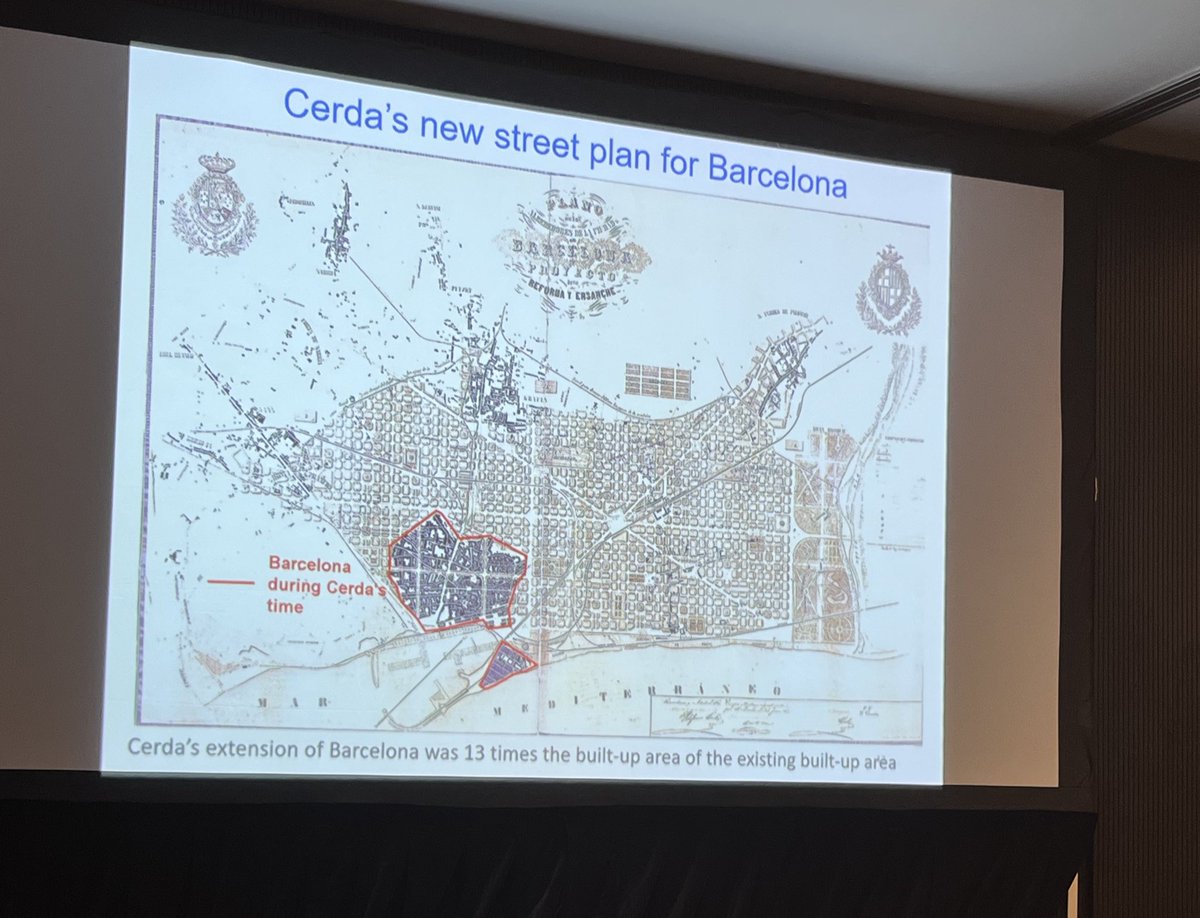

Here’s our interview with legendary city planner Alain Bertaud from this morning’s Q+A. youtu.be/CtYSaxeQFl4?si…


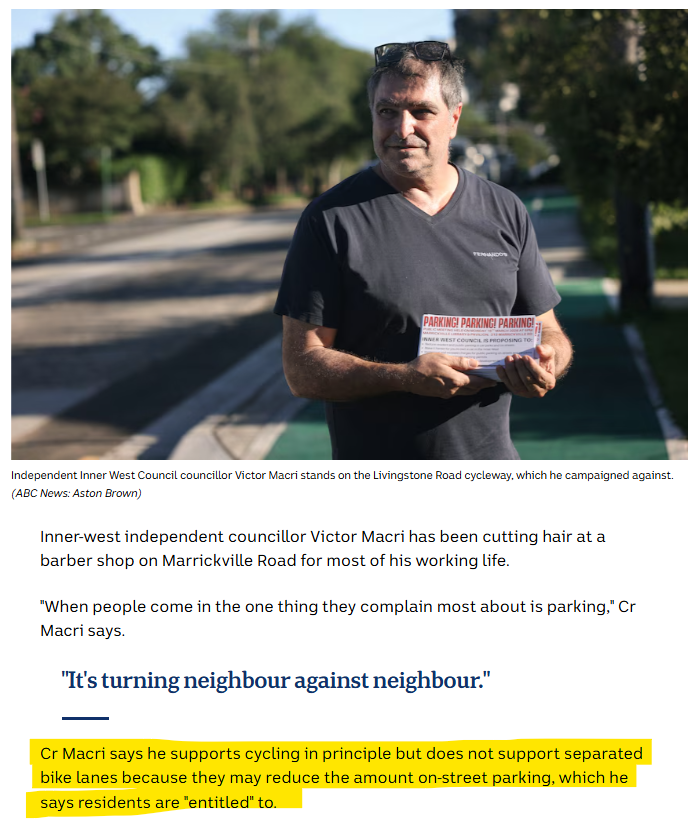
On-street parking. The Aussie final boss Carrington St bikeway is pretty crap & conflicts obvious. Annoying as there’s lots of room for a better solution Livingstone St a total bodge, IWC should be embarrassed abc.net.au/news/2026-03-1…