
Sabitlenmiş Tweet
🇯🇵🇮🇹
4.1K posts



🇯🇵🇮🇹 retweetledi

Software is about to look a lot like ecommerce.
Shitty margins.
Unlimited competition.
A hard way to make a living.
Why? Because over the next few years, Anthropic, Google, and OpenAI are going to drink the software industry's milkshake 🥤
If you were looking for a hotel in 2010, this is how it went:
2010: Google "hotels in New York" → Google links you to TripAdvisor.
But by 2020...
2020: Google "hotels in New York" → Google shows its own hotel booking system integrated directly into the search results.
RIP TripAdvisor 🪦📉 (check their stock price 2015 vs today)
Google made a fortune by building products that captured demand on the keywords where they had the most traffic, like travel.
But Google had finite resources.
They only had so many developers to build these products, so it only made sense to do this for the largest categories: hotels, flights, shopping.
This same thing is about to happen to most digital services and software products. Except this time, the constraint that protected smaller categories is gone.
2025: Ask ChatGPT for the best CRM software → It directs you to Attio, Pipedrive, and Zoho.
2028: Ask ChatGPT for the best CRM → It builds one, imports your data, and runs it for you at a fraction of the cost.
The difference between OG Google and today's frontier models is that OG Google needed human engineers to build each vertical product.
OpenAI, Anthropic, and the Google of today (Gemini) won't have this constraint.
When the cost to build and maintain software approaches zero, there's no reason to stop at hotels and flights. You do it for everything, on demand.
Right now, vibe coding is still fiddly. It requires a human in the loop, it's insecure, and it depends on third-party hosting and infrastructure.
But I expect the frontier model companies to build out their own vertical infrastructure to run the software they generate, removing the current friction entirely.
Think Claude's artifacts, except full-fledged digital products—hosted, maintained, and updated by the same AI that built them.
The moat for most software companies isn't the code. It's the switching cost and the ecosystem lock-in. When an AI can rebuild your tool in seconds and migrate your data automatically, that moat disappears.
Everyone understands that vibe coding = infinite competition. But this is different.
They're taking your customer before they can even get to you.
So, software becomes a lot like ecommerce.
Near zero margin unless you own distribution and aren't reliant on Google/Meta for customers.
TLDR: They drink your milkshake. They'll drink it up.
GIF
English
🇯🇵🇮🇹 retweetledi

Apollo charges $100 for 4,000 LinkedIn enrichments
Serper.(dev) charges $100 for 50,000-70,000 searches
same job. 92-94% cheaper. 89% hit rate on executive profiles.
everyone building outbound in 2026 is dramatically
overpaying because they never questioned the defaults
actual stack. pricing included.
FINDING PEOPLE
→ Apollo — $79/mo. use it for the database and
contact filters. do NOT use it for LinkedIn URL matching.
that's where the credits disappear
→ Serper — use this for LinkedIn URL matching instead.
$100 = 50-70K searches. Apollo as fallback for the 11%
that don't match
→ theorg — completely free org charts with API.
shows reporting lines, promotions, departures. LinkedIn
shows none of this. almost nobody has it in their stack
ENRICHING
→ Enrichly — $59/mo for 5,000 person enrichments.
primary fallback when Apollo misses.
→ waterfall: Apollo → Enrichly → Anymail Finder → Findymail
→ manual. never one source.
SIGNALS (mostly free)
→ Google News RSS — free. unlimited. real-time.
go to Google News, search your query, add /rss to the URL.
that's a live signal feed. replaced a $490/month
monitoring tool
→ f5bot — free. email alerts when your keywords
appear on Reddit. people write paragraphs about their
problems on Reddit they'd never say to a salesperson
→ visualping — monitors any webpage for changes.
hourly checks. set up 200 competitor pages and forget it
RUNNING OUTREACH
→ HeyReach — $79/account/mo. cloud-based LinkedIn automation.
dedicated IPs. 5-10% ban risk vs 23% for browser extensions.
runs 24/7 without your laptop open
→ never send cold email from your main domain.
one spam complaint tanks domain reputation entirely —
website deliverability, brand, everything.
deliveron: $49/mo, 100 Microsoft inboxes,
warmup, rotation included
full stack: under $500/month
the gap isn't tools. it never was.
English
🇯🇵🇮🇹 retweetledi

I accidentally broke my brain reading about Nobel Prize winners last month.
There's this thing called "Janusian thinking" that basically explains why some people's minds work like magic while the rest of us think in straight lines. Named after Janus, the Roman god with two faces pointing opposite directions.
The psychologist who discovered it, Albert Rothenberg, was trying to figure out what made breakthrough thinkers different. He interviewed dozens of Nobel laureates, major artists, revolutionary scientists. What he found sounds impossible.
These people can hold two different ideas in their mind at the same time. They can explore both without switching back and forth or forcing a quick comparison. They can consider “yes” and “no” to the same question simultaneously and stay clear-headed.
Einstein too talked about this when he described his relativity breakthrough. He was imagining riding alongside a beam of light while also standing perfectly still. Both perspectives at once. Mozart said he could hear an entire symphony "all at once," every note, every contradiction, every resolution happening in a single moment of awareness.
Your average person's mind works like a courtroom. Evidence comes in, you weigh it, you reach a verdict. Case closed. But Janusian minds work more like... I don't know, like a quantum computer that can process multiple realities simultaneously until something new emerges from the overlap.
I've started noticing it in conversations. When someone can genuinely see both sides of something without needing to pick one, it drives people nuts. They want you to land somewhere definite. The ability to live in that tension space reads as wishy-washy or indecisive.
Most creative advice tells you to "think outside the box." But Janusian thinking is weirder than that. It's being inside and outside the box at the same time. It's thinking the box exists and doesn't exist simultaneously.
Which explains why truly creative people seem slightly unhinged. They think they're choosing between realities. But, they're inhabiting multiple realities at once, mining the contradictions for insights the rest of us never see.
Sadly, most of us have trained ourselves out of this ability. We've learned that holding contradictions feels unstable, so we rush toward resolution. We've been taught that changing your mind means you were wrong before, so we defend positions instead of exploring them.
But the people changing the world have kept that childlike ability to hold impossible thoughts without needing them to make sense immediately.
We just need to live in the questions everyone else is too scared to ask.
DAN KOE@thedankoe
English
🇯🇵🇮🇹 retweetledi

I’m launching Stanley (AI Head of Content) on June 1, 2026.
Over the next 6-12 months, I'll grow it from $0 → $10M ARR.
In public.
(While running my $30M ARR business full time)
I will also be using only AI employees to do it, so you can copy the playbook.
I'll update this thread as I go. Bookmark it and follow along to hold me accountable 🤝
Comment "alpha" to get early access.
My social media stats as of today:
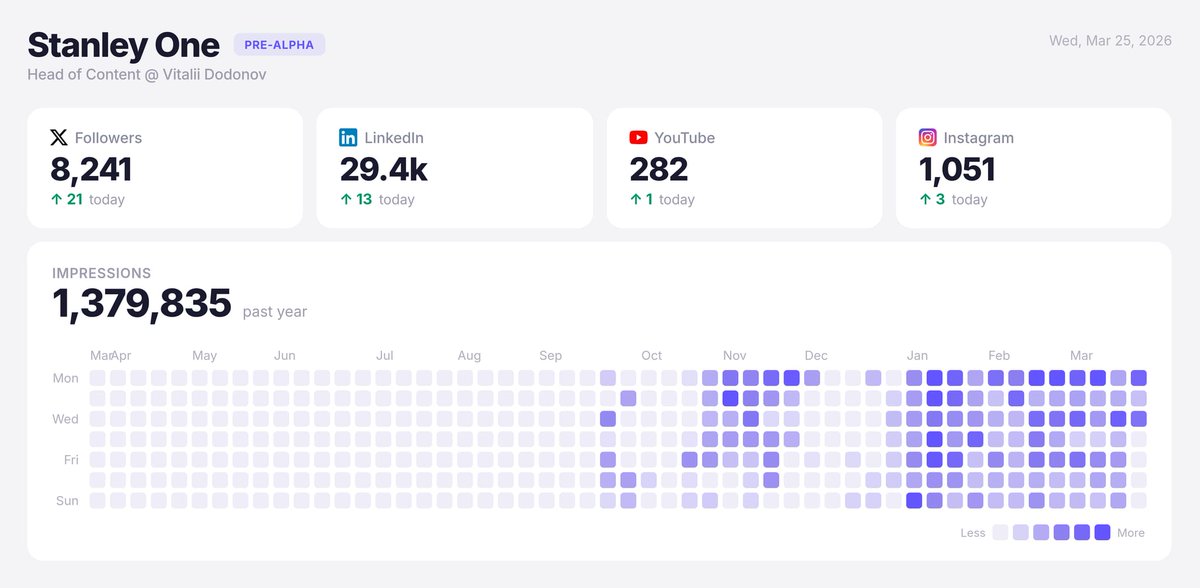
English
🇯🇵🇮🇹 retweetledi

Text-to-manga is here ✨
I asked the new Uni-1 from @LumaLabsAI to read my X profile and make a manga about my life.
It wrote a story about me + @omooretweets disagreeing on a pitch - and then constructed character sheets, rendered panels, and checked its work.
The output 👇

English
🇯🇵🇮🇹 retweetledi

Used mailcheep.com to send a broadcast campaign to 16k contacts, and it only cost $1.66 from my AWS bill. ✌️
English
🇯🇵🇮🇹 retweetledi

Leadership in Tech is a free carefully curated weekly newsletter for CTOs, engineering managers and senior engineers to become better leaders.
English
🇯🇵🇮🇹 retweetledi

🇯🇵🇮🇹 retweetledi

Top 10 niche apps that go viral on TikTok (from someone who’s done $20k+/mo with organic):
- AI Study apps
- Fitness / gym gamification
- AI language learning
- Face / glow up / looksmax apps
- Money tracking / “get rich” apps
- AI content creator tools (UGC / video)
- Dating / rizz assistant apps
- Mental health / dopamine detox
- Productivity / habit tracking
- Resume / career / interview AI
Rule is simple:
If your app can show a clear
before → after → transformation
in under 5 seconds
→ it can go viral on TikTok
Most devs fail not because of product
but because their app is not “visualizable”
TikTok ≠ feature showcase
TikTok = transformation engine
Build for that.
English
🇯🇵🇮🇹 retweetledi

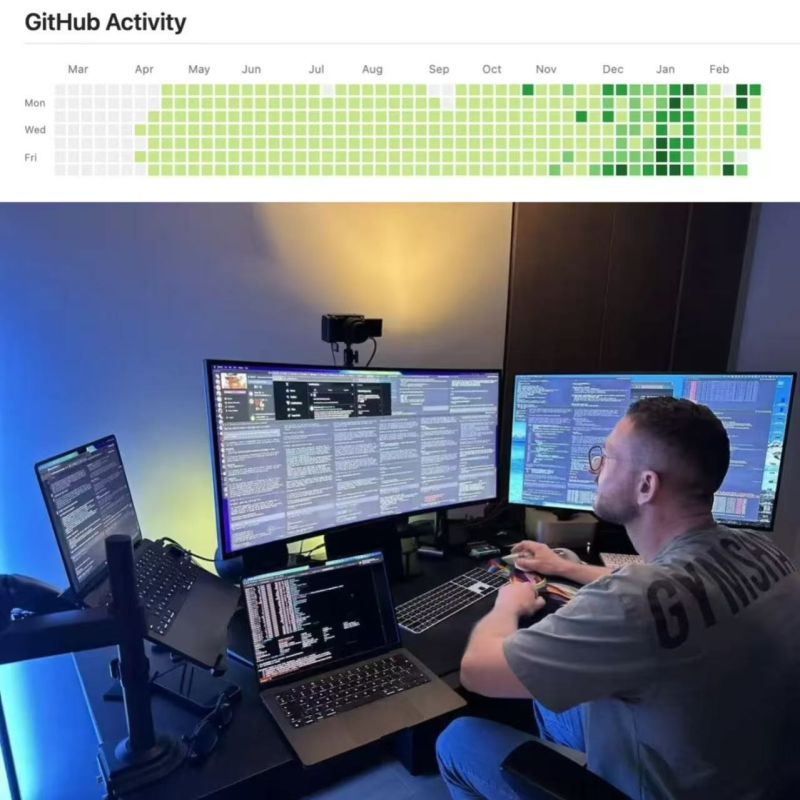
The working style of OpenClaw founder @steipete is insane.
bro runs 4–10 AI coding agents in parallel to generate, review, and commit code at superhuman speed.
hitting 500+ commits pretty much every day and did 6,600+ in jan month alone.
NVIDIA CEO must be happy seeing him spend $250k worth of tokens every month lmao
OpenClaw🦞@openclaw
OpenClaw 2026.3.22 🦞 🏪 ClawHub plugin marketplace 🤖 MiniMax M2.7, GPT-5.4-mini/nano + per-agent reasoning 💬 /btw side questions 🏖️ OpenShell + SSH sandboxes 🌐 Exa, Tavily, Firecrawl search This release is so big it needs its own table of contents. github.com/openclaw/openc…
English
🇯🇵🇮🇹 retweetledi

🇯🇵🇮🇹 retweetledi

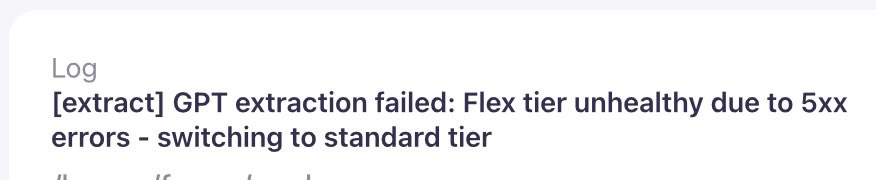
If you do AI inference via OpenAI’s API, you should use the flex tier for half price.
My requests always try to use flex tier first, and on 429 / 500 errors, I use the default service tier. 95% of my requests are flex.
2 tries flex, then fall back to standard. Massive cost cut.
English
🇯🇵🇮🇹 retweetledi

🇯🇵🇮🇹 retweetledi
AI videos have replaced every single influencer on my IG feed and I couldn’t be more thrilled.
Exceptional content. What a massive improvement!
(from themonksbrush_thangka)
English
🇯🇵🇮🇹 retweetledi

🇯🇵🇮🇹 retweetledi

Worth thinking about: if this is true, why has my "make your website faster" consulting business been running at ~95% capacity for 18 months now?
Jon Yongfook@yongfook
If you haven't already, tail your server logs and filter by requests that take longer than 500ms. Copy paste it all into Claude and say "pls fix". Instantly faster app.
English
🇯🇵🇮🇹 retweetledi

I just built a $10K/month creative strategist inside Claude Code 🤯
Give it your competitor Facebook page URLs → it scrapes their ads, watches every video with AI, and delivers a data-backed creative brief with 10 ad concepts in your brand voice.
All inside Claude Code.
Perfect for DTC brands and agencies who are still manually scrolling the Meta Ad Library, screenshotting ads into Google Docs, and guessing at what's working.
If you're spending hours every week pulling competitor ads one by one, watching videos to figure out the hook, copying notes into a brief, and rewriting concepts from scratch every time...
This system eliminates the entire loop:
→ Apify scrapes your competitors' active ads from Meta Ad Library (video + image)
→ Downloads every creative asset locally
→ Gemini watches each video and analyzes the hook, angle, visual format, copy framework, CTA, and emotional trigger
→ Runs the full batch and finds the patterns that repeat across 3+ ads
→ Claude generates 10 ad concepts using the proven mechanics, matched to your brand voice
No manually scrolling the Ad Library.
No screenshotting ads into docs.
No guessing which hooks are actually working.
What you get:
→ Individual creative breakdowns for every competitor ad (7 dimensions each)
→ A pattern report showing which hooks, formats, and triggers keep repeating
→ 10 ready-to-brief ad concepts traced back to real competitor data
→ A reusable system — new competitors, new brief, same pipeline
The research that takes your team a full day now runs in 15 minutes for ~$3 in API costs.
Built 100% in Claude Code with Apify + Gemini.
I put together a full playbook showing you can build the entire thing step-by-step from scratch.
Want the playbook for free?
> Like this post
> Comment "ADS"
And I'll send it over (must be following so I can DM)
English
🇯🇵🇮🇹 retweetledi

🇯🇵🇮🇹 retweetledi
