
Super Lutheran
60 posts

Super Lutheran
@superlutheran
unapologetically LUTHERAN
United States Katılım Ağustos 2022
54 Takip Edilen66 Takipçiler
@superlutheran/note/c-259491648" target="_blank" rel="nofollow noopener">substack.com/@superlutheran…
ZXX
@LutheranAnswers He’s literally on full display all over the Old Testament, of course.
But I grant you the landed joke…which appears to gone over most folks’ heads.
Twitter/X appears to be especially dense this weekend. :)
English

One difficulty Christians have to deal with:
We have no written record of Jesus - at all, anywhere - until the mid-to-late first century.
English
@BRoh23 @StChad_1517 He said “This is my body”… AND he gave us eyes, ears, a brain, and taste buds.
English

@StChad_1517 Jesus said this is my body. Not my body is in there somewhere.
English

“Our churches teach that the body and blood of Christ are truly present and are distributed to those who eat the Lord’s Supper.” Augsburg Confession, Article X
𝚕𝚒𝚝𝚝𝚕𝚎 𝚘𝚗𝚎 ♱🇻🇦@BillArnoldTeach
Jesus lost disciples over the Eucharist. He never said, “Come back, it was symbolic.”
English
English


@superlutheran I know what Christian values are. What are Judeo values?
English
Respectfully, the meme only works if you've already assumed baptism is your testimony rather than God's gift. Let Scripture define it (Titus 3:5; 1 Pet 3:21; Acts 2:38–39; Col 2:11–12) and the picture inverts. The "support" is right there once baptism is allowed to do what Scripture says it does.
English

To say I am a Confessional Lutheran means I read Scripture with the Book of Concord — the Lutheran symbols of 1580 — as my doctrinal anchor. It means I confess that the Bible is the inspired Word of God, that justification is by grace through faith on account of Christ alone, that the Word and Sacraments are the means by which the Holy Spirit works faith, and that the church is found wherever the gospel is rightly preached and the sacraments rightly administered. It does not mean I think Lutherans have a monopoly on Christian truth. It means I think the Lutheran Reformation recovered something the medieval church had buried, and that what it recovered is what American evangelicalism, in its own way, is now in danger of burying again.
English
@lecternleader @MetzUAC1530 Bryan is a gifted teacher for sure. If you are coming from mainstream American evangelicalism, definitely check this resource out:
a.co/d/0dThBFn1
English

Spent 6 hours listening to Bryan Wolfmueller this morning. I have to say, I'm beginning to feel like I found my church home.

English
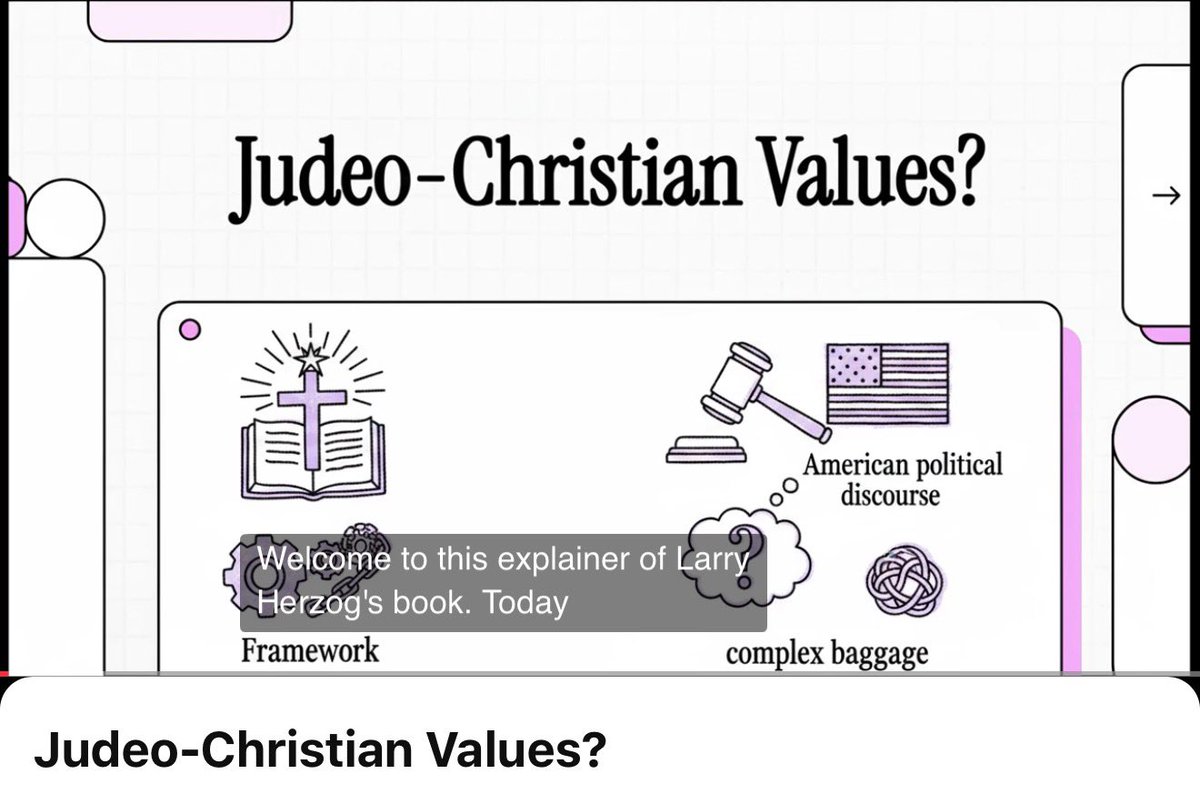
Judeo-Christian values??
If you grew up evangelical in America, you can probably recite the script in your sleep.
The host on Christian radio invokes Judeo-Christian values. The presidential candidate, in a televised interview, defends Judeo-Christian values. The pastor, working through a sermon series on cultural decline, names Judeo-Christian values as the inheritance we are losing. The Sunday school teacher, the homeschool curriculum, the conference speaker, the bumper sticker. Three words, doing extraordinary work. The phrase frames our politics, anchors our cultural identity, names the alliance that connects American Christianity to the modern state of Israel, and somehow, almost without our noticing, has come to feel like a synonym for the gospel itself.
It is not the gospel. It is not even, in the form we now use it, very old.
The phrase Judeo-Christian values — meaning a shared moral and civilizational tradition uniting Christians and Jews against a secular or pagan alternative — entered American discourse in the 1930s. It was popularized in the 1950s. It was politicized in the 1980s. It was fused with Christian Zionism in the decades that followed. The whole linguistic edifice that frames so much of American evangelical political and theological life is younger than the lifetime of someone you know. Before the twentieth century, Christians did not speak this way, because they did not need to. They had a richer, older, and more accurate vocabulary, and they used it.
“Judeo-Christian values,” as a phrase, has done specific theological work in the American evangelical mind. It has fused civic morality with gospel proclamation. It has dissolved the offense of the cross into a generic ethical monotheism that any reasonable theist could affirm. It has underwritten an alliance between American evangelicalism and a particular reading of the modern state of Israel — an alliance that no historic Christian creed has ever required, that no Lutheran confession could sign, and that has cost American Christianity more than its defenders realize.
This distortion did not arise in a vacuum. It is the natural rhetorical scaffolding for a system — dispensationalism — that fragmented the church’s reading of the Bible into sealed compartments, made the modern state of Israel central to the church’s theological imagination, and substituted geopolitical speculation for the proclamation of Christ crucified. Christian Zionism, the political-theological movement that grew out of dispensationalism, then required a vocabulary that could bind Christians and Jews into a shared civilizational project, and the phrase Judeo-Christian values was ready to hand.
The Lutheran Confessions — and the historic Christian faith they articulate — have already given us the answer we need. The Augsburg Confession’s Article XVII condemns the chiliasm at the root of dispensational eschatology. The Lutheran distinction between Law and Gospel reorients us toward the Bible’s actual subject matter. The doctrine of the two kingdoms gives us a way to honor civic moral common ground with our Jewish neighbors without confusing it for the gospel that Christ has commissioned His church to preach. The theologia crucis — the theology of the cross — recalls us to the only triumph the church has ever been promised in this age.
The way forward for American Christians is not to defend the slogan harder or to abandon Christianity for some vague spiritual humanism, but to recover the older, deeper, more accurate confession that the Reformation never stopped offering us.
English
Most of us know someone who keeps leaving Sunday morning hungry. A sibling, a coworker, the college friend who’s been quietly church-shopping for three years. They can’t name what’s missing. They’re not looking for an argument — they’re looking for someone to name it for them.
The Hollow Altar is written for that reader. A pastoral, non-polemical invitation for the disillusioned evangelical who is beginning to suspect that production cannot do what the Verba do. It walks gently through the Divine Service in order — Confession, Word, Creed, Verba, Supper, Benediction — and shows what Christ has been giving all along.
Written by a layman, for laypeople. If you have someone in mind, this is for them.
a.co/d/05gb1Tsi
English
@Baldwin1418419 @HVACwarfare You [Baldwin] don’t appear to have the slightest idea what confessional Lutheran theology encompasses…
English

@HVACwarfare Both heretics. Both hellbound. One frontloads the gospel. The other backloads it. Free Grace OSAS is the narrow gate. Works are not needed for salvation and by claiming they are (pre or post salvation) you are twisting the gospel.
English

I was born Lutheran, Raised Lutheran, I will die Lutheran 🦬
Dana Rachel 🇻🇦@thyflameoflove
I was born Catholic, Raised Catholic, I will die Catholic. 🙏✝️
English
@HVACwarfare Interesting name…especially considering the sacramental vacuum that is mainstream, American evangelicalism… ;)
English
The Phrase That Built an Alliance
[ A teaser for “Judeo-Christian Values: A Confessional Lutheran Reckoning with Dispensationalism, Christian Zionism, and the Gospel They Replaced”. ]
If you are an American Christian over forty, you have heard Judeo-Christian values your whole life. From presidents and pastors. On talk radio and in the pulpit. In arguments about prayer in schools and arguments about American foreign policy. It feels eternal — a kind of shorthand for the moral inheritance that built the West.
It is not eternal. It is younger than your grandmother.
The phrase as we now use it — the civilizational shorthand, the political slogan, the rhetorical glue holding together a generation of evangelical-Jewish alliance — is a product of the 1930s. It was born in American interfaith organizations responding to European fascism. It was consolidated in the 1950s by Cold War civic religion. It was repurposed in the 1980s by the Religious Right. It was fused with Christian Zionism in the decades that followed by figures like John Hagee, and made bipartisan common sense by the time most of us were old enough to vote.
Before the twentieth century, Judeo-Christian meant something else entirely. It was a technical term — scholars used it for first-century Jewish believers in Jesus, the apostolic-era saints of the Jerusalem church. It described a kind of Christian, not a kind of civilization. It carried no political weight. It promised no alliance.
This matters. Not because the moral common ground between Christians and Jews is illusory — it is not — but because the phrase has done specific theological work in the American evangelical mind. It has fused civic morality with gospel proclamation. It has dissolved the offense of the cross into a generic ethical monotheism. It has underwritten a political-eschatological alliance that no Lutheran confession could sign and no historic Christian creed has ever required.
This book is about that alliance. About how American evangelicalism — through dispensationalism, through Christian Zionism, and through Judeo-Christian values as cultural-political shorthand — traded the gospel of Christ crucified for a story about end times, civilizational struggle, and geopolitical destiny. And about why the Reformation has already given us the answer we need, if we will recover it.
Christ has not appointed a parenthesis. He has appointed a means.
English

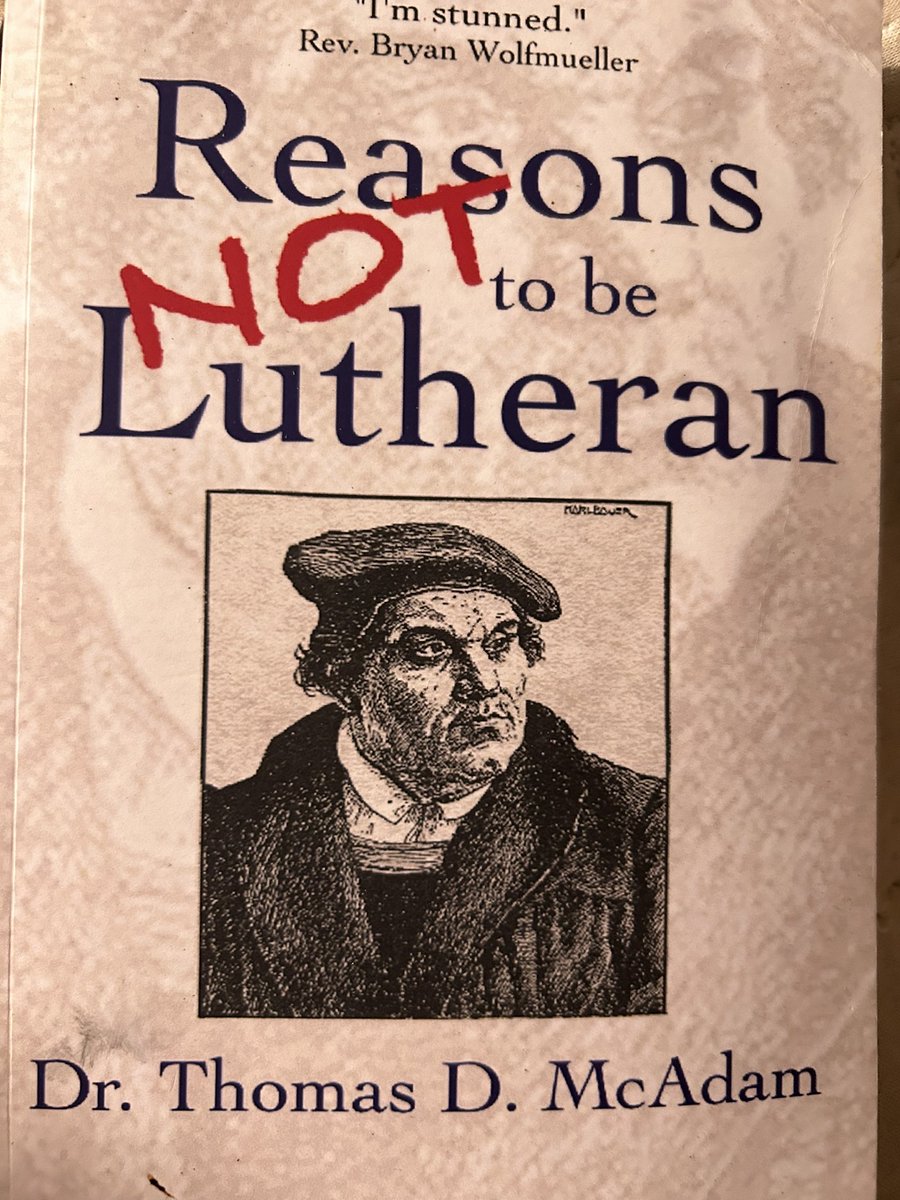
Has anyone read this book? It’s got all of the best arguments against Lutheranism condensed in an easy-to-read format. I honestly don’t know what to say.🤔
English