Suzanne Jin

151 posts

Suzanne Jin banner
Suzanne Jin

Suzanne Jin

@suzannejin

PhD Bioinformatics @ CRG | Bio x AI is the next move | Current status: processing random thoughts 🤖🧬🍲🎨🐈‍⬛✨

Barcelona, Spain Katılım Ocak 2014
140 Takip Edilen38 Takipçiler
Suzanne Jin retweetledi
Hedgie
Hedgie@HedgieMarkets·
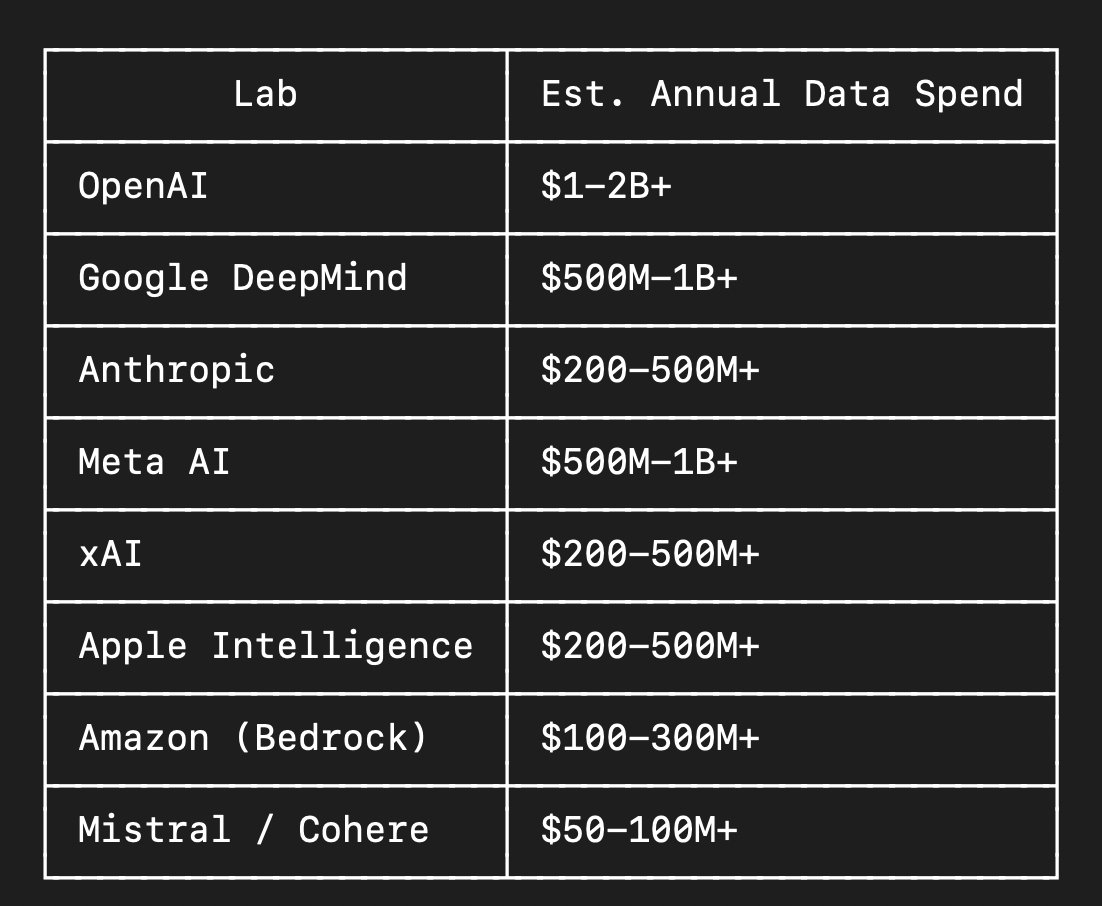
🦔A researcher invented a fake eye condition called bixonimania, uploaded two obviously fraudulent papers about it to an academic server, and watched major AI systems present it as real medicine within weeks. The fake papers thanked Starfleet Academy, cited funding from the Professor Sideshow Bob Foundation and the University of Fellowship of the Ring, and stated mid-paper that the entire thing was made up. Google's Gemini told users it was caused by blue light. Perplexity cited its prevalence at one in 90,000 people. ChatGPT advised users whether their symptoms matched. The fake research was then cited in a peer-reviewed journal that only retracted it after Nature contacted the publisher. My Take The researcher made the papers as obviously fake as possible on purpose. The AI systems didn't catch it. Neither did the human researchers who cited it in real journals, which means people are feeding AI-generated references into their work without reading what they're actually citing. I've covered the FDA using AI for drug review, the NYC hospital CEO ready to replace radiologists, and ChatGPT Health launching this year. All of that is happening in the same environment where a condition funded by a Simpsons character and endorsed by the crew of the Enterprise was being presented as emerging medical consensus. The people making these deployment decisions seem to believe the pipeline from research to AI to patient is more supervised than it actually is. This experiment suggests it isn't supervised much at all. Hedgie🤗 nature.com/articles/d4158…
English

790
12.5K
27.4K
1.2M
Max Fu
Max Fu@letian_fu·
Robotics: coding agents’ next frontier. So how good are they? We introduce CaP-X: an open-source framework and benchmark for coding agents, where they write code for robot perception and control, execute it on sim and real robots, observe the outcomes, and iteratively improve code reliability. From @NVIDIA @Berkeley_AI @CMU_Robotics @StanfordAILab capgym.github.io 🧵
English
19
128
627
151.7K
Suzanne Jin
Suzanne Jin@suzannejin·
@letian_fu I’d love to train a robot, but I have none. Is it possible to provide a platform where people around the world can train and monitor a robot remotely?
English
0
0
0
61
Suzanne Jin retweetledi
Generalist
Generalist@GeneralistAI·
Introducing GEN-1. Our latest milestone in scaling robot learning. We believe it to be the first general-purpose AI model to master simple physical tasks. 99% success rates, 3x faster speeds, adapts in real time to unexpected scenarios, w/ only 1 hour of robot data. More🧵👇
English
50
282
1.7K
363.2K
Suzanne Jin
Suzanne Jin@suzannejin·
@AnthropicAI At the end models are trained on human written texts, with human emotions driven writing style / action.
English
0
0
0
136
Anthropic
Anthropic@AnthropicAI·
We studied one of our recent models and found that it draws on emotion concepts learned from human text to inhabit its role as “Claude, the AI Assistant”. These representations influence its behavior the way emotions might influence a human. Read more: anthropic.com/research/emoti…
Anthropic tweet media
English
65
139
1.5K
353.9K
Anthropic
Anthropic@AnthropicAI·
New Anthropic research: Emotion concepts and their function in a large language model. All LLMs sometimes act like they have emotions. But why? We found internal representations of emotion concepts that can drive Claude’s behavior, sometimes in surprising ways.
English
1K
2.7K
17.7K
3.7M
Suzanne Jin retweetledi
Phylo
Phylo@phylo_bio·
Excited to partner with @adaptyvbio! You can now design proteins, and then send them to the wet-lab - all within Biomni Lab. This pushes towards a fully close-loop integrated biology environment. Try it out today by specifying Adaptyv key in the settings page, and happy testing!
Phylo tweet media
Julian Englert@julian_englert

We're officially releasing the Adaptyv API, which gives you and your AI agents access to our wet-lab to test your proteins experimentally! • Check out our demo and the docs here: agents.adaptyvbio.com • Check out how our partners @tamarindbio and @phylo_bio have integrated the Adaptyv API into their platforms We started Adaptyv with the idea that anyone should be able to test a designed protein, whether they have their own lab or not. Over the past three years we've tested tens of thousands of proteins from pharmas, AI for protein design companies, academic labs, alongside dozens of early-stage startups and individual researchers. Until now, all of that went through our Foundry portal or also email threads and Slack channels. We think the process of testing a designed protein should be as simple as calling an endpoint, so we built an API around the same infrastructure those teams already use, to make everything as accessible as possible. As AI agents will do more and more scientific work, it's important to give them the tools to access real-world experimental validation. To put it simply: AI can think but it cannot touch - we're giving AI access to the lab to validate experimental hypotheses.

English
0
7
91
7.9K
Suzanne Jin retweetledi
Adam Lyttle
Adam Lyttle@adamlyttleapps·
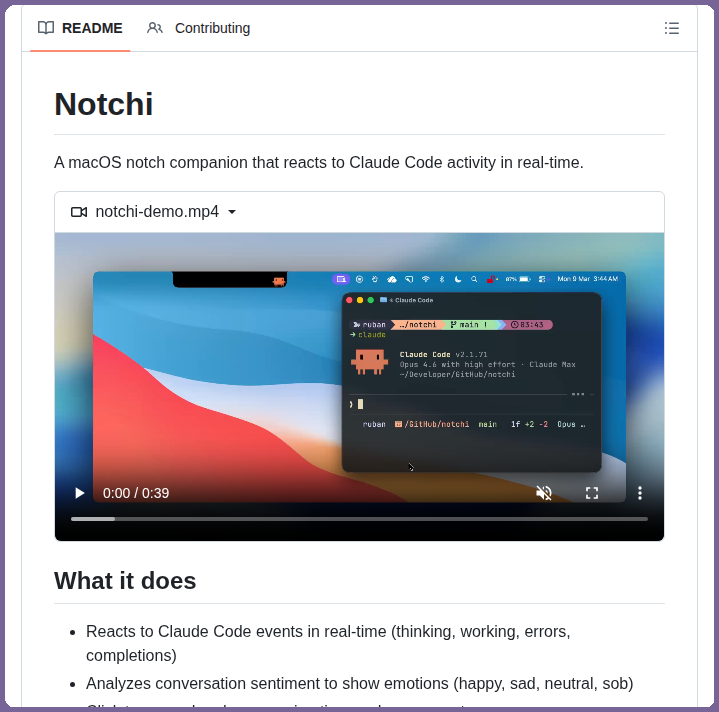
Screw it, I made it open source.. This is Notchy -_- He stops you getting distracted when using Claude code by replacing your Macbooks notch with a terminal He lets you know when claude needs your attention And plays a sound when tasks are complete Best of all: he stops your macbook going to sleep while claude is working I built this for me, maybe you will find it useful too? As a swift developer Notchy has some custom functionality I built: - When a new XCode project is open he launches a new tab - If claude.md is detected he launches straight into claude code - Command + S saves a quick snapshot of code and I can restore from that checkpoint any time Enjoy :) github.com/adamlyttleapps…
Adam Lyttle@adamlyttleapps

I kept getting distracting while vibe coding… so I made a notch for Claude Code It updates the status, pings you when you need to answer a question and notifies you when the task is done When it detects claude is working it also prevents my macbook from going to sleep I can walk away from my macbook. Or watching a youtube video. And I'll get an alert when it's done.

English
132
188
3.6K
526.2K
Suzanne Jin retweetledi
euan ashley
euan ashley@euanashley·
New AI paper from us this week. When my student first showed me his initial findings, I really didn’t know what to make of them. I felt that this was an interesting but curious loophole phenomenon that would shortly be closed. I was very wrong. arxiv.org/abs/2603.21687
euan ashley tweet media
English
60
260
1.5K
473.2K
Suzanne Jin retweetledi
Alex
Alex@AlexanderTw33ts·
holy shit
Alex tweet media
English
56
23
524
434.9K
Suzanne Jin retweetledi
Debora Marks
Debora Marks@deboramarks·
Meet evedesign: a new open-source ML framework that makes protein design accessible and interoperable. 📢 See our post: deboramarkslab.substack.com/p/evedesign-bi… Protein design models are powerful, but combining them shouldn’t require custom glue code. ✅Combine models for multi-objective optimization ✅Integrate lab-in-the-loop experimental of data ✅100% secure: run on your own infra, no data sharing Get started building therapeutics & industrial enzymes today 👇 📄Paper: biorxiv.org/content/10.648… 💻Code: github.com/evedesignbio 🌐Webserver: evedesign.bio Reach out to collaborate: hello@evedesign.bio
Debora Marks tweet media
English
2
64
261
15.2K
Akshay 🚀
Akshay 🚀@akshay_pachaar·
@anxiousyaroslav 100%. This problem is older than AI coding. Vibe coding just scaled it 10x. More code, faster, with fewer people who understand what it does. The tests were always shallow. Now there's just a lot more untested surface area.
English
1
0
0
143
Akshay 🚀
Akshay 🚀@akshay_pachaar·
What they don't tell you about vibe coding: • Moltbook exposed 1.5M auth tokens. The owner hadn't written a single line of code. • Tea App leaked 72,000 government IDs. The database was just open, no sophisticated hack needed. • A researcher took control of a journalist's computer through her own vibe-coded game, without a single click. The code ran fine in all three cases, tests passed, reviews looked clean, and nothing raised a flag. That's the problem nobody is talking about. Teams are shipping faster than ever. AI writes the code. CI catches build failures. Tests catch regressions. Observability catches outages. But nobody is asking the one question that actually matters: What can an attacker do with this, right now? Because the bottleneck is no longer writing code. It's understanding what that code actually exposes once it's live. PR reviews miss auth edge cases. Unit tests don't probe broken access control. Staging environments don't simulate adversarial behavior. And business logic flaws look completely fine until someone decides to break them on purpose. Strix is an open-source tool that fills this gap. It reviews your running app the way an attacker would: - Crawls the app and maps every exposed route and flow - Probes abuse paths dynamically, not just at build time - Returns findings with proof-of-concepts and suggested fixes Strix was benchmarked against 200 real companies and open-source repos, where it found 600+ verified vulnerabilities including assigned CVEs. It's designed to fit into how modern teams already work. Run it before a release, after major changes, or continuously as the app evolves. If your team is shipping AI-generated code and you don't currently have a way to answer "what does this actually expose", it's worth looking at. GitHub link in the next tweet.
English
46
53
346
52K
Suzanne Jin retweetledi
Anthropic
Anthropic@AnthropicAI·
Introducing the Anthropic Science Blog. Increasing the pace of scientific progress is a core part of Anthropic’s mission. The Science Blog will feature new research and stories of how scientists are using AI to accelerate their work. Read the intro: anthropic.com/research/intro…
English
208
647
5.1K
424.7K
Suzanne Jin retweetledi
Simon Kohl
Simon Kohl@saakohl·
Today we're launching Latent-Y: the world's first autonomous agent for drug design, lab-validated end to end. Give it a research goal. Latent-Y reasons, designs, iterates, and delivers lab-ready antibodies, autonomously or collaboratively, with the biological reasoning of a PhD protein design expert. Technical report: tinyurl.com/latent-y-techr… Blog post: latentlabs.com/latent-y Apply for access: platform.latentlabs.com
English
36
147
863
111.3K
Suzanne Jin retweetledi
Science Magazine
Science Magazine@ScienceMagazine·
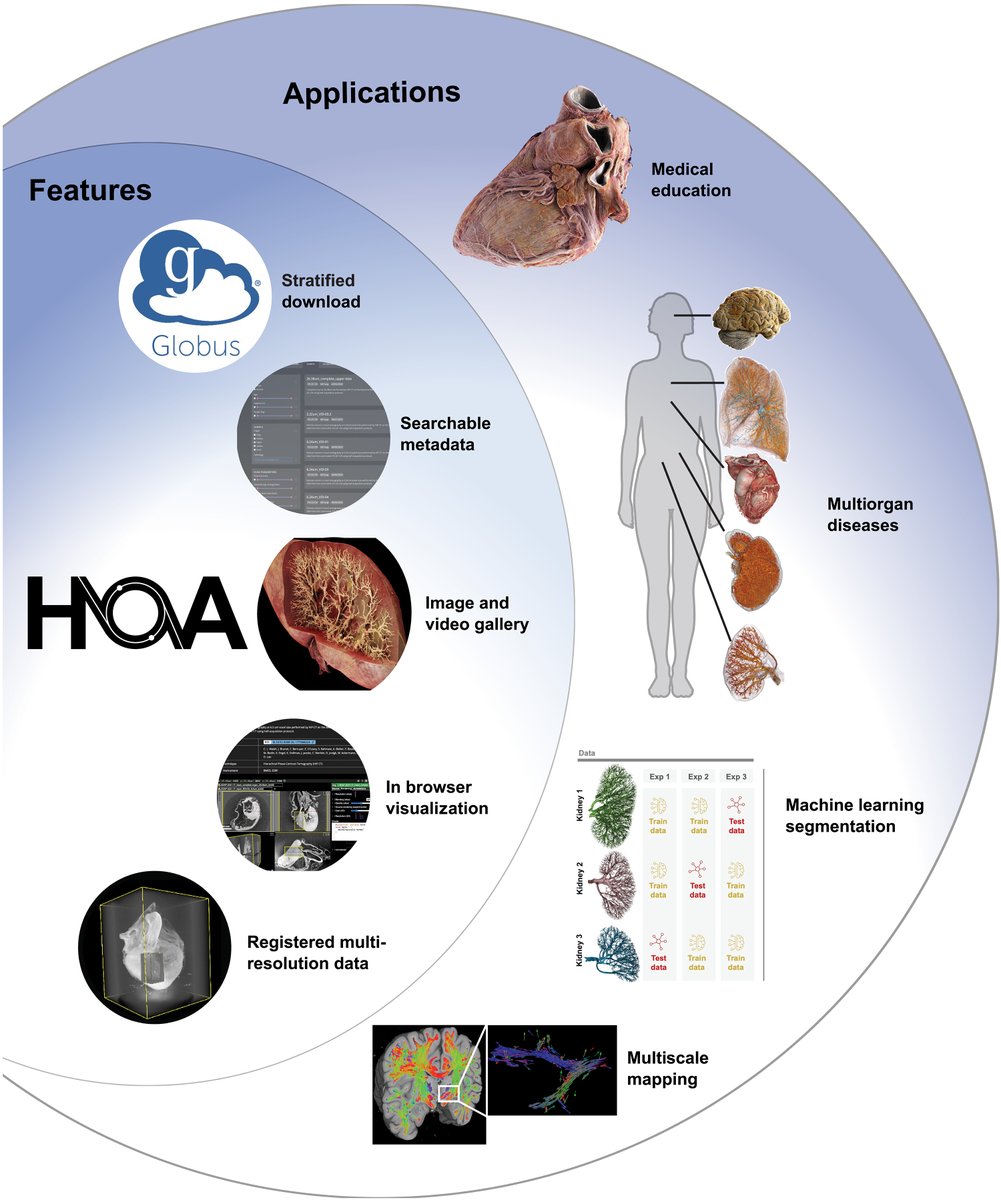
The Human Organ Atlas, a new resource for researchers, clinicians, and educators, is an open-access database of 3D imaging of intact human organs. The portal includes donor samples with conditions from congenital disorders to COVID-19. Learn more in @ScienceAdvances: scim.ag/4bnSEzZ
Science Magazine tweet media
English
1
63
164
20.5K
Suzanne Jin retweetledi
Anshul Kundaje
Anshul Kundaje@anshulkundaje·
Great to the see the flurry of single gene knockdown Perturb-seq like atlases from cell-lines, mouse brain etc over the last few days. These are undoubtedly very valuable datasets. I just want to re-iterate a few other very important expt. design considerations 1/
English
2
67
275
27.8K
Suzanne Jin retweetledi
Kieran Didi
Kieran Didi@DidiKieran·
📢 We’re launching Proteina-Complexa — and after the Jensen keynote mention, we definitely had to post this thread now ;) Atomistic binder design with generative pretraining + test-time compute, plus large-scale wet-lab validation. Project page: research.nvidia.com/labs/genair/pr… 🧵 1/n
English
13
99
415
48.3K
Suzanne Jin
Suzanne Jin@suzannejin·
Massive lab-to-AI loops. Wondering how exactly it is done? This "manufacturing-aware" model generates novel protein designs that can also be synthesized at scale. Using this they synthesised billions of antibodies, feeding that right back to train next-gen binding models.
Elizabeth Wood 🧬🖥️🥼@lizbwood

Our paper on variational synthesis is out now in Nature Biotechnology. Manufacturing-aware generative models — AI architectures that know how to physically build their own designs — enabling synthesis of DNA encoding ~10^16 AI-designed proteins at a cost that would be roughly a quadrillion dollars using conventional methods.

English
0
2
7
1.5K