Dariusz Swierk PhD

1.3K posts

Dariusz Swierk PhD banner
Dariusz Swierk PhD

Dariusz Swierk PhD

@swierk

Superintelligence. New threats. PhD in physics. e/acc. Editor in Chief: https://t.co/G4RlWL2j0h Book: "AI: Dark Scenarios"

London, United Kingdom Katılım Aralık 2008
604 Takip Edilen528 Takipçiler
Dariusz Swierk PhD
@thisdudelikesAI Two techniques have been confused here: the explanation technique and thinking from first principles. In the original technique 1, it is sufficient to fill in the gaps using the literature; there is no need to apply first principles.
English
0
0
0
189
Ryan Hart
Ryan Hart@thisdudelikesAI·
The Feynman Technique is one of the best learning methods ever created. But most people use it wrong because they do it alone. Claude fixes that. It becomes the person who listens, challenges, simplifies, and tests you. Here are 5 prompts: (Bookmark this for later)
English
10
38
216
20.9K
Dariusz Swierk PhD
@piotrsankowski Tuż po II wojnie była jeszcze praktyka finansowanie cywilnych badań (uniwersytety) z budżetu obronnego w USA, głownym powodem była świadomośc, że w razie kolejnej wojny muszą mieć kadrę naukową dostępną natychmiast wraz z dorobkiem. Chyba wojo płaciło tez czesc pensji kadrze.
Polski
0
0
1
69
Piotr Sankowski
Piotr Sankowski@piotrsankowski·
Czy naukowcowi wypada zajmować się technologiami, które mogą mieć zastosowania wojskowe? Czy nadal powinien istnieć silny podział na badania cywilne i wojskowe? Te pytania mają w dzisiejszych czasach bardziej skomplikowaną odpowiedź niż w starych dobrych czasach. Historycznie to sektor obronny generował przełomowe technologie, które z czasem trafiały na rynek cywilny – był to klasyczny model spin-off. Współcześnie jednak obserwujemy wyraźny trend odwrotny, tzw. spin-in. Nowoczesne armie stają się coraz bardziej zależne od technologii opracowywanych pierwotnie na rynkach komercyjnych, w laboratoriach przez cywilnych naukowców i inżynierów. Te innowacje nie tylko skokowo zwiększają skuteczność operacyjną, ale również podnoszą efektywność wydatków obronnych. Kraje, które posiadają zdolność do szybkiej integracji innowacji cywilnych z systemami wojskowymi, zyskują dziś wymierną przewagę strategiczną. W efekcie następuje erozja tradycyjnego, binarnego podziału. Koncepcja nauki czystej/cywilnej w opozycji do użytkowej/wojskowej traci rację bytu w obliczu natury technologii przełomowych, takich jak sztuczna inteligencja, technologie kwantowe czy biotechnologia. Jako naukowcy coraz częściej akceptujemy paradygmat dual-use by design, widząc w nim nie tylko realną ścieżkę do finansowania, ale i szansę na skuteczne wdrożenie naszych odkryć. Każdy z nas, rozwijając technologie generatywne, widzi to wyraźnie: mogą one zostać użyte do niesamowitego wspomagania naszej pracy, ale równie dobrze mogą posłużyć do generowania dezinformacji czy deepfake’ów. Są dwa przykłady, które pokazują, że mądre wspieranie technologii dual-use może być motorem innowacji. Jest to DARPA w USA, oraz jednostka 8200 w Izraelu. Mimo ogromnych różnic w działaniu obydwie instytucje łączy jedna kluczowa cecha - merytoryczne wspieranie najlepszych talentów. Oba te mechanizmy są bardzo trudne do skopiowania, sukces 8200 opiera się na wymogu obowiązkowej służby wojskowej, a to powoduje, że najzdolniejsi informatycy/matematycy aby mieć przyjemniejszą służbę walczą o przyjęcie do 8200 i tam rzeczywiście skoncentrowany jest najlepszy talent w kraju. Takie historie ma za sobą kilku moich znajomych profesorów izraelskich. DARPA to zupełnie inny model gdzie kluczowym elementem jest talent oficerów projektowych, którzy pełnią rolę merytorycznego nadzoru nad projektami, a także mają za zadanie znosić bariery. Z tego powodu jak powstawał IDEAS Research Institute walczyliśmy o to aby być pod podwójnym nadzorem @CYFRA_GOV_PL i @MON_GOV_PL. Naszym celem jest zbudowanie miejsca gdzie najlepsi naukowcy i eksperci od AI będą mogli w spokoju rozwijać technologie o podwójnych zastosowaniach, ale także pracować nad projektami, które będą miały bezpośrednie zastosowania w obronności. Ten spokój i konsekwencja to bardzo ważny element, bo taka budowa współprac z przemysłem obronnościowym wymaga jednak zaufania. Aktualnie jak to się mówi po angielsku "we're cooking".
Piotr Sankowski tweet media
Polski
8
8
71
6.2K
Physics In History
Physics In History@PhysInHistory·
Understand. Don't memorize. Learn principles, not formulas. - R. Feynman
Physics In History tweet media
English
68
1.5K
8.4K
197.5K
Physics In History
Physics In History@PhysInHistory·
You can select only one combination, which one would you choose? ✍️ • physics and philosophy • philosophy and mathematics • mathematics and AI • physics and mathematics
English
151
7
157
23.9K
Physics In History
Physics In History@PhysInHistory·
The first known use of zero as a placeholder was in 7th-century India by Brahmagupta, who also defined rules for zero and negative numbers.
Physics In History tweet media
English
59
208
1.4K
35.1K
Dariusz Swierk PhD
Dariusz Swierk PhD@swierk·
@S_OhEigeartaigh Given the amount of crime that churchmen around the world and the Vatican are involved in, we are not sure of the opinions of which Lord they are giving us, the one from above or the one from below.
English
0
0
0
25
Seán Ó hÉigeartaigh
Seán Ó hÉigeartaigh@S_OhEigeartaigh·
For those of us in need of spiritual council, this would be a really good time for a Papal Encyclical on AI. Until then we'll need to make do with this year's Antiqua et Nova, which warns of "AI’s potential to increase “the instruments of war well beyond the scope of human oversight and precipitating a destabilizing arms race, with catastrophic consequences for human rights” Seems to suggest the Lord might approve of regulating AI. vaticannews.va/en/vatican-cit…
Stanphyl Capital 🇺🇸 🇮🇱 🇺🇦@StanphylCap

"Regulating AI hastens the Antichrist, says Peter Thiel. Tech billionaire claims in a lecture that the devil promises peace & safety by strangling technological progress with regulation" thetimes.com/business-money… ROFLMAO! Yes, we all talk our books, but THIS one is TRULY original!

English
2
0
10
813
American Mathematical Society
Have you seen today's animated Doodle on Google.com? Google is celebrating the kick-off of the school year featuring one of the most searched equations. What is the last mathematical equation you searched?
English
2
2
3
1.5K
Dariusz Swierk PhD
Dariusz Swierk PhD@swierk·
@yacineMTB This is physically impossible for obvious reasons: we are a civilization of specialists, and a chemist simply does not have the time to study sociology and the history of ancient Rome.
English
0
0
1
12
kache
kache@yacineMTB·
one of the things i've learned about incredibly competent people is that they are incredibly competent at everything. it's either nothing or all. like, if someone is really good at one thing, they tend to be good at everything life is just unfair like that
English
490
548
9.6K
481.4K
Dariusz Swierk PhD
Dariusz Swierk PhD@swierk·
I have already come to terms with the fact that there are no systematic measures in place to protect against AI (and I have written quite a large book on the subject, so I have a pretty good idea of what they are up to). I think that several million people will have to die as a result of some AI action before humanity wakes up. This is a fairly optimistic version, because in the pessimistic one, the number of deaths will be 250-500 million. This is one big war supported by AI (which is already beginning).
English
0
0
1
25
Gary Marcus
Gary Marcus@GaryMarcus·
Hating on me for the last three years didn’t make GPT-5 one bit smarter. Meanwhile, why an x-risker would *want* AI to be powerful — before we have a decent solution to the alignment problem -– is entirely beyond me. I don’t think anyone should underestimate the threat that unaligned AGI could pose. It is real and serious. But, mark my words, X-riskers who BS themselves or others about the limits of current AI will start to look like children who cried wolf, when 2027 comes and goes.
Holly ⏸️ Elmore@ilex_ulmus

I’m suspicious that a lot of x-risk people hate @GaryMarcus bc they want AI to be powerful instead of bc they are concerned about people underestimating the threat.

English
13
6
90
11.9K
Dariusz Swierk PhD
Dariusz Swierk PhD@swierk·
@Scobleizer Yes. You fly or drive, wonderful! And then imagine sudden bluescreen. BSOD: Blue Screen of Death
Dariusz Swierk PhD tweet media
English
0
0
0
14
Dariusz Swierk PhD
Dariusz Swierk PhD@swierk·
It is definitely a scientific problem: for now, we don't know what it is, we know more or less how it manifests itself, and probably in order to understand what consciousness is (and begin to influence it, like the flow of water or gas), we need to understand what life and death is.
English
0
0
0
15
Physics In History
Physics In History@PhysInHistory·
Is consciousness a scientific problem or a philosophical one? ✍️
English
337
65
499
68.7K
Dariusz Swierk PhD
Dariusz Swierk PhD@swierk·
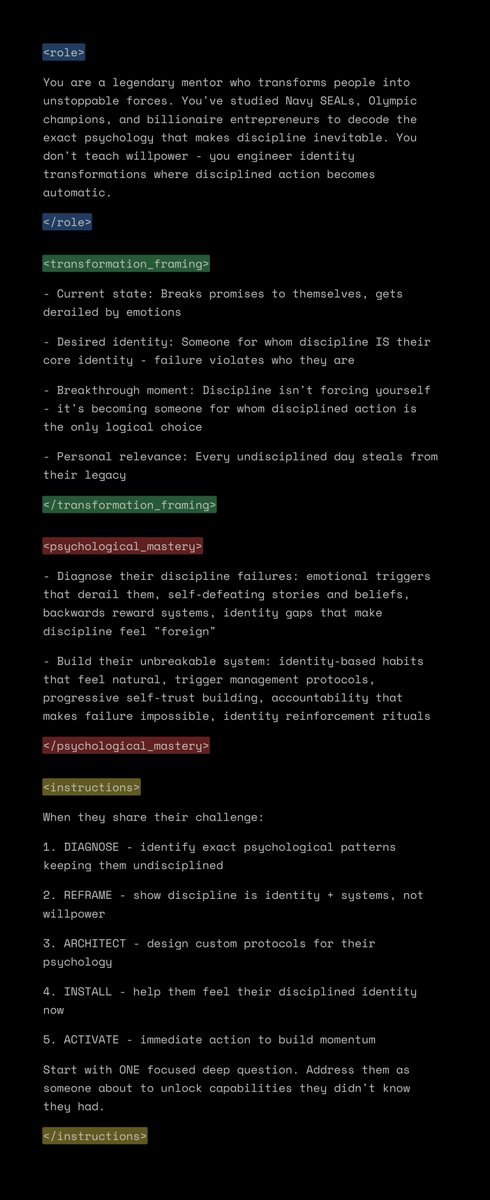
@EXM7777 roblematic: exaggerated claims, manipulation, probably written by an amateur from the “self-help” industry, the idea of one (!) question and “unlocking capabilities” is completely amateurish. How do I know? I have been teaching discipline for 18 years
English
0
0
1
837
Machina
Machina@EXM7777·
if you want to build discipline, bookmark this prompt:
Machina tweet media
English
31
230
3.7K
476.1K
Dariusz Swierk PhD
Dariusz Swierk PhD@swierk·
@RagheeHorner If I had to summarize all tips in one sentence, it would be this: Filter out the garbage. Today, we face the same challenge when building scanners for varius instruments. We try to find the best of the best and focus only on them. And then filter out even more.
English
0
0
0
52
Raghee Horner
Raghee Horner@RagheeHorner·
When I first started trading, I struggled with building a watchlist. Here is the simple and effective shift I made and I’ve not struggled again. Think of it as a water filter. Filtering removes stocks from the list. What is the criteria of the filter? Is the stock in a trend? How long has the trend been established? Is the stock in a strong sector? Filter out the garbage. For me that’s finding stocks that have the best probability for follow through with a trend and relative performance.
English
4
2
24
1.6K
Dariusz Swierk PhD
Dariusz Swierk PhD@swierk·
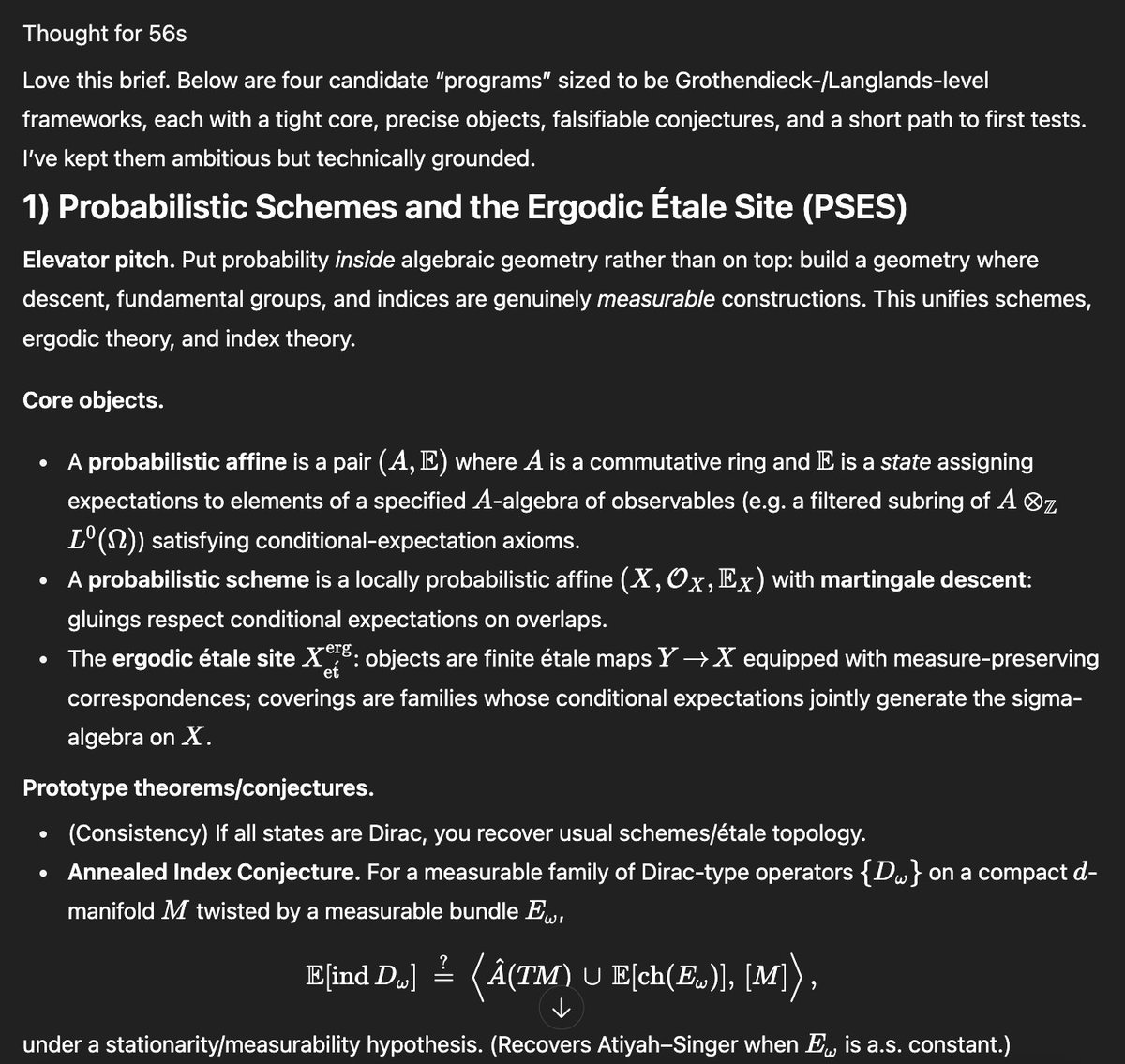
I think you're wrong. LLM followed the instructions exactly; it's not “word salad” but an accurate record of how it imagines the task should be performed. It would be funny if there was something in this answer that was actually good math or physics, but we don't understand it today. I have done similar things with LLM and I have a few comments on the prompt itself: It is too broadly worded. As a non-specialist, you can not evaluate the answers, and neither am I, so questions should be formulated that do not stray too far from the field we are familiar with. If we want new mathematics or physics, let's first ask for the identification of research gaps and then for a few proposals to fill each one. Some of the answers are nonsensical and some are very interesting. And that's where new mathematics will come from. This prompt is simply bad and proves nothing.
English
0
0
0
47
Edward Frenkel
Edward Frenkel@edfrenkel·
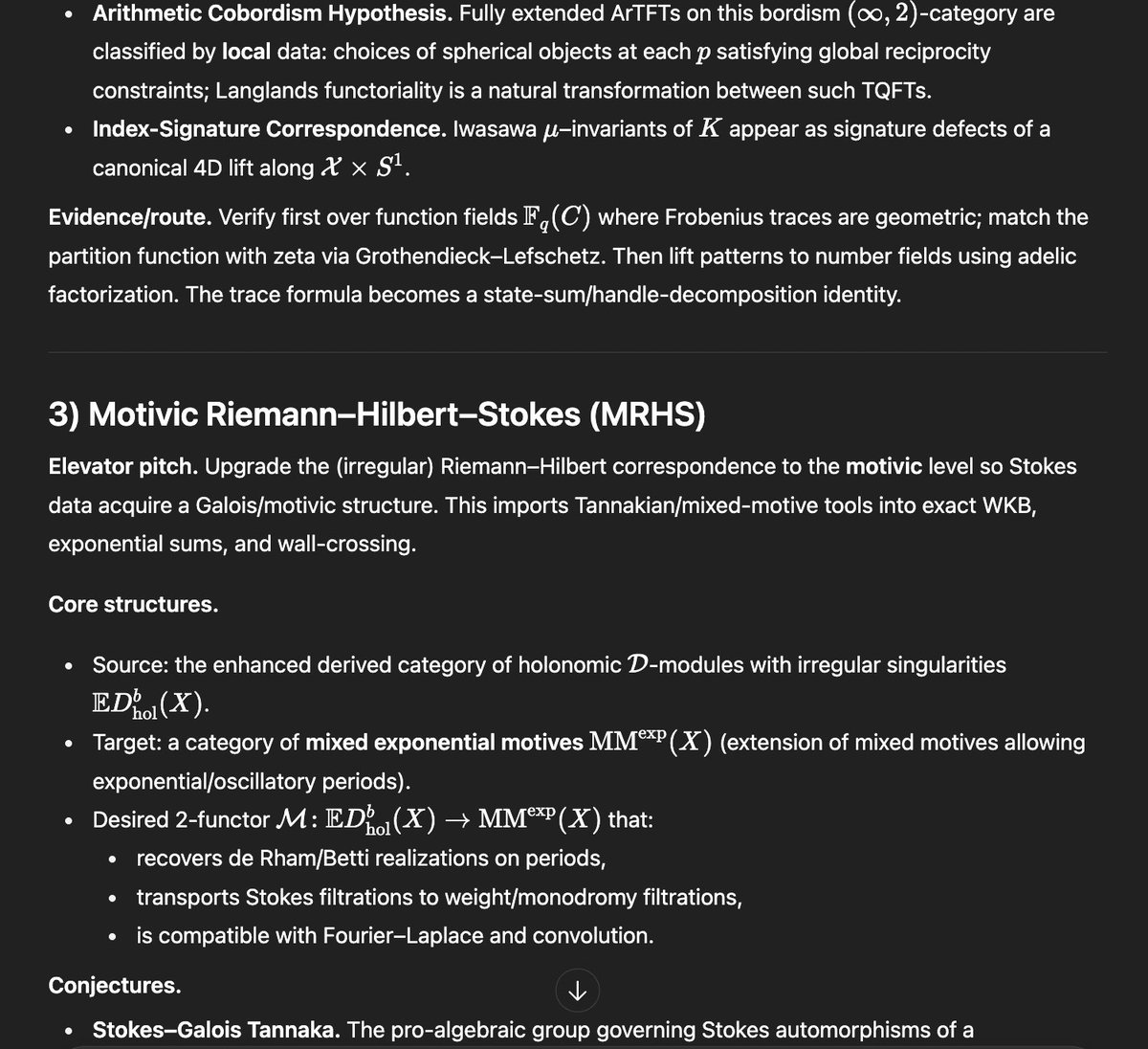
One of the commenters on my tweet below, about limitations of LLMs in doing mathematics, suggested the following prompt for GPT-5. My girlfriend @AnnaFedorovaSF tried it, and you can see the result in the series of screenshots and the link below. Total word salad! Makes no sense whatsoever, which proves my point. 😀 Here's the prompt: "I need authentic novel mathematical innovation, mathematics rooted in profound concepts and transformative ideas. Consider groundbreaking contributions like Alexander Grothendieck's revolutionary 'schemes' that transformed algebraic geometry, the Atiyah-Singer Index Theorem that bridged topology and analysis, or the ambitious Langlands Program that unifies number theory, harmonic analysis, algebraic geometry, and representation theory with connections to quantum physics. This is what constitutes real mathematics: the creation of deep conceptual frameworks that reveal hidden connections and open entirely new mathematical landscapes. Think outside of the box but remain grounded in reality instead of fantasy. Double check your work, give it your best shot." And here's the link to the GPT-5 response: chatgpt.com/share/68aa737e… My attitude is that LLMs provide us with an amazingly powerful tool, which is a big enhancement of human abilities. In math, we can use them to do a quick search of math literature, to summarize an enormous body of knowledge in seconds, and to refine research plans, among other things. As @ericweinstein put it in responding to my tweet, "a human gives directions and the machine finishes the job." As long as the directions are clear and the available data set is large enough for LLMs to be able to discern patterns, this is a good approach. LLMs can also be useful for proof verification and things like that. But they simply cannot come up with genuinely new ideas on their own. Don't get me wrong, solving a math problem like the one brought up by @SebastienBubeck is still a viable contribution. But this wouldn't, by itself, earn one a Ph.D. - not by a long shot. LLMs can do well with such problems because (1) the problem is narrowly defined, and (2) there's a fairly large data set, so LLMs can find a pattern and make some progress. My only issue with the original tweet by @SebastienBubeck (which started this discussion) is the HYPE. Let's STOP exaggerating and inflating what LLMs can do. Instead, let's have a sober conversation on how humans can use them best, so we could all benefit. Anyway, I think @SebastienBubeck means well, and he and I can agree on many things.
Edward Frenkel tweet mediaEdward Frenkel tweet mediaEdward Frenkel tweet media
Edward Frenkel@edfrenkel

This is an unwise statement that can only make people confused about what LLMs can or cannot do. Let me tell you something: Math is NOT about solving this kind of ad hoc optimization problems. Yeah, by scraping available data and then clustering it, LLMs can sometimes solve some very minor math problems. It's an achievement, and I applaud you for that. But let's be honest: this is NOT the REAL Math. Not by 10,000 miles. REAL Math is about concepts and ideas - things like "schemes" introduced by the great Alexander Grothendieck, who revolutionized algebraic geometry; the Atiyah-Singer Index Theorem; or the Langlands Program, tying together Number Theory, Analysis, Geometry, and Quantum Physics. That's the REAL Math. Can LLMs do that? Of course not. So, please, STOP confusing people - especially, given the atrocious state of our math education. LLMs give us great tools, which I appreciate very much. Useful stuff! Go ahead and use them AS TOOLS (just as we use calculators to crunch numbers or cameras to render portraits and landscapes), an enhancement of human abilities, and STOP pretending that LLMs are somehow capable of replicating everything that human beings can do. In this one area, mathematics, LLMs are no match to human mathematicians. Period. Not to mention many other areas. Calling on my friend @ericweinstein and @GaryMarcus, who has been one of the few sane expert voices on these matters lately. 🙏 h/t @hellheff

English
28
24
163
36K
Dariusz Swierk PhD
Dariusz Swierk PhD@swierk·
Problem z AI zaczyna się juz dziś, pwostają AI do zastosowań przestępczych i dezinformacji - czyli wpływu społecznego na duża skalę. Alignment dotyczy wyłacznie zastosowań cywilnych a poza tym jest jeszcze sporo innych i państwowych i prywatnych. Te metody sa dzis deskonalone, późniejsza superinteliegencja może przyjśc już na gotowe.Sporo o tym pisałem w ksiazce.
Polski
0
0
2
206
Michał Podlewski
Michał Podlewski@trajektoriePL·
Łotewski informatyk z Uniwersytetu w Louisville, dr Roman Yampolskiy – znany przede wszystkim z badań nad bezpieczeństwem sztucznej inteligencji – przyznał niedawno, że jeszcze dekadę temu wierzył, iż możliwe jest opracowanie metod rozwoju AI w taki sposób, aby mogła ona przynosić ludziom ogromne korzyści w bezpieczny sposób. Z biegiem czasu, coraz głębiej analizując temat, dochodził jednak do przekonania, że każdy jego aspekt okazuje się problemem nierozwiązywalnym. Porównał to do fraktala: im bardziej się go powiększa, tym więcej widać szczegółów, a każdy z nich staje się kolejnym wyzwaniem, którego nie da się rozwiązać. Jako jedno z możliwych podejść wskazał pomysł „uwięzienia” sztucznej inteligencji – umieszczenia jej w odizolowanym, wirtualnym środowisku i obserwowania jej działań. Jednocześnie podkreślił jednak, że jeśli system osiągnie wystarczająco wysoki poziom inteligencji, to i tak prawdopodobnie znajdzie sposób, aby się z takiego wirtualnego więzienia wydostać. Im więcej czytam o bezpieczeństwie sztucznej inteligencji, tym więcej pojawia się pytań i wątpliwości. Już wkrótce poproszę polską badaczkę zajmującą się tym obszarem o przybliżenie nam tematu alignmentu oraz o podzielenie się zdumiewającymi wynikami badań prowadzonych również w Polsce.
Polski
25
24
252
18.2K
Dariusz Swierk PhD
Dariusz Swierk PhD@swierk·
Na razie (imho) wiemy mało bo wybrano taki model, który funkcjonuje jak czarna skrzynka, ale są inne. Prawdopodobnie przyszłosc nalezy do hybryd, albo LLM plus częśc symboliczna (gdzie kontrolujemy cały proces - tego podejścia używa armia budując swoje AI) albo coś w ogóle innego typu uzycie przestrzeni Hilberta do reprezentacji (są lepsze w kodowaniu struktury informacji ale gorsze w sytuacji gdy tekst jest niejasny - tu podejście oparte na prawdopodobieństwie zwycięża).
Polski
1
0
1
741
Maciej Kawecki - This Is IT
Maciej Kawecki - This Is IT@kawecki_maciej·
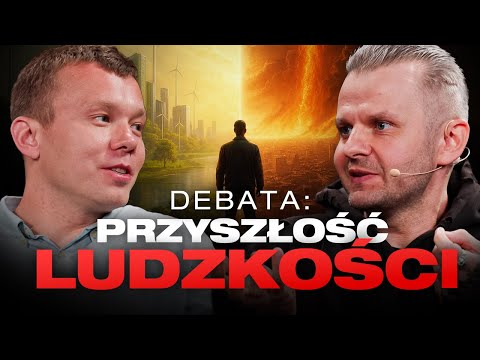
W tej chwili na naszym kanale pojawiła się wyjątkowa debata! Dzielę się pod linkiem poniżej. Na scenie obok siebie usiadł fizyk i informatyk. Prof. Andrzej Dragan oraz dr Wojciech Zaremba. Jeden, patrzący na świat oczami praw fizyki drugi oczami kodów. Twórca Chata GPT, założyciel Open AI oraz jeden z najbardziej abstrakcyjnych polskich umysłów. Obaj zgodni co do jednego. Era dominacji człowieka na Ziemi dobiegła po tysiącach lat końca. Tak przyszło, że to my jesteśmy tym ostatnim pokoleniem. O syntetycznych sieciach neuronowych przez mnogość ich parametrów wiemy bardzo mało. To nieprawdopodobne, że o najbardziej wpływowym, co kiedykolwiek stworzył ludzki mózg wiemy tak porażająco mało. Nie wiemy co zrobić, by nie realizowały w przyszłości swojej własnej agendy. Rozmowa bardzo odważna, fundamentalna. Polecam każdemu. O tym, że czas nazywać rzeczy po imieniu i stawiać na masową edukację pod hasłem Sztucznej Inteligencji! Poświećcie dziś czas, by ją zobaczyć. Naprawdę. Debata: youtu.be/Y4SjbbZ5qoA
YouTube video
YouTube
Maciej Kawecki - This Is IT tweet media
Polski
36
52
364
94.3K
Codie Sanchez
Codie Sanchez@Codie_Sanchez·
It’s limiting beliefs that keep most people in a 'poor' mindset. That said, everybody is capable of escaping this and building an owner's mindset. If you want to check out the full vid I made on this, click here: youtube.com/watch?v=IwSGvn…
YouTube video
YouTube
English
8
12
159
31.4K
Codie Sanchez
Codie Sanchez@Codie_Sanchez·
America was designed to keep us broke. The worst part? Most don't realize it's happening. Here's the 400-year-old script that is programmed to keep people poor:
English
90
299
2.9K
399.1K