

talisman 🇮🇳
26.6K posts

talisman 🇮🇳
@talisman23
A Nationalist. Supports Modi and his efforts to Modify India. RT's are not always endorsements.
Katılım Temmuz 2009
1.3K Takip Edilen216 Takipçiler

One possible scenario is that the AIADMK ends up as the largest party in terms of vote share, followed by the TVK. If anti-incumbency is widespread across the state, the DMK might end up as the third party in Tamil Nadu. If everything goes according to Vijay’s fans, then the TVK could become the No. 1 party in terms of vote share, followed by the AIADMK and then the DMK. What do you think will happen?
English
talisman 🇮🇳 retweetledi
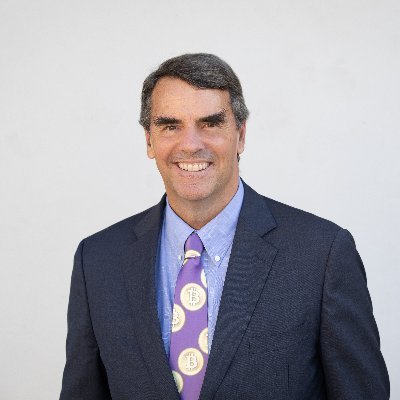
This is my friend Surbhi Sarna.
She came to Draper University in 2012.
She had painful ovarian cysts as a teenager, but doctors didn’t have tools that could detect cancer without harming the ovaries.
She studied molecular biology at UC Berkeley. Then came to DU.
Then she built nVision around a fiber optic line product that could go up the fallopian tubes to detect cancer without harming the ovaries.
Her medical device got FDA approval and nVision sold for $275 million to Boston Scientific.
200,000 women worldwide die each year from ovarian cancer. Early diagnosis by nVision can save many of these lives.
Incredibly proud to have invested in Surbhi, her mission and her product. She is one of the poster star heroes from Draper University and we will always be grateful.

English
talisman 🇮🇳 retweetledi

Jeff Bezos spent 3 hours on a physics problem with his roommate.
They got nowhere.
So they went to the smartest guy at Princeton.
He looked at the problem and said one word: "Cosine."
That was the exact moment Bezos decided not to become a physicist.
Here's the full story:
Bezos wanted to be a theoretical physicist. That was the plan.
He went to Princeton. He was a really good student. A+ on almost everything.
He was in the honors physics track. Started with 100 students. By quantum mechanics, it was down to 30.
Junior year. Quantum mechanics. He's also taking computer science and electrical engineering classes on the side.
Then he hits a partial differential equation he can't solve.
"It's really, really hard."
He studies with his roommate Joe. Also really good at math.
Three hours. Got nowhere.
They look up at each other across the table at the same moment and say the same name: "Yosanta."
Yosanta was the smartest guy at Princeton.
He was Sri Lankan. His name was three lines long in the facebook (which was an actual paper book at that time).
"I guess in Sri Lanka when you do something good for the King they give you an extra syllable on your name. So he had a super long last name. The most humble, wonderful guy."
They go to Yosanta's room. Show him the problem.
He stares at it for a while.
Then he says: "Cosine."
Bezos: "What do you mean?"
"That's the answer."
"That's the answer?"
"Yeah. Let me show you."
He brings them into his room. Sits them down. Writes out three pages of detailed algebra. Everything crosses out.
The answer is cosine.
Bezos asks: "Yosanta, did you just do that in your head?"
"No. That would be impossible."
"Three years ago I solved a very similar problem. I was able to map this problem onto that problem. And then it was immediately obvious that the answer was cosine."
Bezos on that moment:
"That was an important moment for me. Because that was the very moment when I realized I was never going to be a great theoretical physicist."
He didn't quit because he was bad. He was in the top 30 at Princeton.
He quit because he saw what great actually looked like.
Great wasn't grinding for 3 hours. Great was pattern-matching to a problem you solved 3 years ago and seeing the answer instantly.
He couldn't do that. Yosanta could.
So he pivoted. Computer science. Business. Amazon.
Built a $2.5+ trillion company instead.
The rest is history.
English
talisman 🇮🇳 retweetledi
In 1942, the Japanese rounded up all Chinese men in Singapore.
They were filtering out the healthy young ones to execute.
Lee Kuan Yew was 18. A guard pointed at him and said: "Go to that lorry."
He knew what that meant. The lorry went to the beaches. The beaches meant machine guns.
He asked: "Can I collect my other things?"
They said yes.
He walked away, found his family's gardener, and hid in his quarters for two days.
When they changed the screening inspectors, he tried again. This time, he got through.
The ones sent to that lorry were taken to the beaches and shot. Somewhere between 50,000 and 100,000 didn't survive.
60 years later, he sat down at Harvard to explain how he built Singapore from a tiny island into one of the wealthiest nations on Earth:
On what the war did to him:
"We lived in happy, placid colonial Singapore in the 1920s and 30s. The British Empire would have lasted another thousand years, so we thought."
Then the Japanese came. In less than one and a half months, the British collapsed.
"Three and a half years of hell. Butchery. Brutality. Many didn't survive. I was fortunate. I did."
"But it changed us."
"What right did they have to do this to us? Why did the British let us down so badly?"
When the war ended, Lee went to Cambridge to study law. But he was watching with different eyes.
"Can they govern me better than I can govern myself? Because they scooted when the Japanese came in. And why shouldn't I be running the place?"
On learning languages to lead:
Lee was the best speaker in English. But only 20% of Singapore spoke English.
The masses spoke Hokkien, Mandarin, and Malay.
"So every day at lunchtime, instead of having lunch, I would sit down with a Hokkien teacher and laboriously and painfully learn to convert my Mandarin into Hokkien."
"Had I not mastered that, the battle would be lost by default."
His first speech in Hokkien, the kids laughed at him.
"I said, please don't laugh. Help me. I'm trying to get you to understanding."
By 6 months, he could get his ideas across. By 2 years, he was fluent.
"Believe it or not, at the end of two years I could speak better than most of them."
"That came respect."
It showed two things: how determined he was, and how sincere. Here was a man doing all these other things and still learning their language just to talk to them.
On fighting the Communists:
The Communists had been organizing since 1923. The year Lee was born.
"Here we were in the 1950s trying to beat them. And they are professionals at organization."
They had elimination squads. Guerrillas in the jungle. Killer squads in the towns.
Lee stood up and said no.
"They denied that they were Communists. 'We're just left-wing socialists.' So I did a series of 12 broadcasts to set the scene. And I made it in three languages."
English. Malay. Mandarin. 20 minutes each.
"When I finished each broadcast, the director of the station couldn't see me. Went into the room and found me lying on the floor trying to recover my breath."
"But it was a fight for survival. Life or death."
On where trust comes from:
"It's difficult to establish trust in times of calm. You just say, 'Well, it's an argument, therefore I'm a better guy than you.'"
"But when the chips are down and you can get eliminated in a very unpleasant way and you show that you're prepared for it and you'll fight for them, it makes a difference."
"Without that trust, we could not have built Singapore."
On IQ vs EQ:
Harvard asked him: would you prefer high IQ or high EQ in a leader?
"IQ, you can get beautiful paper done. Complex formulas worked out. Elegant solutions."
"But when you've got to get a team to work and put that formula into practice, you're dealing with human beings."
"If you're not good at EQ, you can't sense that A doesn't get on with B, and you put them in the same team. It's no good."
He rated his own EQ as 7 or 8 out of 10. His IQ as "maybe 120."
But he had colleagues who could sense a person instantly.
"He shook hands with the man and said, 'I recoiled when I felt his palm. Evil man.' And he was. How does he know? I don't know."
"So I learned whenever I had to do interviews to choose people, I would get people who are very good at seeing through a candidate."
On corruption:
Singapore in the 1950s was full of deals, bribes, and organized crime.
"When we took over, we decided that this was the critical factor. If we did not make it so that every dollar put in at the top reaches the ground as one dollar, we're not going to succeed."
"We came in and made a symbolic act. We dressed in white shirts, white trousers, and said we will be what we represent."
He put the anti-corruption bureau under his personal portfolio.
"I gave the director the authority to investigate everybody and everything. All ministers. Including myself."
One of his own colleagues took half a million in bribes. When the investigation started, he asked to see Lee.
"I said, if I see you then I'll be a witness in court. So best not see me. Better see your lawyer."
The man committed suicide. Left a note saying: "As an oriental gentleman who believes in honor, I have to pay the supreme price."
"It's a heavy price. But it reminds every minister that there are no exceptions."
On consistency:
Lee had three journalists analyze 40 years of his speeches.
He asked them: what was the dominant theme?
All three said the same thing: consistency.
"What I said at the beginning, throughout all that period, the theme stayed loud and clear."
"That made it simple. Because you know where you stand with me. And you know what I want to do."
On delivering results:
"We deliver the homes, the schools, the jobs, the hospitals."
"Today, 98% of our people own their own homes. The smallest would be about $100,000 US. The biggest about $300,000."
"Once you own that amount of assets, you are not in favor of risking it with a crazy government. Your assets will go down in value."
"But that was planned."
Why? Because Singapore is small. Everyone does national service. If you're going to fight, you better be fighting for something you own.
"So we give everybody a stake."
On changing culture slowly:
Lee wanted Singapore to speak English. But he couldn't force it.
"Had I passed a law and said you will all learn English, we would have had mayhem. Riots."
Instead, he let parents watch who got the best jobs. The jobs were already there, from the multinationals and banks. They all used English.
"They watched and saw who got the best jobs. And they switched."
It took 16 years.
"I did not want to have said 16 years. Because in those 16 years I lost 20,000 Chinese graduates who had poor jobs. I wanted to make it shorter. I couldn't. I would have run into flack."
On whether leadership can be taught:
Lee quoted Isaac Singer, the Nobel Prize winner for Yiddish literature.
Someone asked Singer: "Can you make a writer write great literature?"
He paused. Then said: "If he has the writer in him, I will make him a good writer in a shorter time."
Lee's version:
"Can you make a leader of anybody? I don't think so."
"He must have some of the ingredients. He must have that high energy level. He must have the ability to project himself, his ideas. He must have the desire, almost instinctively, to say 'let's do something better.' Of wanting to do something for his fellow men and not just for himself and his family."
"You can't teach those things. He's either got it or he hasn't got it."
"But if he's got that, then you can save him a lot of trouble."
On sustaining yourself:
Harvard asked how he managed despair over decades of leadership.
"If your message is one of despair, then you should not be a leader. You must give people hope."
"But there are moments when you feel very down. Either because you're physically down, or emotionally down, or because the world has turned adverse against you."
"When you are in that condition, the first thing you do is get a good night's sleep. Then get a swim or chase a ball. Get the cobwebs out of your mind."
"If you're not fit, you're going to make mistakes. Physically fit. You must stay physically and mentally fit."
In his later years, he learned to meditate.
"At the end of 20 minutes to half an hour, my pulse rate can go down from 100 to about 60. You can feel yourself subside. You still your mind. You empty your mind."
"Then when you are rested, you resume quietly. You still got the same problems. Maybe you sleep on it. Come back. Look at it for a few days. Then decide."
This 2 hour Harvard interview will teach you more about leadership than every business book you've read combined.
Bookmark & give it 2 hours this weekend, no matter what.
English
talisman 🇮🇳 retweetledi

We had the honour of meeting Manuel Aaron Sir, Pioneer of Indian chess. At 92 his passion is still unmatched and analyzing all top-level games. Truly inspiring and lot of respect🙏🙏

English
talisman 🇮🇳 retweetledi

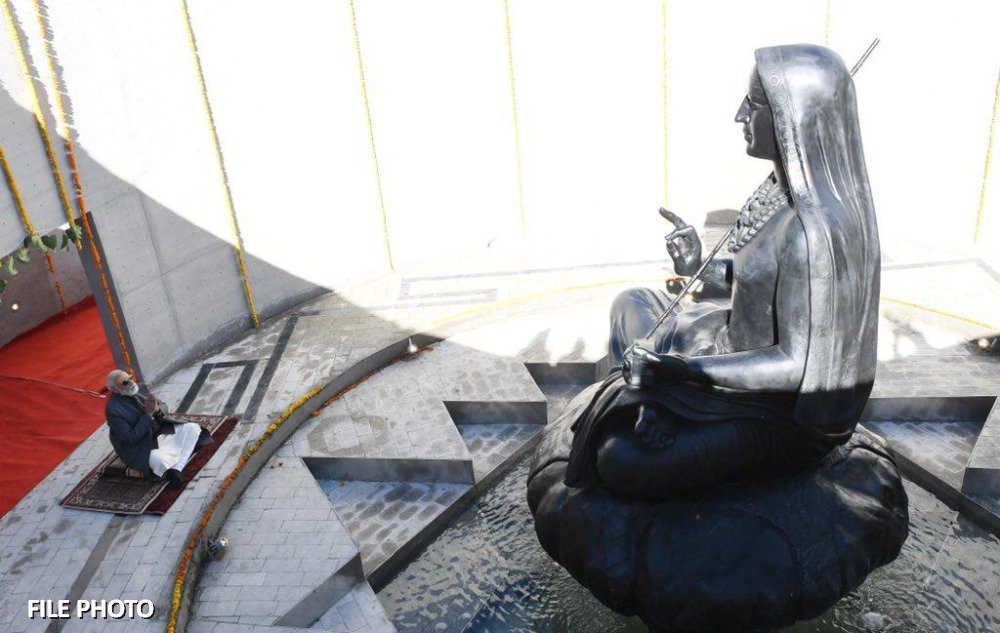
On the sacred occasion of Adi Shankaracharya Jayanti, paying homage to one of India’s greatest spiritual luminaries. His profound teachings, thoughts and philosophy of Advaita Vedanta continue to guide innumerable people globally. He emphasised harmony, discipline and the oneness of all existence. His efforts to revitalise spiritual thought and establish spiritual centres across the nation remain a lasting inspiration. May his wisdom continue to illuminate our path and strengthen our commitment to truth, compassion and collective well-being.
English
talisman 🇮🇳 retweetledi

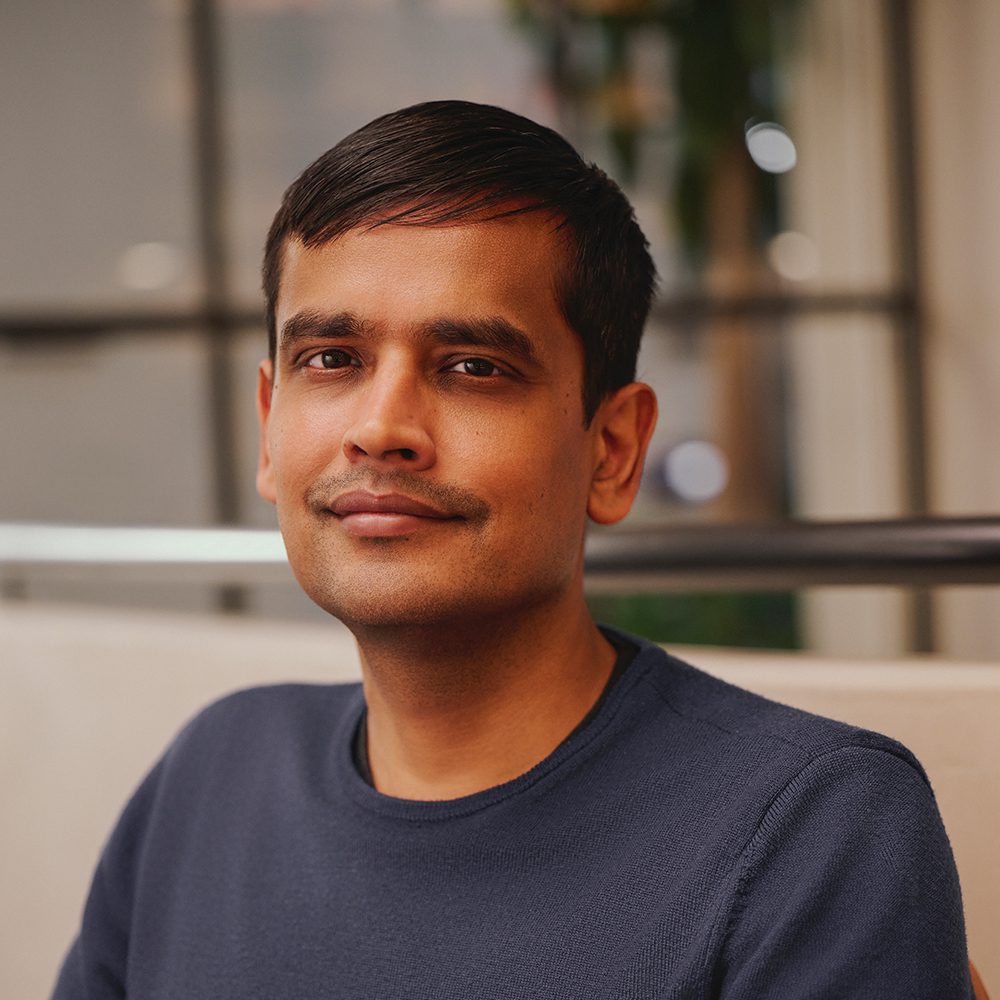
His name is Srinivas Narayanan.
Born in Chennai in 1974. He completed his B.Tech in Computer Science from IIT Madras in 1995. Then a Master's from the University of Wisconsin-Madison in 1996.
He started his career at IBM's Almaden Research Center. Moved to Tavant Technologies. In 2007, he co-founded his own startup, Viralizr, as CTO. In 2008, he joined Facebook as Vice President of Engineering and spent over a decade building large-scale engineering systems.
In April 2023, he joined OpenAI.
At that time, the Applied Engineering team had 40 people sitting on a single floor.
He built it into the team that launched and scaled ChatGPT and the developer API platform. Products that grew faster than almost anything in the history of technology.
In September 2025, he was elevated to CTO of B2B Applications at OpenAI.
On April 17, 2026, he announced he was leaving.
He said this to his team.
The last three years have been an incredible journey that felt more like ten. You built some of the fastest-growing products in history without any established playbook. I am so grateful to Sam Altman and Greg Brockman for this opportunity of a lifetime.
He is returning to India.
Not for a new job. Not for a new startup. He said he is going back to spend time with his ageing parents before deciding what comes next.
An IIT Madras graduate who helped build the product that changed the world.
Who is going home to be with his parents.
His name is Srinivas Narayanan.
Follow for real stories about Indians who make the whole country proud.
English
talisman 🇮🇳 retweetledi

Samsung Chairman Lee Jae-yong takes a selfie with South Korea President Lee, PM Modi using a Samsung phone made in India.

English
talisman 🇮🇳 retweetledi

The problem is not people being uneducated.
The problem is that people are educated just enough to believe what they have been taught, and not educated enough to question anything from what they have been taught.
—Professor Richard Feynman

English
talisman 🇮🇳 retweetledi



Political speech to accuse the Opposition of blocking the Women's reservation bill which they did not do. Won't work. That's my guess.
CNBC-TV18@CNBCTV18Live
#JustIn | #PrimeMinister #NarendraModi To Address The Nation Today At 8:30 pm
English
talisman 🇮🇳 retweetledi

Kamal Haasan compares DMK minister Sekar Babu to Raja Raja Chola. Never knew the politician had become a court poet (avai pulavar).
Indonesia
talisman 🇮🇳 retweetledi
In 1999, Ratan Tata flew to Detroit with his team.
The Tata Indica had just been launched. Sales were poor. The board wanted to sell the passenger car division to Ford to cut losses.
Ford agreed to a meeting.
What happened in that boardroom was recounted by Pravin Kadle, who was present that day.
Ford executives told Ratan Tata this.
You do not know anything. Why did you even start a passenger car division?
Then they said they were doing Tata a favour by considering buying the struggling business.
On the 90-minute flight back to New York, Ratan Tata sat in silence. He spoke almost no words.
He returned to India and cancelled the sale.
Tata Motors would not be sold. Not to anyone.
For nine years, he said nothing publicly about what happened in Detroit. He simply got to work.
In 2008, Ford was on the verge of bankruptcy. The Great Recession had broken them. They needed to sell their most prized assets urgently.
Jaguar. Land Rover. Two of the most iconic British car brands in the world.
They called Ratan Tata.
Tata Motors bought both for Rs 19,000 crore. All cash.
When the papers were signed, Ford chairman Bill Ford flew to Mumbai and sat across from the same man he had humiliated nine years earlier.
He said this.
You are doing us a big favour by buying Jaguar Land Rover.
Ratan Tata made no reference to 1999. No speech. No dig. He simply said he was looking forward to supporting both brands.
He never needed to say anything else.
India walked into that room in 1999 as a seller being insulted.
India walked out of that room in 2008 as the buyer being thanked.
Nothing changed except who needed whom.
Follow for real stories about Indians who made the world take notice.

English
talisman 🇮🇳 retweetledi
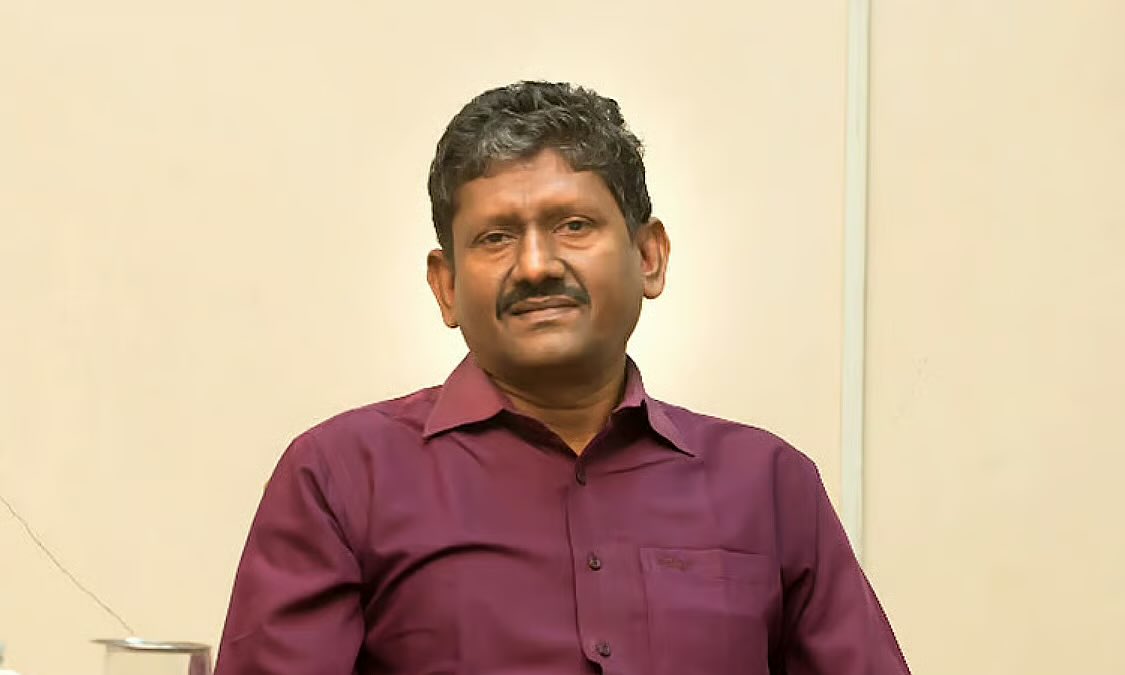
His name is U Sagayam.
He became District Collector of Namakkal in 2009.
The first thing he did was upload his personal assets on the district website.
Bank balance: Rs 7,172.
House in Madurai jointly owned with his wife: Rs 9 lakh.
That was everything he had after 18 years of government service.
He said this. The district collector should set an example of honesty for his subordinates.
He was the first IAS officer in Tamil Nadu to voluntarily publish his financial details.
In 2000 he found dirt floating in Pepsi bottles as Additional District Magistrate in Kanchipuram. He sealed the entire plant. Refused to back down despite pressure.
In 2004 he found restaurants in Chennai using subsidized domestic gas cylinders illegally. He confiscated 5,000 cylinders in three days.
In 2012 as District Collector of Madurai he investigated illegal granite quarrying. His report found losses to the state of at least Rs 16,000 crore. He named politicians and officials.
He was transferred four days after submitting the report.
That was transfer number 19.
In 2015 the High Court appointed him to probe a granite scam. He needed to exhume bodies as evidence. The police refused to help. He was worried evidence would be tampered with.
He spent the night alone in a graveyard.
In Namakkal 5,000 villagers once came out to protest when the government tried to transfer him. The transfer was withdrawn.
He was ultimately kept for six years in an insignificant post at Science City Chennai with nothing to do.
In 2021 he resigned voluntarily. Three years before retirement.
His office door had a sign throughout his entire career.
Reject bribes. Hold your head high.
His name is U Sagayam.
Follow for real stories about people who chose truth over everything.
English
talisman 🇮🇳 retweetledi
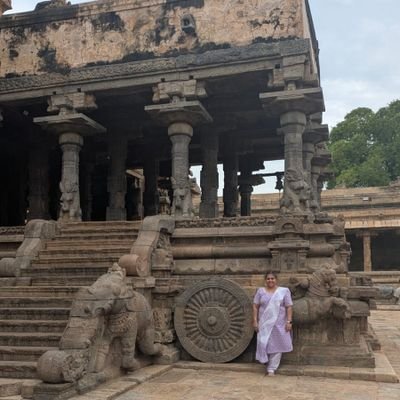
The Mariamman Temple, built by Tamils in the 19th century, in a city where there aren't many Tamilians left.
How Chi Minh City, Vietnam.
Fridays are special for Her! 🌺🙏
English
So the BJP Govt setting the #Delimitation matter to rest by committing to a uniform 50% hike in LS seats in Parliament today. Takes the sting out of the "Tamil Nadu is being cheated" campaign.
English
talisman 🇮🇳 retweetledi
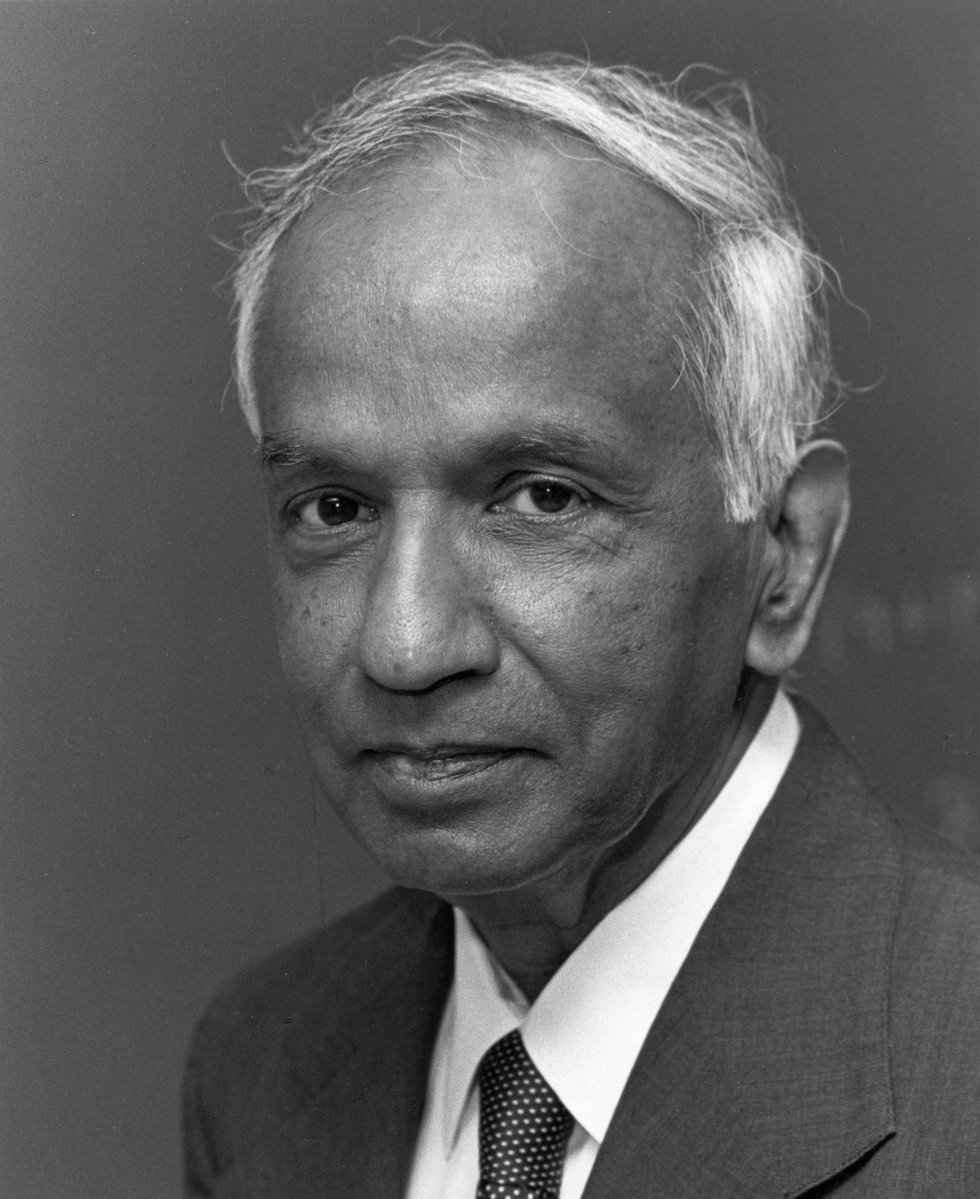
His name was Subrahmanyan Chandrasekhar.
In 1930, he was 19 years old. A boy from Madras is boarding a ship to England on a scholarship to Cambridge.
During that sea voyage, he opened his notebook and started calculating.
By the time the ship docked in Southampton, he had worked out something no one in the history of science had understood before.
Stars do not simply fade and die. Stars above a certain mass collapse into themselves with such force that nothing can stop them. Not light. Not time. Not physics as anyone understood it.
What he had discovered on that ship would eventually be called black holes.
He arrived at Cambridge. He spent four years refining his calculations. He showed them to Arthur Eddington. The most famous astronomer in the world at that time. The man who had proven Einstein right.
Eddington watched his progress. Encouraged him. Asked him to present his findings at the Royal Astronomical Society in January 1935.
Then Eddington gave his own presentation immediately after.
He publicly ridiculed Chandrasekhar in front of the entire scientific establishment. He said the theory had no physical meaning. He called it absurd. He used his enormous reputation to crush a 24-year-old Indian student in front of everyone who mattered.
Chandrasekhar left that conference devastated.
He appealed to the president of the International Astronomical Union. He was told not to respond to Eddington publicly.
He left England.
He went to America. To the University of Chicago. He drove 150 miles every week to teach a class of just two students. Those two students were Tsung-Dao Lee and Chen-Ning Yang.
Both of them won the Nobel Prize before he did.
He spent 50 years working quietly. He never stopped.
In 1983, the Nobel Committee called.
53 years after he worked out the existence of black holes on a ship as a teenager, the Nobel Prize in Physics was his.
NASA later named its most powerful X-ray telescope after him.
The Chandra X-Ray Observatory.
The universe he described is real. Eddington was wrong. The boy on the boat was right.
Most Indians have never heard his name.
They should say it every day.
Follow for real stories about Indians who changed the world.
English
talisman 🇮🇳 retweetledi

talisman 🇮🇳 retweetledi

When a computer tracks the Indian classical dancer in this video, it picks up perfect circles, triangles, and curves in every movement. There are exactly 108 of them. All 108 were written into a manual over 2,000 years ago.
That manual is the Natya Shastra. Six thousand verses, written somewhere around 200 BCE. It describes 108 specific dance movements for Bharatanatyam, one of the oldest dance forms in India. Each movement spells out three things: where your hands go, what angle your body holds, and the exact path your legs trace. Roughly 150 step combinations grow out of those 108 base movements. A trained dancer spends years learning 70 to 80 of them.
Watch the dancer's legs in the video. The bent-knee squat creates a diamond shape. Palms together make a triangle. When researchers plotted these positions in three dimensions this year, they found the moving body carves out twisted spirals and bowl-shaped curves, the kind of shapes you see in an engineering textbook, not a dance studio. Every limb holds a specific angle and moves a measured distance.
The rhythm is math too. A 7-beat song gets filled with dance steps of 3 and 4. Scale that to 35 beats and the groups of 3 and 4 repeat five times. Choreographers work out these splits in their heads while performing live. All 108 movements are also carved into the stone walls of a 12th-century temple in Tamil Nadu called Chidambaram, many panels still carrying the original Sanskrit description next to them. A choreography textbook in granite, still legible after 900 years.
A 2013 study put 25 people on a walkway rigged with motion-capture cameras. Every human stride has two parts: when your foot is on the ground and when it swings forward. The ratio between those two parts came out to 1.620. The golden ratio is 1.618. Your foot lifts off at 61.8% of every step you take, and it has done this your entire life. A Bharatanatyam dancer takes that same built-in proportion and amplifies it across 108 movements, each one tracing shapes that were set down in writing over 2,000 years before the tracking software in this video existed.
Massimo@Rainmaker1973
Sacred Geometry in dance forms
English