
Sabitlenmiş Tweet

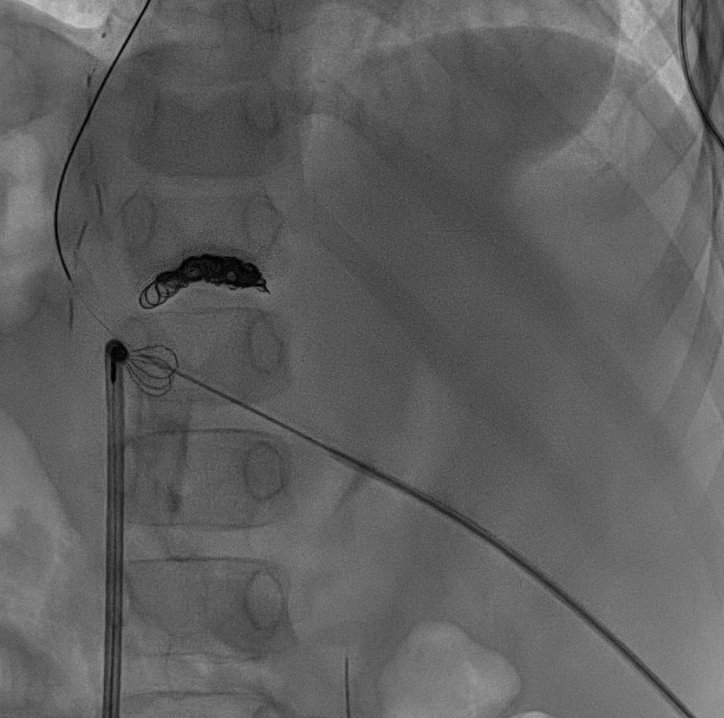
Excited to announce my first author manuscript to JVIR on Y90 outcomes in Cholangiocarcinoma was accepted!
Grateful for incredible mentorship from @danbrownIO and the support of @VUMCradiology @VUmedicine.


English
Taylor Robinson, MD
9.9K posts

@tayjrobin
Interested in all things endovascular & surgical| IR PGY-3 | Engineer, Medtech | Faith, Fitness, Finance @methodistsurgery @vanderbiltsom


This week, BackTable VI collaborates with BackTable Cardiology to meet at the carotid bifurcation and break down all things carotid angioplasty and stenting. @_AdnanSiddiqui shares his expertise in carotid intervention, detailing its history, developments, and key proficiencies for new operators. Tune in as we cover: 🫀Landmark trials: CREST-2, SAPPHIRE, NASCET 🫀Second-generation stents 🫀What’s next in carotid intervention, including IVL Listen now on the BackTable App: backtable.com/shows/vi/podca… This podcast is sponsored by Terumo. #InterventionalRadiology #InterventionalCardiology #CarotidStenosis #CV31 #Stents #VI631



Kaiser LA wants to pay board-certified cardiologists $218.65/hr to work overnights and weekends. Don’t take this job. It’s hurts all of us.










Let’s talk about the realities of the Residency Match and move past the noise. There’s a growing wave of anti-IMG rhetoric online, often driven more by clicks and bias than facts. It’s time to ground this conversation in reality. Take top-tier programs in NYC like Columbia and Mount Sinai. Their incoming and PGY1 classes are almost 100% from U.S. medical schools. Many IMGs don’t even apply to ultra-competitive academic programs like these, NYU, or Montefiore’s main campus. Now look at the other side of the system. In community hospitals across Brooklyn, Bronx, Queens, and similarly in cities like Philadelphia, Houston, Atlanta, Baltimore: • A large proportion of residents in IM, FM, Pediatrics, Psychiatry are IMGs • Not because AMGs are being rejected • But because many AMGs choose not to train there Why? Longer hours, heavier workloads, fewer resources, and challenging practice environments. 👉 These are the programs that keep the system running. 👉 These are the hospitals serving underserved populations. 👉 These are the gaps IMGs help fill. This isn’t about “taking spots.” It’s about filling needs that would otherwise remain unmet. Before buying into narratives, understand the ground reality. Facts > propaganda. #Match2026 #MedTwitter #MedEd







Presented at #ACC26: In patients with pulmonary embolism, ultrasound-facilitated, catheter-directed fibrinolysis led to a lower risk of a composite of major adverse outcomes than anticoagulation alone. Full HI-PEITHO trial results: nejm.org/doi/full/10.10… Editorial: Advanced Therapy for Intermediate-Risk Pulmonary Embolism nejm.org/doi/full/10.10… @ACCinTouch




If you have gone to the ER, or expect to ever go to the ER you need to understand this. There are 5 codes in which they can bill you for stepping into the ER: 99281: “You basically walked in and said hi.” Stubbed toe. Paper cut. Insect bit. At Crowd, we have never seen this billed. These should be a "suck it up" or a "you should have gone to Urgent Care instead" issue. 99282: “Minor evaluation. Quick fix.” A few stitches, sprains, ear infection. We have seen this billed a handful of times. 99283: “This is probably straightforward.” Dehydration, Mild abdominal pain. Low complexity decision making, low risk. Again, very very rarely billed. Maybe 10-15% of the time. 99284: “This might be something serious and need to rule things out.” Complicated infections, pneumonia, kidney stone, severe migraines. If you get any imaging (whether warranted or not) you'll most likely end up here. 99285: “Critical Issues" Heart attack, stroke, major trauma, sepsis. You are basically one step away from potential death. Here is where it gets interesting: About 85% of the ER bills we see have a 99284 or 99285 (highly complex or critical). Yet, according the NCQA (a nationally reputable non profit that certifies healthcare quality) approximately 60% of ER visits are avoidable. Either Crowd members are massively more informed about when to go to the ER or....something else is going on. Look at your ER bills and these codes (you'll probably need a detailed bill because the hospital is good at hiding the codes) and ask yourself whether it's an accurate depiction of the severity of your condition.
