

IDESofMarch
1.3K posts

IDESofMarch
@terryturner1978
Stonks/Crypto trader 📈 Real Estate Investor 🏠 NFT Collector 🎨 https://t.co/ZAs9pKQdvf
Katılım Şubat 2020
189 Takip Edilen434 Takipçiler


@DanSchoonmaker @LintzJordan @coinbase @desoprotocol @brian_armstrong @CoinbaseExch Still building out the new Focus app on @desoprotocol
Come take a look focus.xyz/?password=0BW1… 💎
English

@LintzJordan @coinbase @desoprotocol @brian_armstrong @CoinbaseExch What ever happened to this? I think I bought like $2k worth a year ago. I totally forgot about this project.
English



Retarded Nigga of the Day #CTESPN
Willie Ross Jr. Knee Deep@RossKneeDeep
If I see the R-word from you, you will be blocked. Same with the N-word
English
IDESofMarch retweetledi

We’ve got 2 tickets to giveaway to next Tuesday’s (2/25) game against the @FlaPanthers 🏒🥅
For a chance to win:
- LIKE this post
- TAG a friend
- SHARE this post
Must be following @nashvillestars to win.
📸 @predsnhl
#giveaway #preds #nashville

English
IDESofMarch retweetledi

subscribe to feet pics for $0.01/month only on focus 🦶📸
or whatever else you prefer, we dont judge
Ed Moss@mossifiedd
on @FocusDotXYZ , you can create a monthly recurring subscription for as little as $0.01 per month. why is that a huge f*cking deal? because previously, if you wanted to do this, you would have to give up 2.9% and 30 cents to a centralized payment provider like Stripe — which can also dictate your entire payment policy as they can cancel your account at anytime without notice. but also, most creator platforms require arbitrary thresholds (# of followers), linking bank accounts and going through a long creator KYC approval flow just to even *enable* payments and monetization features. but since @FocusDotXYZ is built with crypto payment rails, it completely eliminates all of these problems. it works because the DeSo blockchain supports derived keys, deeply integrated at the layer-1 level and the wallet. this means that apps can perform transactions on your behalf, like paying for recurring subscriptions, without ever needing to touch your private keys. and the reason you can go as low as a penny per month (even lower honestly), is because transaction fees on DeSo are less than $0.00001 but you can also go as high as you want too — which Stripe would never let you do! want a subscription tier for high networth individuals at $10,000 per month? no problem, DeSo and Focus can handle it. this opens up content monetization to roughly anyone in the world with an internet connect, from the moment they sign up and create a DeSo wallet. no unnecessary hoops and hurdles. it's the way crypto should be — unlocking new financial opportunities for *everyone* across the world.
English

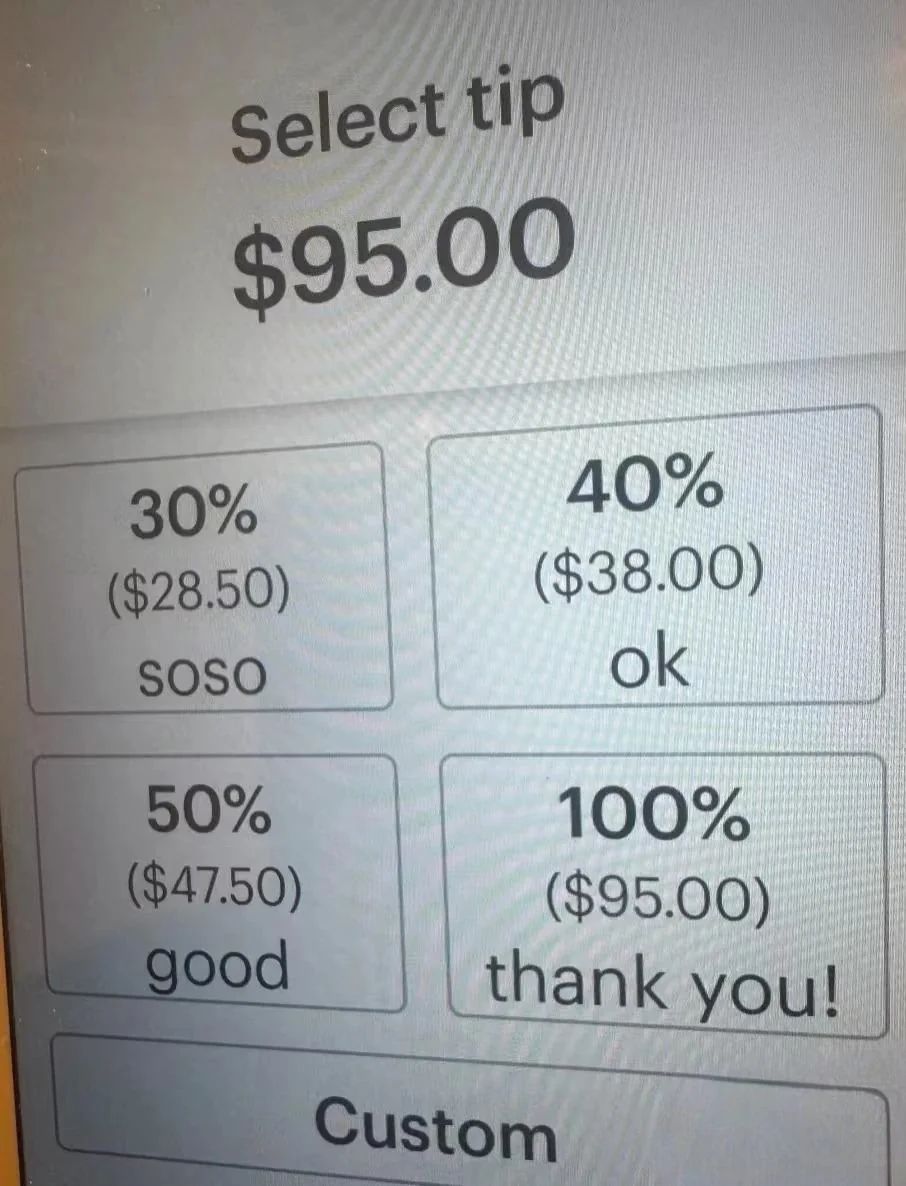

@playmatejaylene Should be a crime to leave that behind lol
English

IDESofMarch retweetledi

I made the BitClout song so I figured I might as well make the Focus song.. 👀
music.youtube.com/playlist?list=…
English
@aylacroft Come on back and try the new focus app and get $100 just for having a verified X account. Free $$$
focus.xyz/?password=0BW1… 💰
English

I got paid 76 bucks for 1 post that went viral for a few days. Not bad

English
Come and give it a try and grab $100
focus.xyz/?password=0BW1… 💰
nader.deso@nadertheory
Announcing a major upgrade to Focus. Connecting a verified X account now gets you a minimum of $100 In $FOCUS, and referring someone with a verified account now gets you a minimum of $10 in $FOCUS, with uncapped referrals. Note because you receive tokens, the value could appreciate or depreciate after you join. Accounts with high influence can get hundreds of thousands of dollars, this is just a minimum. What's your account worth? Find out on Focus 👇 We will be manually rejecting suspicious/bot accounts ruthlessly, but otherwise this is our official "long tail" portion of the bounty program. Focus is retaining well in spite of a down market, and we're prepared to spend millions on this incentive if we see good results. Public access is expected to open in a week or two after a few more updates to the app.
English
This 👇
nader.deso@nadertheory
The same battle that's happening between Google and ChatGPT is going to happen in social media very soon, and not how you may think. I want to explain to you what the future of social media will probably look like, 🧵 The drawbacks of today's social media platforms hint at how they'll be disrupted, and most issues come from centralization. A few "trusted" media outlets controlled our information for decades with little oversight (eg New York Times). They fell and got replaced by "social platforms" with the rise of Meta, X, TikTok, etc... The problem is centralization increased even more because network effects allowed these platforms to concentrate users across fewer "owners," with even less oversight. If TikTok decides to censor something, the impact is arguably much higher than if the NYT did in the "old days," and harder to detect as well. So what do we do? The first step is not controversial, and many are pursuing it. It's to open up the "firehose" of content so that anybody can build on top of it, rather than keeping content "trapped" in a walled garden that's controlled by a single entity. If the content is open, then it's technically possible for anyone to "audit" what's being shown vs not shown. What's going viral and what's being "suppressed." It's also technically possible for alternative feed algorithms to be developed, and for you to be able to choose which algorithm is ranking the content for you. Open content is the first step, and it's widely-understood as a key component of what the future should look like. Open content is also a key part of nearly all alternative social medias that people are working on. @jack started a solution called "Blue Sky" that's a non-profit instead of a for-profit, and still centralized, but whose content is fully open in the way described above (a big improvement). Mastodon allows anyone to run a "federated server" so you can have your own community running on a machine you control rather than someone else, and also promotes open content. DeSo, which I work on, goes even further and allows you to put all of your information directly on a blockchain that's not controlled by anybody (and can't be censored by anybody, like Bitcoin). Every "next-generation" social media is incorporating "open content" as a key component-- so why hasn't it created a better system if it's so good then? I believe it's because "open content" is only half of the solution. The other half is "monetization." It's not enough to open the content if it costs millions of dollars to create a "feed algorithm" that improves on centralized players, and it's even worse if you don't have a way to monetize that algorithm after you've invested so much in creating it. Centralized social media platforms run a "closed content" model and then show ads on it, which turns out to be extremely monetizable. What we need is a new model to monetize social media that's compatible with the "open content" approach (and that ideally earns just as much, if not more, than the closed-content-with-ads model). What would that look like? I've thought about this a lot. Like for the last several years thinking about it. And... I think I have an answer. The solution is to create a subscription model for *feed algorithms*, the same way we have subscriptions for things like Netflix or Hulu (or ChatGPT and Claude). You pay a monthly subscription to someone who runs extremely sophisticated (and possibly extremely expensive) algorithms to rank the content just for you. This is really interesting not only because it allows for monetization on "open content" but also because you can have "tiers" of complexity. If you want really simple feeds, pay $0.10 per month and get something cheap. If you want something super complex, pay $100 per month (or more!) and get what you pay for. Even better, people can *compete* against each other to give you the best possible algorithm. Think this guy is censoring the rankings? Ok, switch to this other guy's algorithm and try their ranking. They can even let you tweak the "knobs" of their algorithm directly. You can see that the internet is already moving more toward subscriptions. Google is literally getting disrupted by ChatGPT on an "ads-driven" vs "subscription" monetization contest of the century. And the ability to choose your AI model more easily is actively causing the model providers to iterate and provide a better experience. What people are missing is that the SAME CONTEST is going to hit social media soon. The reason it's easy to miss is you need TWO things to come together: 1) open content and 2) a marketplace for ranking that content. But it's going to happen, and when it does, I believe we're going to wonder how we ever let a handful of highly-centralized companies tell us what to think. I also think all the problems of misinformation and bias are going to dramatically improve, almost overnight. Still skeptical? You should be-- this stuff is HARD to pull off. It would take someone YEARS of deep devotion and tens of millions of dollars spent on a super speculative idea, almost out of pure LOVE to make it happen. You have to put SO MANY pieces together JUST RIGHT. Yeah, it's definitely tough. But I've been thinking about these problems, and working on what I believe will be close to the ultimate solution for basically since 2019 at this point (six years? wow that's a long time oof...). I don't know if our solution will even win, but honestly it doesn't even matter that much to me as long as the change that we need eventually ends up happening. If you want to try what I've been working on, it's an app called Focus, it's built end-to-end on crypto, it stores all your content on the blockchain directly (though you probably wouldn't even notice), and it has a built-in Feed Marketplace that allows you to subscribe to anyone's algorithms that they build for a monthly fee. It's going into public access soon, and I'm really excited for you to try it. I can't promise it will solve all of our problems, but I can promise it will be unlike any social app you've ever used. And I can also promise that the IDEAS that it's pioneering are new and interesting, and that many will be a part of a more decentralized future. If you read this far, thank you for caring about this stuff. It's very important to me, and I hope it eventually becomes important to more people as well.
English
focus.xyz/?password=0BW1…
Hurry before everyone else does!
nader.deso@nadertheory
As the creator of the DeSo blockchain, I want to talk about how crypto will fundamentally change social media and solve the bot problem 🤖 When Elon took over X, he made everyone pay for a verified check. There's only one problem with that plan, which is that bots can easily afford it. How do I know? Focus, our next-generation SocialFi app, was ASSAULTED by verified bots when we launched our invite-only "Bounty Hunter," which gives $100 to Verified Twitter users. The problem is that it's equally expensive for a bot to buy a blue check as it is for a legitimate user, and so it doesn't provide enough differentiation. The key is to have something that's effortless for real users but prohibitively expensive for bots. What could that be...? It turns out crypto wallet balance is an *amazing* metric in this regard. Whales naturally keep thousands of dollars in their wallet, but a bot can't afford to keep more than a few hundred at most. And it scales in the sense that the more you have, the less likely you are to be a bot, even if you don't have a long track record of posting. Focus is truly novel in many ways, but perhaps the most interesting is how it tightly integrates assets with one's social identity. And it doesn't stop there. Once on-chain assets are tied to identity, you can build much better ranking algorithms, a better upvote mechanic that factors in wealth, and many other novel innovations that can finally prevent bots from having a disproportionate influence on our discourse. You may never have heard of Focus, but it's the only app in the world that's innovating on this stuff right now, and it's going into public access next week. We've been working on it for years and I'm excited for everyone to try it. I truly believe it's an app that can not only materially enhance the quality of our information on the internet, but also solve a lot of problems related to misinformation as well.
English
@yelotree Come on back over to Deso with the new focus app and have some fun trading creator and meme coins there as well. Check it out focus.xyz/?password=0BW1…
English
