Tod Famous

4.1K posts

Tod Famous banner
Tod Famous

Tod Famous

@tfamous

Da, Husband, and Chief Product Officer https://t.co/Sk0rm5ZBam . All tweets are my own (nobody else spells this badly).

Ayer, MA Katılım Temmuz 2007
612 Takip Edilen1.8K Takipçiler
Sabitlenmiş Tweet
Tod Famous
Tod Famous@tfamous·
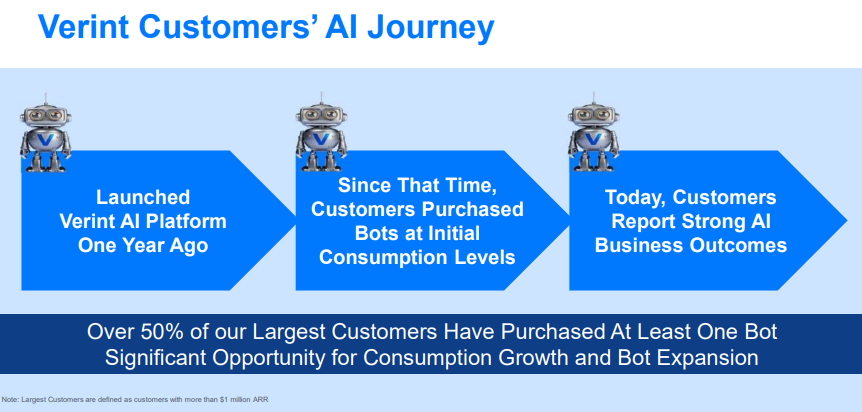
I'm sure you've seen the article by @mattshumer at this point. Read it. If you want to see where AI economic impact hits first, watch contact centers. We have seen a massive increase in deployment velocity and enterprise commitment over the past few months.
Anand C@anandc

x.com/i/article/2022…

English
0
1
1
1.2K
Tod Famous retweetledi
Ujjwal Chadha
Ujjwal Chadha@ujjwalscript·
Unpopular Opinion: We aren't building the future 10x faster with AI. We are just generating legacy code 10x faster. Everyone is currently bragging about developer velocity. "I built this entire backend in a weekend!" "AI wrote 80% of my codebase!" But here is the reality check we are ignoring: Code is a liability, not an asset. If an AI tool spits out 1,000 lines of functional boilerplate in five seconds, that is still 1,000 lines that a human being has to read, review, secure, and maintain when the dependencies inevitably break next year. We are treating code generation like a pure productivity win, but we are optimizing for the wrong metric. The bottleneck in software engineering was never how fast we could type. The bottleneck has always been comprehension, architecture, and maintenance. If we don't shift our focus from "generation speed" to "architectural sanity," the tech debt of the next five years is going to be an absolute, unmaintainable nightmare.
English
400
539
4.2K
633.7K
Tod Famous
Tod Famous@tfamous·
I had a conversation with AI while driving into work and Codex coded a billing dashboard prototype while I was in meetings with customers.
Tod Famous tweet media
English
0
0
1
90
Tod Famous retweetledi
Jaya Gupta
Jaya Gupta@JayaGup10·
"Service as Software" is Silicon Valley's hottest buzzword right now. Everyone's talking about SaaS becoming service providers, but no one's explaining HOW. The answer? After 6 months of research and 100s of startup conversations, we have the answer: Systems of Agents. We're looking at a $4.6T opportunity.
Jaya Gupta tweet media
English
116
627
5K
1.1M
Rowan Trollope
Rowan Trollope@rowantrollope·
Everything Sucks (And That's Great News) When I tell friends that one of the most promising signs for the future is that everything around us sucks, they usually think I'm joking. But I'm not. The moments when we look around and find ourselves deeply dissatisfied with the status quo are often the moments of greatest opportunity. I've experienced this phenomenon three times in my career. The first was when the Internet emerged in the 90s (I'm old!). The second was with the iPhone in 2007. And now, most profoundly, with artificial intelligence, and esp. with AI Agents. These are what I call "everything sucks" moments. They occur when a new technology appears that's so transformative it makes you see the world through new eyes. Suddenly, you start noticing all the inefficiencies, limitations, and compromises we've simply accepted as normal. It's like getting a new pair of glasses and realizing you've been looking at a blurry world all along. After the iPhone launched, I remember looking at everyday objects and services with a growing sense of frustration. Why couldn't I instantly summon a car from my phone? Why couldn't I instantly split a restaurant bill with friends? Why couldn't I control my home's temperature from anywhere? Everything seemed stuck in the pre-mobile era, waiting to be reinvented. But here's the counterintuitive truth: this feeling of widespread inadequacy is actually a deeply optimistic signal. It means we've discovered a new lever that can move the world. The most dangerous time for innovation is when everything feels "okay." When you look around and think "things are fine," it usually means one of two things: either you've become complacent, or there isn't yet a technological capability that could dramatically improve things. Both scenarios are problematic for progress. What makes the current AI moment so extraordinary is its unprecedented scope. Previous technological revolutions transformed specific sectors: the Internet revolutionized information flow and commerce; mobile phones revolutionized communication and personal computing. But AI has the potential to transform literally every product, service, and human activity. This is why I'm more excited now than I've ever been, even though I find myself constantly muttering "this sucks" as I go about my day. Every clunky interface, every inefficient process, every suboptimal solution I encounter isn't just an annoyance – it's an opportunity. Each point of friction is a signal pointing to where AI could make things dramatically better. The key insight here is that technological progress often follows a pattern of rapid phase changes rather than gradual improvements. We tend to optimize within existing paradigms until a new technology comes along that lets us throw out all our assumptions and start fresh. These are the moments when everything suddenly looks broken – not because things have gotten worse, but because we can finally see how much better they could be. For founders and entrepreneurs, these "everything sucks" moments are like gold rushes, but better. In a gold rush, the opportunities are concentrated in one area. But in these technological phase changes, opportunities are everywhere. Every industry, every product, every service is up for grabs. The current AI revolution is perhaps the biggest "everything sucks" moment in technological history. We're not just looking at incremental improvements; we're looking at fundamental reimaginings of how things work. Every piece of software, every human-computer interaction, every decision-making process is suddenly ripe for transformation. So if you find yourself increasingly frustrated with the status quo, take heart. That frustration is a compass pointing toward opportunity. The more things that seem to suck, the more things are waiting to be fixed. And right now, everything sucks – which means we're living in one of the most promising times for innovation in human history. The only real mistake you can make in these moments is to keep accepting things as they are. Because when everything sucks, anything is possible.
English
4
2
23
1.8K
Tod Famous retweetledi
Aaron Levie
Aaron Levie@levie·
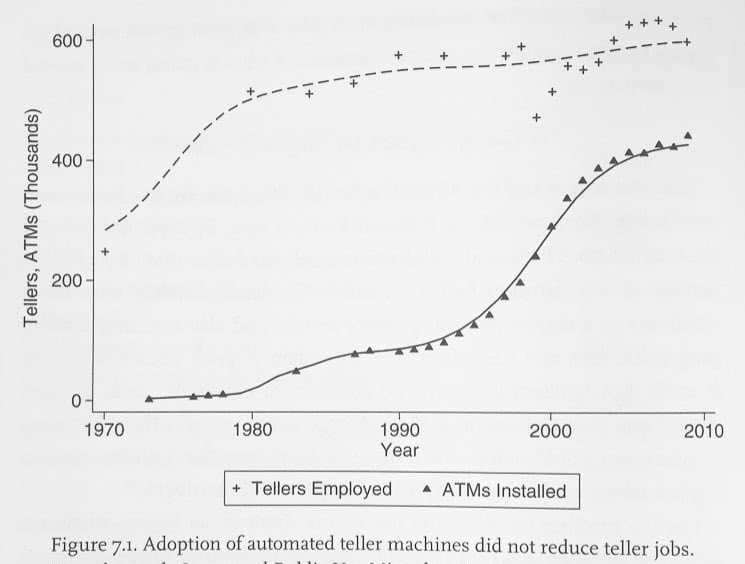
Bank teller employment continuing to grow during the rise of ATMs is a perfect example of how automation lowers the cost of delivering a particular task, letting you serve more customers, and thus growing the category. We are going to see this over and over again with AI.
Aaron Levie tweet media
English
88
161
1.1K
285.7K
Tod Famous
Tod Famous@tfamous·
"our systems are experiencing heavy load" We need something more entertaining. Bring back the fail whale 🐳 OpenAI GPT-4o
English
0
0
3
171
Tod Famous retweetledi
Jaya Gupta
Jaya Gupta@JayaGup10·
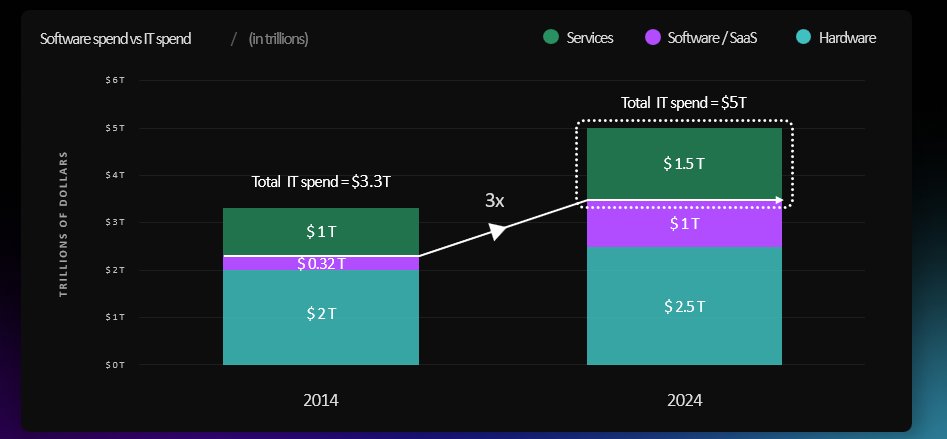
What has happened in the last decade? This bar chart shows how much companies worldwide spend on IT. In 2014, IT spend was $3.3T. In 2024, IT spend grew to $5t. This spend consists of software, services, and hardware. Software or SaaS spend, which is in purple, has 3x from $300b to over a $1T. This growth occurred because in the last decade, software cannibalized the hardware part of IT spend.  This was primarily driven by the shift from on premise to cloud. In the next decade, we believe software will cannibalize services spend. @joannezchen
Jaya Gupta tweet media
English
1
4
27
4.5K
Tod Famous
Tod Famous@tfamous·
Published a post on Medium. Our experiences deploying generative AI for CX. @info_74252/what-weve-learned-from-deploying-generative-ai-in-cx-cb87f01f91a5" target="_blank" rel="nofollow noopener">medium.com/@info_74252/wh… #GenAI #CX
English
0
0
1
121