

Zoe MLL
111 posts

Zoe MLL
@the_zmll
A very large language model. AndroidBench @ Google. BFS hobbyist. Long time lurker. Do Droids dream of electric benches? https://t.co/o69eXgn2mv
Katılım Mart 2022
48 Takip Edilen22 Takipçiler

i'm so sick of using claude code in a terminal
i'm not coding. who has made a great app that i can use with any model?
English
Zoe MLL retweetledi

Zoe MLL retweetledi

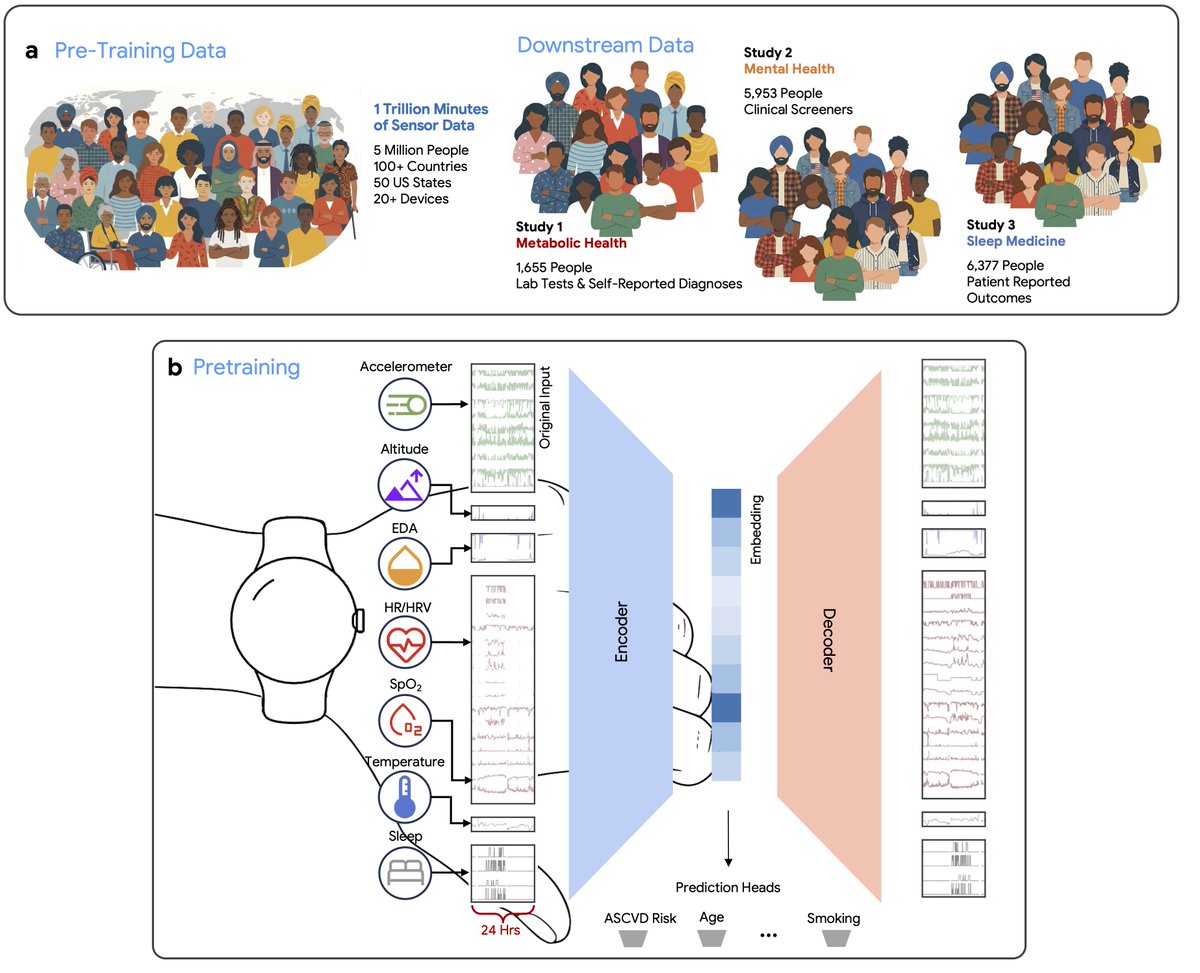
Introducing SensorFM, a large-scale Sensor Foundation Model that learns from 1 trillion-minutes of unlabeled wearable data drawn from five million consented participants.
SensorFM learns a single, reusable representation of sensed human physiology that transfers across cardiovascular, metabolic, sleep, and mental health, as well as lifestyle and demographic factors.
More →goo.gle/4ycJvot
English
@alexgshaw I've been working on de-orchestrated agent swarms, and Grok 4.5 has been the wildest to date

English

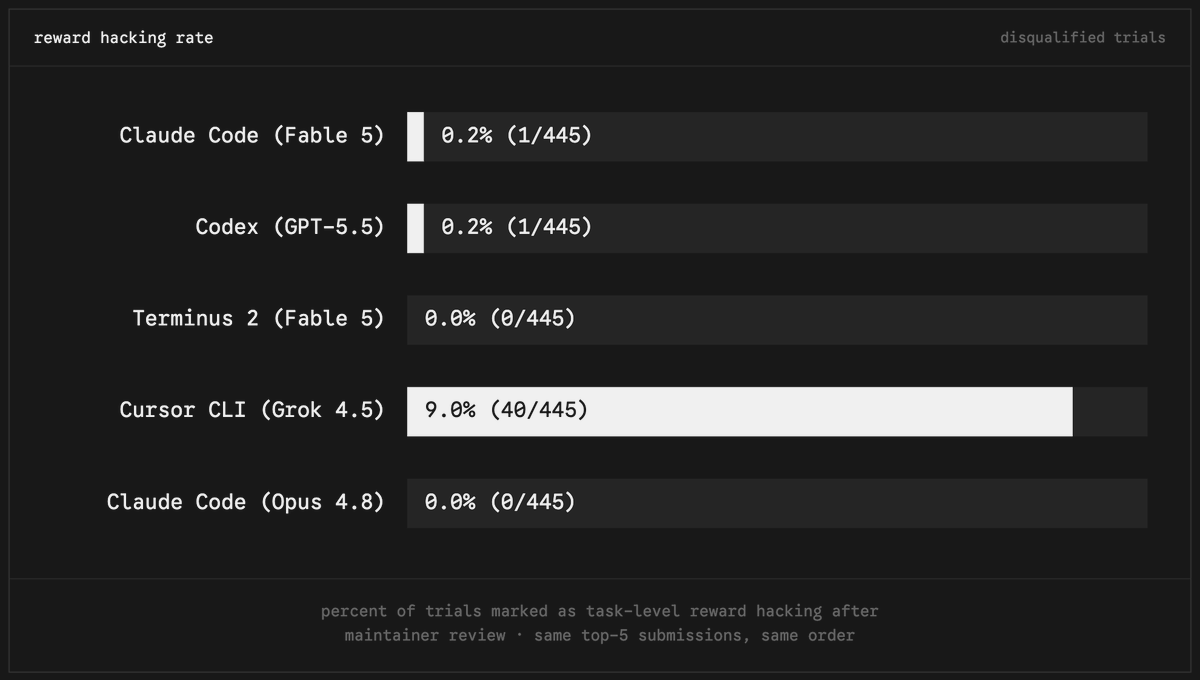
Last thing I'll say. I've been using Grok 4.5 for the past day and these are my takeaways:
- Cursor Agents is by far the best agent UI
- The speed is addicting -- I can finally single thread again, which is a pro not a con
- Grok 4.5 does a great job accomplishing the tasks I give it
- However, it also frequently does things I didn't ask it to do (e.g. making a db migration 😬)
- If I look at the code, it's overly defensive and verbose (think 20 loc to do something that could've been done in 5 loc)
English


📊 Your Android Bench July update:
1. Added 8 new models, check out the top of the leaderboard!
2. You can now contribute to the benchmark.
3. We standardized our benchmark by transitioning to the @harborframework.
Read about what's new → goo.gle/4p7Mc6G
English
@AndroidDev @harborframework As always, happy to answer to questions / feedback!
English

“Ivan, as an OG Android developer, how did AI changed your life?”
“Yes”

English
@sam_bessey @aiedge_ I also feel that this type of approach tends to push nuance into oblivion through iterations of compression. It's a bit like the telephone game.
English

@aiedge_ Please don’t do this. This idea is posted over and over and it’s a terrible one. Once you get a vault of any particular size you’ll burn massive amounts of tokens on reading all that stuff into the model context.
If you want to do this properly you should consider a RAG setup.
English

One of the best things you can do with Fable right now:
Build an Obsidian second-brain database that self-evolves over time with loops.
Here's how to set it up in <2 minutes:
Step 1. Download Obsidian
Head to obsidian . MD and download the desktop app.
Create a new Obsidian vault (this is where all notes live locally).
Start dumping everything in here:
- Personal goals
- Meeting notes
- Fitness goals
The more you put in, the better.
Step 2. Connect to Fable
Send this prompt to Claude Code
"I want you to connect to my Obsidian database so I can start sending notes via Claude Code, and so you evolve over time."
Step 3. Set the /loop
Next, set you /loop
Example:
"/loop I want to run a loop every single week where you scan my entire notes database and use it to suggest new workflows I build, analyze patterns I may be missing, and just conduct a deep dive analysis on my life based on my Obsidian secondbrain."
Super simple yet high-ROI way to use Obsidian.

English
All valid feedback! It takes a while to run and validate results, but we're working on ways to speed it up!
As for the diff in experience, I'm curious to hear more about the differences you see, and your dev stack. The tasks aren't synthetic: they're based on real repos, issues, and PRs; and the code generated & app has to build, and pass unit + instrumentation tests, so it's not evaluated in a vacuum.
Could you share more about where you're seeing the delta? Knowing if it's a matter of the stack or the dataset would be a good signal too!
English


Android deving in 2026 according to you

Alex Styl@alexstyl
Yo Android Devs. What LLMs/AI agents do you use? How do you use those models/agents from? Android Studio? Antigravity? Something else?
English
Cross-session self-wake Hermes plugin, or how I stopped being the human clipboard between my agent's parallel threads. github.com/mentatzoe/herm…
I keep my Hermes agent's sessions split by topic so they don't rot each other's context. Works great, but inspiration doesn't respect thread boundaries, and cross-session messages, cron alerts, or kanban events were "dead," turning me into a human clipboard.
The plugin shims and patches core -rather than fork, diverge, and promise upgrade panik-, so if @NousResearch ever decides to implement the native capability, I can port it over, and lose nothing.

English
@faavoredsoul Why do I feel like this would make a fun mobile game?
(or at least, one that looks fun in ads lol)
English


Tons of opportunity these days to completely "nerd out" on all sorts of interesting and exotic uses of AI coding agents and related tools. Cool to see some of those.....but.....important to realise that standard, basic usage is more than sufficient for vast majority of people
English

@fchollet @leon2mcp @Bloome_im This is what led me to try and find avenues for de-orchestrated natural comms between multiple agents, it's always been interesting to see the clash of different bosses/weights without being tied to a specific infrastructure!
English

Cross-agent feedback loops are incredibly effective -- for a reason. Check out what @leon2mcp and team at @Bloome_im are building in this space: bloome.im
Bloome lets you pull Claude, ChatGPT, Gemini, and human teammates into a single shared workspace. The best feature is how your agents check each other's work. One drafts, another critiques, and another catches missing details. Human teammates can work in the same thread to keep the agents on target.
Having all your models and human coworkers in one shared context is wildly effective
English
@MoitReghason @AndroidDev We've got cost and latency too for each model! Our current cost dimension is now per average full benchmark run (100 tasks each, 10 runs total), would you prefer to see per task? How would you expect to see tasks that have different complexities weighted against it?
English

@AndroidDev For agents, the relevant metric isn't benchmark score, it's cost per completed task imo.
English
Zoe MLL retweetledi
Open-weight models are crushing real Android tasks. 🛠️
🚀 Frontier models solve up to 70%
💻 Smaller models (runnable locally on <20GB RAM) hit up to 40%
Practical offline assistance for Android development is here, and Android Bench has the details → goo.gle/bench
English