@ahmedxm01 A banger boy can be defined as a person that shares information or news that is not real so as to get engagement on his page for elons stimmy
Happy International Women's Day to everyone building Bitcoin's future ❤️
There are countless women shaping this ecosystem: artists, developers, educators, community leaders. We can't highlight them all, but if you're reading this and building: thank you.
These six powerhouses joined us on Friday's Spaces to share their journeys. If you couldn't join Friday, you missed some real ones. Their stories deserve another spotlight 🧵
🏅 4,500,000 $ZOOF DISTRIBUTED 🏅
All chirper rewards from the @zoofwallet campaign have just been distributed, officially concluding the campaign! ✅
→ 4,5M $ZOOF — Month 2 Chirper rewards
Congrats Chirpers! 🪽
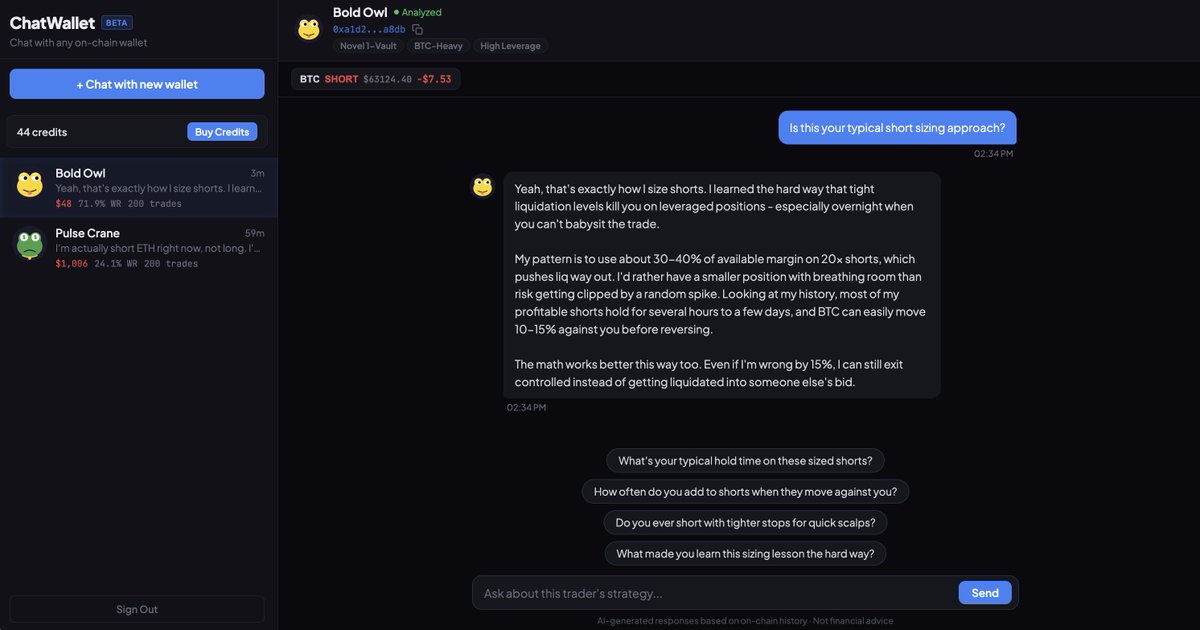
paste any Hyperliquid wallet
talk to the trader
why are you short BTC at 20x?
when do you cut losers?
why didn't you take profit?
should I copy this trade?
AI persona built from live positions, real fills, actual P&L along with a bunch of non-trivial tricks to clone behavior in real-time
Join our founder @Caf0lla tomorrow at 4pm UTC for our space with @iEx_ec
We'll be diving into how iExec enables privacy and confidentiality within Neox's ecosystem and the need for privacy in an agentic world.
Set a reminder and head over to iExec's page tomorrow
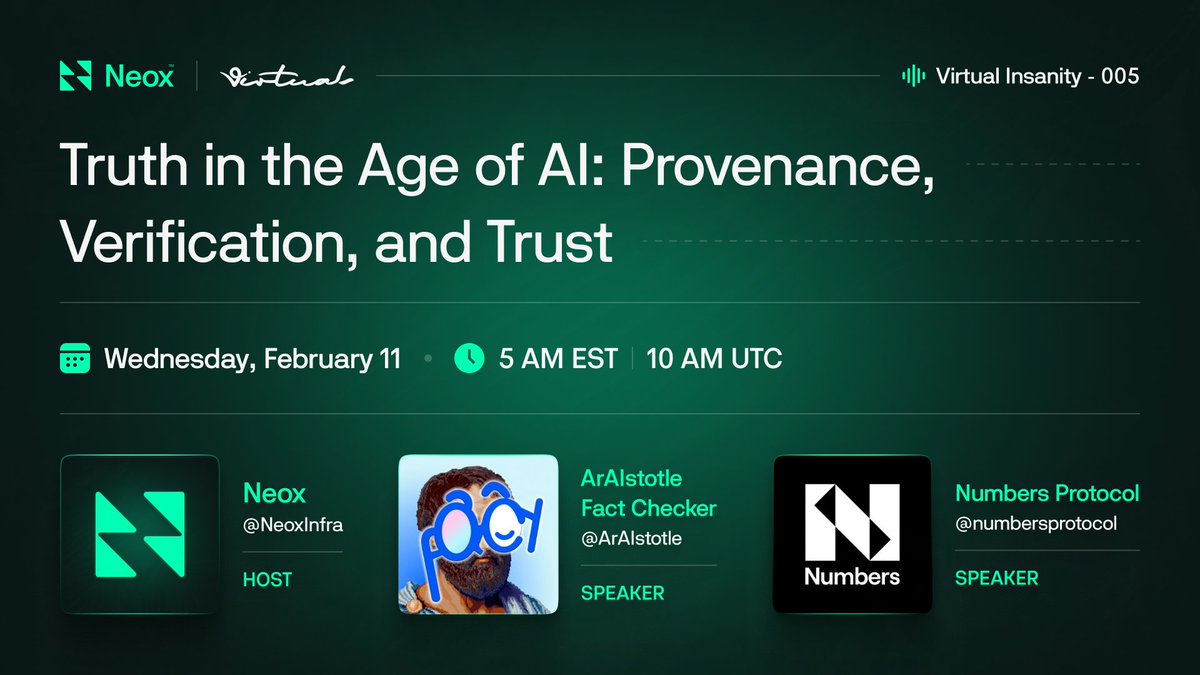
Virtual Insanity returns this week!!
Episode 5 explores one of the hardest problems created by AI: how we establish truth when content can be generated, altered, and distributed at scale.
This week, we’re joined by @ArAIstotle and @numbersprotocol to break down how provenance, verification, and trust are becoming core infrastructure in an AI-native internet.
The conversation will dive into:
• How content provenance works in practice
• The difference between verifying origin vs verifying truth
• Why trust can’t be solved by models alone
📅 Wednesday, February 11
⏲️ 10am UTC / 5am EST
🔊 ArAIstotle, Numbers Protocol
x.com/i/spaces/1kvJp…
Virtual Insanity is a weekly deep dive into the systems shaping AI, crypto, and digital markets. Each episode focuses on one problem, one layer of infrastructure, and the people actually building it.
If you care about how truth is verified, not just generated, this one’s worth your time.
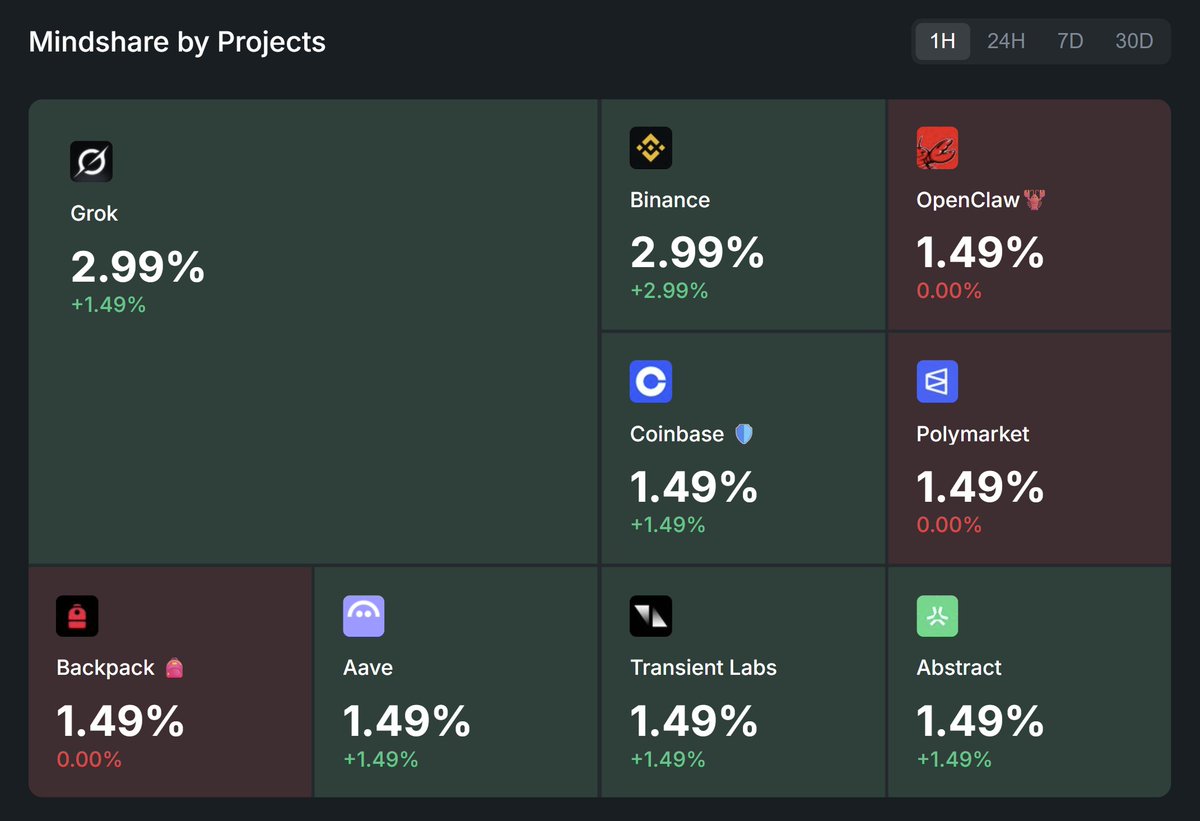
Arbus Terminal lets you track narratives, mindshares, early signals, and alpha insights in real time.
Stay one step ahead instead of catching up. 👨🏼💻
Join now 👉 app.arbus.ai/signup
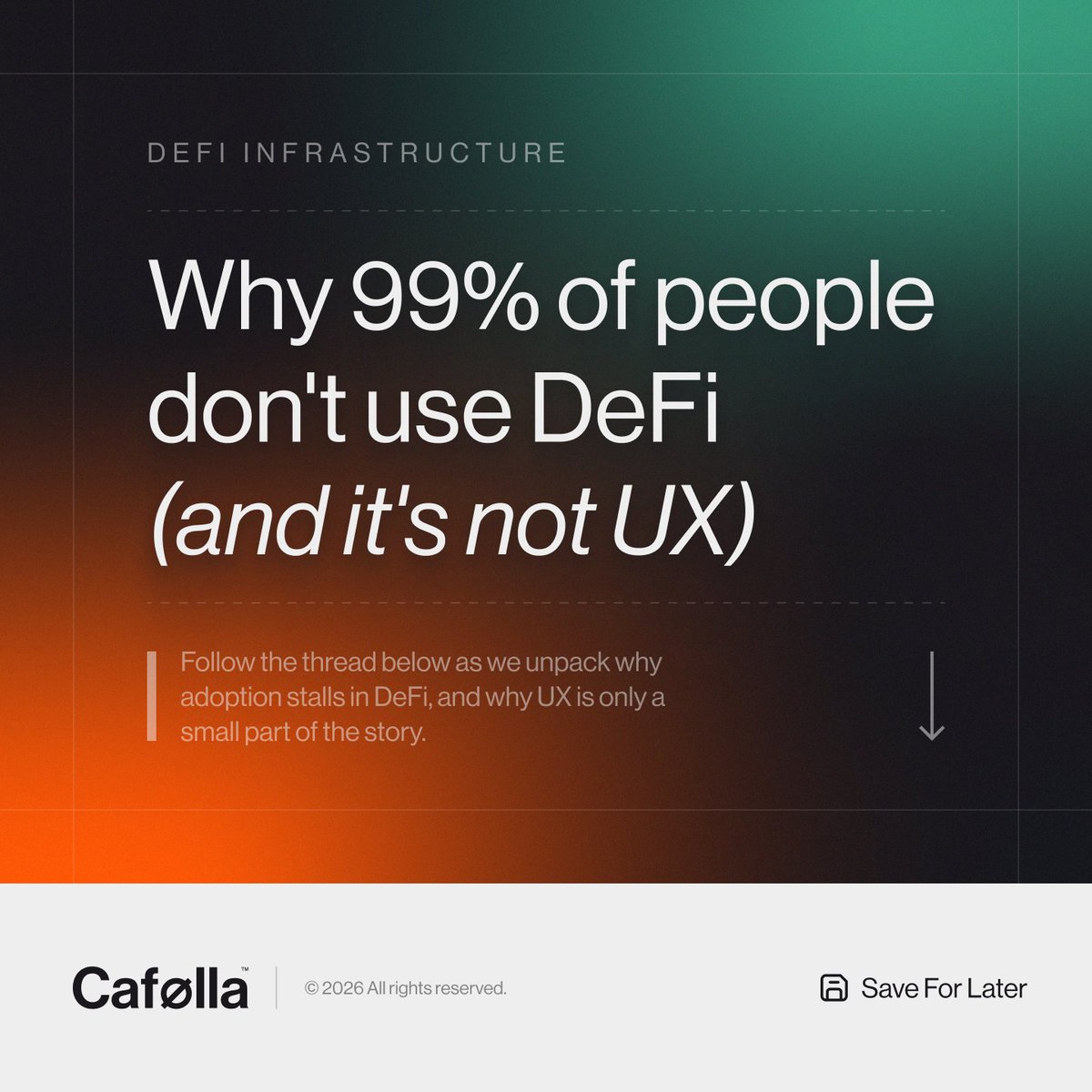
Everyone blames DeFi's UX for low adoption.
"The wallets are confusing."
"There are too many chains"
"It's too complicated."
That's not the real problem.
The real problem is distribution.
DeFi has a discovery problem, not a design problem.
Here's what I mean:
1. People don't go looking for DeFi
Most users don't wake up thinking "I should learn about Aave today."
They wake up thinking "I want to earn interest on my savings."
DeFi forces people to come to it. Traditional finance embeds yield into the products people already use.
2. The friction isn't the interface
It's the 47 steps before you even see the interface:
- Buy crypto on an exchange
- Learn about wallets
- Transfer to a wallet (pay fees)
- Understand gas
- Bridge to the right chain (more fees)
- Approve token contracts
- Finally deposit
Each step causes friction and loses users.
3. Platforms optimise for degens, not normal people
Aave's dashboard is built for people who already know what "utilisation rates" are.
Normal people just want to click "Earn 5%" and be done.
The fix isn't better UX. It's better distribution.
DeFi needs to be embedded into the apps people already use. Neobanks, apps, fintech platforms.
Users shouldn't need to know they're using DeFi. They just need to see "Earn 5% on idle USD."
This is exactly what companies like Stripe, PayPal, and Visa are starting to do with stablecoins in 2026.
The infrastructure layer that solves this wins.