The Khwab 💭 retweetledi

@balajis I’m very very bullish on the future of India. Can’t wait to spend more time in my motherland in 2024 and beyond!
English
The Khwab 💭
12 posts

@thekhwab
Gathering ambitious south asians. We host community events, private talks & intimate dinners for founders in sf
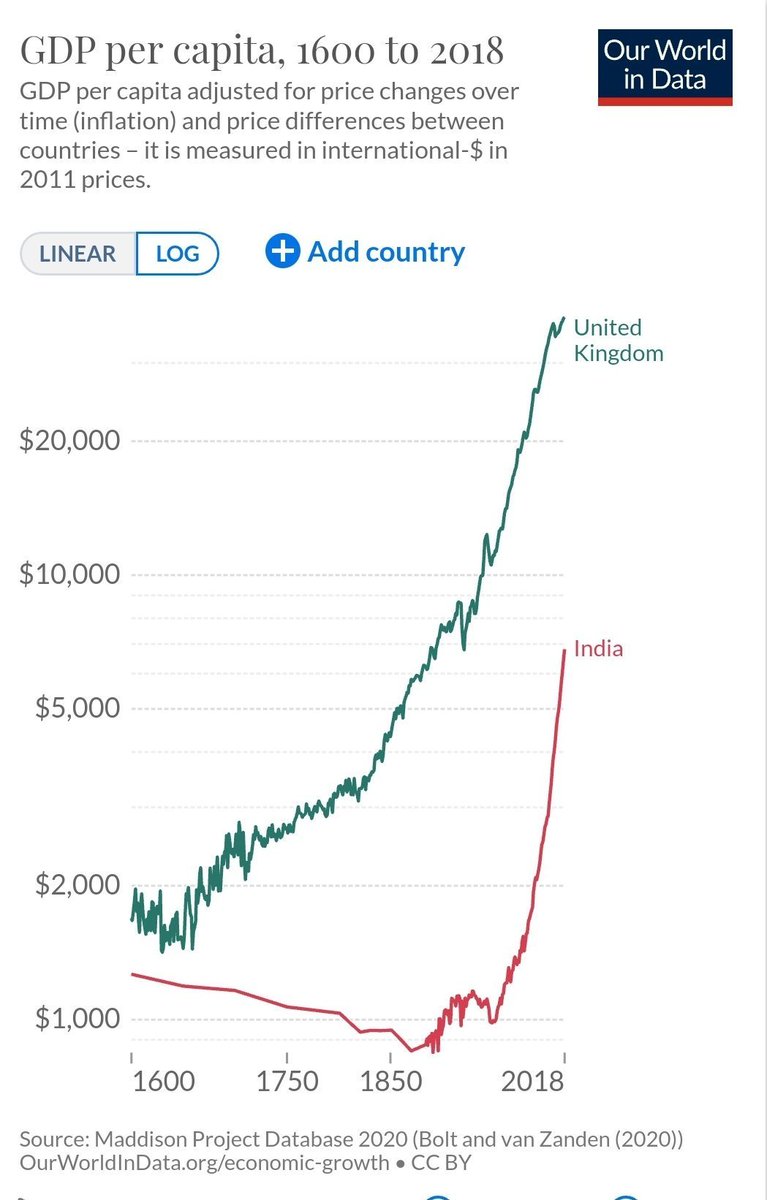
INVESTING IN INDIA IS IMPROVING INDIA If you see a startup growing, does that mean it doesn't have any flaws? That it's the best in the world? That you're going to use it for everything right away? No, of course not. But you might start using it, and putting money into it, and talking about it to your friends. And that's how I think about India — an ancient civilization that's simultaneously like a startup country, as you can see from the graph below. That's why I'm investing in India and Indians: because I see the growth potential, because it helps build up Bharat, and because a strong and self-sufficient India is good for the world. Now, let me address a few common arguments. 1) Civilizational Reincarnation. First, note that I used the phrase "ancient civilization" above. Of course I'm well aware that the Indus Valley civilization is one of the oldest in human history. But India is still analogous to a tech startup, because the country experienced a civilizational rebirth in 1991 after liberalization, just as China did in 1978. Whenever we use the term "leapfrogging" we acknowledge this. Why could India jump straight over landlines straight to mobile, or from cash to UPI? Because it was reborn recently, after centuries of colonialism and occupation. And reincarnation is something we are familiar with. 2) Underdog Millionaire. Second, observing that something is improving doesn't mean saying that it's already number one. In fact, one of the most important things about India is that Indians think of themselves as underdogs. Not starving "slumdogs" like the regrettable epithet, nor overconfident overdogs, but underrated underdogs — with a chance to win but certainly no guarantee. That's the message of movies like Super 30 (youtube.com/watch?v=QpvEWV…), which couldn't be more different than Black Mirror. Indians know they aren't #1, or even #2, because they aren't. But the diaspora helps show that Indians can be world class, and that India itself could become world class, which is part of why India is now rising to the occasion. 3) Decentralized Diaspora. Third, that brings us to one of India's greatest strengths: its diaspora. In this century China may end up playing the world's best home game, but India is on track to play the world's best away game. So India's development will look different than China's. For one thing, Indians are willing and able to move anywhere. Westerners mostly aren't willing to move, because they still think their societies are the only places that are "First World". And the Chinese increasingly aren't able to move, because they're restricted from any countries where the Chinese state lacks hard power. That leaves Indians to fill the gap. As Chinese emigration drops off, Indian emigration picks up to fill the holes in tech talent. As individual Indians become wealthier, more are financially able to emigrate. And as India as a whole becomes stronger, the passport improves, and more people are diplomatically able to emigrate. All this means the age of Indian emigration is just beginning. If China is the centralized state, India is the decentralized diaspora. 4) Special Economic Zones. Putting that all together, that means (a) India is reborn, (b) Indians know they are rising-yet-underdogs, and (c) Indian development is going to be quite different from Chinese development, with much more focus on the diaspora. So, that's one of the reasons I think so much about special economic zones. Indians thrived in Dubai and Delaware, in Singapore and the Anglosphere — once they got out into a different economic system. And they're now starting to thrive in India itself — once India itself changed its economic system in 1991. So, it's all about changes to the economic system. And with every investment we make in India or Indians, we build up a feature list of things to change. Because there are a series of conceptually simple things India can do to be as good a place to do business as Dubai or Singapore. For example, you need to be able to send money into and out of the country for investment without hassle. You need to get a better passport so Indians can attend conferences. You need to rank higher on the economic freedom index (heritage.org/index/country/…). And so on. At India's current rate of improvement, I think much of that will eventually be possible in a place like GIFT City, as a kind of special economic zone, even if not for all of India at once. Put another way: India's internet connectivity, digital payments, and basic infrastructure has dramatically and visibly improved in the last 10 years. But while it's improving, it doesn't yet have certain "power user" features for international business that Singapore, Dubai, and Delaware do. Once it does, it'll get even more of my business — and more importantly the world's. But it's already investable, and improving — which is why I'm writing about India, putting money into Indians, and regularly meeting founders on the ground. 5) Investor, not cheerleader. In summary, that's what the quoted tweet gets wrong. It's not about being a "cheerleader" who has to "stay" in a place to invest in it — imagine if every business had to be funded solely by neighbors down the street. Instead, it's about being an international investor looking for the best talent around the world — and finding quite a lot of it in India. Maybe I'll find one of you at the next meetup!

INVESTING IN INDIA IS IMPROVING INDIA If you see a startup growing, does that mean it doesn't have any flaws? That it's the best in the world? That you're going to use it for everything right away? No, of course not. But you might start using it, and putting money into it, and talking about it to your friends. And that's how I think about India — an ancient civilization that's simultaneously like a startup country, as you can see from the graph below. That's why I'm investing in India and Indians: because I see the growth potential, because it helps build up Bharat, and because a strong and self-sufficient India is good for the world. Now, let me address a few common arguments. 1) Civilizational Reincarnation. First, note that I used the phrase "ancient civilization" above. Of course I'm well aware that the Indus Valley civilization is one of the oldest in human history. But India is still analogous to a tech startup, because the country experienced a civilizational rebirth in 1991 after liberalization, just as China did in 1978. Whenever we use the term "leapfrogging" we acknowledge this. Why could India jump straight over landlines straight to mobile, or from cash to UPI? Because it was reborn recently, after centuries of colonialism and occupation. And reincarnation is something we are familiar with. 2) Underdog Millionaire. Second, observing that something is improving doesn't mean saying that it's already number one. In fact, one of the most important things about India is that Indians think of themselves as underdogs. Not starving "slumdogs" like the regrettable epithet, nor overconfident overdogs, but underrated underdogs — with a chance to win but certainly no guarantee. That's the message of movies like Super 30 (youtube.com/watch?v=QpvEWV…), which couldn't be more different than Black Mirror. Indians know they aren't #1, or even #2, because they aren't. But the diaspora helps show that Indians can be world class, and that India itself could become world class, which is part of why India is now rising to the occasion. 3) Decentralized Diaspora. Third, that brings us to one of India's greatest strengths: its diaspora. In this century China may end up playing the world's best home game, but India is on track to play the world's best away game. So India's development will look different than China's. For one thing, Indians are willing and able to move anywhere. Westerners mostly aren't willing to move, because they still think their societies are the only places that are "First World". And the Chinese increasingly aren't able to move, because they're restricted from any countries where the Chinese state lacks hard power. That leaves Indians to fill the gap. As Chinese emigration drops off, Indian emigration picks up to fill the holes in tech talent. As individual Indians become wealthier, more are financially able to emigrate. And as India as a whole becomes stronger, the passport improves, and more people are diplomatically able to emigrate. All this means the age of Indian emigration is just beginning. If China is the centralized state, India is the decentralized diaspora. 4) Special Economic Zones. Putting that all together, that means (a) India is reborn, (b) Indians know they are rising-yet-underdogs, and (c) Indian development is going to be quite different from Chinese development, with much more focus on the diaspora. So, that's one of the reasons I think so much about special economic zones. Indians thrived in Dubai and Delaware, in Singapore and the Anglosphere — once they got out into a different economic system. And they're now starting to thrive in India itself — once India itself changed its economic system in 1991. So, it's all about changes to the economic system. And with every investment we make in India or Indians, we build up a feature list of things to change. Because there are a series of conceptually simple things India can do to be as good a place to do business as Dubai or Singapore. For example, you need to be able to send money into and out of the country for investment without hassle. You need to get a better passport so Indians can attend conferences. You need to rank higher on the economic freedom index (heritage.org/index/country/…). And so on. At India's current rate of improvement, I think much of that will eventually be possible in a place like GIFT City, as a kind of special economic zone, even if not for all of India at once. Put another way: India's internet connectivity, digital payments, and basic infrastructure has dramatically and visibly improved in the last 10 years. But while it's improving, it doesn't yet have certain "power user" features for international business that Singapore, Dubai, and Delaware do. Once it does, it'll get even more of my business — and more importantly the world's. But it's already investable, and improving — which is why I'm writing about India, putting money into Indians, and regularly meeting founders on the ground. 5) Investor, not cheerleader. In summary, that's what the quoted tweet gets wrong. It's not about being a "cheerleader" who has to "stay" in a place to invest in it — imagine if every business had to be funded solely by neighbors down the street. Instead, it's about being an international investor looking for the best talent around the world — and finding quite a lot of it in India. Maybe I'll find one of you at the next meetup!




🇮🇳/acc (h/t @balajis)

Okay now that the open AI saga is closed! Earlier this year, I felt called to bring Ambitious South Asians together. So with the incredible community support from @mercury and @awscloud - I along with the @thekhwab hosted 30 @ycombinator founders & loved ones for an intimate Diwali gathering 🪔🪔🪔 It was an incredible privilege to plan and host the next generation of silicon valley leaders. We made a clip, hope you enjoy it (volume up)👇🏽 P.S. The Khwab plans to bring a lot more ambitious south asians together in 2024, stay tuned! (or get in those DMs☺️)
Okay now that the open AI saga is closed! Earlier this year, I felt called to bring Ambitious South Asians together. So with the incredible community support from @mercury and @awscloud - I along with the @thekhwab hosted 30 @ycombinator founders & loved ones for an intimate Diwali gathering 🪔🪔🪔 It was an incredible privilege to plan and host the next generation of silicon valley leaders. We made a clip, hope you enjoy it (volume up)👇🏽 P.S. The Khwab plans to bring a lot more ambitious south asians together in 2024, stay tuned! (or get in those DMs☺️)