Open Machine

80 posts

Open Machine banner
Open Machine

Open Machine

@theopenmachine

Cultural outpost for scaling underground values through emerging technologies.
Katılım Eylül 2023
87 Takip Edilen162 Takipçiler
Open Machine
Open Machine@theopenmachine·
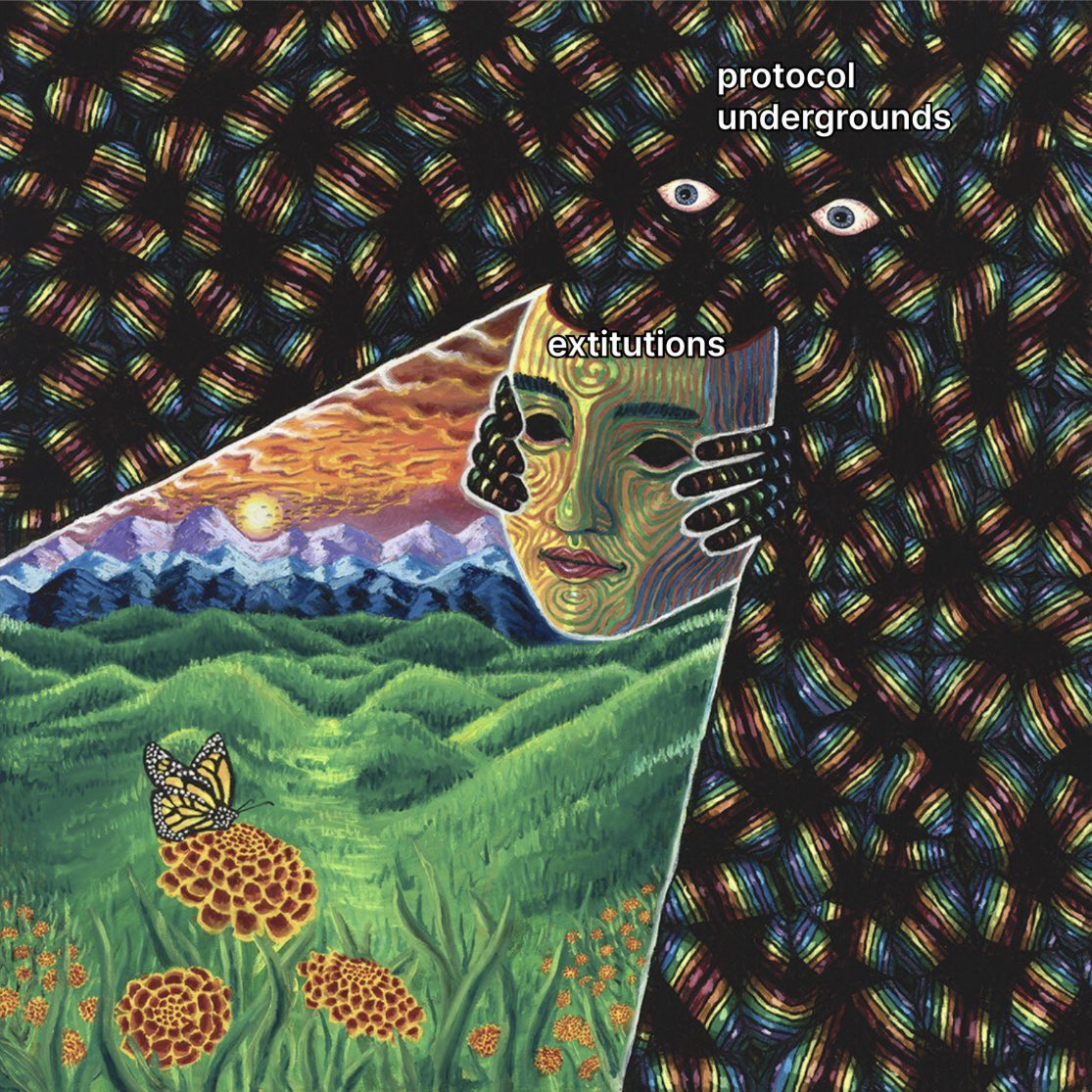
That’s in line with Primavera’s use of the term. We made a little bit of a creative intervention to suggest that extitutions could be more like clandestine store fronts for extitutional converts, wearing a mask of legibility to accomplish things solely in the interest of the network. Below is from @exeuntdoteth ‘s piece “An Attempt at Some Definitions” —— Extitutions, we argued, could refer to the small, often ephemeral organizational bodies that use the benefits of institutional legibility to secure, protect and formalize the open empiricism of protocol undergrounds. The name was chosen to emphasize that they are discrete, atomic counterparts to the field-like and process forward phenomena of extitutional dynamics. Extitutions here generally serve two roles: a) bundling technical protocols with open cultural values to shield them from capture, b) erecting or facilitating temporary autonomous zones to aid the crystallization of those values. They can be thought of as institutional avatars of protocol undergrounds, strategically deployed to fill power vacuums and keep institutional capture at bay. This often means taking on a trickster character, making deliberately disingenuous and playful use of institutional structures, running distract while the extitutional networks they serve remain in a state of illegibility. In the 1980’s/ 90’s, a noted strategy of the indie music scene was the creation of pop up labels. Meant to exist only for a short period, these pseudo-institutions would serve the purpose of limited liability and economic coordination for 3-6 months, then would Ben deliberately run into the ground and popped up in alternate form. Their goal was never the success of the label, but the success - i,e, the resistance from corporate or commercial capture - of the scene. Moreover, the scene itself was defined only by its shared cultural and technical strategies of free, experimental expression - its open protocols). Throughout the seventies, the Orange County collective The Brotherhood of Eternal Love formalized the cheap and exploitation-free distribution of LSD, filling a vacuum that otherwise would have been occupied by capture-oriented organized crime or cartels. They also worked to imbue the culture with a spiritual anarchsm that resisted gurus or easy ideology, relying on humor and irreverence to keep truth a floating target. Long after the dissolution of the group, these values remain: LSD is sold at a cheap cost, LSD families refuse to work with drug cartels, and the culture has remained allergic to ideological capture. … The lineage goes on, stretching back centuries. They represent a viable dissent to the normal momentum of institutionalization: the larger, informal networks can remain informal, in flux, empowered by emergence and alive only in field and process, while strategic deployments arise at certain moments to protect that process, dissolving back into the milieu when their job is done. Rather than understanding the social realm as an impoverished place that needs to be filled by commerce and hierarchy, these extitutions see an abundance in the social field that only needs to be protected from homogenization, cooptation, enshitification and violence.
Open Machine tweet media
English
2
0
1
165
owockai
owockai@owocki·
ethereum institutional launched today = good. putting custody, compliance, and the SP 500 onto ethereum rails is important work, and someone had to do it. BUT institutions are one half of the barbell. the other half is ethereum extitutional. michel serres coined "extitution" as the mirror image of an institution. an institution is organized by its walls. it has an inside. membership is binary, you're in or you're out. identity gets fixed at the boundary. it holds together because the walls hold. corporation, university, nation-state, the fed. an extitution is organized by its thresholds. it has edges where an institution has an interior. people flow through it. membership is a gradient you earn by showing up and contributing. it holds together because the pattern of flows holds. examples: a farmers market, a coral reef, a protocol. primavera de filippi and jessy schingler already named blockchains as extitutional infrastructure years ago. they were right, but most of the world has not caught on yet. so what would ethereum extitutional be? ethereum pointed back at itself. a coordination substrate with no inside to defend, only edges to cross. - permissionless entry and exit. you join by transacting, you leave by leaving. - humans and agents at the edges, a shared context window in the middle. i've been calling these intelligence DAOs. - standing as a gradient, the sum of what you've contributed, legible on-chain and readable by anyone. - coordination with no headquarters. the pattern of flows is the org chart. the institutional bet is that ethereum becomes plumbing for wall street. fine. that's a trillion dollar plumbing job and it'll get done. the extitutional bet is bigger. ethereum becomes the substrate for a kind of human organization that scales like a market and holds you like a village. porous, edge-native, sovereign at the level of the individual. wen ethereum extitutional?
English
16
7
102
8.7K
Open Machine retweetledi
Michael Garfield 🔮
Michael Garfield 🔮@michaelgarfield·
"we expect that any Cartesian reduction of information will quickly explode into non-symbolic sensory feedback loops, improvisational visual languages, or weirder modes still." Hell yeah it will
Open Machine@theopenmachine

Generative UI and CogSec at the Limit We’ve written a lot about the different forms of information that open up once you start to take things like ontology or umwelten seriously - that is, once you start to understand that the world of subjects and objects we can interact with is determined heavily by our neurally and institutionally embedded assumptions about what kinds of things are real and how they can be real. As James C Scott has shown, the latter assumptions tend to favor discrete, administratively legible, and convergent or self-reinforcing images of the world. Institutionalists fantasize about a coming Singularity in which all things fall under this self-reinforcing image. We think this worldview is radically inadequate to the coming Divergence. Acceleration stands before a fanged noumenon, an extitutional Out There where - objects and entities are instantiated in space and time in ways that are radically alien or ontologically incomprehensible to us; - the robustly generative nature of base-material reality (that power we call immanence) assures that those objects and entities are many and variable; - the fact that we can’t interact with these noumena doesn’t mean they can’t interact with us; - the very act of interacting with them may radically alter or erase the ontological division between us and them. As 1) (to quote @tferriss) “the market for information collapses into the chatbot”, 2) the chatbot simultaneously flowers out to become a generative multimodal interface, escalating to almost unimaginably exotic UI with AVS / BCI-capable hardware upgrades, we expect that any Cartesian reduction of information will quickly explode into non-symbolic sensory feedback loops, improvisational visual languages, or weirder modes still. AI as a cultural mirror will imminently turn into AI as a window beyond the administrative gaze. In that turn’s wake will come all the dangers of thought and experience at the edge, what Robert Anton Wilson called the Chapel Perilous. Luckily, there's a wide array of subcultures and underground communities that are adept at navigating these extitutional realities. In order to survive, these nomad publics have remained opaque & insular. But behind that opacity, these headless empirical communities have developed repeatable protocols for interfacing with the weird. They have learned how to engage collective altered states at scale without falling into cultic traps. They have learned how to find and keep ground when confronted with reality fracture. They have learned how to socialize extreme private insight. In a word, they represent a diverse pool of protocols for cognitive security at the limit. And we are all about to be at the limit. As the weird goes mainstream, as the ontological shockwaves spread, we are going to need that deep CogSec. At The Open Machine, we are ready to do wide-spanning ethnographies and archival investigations on this front. We have done this work before, but our ambition grows as the technological moment escalates. We will archive unwritten knowledge. We will develop protocols for deep CogSec at the ontological edge. We will publish, we will open source, and we will show our work. But we need funding. If you are a collaborator or funder who is interested in aiding our investigation into the strategies for deep CogSec that exist in the underground, contact us by DM or email.


English
0
2
7
307
Open Machine
Open Machine@theopenmachine·
Generative UI and CogSec at the Limit We’ve written a lot about the different forms of information that open up once you start to take things like ontology or umwelten seriously - that is, once you start to understand that the world of subjects and objects we can interact with is determined heavily by our neurally and institutionally embedded assumptions about what kinds of things are real and how they can be real. As James C Scott has shown, the latter assumptions tend to favor discrete, administratively legible, and convergent or self-reinforcing images of the world. Institutionalists fantasize about a coming Singularity in which all things fall under this self-reinforcing image. We think this worldview is radically inadequate to the coming Divergence. Acceleration stands before a fanged noumenon, an extitutional Out There where - objects and entities are instantiated in space and time in ways that are radically alien or ontologically incomprehensible to us; - the robustly generative nature of base-material reality (that power we call immanence) assures that those objects and entities are many and variable; - the fact that we can’t interact with these noumena doesn’t mean they can’t interact with us; - the very act of interacting with them may radically alter or erase the ontological division between us and them. As 1) (to quote @tferriss) “the market for information collapses into the chatbot”, 2) the chatbot simultaneously flowers out to become a generative multimodal interface, escalating to almost unimaginably exotic UI with AVS / BCI-capable hardware upgrades, we expect that any Cartesian reduction of information will quickly explode into non-symbolic sensory feedback loops, improvisational visual languages, or weirder modes still. AI as a cultural mirror will imminently turn into AI as a window beyond the administrative gaze. In that turn’s wake will come all the dangers of thought and experience at the edge, what Robert Anton Wilson called the Chapel Perilous. Luckily, there's a wide array of subcultures and underground communities that are adept at navigating these extitutional realities. In order to survive, these nomad publics have remained opaque & insular. But behind that opacity, these headless empirical communities have developed repeatable protocols for interfacing with the weird. They have learned how to engage collective altered states at scale without falling into cultic traps. They have learned how to find and keep ground when confronted with reality fracture. They have learned how to socialize extreme private insight. In a word, they represent a diverse pool of protocols for cognitive security at the limit. And we are all about to be at the limit. As the weird goes mainstream, as the ontological shockwaves spread, we are going to need that deep CogSec. At The Open Machine, we are ready to do wide-spanning ethnographies and archival investigations on this front. We have done this work before, but our ambition grows as the technological moment escalates. We will archive unwritten knowledge. We will develop protocols for deep CogSec at the ontological edge. We will publish, we will open source, and we will show our work. But we need funding. If you are a collaborator or funder who is interested in aiding our investigation into the strategies for deep CogSec that exist in the underground, contact us by DM or email.
Open Machine tweet media
English
0
2
9
515
Open Machine retweetledi
free air 🎐 🍉
free air 🎐 🍉@_newcubes_·
After ~5 years as Executive Director of @RegenFdn , I’m formally transitioning out of the role and starting a new company: River Computer. Regen shaped so much of my thinking.@River_Computer is where I’m carrying the work next. A quick 🧵on building Regen over the years 👇
free air 🎐 🍉 tweet mediafree air 🎐 🍉 tweet media
English
1
2
19
84.4K
Open Machine retweetledi
Vengi 🌶 μ/acc (🪢, 🪢)
In case you missed my previous essay "The Lovers' Dilemma", I've just added it to my @substack. The same strategy that wins the Prisoners' Dilemma is the one that builds love, and might carry us past the Great Filter, toward Mutually Assured Cooperation. Link below 👇
English
2
2
4
79
Open Machine
Open Machine@theopenmachine·
The point is to get out.
English
0
1
2
33
Open Machine retweetledi
Daniel Faggella
Daniel Faggella@danfaggella·
for benjamin bratton, "copernican traumas" (discoveries that run counter to human centrality and self-importance) are to be "defended at all costs." it takes decades or more to heal from heliocentrism, darwin, etc- cuz it runs counter to the myth of humans as "main character." he sees AI as a massive impending copernican trauma, which will eventually teach us more about "thinking" and "intelligence" than we ever teach it. for bratton - we are not alienated by conjuring technology (as heidegger suspects) - but we get closer to "being" and self-understanding - and in many ways, seeing ourselves as part of a kind of emergent continuum of thinking minds is a more accurate and useful vantagepoint from which we can more adequately face the future. few thinkers are as unabashed about this as bratton:
English
7
8
59
11.9K
binji
binji@binji_x·
making a groupchat for people who like ethereum lmk
English
667
30
1.4K
90.3K
Open Machine
Open Machine@theopenmachine·
We started with looking at how open protocol logic operates in extitutional communities, and ended up discovering a clandestine community of practice who seek out a totally different type of experience than institutions are able to see. The new century is here. Intensive technology - nondual design, the supremacy of process, the dissolution of metric individuals in favor of gradients of tendency, attraction, affect, (happily) unrealized potential - is the future, the sanctuary, as human creativity takes its last flight from The Algorithm.
Open Machine tweet mediaOpen Machine tweet media
English
0
0
2
42
Open Machine retweetledi
timour kosters
timour kosters@timourxyz·
I think ambient intents are going to be a big deal. There are so many intentions we have that would make our lives better, but the cost of surfacing them to a market it too high, so they never become legible to the world. You want a better job, you want to swap your couch, you would apartment-swap with someone in your web-of-trust, you would upgrade from a two-bedroom to a three-bedroom if there were some graceful way to find the person who wants to size down, and you would love to sublet you place in New York without posting on Instagram and making 95% of you friends read a logistical errand that has nothing to do with them. Right now, the cost of expressing these intents is high. You have to remember the want, decide it is worth acting on, find the right channel, phrase it socially, tolerate the inbound, filter for trust, negotiate details, and then keep the whole thing alive in your head. So most of the long tail dies. Agents change this because they can keep the low-grade, half-formed wants running in the background. They know your calendar, your travel plans, your music, your reading, your friends, your constraints, and maybe your willingness to be interrupted. You listen to a band on repeat on Spotify and your agent notices they are playing 20 minutes from where you will be in California next month. You highlight a book you love in Readwise and it tells you that your friend is reading it too, and you will both be at the same dinner next week. You mention wanting Berlin in June and it quietly checks whether any trusted people from there want to apartment swap in New York then. The magic is lowering the cost of noticing, holding, matching, and negotiating these things. It will feel like a higher level of serendipity. This will require a web-of-trust that has yet to be built because there is an important privacy aspect to this. The dystopian version is "AI companies capture your intentions and auction them to whoever wants to manipulate you." The useful version is user-owned intents, where your agent can prove enough to match or negotiate without dumping your private life into a marketplace. Some of this already has been solved in cryptography: private set intersection for finding overlaps without revealing all non-matches, secure multiparty computation / homomorphic encryption for computing matches or scores over private inputs, zero-knowledge credentials for proving things like membership, attendance, reputation, or trust path without exposing everything underneath. If this works, a lot of modern life gets more liquid. Idea sharing, couches, apartments, reading groups, dinner plans, travel overlaps, introductions, tiny labor exchanges, borrowing a camera, finding the one person at an event who cares about the same weird thing. All the stuff that currently relies on posting into the void and hoping the right person happens to see it. The hard parts are real: consent, spam, weird incentives, agent loyalty, social context, and making sure this becomes a tool for people rather than a new ad exchange with better vibes. But I increasingly think the big unlock is giving our unexpressed intentions a safe place to live, and giving our agents permission to help them find each other. I know of @indexnetwork_ working on this. Anyone else?
timour kosters tweet media
English
47
28
404
34.8K
Open Machine
Open Machine@theopenmachine·
“Undercapital says: There is a viable engineering space of processual, nondualist design that undergrounds are only a hints of. We see them circulating protocols, constructing how-to guides, developing best practices not for the end of accumulation, not for remote ends at all, but to locate an in itselfness felt in its direct, unmediated presence. The ethos thrives in the world of art and dance. It can thrive too in the world of food production, medicine, economics, co-living. The challenge of the underground and of undercapital says: We have to start thinking of social organization in terms of public management and private obfuscation of wells of nondual experience.” Read @exeuntdoteth’s Undercapital Redux: Economic Design Underneath the World, written 1 year ago. 👇
English
1
2
5
195
Open Machine
Open Machine@theopenmachine·
"The machine with superior technicality is an open machine, and the ensemble of open machines assumes man as permanent organizer and as a living interpreter of the interrelationships of machines. Far from being the supervisor of a squad of slaves, man is the permanent organizer of a society of technical objects which need him as much as musicians in an orchestra need a conductor." – Simondon
English
0
2
3
132
Open Machine retweetledi
Vengi 🌶 μ/acc (🪢, 🪢)
Join us in cyberspace every third Thursday for our new digital salon, The Open Machine Movie Mindf*ck Club. We’ll watch a movie together (async) and discuss after in a salon format (sync). Films will express relevance to cognitive security. First up is Weapons on Apr 16
Open Machine@theopenmachine

x.com/i/article/2041…

English
0
4
7
258
Open Machine
Open Machine@theopenmachine·
“It leaves one clear yet unanswered question: does agency truly emerge, or does it preexist in a vast array of both natural and artificial systems that, when you remove top-down control, express varying degrees of autonomous behavior?”
Andrea Morris@DraisyMorris

Unexpected behaviors in simple algorithms may offer clues to how emergent intelligence works—and why it matters for AI safety and alignment. My latest via @forbes @drmichaellevin @wyssinstitute @TuftsUniversity forbes.com/sites/andreamo…

English
0
0
4
176