Scott King

4.9K posts

Scott King banner
Scott King

Scott King

@thescottking

Chief marketer @krista_ai.

Dallas, TX Katılım Temmuz 2010
4.3K Takip Edilen5.4K Takipçiler
Scott King
Scott King@thescottking·
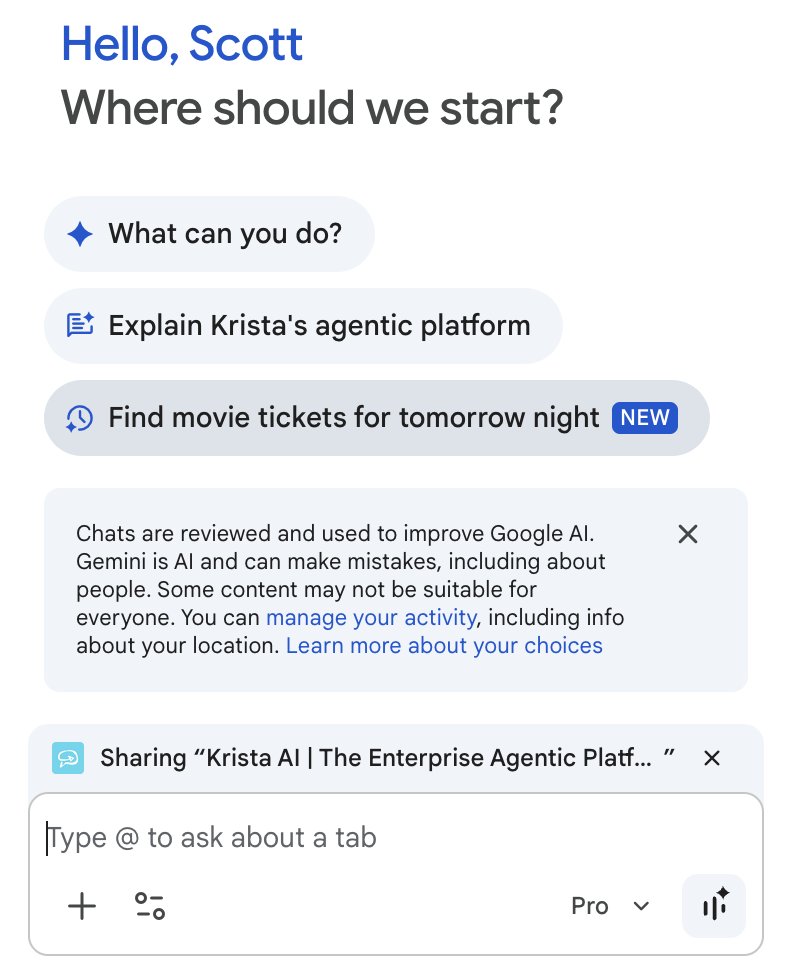
Proof that @GeminiApp isn't monitoring your activity. The first suggestion in the Gemini browser function is to purchase movie tickets. I don't go to the movies, nor have I browsed or purchased movie tickets in a browser or on this machine. I do, however, check the weather to see how hot the ride will be tomorrow. #AI is dumb without stuffing it full of context.
Scott King tweet media
English
0
0
0
67
Scott King
Scott King@thescottking·
32. The thing that will seem most obvious in hindsight: we spent 2025-2026 arguing about which model is best while the entire value was in the orchestration layer. The model is the CPU. Nobody buys a computer based on the CPU anymore. They buy it based on what they can do with it.
GREG ISENBERG@gregisenberg

My 30+ observations on the greatest opportunities in AI agents right now: And some ideas that are keeping me up at night. 1. The new buyer on the internet is an AI agent. Imagine billions of new customers showing up with money to spend but they only shop via MCP. That's what's happening. No MCP server means you're invisible to the fastest growing buyer on the internet. 2. Every franchise system in America (30,000+) needs an agent layer and none of them have one. One founder per franchise vertical. That's 30,000 businesses waiting. 3. Everyone said "distribution is the only moat" a year ago. Now I'd add that the only moat is distribution plus memory. The company that has your audience AND your agent's accumulated context is impossible to leave. 4. Consumer mobile is more interesting than it's been since 2012. Apps can finally DO things for you instead of showing you things. The next wave of $100M apps are being built right now. 5. The most interesting startup nobody has built is an agent marketplace where you rent access to someone else's trained agent. A recruiter spent 6 months training a sourcing agent on healthcare hiring. That agent is worth renting to every other healthcare recruiter on earth. The agent itself becomes the product. 6. A sorta strange phenomenon that's happening right now is agents are developing preferences. Give the same agent the same task 100 times and it starts developing patterns in how it approaches it. Nobody is studying this yet. But the agents that develop good patterns are worth more than the ones that don't. That's a new kind of asset. 7. Dead internet theory is about to become dead SaaS theory. Half the apps you use will quietly replace their support team, their onboarding team, and their content team with agents. You won't notice for months. Then you'll realize you haven't talked to a human at that company in a year. 8. The most valuable data in the world right now is sitting in the support tickets of small or mid tier SaaS companies. Every ticket is a customer telling you exactly what to build next. Mine this. 9. The most interesting pricing problem nobody has solved is how do you price a product when your costs change every time OpenAI or Anthropic updates their model pricing? Your margins can swing 40% overnight based on a decision made in San Francisco. The company that builds dynamic pricing infrastructure for agent-based businesses solves a problem every AI company has. 10. The best AI products feel like they're reading your mind. The worst ones feel like filling out a form with extra steps. 11. An interesting arbitrage I've noticed lately is hiring a human VA for $20/hour to supervise an AI agent that does $200/hour work. The human just checks the output. 12. The managed AI agent business is becoming the new agency model. $5k/month per client. You build it, run it, maintain it. The client gets a digital employee they never have to think about. This will be a $50 B+ category. 13. The first "shadow agent" scandals are about to drop. Employees running personal agents on company infrastructure without telling anyone. Using company API keys. Agents accessing internal docs. IT departments have little visibility into this right now. Lots of opportunity to build companies here. Definitely a painkiller not a vitamin type of business. 14. Right now there are probably millions of agents running on autopilot that their creators forgot about. Still burning tokens. Still sending emails. Still scraping websites. Still costing money. The "find and kill your zombie agents" tool is a product that writes itself. 15. Companies are starting to hire based on someone's agent portfolio instead of their resume. "Show me 3 agents you built that are running right now." It's REALLY early but it's starting. 16. Your Slack archive is a product. Every company's internal Slack has thousands of messages explaining how they actually do things. The company that lets you point an agent at your Slack history and auto-generate SOPs and agents from it will be enormous. 17. We're watching the cost of intelligence fall faster than the cost of distribution. Which means distribution is now the expensive thing. 18. The most underrated asset a human can have in 2026: the ability to sit in a room with another human, make eye contact, and have a real conversation. As AI handles more of the transactional stuff, the humans who can do the relational stuff become disproportionately valuable. The soft skills people used to dismiss as fluffy are becoming the hard skills. The hard skills people spent decades acquiring are becoming the soft ones. 19. There are MANY huge companies to be built around the fact that most people's agents are running on their personal laptops which they also use to browse the internet, check email, and download random files. The attack surface is enormous. One compromised Chrome extension and your agent's API keys, customer data, and workflows are exposed. 20. There's a new type of burnout forming that doesn't have a name. It's not from working too hard. It's from context switching between human work and agent work 50 times a day. Reviewing agent output, correcting it, approving it, reviewing again. The mental load of supervising agents is different from the mental load of doing the work yourself. Some founders are telling me they were less tired when they did everything manually because at least the cognitive pattern was consistent. 21. The cheapest form of market research: search "[your industry] spreadsheet template" on Google. Whatever people are tracking manually is your product. 22. Half the YC companies pivoted within 8 weeks of demo day. Not because they failed. Because agents let them test 5 ideas in the time it used to take to test one. The concept of "committing to an idea" is dissolving. Serial pivoting is becoming the default because 1) AI lets you move fast 2) the world is moving fast. 23. The loneliest job in tech right now is being the only person at your company who understands what the agents are doing. You can't explain it to your boss. You can't hand it off to a colleague. If you leave, everything breaks. You've become a single point of failure for an entire automated system. That person needs a title, a team, and a backup plan. Most companies haven't figured this out yet. 24. Your browser history is the most valuable training data you own and you're giving it away for free. Every site you visit, every product you research, every competitor you study, every pricing page you screenshot. That behavioral data, structured and fed to an agent, would make it understand your business better than any onboarding call. The company that lets you turn your browser history into agent context builds something nobody can replicate. 25. Everyone is building AI wrappers. Nobody is building AI unwrappers. The tool that takes an AI-generated document and tells you which parts a human wrote and which parts were generated. 26. Stripe just became the most important company in the agent economy and they barely had to do anything. Every agent that sells something needs Stripe. Every agent that buys something needs Stripe. They're the payment rail for the entire agentic internet by default. 27. The most undervalued API in the world right now is the US Postal Service address verification API. It's practically free. Every local business lead gen agent needs it. Every real estate agent needs it. Every direct mail agent needs it. Boring government infrastructure is quietly becoming the backbone of agent-native businesses. 28. The concept of "business hours" is for humans. Your agent closed a deal in Tokyo at 3am, processed the payment, sent the onboarding email, and updated the CRM before your alarm went off. 29. What happens when agents start recommending other agents? Your research agent finds that a competitor's sales agent is better and suggests you switch. Agent referral networks are forming organically. The first agent affiliate program is probably 6 months away. 30. Cal dotcom closed their source code. That's the canary. When open source companies start closing up, it means agents were cloning their product too easily. Every open source company is quietly asking the same question right now. 31. "AI for pet groomers" sounds like a joke and that's exactly why it will work. 150,000 of them in America. Zero tech. All scheduling by phone or IG DMs. The joke ideas always win. 32. The thing that will seem most obvious in hindsight: we spent 2025-2026 arguing about which model is best while the entire value was in the orchestration layer. The model is the CPU. Nobody buys a computer based on the CPU anymore. They buy it based on what they can do with it. Makes so much sense in hindsight. What else will be obvious in hindsight? I'll share more notes soon. I can't sleep with all that's going on. Maybe you too. What an incredible time to be building.

English
0
0
0
24
Scott King
Scott King@thescottking·
Most "AI invoice tools" are OCR with a GenAI wrapper. They extract text, hand it to humans, and call it automation. This is what governed agentic AP actually looks like. An invoice lands in your AP inbox. Watch Krista move through it. She reads the email with native ML trained on YOUR document types. Classifies it as a vendor invoice in milliseconds. Extracts every line item, total, PO reference, and tax field, with a confidence score on each value. Then she does something most "AI agents" can't. She catches the anomaly. A line item priced at $4,250 doesn't match the catalog price of $3,950. She doesn't post it. She doesn't guess. She quantifies her uncertainty, pulls the supplier history, and routes the exception to the right person. That person is the AP Manager responsible for Vendor Pricing, resolved dynamically by role. Not a hardcoded email address. The AP Manager confirms the discrepancy is a new contract rate. Krista picks back up. She three-way matches the invoice against the PO and goods receipt, runs the business rules check (duplicate detection, Net 30 terms, under-$25K auto-approval), and posts to your ERP. Then she logs every decision and updates her model. Next time, that supplier's new rate is part of her knowledge. Zero hallucinations. Confidence-scored at every step. Human judgment for the calls only humans should make. This is the difference between AI that generates text and AI that generates outcomes. #EnterpriseAI #AgenticAI #ML
English
6
0
1
93
Scott King
Scott King@thescottking·
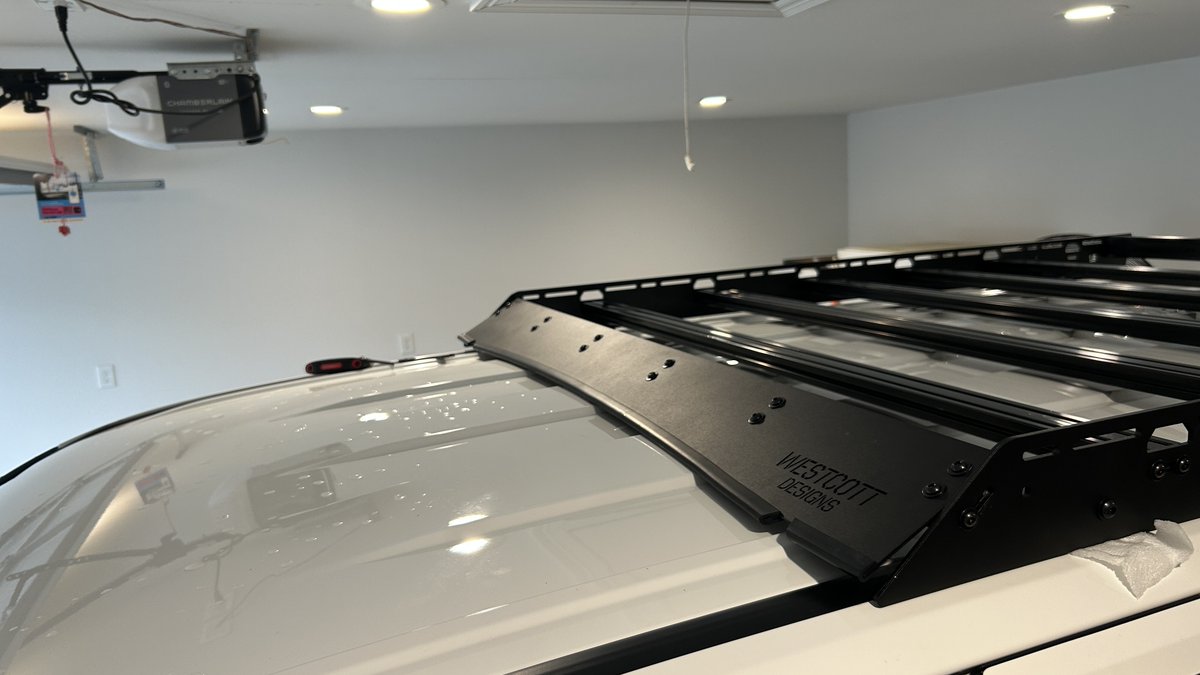
Hello Westcott Designs Team, I recently purchased and am installing the 3/4 roof rack for my Toyota 4Runner. I chose your rack specifically because it is advertised as the quietest option available. However, I am running into a couple of fitment issues during the installation that I am hoping you can help me resolve. First, the front wind visor does not fit my roof. It appears to be cut for a 4Runner with a sunroof. My vehicle does not have a sunroof, and the stamped ridges on my roof prevent the visor from sitting properly. Since the visor is essential for minimizing wind noise, I cannot just leave it off. Do you offer a different visor designed specifically for models without a sunroof? Second, the sharkfin antenna interferes directly with the second to last cross rail, making it impossible to mount that specific bar correctly. I have attached photos showing the visor resting on the roof ridges and the cross rail interference with the antenna. Please let me know what my options are for getting a compatible visor. I look forward to hearing from you. Best regards, Scott King
Scott King tweet mediaScott King tweet media
English
0
0
1
55
Barrett Linburg
Barrett Linburg@DallasAptGP·
Big Deck Energy in Dallas this Saturday. Halperin Park opens. Dallas' second deck park, sitting over I-35E. Klyde Warren transformed Uptown over the last decade. Property values up. Rents up. Tons of visitors all year long. Dallas mastered the deck park playbook. Now the city is running it back. We are excited to have this kind of public infrastructure so close to Bishop Ridge. Bishop Ridge is the Oak Cliff neighborhood where we started buying in 2020. Since then we have renovated 16 old apartment buildings, built 5 new ones, and have 5 more on the way. The investment is already working. Halperin is the kind of public infrastructure that lifts every block around it. More desirable for our residents. More desirable for the whole neighborhood. A rising tide.
Barrett Linburg tweet media
English
18
16
204
34K
Matthew Mathison
Matthew Mathison@matthewmathison·
What's the one permission you're still waiting for that nobody is ever going to give you?
English
1
0
0
26
Nik
Nik@mycomradio·
@ashwingop Do companies know that they need a brain and memory? Is this problem big enough to solve? Are they willing to pay for this solution?
Palos Verdes Estates, CA 🇺🇸 English
1
0
0
325
Scott King
Scott King@thescottking·
"Token Shock" is real. @DavidSacks highlighted a massive problem for the modern enterprise on the latest episode of the All In podcast. Token bills are going through the roof. Why? Because most companies are using a "Ferrari to deliver the mail." They use expensive frontier models for mundane tasks that could be handled by smaller, more efficient open-source models. The missing link is middleware to right-size work bases on the task. This is part of Krista. Krista is that intelligent layer. Krista doesn't just connect you to AI. She optimizes your entire AI ecosystem by dynamically routing tasks based on: - Speed: Need an instant response? Krista picks the fastest path. - Quality: Complex reasoning? Krista escalates to a frontier model. - Cost: Simple data formatting? Krista routes to a low-cost or open-source model. Stop letting your API bills dictate your innovation roadmap. It’s time to move from "AI at any cost" to "AI that scales." Let us show you how to optimize your token consumption as you automate more work.
English
0
0
0
40
Scott King
Scott King@thescottking·
@Jason Dallas is just as good, if not better.
English
0
0
0
12
@jason
@jason@Jason·
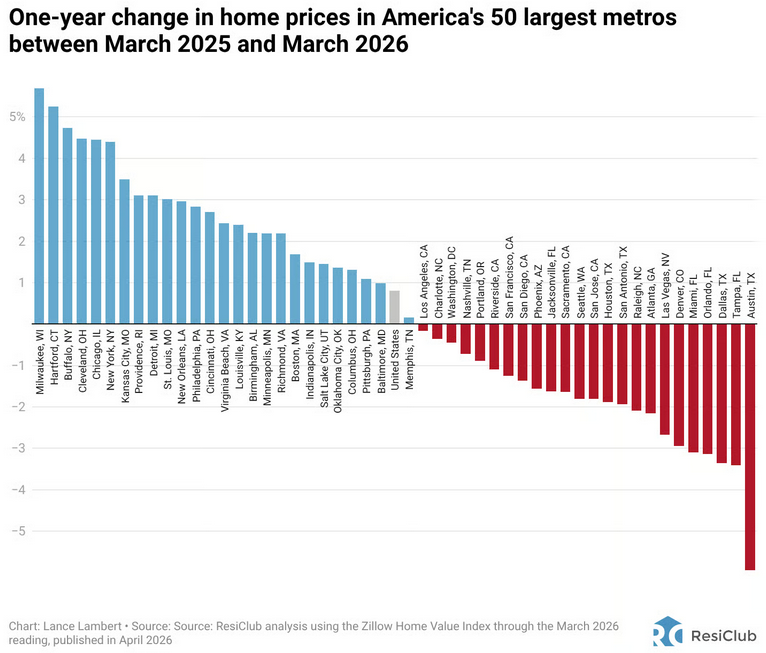
move your company to Austin and all your team members will love you... because they'll save 50% on housing and ~12% on taxes. Quality of life goes up 35% -- minimum. Like giving your team a 30-40% raise out of the gate. note: you will need to let the work remote in July since it's H.A.B. here!
@jason tweet media
English
270
77
1.3K
219.8K
Livio Q
Livio Q@livioq·
Livio Q@livioq

@ClawiAi Will enterprise ever adopt something like this? I feel like they're too bloated to move to something like this until it is packaged up and given to them by BCG and only then about 5 years after it's become common in the commercial space

English
1
0
6
12.8K
First Squawk
First Squawk@FirstSquawk·
OPENAI WORKING WITH CONSULTING FIRMS, INCLUDING ACCENTURE, CAPGEMINI AND PWC, TO HELP SELL CODEX TO BUSINESSES- WSJ
English
19
26
316
1.1M
Mike Futia
Mike Futia@mikefutia·
Claude Cowork + Google Ads is f*cking cracked 🤯 Set up once → ask Claude questions like: "What's driving my CPA spike this week?" "Which search terms are wasting budget?" "Run a full account audit and tell me the top 5 things to fix." All inside Claude Cowork. Perfect for DTC brands and agencies running Google Ads who are still pulling reports manually, digging through search term reports, and trying to figure out where budget is leaking. Claude Cowork eliminates the entire loop: → Connects to your live Google Ads data via MCP → Runs a full account audit across campaigns, ad groups, and keywords → Finds wasted spend — search terms burning budget that aren't converting → Analyzes quality scores and flags what's dragging them down → Detects anomalies — CPA spikes, CTR drops, budget pacing issues → Generates a prioritized action list: what to pause, what to scale, what to test → Writes a weekly performance report in plain English, not spreadsheet noise No logging into Google Ads and staring at columns. No exporting CSVs and rebuilding pivot tables every Monday. No guessing which search terms to negate. What you get: → 21 specialized Google Ads skills that plug into Claude → Full account audits in minutes, not hours → Negative keyword discovery on autopilot → Search term mining that surfaces hidden winners and budget waste → Quality score analysis with specific fix recommendations → Weekly reports your clients or team can actually read I put together the full skill pack: All 21 Google Ads skills for Claude, plus the setup guide to get Cowork connected to your accounts. Want it for free? > Like this post > Comment "ADS" And I'll send it over (must be following so I can DM)
English
739
99
1.3K
134.5K
Dan Rosenthal
Dan Rosenthal@dan__rosenthal·
I stopped sending text-only outreach to my best prospects. Instead, I built personalized ‘microsites’ using Gamma's API and Clay: Each microsite pulls in the prospect's company colors, logos, ICP research, TAM breakdowns, and a customized proposal with a scheduling link. (and it’s all 100% automated) This way, every prospect sees a custom proposal before we ever get on a call. I documented the full workflow so anyone can set this up: • Clay template for account enrichment (importable) • Gamma API call format for microsite generation • Auto-branding logic for colors and logos • GTM analysis prompt structure • Scheduling link integration Comment "MICROSITE" and I'll send it over. PS - The template is reusable. Once it's set up, you can generate a new microsite for any prospect in minutes.
English
274
20
277
24.7K
Scott King
Scott King@thescottking·
I am the Director of Sales Operations, reporting directly to the Chief Revenue Officer at a leading global advertising technology company. We have been in the media placement business for over a decade, handling the intricate logistics that get creative assets in front of audiences across television, digital, out-of-home, and streaming channels. My day-to-day involves dashboards, pipeline reviews, and ensuring our revenue engine runs without friction. For years, that meant weekly check-ins on order processing bottlenecks, where we would review error logs and penalty accruals from the prior month. The team managed over 10,000 incoming ad orders each month. Each order carried hundreds of line items specifying exact placements, creatives, flight dates, and compliance requirements. One misplaced comma in a delivery spec could trigger a missed spot and a five-figure make-good. Before the change, our sales reps spent roughly 30 minutes per order on manual entry and compliance checks. They would open emails, download attachments, parse PDFs or Excel sheets for details, cross-reference against our internal order management system, validate against brand guidelines, regulatory rules (FCC, GDPR for global campaigns), channel-specific formats, and then manually create or update records. Sixty full-time employees across ops and support were dedicated to this intake and validation layer. The process was thorough. It was necessary in an industry where errors cost real money. But it locked our highest-value players, the account executives and client strategists, into repetitive data work instead of expansion conversations. Leadership had tracked the metrics closely. In Q4 of last year, we logged 1.2% error rates on manual processing. That translated to roughly $2.8 million in avoidable penalties and credits across the fiscal year. Client satisfaction scores dipped when delays pushed creative approvals past deadlines. Scalability was the bigger concern. As major brands accelerated campaign cadences, some pushing 20%+ quarter-over-quarter volume growth, the headcount math did not work. Adding more FTEs would erode margins, and fatigue-driven mistakes would compound. We selected Krista as our agentic orchestration platform precisely because it promised to close that loop end-to-end. Unlike traditional RPA tools that required brittle scripting, Krista subscribed to our shared order inbox, monitored for new arrivals in real time, extracted data from email bodies and attachments using its proprietary document understanding and NLU models, achieved 100% accuracy on structured fields (we validated this in pilot against 5,000 historical orders), pulled missing metadata via direct API calls to our order platform, normalized everything to industry standards (IAB specs, MRC guidelines), constructed the pending order record, and dropped a reply to the account manager with a clickable link and a concise summary of any flagged items needing human confirmation. The rollout was deliberate. We started with a controlled cohort of 2,000 orders in January. By March, we had full production traffic. Processing time dropped from an average 30 minutes of human effort per order to under 10 seconds for fully automated cases. Straight-through processing hit 92% within the first quarter with no manual intervention required. The remaining 8% routed to quick reviews (typically 1-2 minutes) for edge cases like ambiguous creative instructions or novel compliance queries. Zero errors. Zero penalties tied to data entry since go-live. The dashboard now shows a clean log of every orchestration step: timestamped receipt, extraction confidence scores (all 100% on key fields), API interactions, and final submission status. Full audit trail. Immutable. Searchable. The impact on the sales organization was immediate and profound. Our 200+ account executives, previously spending 25-30% of their week on order admin and compliance chasing, now have that time back. Pipeline velocity increased 18% in Q2 as reps shifted focus to upsell discussions, new creative concepts, and deeper client strategy sessions. Average deal expansion size grew 14% year-over-year, directly attributable to more proactive outreach. Reps were no longer buried in spreadsheets. One senior AE told me in our monthly sync, "I used to dread Mondays because of the order backlog. Now I start with client calls. It's night and day." Client NPS climbed 12 points in the same period. Brands noticed faster turnaround without the old delays. We are feeding every processed order back into Krista's learning loop. The platform continuously strengthens its models with our specific data, refining NLU for industry jargon, recognizing subtle variations in agency order templates, improving flagging logic for rare compliance nuances. We have already seen false-positive rates on human-in-the-loop triggers drop 35% month-over-month. The shared knowledge base grows richer with each cycle, turning institutional know-how into institutional advantage. From my vantage point in sales ops, this is not just efficiency. It is realignment. The company invested in automation that respects the high-stakes nature of our work while freeing people for the work that drives growth. 100% accuracy. Tens of thousands of hours reclaimed. A revenue team finally focused on revenue. Penalties eliminated. Scalability without added overhead. We are just getting started. The next phase is extending orchestration to creative trafficking, billing reconciliation, and performance reporting. The blueprint works. The data proves it. And the momentum is building. #agentic #ai #automation
English
0
0
1
71
Scott King
Scott King@thescottking·
I wrote answers to the recent questions I answered about how to get AI to respond to email replies without making SH!T up. Let me know if you have a new question. 𝟏. How Can Customer Service Organizations Use AI to Reply to Customers with Accurate Real-Time Data? 𝟐. Why Does AI Email Automation Usually Fail to Deliver ROI? 𝟑. How Does 𝐊𝐫𝐢𝐬𝐭𝐚 Discover Customer Intent and Automatically Respond to Email? 𝟒. What Is the Difference Between a Basic Email Bot and a True Agentic Platform? 𝟓. How Do You Train AI on Enterprise Data So Replies Stay Accurate? 𝟔. How Can Contact Centers Handle 500–3,000 Daily Emails Without Adding Headcount? 𝟕. What Happens When 𝐊𝐫𝐢𝐬𝐭𝐚 Needs Human Judgment? 𝟖. How Does 𝐊𝐫𝐢𝐬𝐭𝐚 Prevent Hallucinations in Customer Replies? 𝟗. How Do You Set Up an AI Email Responder for Your Service Desk? 𝟏𝟎. Why Do Most Automation Efforts Produce Slower-Than-Expected Results? 𝟏𝟏. How Does 𝐊𝐫𝐢𝐬𝐭𝐚 Deliver Strategic ROI Beyond Cost Savings? 𝟏𝟐. What Are the Best AI Inbox Management Tools for Overloaded Customer Service Teams? 𝟏𝟑. How Does AI Inbox Management Eliminate Bottlenecks in Shared Inboxes? 𝟏𝟒. What Makes 𝐊𝐫𝐢𝐬𝐭𝐚 the Top Customer Service Email Management Software? 𝟏𝟓. How Can Inbox Management Tools Scale Operations Without Agent Sprawl? 𝟏𝟔. How accurate is AI email automation when it needs real-time order or account data? 𝟏𝟕. Can AI handle complex customer service emails that require cross-department coordination? 𝟏𝟖. What happens if a customer emails the wrong department? 𝟏𝟗. How does 𝐊𝐫𝐢𝐬𝐭𝐚 compare to ChatGPT for enterprise email replies? 𝟐𝟎. Will 𝐊𝐫𝐢𝐬𝐭𝐚 learn our brand tone and policies? 𝟐𝟏. How long does it take to see ROI? 𝟐𝟐. Can 𝐊𝐫𝐢𝐬𝐭𝐚 work with our existing service desk software? 𝟐𝟑. What about data security and compliance? hubs.li/Q046K2kW0
English
0
0
0
49