Sabitlenmiş Tweet
Thor Hovden 🇳🇴❤️🇺🇦
7.4K posts

Thor Hovden 🇳🇴❤️🇺🇦
@thor574
#Informatics #Admiralty #LifeLongLearning #Kaizen #Concepts #Words - Care for your herd. Tinyest yoga is a smile. Also on Bluesky.
Bergen, Norge Katılım Haziran 2008
5.1K Takip Edilen869 Takipçiler
Thor Hovden 🇳🇴❤️🇺🇦 retweetledi

The best programmers don't write code anymore.
They write a spec. A test. An eval. T
Then they turn the AI on and walk away for hours. It runs. It ships. They review.
Evals are the unlock most devs are sleeping on. Here's how top agent teams build them right.
Viv@Vtrivedy10
English
Thor Hovden 🇳🇴❤️🇺🇦 retweetledi

🚨 Here is the full 42 minutes of my crew and I exposing Minnesota fraud, this might be my most important work yet. We uncovered over $110,000,000 in ONE day. Like it and share it around like wildfire! Its time to hold these corrupt politicians and fraudsters accountable
We ALL work way too hard and pay too much in taxes for this to be happening, the fraud must be stopped.
English
Thor Hovden 🇳🇴❤️🇺🇦 retweetledi

‼️Statement on the Orbán Government Accusing Me, an Investigative Journalist, of Espionage‼️
Today, the Hungarian government has filed a complaint against me for espionage. Accusing investigative journalists of espionage is virtually unprecedented in the 21st century for an EU member state. This is typical of Putin’s Russia, Belarus, and similar regimes.
I have spent over a decade documenting how Russian spies and interests have penetrated Hungarian politics, so I am probably the least surprised by this.
Despite growing signs that the Hungarian government acts as a Kremlin ally and copies the Russian model, I still trust that parts of the Hungarian state—and the judiciary—follow the Hungarian constitution, not that of the Russian Federation.
I have never engaged in espionage. I see my work as journalistic counterintelligence—from exposing the hacking of the Hungarian Foreign Ministry by Russian actors to revealing the activities of Hungarian pro-Kremlin propagandists.
Defending myself publicly would be easier if I were not bound by source protection. But that remains my top priority. I cannot reveal who provides me information or what I receive, including from within Hungarian state structures.
If I were not a journalist, I could list many facts proving it is impossible for the Hungarian state to genuinely believe I am spying. Certain meetings, contacts, and information gathering could never have happened otherwise.
This baseless accusation now forces me to share details of a specific investigation, including a conversation with a confidential source that appears to have been wiretapped. Normally, this would appear in a finished article or my upcoming book—not here. (It will appear there as well.)
Since 2023, I have investigated whether the relationship between Péter Szijjártó and Russian officials exceeds legal limits. The published audio, where I’m heard talking to a source, mentions that communication between Szijjártó and Sergey Lavrov is recorded by EU intelligence services. Less attention has gone to my point that this relationship raises strong suspicion of political intelligence activity and influence operations in Russia’s interest.
These are serious claims and hard to prove. As a journalist, I cannot force anyone to speak or hand over documents. That is why gathering this information has taken so long—and why I spoke to that sensitive source (while the conversation was secretly recorded).
Serious claims require serious evidence, and I believe I have gathered some. I have not engaged in espionage.
I have not cooperated with any foreign intelligence service in surveilling Szijjártó. Instead, I tried to verify earlier fragments of information about Szijjártó–Lavrov communication.
I sought to identify the channels and phone numbers used, and whether a secret channel—possibly used by Russian intelligence—exists. In other words, whether Szijjártó uses a hidden device or number unknown even within the Hungarian Foreign Ministry.
This was only one part of my research. The other, more serious topic is this:
Since at least 2016–2017, EU and NATO intelligence services have had indications that large amounts of cash and precious stones may have been transported from Russia on Hungarian government aircraft or private jets used by government figures. Officials from at least six countries made such claims to me.
These signals did not come from monitoring Hungarian targets, but, for example, from intercepting Russian officials discussing or preparing such shipments.
Alongside Szijjártó–Lavrov communication, I examined how baggage screening and handling works on such flights, which officials travel with what luggage, whether more packages arrive from Moscow than depart, and how such shipments could be handled discreetly.
I know how serious this is, and I would not have written even this much—but since I do not know what else may be taken from the edited recording, or what fabricated accusations (like, for example, that I was seeking such details to commit terrorism) may follow, I believe I must share this now.
Why do I investigate all this?
According to many sources familiar with the Hungarian state and counterintelligence, there is no independent body in the Orbán system able to investigate or act if a senior official is suspected of espionage.
Government members direct intelligence services and set expectations. The services lack both tools and authority to investigate a government member.
I knew this would be difficult when I chose to pursue it. But few people in Hungary can or dare to do this, so I felt it was my duty.
We have now reached the point where the Orbán government—of which Szijjártó is still a member—aware of my reporting plans and the risk they pose, has preemptively accused me of espionage.
I am a Hungarian patriot. I serve the public. As an investigative journalist, my job is to hold power accountable. Neither political theater nor legal threats will deter me.

English
Thor Hovden 🇳🇴❤️🇺🇦 retweetledi

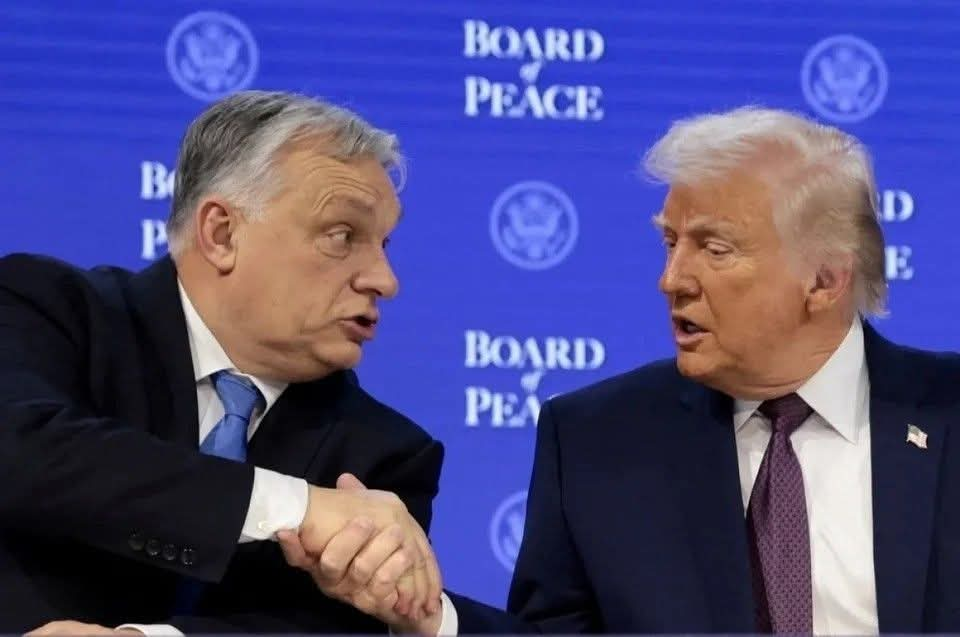
The Hungarians have a saying: “Visszanyal a fagyi,” which can be translated as “you lick the ice cream, and the ice cream licks you back.” It means: be careful — what you consume with pleasure may eventually consume you.
The name of the “drug” that makes Trump sympathetic to the idiot Orbán is already known — “orbanalism.” And as we can see, the trial of this “drug” has been successful.
It’s easy to understand why the U.S. president took a liking to the somewhat dim Viktor — a full-time Kremlin sycophant and a political corpse in the making. Recently, Trump supported Orbán, but did so in such an overly flattering and sugary way that it triggered a gag reflex among Hungarians. It didn’t boost Orbán’s popularity. At this point, any support from Trump is the worst kind of publicity. European parties once backed by Trump have almost always lost elections. So support for Orbán from such an odious figure as Trump is more likely a sentence than an advantage — it will work against him. Hmm… maybe that’s exactly Trump’s goal?
So let’s drink to the swift end of both!
Trump is not promoting Orbán out of kindness or stupidity. There are several key reasons for this. The main one is the similarity in how Trump and Orbán see the world: an ideology of “national greatness,” hostility toward liberal elites, opposition to migration, a desire for strongman leadership, and a love of spectacle and luxury. In addition, Orbán has found Trump’s weak spot — the U.S. president’s love for direct, unfiltered flattery. Trump genuinely doesn’t understand why people would hide their admiration for him.
Trump’s goal is to line up all EU countries under pressure, by any means necessary. That’s why elections in Hungary matter to the U.S. — to create conditions for a broader “offensive” in France, Germany, and the UK. The ultimate aim is to bring to power figures like Orbán — those with whom Trump can strike deals. Orbán, in turn, would sow discord within the EU and play along with Washington’s policies from the inside.
Corrupt, pro-Moscow, “great and magnificent” Orbán is not insane — he is a professional manipulator. His audience is not Ukrainians, but certain segments of Hungarian society frightened by war, instability, and rising utility costs. With friends like Fidesz has, it hardly needs enemies.
So, most likely, on April 12, 2026, Orbán will be… well… sent packing. And on November 3, 2026, Trump will be… well… sent packing too. Which means Putin has about six months — and then things will turn very rough for him.
P.S. It turns out Orbán received a car factory and a huge mansion on Rublyovka as a gift from Putin. Apparently, Orbán is planning to “retire” to Moscow. Personally, I’m not surprised at all. I’d be more surprised if this toad stayed in Hungary.

English
Thor Hovden 🇳🇴❤️🇺🇦 retweetledi

Everyone needs to hear this...
Michael Caine on his defining philosophy for life:
Use the Difficulty
As a young actor, he was rehearsing a play when a chair got stuck in the door and blocked his path. He told the other actor he couldn't get by the chair to enter the scene.
The actor's response:
"Use the difficulty...if it's a comedy, fall over it, if it's a drama, pick it up and smash it."
This idea became a defining mantra for his life.
"There's never anything so bad that you cannot use that difficulty...if you can use it a quarter of one percent to your advantage, you're ahead, you didn't let it get you down."
I can't stop thinking about this...
How can you use the difficulty you're currently facing? How can you embrace the struggle? How can you find flow through the friction?
As with everything in life, control the controllable:
The difficulty is already there. You can't control it. But you can control how you react to it. You can control your response to it. You can control your attitude towards it.
Lesson: Difficulty is inevitable. Use it.
English
Thor Hovden 🇳🇴❤️🇺🇦 retweetledi

Jim Rohn's 7 attitude diseases that silently destroy success:
"Attitude diseases are deadly. They'll destroy all the good things you start. I'm a pro on these because I've had them all."
1. Indifference.
"The shrug of the shoulder. The guy's not even concerned. He's just drifting. There's one problem with drift: you cannot drift to the top of the mountain. Here's the key to the good life: Learn to put everything you've got into everything you do. The delusion is, 'If I had a better job, I'd really pour it on.' Wherever you are, pour it on."
2. Indecision.
"Mental paralysis. The guy can't make up his mind. He says, 'What if I get off on the wrong side?' Listen, after a while, it doesn't matter. Just get off. Any side will do. The ones that turn out to be wrong give you better experience to make better decisions. Don't see how many decisions you can get out of, see how many you can get into. That's where the adventure is."
3. Doubt.
"One of the worst is self-doubt. The guy doubts himself. Doubts if it'll last. Doubts if he can do that well. Doubts if he can make that much. A chronic, excellent self-doubter. You can imagine what damage that does to your future. Turn this coin over and become a believer. The understanding of self-worth is the beginning of progress."
4. Worry.
"Worry causes health problems, social problems, personal problems, family problems. Worry long enough, it'll drop you to your knees. I used to be known as a super worrier. Not a super warrior, a super worrier. My family wished I'd have been a warrior. It took me almost one year to kick the worry habit. It was one of the toughest years I ever spent. But I discovered you could live the most incredible life free of worry. Not free of challenge, not free of difficulty, free of worry."
5. Overcaution.
"Some people never will have much. They're too cautious. This is the timid approach to life. I used to say, 'What if this happens?' It's called the language of the poor. Then I discovered it's all risky. The minute you were born, it got risky. If you think trying is risky, wait till they hand you the bill for not trying. Getting married is risky. Having children is risky. Going into business is risky. I'll tell you how risky life is; you're not going to get out alive. Don't ask for security. Ask for adventure. Better to live 30 years full of adventure than 100 years safe in the corner."
6. Pessimism.
"The deadly disease of always looking on the bad side. The poor pessimist doesn't try to figure out what's right; he tries to figure out what's wrong. He doesn't look for virtue; he looks for faults. And when he finds them, he's delighted. How ugly. To the pessimist, the glass is always half empty. To the optimist, it's half full. Our lives are mostly affected by the way we think things are, not the way they are."
Jim shares what changed his thinking:
"I used to start the day reading the morning newspaper. I'd load up on wars and riots and murders and stabbings and killings. I'd even read the back pages. I seem to like that stuff for some weird reason. Then I'd start the day. You can imagine the kind of days I used to have. Mr. Shoaff gave me one of the greatest phrases: 'Jim, every day, stand guard at the door of your mind.' Don't let anybody just dump anything they want into your mental factory because you've got to live with the results."
7. Complaining.
"Complaining, crying, whining, griping. Spend five minutes complaining and you have wasted five, and you may have begun what's known as economic cancer of the bone. Surely they will soon haul you off into a financial desert and there let you choke on the dust of your own regret."
English
Thor Hovden 🇳🇴❤️🇺🇦 retweetledi

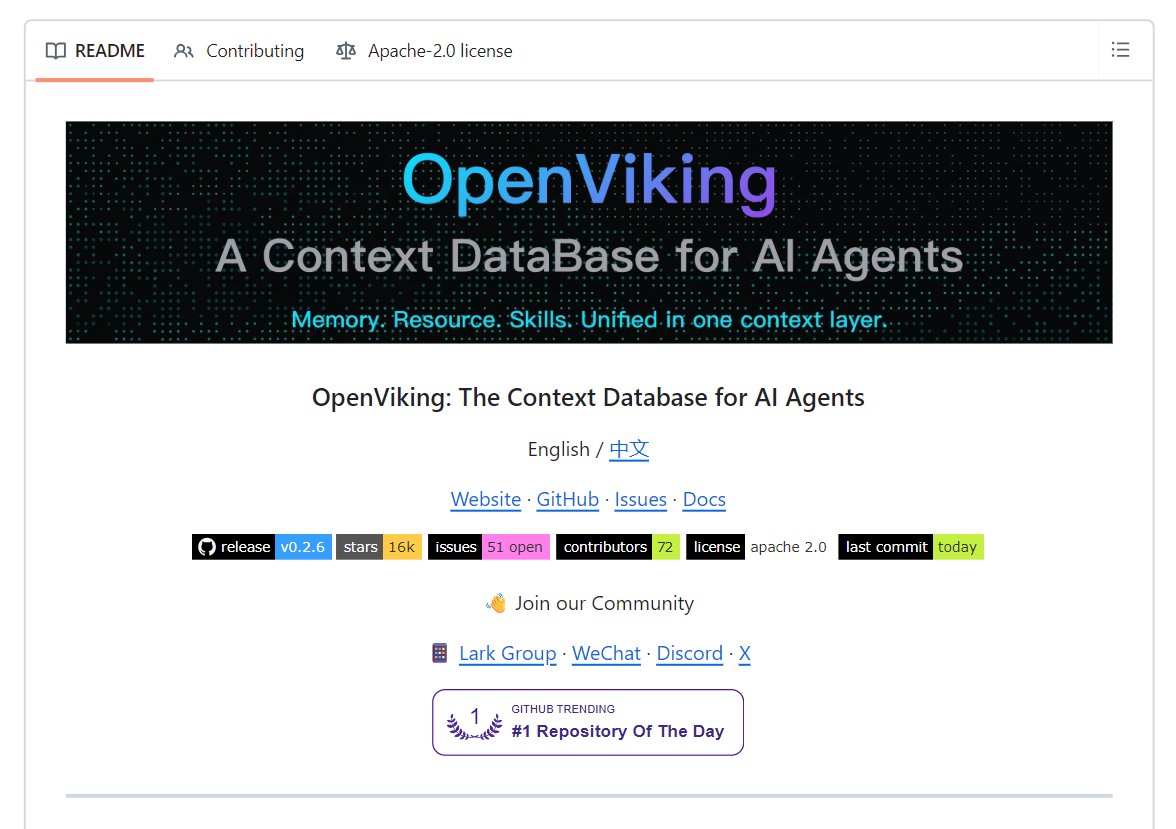
OpenViking – filesystem memory for AI agents
It gives agents a structured navigable context system that:
- replaces flat vector storage with a filesystem (viking://)
- unifies memory, resources, and skills
- loads context in layers (L0/L1/L2) to save tokens
- retrieves info via directory-aware search (not flat RAG)
- makes retrieval traceable and debuggable
→ So it's a combination of structured navigation + semantic (embedding-based) retrieval
This approach delivers better retrieval accuracy, up to 80–96% lower token cost and self-improving memory over time.

English
Thor Hovden 🇳🇴❤️🇺🇦 retweetledi

EU literally explained which forces erode democracies over time:
* Political
* Disinformation
* Geopolitical
* Economic dependence (incl. tech giants and commercialization)
* Polarization and growing intolerance – also within academia
europarl.europa.eu/thinktank/en/e…
English
Thor Hovden 🇳🇴❤️🇺🇦 retweetledi

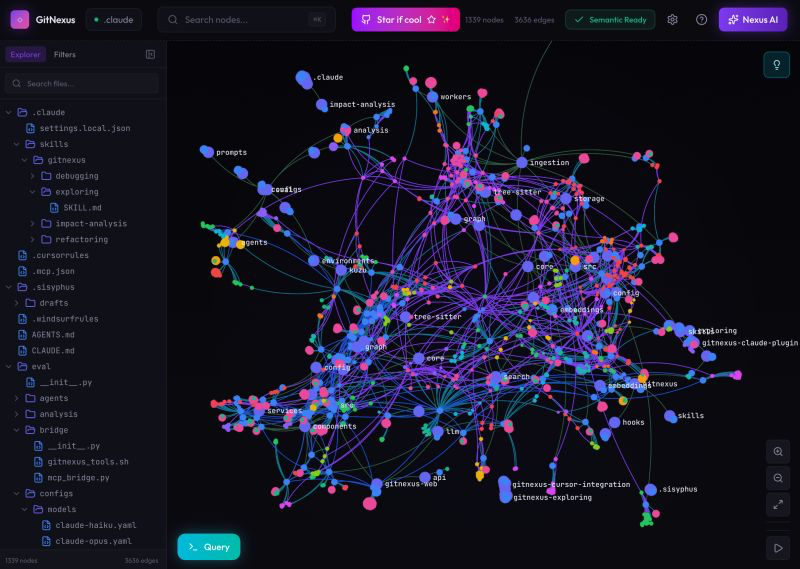
🚨Breaking: Someone just open sourced a knowledge graph engine for your codebase and it's terrifying how good it is.
It's called GitNexus. And it's not a documentation tool.
It's a full code intelligence layer that maps every dependency, call chain, and execution flow in your repo -- then plugs directly into Claude Code, Cursor, and Windsurf via MCP.
Here's what this thing does autonomously:
→ Indexes your entire codebase into a graph with Tree-sitter AST parsing
→ Maps every function call, import, class inheritance, and interface
→ Groups related code into functional clusters with cohesion scores
→ Traces execution flows from entry points through full call chains
→ Runs blast radius analysis before you change a single line
→ Detects which processes break when you touch a specific function
→ Renames symbols across 5+ files in one coordinated operation
→ Generates a full codebase wiki from the knowledge graph automatically
Here's the wildest part:
Your AI agent edits UserService.validate().
It doesn't know 47 functions depend on its return type.
Breaking changes ship.
GitNexus pre-computes the entire dependency structure at index time -- so when Claude Code asks "what depends on this?", it gets a complete answer in 1 query instead of 10.
Smaller models get full architectural clarity. Even GPT-4o-mini stops breaking call chains.
One command to set it up:
`npx gitnexus analyze`
That's it. MCP registers automatically. Claude Code hooks install themselves.
Your AI agent has been coding blind. This fixes that.
9.4K GitHub stars. 1.2K forks. Already trending.
100% Open Source.
(Link in the comments)

English
Thor Hovden 🇳🇴❤️🇺🇦 retweetledi

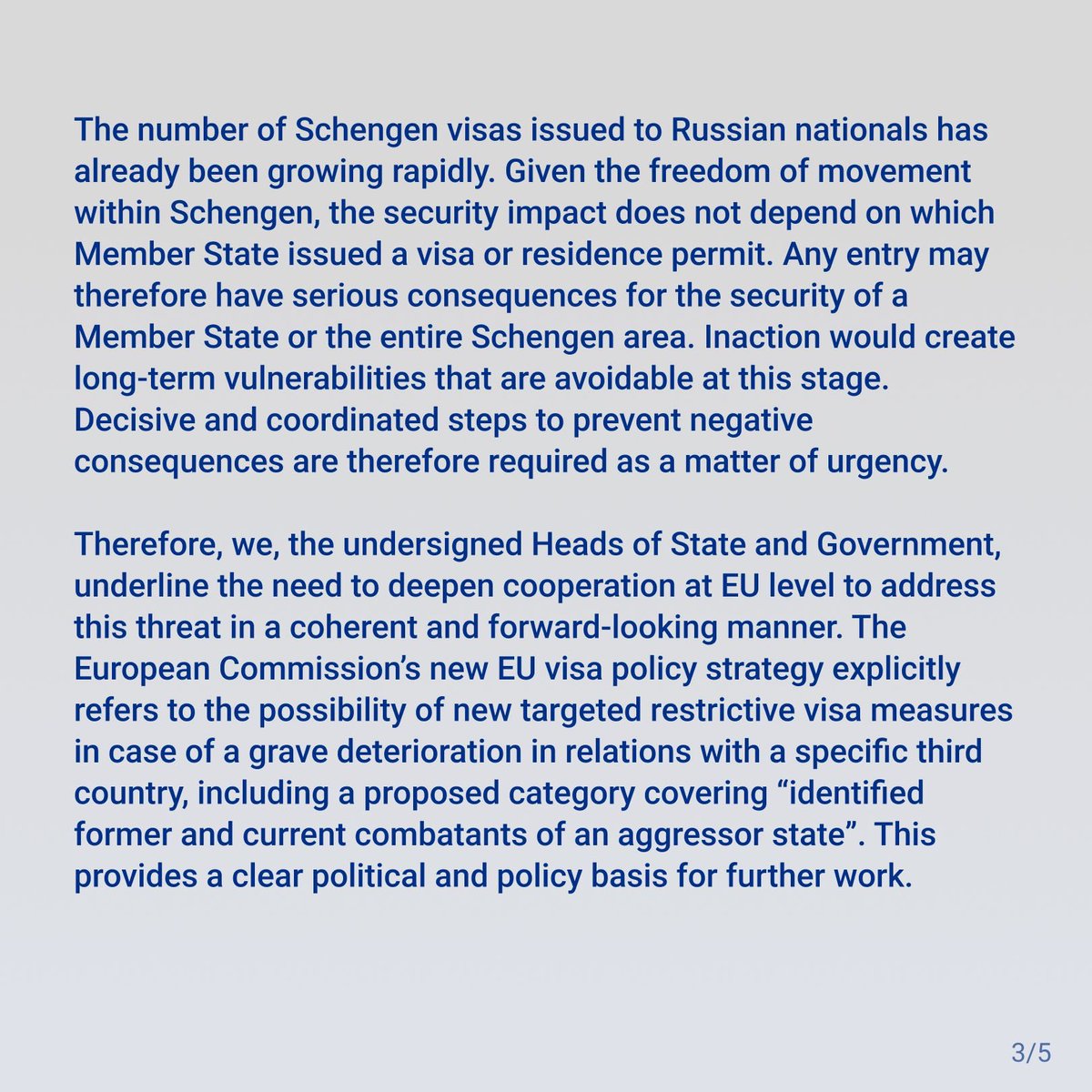
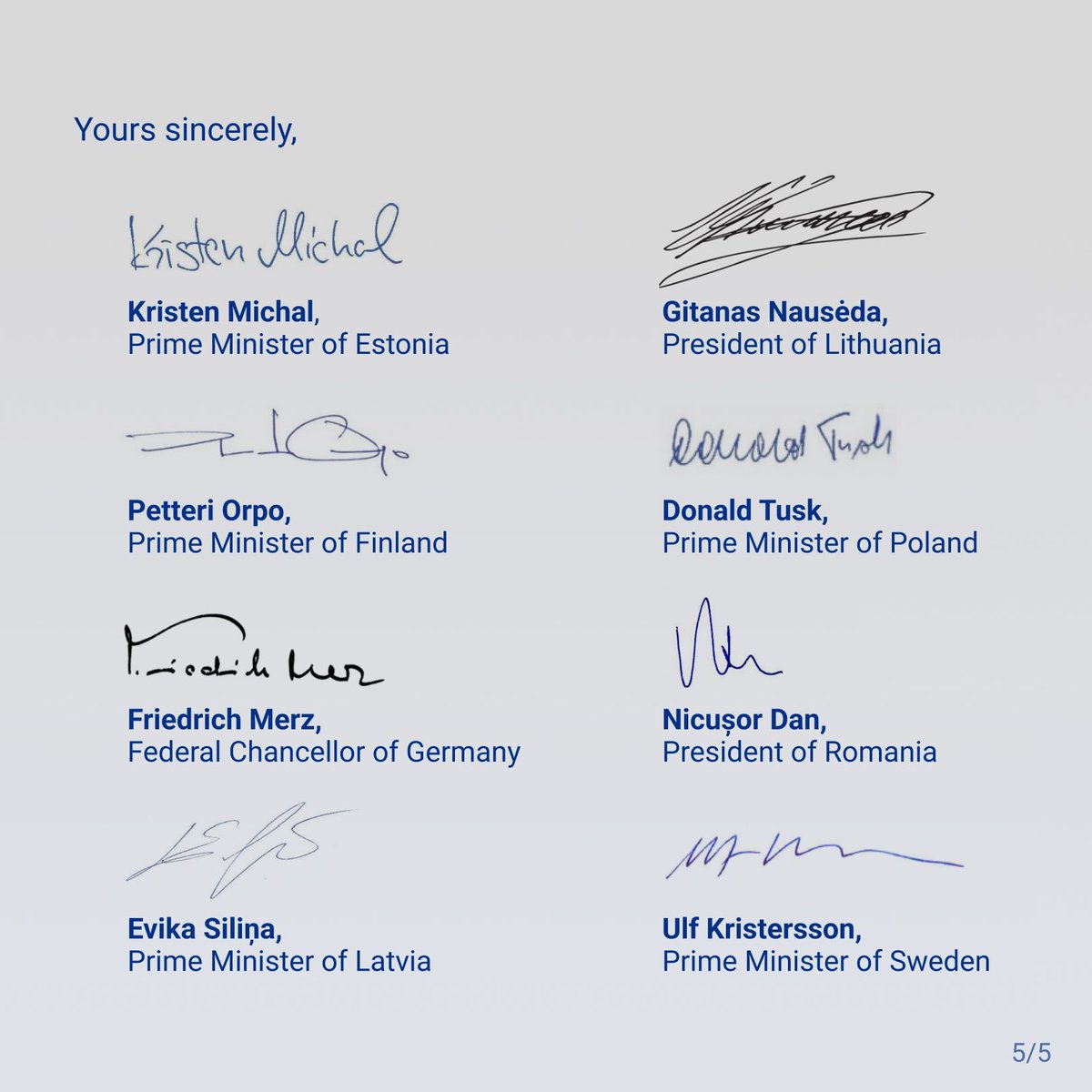
Russian fighters who have taken part in the aggression against Ukraine have no place in Europe.
They pose a direct threat to Europe’s internal security. They have recent combat experience. Many were recruited from prison.
Europe must urgently prevent their entry into the EU and Schengen.
Ahead of #EUCO, eight European leaders call on the European Commission to address this issue at EU level.


English
Thor Hovden 🇳🇴❤️🇺🇦 retweetledi

🇪🇺 EU foreign policy chief Kaja Kallas says the quiet part out loud: Washington is not trying to manage Europe. It is trying to dissolve it.
“They do not like the European Union,” she told the Financial Times. The tactics, she adds, resemble those used by the EU’s adversaries.
The answer is not bilateral deals with Trump. It is unity. Because when Europe stands together, it is an equal power. And that is exactly what Washington cannot stand.
Gandalv @Microinteracti1

English
Thor Hovden 🇳🇴❤️🇺🇦 retweetledi

BREAKING: Saudi Aramco, the world’s largest oil company, is negotiating to buy drone interceptors from Ukraine, the country Russia has been bombing for four years, to defend its oil fields from Iran, the country America has been bombing for two weeks.
Read that sentence as many times as you need. It is the 21st century in a single transaction.
The Wall Street Journal reports that a Saudi intermediary closely tied to Aramco is in advanced talks with Ukrainian manufacturers SkyFall and Wild Hornets for their P1-SUN and STING interceptor drones, plus Phantom Defense electronic warfare systems, in a multi-million-dollar batch purchase explicitly designed to destroy Iranian Shahed-type drones before they reach Saudi oil infrastructure.
Ukraine learned to kill Shaheds by being hit with them. Russia has launched thousands of Iranian-made Shaheds at Ukrainian cities, power stations, and military positions since 2022. Ukrainian engineers did not study the Shahed in a laboratory. They studied it falling through their bedroom ceilings. They reverse-engineered the threat, built interceptors calibrated to its exact flight profile, radar signature, and thermal characteristics, and fielded them under fire. The interceptors work because the engineers who built them did so while the drones they were designed to kill were attacking their homes.
Now Saudi Arabia wants to buy that knowledge. Not from Lockheed. Not from Raytheon. Not from the Patriot system that costs $3 million per missile and was designed to kill ballistic warheads, not $20,000 drones. From Ukrainian startups that built their products in basements and tested them on battlefields.
The strategic implications cascade across every domain this war touches.
For Ukraine, this is the moment the country transforms from victim to vendor. Zelensky’s government has spent four years asking the world for weapons. It is now selling them. Every interceptor drone that ships to Saudi Arabia funds Ukraine’s own defence, reduces Kyiv’s dependence on Western aid, and demonstrates that the country the world pitied has become the world’s most experienced counter-drone power. The “salesman of the year” meme circulating on X understates it. Ukraine is not selling products. It is selling survival expertise, and the market for survival expertise in a world of $20,000 drones is every country with infrastructure worth protecting.
For Saudi Arabia, this is an admission that the most expensive Western air defence systems in the world cannot efficiently kill the cheapest weapons in the world. The Kingdom operates Patriot batteries, THAAD interceptors, and an integrated air defence architecture that costs tens of billions. Against ballistic missiles, these systems perform. Against saturation swarms of $20,000 Shaheds, they are economically irrational: a $3 million Patriot missile destroying a $20,000 drone is a 150-to-1 cost inversion that the attacker wins by firing. Ukraine’s interceptors cost a fraction of Western missiles and are purpose-built for exactly the threat Iran is deploying. Aramco is not buying Ukrainian because it is fashionable. It is buying Ukrainian because the math demands it.
For Iran, this is the beginning of the end of the Shahed’s strategic advantage. The drone that closed Hormuz, burned Salalah, struck the SafeSea Vishnu, hit towers in Dubai, and terrorised Gulf capitals for two weeks is about to face a countermeasure designed by the people who have been fighting it longest. If Saudi fields are protected by Ukrainian interceptors calibrated to the Shahed’s exact signature, the IRGC’s cheapest and most effective weapon becomes progressively less effective with every unit deployed.
For the world, this is the moment the drone age produces its own antibody. The same battlefield that created the threat created the cure. Ukraine is the immune system the Gulf is purchasing.
open.substack.com/pub/shanakaans…

English

@WLCongress @McCainInstitute «If an evil man can do so much harm, imagine what good the rest of us can do together» (2011)
English
Thor Hovden 🇳🇴❤️🇺🇦 retweetledi

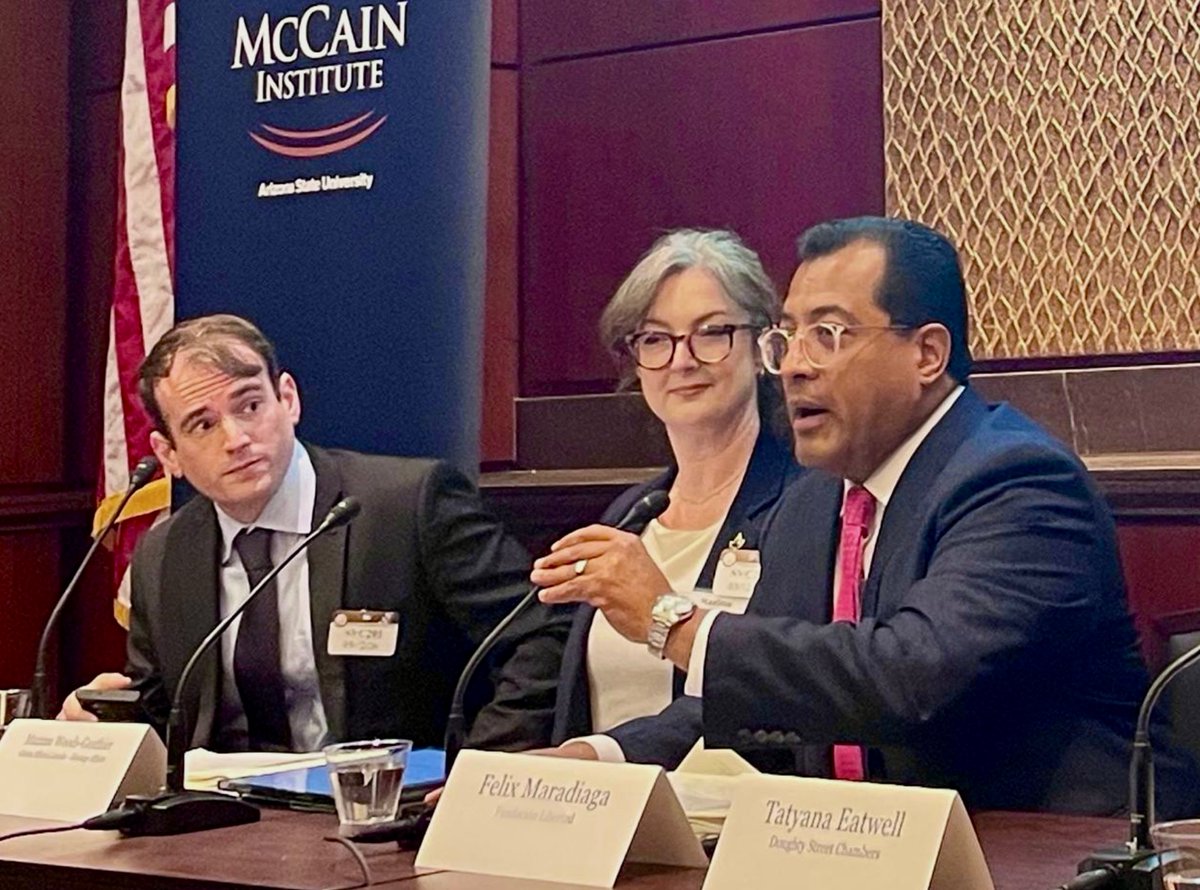
World Liberty Congress President Félix Maradiaga spoke today at the U.S. Senate in the @McCainInstitute’s “Transatlantic Conference on Hostage Taking and Arbitrary Detention,” calling for a new international protocol to address the global crisis of political prisoners.
Speaking on behalf of the WLC, @maradiaga proposed a crisis-management approach built around three stages: before detention, through prevention and protection of activists; during detention, through coordinated pressure for release; and after detention, through assistance for the reintegration of former political prisoners.
The WLC reaffirmed that defending political prisoners is not a secondary issue, but a central front in the global struggle for freedom and democracy.

English